“I Was Losing Pieces of My Childhood:” a Former Child Farmworker Urges Action to End Child Labor in a Speech to Be Remembered

By Reid Maki, NCL Director of Child Labor Advocacy & Coordinator of the Child Labor Coalition

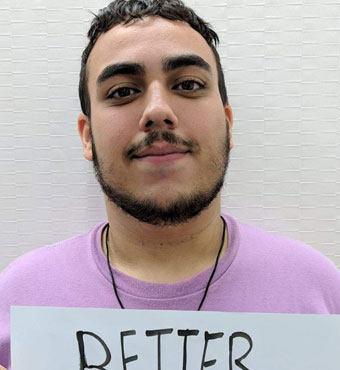
The recent 6th Global Conference on the Elimination of Child Labour included high-ranking officials from over 100 governments, the ILO, trade groups, and employer groups. I heard many speeches from child labor experts with decades of experience, but former NCL intern Jacqueline Aguilar, only 23 and a recent college graduate, gave by far the most compelling and poignant remarks. In 2023, Jacky interned for me at the Child Labor Coalition, a program of the National Consumers League.  She came to us through a remarkable program for former Migrant Head Start students led by the National Migrant and Seasonal Head Start Association, a member of the Child Labor Coalition.

Jacky spoke on a panel with a half-dozen government officials and a trade unionist. She recalled her experiences in the United States as a child laborer in agriculture. Members of the Child Labor Coalition are concerned that, in any given year, there may be as many as 300,000 minors working in agriculture. They work legally at tasks most adults cannot do because of gaps in child labor law that apply to agriculture. These exemptions allow children to work unlimited hours in the fields (if they aren’t missing school) beginning at the age of 12.

Jacky spoke from the heart about the impact child labor has had on her life and those of her peers from migrant families. Her remarks reminded us of why we were at the conference and impressed the attendees that we must act urgently to protect the 138 million children trapped in child labor.

Jacky started: “When people hear ‘child labor,’ they imagine something far away. A different country. A different life. But I am standing here to tell you it happened. In our communities. In our fields.”

“My parents worked in the fields every single day to provide for us,” recalled Jacky.  “I remember waiting by the door as a little girl for my dad to come home. When he put his hand on my cheek, I would feel how rough it was: cracked, dry, hardened by the earth. I used to wonder why his hands felt like that. Now I know. Those hands were not meant to be that way. They were shaped by survival.”

“At 11 years old, I stepped into those same fields. 11,” she continued.  “While other kids were worrying about homework or sleepovers, I was waking up at 4:00 in the morning. It was still dark outside…By 5:00 a.m., I was in the lettuce rows. The fields were endless. My hands wrapped around a hoe that felt too heavy for my body. The metal burned my palms. Blisters formed and broke. My feet ached from standing for hours. The morning dew soaked through my shoes, and the cold crawled up my legs.”

“There was no one asking how old I was. No one asking if I was tired. No one asking if I was okay. We had 30 minutes for lunch. 30 minutes sitting in the dirt. No cold water. No shade. Just the understanding that we needed to move faster. I wasn’t building character. I was losing pieces of my childhood.”

Like many farmworker families, Jacky’s was touched by cancer. “My father was diagnosed with lung cancer,” she said. “He had been in agriculture since he was seventeen years old,” she recalled.  “I think about the pesticides he inhaled. The dust that settled deep into his lungs. The chemicals that were part of his everyday air. My mother’s body gave out, too. Years of lifting heavy sacks of potatoes tore her shoulder until she couldn’t lift them anymore. I watched my parents sacrifice their health for us. And when my father had to move three hours away for treatment, I stayed behind. I was still in school. But I worked the potato harvest so we could survive, and I could help support my family. “

Jacky recalled one day in particular: “One morning, it started snowing while we were in the field, and the snow collected on the dirt, on the crops, on our shoulders. My fingers went numb. My socks were soaked. I couldn’t feel my toes. I remember standing there, staring at the ground, silently begging for someone, anyone, to say, ‘Go home.” That’s enough.’ But no one said anything. And that silence… it teaches you something. It teaches you that your pain is normal. That your exhaustion is expected. That your childhood is negotiable. I didn’t lose my childhood in one moment. I lost it in early mornings. In blistered hands. In missed school events. In falling asleep over homework because my body couldn’t take anymore.”

Jacky wasn’t alone. She saw other farmworker children suffer. “I watched classmates disappear from school. Smart kids. Funny. Full of light. They didn’t transfer schools. They transferred to full-time labor. And no one called it a crisis,” she recalled.  “No child should have to choose between education and survival. No child should feel responsible for keeping their family afloat. No child should stand in freezing snow waiting for permission to stop working.”

Speaking before an audience of government officials from all over the world, Jacky implored them to do more to end child labor: “To our ministers, policymakers, and public leaders, I am asking you to see us. Strengthen protections for children. A child in a field deserves the same protection as a child anywhere else. Enforce the laws. Visit the fields. Ensure there is clean water, real breaks, and protection from harmful chemicals. Support families with living wages, healthcare, and financial stability so children are not pushed into labor out of desperation. Train schools to recognize working children not as lazy or distracted but as exhausted. And include survivors in your decisions. We know where the system fails because we experienced the failure.”

“I am proud of my parents. I am proud of where I come from. But I should not have had to grow up that fast,” said Jacky. “There are children, right now, standing in rows of crops before the sun rises. Their hands are blistering. Their backs are aching. Their childhood is slipping away quietly. And most people will never know their names. Please do not let their silence continue because child labor does not just take childhoods. It takes futures. And we cannot afford to keep losing them. This happened. I survived it. And I’m not going to whisper about it.”

In three decades of advocacy and four Global Child Labor conferences, I’ve never heard a speech more eloquent or powerful.

Jacky speaks for children in child labor everywhere—not just the 300,000 children who work in agriculture. In recent years, thousands of unaccompanied minors, have come to work in the U.S.  Many ended up working in auto parts factories, the graveyard shifts in meatpacking facilities, or late nights at fast food restaurants. Yet children working in the U.S. are a small fraction of the global reality: 138 million children are engaged in labor worldwide. Jackie Aguilar’s story gives a voice to all of them.

Jacqueline Aguilar is a recent graduate of Adams State University in Colorado, where she lives and works. Jacky interned for the Child Labor Coalition in the summer of 2023 at the National Consumers League.

Progress at Risk as Global Leaders Confront the Ongoing Child Labor Crisis

By Reid Maki, NCL Director of Child Labor Advocacy & Coordinator of the Child Labor Coalition

In Marrakech, Morocco, on Wednesday morning, the 6th Global Conference on the Elimination of Child Labour opened at the Palais des Congrès to a palpable air of excitement.

About 1,300 government leaders, employer groups, union leaders, and advocates against child labor attended the conference, organized by the government of Morocco with logistical assistance from the International Labour Organization (ILO). It is the first such international child labor conference since the one held in Durban, South Africa, in May of 2022.

As the Director of Child Labor Advocacy for the National Consumers League and the coordinator of the Child

Labor Coalition, this is my fourth quadrennial global child labor conference. Wednesday’s opening plenary began with a status check, highlighting the remarkable progress in reducing child labor, with estimates dropping from 246 million to 138

million last year. That’s phenomenal progress, but uncertainty hung in the air about what the future holds. The Trump administration’s cancellation of US AID poverty-reduction programs and $550 million in cuts to child labor and labor grants administered by the U.S. Department of Labor International Affairs Bureau in early 2025 has been an ongoing concern for child labor advocates, who fear a reversal of progress toward eliminating child labor.

Despite progress, advocates stressed the unfinished work: the global target to eliminate child labor by 2025 was missed, and 138 million children remain affected. As one speaker put it, ‘the number is simply not acceptable.’

Both the morning and afternoon plenaries featured ministers from several governments, ILO officials, and the International Trade Union Confederation discussing progress and future directions. Participants highlighted that reductions in child labor occurred across all continents where it was prevalent. The largest decrease was a 43% drop in Asia. Globally, the number of children in hazardous child labor fell from 79 million in 2020 to 54 million in 2024. However, speakers also noted a troubling rise in the proportion of child laborers who are between five and eleven years old.

Speakers urged identifying gaps in current efforts and emphasized the need to expand effective remediation—underscoring a united call to action.

Nobel Peace Prize Laureate Kailash Satyarthi addressed participants via video, urging the world to take “tools and guns out of children’s hands” and replace them with “pens and books.” He warned that recent years have seen a troubling decline in “moral accountability” and called for a “resurgence of compassion,” which he described as the transformative force needed to meet global child labor reduction goals. He also urged the ILO to mobilize heads of state committed to ending child labor into a special task force, aimed at building a stronger and more coherent “framework of action.”

“We must be bold,” said Satyarthi.

The conference continues until Friday afternoon, with officials and advocates sharing the strategies they have found most successful.


Holding Corporations Accountable for Child Labor: NCL Endorses New Bipartisan Bill 

Media Contact: Lisa McDonald, Vice President of Communications, 202-207-2829 

Washington, DC – Today, the National Consumers League’s (NCL) Child Labor Coalition (CLC) is proud to support Congresswoman Hillary Scholten’s reintroduction of her bipartisan Justice for Exploited Children Act alongside Congressman Ryan Mackenzie (PA-07). This legislation would increase both civil and criminal penalties for companies that violate child labor standards established in the Fair Labor Standards Act. Under current law, penalties for child labor violations are as low as $10,000 in some cases – and the maximum prison sentence is 6 months, even if violations result in the death or serious injury of a child.  

“The Child Labor Coalition and the National Consumers League both welcome—and endorse—Rep. Scholten’s and Rep. Mackenzie’s Justice for Exploited Children Act, with its significantly increased child labor fines,” said Reid Maki, director of child labor advocacy for the National Consumers League and coordinator of the Child Labor Coalition. “Just three years ago, the U.S. Department of Labor’s Wage and Hour Division cited low fine levels as an obstacle to its efforts to root out hazardous child labor in meatpacking factories. It has been clear that current child labor fine levels are not sufficient to elicit the compliance of large corporations, with annual revenues of hundreds of millions of dollars or more. Fines must be significantly higher if we are to protect our children from dangerous workplaces.” 

The Justice for Exploited Children Act would update these penalties, incentivizing companies to monitor the quality of their supply chains. By instituting a wider range of penalties and doubling certain fines upon repeated or willful violation, this bill allows for nuance in each instance of violation, acknowledging that many businesses are initially unaware of the presence of child laborers in their workforce and supply chains. 

Endorsing organizations include the Campaign to End US Child Labor, Human Rights Watch, National Education Association, American Federation of Teachers, Economic Policy Institute, First Focus Campaign for Children, Global March Against Child Labor, Green America, National Advocacy Center of the Sisters of the Good Shepherd, National Consumers League, and the National Council for Occupational Safety and Health. 

### 

About the National Consumers League (NCL)      

The National Consumers League, founded in 1899, is America’s pioneer consumer organization. Our mission is to protect and promote social and economic justice for consumers and workers in the United States and abroad. For more information, visit www.nclnet.org.  

Major Child Labor Victory in Ohio, Governor DeWine Vetoes Senate Bill 50

Media Contact: Lisa McDonald, Vice President of Communications, 202-207-2829   

Washington, DC – Today, the National Consumers League’s Child Labor Coalition is very pleased to announce a significant victory in our fight to strengthen child labor laws in Ohio. Governor Mike DeWine has vetoed SB 50, legislation that would have weakened Ohio’s child labor protections by allowing 14- and 15-year-olds to work until 9 p.m. on school nights.   

“The Child Labor Coalition, in partnership with Policy Matters Ohio and the Economic Policy Institute, strongly urged this veto, and we commend additional allies—including the Ohio AFL-CIO and many other organizations—who stood up to protect the well-being and educational success of Ohio’s youth,” said CLC Director, Reid Maki. “We are grateful to the Governor for bravely bucking the legislature and putting the interests of teens before profits and will continue to advocate for our nation’s children.”   

Last month, NCL lead numerous advocacy organizations in writing a letter to Ohio Governor Mike DeWine urging him to veto Senate Bill 50, the legislation would have allowed 14- and 15-year-olds in Ohio to work on school nights until 9 p.m., extending the current cutoff from 7 p.m. It is an additional danger to our nation’s most vulnerable to be out late while partaking in jobs that put their safety at risk.  

“Learning to work is an essential part of growing up.  Businesses across Ohio each day give young people the opportunity to learn the so-called soft skills that will serve them well when they become adults.  In analyzing this bill, it is important to define what it would do and what it would not do,” said Governor DeWine. “I believe it unwise to provide 14- and 15-year-olds to work, on a school night, that late at night.  I see no compelling reason to deviate from current law.”  

  ###  

About the National Consumers League (NCL)       

The National Consumers League, founded in 1899, is America’s pioneer consumer organization. Our mission is to protect and promote social and economic justice for consumers and workers in the United States and abroad. For more information, visit www.nclnet.org.   

Child Labor Coalition Applauds Introduction of the CARE Act of 2025 on Universal Children’s Day

Media Contact: Lisa McDonald, Vice President of Communications, 202-207-2829 

Washington, DC — Today, on World Children’s Day, Representative Raul Ruiz (CA-25) reintroduced the Children’s Act for Responsible Employment and Farm Safety (CARE Act) in the U.S. House of Representatives. The Child Labor Coalition (CLC) strongly supports this essential legislation, which modernizes outdated federal child labor laws and extends long-overdue protections to child farmworkers—among the nation’s most vulnerable laborers. 

“Our nation has a moral duty to protect every working child,” said Reid Maki, Director of Child Labor Advocacy and Coordinator of the CLC. “Farmworkers remain among the most exploited and unprotected workers in America. Children deserve safe working conditions and the same rights afforded to young workers in every other industry. Updating these antiquated laws is long overdue.” 

The CARE Act closes loopholes that have long allowed children in agriculture to perform hazardous work at age 16—an age two years younger than what is required in all other sectors. It raises the minimum age for children to work on farms from 12 to 14, and it makes these critical changes while preserving long-standing family farm traditions by ensuring that new protections do not restrict children working on their parents’ farms. 

Maki emphasized the deep historical harm caused by these outdated rules:
“It’s astonishing that discriminatory loopholes allowing very young children to work 70- or 80-hour weeks in dangerous conditions have existed since the 1930s. These exemptions undermine children’s education and put their health at serious risk.” 

The CARE Act of 2025 marks a critical step toward safety, equity, and dignity for child farmworkers. The Child Labor Coalition urges Congress to act swiftly to pass this legislation and ensure that every child in America is protected—no matter where they live or work.  

### 

About the National Consumers League (NCL)      

The National Consumers League, founded in 1899, is America’s pioneer consumer organization. Our mission is to protect and promote social and economic justice for consumers and workers in the United States and abroad. For more information, visit www.nclnet.org.   


Guest Blog: A Life in the Shadows of North Carolina Fields

By Yesenia Cuello

A former child farmworker and the daughter of immigrants reflects on her life and the current moment.

Guest Blog: Modernizing Government or Undermining Worker Protections? A Closer Look at the Secretary of Labor’s Agenda

By Alyssa Bredefeld, NCL Child Labor Intern

The U.S. House Committee on Education and the Workforce held a hearing on Wednesday, June 6th, where Secretary of Labor Lori Chavez-DeRemer was questioned. The hearing focused on what Committee Chairman Tim Walberg (R-Mich.) described as the “Trump administration’s plans for a smaller and more effective government for taxpayers”—a statement that reflects the administration’s “slash and burn” ideology, set in place by the Department of Government Efficiency (DOGE). This department rapidly dismantled vital policy and aid programs in the name of streamlining. Unsurprisingly, the hearing was riddled with empty promises and evasive answers that signaled a lack of commitment to stopping child labor and the exploitation of American workers. The Secretary’s responses foreshadowed diminished protections for American workers and an increase in the number of children working in unsafe conditions.

One of the most urgent concerns was the proposed budget cuts to the Department of Labor’s Wage and Hour Division, which investigates labor violations and enforces labor laws. Representative Lucy McBath (D-Ga.) highlighted the current severe staffing shortages, noting that the division went from went from 1,000 staff in 1948 to 611 by the end of the Biden administration—despite our workforce being much larger. She added that “investigators in a dozen states told The New York Times that their understaffed offices could barely respond to the number of complaints, much less open their own independent investigations.” With the Trump administration shuttering many state Wage and Hour offices and pressuring federal employees to retire or accept buy outs, that number of 611 inspectors could continue to drop quickly and significantly.

Chavez-DeRemer’s response to questioning did little to alleviate concerns. “If you say that more money will always solve the problem, I would probably have to disagree,” stated Chavez-DeRemer, returning to the message of “modernizing and streamlining” the government promoted by DOGE. Chavez-DeRemer refused to answer whether the number of investigations into child labor would decrease, stating only, “I will do everything in my effort to protect against child labor.”

While her promise to protect against child labor may sound reassuring, it means little without policy and action. As Rep. Ilhan Omar (D-Minn.) put it, “the math isn’t mathing.” Without adequate staffing, investigations can’t proceed, allowing wage theft, misclassification, and dangerous conditions to continue unchecked. According to UNICEF, the United States saw an 88% increase in child labor violations between 2018 and 2023. Addressing these numbers before they worsen is critical to protecting the future of the American workforce. The Secretary of Labor’s inability to answer basic questions about investigative staffing signals an unwillingness to put children first and ensure protection for the most vulnerable. This hearing made it abundantly clear that Chavez-DeRemer’s loyalty lies with the Trump administration, not with American workers or children.

Click to access UNICEF_USA_ChildLaborReport.pdf

Alyssa Bredefeld is a senior at the University of Connecticut studying Human Rights and Allied Health Sciences.

More than 100 organizations urge full restoration of USDOL/ILAB programming and staffing to fight against child labor, forced labor, and human trafficking

Media Contact: Lisa McDonald, Vice President of Communications, 202-207-2829    
Washington, DC — In a bold show of unity, more than 100 organizations have issued a new statement urging Secretary of Labor Lori Chavez-DeRemer and the U.S. Congress to restore essential programs and staffing levels of the International Labor Affairs Bureau (ILAB), a frontline force in the global fight against child labor, forced labor, and human trafficking. ILAB also plays an important role in expanding global labor protections, with the aim of ensuring a level-playing field for American businesses at risk from overseas manufacturing that relies on exploited labor.
In late March, the Trump Administration terminated more than $500 million in ILAB grant programs. The Bureau is now bracing for catastrophic staff reductions and is expected to lose at least half its personnel this week.
For decades, ILAB has stood as a global leader and the primary U.S. government funder of child labor remediation and a major funder of efforts to reduce forced labor and human trafficking internationally.
The signatories of the ILAB-support statement include human rights, labor rights, anti-trafficking, and child rights organizations, as well as representatives of the U.S. business community. Faith-based groups and two of the largest unions in the U.S.—the National Education Association and the American Federation of Teachers—who share deep concern about the development of children at risk of child labor, are also among the signatories.
We are unified in our message: the United States must not abandon its global leadership role in defending our most vulnerable workers.
The ILAB-support letter and list of signatories can be found here.
A list of quotes from some of the statement signatories follows:
“For decades, the Bureau of International Labor Affairs (ILAB) has been the U.S. government’s primary funder of child labor remediation projects around the world. ILAB also funds projects to reduce and end forced labor and human trafficking and to expand labor rights to ensure that American businesses do not face unfair competition from overseas companies that engage in exploitative labor practices. Over the last 25 years, ILAB has played a leading role in the remarkable reduction of global child labor from 246 million to 168 million—by more than one third. Cuts to ILAB’s programming and staff threaten to spark a dramatic increase in global child labor.”
  • Reid Maki, director of child labor advocacy, Child Labor Coalition and National Consumers League
“The ILAB team has deep expertise in carrying out important priorities to all Americans, including ensuring that products that come into our country are made free from child and forced labor. It also works on monitoring and enforcing the effective implementation of our trade agreements. The ILAB programs provide a vital tool for our nation to fight against trafficking, child labor and exploitative cheap labor. The elimination of these grants and possible staff positions undermines the interests of workers in the United States and around the world.”
  • Liz Shuler, president, AFL-CIO
“The dismantling of ILAB grants and accompanying staff reductions threatens to unravel decades of progress in combating forced and child labor, human trafficking and exploitation around the world. For over 20 years, ILAB-supported programs have helped uphold the values of dignity, freedom and fairness by supporting grassroots efforts to ensure safe workplaces and human rights protections across global supply chains. Crucially, many of these programs were established to enforce labor provisions in countries where the United States has trade agreements. They help ensure that our trading partners live up to their commitments. Cutting these programs risks turning a blind eye to violations that directly impact the fairness of our trade relationships.”
  • Shawna Bader Blau, executive director, Solidarity Center
“ILAB’s work reflects the values of the American people and the Trump administration by putting American workers and businesses first. Eliminating all ILAB grants instead puts American workers and American businesses last, leading to unfair competition with countries and foreign businesses that are not held to the same laws and standards for labor abuses, forced labor, human trafficking, and child labor.”
  • Nate Herman, senior vice president of policy, American Apparel and Footwear Association
“Workers around the world are at higher risk of exploitation and abuse because of these cuts. Without ILAB programs, more children will end up in dangerous work that could harm their health, disrupt their education, and rob them of their childhood.”
  • Jo Becker, children’s rights advocacy director at Human Rights Watch
“Forced labor and child labor are ubiquitous in global supply chains, harming the victims and creating an unfair playing field for U.S. workers. For more than two decades, the Department of Labor’s international grant programs have made tremendous strides in combating human trafficking and abuse. That has now ended. The administration’s counterproductive decision to eliminate $500 million in funding for this work undermines progress in the global fight to end forced labor and child exploitation. We strongly urge Secretary Chavez-DeRemer to restore this essential funding immediately and to end the attack on ILAB.”
  • Martina E. Vandenberg, president, Human Trafficking Legal Center
“We call on Secretary Chavez-DeRemer to restore ILAB’s funding. Through our work and partnerships, we have seen how this funding and the bureau’s partnership has been pivotal in addressing forced labor, human trafficking, and child labor by supporting organizations in developing enforceable brand agreements in India and Lesotho, strengthening labor standards for seafood workers in the Asia Pacific, advancing freedom of association in Mexico, and more. The loss of $500 million will have crippling effects around the world and impact those most vulnerable.”
  • Kehinde A. Togun, managing director, Public Engagement, Humanity United
“Restoring these grants gives child laborers a fighting chance at an education, better jobs as adults, and raises wages and living standards world-wide.”
  • Tim Ryan, chair, Global March Against Child Labour

###    

About the National Consumers League (NCL)      

The National Consumers League, founded in 1899, is America’s pioneer consumer organization. Our mission is to protect and promote social and economic justice for consumers and workers in the United States and abroad. For more information, visit www.nclnet.org.    

New anti-child labor campaign targets major U.S. meat companies for illegal child labor in slaughterhouses

Media Contact: Lisa McDonald, Vice President of Communications, 202-207-2829 

Washington, DC – Green America and the Child Labor Coalition launched a new campaign aimed at eradicating child labor and labor violations in the food production industry, with a focus on the four top U.S. meat processing companies. The campaign will focus on child labor and labor violations at Perdue Farms, JBS, Tyson and Cargill, including launching a consumer petition and engaging a network of allied grassroots groups on the ground across the country.

Once thought a relic of the past, child labor is on the rise in the United States. Major U.S. corporations are putting children as young as 13 to work in dangerous jobs they are too young to perform and that are hazardous to their health. An estimated 300,000 to 500,000 children are working in the agriculture industry alone.

In January, Perdue Farms and JBS, two of the country’s largest meat-packers, were fined a combined $8 million for relying on children to work in their slaughterhouses. Children also have been reportedly working in dangerous conditions at Tyson and Cargill facilities. To make matters worse, 31 states have worked to loosen child labor and safety laws since 2021.

Reid Maki, Child Labor Advocacy Director for the Child Labor Coalition and National Consumers League, said: “Children’s lives are on the line and there is no time to waste. In just the last two years, the U.S. has experienced fatalities and permanent, traumatic injuries involving children working at dangerous and exploitative jobs in meat-processing facilities. Companies have a legal and moral obligation to eliminate child labor in the food production industry.”

Charlotte Tate, Labor Justice Campaigns Director at Green America, said: “In the United States today, illegal child labor is resurgent because of the irresponsible business practices of corporations, including some of the top meat-packing companies. It’s appalling that multi-billion-dollar meat producers are profiting from children carrying out dangerous work cleaning in their facilities. Cargill hit record profits of up to $6 billion in recent years. JBS is even bigger, with a reported $20 billion profit last year alone. While companies are taking steps in response to federal investigations, more needs to be done to protect children from child labor and unsafe working conditions throughout their entire supply chains.”

Todd Larsen, Executive Co-Director at Green America said: “Sadly, there have been several reports of minors who suffered injuries that included mangled arms and chemical burns in food processing facilities cleaned by contractors hired by meatpacking companies. These children are working long hours, often late in the night, to do work that should only be performed by adults.”

JBS  JBS is the world’s largest meat processor. The Department of Labor recently uncovered serious child labor violations at multiple JBS facilities, revealing minors as young as 13 years old working in hazardous working conditions. These violations were found in locations in Grand Island, Nebraska; Greeley, Colorado; Worthington, Minnesota; and Marshall, Minnesota. The Department of Labor report states that these minors were exposed to and cleaned hazardous machinery during overnight shifts. JBS paid $4 million in fines in January 2025 for child labor violations in several states.

Tyson – Tyson is the second-largest meat processor after JBS. The Department of Labor recently found minors as young as 13 working in hazardous conditions at Tyson Foods facilities in Green Forest, Arkansas and Goodlettsville, Tennessee. The Department of Labor also began investigating Tyson for child labor violations at two poultry processing plants in Arkansas.

Perdue – The Department of Labor recently found children as young as 13 working in hazardous conditions in a Perdue Facility in Virginia. Tragically, while sanitizing power-driven meat-processing equipment, a child working an overnight shift was traumatically injured when his arm was caught in a machine that he was cleaning and cut to the bone in February 2022. Perdue recently agreed to pay $4 million in fines based on investigations of child labor in Virginia.

Cargill – Cargill is the world’s largest ground beef producer. The Department of Labor recently uncovered child labor violations at Cargill facilities in Dodge City, Kansas and Fiona, Texas. The investigation of Packer Sanitation Services Inc. (PSSI), which was contracted by Cargill and other meatpackers, found children working with hazardous chemicals and cleaning equipment such as brisket saws and “head splitters,” often on overnight shifts.

Green America is a non-profit organization representing over 250,000 individual members and 2,000 small businesses. Our mission is to harness economic power—the strength of consumers, investors, businesses, and the marketplace—to create a socially just and environmentally sustainable society.

The Child Labor Coalition (CLC) represents millions of Americans through 37 organizations that fight to protect worker rights, human rights, and child rights. CLC members include the nation’s largest union, the National Education Association, the National Consumers League, Human Rights Watch, and the Fair Labor Association, as well as numerous groups that are also concerned about the welfare of vulnerable children at risk of child labor exploitation.

###

About the National Consumers League (NCL)      

The National Consumers League, founded in 1899, is America’s pioneer consumer organization. Our mission is to protect and promote social and economic justice for consumers and workers in the United States and abroad. For more information, visit www.nclnet.org

Consumers deserve slave-free chocolate: new scorecard holds brands accountable     

Media Contact: Lisa McDonald, Vice President of Communications, 202-207-2829     

Washington, DC – The National Consumers League (NCL) and its organization, the Child Labor Coalition (CLC), are proud to participate in the launch of the Annual Chocolate Scorecard, an initiative coordinated by Be Slavery Free, an Australian coalition campaigning against modern slavery. This campaign aims to raise awareness about child labor in chocolate production, promote ethical sourcing, and empower consumers to choose chocolate that aligns with their values.     

“Consumers deserve to enjoy their chocolate without the bitter aftertaste of exploitation. The Annual Chocolate Scorecard empowers shoppers to make informed choices and demand better from the industry,” said Reid Maki, Director of the Child Labor Coalition. “While we acknowledge progress, the persistence of child labor and lack of transparency from major companies is unacceptable. It’s time for real accountability and action—not just empty promises.”     

The Chocolate Scorecard ranks companies based on traceability and transparency across supply chains, whether they pay farmers a living income, make efforts to prevent the use of child labor, take action on climate and deforestation, and eliminate the use of harmful pesticides.           

This year’s Annual Chocolate Scorecard highlights both progress and ongoing challenges in the chocolate industry. Mars Wrigley, the maker of Snickers, Twix, and Maltesers, was recognized for its efforts to support women, which helps reduce child labor. On the other hand, Cadbury’s parent company, Mondelēz, received the “Bad Egg” award for refusing to participate, raising concerns about transparency and accountability. While some companies report a drop in child labor, NGOs warn of “cocoa washing,” where progress is exaggerated.        

“Consumers are being asked to swallow record chocolate prices and shrinking products. The least they expect is chocolate free from slavery. The Chocolate Scorecard will help shoppers make smart purchases this Easter,” said Fuzz Kitto, Co-Director at Be Slavery Free. “Chocolate companies love to talk about policies and commitments, but 25 years since they promised to eliminate child labor from the supply chain, it’s time to stop ‘cocoa washing’ and innovate more effective action.”        

Overall, this year’s findings have shown improvements in transparency across the industry, with 82% of companies sharing data on child labor, compared to 45% in 2023.  Additionally, several companies were recognized for their progress and achievements this year. Dutch Company Tony’s Chocolonely, received the “Good Egg” award for excellence and transparency in the marketplace. USA chocolate manufacturer Beyond Good, gained recognition for using beans from Madagascar and Uganda, receiving the “Good Egg” Award for smaller companies. Finally, US company Mars Inc. received the Gender Award for policies and programs to empower women.   

To learn more the official scorecard is available here.    

###  

About the Child Labor Coalition (CLC)     

In 1989, NCL helped launch the Child Labor Coalition (CLC) to stamp out the worst forms of child labor and to protect teen workers from health and safety hazards. Today, it is co-chaired by NCL and the American Federation of Teachers and is staffed by NCL. For more information, visit https://stopchildlabor.org/