Nation’s oldest consumer advocacy organization to present annual awards to Former HHS Secretary and Former Kansas Governor Kathleen Sebelius, California AG Rob Bonta, and child marriage survivor and activist Fraidy Reiss on Wednesday, October 11

October 11, 2023

Media contact: National Consumers League – Melody Merin, melodym@nclnet.org, 202-207-2831

Washington, DC –The National Consumers League (NCL), the nation’s pioneering consumer and worker advocacy organization, has announced it will honor former U.S. Secretary of Health and Human Services and former Governor of Kansas Kathleen Sebelius and California Attorney General Rob Bonta with its highest honor, the Trumpeter Award, on Wednesday, October 11 in Washington, DC.

In addition to the Trumpeter Award, NCL will honor activist Fraidy Reiss with the 2023 Florence Kelley Consumer Leadership Award, named for NCL’s first general secretary and one of the most influential figures in 20th century American history. Reiss is a forced marriage survivor and activist who founded Unchained At Last.

The National Consumers League is also proud to announce that it has bestowed an honorary Trumpeter Award to President Joseph Biden for his exceptional work to protect consumers and workers. President Biden’s focus on safeguarding hard-working Americans from the burdens of hidden or junk fees is unprecedented and deserves special recognition, says NCL’s Chief Executive Officer Sally Greenberg. No living president has ever been given this award.

MEDIA ADVISORY

What:              National Consumers League’s 2023 Trumpeter Awards
When:             Wednesday, October 11, 2023

                         7 pm Presentation of Awards

Where:            Mayflower Hotel DC 1127 Connecticut Ave, NW

                         Washington, DC 20036

The National Consumers League, founded in 1899, has been honoring visionaries in consumer and worker protection with its annual Trumpeter Award since 1973. Past honorees include: Senator Ted Kennedy, the award’s inaugural recipient; as well as Labor Secretaries Hilda Solis, Robert Reich, and Alexis Herman; Senators Carl Levin and Paul Wellstone; Delores Huerta of the United Farm Workers; U.S. Representative John Lewis; and other honored consumer and labor leaders.

Last year’s Trumpeter recipients were U.S. Health and Human Services Secretary Xavier Becerra and Dr. Francis Collins, former Director of the National Institutes of Health and former Science Advisor to the President. Mary Cheh, Ward 3 DC Councilmember, was recipient of the Florence Kelley Consumer Leadership Award.

This year’s Trumpeter Awards will feature a reception, dinner, and speaking appearances by NCL leadership, honorees, as well as:

  • Susan Hogan, NBC News4 Consumer Investigative Reporter
  • Lael Brainard, Director, National Economic Council
  • Chiquita Brooks-LaSure, Administrator, Centers for Medicare and Medicaid Services
  • Brian L. Schwalb, Attorney General, Washington, DC
  • Carol Ode, Representative, Vermont State Legislature
  • NCL Board President Joan Bray, Former Senator, Missouri General Assembly
  • NCL Board Member Jenny Backus, Backus Consulting
  • NCL Chief Executive Officer Sally Greenberg

To learn more, visit NCL Trumpeter Awards.

###

About the National Consumers League (NCL)
The National Consumers League, founded in 1899, is America’s pioneer consumer organization.  Our mission is to protect and promote social and economic justice for consumers and workers in the United States and abroad.  For more information, visit nclnet.org.

The return of Striketober and why consumers should care

By Eden Iscil, Public Policy Manager

The National Consumers League has a long history of fighting for both consumers and workers alike. Founded 124 years ago, NCL’s first major policy accomplishments included the establishment of minimum wage laws and protections around child labor. In support of these goals, much of the League’s early years were centered around consumer boycotts of companies that treated their employees unfairly.

Today, NCL’s support of workers’ rights remains just as critical as we find ourselves in another October with truly historic labor action. Two years after “Striketober,” 75,000 healthcare workers at Kaiser Permanente walked off the job in the largest healthcare strike in history largely due to low pay and understaffing. At the same time, 160,000 actors belonging to SAG-AFTRA and 25,000 members of the United Auto Workers continue to strike. The Writers Guild of America recently secured significant gains after a months-long writers’ stoppage, and UPS agreed to better contracts for drivers after 340,000 Teamsters threatened to withhold their labor.

Beyond the benefits for all workers that the presence of strong unions provides, it’s also in consumers’ self-interest to support workers agitating for better employment terms. As consumers, we rely on these employees to safely fly passengers across the country, provide critical healthcare services, and raise the alarm over unsafe food production. In addition to the harm that results from jeopardizing workers’ safety, poor working conditions can lead to indefinite closures, potentially reducing the amount of product on the shelves. In all of these cases, unions help consumers by advocating for adequate staffing levels to prevent worker burnout, securing healthy workplace environments, and ensuring robust whistle-blower protections.

Even for less perilous industries (i.e. not flying a plane or driving a truck), consumers should support workers fighting for better employment conditions if only to safeguard the continuation of their favorite products. The arts—including television, movies, and music—provide invaluable comfort and entertainment, in addition to awakening us to new perspectives, ideas, and values. Despite consumers’ intense love for these forms of entertainment, writers, actors, and musicians continue to struggle in their fields for fair compensation, something that can threaten (or at the very least, doesn’t promote) the future creation of high-quality art.

Industry has always threatened to raise prices if they are forced to pay their employees more. Consumers should understand that this is a choice corporate executives can make—but it is not the only possible outcome. Rather than price gouging consumers, companies can reduce executive compensation to offset the costs of fair wages. General Motors, one of the targets of the UAW strike, pays its CEO 362 times what it pays its median worker. Starbucks, a company infamous for its illegal union-busting, paid its former CEO nearly 1,400 times what it paid its median employee in 2022.

For this year’s resurgence of Striketober, consumers should do their part in supporting workers. Try purchasing union-made goods, shopping at worker-owned cooperatives (a directory of local co-ops can be found here while a list of large chains is viewable here), and supporting non-profit news organizations.

National Consumers League calls on auto industry to bargain fairly with workers

September 28, 2023

Media contact: National Consumers League – Melody Merin, melodym@nclnet.org, 202-207-2831

Washington, DC – The National Consumers League (NCL), the nation’s longest-operating consumer organization, calls on the auto industry to bargain fairly with the very workers who have helped the industry become extremely profitable.

Though top-scale assembly workers earn $32.32 an hour, lower-tier workers who joined the company after 2007 earn less than $17 an hour. By comparison, many McDonald’s franchises are paying starting workers $15 per hour.

For years, the United Auto Workers (UAW) union gave up general pay raises and lost cost-of-living wage increases to help the companies control costs during tougher economic times when the industry struggled. Now, the industry is thriving. The “Big 3” auto companies—Ford, GM, and Stellantis—saw profits skyrocket 92 percent from 2013 to 2022, according to the Economic Policy Institute. Total profits of the Big 3 were $250 billion for the decade.

Today, the striking UAW union is asking for 36-percent raises in general pay over four years. Compare that to Detroit’s three automakers that have raised CEO pay by 40 percent over the past four years. Workers should get similar raises.

CEO salaries dwarf the pay of even the best-paid assembly line workers. General Motors (GM) CEO Mary Barra was paid $28.98 million in 2022; Ford CEO James Farley received nearly $21 million; and Stellantis CEO Carlos Tavares’ 2022 pay was $24 million.  Barra’s pay was 362 times the median employee earnings of $80,034 at GM.

“We believe that those who work on the assembly line building America’s cars deserve the same percent of pay increases that CEOs receive,” said Sally Greenberg, CEO of NCL.  “We support those who make our cars and wish them victory in their valiant battle for fair wages and benefits.”

###

About the National Consumers League (NCL)
The National Consumers League, founded in 1899, is America’s pioneer consumer organization.  Our mission is to protect and promote social and economic justice for consumers and workers in the United States and abroad.  For more information, visit nclnet.org.

Guest Blog: The FABRIC act will address garment industry workplace concerns

By Rebecca Ballard

Last year the first ever federal fashion bill, The FABRIC Act, was introduced in Congress, and it will be reintroduced this September. However, the intersection between labor rights, legislation, and the garment industry is far from new. The industry has been tied to labor abuses since before our country’s founding; it was cotton that enabled the United States to reach global economic prominence, and issues with forced labor in fashion continue to this day. And it is not just labor concerns linked to fashion, but key labor achievements as well. Many of the labor laws that govern our lives and workplaces took root in the garment industry.

As a guest blogger for NCL and a longtime partner with the organization, I am excited to briefly share the fascinating history linking the garment industry and labor movements, some of the present-day issues in the industry, and even an opportunity to advocate for change this year.

The Industrial Revolution and the U.S. Fashion Industry

The industrial revolution gave rise to the fashion industry as we know it today, bringing innovation and affordable mass-produced items as well as widespread workplace labor abuses, sweatshop conditions, and pollution. In fact, the beginning of the U.S. industrial revolution is often cited as the opening of a textile mill in Pawtucket, Rhode Island, in 1793. During the Industrial Revolution we saw women, including recent immigrants, and children take jobs in textile mills to supplement family income. Many of these workers were exploited, toiling sometimes for 16 hours a day during high demand periods, for a subsistence income; all too often they were subject to wage theft.

But through this work, many women garment workers also achieved a measure of independence, leaving homes and families, and some used that newfound independence to join social activist movements and advocate for improved labor conditions. Female workers in Lowell, Massachusetts, for example, formed America’s first women’s union in the 1830s, which focused on maximum hours laws, including a 10 hour work day and higher wages, and they conducted one of the first major labor strikes in this nation’s history. Workers in New York’s sweatshops were victims of harassment, wage theft, and terrible conditions, and the International Ladies Garment Workers Union and Amalgamated Clothing Workers of America unions formed to demand labor reforms there in the early 1900s.

The Triangle Shirtwaist Factory Fire and Subsequent Labor Reforms 

Just as unions were gaining strength, the United States saw a devastating example of the incredible harms that can take place in the garment industry. Near closing time on March 25, 1911, the factory fire that broke out at the Triangle Shirtwaist Factory killed 146 workers, many of whom were immigrant women and girls. The building’s only fire escape building had collapsed during the rescue effort. Machinery and tables crushed workers, while locked doors trapped them, and there were only a few buckets of water to douse the flames. Firefighter ladders were too short to reach the 9th floor and safety nets ripped. The survivors from the 500-plus Triangle Shirtwaist Factory recounted the horrors they witnessed, including their fellow workers leaping to their deaths from the 9th floor rather than being burned alive. Some victims were as young as 14 years old.

In New York state, this tragedy prompted the transformation of the state’s labor and fire codes, thirty-six new state laws, and increased labor funding. The New Deal era under President Franklin Roosevelt saw adoption of similar legislation at the federal level nearly 20 years later with the support of some of these same reformers, like Frances Perkins who witnessed the Triangle Shirtwaist Factory fire herself and later became the Secretary of Labor under President Roosevelt. The *Occupational Safety and Health Administration, country-wise fire and safety laws, and the Fair Labor Standards Act could be said to have arisen from laws enacted in New York after the Triangle Shirtwaist Factory fire.

Following the lead of women’s suffrage groups, and often in concert with women’s rights leaders, a number of trade unions formed to support the rights of garment workers. Roosevelt’s New Deal offered legal protection to unions, and through union gains and New Deal programs sweatshop conditions lessened and wages increased. However this brief period of reforms for workers in the US garment industry did not continue when the industry expanded and much of the industry moved abroad.

In addition to labor issues, the modern garment industry continues the environmental degradation that started during the industrial revolution. The industry today is playing a role in climate change and not on track to meet key climate goals and operate within planetary boundaries in its current form. Overproduction as well as over-purchasing are both extreme, and there are presently enough clothes on our planet to clothe six generations of people. Waste is often exported to other countries, hurting local economies and climates through waste colonialism. The industry continues to be powered by coal and uses toxic chemicals that are dangerous for workers, wearers, and our planet. Water usage is also highly problematic. For example, it takes over 2,000 liters of water to make just one t-shirt, around as much as one person drinks in three years. The water used in clothing creation, as well as clothing use, is often filled with microfibers that reach even the depths of our oceans and cause great harm to planetary ecosystems.

California Legislation

Sweatshops reemerged in the 1960s due to a range of forces in the U.S. and abroad: the changing retail industry, the growing global economy, increased contracting, and a large number of immigrant workers in the U.S. In the 1970s, manufacturers began outsourcing production to other countries to lower labor costs and employ a more compliant, non-union worker base. Despite increased consumption and a growing population, the number of U.S.-based garment workers dropped 37 percent, from 1.2 million in 1970 to 760,000 in 1995.

When sweatshops reemerged on U.S. soil they brought with them many horrific practices.  In California in the 1990s, the El Monte sweatshop, was subject to a raid that uncovered workers held behind fences surrounded by razor wire. These modern-day sweatshops exposed brutal conditions, with many tricked into accepting U.S. employment while living in other countries and once here being subject to debt bondage, threats of harm to them or their families, and violations of wage and hour codes. 

The 2021 California’s Garment Worker Protection Act (SB 62) enacted many statewide reforms for the industry in the state with the greatest number of garment workers. This landmark law aims to end wage theft and the payment of less than a minimum wage to garment workers by ending the piece rate of payment and creating liability for contractors for the full amount of unpaid wages and reimbursement of expenses, no matter how many layers of contracting are used. It also aims to enhance workplace safety by having garment workers no longer need to work at unsafe speeds to complete as many items as possible each day to reach a fair rate of pay.

The FABRIC Act

On the federal level, promising reforms include the first federal fashion industry bill, The Fashioning Accountability and Building Real Institution Change (FABRIC) Act, which was introduced in 2022 and will be reintroduced this September. A federal Lobby Day on September 12th is planned in partnership with national worker rights and sustainable fashion NGOs. The FABRIC Act follows in the footsteps of California’s SB62 by eliminating the piece rate and creating joint and several liability for violations of the law.  The FABRIC Act also creates a national garment manufacturing registry and incentivizes domestic production through a $40 million garment manufacturing grant program and reshoring tax credits. Anyone is welcome to be a part of the Lobby Day, and can sign up to volunteer here.

*Links are no longer active as the original sources have removed the content, sometimes due to federal website changes or restructurings

National Consumers League supports the SAG-AFTRA strike

August 4, 2023

Media contact: National Consumers League – Katie Brown, katie@nclnet.org, 202-823-8442

Washington, D.C. – The National Consumers League supports the SAG-AFTRA nationwide strike announced on July 14, 2023 against the Alliance of Motion Picture and Television Producers. After a union wide vote authorized the strike with 97.7% voting yes, more than 150,000 movie, theater, and streaming actors have gone on strike.  AMPTP represents over 350 American television and film production companies, including Paramount Pictures, Sony Pictures, Universal Pictures, Walt Disney Studios, Warner Bros, ABC, CBS, FOX, NBC, Netflix, Apple TV+, and Amazon.

SAG-AFTRA President Fran Drescher has been outspoken about the union’s frustration with the studios and networks.  “The Association of Motion Picture and Television Producers’ (AMPTP) responses to the union’s most important proposals have been insulting and disrespectful of our massive contributions to this industry,” Drescher and chief negotiator Duncan Crabtree-Ireland have said.

The strike started after negotiations with AMPTP failed, despite SAG-AFTRA’s very reasonable demands:

  • Residual payments from streaming services based on viewership numbers
  • Streaming services won’t release statistics on streaming numbers to the union.
  • Protections and restitution for studios using Artificial Intelligence to reproduce an actor’s likeness
  • More regulation on “Self Taped Auditions” in which actors film their own auditions instead of within a casting studio. SAG-AFTRA says this creates an unfair burden being placed on actors
  • Increased contributions to pension, health and welfare funds.
  • Increased pay across the board and a living wage for those who work in the industry.

This strike coincides with the Writers Guild of America’s strike against the AMPTP; NCL also supports that group of writers who are striking. This marks the first time in 63 years that that both of these major unions have been forced to simultaneously go on strike.

The issues facing SAG-AFTRA and the Writers Guild of America are almost identical: workers in this industry have seen their pay slowly diminished by inflation during the last several years, they face a reduction in residuals, less working time for shows, and the threat of artificial intelligence to replace actual writers and editors.

Sally Greenberg, NCL’s CEO, explained the reason for her organization’s support. “We have always been pro worker and this strike is no exception, except that the disparity in pay between industry executives and performers is more shocking than ever. Disney CEO Bob Iger’s board of directors handed him a two-year $27-million-per-year contract extension the day before the vote. Other studio executives make many millions as well, and yet they expect performers and writers in the industry – whose creativity is responsible for the success of these shows – to work for diminishing salaries and reduced benefits such that many cannot earn a living wage. The AMPTP refuses to even consider ideas like a plan for actors to participate in streaming revenue, for example.”

NCL also recognizes the strong solidarity that these striking performers have shown. For weeks, hundreds have kept the picket lines active at major AMPTP locations. Several major Hollywood SAG-AFTRA members have given generous donations in the millions to support striking performers who may not be able to afford rent or food due being shut out of their occupation by the AMPTP. Some of these individuals include Leonardo DiCaprio, Nicole Kidman, Dwayne Johnson, Arnold Schwarzenegger, and Matt Damon.

We also include below the statement of AFL-CIO President Liz Shuler in support of the performers represented by SAG-AFTRA.

AFL-CIO Statement on SAG-AFTRA

###

About the National Consumers League (NCL)
The National Consumers League, founded in 1899, is America’s pioneer consumer organization.  Our mission is to protect and promote social and economic justice for consumers and workers in the United States and abroad.  For more information, visit nclnet.org.

Growing up in fields

By Child Labor Coalition Intern Jacqueline Aguilar
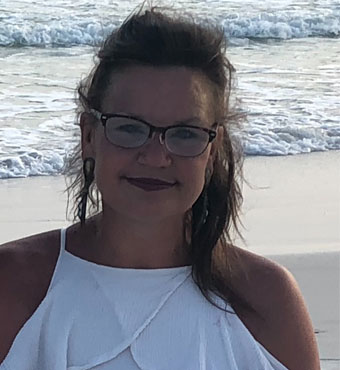
July 20, 2023

I grew up in a small rural area named Center, Colorado which has a population of about 2,000 people. Growing up my parents were always working in the fields, I remember my father coming home from work, and I would feel how raspy his hands were on my face. I would always ask myself, “Why are his hands so rough?” Eventually, I realized it was because of the hard work he did every day.

In middle school, buying school clothes was difficult for my parents. I started working in the lettuce fields at the age of eleven with many of my friends. We would go in at 5:00 am and get out around 2:00 pm, my parents couldn’t take me to work because they had their own job to get to, so I would have to catch a ride with my supervisor at 4:30am and get home around 3:00 pm.

Walking down those lettuce fields was draining physically, and mentally. It consisted of tired feet walking down the field with my blistered hands holding a bulky hoe and keeping an eye out on the lettuce heads making sure they grew the right way. Most days would start with the fields cold and wet with dew. I was often drenched in mud. By the time the sun rose, it was boiling outside. I would still wear layers of clothes to avoid getting sunburnt and wrap bandanas around my head and neck.

There was no cold water available for us during working hours, or even on our lunch break. We normally worked a 12-hour shift with a 30-minute lunch—typically just cold food or snacks since we didn’t have enough time to go home and make something.

I found the work exhausting, so I started working a food service job. But soon found myself back in the fields when my father got diagnosed with lung cancer. My father had migrated to the U.S. when he was 19 and had been working in the fields ever since. The cancer could have been caused from the fertilizer, dust, and pesticides that he breathed in the fields.

My mother is now disabled with torn ligaments in her shoulder, which can also be from her field work and the movements of sorting the potatoes for so many years.

My parents were unable to provide for me financially and had to move three hours from home for my dad’s cancer treatment, so I worked the potato harvest while attending high school. I juggled a lot of responsibilities during this time, and it was difficult to still be a child with so much on my plate.

I recall one morning it began to snow, we didn’t know any better, so we kept working in the heavy weather. My fingers and feet grew ice-cold as I sorted potatoes, and I wished they would tell us to go home for the day. At that moment, I knew I wanted more for myself.

I am trying to give back to my community. I dedicate two days of my week tutoring ESL students at Center Middle School, where I previously attended. I want to help Spanish-speaking students continue school without the language barrier.

I have also been connected to the Migrant and Seasonal Head Start Program since youth. For the past three years, I have been the Otero Migrant and Seasonal Head Start Recruiter in the San Luis Valley in Colorado which allows me to promote a good program that benefits farmworker children and parents. I am an active member of the College Assistance Migrant Program at Adams State University where I’ve learned the value of an educational community and the power of coming together to work toward a common goal.

I am now a rising junior at Adams State University working toward a major in sociology with an emphasis in social work and a minor in Spanish. I hope to receive my Master’s degree at Colorado State University-Pueblo to become a medical social worker. I want to stay close to my community to help families that face barriers to medical services—just as mine did when my father had cancer.

NCL urges DC Council to reject anti-consumer and anti-worker bill

June 9, 2023

Media contact: National Consumers League – Melody Merin, melodym@nclnet.org, 202-207-2831

Washington, DC – In preparation for a June 8 hearing, NCL submitted a letter to the DC Council urging that the council reject Bill 25-0280, the “Workers and Restaurants are Priorities Act of 2023.” NCL believes this bill is both anti-consumer and anti-worker and it sets a dangerous precedent for carving out an exemption to our DC Consumer Protection Procedures Act (CPPA) for the sole protection of restaurants.

The letter can be found here.

National Consumers League applauds the U.S. Department of Labor’s recent lawsuit against employers that require mandatory arbitration

April 5, 2023

Media contact: National Consumers League – Katie Brown, katie@nclnet.org, 202-823-8442

Washington, D.C. – The National Consumers League (NCL) welcomes a lawsuit filed in federal court last month by the Department of Labor (DOL) challenging mandatory arbitration clauses that illegally require employees to repay earned wages if the employee does not work for the employers for specific periods of time. The defendant in the suit is Advanced Care Staffing (ACS), a Brooklyn, New York healthcare staffing provider that required their employees to repay earned wages if they did not complete three years of employment. If employees tried to leave before the three years were up, ACS mandated employees enter private arbitration and compelled employees to pay for arbitration costs, attorney fees, and future ACS profits—in addition to repaying the wages they had earned. This policy resulted in employees earning below the minimum wage.

“This situation is just one example of the harm caused by the rise of mandatory arbitration clauses. Many employers now insert—or rather, bury –these clauses in the paperwork that employees must accept if they want a job. They prohibit employees from bringing claims before a judge or jury for wage theft, discrimination and other violations of federal law,” *said Seema Nanda, DOL’s Solicitor of Labor.

“For many years, NCL has condemned the rise of forced arbitration clauses to rob consumers and workers of access to justice. This is among the most egregious violations of employee rights we have ever seen. Workers’ right to seek alternative employment must not be compromised,” said Sally Greenberg, NCL’s executive director. “Consumers and workers are often forced into an arbitration system where corporations write the rules, and those rules are not understood by consumers and employees.  There is no meaningful judicial review and no ability to appeal bad decisions by arbitrators who get things wrong. We can never permit consumers and workers to be stripped of their right to go to court, which is guaranteed by the U.S. Constitution.”

*Links are no longer active as the original sources have removed the content, sometimes due to federal website changes or restructurings.

###

About the National Consumers League (NCL)
The National Consumers League, founded in 1899, is America’s pioneer consumer organization.  Our mission is to protect and promote social and economic justice for consumers and workers in the United States and abroad.  For more information, visit nclnet.org.

The National Consumers League announces support for the pro labor “PRO Act”

March 2, 2023

Media contact: National Consumers League – Katie Brown, katie@nclnet.org, 202-823-8442

WASHINGTON, D.C. — The National Consumers League, the nation’s oldest consumer and labor advocacy group, announced support today for legislation known as the Pro Act. The bill is comprehensive labor legislation to protect workers’ right to stand together and bargain for fairer wages, better benefits, and safer workplaces.

The Richard L. Trumka Protecting the Right to Organize (PRO) Act, was recently re-introduced in Congress, will address those very critical issues.

“We applaud Senator Murray for leading the charge on passage of the PRO Act. Labor laws badly need  strengthening in the US. The PRO Act will protect workers trying to organize a union, and strengthen their ability to earn higher wages, quality health care, gain safe working conditions and a more secure retirement. It’s long past time that we pass the PRO Act, which will help build a stronger and fairer economy—and ensure workers get their fair share of the wealth they help create,” said Sally Greenberg, NCL’s CEO.

Congressional supporters and union leaders announced the introduction of the PRO Act at a press conference on February 28, 2023. Members of Congress supporting the legislation include Senator Patty Murray (D-WA), Chair of the Senate Appropriations Committee, Senate Majority Leader Chuck Schumer (D-NY), Senator Bernie Sanders (I-VT), House Democratic Leader Hakeem Jeffries (D-NY), Congressman Robert C. “Bobby” Scott (D-VA), and Congressman Brian Fitzpatrick (R-PA).

The PRO Act would protect the right to organize and collectively bargain by:

  • Bolstering remedies and punishing violations of workers’ rights through authorizing meaningful penalties for employers that violate workers’ rights, strengthening support for workers who suffer retaliation for exercising their rights, and authorizing a private right of action for violation of workers’ rights.
  • Strengthening workers’ right to join together and negotiate for better working conditions by enhancing workers’ right to support secondary boycotts, ensuring unions can collect “fair share” fees, modernizing the union election process, and facilitating initial collective bargaining agreements.
  • Restoring fairness to an economy rigged against workers by closing loopholes that allow employers to misclassify their employees as supervisors and independent contractors and increasing transparency in labor-management relations.

Senator Murray—former Chair of the Senate Health, Education, Labor, and Pensions (HELP) Committee—first introduced the PRO Act in the 116th Congress and held a hearing urging action to protect workers’ right to organize. Senators also held a roundtable in Seattle with U.S. Secretary of Labor Marty Walsh and Representative Pramila Jayapal (D-WA) to discuss the importance of protecting workers’ right to form a union and pass the PRO Act. In the spending bill passed into law last December, Congress secured a long overdue $25 million increase in funding for the National Labor Relations Board (NLRB) to help ensure the agency can protect the rights of workers everywhere.

For the bill text of the PRO Act, click here.

For a fact sheet on the PRO Act, click here.

For a section-by-section summary of the PRO Act, click here.

###

About the National Consumers League (NCL)
The National Consumers League, founded in 1899, is America’s pioneer consumer organization.  Our mission is to protect and promote social and economic justice for consumers and workers in the United States and abroad.  For more information, visit nclnet.org.

National Consumers League applauds nomination of Julie Su for Secretary of the Department of Labor

March 1, 2023

Media contact: National Consumers League – Katie Brown, katie@nclnet.org, 202-823-8442

WASHINGTON, D.C. — The National Consumers League welcomes President Biden’s announcement that he intends to nominate Julie Su to serve as Secretary of the Department of Labor. Su is an experienced labor expert who can continue the Administration’s commitment to a stronger, more resilient, and more inclusive economy for all Americans. She has been serving as Deputy Secretary of Labor since July 2021. As Deputy Secretary, Su has worked with Secretary Walsh to advance President Biden’s vision of a strong, resilient, inclusive economy with worker well-being at its center.

Under Walsh and Su’s leadership, the Department of Labor has witnessed an increase of more than 12 million jobs and the unemployment rate has inched down to 3.4 percent, the lowest rate since May of 1969.

Su previously led California’s Labor and Workforce Development Agency — the nation’s largest state Department of Labor – where she launched the “Wage Theft is a Crime” campaign with the support of both labor and management. During her tenure as Labor Commissioner, she cracked down on wage theft, fought to protect trafficked workers, increased the minimum wage, helped to create good-paying, high-quality jobs, and established and enforced workplace safety standards.

“We are excited by President Biden’s nomination of Julie Su as Labor Secretary and urge a quick confirmation,” said Reid Maki, Director of Child Labor Advocacy for the National Consumers League. “Her record of cracking down on illegal labor trafficking and her long career as a civil rights attorney gives her a unique understanding of the plight of the most vulnerable workers.”

“Given heightened attention to the scourge of hazardous child labor, as highlighted by a recent New York Times expose, we hope Su will make this issue a top priority,” added Maki. NCL chairs the Child Labor Coalition which has long raised concerns about the safety and health of young workers in meat processing plants and in agriculture. “Unaccompanied minors are working in dangerous conditions for long hours—in the fields and in meat processing plants and other factories. Many live in the US alone without family looking after their welfare, and thus they are easily exploited. They are  our most vulnerable workers,” observed Maki. “We hope that if Su is confirmed, she will make underage teens illegal employment a top priority; we also will press DOL and Su to address badly needed safety protections for children who work in agriculture, an issue before Congress that is urgently in need of a solution.”

NCL was founded by progressive era leaders at the turn of the 20th century with the goal of ending child labor in the United States and enacting minimum wage and maximum hours laws.

###

About the National Consumers League (NCL)
The National Consumers League, founded in 1899, is America’s pioneer consumer organization.  Our mission is to protect and promote social and economic justice for consumers and workers in the United States and abroad.  For more information, visit nclnet.org.