National Consumers League and Child Labor Coalition Mourn the Passing of Human Rights Attorney Terry Collingsworth 

Media Contact: Lisa McDonald, Vice President of Communications, 202-207-2829 

Washington, DC – The National Consumers League (NCL) and the Child Labor Coalition (CLC) mourn the untimely passing of Terry Collingsworth, a pioneering human rights attorney and tireless advocate for workers, children, and vulnerable communities around the world. 

For decades, Terry dedicated his life to confronting injustice and holding powerful multinational corporations accountable for human rights abuses. As the founder and Executive Director of International Rights Advocates (IRAdvocates), he helped advance a bold vision of a world free from forced labor, child slavery, and exploitation—a world where victims of corporate abuses have meaningful access to justice. 

Terry understood that protecting human rights required more than promises and voluntary corporate commitments. It demanded courageous action, legal accountability, and strong partnerships with workers and communities on the front lines of exploitation. His pioneering approach combined strategic litigation, research, public advocacy, and coalition building to challenge some of the world’s most powerful corporations.  

From representing children trafficked into forced labor on cocoa plantations in West Africa to challenging hazardous child labor in cobalt mines in the Democratic Republic of Congo, Terry was relentless in his pursuit of justice. His work also sought accountability for violence against trade unionists and for the exploitation of workers and communities whose fundamental rights had been denied.  

For the Child Labor Coalition and the National Consumers League, Terry was an important ally in the shared struggle to eliminate child labor and ensure that corporations respect human rights throughout their global supply chains. He recognized the essential role of consumers, advocates, trade unions, and grassroots organizations in demanding change and refusing to accept exploitation as the cost of doing business. 

 Terry’s determination, courage, and commitment to those too often denied a voice leave an enduring legacy. He demonstrated that even the most powerful corporations must be challenged when they profit from human suffering, and that the law can be a powerful instrument for advancing human dignity. 

We extend our deepest condolences to Terry’s family, friends, and colleagues. We honor his extraordinary contributions by reaffirming our commitment to the principles he championed: justice for exploited workers, freedom for children trapped in forced labor, and accountability for those who violate fundamental human rights. 


### 

About the National Consumers League (NCL)      

The National Consumers League, founded in 1899, is America’s pioneer consumer organization. Our mission is to protect and promote social and economic justice for consumers and workers in the United States and abroad. For more information, visit www.nclnet.org.  

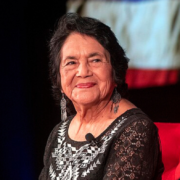
Honoring Dolores Huerta: A Trailblazer for Workers’ Rights, Children’s Rights, and Social Justice

“Sí, se puede!” — Yes, we can!

Few individuals have had as profound and lasting an impact on the American labor movement as Dolores Huerta, the legendary labor organizer, civil rights activist, and champion of working families.

For more than six decades, Huerta has fought tirelessly for the dignity, safety, and economic security of farmworkers, immigrants, women, and children. As a co-founder of the United Farm Workers movement, she helped transform the lives of countless agricultural workers by organizing for fair wages, safer working conditions, collective bargaining rights, and basic human dignity.

But Huerta’s legacy extends far beyond the workplace. Her advocacy has also helped shine a light on the struggles of farmworker families and the exploitation of children in American agriculture.

Before becoming a labor organizer, Huerta was a schoolteacher. She witnessed firsthand the devastating effects of poverty on the children of farmworkers—students who arrived at school hungry and without adequate clothing or shoes. Those experiences inspired her to devote her life to organizing workers and addressing the systemic injustices that kept families trapped in poverty.

Her life’s work underscores a fundamental truth: Protecting workers’ rights and protecting children from exploitation are inseparable goals. When parents earn fair wages, work in safe conditions, and have a voice on the job, their children have a better chance to remain in school, grow up healthy, and enjoy the childhood every young person deserves.

In 1993, the National Consumers League (NCL) proudly honored Dolores Huerta with its prestigious Trumpeter Award, recognizing her extraordinary contributions to labor rights and social justice. The award reflected NCL’s longstanding commitment to protecting workers, empowering consumers, and combating exploitative child labor.

Huerta also courageously exposed the rape and sexual abuse she was subjected to by her colleague Cesar Chavez. In an exposé earlier this year, it was revealed that Chavez, president of the United Farm Workers Union,  had a history of abusing young women who worked for him.

As NCL honored the group Justic for Migrant Women at NCL’s Trumpeter Awards, the irony didn’t escape us that this migrant women’s group is focused on protecting women from sexual abuse and harassment in the fields.

Today, Huerta’s work remains as relevant as ever. Children continue to labor in America’s agricultural fields, sometimes facing dangerous machinery, extreme heat, pesticide exposure, and grueling hours that jeopardize their health, safety, and education. The struggle to ensure that every child is protected from hazardous work is far from over.

Sally Greenberg, CEO of the National Consumers League and Co-Chair of the Child Labor Coalition, offers this tribute:

“Dolores Huerta is a giant in the history of American labor and civil rights. She understood long before many others that the fight for decent wages, safe workplaces, and dignity for working people is also a fight for the well-being of their children. Her extraordinary leadership helped give a voice to farmworkers and their families, including children whose needs and vulnerabilities have too often been overlooked. When the National Consumers League honored Dolores with our Trumpeter Award in 1993, we recognized a leader whose courage, determination, and commitment to justice embodied our organization’s deepest values. Today, as we confront the continued exploitation of children in agriculture and other dangerous industries, her example reminds us that progress requires organizing, persistence, and an unwavering belief that every worker—and every child—deserves dignity and opportunity. Dolores has shown generations of advocates what it means to turn compassion into action.”

— Sally Greenberg, CEO, National Consumers League; Co-Chair, Child Labor Coalition

At NCL and through our leadership in the Child Labor Coalition, we are proud to carry forward this shared commitment to protecting vulnerable workers and ensuring that children are not forced to sacrifice their health, education, or futures to dangerous labor.

Dolores Huerta’s extraordinary legacy reminds us that meaningful change is possible when people stand together, demand justice, and refuse to accept exploitation as inevitable.

We salute Dolores Huerta for her groundbreaking contributions to the labor movement, her lifelong advocacy for working families, and her enduring inspiration to those fighting for a world free from exploitative child labor.

Sí, se puede!


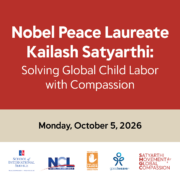
Nobel Peace Laureate Kailash Satyarthi to Keynote a Conversation on Ending Global Child Labor

Media Contact: Lisa McDonald, Vice President of Communications, 202-207-2829

Washington, DC – Nobel Peace Laureate and global child rights advocate Kailash Satyarthi will join leaders in child labor advocacy, academia, diplomacy, and international development on Monday, October 5, for “Solving Global Child Labor with Compassion,” a public event hosted by the National Consumers League’s (NCL) Child Labor Coalition at American University’s School of International Service. Register here.

Event Details

When: Monday, October 5, 2026, 2:30-4:00 p.m.

Where: Abramson Family Founders Room, School of International Service, American University, 3468 Nebraska Ave. NW, Washington, DC

Keynote: Kailash Satyarthi, Nobel Peace Laureate and Founder of the Satyarthi Movement for Global Compassion

Admission: Free and open to the public; registration required.

The program will open with remarks from Rachel Sullivan Robinson, Interim Dean of American University’s School of International Service, and Sally Greenberg, Co-Chair of the Child Labor Coalition.

Following Satyarthi’s keynote, Judy Gearhart, Research Professor at the Accountability Research Center at American University’s School of International Service, will moderate a panel examining the continuing challenge of global child labor and approaches to addressing it. Satyarthi will be joined on the panel by Tim Ryan, Chairman of the Global March Against Child Labor, and Jon Jacoby, Chief Executive Officer of GoodWeave International.

The event comes as the international community continues working toward the elimination of child labor worldwide. The discussion will explore the role of compassion in confronting child exploitation and consider how advocates, governments, businesses, researchers, and consumers can contribute to protecting children and advancing their rights.

NCL has a longstanding commitment to combating exploitative child labor through its coordination of the Child Labor Coalition (CLC), whose 38 member organizations work to protect children from hazardous and exploitative work in the United States and abroad.

Satyarthi has been a longtime partner in the global movement to eliminate child labor and has previously joined NCL and CLC initiatives to advance children’s rights.

###

About the Child Labor Coalition

The Child Labor Coalition, co-chaired by the National Consumers League and the American Federation of Teachers, brings together organizations committed to combating exploitative child labor and protecting the health, safety, education, and well-being of working minors.

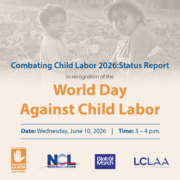
Ahead of World Day Against Child Labor, the Child Labor Coalition Urges Federal Legislation to Combat Child Labor

Media Contact:  Lisa McDonald, Vice President of Communications, 202-207-2829 

Washington, DC — As the world prepares to observe World Day Against Child Labor on June 12, the Child Labor Coalition (CLC) joins today with Members of Congress, labor leaders, human rights advocates, and policy experts for Combating Child Labor 2026. Hosted by Ranking Member Congressman Bobby Scott (VA-03), House Committee on Education and Workforce, in the Rayburn House Office Building at 3 p.m., experts will discuss today’s child labor challenges and recent legislative efforts to protect vulnerable children from exploitation here in the U.S. as well as in global supply chains.

Sally Greenberg, Chair of the Child Labor Coalition and CEO of the National Consumers League, will discuss  legislation pending before the 119th Congress, including measures designed to strengthen workplace protections for minors, increase penalties for violators, improve transparency in supply chains, and enhance federal enforcement efforts. For example, legislation such as the Children Don’t Belong on Tobacco Farms Act (H.R. 3335 / S. 1742), sponsored by Representative Rosa DeLauro and Senator Dick Durbin, would prohibit minors from direct contact with tobacco plants, protecting young workers from nicotine poisoning.

“The United States should be leading the world in protecting children—not debating whether children should work longer hours, later nights, or in more hazardous conditions,” says Sally Greenberg, Chair of the Child Labor Coalition. “The answer to labor shortages is not to put children at greater risk. The answer is stronger enforcement, meaningful accountability for employers who break the law, and a national commitment to protecting young workers. We cannot allow the clock to be turned back on child labor protections that generations fought to secure.”

Dr. Ray Serrano, Director of Research and Policy at the League of United Latin American Citizens (LULAC), will share his firsthand experience as a child farmworker in Idaho highlighting the need for stronger protections for young workers and greater public awareness of the conditions faced by many children in the nation’s fields. Few Americans are aware that 300,000 to 400,000 children work in U.S. agriculture each year, harvesting fruits, vegetables, and other crops for our dinner tables under conditions that often fall outside the labor protections afforded to workers in other industries.

Also speaking are Congressman Donald Beyer (VA-08), Jon Jacoby, CEO of GoodWeave International, and Sonia Vásquez Luna, Board Member of the Labor Council for Latin American Advancement (LCLAA).

The discussion comes amid renewed attention to forced labor and child labor exploitation in the global supply chain as related to the international tariffs proposed by President Trump. International organizations estimate that nearly 138 million children remain engaged in child labor globally.

“As policymakers debate tariffs and global trade, we cannot lose sight of the millions of children and vulnerable workers who remain trapped in abusive labor conditions around the world. Trade policy should do more than protect economic interests—it should help ensure that products entering U.S. markets are not made with child labor or forced labor. Consumers deserve confidence that the goods they purchase reflect the values of fairness, dignity, and human rights,” says Greenberg.

The coalition will introduce The Nation’s Report Card on Child Labor, which is scheduled for release in August 2026, as a comprehensive assessment of state child labor laws, enforcement trends, and policy developments nationwide.

“Child labor is not an unfortunate byproduct of our economy—it is a policy failure and a moral failure,” says Sally Greenberg. “At a time when children are still working in dangerous jobs, and some state lawmakers are advancing proposals that would weaken long-standing protections, we should be moving forward, not backward. Every child deserves a childhood, an education, and a future free from exploitation.

The event is co-sponsored by the Global March Against Child Labor and Labor Council for Latin American Advancement (LCLAA).

###

About the Child Labor Coalition: The Child Labor Coalition is a leading alliance of 38 labor, human rights, consumer, faith-based, and child advocacy organizations working to eradicate child labor in the United States and around the world. Together, coalition members advance policies and partnerships that protect children from exploitation and promote opportunities for every child to thrive.

“I Was Losing Pieces of My Childhood:” a Former Child Farmworker Urges Action to End Child Labor in a Speech to Be Remembered

By Reid Maki, NCL Director of Child Labor Advocacy & Coordinator of the Child Labor Coalition

The recent 6th Global Conference on the Elimination of Child Labour included high-ranking officials from over 100 governments, the ILO, trade groups, and employer groups. I heard many speeches from child labor experts with decades of experience, but former NCL intern Jacqueline Aguilar, only 23 and a recent college graduate, gave by far the most compelling and poignant remarks. In 2023, Jacky interned for me at the Child Labor Coalition, a program of the National Consumers League.  She came to us through a remarkable program for former Migrant Head Start students led by the National Migrant and Seasonal Head Start Association, a member of the Child Labor Coalition.

Jacky spoke on a panel with a half-dozen government officials and a trade unionist. She recalled her experiences in the United States as a child laborer in agriculture. Members of the Child Labor Coalition are concerned that, in any given year, there may be as many as 300,000 minors working in agriculture. They work legally at tasks most adults cannot do because of gaps in child labor law that apply to agriculture. These exemptions allow children to work unlimited hours in the fields (if they aren’t missing school) beginning at the age of 12.

Jacky spoke from the heart about the impact child labor has had on her life and those of her peers from migrant families. Her remarks reminded us of why we were at the conference and impressed the attendees that we must act urgently to protect the 138 million children trapped in child labor.

Jacky started: “When people hear ‘child labor,’ they imagine something far away. A different country. A different life. But I am standing here to tell you it happened. In our communities. In our fields.”

“My parents worked in the fields every single day to provide for us,” recalled Jacky.  “I remember waiting by the door as a little girl for my dad to come home. When he put his hand on my cheek, I would feel how rough it was: cracked, dry, hardened by the earth. I used to wonder why his hands felt like that. Now I know. Those hands were not meant to be that way. They were shaped by survival.”

“At 11 years old, I stepped into those same fields. 11,” she continued.  “While other kids were worrying about homework or sleepovers, I was waking up at 4:00 in the morning. It was still dark outside…By 5:00 a.m., I was in the lettuce rows. The fields were endless. My hands wrapped around a hoe that felt too heavy for my body. The metal burned my palms. Blisters formed and broke. My feet ached from standing for hours. The morning dew soaked through my shoes, and the cold crawled up my legs.”

“There was no one asking how old I was. No one asking if I was tired. No one asking if I was okay. We had 30 minutes for lunch. 30 minutes sitting in the dirt. No cold water. No shade. Just the understanding that we needed to move faster. I wasn’t building character. I was losing pieces of my childhood.”

Like many farmworker families, Jacky’s was touched by cancer. “My father was diagnosed with lung cancer,” she said. “He had been in agriculture since he was seventeen years old,” she recalled.  “I think about the pesticides he inhaled. The dust that settled deep into his lungs. The chemicals that were part of his everyday air. My mother’s body gave out, too. Years of lifting heavy sacks of potatoes tore her shoulder until she couldn’t lift them anymore. I watched my parents sacrifice their health for us. And when my father had to move three hours away for treatment, I stayed behind. I was still in school. But I worked the potato harvest so we could survive, and I could help support my family. “

Jacky recalled one day in particular: “One morning, it started snowing while we were in the field, and the snow collected on the dirt, on the crops, on our shoulders. My fingers went numb. My socks were soaked. I couldn’t feel my toes. I remember standing there, staring at the ground, silently begging for someone, anyone, to say, ‘Go home.” That’s enough.’ But no one said anything. And that silence… it teaches you something. It teaches you that your pain is normal. That your exhaustion is expected. That your childhood is negotiable. I didn’t lose my childhood in one moment. I lost it in early mornings. In blistered hands. In missed school events. In falling asleep over homework because my body couldn’t take anymore.”

Jacky wasn’t alone. She saw other farmworker children suffer. “I watched classmates disappear from school. Smart kids. Funny. Full of light. They didn’t transfer schools. They transferred to full-time labor. And no one called it a crisis,” she recalled.  “No child should have to choose between education and survival. No child should feel responsible for keeping their family afloat. No child should stand in freezing snow waiting for permission to stop working.”

Speaking before an audience of government officials from all over the world, Jacky implored them to do more to end child labor: “To our ministers, policymakers, and public leaders, I am asking you to see us. Strengthen protections for children. A child in a field deserves the same protection as a child anywhere else. Enforce the laws. Visit the fields. Ensure there is clean water, real breaks, and protection from harmful chemicals. Support families with living wages, healthcare, and financial stability so children are not pushed into labor out of desperation. Train schools to recognize working children not as lazy or distracted but as exhausted. And include survivors in your decisions. We know where the system fails because we experienced the failure.”

“I am proud of my parents. I am proud of where I come from. But I should not have had to grow up that fast,” said Jacky. “There are children, right now, standing in rows of crops before the sun rises. Their hands are blistering. Their backs are aching. Their childhood is slipping away quietly. And most people will never know their names. Please do not let their silence continue because child labor does not just take childhoods. It takes futures. And we cannot afford to keep losing them. This happened. I survived it. And I’m not going to whisper about it.”

In three decades of advocacy and four Global Child Labor conferences, I’ve never heard a speech more eloquent or powerful.

Jacky speaks for children in child labor everywhere—not just the over 400,000 children who work in agriculture. In recent years, thousands of unaccompanied minors, have come to work in the U.S.  Many ended up working in auto parts factories, the graveyard shifts in meatpacking facilities, or late nights at fast food restaurants. Yet children working in the U.S. are a small fraction of the global reality: 138 million children are engaged in labor worldwide. Jackie Aguilar’s story gives a voice to all of them.

Jacqueline Aguilar is a recent graduate of Adams State University in Colorado, where she lives and works. Jacky interned for the Child Labor Coalition in the summer of 2023 at the National Consumers League.

Progress at Risk as Global Leaders Confront the Ongoing Child Labor Crisis

By Reid Maki, NCL Director of Child Labor Advocacy & Coordinator of the Child Labor Coalition

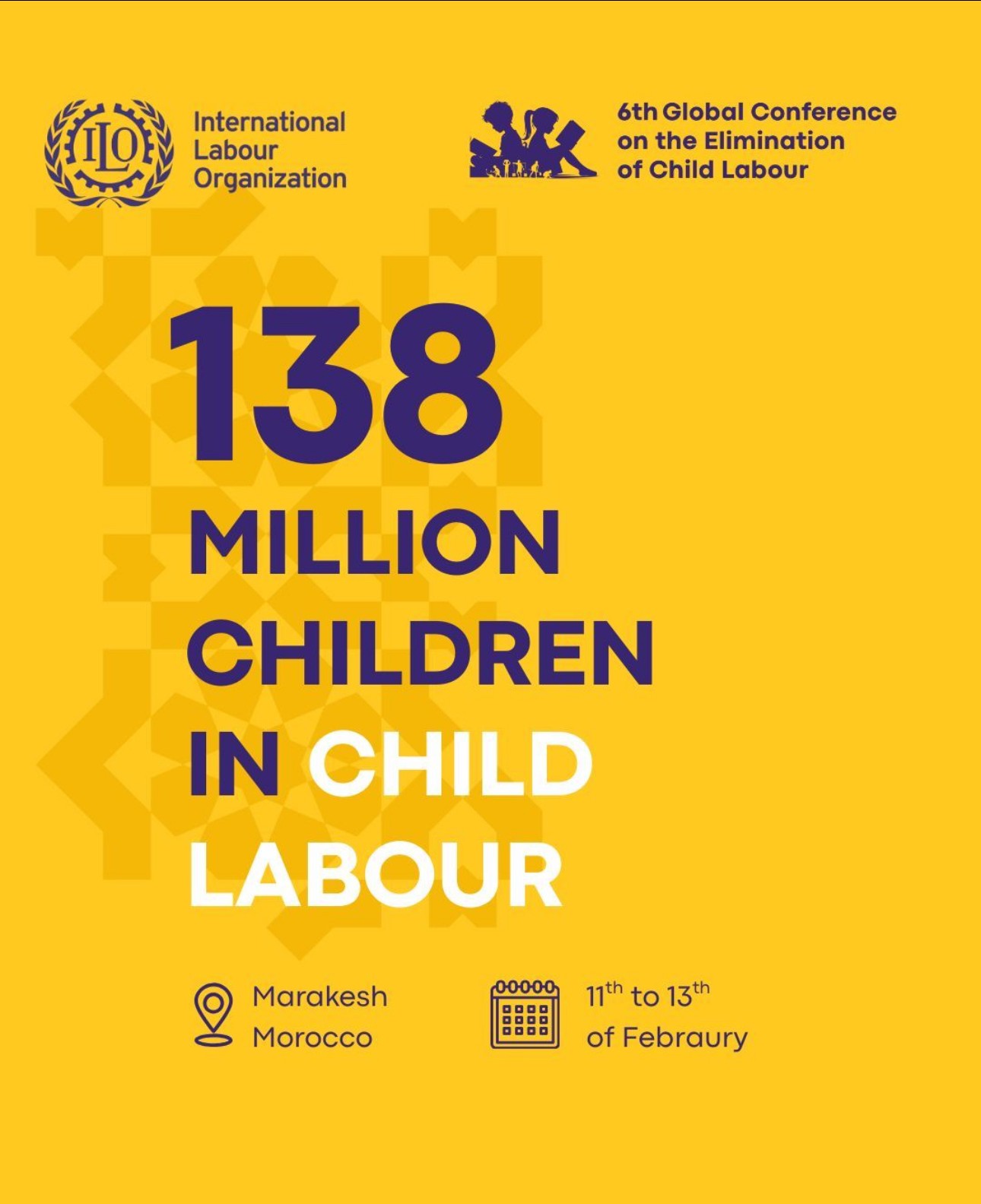
In Marrakech, Morocco, on Wednesday morning, the 6th Global Conference on the Elimination of Child Labour opened at the Palais des Congrès to a palpable air of excitement.
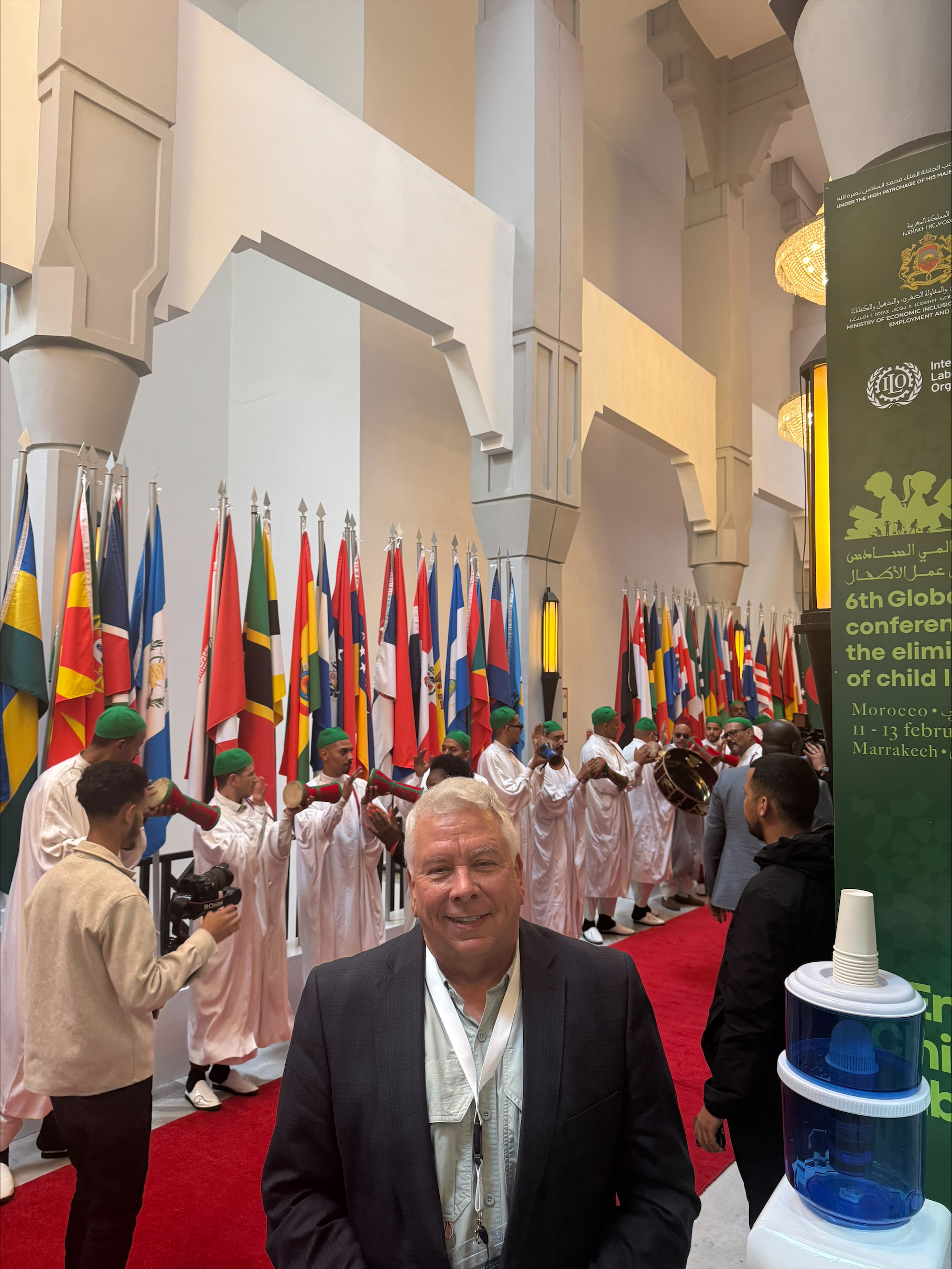
About 1,300 government leaders, employer groups, union leaders, and advocates against child labor attended the conference, organized by the government of Morocco with logistical assistance from the International Labour Organization (ILO). It is the first such international child labor conference since the one held in Durban, South Africa, in May of 2022.

As the Director of Child Labor Advocacy for the National Consumers League and the coordinator of the Child

Labor Coalition, this is my fourth quadrennial global child labor conference. Wednesday’s opening plenary began with a status check, highlighting the remarkable progress in reducing child labor, with estimates dropping from 246 million to 138

million last year. That’s phenomenal progress, but uncertainty hung in the air about what the future holds. The Trump administration’s cancellation of US AID poverty-reduction programs and $550 million in cuts to child labor and labor grants administered by the U.S. Department of Labor International Affairs Bureau in early 2025 has been an ongoing concern for child labor advocates, who fear a reversal of progress toward eliminating child labor.

Despite progress, advocates stressed the unfinished work: the global target to eliminate child labor by 2025 was missed, and 138 million children remain affected. As one speaker put it, ‘the number is simply not acceptable.’

Both the morning and afternoon plenaries featured ministers from several governments, ILO officials, and the International Trade Union Confederation discussing progress and future directions. Participants highlighted that reductions in child labor occurred across all continents where it was prevalent. The largest decrease was a 43% drop in Asia. Globally, the number of children in hazardous child labor fell from 79 million in 2020 to 54 million in 2024. However, speakers also noted a troubling rise in the proportion of child laborers who are between five and eleven years old.

Speakers urged identifying gaps in current efforts and emphasized the need to expand effective remediation—underscoring a united call to action.

Nobel Peace Prize Laureate Kailash Satyarthi addressed participants via video, urging the world to take “tools and guns out of children’s hands” and replace them with “pens and books.” He warned that recent years have seen a troubling decline in “moral accountability” and called for a “resurgence of compassion,” which he described as the transformative force needed to meet global child labor reduction goals. He also urged the ILO to mobilize heads of state committed to ending child labor into a special task force, aimed at building a stronger and more coherent “framework of action.”

“We must be bold,” said Satyarthi.

The conference continues until Friday afternoon, with officials and advocates sharing the strategies they have found most successful.


Holding Corporations Accountable for Child Labor: NCL Endorses New Bipartisan Bill 

Media Contact: Lisa McDonald, Vice President of Communications, 202-207-2829 

Washington, DC – Today, the National Consumers League’s (NCL) Child Labor Coalition (CLC) is proud to support Congresswoman Hillary Scholten’s reintroduction of her bipartisan Justice for Exploited Children Act alongside Congressman Ryan Mackenzie (PA-07). This legislation would increase both civil and criminal penalties for companies that violate child labor standards established in the Fair Labor Standards Act. Under current law, penalties for child labor violations are as low as $10,000 in some cases – and the maximum prison sentence is 6 months, even if violations result in the death or serious injury of a child.  

“The Child Labor Coalition and the National Consumers League both welcome—and endorse—Rep. Scholten’s and Rep. Mackenzie’s Justice for Exploited Children Act, with its significantly increased child labor fines,” said Reid Maki, director of child labor advocacy for the National Consumers League and coordinator of the Child Labor Coalition. “Just three years ago, the U.S. Department of Labor’s Wage and Hour Division cited low fine levels as an obstacle to its efforts to root out hazardous child labor in meatpacking factories. It has been clear that current child labor fine levels are not sufficient to elicit the compliance of large corporations, with annual revenues of hundreds of millions of dollars or more. Fines must be significantly higher if we are to protect our children from dangerous workplaces.” 

The Justice for Exploited Children Act would update these penalties, incentivizing companies to monitor the quality of their supply chains. By instituting a wider range of penalties and doubling certain fines upon repeated or willful violation, this bill allows for nuance in each instance of violation, acknowledging that many businesses are initially unaware of the presence of child laborers in their workforce and supply chains. 

Endorsing organizations include the Campaign to End US Child Labor, Human Rights Watch, National Education Association, American Federation of Teachers, Economic Policy Institute, First Focus Campaign for Children, Global March Against Child Labor, Green America, National Advocacy Center of the Sisters of the Good Shepherd, National Consumers League, and the National Council for Occupational Safety and Health. 

### 

About the National Consumers League (NCL)      

The National Consumers League, founded in 1899, is America’s pioneer consumer organization. Our mission is to protect and promote social and economic justice for consumers and workers in the United States and abroad. For more information, visit www.nclnet.org.  

Major Child Labor Victory in Ohio, Governor DeWine Vetoes Senate Bill 50

Media Contact: Lisa McDonald, Vice President of Communications, 202-207-2829   

Washington, DC – Today, the National Consumers League’s Child Labor Coalition is very pleased to announce a significant victory in our fight to strengthen child labor laws in Ohio. Governor Mike DeWine has vetoed SB 50, legislation that would have weakened Ohio’s child labor protections by allowing 14- and 15-year-olds to work until 9 p.m. on school nights.   

“The Child Labor Coalition, in partnership with Policy Matters Ohio and the Economic Policy Institute, strongly urged this veto, and we commend additional allies—including the Ohio AFL-CIO and many other organizations—who stood up to protect the well-being and educational success of Ohio’s youth,” said CLC Director, Reid Maki. “We are grateful to the Governor for bravely bucking the legislature and putting the interests of teens before profits and will continue to advocate for our nation’s children.”   

Last month, NCL lead numerous advocacy organizations in writing a letter to Ohio Governor Mike DeWine urging him to veto Senate Bill 50, the legislation would have allowed 14- and 15-year-olds in Ohio to work on school nights until 9 p.m., extending the current cutoff from 7 p.m. It is an additional danger to our nation’s most vulnerable to be out late while partaking in jobs that put their safety at risk.  

“Learning to work is an essential part of growing up.  Businesses across Ohio each day give young people the opportunity to learn the so-called soft skills that will serve them well when they become adults.  In analyzing this bill, it is important to define what it would do and what it would not do,” said Governor DeWine. “I believe it unwise to provide 14- and 15-year-olds to work, on a school night, that late at night.  I see no compelling reason to deviate from current law.”  

  ###  

About the National Consumers League (NCL)       

The National Consumers League, founded in 1899, is America’s pioneer consumer organization. Our mission is to protect and promote social and economic justice for consumers and workers in the United States and abroad. For more information, visit www.nclnet.org.   

Child Labor Coalition Applauds Introduction of the CARE Act of 2025 on Universal Children’s Day

Media Contact: Lisa McDonald, Vice President of Communications, 202-207-2829 

Washington, DC — Today, on World Children’s Day, Representative Raul Ruiz (CA-25) reintroduced the Children’s Act for Responsible Employment and Farm Safety (CARE Act) in the U.S. House of Representatives. The Child Labor Coalition (CLC) strongly supports this essential legislation, which modernizes outdated federal child labor laws and extends long-overdue protections to child farmworkers—among the nation’s most vulnerable laborers. 

“Our nation has a moral duty to protect every working child,” said Reid Maki, Director of Child Labor Advocacy and Coordinator of the CLC. “Farmworkers remain among the most exploited and unprotected workers in America. Children deserve safe working conditions and the same rights afforded to young workers in every other industry. Updating these antiquated laws is long overdue.” 

The CARE Act closes loopholes that have long allowed children in agriculture to perform hazardous work at age 16—an age two years younger than what is required in all other sectors. It raises the minimum age for children to work on farms from 12 to 14, and it makes these critical changes while preserving long-standing family farm traditions by ensuring that new protections do not restrict children working on their parents’ farms. 

Maki emphasized the deep historical harm caused by these outdated rules:
“It’s astonishing that discriminatory loopholes allowing very young children to work 70- or 80-hour weeks in dangerous conditions have existed since the 1930s. These exemptions undermine children’s education and put their health at serious risk.” 

The CARE Act of 2025 marks a critical step toward safety, equity, and dignity for child farmworkers. The Child Labor Coalition urges Congress to act swiftly to pass this legislation and ensure that every child in America is protected—no matter where they live or work.  

### 

About the National Consumers League (NCL)      

The National Consumers League, founded in 1899, is America’s pioneer consumer organization. Our mission is to protect and promote social and economic justice for consumers and workers in the United States and abroad. For more information, visit www.nclnet.org.   


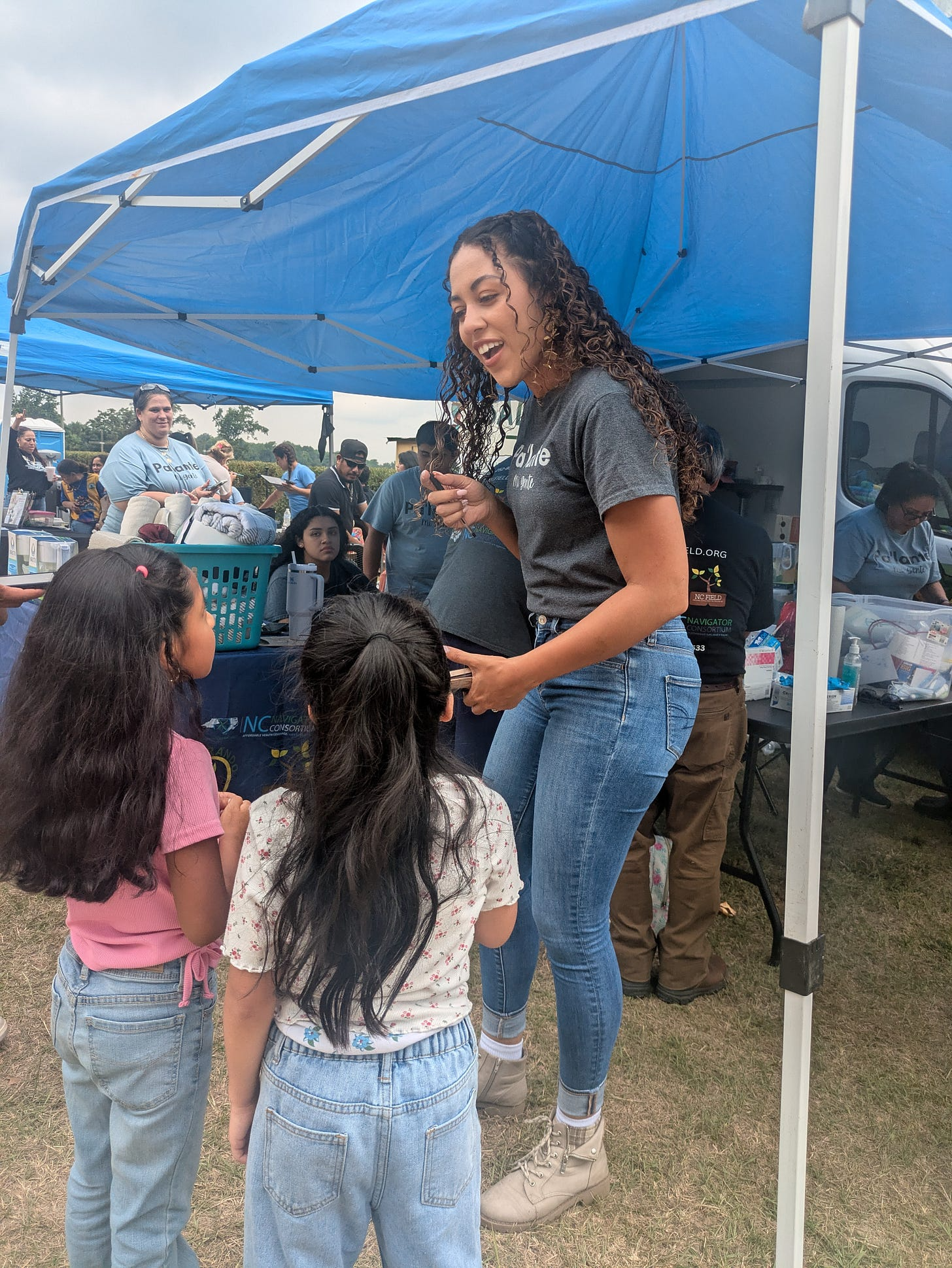
Guest Blog: A Life in the Shadows of North Carolina Fields

By Yesenia Cuello

A former child farmworker and the daughter of immigrants reflects on her life and the current moment.