Students saddled with increasing debt loads – National Consumers League

Lili Gecker, NCL public policy intern

The life of a college student often involves seeking free food. We often forgo luxuries (like spending $12 on going out to the movies), and instead can be found gathered around a computer screen watching free TV off of Hulu.com. Students today do not have much spare pocket change. A common question among friends will be, “How can you afford to be here? How many grants, loans, scholarships, and jobs did it take you?”

Two-thirds of bachelor’s degree recipients graduate with debt, and graduates who take out loans leave college with an average of about $24,000 in debt. Even those individuals not currently seeking higher educations have likely noticed the problem (and maybe seen a couple of front pages like this one). This problem affects all of us. An investment in education is an investment in the future workforce.

As college graduates struggle to find employment, why add an increased student loan debt to their plate? Congress was given the deadline of July 1, 2012 to resolve to keep interest rates on Stafford loans at 3.4 percent, or they would double to 6.8 percent.  President Obama calls this is a “no-brainer” and Congress agrees—the question remains just how to pay. While they could not agree to a long-term solution, Congress settled the deal with a compromise: they agreed to freeze interest rates on student loans for one year, allowing it to remain at 3.4 percent, and deal with the problem later.

The bill is great for borrowers this year, but there are some problems: it excludes graduate students. And it puts Congress in the same position next year, with the need to act to either maintain or increase interest rates on Stafford loans. On an optimistic note, it buys time to find real, long-term solution—and many critics of this decision will be advocating for a stronger approach to student loans in the future.

Tweens and cell phones: A guide for responsible use – National Consumers League

Cell phones are becoming increasingly common among younger teens and tweens. To help parents manage their tween’s use of a cell phone, NCL has put together advice for families on how to shop for tweens’ phones, how to keep down costs, and how to set some simple rules to make sure a child doesn’t misuse the phone.

Cell phones seem to be as much a part of teenage life as schoolwork, hanging out at the mall, and obsessing over what to wear to prom. But these days, children are beginning to receive their first wireless phones at progressively younger ages. According to a new 2012 NCL survey, nearly six out of 10 parents with tweeners surveyed (56 percent) have purchased cell phones for their young children.

Although cell phones are becoming more common among younger teens and tweens, there are major differences in the issues parents face when shopping for and managing the use of a tween’s mobile device as opposed to an older teenager’s phone. For example, a 16-year-old driving herself to an after-school job is likely to use a wireless device differently than a 12 year-old who is still dependent on a parent for rides to soccer practice and not venturing far from home independently.

Figuring out how to manage a child’s use of one of these high-tech gadgets can often require the skills of a seasoned diplomat, the steely nerve of a tightrope walker, and the tech savvy of a Silicon Valley computer geek. To help parents plan for and manage their tween’s use of a cell phone, NCL offers the following advice on how to shop for tweens’ phones, how to manage their costs, and how to set some simple rules to make sure a tween doesn’t misuse the phone.

Before you buy

Before beginning the shopping for a tween’s cell phone, ask yourself some basic questions to set expectations for your family.

  • Why does your child need a cell phone?
  • Will the phone be used primarily to stay in touch with parents and for emergency use? Or will your child be using the phone for entertainment or to communicate with friends?
  • How much to you want to spend per month on service?
  • How much do you want to spend on the initial purchase of the cell phone itself?
  • Is your tween mature enough to keep their minute use, texting and data within plan limits?
  • Is your tween mature enough to use the phone responsibly and avoid viewing or sending inappropriate content?
  • What is your tween’s school’s policy on cell phones in school?
  • Does your tween have a habit of losing things or can he or she handle the responsibility of caring for a phone?

Write out your answers to these questions and keep it with you when you shop. Having this list with you can help keep these important factors in mind when shopping for a cell phone. It will also help you stay focused when your tween inevitably starts to drool over phones that may not fit their and your needs.

Things to consider: Shopping for a tween’s cell phone

Once you have a good grasp on what exactly your want out of your tween’s cell phone experience, it’s time to start shopping. You may want to start online. There are dozens of Web sites that offer consumer reviews of cell service, handsets, and features. Checking these out first can help you narrow your choices before you check out the carriers’ Web sites and start being influenced by their marketing hype.

Coverage

Once you’ve narrowed down your choices, check out Web sites of the carriers that offer service in your home calling area. The carrier should fully cover all of the places that your tween is likely to use a cell phone on a regular basis. Many carriers’ Web sites feature coverage maps that show where voice and data service are offered in a particular geographic area. These maps aren’t foolproof, however.  It may be necessary to ask friend and family if they know of persistent “dead zones” in areas that your tween will be frequently using her phone. Once you’ve found a carrier that covers your area, talk to friends who use the carrier or carriers you are considering to see how they rate the service.

Postpaid or prepaid?

The second major decision involves choosing between a prepaid and a postpaid service. Most consumers are familiar with postpaid/contract-based services from national companies like AT&T, Sprint, T-Mobile, and Verizon Wireless or regional carriers like US Cellular, Cellular South or nTelos. With postpaid, subscribers pay based on a monthly bill that lists out costs of use. One benefit of postpaid service for parents shopping for a tween’s cell phone is that the phone itself is likely to be significantly discounted or even free (though an activation fee is typically charged). You will also get a monthly bucket of minutes, text messages, and data to draw from, and you may be able to place limits on your child’s use to ensure he or she doesn’t go over and rack up extra costs.

On the minus side, to get cheap phone, a new subscriber typically must sign a 1-2 year service agreement, which generally includes a hefty early termination fee. Going over monthly voice, text, or data limits can quickly run up big overage charges as well. This could be an issue if your tween has trouble controlling her usage. Finally, if you already have postpaid cellular service, you can generally add your child’s line to your account (typically, for an additional fee) and have them share your monthly allotments of voice, text and data. Keep in mind that you may need to increase your plan limits to accommodate this new usage without going over plan limits.

Alternatively, a prepaid plan typically contains no contract or overage charges. Instead of paying for a defined allotment of minutes, texts, and data every month, the subscriber pays for their allotment up front (commonly known as a “top up”). Subsequent usage then deducts from this allotment (often referred to as “units”). Unless the prepaid plan provides for unlimited calling/browsing/texting, once the allotment is used up, the phone can no longer be used until additional units are purchased or the monthly allotment is replenished (on monthly prepaid plans). In addition to not having to worry about contracts or overages, prepaid offers the benefit of only having to pay for what is used. Postpaid cellular plans typically add a significant amount of fees and taxes to the advertised prices. These fees are generally included in the initial cost.

On the minus side, prepaid handsets are not discounted as heavily as postpaid. For moderate-to-heavy users, the per-unit cost of use may be more expensive than postpaid plans, unless you have an unlimited minutes, Web browsing, and texting prepaid plan. Prepaid carriers are just now starting to offer the latest current-generation smartphones, which might be an important consideration for your family.

The importance of texting

Teens are texters – more than face-to-face contact, email, instant messaging, and voice calling, the primary way kids prefer to communicate with each other is via text messaging. Among 12-year-olds, 35 percent report sending a text message to a friend on a daily basis. Among tweens ages 11-13, 43 percent prefer texting to emailing as a way to communicate with their friends.

This means, for parents of tweens, text-messaging costs are key when shopping for a plan. The most expensive option for frequently-texting tweens is typically pay-as-you go, where each text sent and received typically costs between 15 and 20 cents. A more affordable option may be to buy a bucket of text messages or an unlimited texting plan, which tend to run anywhere from $10-20 per month. Many prepaid plans that bill monthly offer unlimited texting as part of the monthly fee.

Mobile data

More and more these days, it seems everyone is using a smartphone – cell phones that are essentially pocket-sized mini-computers. They can be used to send email, download apps, play music, surf the Web, and more. All of these gee-whiz features come with a significant catch, however: the need for a data plan. Data plans vary greatly in cost and capacity. The big national carriers typically offer metered postpaid data plans starting in the $10 for less than 100 megabytes per month and ranging up to $100 for 10 or more gigabytes per month. Some of the smaller prepaid carriers offer unlimited data plans for as little as $35 per month. Bundles of unlimited voice, text, and data are being increasingly offered on prepaid plans as well.

From a parent’s perspective, whether or not to get a data plan for a tween will likely come down to a question of budget and how comfortable you are with your child’s ability to manage their use. A data-enabled smartphone has many of the same capabilities of a small computer, allowing a tween to surf the Web, download apps (often at a price) and send instant messages. Setting clear rules and taking advantage of available parental controls to manage usage of the device are important factors to consider before getting your tween a data plan.

On the plus side, many free apps are available to allow users to send text messages at no cost. If you are comfortable with your tween having a smartphone, using one of these apps could allow you to avoid paying for a text-messaging plan.

Try before you buy

It’s generally a smart idea to have your tween see the phone in person and try it out before you purchase it. Test out the keyboard or number pad (for texting comfort), and place a test call to test volume and microphone pickup. Check out the user interface to see if it’s easy to navigate. How comfortable is it for your tween to hold the phone up to her ear for an extended period of time?

Once you’ve settled on a particular handset, see what kinds of discounts are being offered. Often, the carriers offer special online-only discounts that beat the price of the handset in the store.

NOTE: Many carriers offer a 14-30 day money-back guarantee. If you find that the phone isn’t working as advertised or if coverage is spotty, you may be able to return it in this window and avoid an early termination fee (in the case of postpaid plans).

Setting the rules of the road

Managing usage of your tween’s new cell phone can easily become a source of conflict unless clear rules are set ahead of time. Since each tween is different, the rules they are expected to follow will differ. However, there are many areas that parents and tweens should have an understanding about to ensure responsible use.

  • Set a monthly budget and stick with it. Be clear about our commitment to avoiding overages (for postpaid plans) or your willingness to purchase additional minutes (for prepaid plans),
  • Discuss whether the phone may be used for making purchases of ringtones, apps, games, etc. If you don’t want it used for these, consider setting up parental controls to block these features.
  • Talk to your children about cyberbullying. A quarter (26 percent) of teens report having been bullied or harassed through text messages and phone calls. Discuss strategies for handling cyberbullying responsibly.
  • Discuss inappropriate use of the phone. “Sexting” or sending or receiving inappropriate photos can quickly come back to haunt a tween.
  • Discuss whom the tween is and is not allowed to contact with their phone. A good strategy is to program in all allowable numbers into the phone’s contact list so that the caller ID function shows who is calling. Be clear about whether you want your child to answer calls from unknown numbers.
  • Make sure your tween knows not to give out their cell number to people they don’t know, particularly online.
  • Make sure your tween knows about distracted biking. Just as adults need to make sure and avoid texting while driving, tweens should remember to keep their eyes on the road, not their cell phones, while they’re on two wheels or walking in public places where traffic could be an issue.

NCL thanks TracFone Wireless for its support for these tips for smart and safe family use of cell phones.

Consumer group hails vote on California table saw safety bill – National Consumers League

July 6, 2012

Contact: NCL Communications: (202) 835-3323, media@nclnet.org

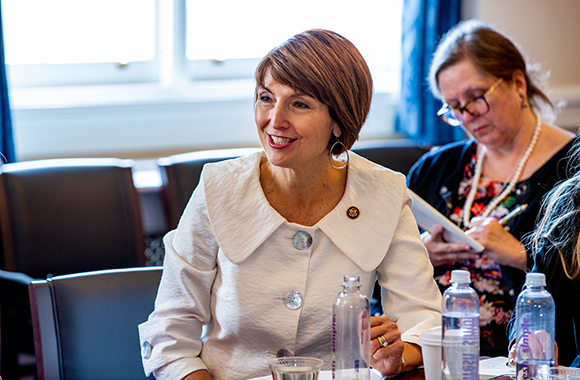
Washington, DC—The National Consumers League (NCL) is celebrating the July 3 passage of the Table Saw Safety Act in the California Senate Judiciary Committee, receiving the three votes needed to move it from the Committee to the full State Senate. The California State Assembly had already passed the bill by a vote of 64-4.

NCL Executive Director Sally Greenberg, who traveled to Sacramento to speak in support of the bill, commended its author, Senator Das Williams (D-Santa Barbara), and the three members of the Judiciary Committee for their support. Greenberg testified that “based on national data, California consumers suffer 6,700 injuries each year from table saws and about one amputation each day. And the grave hazards posed by a 100mph-spinning table saw blade can be completely eliminated by technology either currently available or in development. We urge the Committee to act on this critical consumer safety measure.”

The California bill requires that, after January 1, 2015, any new table saw sold in the state of California must be designed with an “active injury mitigation system.” Such technology must be able to prevent or detect contact with, or dangerous proximity between, a hand or finger and the teeth of a spinning table saw blade, and act to prevent severe injury to the hand or the finger. Similar technology is already available on table saws in the market and they have proven successful at virtually eliminating the horrific lacerations and amputations that occur on table saws without the technology. The legislation is supported by consumer organizations, labor unions, and medical associations. It is opposed by table saw manufacturers and associated industry groups.

Daniel Curtin, Director of the California Conference of Carpenters, endorsed the legislation. He said, “The carpenters proudly support AB 2218 (Williams) because safety devices on table saws protect our members from severe injuries and possible loss of their livelihood.”

“The technology required by AB 2218 would help ensure that construction workers using dangerous table saws would have one more way to remain safe on the job,” said Cesar Diaz, Legislative & Political Director, State Building and Construction Trades Council, AFL-CIO.

The federal Consumer Product Safety Commission is also working on a proposed rule for a mandatory safety standard on table saws, but the time it will take for completion of a federal safety standard is unknown.

###

About the National Consumers League

The National Consumers League, founded in 1899, is America’s pioneer consumer organization. Our mission is to protect and promote social and economic justice for consumers and workers in the United States and abroad. For more information, visit www.nclnet.org.

Challenges of modernizing hallmark food safety laws – National Consumers League

Earlier this week, we wished a happy 106th birthday to the Pure Food and Drugs Act and the Federal Meat Inspection Act, both of which were signed into law on June 30, 1906 by President Theodore Roosevelt. While commemorating the history of these laws is important, so is looking ahead and thinking about what the future holds for the important institutions created by these landmark pieces of legislation.

The Food Safety Modernization Act (FSMA), signed into law on January 4, 2011 by President Obama, is an example of the positive ways in which legislation can be modernized. FSMA would transform the U.S. Food and Drug Administration from an agency which merely responds to foodborne illnesses to one which actively works to prevent them. Unfortunately, this law is facing two major challenges to its implementation.

The first challenge facing FSMA is the current budget climate. With vastly increased responsibilities, FDA needs a corresponding increase in funding. However, in an era of fiscal austerity, government agencies across the board face funding cuts. This means FDA must do more with less, leaving the agency to make tough decisions about priorities. The inevitable result of this process of prioritization is that some things will slip through the cracks.

The second challenge facing FDA is the job of actually implementing the new law, a task which requires the release of many new regulations according to a time table. Four of these important rules, dealing with preventative controls (for both human food and animal feed), the foreign supplier verification program and produce safety, were due to be released in January. As of the writing of this blog post, these essential rules are being held up at the Office of Management and Budget (OMB) at the White House. Because these rules are integral to the implementation of FSMA, food safety advocates have been joined by the industry in urging OMB to release the rules immediately. Without these rules, FSMA enactment is essentially stalled.

While FSMA seeks to modernize the FDA by improving and expanding the government’s role in keeping food safe, a proposed rule recently released by the U.S. Department of Agriculture (USDA) entitled “Modernization of Poultry Slaughter Inspection,” would roll back the government’s role in keeping our food safe. If the proposed rule was enacted, some inspection duties, traditionally performed by trained government inspectors, would be transferred to plant employees who are under no training requirement. Additionally, the new program would decrease the number of federal inspectors on the line while simultaneously increasing allowable line speeds to 175 birds per minute. The practical result is that while inspectors had been examining one bird every three seconds, they would now be inspecting three birds every second. This increase in line speeds is a concern not only for food safety but also for workers. Both consumer and labor organization have called for USDA to back away from its proposal.

Today the Pure Food and Drugs Act and the Federal Meat Inspection Act face challenges of modernization. Modernization must be accompanied by sound science and must above all be free from political considerations. Modernization will require the teamwork of all the stakeholders involved. Consumers especially must let their elected officials know that these laws, the agencies they created and the continuation of the protections they provide are essential aspects of any modernization scheme.

Bogus charities expected to prey on donations for wildfire aid – National Consumers League

Recent wildfires in Colorado have destroyed hundreds of homes and have forced tens of thousands of residents to evacuate. In June, President Obama declared the situation a national disaster, and the Forest Service warned it could take weeks to get the blaze under control. After disasters such as this, many Americans try to help out those who have been affected by donating by charities that promise to assist the victims.NCL is warning consumers to be careful about what charity they choose, or risk becoming the victim of a charity scam.

Scam artists are opportunistic, and charity scams are a perfect illustration of this. Following high-profile disasters such as the 2004 Indian Ocean tsunami, the 2007 Virginia Tech shootings and the 2010 Haiti earthquake, there were numerous reports of consumers receiving solicitations from fraudulent charities. Regardless of the specifics of the disaster, the scammers use the visibility of these disasters in the news media to generate sympathy and cash from their victims.

Consumers should watch out for the following “red flags” for charity scams:

  • The charity refuses to provide any documentation of their 501(c)3 non-profit status or other identifying information such as a mailing address, annual report or website
  • You are pressured to commit to a donation immediately or are asked to provide sensitive personal information
  • Requests for donations to be made in cash or via wire transfer
  • Guarantees of sweepstakes winnings or other prizes if you donate
  • Charities with unfamiliar names that you’ve never heard of

Before giving to a charity, be sure to check their reputation on sites like Charity Navigator and GiveWell.org, which rank charities based on efficiency, transparency and accountability. Be cautious if a charity contacts you first or pressures you to give money or information immediately. Legitimate charities give donors as much time as they need. Remember, the cause will be just as worthy tomorrow as it is today. Also, be sure to ask whether the person calling you represents the charity itself or a professional fundraising company. If the caller represents a professional fundraising company, be sure to ask how much of each donation they collect for “administrative costs” or “overhead.” It is not uncommon for such companies to take 80% or more of every donation for these fees.

After donating, you should still be thoughtful and careful about interacting with the charity. Many organizations continue to contact donors after a donation and may sell or rent your contact information to other organizations. If you are frequently contacted by organizations you do not wish to donate to, ask them to put your name on a “Do Not Call” list.

Keep track of your contribution(s) so you can put them down as tax deductions. If you give a large contribution or frequent contributions, feel comfortable asking for the organization’s annual report and financial statements. This will give you an idea of what the organization is currently doing with your and other people’s money.

Millions of people, both in the United States and worldwide, are suffering and charities do amazing work in benefiting the world. Unfortunately, scam artists masquerading as charities are only out for their own gain. They will take advantage whoever they come across in order to benefit themselves. Do not fall for their traps.

New State Department report suggests the global enormity of trafficking – National Consumers League

By Steven Dorshkind, NCL public policy intern

The State Department released a new update to its annual Trafficking in Persons Report recently, and the results are shocking. The report states that approximately 27 million people are victims of human trafficking globally. This report also evaluates the countries of the world and places them into four different tiers depending upon the level of commitment and action the individual government have shown to combat trafficking.

Trafficking may take many guises: commercial sexual exploitation, and prostitution of minors, debt bondage and forced labor.

Of the 27 million victims of human trafficking, 55 percent are women and girls who make up 98 percent of the sex trafficking industry. These women and girls can be moved from their home, lured by traffickers by promises of a better life. Once far from home, they often find themselves trapped with no help in sight.

The State Department’s tier system is divided into four components, the First, Second, Second Watch List ,and Third Tier. The First Tier designates countries in which some trafficking may exist, but the government is very proactive in dealing with problem and the country meets the minimum requirements set up by the Trafficking Victims Protection Act (TVPA). The Second Tier consists of countries that do not fully meet the TVPA’s minimum standards, but are making significant efforts to bring themselves into full compliance. The Second Watch List has countries that do not meet the minimum standards and the country has not provided significant evidence that measures are being taken to comply with the standards. The Third Tier has countries that do not comply with the TVPA’s standards and are not making significant efforts to do so.

Thirty three countries, including the United States, the United Kingdom, France and Australia, all received First Tier ratings. Ninety four countries, including Albania, Greece, Hong Kong, and Pakistan all received Second Tier ratings. Forty two countries, including Afghanistan, Iraq, Uzbekistan, and China, received Second Watch List Tier ratings, and sixteen countries received a Third Tier rating, including; Algeria, the Central African Republic, the Democratic Republic of Congo, Cuba, Equatorial Guinea, Eritrea, Iran, North Korea, Kuwait, Libya, Madagascar, Papua New Guinea, Saudi Arabia, Sudan, Yemen and Zimbabwe. Receiving a Third Tier ranking on this report comes with the threat of sanctions: the withdrawal of non-humanitarian and non-trade related forces and assistance, and removal of funding for government employees’ participation in educational and cultural exchange programs, and opposition from the US toward trade and certain development related assistance, from the International Monetary Fund and the World Bank.

Many consumer and human rights advocates believe that Uzbekistan should be moved down to the Third Tier because of their blatant disregard for human rights and a lack of effort in trying to meet the minimum standards set up by the TVPA. The groups have written a letter and sent it to Secretary of State Hillary Clinton, asking the State Department to lower the Uzbek government standing from Second Watch List, to the Third Tier. Uzbekistan refuses to allow the International Labor Organization (ILO) to monitor the harvesting of cotton, and therefore an accurate read of how the cotton is harvested cannot be obtained, and many charge that child labor is rampant. The National Consumers League believes this warrants a Third Tier rating, but the United States government has yet to lower the ranking of Uzbekistan.

The ranking of 42 countries has changed from 2011 to 2012. Fifteen countries were lowered in the rankings, and 27 were raised. Countries moved from First Tier to Second Tier are Nigeria and Portugal. Countries moved from Second Tier to Second Watch List are; Bahrain, Djibouti, Jamaica, Kenya, Macau, Malawi, Namibia, Senegal, Seychelles, Sierra Leone, and Syria. The country moved from Second Watch List to the Third Tier was Suriname.

The new report also speaks to the measures that governments can put into place to help ensure the end of human trafficking in their own country. One problem noted by report authors: states that some countries have such strict rules against illegal immigration the victim of trafficking is treated as an illegal alien and tried as a criminal. The report asks for further in-depth study of people found in areas that are considered high risk trafficking zones, suggesting that the police and first-responders to an area must be better trained to identify a trafficked person. This skill is vital to ensure that those who are victims of human trafficking are not merely lumped together with the criminals and treated unjustly. The report puts a large focus on protecting victims.

As Secretary of State Hillary Clinton said, “Over the coming months we will celebrate the 150th anniversary of the Emancipation Proclamation, which Abraham Lincoln announced on September 22, 1862 and issued by Executive Order on January 1, 1863.” The idea that slavery is only in the past must be cast out, and the world needs to see that slavery exists in the modern-day and age. Twenty-seven million people are modern slaves who do not enjoy basic human rights and guarantees, they have been pushed to extremes with little food or rest, and they need to be helped. We cannot rest until all of those who are enslaved are freed.

Happy 106th birthday to two landmark food safety laws! – National Consumers League

This week marks the 106th anniversary of the passage of the Pure Food and Drugs Act and the Federal Meat Inspection Act, two landmark pieces of consumer based legislation which established the modern food protection system as we know it.  Without these two important pieces of legislation, our food system in this country would be virtually unrecognizable. It is these pieces of legislation which provide the basic framework for food safety in this country. Founded in 1899 as an organization dedicated to protecting and promoting the rights of both workers and consumers, the National Consumers League, led by Florence Kelley, played a major part in getting these two important pieces of legislation passed.

Spurred by chilling descriptions of the horrible conditions common in meat-packing plants that Upton Sinclair described in his seminal work The Jungle, published in 1905, Congress passed the Federal Meat Inspection Act of 1906. The law mandated antemortem inspection of livestock, postmortem inspection of each carcass and the continuous inspection of slaughter by U.S. Department of Agriculture employees. The Act also established sanitary standards for slaughtering facilities for the first time. It was this Act which created our modern-day Food Safety and Inspection Service (FSIS), which provides inspection in all the slaughterhouses around the country, ensuring that we have safe and wholesome meat to consume.

The Pure Food and Drugs Act, also of 1906, created the modern-day U.S. Food and Drug Administration (FDA), though it would not be known by that name until the 1930s. This Act not only established the FDA as we know it, it also made it illegal to sell adulterated and misbranded food and drugs across state lines. For the first time, consumers had legal protection of their right to pure food and drugs.

Though the contemporary USDA and FDA may be different in some ways than they were in the early 20th century due to new laws which have updated the requirements for both agencies, the two laws laid the foundation for agencies focused on consumer protection. It is with pride at our involvement in the establishment of these laws that NCL wishes them a happy 106th birthday!

NCL Applauds Supreme Court decision on individual mandate in health care law – National Consumers League

June 28, 2012

Contact: NCL Communications: (202) 835-3323, media@nclnet.org

Washington, DC—The National Consumers League (NCL), the nation’s oldest consumer group, announced today that it is pleased at the Supreme Court’s action to uphold the individual mandate of the Affordable Care Act (ACA), a move that will extend health care coverage to more than 30 million Americans who currently lack it. NCL stands with other consumer, health, and worker groups, in support of the ACA. For decades, NCL has advocated for substantive reform to America’s health care system and was a staunch supporter of the Affordable Care Act when it passed in 2010.

“The Supreme Court’s landmark decision upholding The Affordable Care Act is a giant step toward the goal of providing health insurance for all Americans,” said Sally Greenberg, NCL Executive Director.  “We applaud the Court’s decision and look forward to broad implementation of the law. This decision brings the United States into league with the ever-growing number of nations – rich and poor – that have found it to be economically prudent to provide health care to their citizens. NCL hails this historic decision as a great victory for consumers, one that signifies a move toward a more patient-centered and cost effective health care system. We stand by the law, and the protections and coverage it has already afforded millions of Americans.”

###

About the National Consumers League

The National Consumers League, founded in 1899, is America’s pioneer consumer organization. Our mission is to protect and promote social and economic justice for consumers and workers in the United States and abroad. For more information, visit www.nclnet.org.

Consumer organization to air concerns before Aviation Consumer Protection Board – National Consumers League

June 28, 2012 

Contact: NCL Communications, (202) 835-3323, media@nclnet.org

Washington, DC–The National Consumers League is testifying today before the newly formed federal Advisory Committee for Aviation Consumer Protection, calling on the Committee to address consumer concerns and provide basic consumer protections to the flying public. “We welcome the formation of this critical Advisory Committee to hear concerns from consumer and business groups and the flying public,” said Sally Greenberg, NCL’s Executive Director. “We look forward to sharing the experiences and frustrations of so many passengers who deal with the airlines,” said Greenberg. She is giving testimony today at the Department of Transportation (DOT).

NCL will be discussing a range of issues, from consumer privacy, the explosion of fees for luggage, seats, food, pillows, etc., above and beyond ticket prices, the need for greater fare and fee transparency, added scrutiny on change and cancellation fees, contract protections for consumers in frequent flyer programs, and opening consumer access to state courts in airline suits.

The FAA Modernization and Reform Act of 2012 (Pub. L. 112-95, 126 Stat.11 (2012) mandated the establishment of a committee to advise the Secretary of Transportation on airline customer service improvements. The Secretary established the Advisory Committee on May 24, 2012 and appointed four members, Illinois Attorney General Lisa Madigan as chair, David Berg from Airlines for America, Deborah Ale-Flint, Oakland International Airport’s director of Aviation, and Charles Leocha of the Consumer Travel Alliance. The meeting is scheduled to run from 9 am to 5 pm in the Oklahoma City Room at the US Department of Transportation.

# # #

About the National Consumers League

The National Consumers League, founded in 1899, is America’s pioneer consumer organization. Our mission is to protect and promote social and economic justice for consumers and workers in the United States and abroad. For more information, visit www.nclnet.org.

Safer saws would prevent injuries and $2 billion annual loss – National Consumers League

By Christiana Oatman, NCL Communications intern

Christiana Oatman is a native Californian and a rising senior at University of the Pacific, where she studies history and gender studies. She is the Communications intern at NCL. Her internship is part of the Fund for American Studies’ Institute of Political Journalism program at Georgetown University.

I recently had the opportunity to watch National Consumers League Executive Director Sally Greenberg testify on a panel at the Consumer Product Safety Commission (CPSC) budget hearing on June 20, 2012 to propose that the CPSC implement tougher safety standards on table saws, ATVs, and other dangerous products frequently used by American consumers. Greenberg urged the CPSC to dedicate staff, money, and resources to finalize a mandatory safety standard.

NCL, along with other consumer organizations, requested in October 2011 that the CPSC consider enacting “a technology-neutral performance standard that would require manufacturers to equip table saws with safety devices that would mitigate injury when the operator comes in contact with, or in close proximity to, the spinning blade.” Multiple forms of safety technology exist, but only one, SawStop, is currently on the market.

Tens of thousands of accidents involving table saws happen every year, including ten finger amputations a day. According to the NCL, “These injuries cost society well over $2 billion every year.”

For the past 50 years, the only safety technology on table saws was the blade guard. The blade guard is often removed because it is inconvenient for many types of cuts. Two thirds of table saw injuries reported were without a blade guard. Updated technology does not create the same hurdles that the blade guard does. The average cost for adding newer safety technology on a table saw is $100, which is cost-effective compared to the potential medical and emotional costs of a table saw accident.

The Web site Fine Woodworking has a table saw safety guide to prevent as many accidents as possible. It recommends that you never use a table saw tired or under the influence, wear gear to protect your eyes and ears and use a riving knife and push sticks. Many table saw safety tips are designed to prevent kickback, when a piece of stock moves towards you, which is one of the most common causes of table saw injuries. Fine Woodworking recommends that you use a blade guard, but also notes that blade guards cannot be used for every cut. Even with all these precautions, accidents do happen and some could have been prevented by the new technology.

As one of the three interns who watched Greenberg’s testimony, I found her arguments convincing, as did the CPSC members who responded and asked her questions. Greenberg and the CPSC members were very sympathetic to those who have been injured by table saws, and hopefully Greenberg’s persuasive skills will lead to a progressive change in CPSC policy.