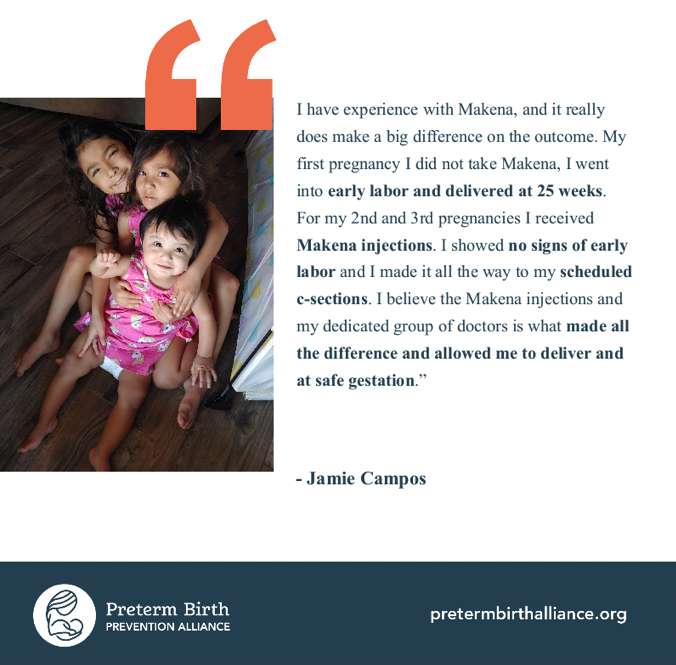
NCL comments regarding Proposed Rule: Medication Guides: Patient Medication Information Docket No. FDA-2019-N-5959

November 21, 2023

Media contact: National Consumers League – Melody Merin, melodym@nclnet.org, 202-207-2831

The National Consumers League recently submitted comments regarding the Proposed Rule, Medication Guides: Patient Medication Information, that we believe will greatly improve the information patients receive with their prescription medicines.

###

About the National Consumers League (NCL)

The National Consumers League, founded in 1899, is America’s pioneer consumer organization.  Our mission is to protect and promote social and economic justice for consumers and workers in the United States and abroad.  For more information, visit nclnet.org.

NCL applauds CPSC’s vote on a historic table saw safety rule that could save up to $2.32 billion and prevent 50,000 grave table saw injuries each year

October 20, 2023

Media contact: National Consumers League – Melody Merin, melodym@nclnet.org, 202-207-2831

Washington, DC – The National Consumers League applauds the Consumer Product Safety Commission’s (CPSC) 3-1 vote on October 18, 2023, to move forward towards a mandatory safety standard for electric table saws, which cause 50,000 partial or full amputations each year and cost the health care system upwards of $2.3 billion a year.

“We thank Chairman Alex Hoehn Saric for his leadership and Commissioners Richard Trumka Jr. and Mary Boyle for their support,” said NCL’s CEO Sally Greenberg. “NCL has been working to get requirements for safer table saw designs since 2008. This is a very welcome development for a product that is so ubiquitous in American homes, while at the same time posing such a grave danger of injury. Over 20 years, table saws have injured one million people.”

NCL Board member and former Executive Director of the CPSC, Pamela Gilbert, noted that this vote is long overdue. “The technology to almost entirely do away with serious injuries from table saws has been available for over two decades. Members of the power tool industry, sadly, have resisted safer designs despite many opportunities to do so,” said Gilbert. “The delay has led to hundreds of thousands of permanent, debilitating injuries that could have been prevented. It’s time for the industry to step up and do the right thing for their customers.”

NCL noted that Commissioner Trumka is seeking information from leadership at seven power tool companies, including SawStop, which already incorporates Active Injury Mitigation to prevent serious table saw injuries, as called for in the proposed rule. He seeks their views on a faster implementation period than the 3 years called for in the proposed rule. Responses to his letter are due on November 15, 2023, and will prove interesting and instructive.

###

About the National Consumers League (NCL)
The National Consumers League, founded in 1899, is America’s pioneer consumer organization.  Our mission is to protect and promote social and economic justice for consumers and workers in the United States and abroad.  For more information, visit nclnet.org.

NCL applauds Biden Administration’s continued actions to combat junk fees

October 11, 2023

Media contact: National Consumers League – Melody Merin, melodym@nclnet.org, 202-207-2831

Washington, D.C. – The National Consumers League (NCL), the nation’s oldest consumer advocacy organization, today applauded the *White House’s announcement of additional whole-of-government efforts to crack down on hidden junk fees that drain consumers’ pocketbooks and reduce competition.

NCL singled out, in particular, the Federal Trade Commission’s (FTC) proposed rule prohibiting junk fees and bogus charges across the economy. NCL previously supported a petition urging the Commission to begin such a rulemaking. The League also praised the Consumer Financial Protection Bureau’s action to bar the imposition of fees on consumers seeking basic information, such as bank account balances or loan repayment information.

“Over the last two years, the Biden Administration has championed the cause of ridding the American economy of hidden charges and promoting economic competition on behalf of American consumers,” said NCL Chief Executive Officer (CEO) Sally Greenberg. “Thanks to consumer advocacy and the federal government’s efforts, many of the biggest banks have reduced or eliminated predatory overdraft fees. This Administration’s actions to address industry consolidation have also reinvigorated discussions about antitrust law and put fair treatment of average Americans as the focus of national policy. The League commends these agencies’ actions to protect consumers throughout the marketplace.”

NCL has been working with the White House, federal agencies, and partners in Congress to rein in the scourge of junk fees. Last month, NCL Vice President of Public Policy John Breyault testified before the U.S. House of Representatives on various ways to address the use of predatory fees in live event ticketing and hotels and short-term lodging. In June, NCL CEO Greenberg testified in the U.S. Senate on the need to end corporations’ “addiction” to junk fees. And in February, NCL joined 42 other advocacy organizations in comments to the FTC supporting a wide-sweeping federal regulation to prohibit the use of predatory and deceptive fees.

Today’s announcement comes just a few weeks after the FTC and U.S. Department of Justice completed the first stages of implementing new guidelines informing how the agencies evaluate whether business acquisitions and mergers would violate federal law. NCL’s comments supporting these new guidelines can be found here.

*Links are no longer active as the original sources have removed the content, sometimes due to federal website changes or restructurings

###

About the National Consumers League (NCL)
The National Consumers League, founded in 1899, is America’s pioneer consumer organization.  Our mission is to protect and promote social and economic justice for consumers and workers in the United States and abroad.  For more information, visit nclnet.org.

NCL supports President Biden’s nominee for Administrator of the Federal Aviation Administration

October 3, 2023

Media contact: National Consumers League – Melody Merin, melodym@nclnet.org, 202-207-2831

Washington, D.C. – Today, the National Consumers League (NCL) urged the U.S. Senate to swiftly confirm President Biden’s nominee for Administrator of the Federal Aviation Administration (FAA), Michael G. Whitaker. Despite a growing number of problems under the FAA’s jurisdiction—including an alarming number of near-misses involving passenger aircraft—the Administration has lacked a Senate-confirmed Administrator for eighteen months. 

The following statement is attributable to NCL Chief Executive Officer Sally Greenberg: 

“The FAA has been without a permanent administrator for too long. Without strong leadership, the agency will struggle to fulfill critical consumer protection mandates, including Congress’s 2018 directive that the agency set minimum seat sizes on airplanes. The Senate should act to restore the full strength of the Administration and confirm Mr. Whitaker as FAA Administrator.”  

###

About the National Consumers League (NCL)
The National Consumers League, founded in 1899, is America’s pioneer consumer organization.  Our mission is to protect and promote social and economic justice for consumers and workers in the United States and abroad.  For more information, visit nclnet.org.

NCL supports CFPB’s proposal to remove medical debt from credit reports

September 28, 2023

Media contact: National Consumers League – Melody Merin, melodym@nclnet.org, 202-207-2831

Washington, DC – The National Consumers League (NCL) supports the bold proposal from the Consumer Financial Protection Bureau (CFPB) to remove medical bills from Americans’ credit reports.

According to a CFPB report released in March 2022, $88 billion of outstanding medical bills are currently in collections—affecting one in five Americans. Medical debt constitutes a majority (57 percent) of all collections on credit reports.

“This proposal will help families financially recover from medical crises and prevent debt collectors from coercing people into paying bills they may not even owe,” said Sally Greenberg, CEO of the NCL. “It will ensure that creditors are not relying on data that is often plagued with inaccuracies and mistakes.”

Approximately 20 percent of Americans report having medical debt, according to the March 2022 report, but previous research by the CFPB shows that consumers with medical debt generally paid back their loans or bills at the same rate as consumers with higher credit scores.

If finalized, the CFPB proposal will do the following:

  • Remove medical bills from consumers’ credit reports: Consumer reporting companies would be prohibited from including medical debts and collection information on consumer reports that creditors use in making underwriting decisions.
  • Stop creditors from relying on medical bills for underwriting decisions: The proposal would narrow the 2005 exception and prohibit creditors from using medical collections information when evaluating borrowers’ credit applications.
  • Stop coercive collection practices: As unpaid medical bills would no longer appear on consumers’ credit reports used by creditors in making underwriting decisions, debt collectors would no longer be able to use the credit reporting system as leverage to pressure consumers into paying questionable debts.

Greenberg added, “Medical debt is not caused by profligate spending. Americans incur this debt because of emergencies or because they are uninsured or underinsured. We believe that this proposed rule will allow consumers weighed down by medical debt through no fault of their own and help them to restore their access to sustainable credit.”

###

About the National Consumers League (NCL)
The National Consumers League, founded in 1899, is America’s pioneer consumer organization.  Our mission is to protect and promote social and economic justice for consumers and workers in the United States and abroad.  For more information, visit nclnet.org.


NCL stands with Swifties in testimony before Congress

September 27, 2023

Media contact: National Consumers League – Melody Merin, melodym@nclnet.org, 202-207-2831

WASHINGTON, DC – Testifying before a Congressional committee, the National Consumers League (NCL) today urged support for comprehensive ticketing reform legislation to fix a “rigged” live event industry. NCL, America’s oldest consumer and worker advocacy organization, described how the November 2022 meltdown of Ticketmaster’s ticketing system during the on-sale for Taylor Swift’s Era’s Tour exposed the “ugly underbelly” of the industry.

“There has never been a better time to reform live event ticketing,” said John Breyault, NCL’s Vice President for Public Policy, Telecommunications, and Fraud. “While the Taylor Swift meltdown may have been an anomaly, it exposed the ugly underbelly of a live event industry that is rigged to maximize profits for a select few and frustration for everyone else.”

Of the three event ticketing bills considered by the subcommittee, Breyault called the “BOSS and SWIFT ACT of 2023,” sponsored by Representatives Bill Pascrell (D-NJ9), Frank Pallone (D-NJ6), Julia Brownley (D-CA26), and Delegate Eleanor Holmes Norton (D-DC) “the single most comprehensive pro-fan and pro-competition ticketing legislation before Congress.” NCL supports the BOSS and SWIFT ACT because it includes a range of ticket industry reforms, including requiring better disclosure of ticket refund policies, shedding daylight on ticket “holdbacks” that siphon tickets away from the average fan, clamping down on unauthorized speculative ticket sales, and helping protect consumers from Ticketmaster’s anti-competitive efforts to extend its monopoly into the secondary ticket market.

NCL also voiced support for two other ticketing bills: Representatives Gus Bilirakis’ (R-FL12) and Jan Schakowsky’s (D-IL9) TICKET ACT, which would mandate all-in pricing of tickets and better disclosure of speculative ticket sales, as well as draft legislation that would ban speculative ticketing outright, while carving out ticket-buying services.

In addition to the ticketing bills, NCL testified in support of Representative David Valadao’s (D-CA22) Online Dating Safety Act of 2023 which would notify users of online dating apps that someone they messaged on the app was banned; Representative Young Kim’s (R-CA40) No Hidden Fees on Extra Expenses for Stays Act, which would mandate all-in pricing in the hotel and short-term lodging industries; and Representative Lisa McClain’s (R-MI9) and Representative Mary Peltola’s (D-AK) WIPPES Act, which would require manufacturers of cleaning wipes to label their cleaning wipes as non-flushable in order to protect wastewater infrastructure and consumers’ plumbing systems from damage.

NCL’s written testimony is available here.

###

About the National Consumers League (NCL)
The National Consumers League, founded in 1899, is America’s pioneer consumer organization.  Our mission is to protect and promote social and economic justice for consumers and workers in the United States and abroad.  For more information, visit nclnet.org.

NCL supports updated merger guidelines

September 20, 2023

Media contact: National Consumers League – Katie Brown, katie@nclnet.org, 202-823-8442

Washington, DC – The National Consumers League sent a letter in support of the draft merger guidelines that the U.S. Department of Justice  and the Federal Trade Commission proposed in July of this year. The guidelines reflect an approach to antitrust enforcement that is grounded in statute and judicial precedent and are a significant improvement from the narrower focus of previous enforcement regimes. By centering market competition as the goal of antitrust law, the DOJ and FTC can appropriately act to protect consumers and workers when mergers pose a threat to the public. 

The full letter can be found here.

###

About the National Consumers League (NCL)
The National Consumers League, founded in 1899, is America’s pioneer consumer organization.  Our mission is to protect and promote social and economic justice for consumers and workers in the United States and abroad.  For more information, visit nclnet.org.

Unveiling the flaws in the 340B Drug Pricing Program: Hospitals, medical debt, and consumer struggles

Sally Greenberg

By Sally Greenberg, Chief Executive Officer

In 1992, Congress created the 340B Drug Pricing Program to help ensure vulnerable patients would be able to access medications they need but may not be able to afford. This program provides steeply discounted drugs to health care providers – mostly hospitals – serving low-income patients with the intent that the providers would pass those discounts along to patients. Unfortunately, that is not what is happening. The National Consumers League (NCL) is increasingly concerned about this program, especially as it relates to hospitals’ abusive and aggressive debt collection practices, and how those practices lead to consumer medical debt. A recent letter from a bipartisan group of Senators underscores hospitals’ role in this growing problem.

We find it particularly troubling that many hospitals benefiting from 340B are not only nonprofit entities but are designated as charity hospitals – supposedly caring for low income and indigent patients. A 2022 report by the Alliance for Integrity and Reform of 340B found that charity care spending for nearly two-thirds of 340B hospitals was less than the national average for similar hospitals. Further, a December 2019 Government Accountability Office (GAO) report found that “some nongovernmental hospitals that do not appear to meet the statutory requirements for program eligibility are participating in the 340B program and receiving discounted prices for drugs for which they may not be eligible.” One report found that 82% of nonprofit hospitals spent less on community programs than the value of their tax exemptions.

Consumers are not benefiting from the 340B program in the way Congress intended. A patient whose income is above 200 percent of the Federal Poverty Level (FPL) is expected to pay full price for a drug they receive at the hospital, even though the care center from which they are “buying” the drug did not pay full price for it. Hospitals participating in the 340B program saved an average of $11.8 million per year, according to a 2019 report from Beckers Hospital Review, and multiple studies have found that a majority of hospitals markup medicines between 200-500 percent. Under the current program, an individual who makes $29,200 per year has to pay that price.

What is even more alarming is the fact that if a patient can’t pay, the hospitals that have benefited enormously from discounted drugs intended for vulnerable patients are aggressively suing these same patients. This illustrates a major disconnect between the intent of the 340B program and the way it is operating today.

While estimates differ, medical debt is believed to cause more than 60 percent of bankruptcies in America. Most consumers facing medical debt did not end up in that situation because of bad decisions or profligate spending. Most have had some kind of injury or unexpected illness and don’t have insurance – or don’t have sufficient insurance – to cover their medical and hospital costs. Patients who need financial assistance should be processed when entering the hospital for medical care. Many are not given the chance to do so and as a result, can be sued for debt after services are rendered. Medical debt collection practices are debilitating for low-income consumers and can destroy their credit ratings, subjecting them to subprime rates and a never-ending spiral of debt.

Even if patients don’t start out poor, because of excessive fees, penalties, and other costs added onto what may or may not be actual medical debt on the part of patients, aggressive debt-collection practices can leave them destitute. Many don’t have funds to hire a lawyer, and if summoned, they often don’t know they need to actually go to court; in fact, sometimes debt collectors advise them not to show up in court. As a result, default judgments are filed against them, leading to garnishments of wages, and liens on homes, cars, and other properties. In 2019, the Journal of the American Medical Association studied the garnishment of wages by hospitals in the state of Virginia and found that 71% of the hospitals were nonprofit and the gross mean annual revenue of hospitals engaged in garnishments was $806 million, with 8,399 patients having wages garnished.

Below are just a few stories illustrating hospitals’ medical debt collection practices playing out in communities throughout the nation.

  • A woman in Knoxville, Tennessee, was diagnosed with cancer and underwent surgery and chemotherapy. Even though she had health insurance, she was left with almost $10,000 in medical bills that she couldn’t pay. Financial counselors told her she couldn’t schedule cancer checkup appointments with her doctor until she has a plan to pay her bills, according to a December 2022 story by NPR.
  • As reported by the Washington Post in May 2019, an investigation by the Baltimore Sun found that 46 hospitals in Maryland filed more than 132,000 lawsuits for unpaid medical bills from 2003 to 2008 and won at least $100 million in judgments. In some cases, hospitals added annual interest at twice the rate permitted for other types of debts or placed liens against patients’ homes.
  • The Washington Post reported in 2019 that the University of Virginia (UVA) Health System sued former patients more than 36,000 times for over $106 million over a six-year period. During that time, UVA’s Medical Center earned a $554 million profit and held stocks and other investments worth $1 billion. One of the patients the UVA Health System sued was Heather Waldron. Following emergency surgery and other treatment in 2017 to address an intestinal malformation, Waldron received a bill from the University of Virginia Health System for $164,000, more than twice what a commercial insurer would have paid for the care. When she was unable to pay, the UVA Health System pursued her with a lawsuit and a lien on the home she shared with her then-husband and five children. In the fall of 2019, the family lost their home, and the “financial disaster” contributed to Waldron and her husband divorcing earlier that year.

We support the critical role hospitals play in communities across the country and understand many dutifully provide charity care to those who cannot pay. However, we believe that if hospitals are designated charity entities and are receiving 340B discounts, they should be required to prove that those discounts have been passed along to patients. The current situation is unacceptable and merits an in-depth investigation and tightening up of the 340B rules. Charity hospitals should not be able to both claim 340B status and drag the very populations they are pledged to serve into debt collection proceedings, taking their homes, their cars, and their possessions in the process. Changes need to be made to ensure that only eligible hospitals are allowed to participate in the 340B program and that the deep discounts for medicines are passed along to patients, as Congress intended.

National Consumers League urges Ticketmaster to refund Springsteen fans

September 11, 2023

Media contact: National Consumers League – Melody Merin, melodym@nclnet.org, 202-207-2831

WASHINGTON, D.C. – The National Consumers League (“NCL”) today urged Ticketmaster to immediately offer refunds to fans who purchased tickets to Bruce Springsteen’s postponed concerts. Due to illness, the rock icon recently announced indefinite postponements of the remainder of the concerts currently scheduled for September. According to Ticketmaster’s Purchase Policy, consumers will only be able to obtain refunds when the postponed concerts are rescheduled for a date to be determined.

The following statement is attributable to NCL Chief Executive Officer, Sally Greenberg:

“Like millions of other fans, our best wishes go out to Bruce Springsteen in light of his pressing medical issues, and we wish him a speedy recovery. Throughout his career, he has put his fans first. However, given the announcement that multiple upcoming concerts have been postponed to a date to be determined, we are concerned that consumers are not being given the option by Ticketmaster to obtain refunds for their tickets. Due to Ticketmaster’s policies, millions of dollars in fans’ funds are stuck in limbo, potentially for months or even longer.

We understand that many of Springsteen’s fans may opt to hold onto their tickets and will plan to see The Boss when his concerts are rescheduled. Until then, Ticketmaster will almost certainly be earning interest on fans’ funds that are locked up due to the company’s refund policy. Essentially, due to its policies, Ticketmaster is forcing fans to give the company an interest-free loan for an indeterminate period. It is a bedrock consumer protection principle that when a consumer does not get a product she paid for, a prompt refund should be issued. Ticketmaster should give consumers the option to immediately obtain refunds not just for Bruce Springsteen’s concerts, but for all postponed events going forward.”


###

About the National Consumers League (NCL)
The National Consumers League, founded in 1899, is America’s pioneer consumer organization.  Our mission is to protect and promote social and economic justice for consumers and workers in the United States and abroad.  For more information, visit nclnet.org.

NCL urges Senate committee to pass the College for All Act

August 28, 2023

Media contact: National Consumers League – Katie Brown, katie@nclnet.org, 202-823-8442

Washington, DC – Today, the National Consumers League (NCL) urged the U.S. Senate Committee on Finance to favorably report the College for All Act of 2023.

The National Consumers League1 (NCL) urges the U.S. Senate Committee on Finance to favorably report S.1963, or the College for All Act of 2023, without delay. The College for All Act would transform the nation’s system of higher education by allowing millions of students to pursue college degrees that they otherwise could not afford. Additionally, it would prevent student debt from continuing to burden future attendees of higher learning, a significant issue currently affecting graduates, individuals with partial educational attainment, and parents of students.” 

The full letter can be found here.

###

About the National Consumers League (NCL)
The National Consumers League, founded in 1899, is America’s pioneer consumer organization.  Our mission is to protect and promote social and economic justice for consumers and workers in the United States and abroad.  For more information, visit nclnet.org.