NEW POLL: Massive Public Support for Ticketing Reforms as the National Consumers League Demands Full Senate Vote on the Ticket ACT

Consumer Advocates Urge Senate Leadership to Bring S. 281 to the Floor, Aligning with the 87% of Voters Demanding Strict Protections Against Fraud, Junk Fees, and Speculative Ticketing

Washington DC – With comprehensive new public opinion survey data showing near-unanimous American consensus in favor of live event ticketing reform, the National Consumers League (NCL) today called on Senate leadership to immediately schedule a floor vote on S. 281, the Transparency In Charges for Key Events Ticketing Act (the TICKET Act).

The new research, conducted by Breakwater Strategy on behalf of Music Artists Coalition, reveals a deeply frustrated public: 84% of consumers agree that the ticketing industry needs common-sense reforms to protect fans, while only 42% believe the market currently operates fairly. Crucially, 87% of registered voters nationally support legislation explicitly designed to mandate transparency and fairness in the ticketing marketplace.

“Fans are at the mercy of a rigged industry, dominated by the illegal Live Nation monopoly, that is awash with predatory practices like hidden fees, ticket bots, speculative tickets, and deceptive reseller conduct,” said John Breyault, NCL Vice President of Public Policy, Telecommunications, and Fraud. “The data could not be clearer: Americans are sick of being gouged. The TICKET Act (H.R. 1402/S. 281) passed the full House of Representatives and was approved by the Senate Commerce Committee, both on overwhelming and bipartisan votes. It is ready for action. We urge the full Senate to bring this bill to the floor for a vote immediately and deliver the protections that fans have been waiting for.”

“While nearly every industry player has their hands in the cookie jar at the expense of fans, NCL stands firmly and uniquely on the side of the consumer,” said NCL Chief Executive Officer Sally Greenberg. “The TICKET Act may not be a perfect solution, but in our judgment, it represents the absolute best way to deliver meaningful protections in a deeply compromised marketplace.”

The TICKET Act Delivers What the Public Demands
The new polling data shows staggering public support for the primary provisions contained within the TICKET Act, including:

Mandatory All-In Pricing: The TICKET Act outlaws hidden “junk fees” by requiring ticket sellers to clearly and conspicuously display the total event ticket price upfront, including all mandatory service, processing, and delivery fees.

The Polling Data: 82% of voters nationally support an industry-wide mandate for all-in pricing. Upfront price transparency was ranked as a top legislative priority, with 95% of voters declaring it important to fixing the industry.

A Ban on Speculative Ticketing: The TICKET Act bans “speculative ticketing”—the deceptive practice where predatory brokers list and sell tickets they do not actually possess, driving up artificial demand and creating consumer confusion.

The Polling Data: 82% of consumers support a ban on speculative ticket sales, and 84% agree that brokers should be legally barred from selling tickets they don’t own.

Stronger Anti-Bot Protections: The TICKET Act takes aim at illegal ticket-buying software (“bots”) by requiring the Federal Trade Commission (FTC) to submit a comprehensive report on the enforcement of the Better Online Ticket Sales (BOTS) Act of 2016, establishing clear metrics to crack down on bot operators.

The Polling Data: Deployed bots remain a massive source of public anger. 94% of voters say preventing automated bots from bulk-buying tickets is a critical priority, and 82% specifically support giving the FTC resources to catch and financially penalize repeat bot offenders.

Voters Reward TICKET Act Champions

The survey emphasizes that legislators who champion solutions included in the TICKET Act stand to win significant favor with their constituents. The data shows that:

  • 70% of voters are more likely to support an elected official who champions all-in pricing;
  • 68% would be more likely to support an elected official who supports a speculative ticket bans; and
  • 68% would favor an official who supports expansion and enforcement of the BOTS Act.

Call to Action: Time for a Senate Vote

The TICKET Act represents a bipartisan consensus that addresses the structural rot in the live event marketplace. Consumer advocacy groups and musical artists rank as the most trusted stakeholders to lead this fight, while the public’s trust in Congress’s willingness to act remains critically low.

“The Senate has a historic opportunity to restore honesty to live entertainment and prove to the American people that it can act on overwhelming, bipartisan public demand,” added Breyault “There is no reason to delay. Real ticket market reform is within reach. Senate leadership should bring S. 281 to a vote on the full Senate floor immediately.”

### 

About the National Consumers League (NCL)      

The National Consumers League, founded in 1899, is America’s pioneer consumer organization. Our mission is to protect and promote social and economic justice for consumers and workers in the United States and abroad. For more information, visit www.nclnet.org.   
Nancy Glick

The Significance of May 22, 2025: The End of the GLP-1 Free-for-All

By Nancy Glick Director of Food and Health Policy

May 22, 2025 – the date set by the Food and Drug Administration for the end of sales of mass-marketed compounded GLP-1 weight-loss drugs – is a barometer of how far we have come in regulating untested, unapproved GLP-1 products and how far we still need to go.

Going back to the beginning, in 2022, studies showed that the FDA-approved GLP-1 drugs, semaglutide and tirzepatide, achieved significant weight loss. This news prompted high demand, which led to a national shortage of these drugs. Thus, to fill the supply gap, the FDA allowed compounding pharmacies to sell non-identical versions of GLP-1 drugs under specific FDA regulations until the shortage ended.

At the time, the FDA could not foresee that opening the market to compounders would create a gold rush situation for telehealth platforms and other sellers. Profits soared, and a largely unregulated market emerged where sellers hyped compounded GLP-1s as cheaper options with the same safety and efficacy as the branded drugs without disclosing the risks. Over time, this exploitative market expanded to include so-called GLP-1 products, such as gummies and patches, that do not contain GLP-1 ingredients. The market also includes online pharmacies selling counterfeit injectable GLP-1s and bad actors selling illegal research-grade raw GLP-1 ingredients online to consumers with dosing instructions.

This was the situation in February 2025, when the National Consumers League issued a national alert to relay the warning from the FDA that compounded GLP-1s are “risky for patients” because these drugs are not required to be tested, and are not reviewed and approved by the FDA. Then, on March 12, the FDA announced the end of the national shortage of semaglutide and tirzepatide, setting May 22 as the last day that mass-produced compounded GLP-1s drugs could be sold.

In advance of the deadline, NCL launched a national initiative, The Weight Truth, to help consumers learn about the differences between FDA-approved and compounded GLP-1s and identify fake and counterfeit products. The Weight Truth initiative is also the call-to-action for NCL to combat false and misleading advertising claims about GLP-1 drugs and press lawmakers to enforce existing laws that protect consumers from disinformation, take counterfeits off the market, and regulate compounding practices more aggressively.

Thus, on May 22, 2025, NCL and the patient safety community watched and waited. But what occurred was not the end of mass-marketed compounded GLP-1s. While some telehealth companies exited the market, most sellers evolved into promoting “personalized” compounded GLP-1s as microdoses or as GLP-1s in combination with other drugs, such as cyanocobalamin (Vitamin B-12). By February 2026, the hype about personalized compounded GLP-1s had reached a level where NCL felt the need to issue a second consumer alert in advance of the 2026 Super Bowl, where telehealth companies aired glitzy ads. The alert explained that these altered forms had not been tested in large clinical trials and may pose additional safety risks.

Then, the earth started to move, so to speak. The volume of misleading advertising claims, the audacious marketing of some telehealth companies, the story of a Kentucky woman who developed acute liver failure after receiving compounded tirzepatide combined with B12 and needed an emergency liver transplant, and the outcry from 38 state attorneys general to stop the illegal sale of research-grade GLP-1 ingredients all combined to get the attention of policymakers. Thus, lawmakers at the federal and state levels are taking increasingly meaningful steps to stop fraudulent advertising and crack down on illegal mass compounding.

What does change look like? In the year since the FDA declared the GLP-1 shortage resolved, there have been these developments:

  • In September 2025, the FDA announced its intent to regulate compounded GLP-s more aggressively. Then, the FDA launched a crackdown on misleading advertising claims, sending warning letters to over 55 online sellers of compounded GLP-1 drugs, telling sellers that it is a breach of FDA regulations to tout the benefits of the weight-loss drugs without any mention of side effects.
  • In December 2025, Congressman Rudy Yakym (R-IN-02) and Congressman André Carson (D-IN-07) introduced the “Safeguarding Americans from Fraudulent and Experimental (SAFE) Drugs Act of 2025” to protect patients from untested, unapproved, and potentially dangerous mass-compounded drugs. By February 2026, Senators Jim Banks (R-IN) and Martin Heinrich (D-NM) had introduced the bill in the Senate with the goal of closing regulatory loopholes and strengthening FDA oversight.
  • In March 2026, Indiana Governor Mike Braun signed a bill into law establishing new state oversight requirements for drug compounding and med spas. This step sets the stage for other states to add guardrails that will protect patients and reinforce the boundaries of lawful compounding.
  • In April 2026, FDA clarified its policies on GLP-1 compounding, stating that compounders should not assume that practices tolerated during shortage conditions are now acceptable. Soon afterward, the FDA issued a proposed rule to exclude three GLP-1 drugs – semaglutide, tirzepatide and liraglutide – from the 503B bulks list. In doing so, the FDA signaled that compounding is intended for limited purposes and not the permanent sale of mass-produced alternatives to FDA-approved medicines.

The National Consumers League celebrates these developments as a good start in improving the regulation of compounded GLP-1 drugs. A year after May 22, 2025, policymakers recognize that insufficient regulatory safeguards allowed an exploitative GLP-1 marketplace to flourish, putting the safety of consumers at increased risk. Now it is up to all of us – advocates, medical societies, public health leaders, and concerned citizens – to demand that policymakers keep moving forward to enforce existing laws and pass new ones that will keep consumers safe, combat fraud in the marketplace, and put patient safety first when implementing changes in compounding practices at the state level.

Remembering Barney Frank, a Giant for Consumers and Equality

By NCL CEO, Sally Greenberg

I was living in Boston in 1987 when a thunderclap of a headline hit the front page of the Boston Globe: Barney Frank was about to be outed over a relationship with a man he had hired as a “massage therapist,” and he decided to get ahead of the story himself.

In May 1987, U.S. Representative Barney Frank became the first member of Congress to voluntarily disclose that he was gay, making the announcement in an interview with the Globe. Motivated by both personal integrity and a desire to manage the growing press scrutiny, his decision was met with overwhelming support from constituents in his district. This was decades before Grindr, Tinder, Match.com, etc.; men (mostly) would place ads in gay papers with an unlisted phone number or go to a gay bar. But a closeted member of Congress couldn’t go do that and not be recognized. Frank described his dilemma in the interview: he was a lonely, overweight gay member of Congress with no means for finding romance or sex.

As a gay icon, Barney was a trailblazer. To younger generations, this may sound unremarkable now, but 39 years ago it was anything but. There were many gay members of Congress then, of course, but none who were out.

I moved to Washington in 1996, and over the years, I had several memorable interactions with Barney, as everyone called him. He was a legendary curmudgeon — cranky to the core —, and I had the dubious honor, like so many others, of being scolded by him after making some innocuous comment, possibly a question, about Israel needing stronger support in Congress. He snapped back, “You’re so immature.” I couldn’t help but laugh at why he chose those words to berate me. But it was almost a badge of honor to be on the receiving end of one of Barney’s rebukes — a little like making Nixon’s enemies list or being called “low IQ” by Donald Trump.

But the Barney Frank I remember most was the extraordinarily smart and wickedly funny man. He once quipped that Senator Dianne Feinstein had “more Jewish husbands than a room full of Hadassah members.” And when a fellow House member declared that America was a Christian nation, Barney famously shot back: ‘If this is a Christian nation, why did you drag this Jew out of bed to get here to listen to all of you?

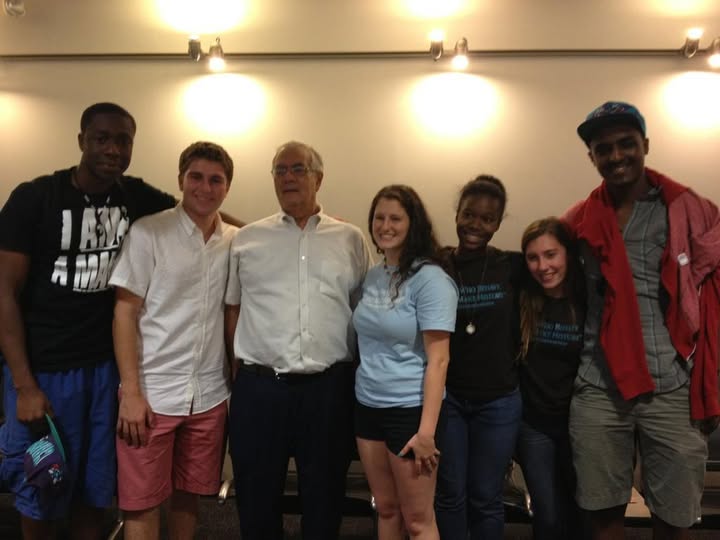
He was also generous with his time, and despite being a curmudgeon, he also had a heart. I remember on one memorable occasion, my son Joe, then a junior in high school, was part of a group of students with Operation Understanding returning to Washington, DC from Mississippi. At the airport, they crossed paths with Barney, who was heading to Boston. At my prompting, he spent nearly half an hour speaking with the students about his experiences working on Freedom Summer in the early 1960s. For the young people on that trip, it was a rare opportunity to hear firsthand reflections from someone directly involved in a pivotal moment in the civil rights movement. That he would take the time to engage with these students — just because — showed the heart beneath the curmudgeon.

Most importantly, Barney was an iconic champion of so many causes: gay rights, consumer protection, and economic fairness.  For consumer advocates, he was a steadfast ally, a brilliant and innovative legislator who successfully navigated the enormously complex but critically important Dodd-Frank financial reform bill to rein in corporate abuses. Barney never hesitated to call out corporate misconduct, and he did so with honesty, humor, and conviction.

I send condolences to his friends, staffers, the LGBTQ community, and especially to his sister, Ann Lewis — a pioneering feminist, close confidante of Hillary Clinton, and someone with whom I’ve had the pleasure working for many years.

Rest in peace, Barney, and know we will never forget your enormous contributions.

Barney Frank, a Fearless Champion for Consumers and Economic Fairness, Says National Consumers League

Washington DC – The National Consumers League mourns the passing of former Congressman Barney Frank, a fearless public servant whose decades in Congress helped strengthen protections for working families and consumers across America.

As chairman of the House Financial Services Committee and co-author of the landmark Dodd-Frank Wall Street Reform and Consumer Protection Act, Congressman Frank played a pivotal role in advancing accountability in the financial system following the 2008 economic crisis. His leadership helped pave the way for the creation of the Consumer Financial Protection Bureau, giving consumers a stronger voice and greater protection from abusive financial practices.

“Barney Frank understood that markets work best when consumers are treated fairly and honestly,” said Sally Greenberg, CEO of the National Consumers League. “He was a brilliant legislator, a tireless advocate for ordinary Americans, and a champion for accountability on Wall Street. Millions of consumers are safer today because of his determination and public service.”

Congressman Frank leaves behind a lasting legacy of consumer protection, economic fairness, and principled leadership.

For Sally Greenberg’s personal recollections of Congressman Barney Frank, please visit her blog: Remembering Barney Frank, a Giant for Consumers and Equality

### 

About the National Consumers League (NCL)      

The National Consumers League, founded in 1899, is America’s pioneer consumer organization. Our mission is to protect and promote social and economic justice for consumers and workers in the United States and abroad. For more information, visit www.nclnet.org.   
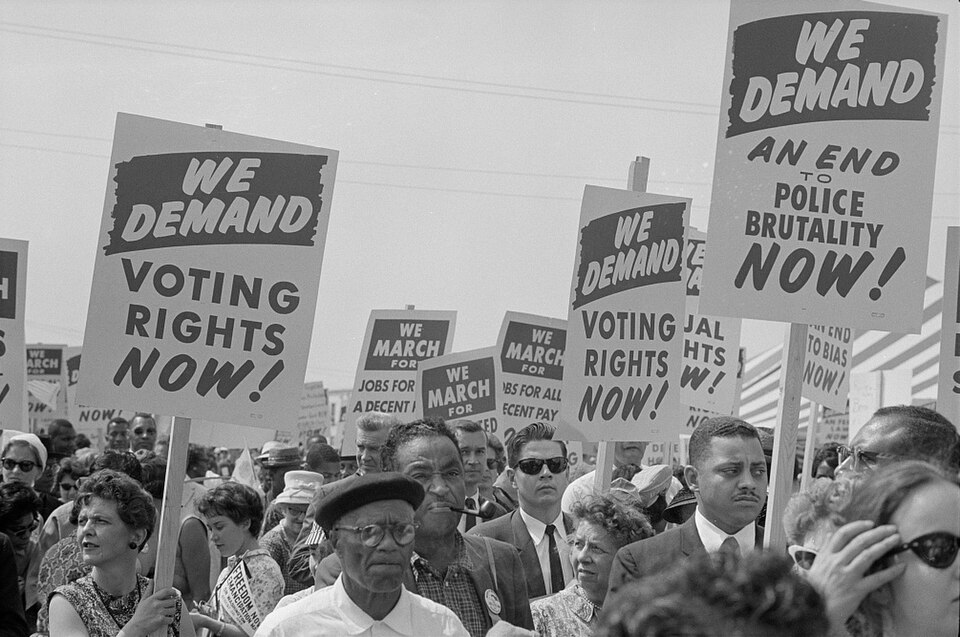
Are we heading into Jim Crow 2.0?

By NCL CEO, Sally Greenberg

How is it possible that decades of civil rights advances can be wiped out in a single year?  Well, it may be happening as we speak. Because polling numbers show the White House and Republicans in danger of losing their narrow 5-seat majority in the US House of Representatives, there’s been pressure on Republican-controlled state legislatures to redistrict out Democratic seats in hopes of keeping their majority.

Many of these seats are held by African Americans: we currently have 6 African American Senators and 63 members of the House of Representatives. But that could change dramatically this year.

There’s a potential for 14 additional Republican seats from new districts in Texas, Florida, Missouri, North Carolina, Ohio, and Tennessee. This means that as many as 15 to 20 Black lawmakers’ seats are at risk, with the threat even greater after a recent Supreme Court ruling that severely weakened the Voting Rights Act.

After the Civil War, during the period known as Reconstruction, some 2,000 Black people held public office, from the local level to the U.S. Senate.

Jim Crow changed all that.  As described on PBS, the Jim Crow era was, “a formal, codified system of racial apartheid that dominated the American South for three-quarters of a century beginning in the 1890s. The laws affected almost every aspect of daily life, mandating segregation of schools, parks, libraries, drinking fountains, restrooms, buses, trains, and restaurants. “Whites Only” and “Colored” signs were constant reminders of the enforced racial order.”

Following the ratification in 1870 of the 15th Amendment, which barred states from depriving citizens of the right to vote based on race, many states in the south launched measures to keep African-Americans from voting, such as literacy tests, primaries with all-white candidates, poll taxes, felony disenfranchisement laws, fraud, grandfather clauses, and other types of intimidation.

It looks like the practice of suppressing Black representation is on track to be repeated.  The wave of redrawn districts could bring the largest single-session drop in Black representation since 1877.

Why is this a concern for the National Consumers League? Because as our founders understood, racial discrimination is deeply tied to the violation of labor and consumer rights, and our mission is to promote both. Florence Kelley, NCL’s towering first General Secretary, was a signatory to the original charter of the NAACP in 1909, and her colleagues – Jane Addams, Florence Kelley, Clara Beyer, and many others – deplored Jim Crow discrimination.

In 1926, Kelley wrote to a colleague, “I write to call your attention to the shameful treatment by hotels of colored members of the Conference at Cleveland. The Statler Hotel was especially brutal. …I think there should be a written pledge from every hotel that there will be no race discrimination. Certainly, I should not dream of staying in any hotel which refused my fellow members either bed or board.” She also noted that her colleagues at the NAACP reported that Statler hotels wouldn’t allow Black people as guests or employees.

States also passed black codes limiting the jobs African Americans could hold, and their ability to leave a job once hired, and they restricted the kind of property Black people could own. African Americans faced social, commercial, and legal discrimination. Theatres, hotels, and restaurants segregated them in inferior accommodations or refused to admit them at all. Shops served them last. The Black Codes and Jim Crow Laws

Keeping Black Americans from representation in Congress was critical to Jim Crow. That changed with the historic voting rights laws and the court cases that upheld the law.

But here we are again – a Congress that is supportive of redistricting out Black representation and a Supreme Court that acts as an “amen chorus” for these discriminatory policies.

The potential loss of many Black members of Congress means silencing the voice of millions of African American constituents. We should not return to the bad old days of Jim Crow, but without fair representation, we lose the voices of so many who have stood  for labor and consumer rights of their African American constituents in Congress.

So is this Jim Crow 2.0? That’s what many – including me – fear. Historic turnout could change that.  This year’s elections will hopefully prove me wrong.

ICYMI: Senator Markey and NCL Calls for a Restoration of Fuel Economy Standards That Save Americans Money at the Pump

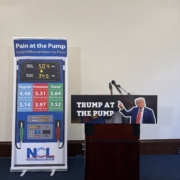
Washington DC – Senator Edward J. Markey (D-Mass.), member of the Commerce, Science, and Transportation Committee, today hosted a press conference calling on the Trump administration to end its proposed rule to roll back Corporate Average Fuel Economy (CAFE) standards, which save money for drivers and reduce oil consumption. Senator Markey was joined by Senator Alex Padilla (D-Calif.), the National Consumers League, Moms Clean Air Force, and a local business owner feeling the pain of high gas prices caused by Trump’s expensive, dangerous, and unnecessary war with Iran. President Trump’s war of choice in Iran has caused gas prices to spike by more than $1.50 in just over two months. Senator Markey also called on car manufacturers to voluntarily recognize previous, more stringent fuel economy standards amidst the ongoing fuel cost crisis.

“With one hand, Donald Trump is rolling back the very standards that keep our vehicles leaner, cleaner, and cheaper, and with the other hand he is driving up gas prices,” said Senator Markey. “That’s like a doctor who makes you sick, withholds the cure, and sends you a bill for both. I am calling on the administration to withdraw their proposed rule to roll back these standards in light of the energy emergency they single-handedly created.”

“Costs are low when fuel economy standards are high,” said Daniel Greene, the Senior Director of Product Safety & Consumer Protection at the National Consumers League. “But in the midst of sky-high gasoline prices and a deepening affordability crisis, the Trump administration response is to weaken federal fuel economy standards. That’s like pouring gasoline onto an open fire – gasoline that costs $4.50 a gallon. The National Consumers League urges the Trump administration to halt its assault on affordability and preserve robust fuel economy standards.”

“As an African American mother, grandmother, and one of the millions of people who drive a car, I have a simple message to the Trump administration: stop putting American families’ health last. Improved fuel economy standards save us money—and save lives too. Tailpipe pollution is a major threat to children’s health and is known to damage our lungs, hearts, and brains. Our children and families deserve better,” said Almeta Cooper, National Manager for Health Justice for Moms Clean Air Force.

In February, Senator Markey and Congresswoman Doris Matsui (CA-07) led 78 lawmakers in a letter to the Administration calling on it to withdraw its proposed rollback of fuel economy standards. Last month, Senator Markey introduced his No Big Fossil Bailouts on Your Power Bill Act as a response to the Trump administration’s abuse of energy emergency powers to force power plants to continue operating beyond their planned retirement dates, causing bills to soar and pollution to surge as a result. Senator Markey has been a fuel economy champion since the Energy Independence and Security Act of 2007 included fuel economy language co-authored by then-Rep. Markey to push for more protective standards.

### 

About the National Consumers League (NCL)      

The National Consumers League, founded in 1899, is America’s pioneer consumer organization. Our mission is to protect and promote social and economic justice for consumers and workers in the United States and abroad. For more information, visit www.nclnet.org.   

Consumer Groups Urge FTC to Regulate Food Delivery Fees, Call for More Action to Fight Unlawful Pricing  

Media Contact: Lisa McDonald, Vice President of Communications, 202-207-2829 

Washington, DC – Today, the National Consumers League (NCL), the Electronic Privacy Information Center (EPIC), and five other public interest organizations filed a joint comment supporting Federal Trade Commission (FTC) action to prohibit hidden fees in food delivery services. The FTC’s pro-consumer effort would bring relief and clarity to shoppers who use food and grocery delivery apps, who (or many of whom) are often individuals with limited mobility or disabilities.   

While supportive of the Commission’s rulemaking, NCL urged the agency to go after hidden fees in additional industries by expanding the scope of the regulation to apply economy-wide, rather than being specific to food delivery. The groups also urged the FTC to ban personalized pricing—a practice fueled by invasive data collection that preys on everyday Americans.  

“There is a longstanding consensus that hidden fees harm consumers and violate the law. Americans now know that dynamic pricing is just as rotten, especially when it’s personalized to exactly how much businesses think they can squeeze from you,” said NCL Senior Public Policy Manager Eden Iscil. “We should not be subjected to a guessing game just to figure out the price of something. It’s important that the FTC works quickly to investigate and stop these unlawful business practices.”  

Recently, the FTC also initiated a proceeding to address hidden fees in rental housing. In 2024, the Commission finalized a regulation to prohibit hidden fees in live-event ticketing and short-term lodging. NCL supports each of these rulemakings, but the FTC’s industry-by-industry approach will take several years to adequately address the breadth of fees plaguing the American economy—and risks excluding currently unforeseen industries’ use of hidden fees. A single, comprehensive regulation would more effectively protect consumers and preclude the practice from reappearing in the future.   

NCL and EPIC’s joint comment received support from Consumer Action, the Consumer Federation of America, the Demand Progress Education Fund, the National Association of Consumer Advocates, and Travelers United.  

The full comment can be found here 

Additional reading 

### 

About the National Consumers League (NCL)      

The National Consumers League, founded in 1899, is America’s pioneer consumer organization. Our mission is to protect and promote social and economic justice for consumers and workers in the United States and abroad. For more information, visit www.nclnet.org.   
As Gas Prices Continue to Rise, Senator Markey and NCL Call on Trump Administration to End Rollback of Fuel Economy Standards That Save Americans Money at the Pump

Media Contact: Lisa McDonald, Vice President of Communications, 202-207-2829 

Washington DC – Senator Edward J. Markey (D-Mass.), member of the Commerce, Science, and Transportation Committee, will host a press conference TOMORROW, Wednesday, May 13, 2026, at 12:00PM EST to call on the Trump administration to end its proposed rule to roll back Corporate Average Fuel Economy (CAFE) standards, which save money for drivers and reduce oil consumption. President Trump’s war of choice in Iran has caused gas prices to spike by more than $1.50 in just over two months.

Senator Markey has been a fuel economy champion since the Energy Independence and Security Act of 2007 included fuel economy language co-authored by then-Rep. Markey to push for more protective standards.

WHO: Senator Markey

— Daniel Greene, Senior Director of Consumer Protection & Product Safety at the National Consumers League

— Almeta Cooper, National Manager for Health Justice for Moms Clean Air Force

— Small Business Owner

WHEN: Wednesday, May 13, 2026, at 12:00PM EST

WHERE: Russell Senate Office Building, SR-198

The press conference will be livestreamed to Senator Markey’s FacebookTwitterYouTubeTikTok, and Twitch.

Press should RSVP to Markey_Press@markey.senate.gov

###

About the National Consumers League (NCL)

The National Consumers League, founded in 1899, is America’s pioneer consumer organization. Our mission is to protect and promote social and economic justice for consumers and workers in the United States and abroad. For more information, visit www.nclnet.org.