
Idaho Patient Act a model for other states for protecting consumers from medical debt

I spent a week last month in Boise with two members of the staff of Melaleuca—a company that makes more than 400 nutritional, cleaning, personal care, and cosmetic products—making lobbying visits to the Idaho legislature. Katie Hart and Jay Cobb work for Frank Vandersloot, CEO of Melaleuca. Vandersloot is a highly successful, conservative businessman who is committed to protecting Idaho residents from abusive medical debt collection practices after discovering that one of his employees was hit with thousands of dollars in bills—including hefty lawyers’ fees and court costs—based on a $294 medical debt that she couldn’t even identify. The stark reality is that 50 percent of bankruptcies in America are caused by medical debt. He was championing a bill called the Idaho Patient Act, House Bill 515.

Many people believe federal law provides broad protections for people in debt. While the federal Fair Debt Collection Practices Act (FDCPA), enforced by Federal Trade Commission, makes it illegal for debt collectors to use abusive, unfair, or deceptive practices when they collect debts, it doesn’t address how debts are calculated or curb predatory fees, penalties and court costs.

NCL has worked with Melaleuca for several years, first to fight a bill in Congress that would have essentially legalized pyramid scheme activity. Last October, I flew to Melaleuca headquarters in Idaho Falls to meet nearly half of the state’s legislators who came to town as part of their tour of businesses in Idaho. At that gathering, Vandersloot discussed his hope to pass a bill to address these predatory collection practices, aiming his fire at the practice of ginning up the cost to patients of medical debts with thousands in lawyers’ and court fees; often patients have no idea where the debt is from and debt collectors aren’t required to provide that information to them. The Idaho Patient Act addresses that issue.

Vandersloot also puts his money where his mouth is: not only did he propose a legislative remedy, he and his wife Belinda created a $1 million fund to provide legal counsel to Idahoans who have been hit with these attorney bills. Consumer advocates like NCL have been working for decades to curb the excesses of this industry. But to see  a conservative CEO take on this issue gives the effort a new push.

Sticking up for the little guy is not out of character for Vandersloot. He spoke with the same fervor when we worked together fighting a bill that would have legalized pyramid schemes. In neither case was there any financial reward coming to Melaleuca—Vandersloot took a stand on this issue because he felt it was the right thing to do. Though we may disagree on a host of other matters, on this we are aligned and that is a good thing for vulnerable consumers. Strange bedfellows are a big advantage when it comes to getting things done in the political arena.

Katie Hart has been wisely deployed to live and work in Boise while the legislature is in session and navigate this important bill through the complicated legislative process. She’s a smart and charismatic lawyer—she and Jay Cobb, an expert strategist, could teach Lobbying 101: they’ve met with the Idaho Hospital Association, Idaho doctors, insurance companies, and the Idaho trial lawyers and revised the bill to address their concerns. 

Specifically, the Idaho Patient Act proposes the following:

  1. All health care providers must submit all charges for procedures performed to an insurance carrier within 45 days.
  2. Within 60 days, the patient must receive a summary of services rendered during treatment and recovery, including the names and contact information for all entities that may be billing the patient separately, such as an individual doctor.
  3. All providers must then send a final statement with a total amount owed by the patient after insurance. The bill must correspond with the original list of services.
  4. Health care providers must wait 60 days after sending the final notice before charging a patient interest on an outstanding bill and hiring a collection agency. They must wait 90 days from the final statement before they take “extraordinary collection actions,” which means a lawsuit, or reporting a patient to a credit bureau for failure to pay.
  5. Finally, in medical debt cases that result in litigation, the legislation limits the amount attorney fees and costs that can be shifted to the patient to $350 for uncontested cases and $750 for contested cases. Currently, there is no official cap for fees that can be charged to delinquent patients by collection agencies and their representing lawyers.

In Boise, my first order of business was to register in the Idaho capitol building as a lobbyist, even though I was only going to be there for the day.  We wanted to do everything by the book! For $11 the Secretary of State’s office put me into the system and off we went.

Jay Cobb explained that Idaho is very conservative where rules or regulations are frowned upon. Of the 70 members of the Idaho House, 56 are Republican and some of those lean far right. 14 are Democrats. Of the 35 members of the Senate, only 7 are Democrat. The Governor is Republican, as is the Secretary of State and the Attorney General.

Katie and Jay have been working for months with elected officials, revising the bill without compromising its impact, and last week the measure was  reported favorably from the House Business Committee by a 15-2 vote (after a 5 hour hearing with many witnesses and terribly sad stories). Adding to the challenge of getting this bill enacted the second Vice Chair of the Republican Party in Idaho, and a member of the Idaho legislature were adamantly opposed to the legislation because as their egregious medical debt collection practices were epicenter of the problem.  Now the bill goes to the full House and over to the Senate.

While in the state house, we met with Senator Grant Burgoyne, a democrat who has provided legal representation to the collections industry. His observation? this bill would rein in “bad actors,” and the collections industry as a whole doesn’t oppose it. Senator Michelle Stennett, a democrat from Ketchum, told us about the challenges of getting what she thought were reasonable measures out of committee in Idaho because members are so loathe to pass any laws. The longest serving Democratic House member told us she believes the bill will pass, and the very smart and entertaining newly elected Boise Representative Steve Berch, who ran five times as a democrat in a red district and finally got elected, also predicts a positive outcome for this bill.  

To cap off the day, both U.S. Senators were in the State House and I had the chance to say hello to one of them, Senator James Risch (R-ID) and meet his DC staff.

The calculus changes when a conservative CEO with political clout backs a bill to offer protections to consumers who -through no fault of their own -have medical debt. Thanks to Frank Vandersloot, Katie Hart and Jay Cobb and the whole team at Melaleuca for making their case to the Idaho legislature so persuasively.

We hope this bill gets enacted in Idaho. If it does, the law will become a template for other states to put reasonable guardrails around collection of medical debt and offer some much-needed consumer protections. And maybe we can even hope that Vandersloot’s willingness to use his clout and bully pulpit to speak out on behalf of those who have no voice will be emulated by other CEOs.

Postscript

On March 9, the Idaho Senate passed the Idaho Patient Act 32-1. On March 16 Idaho Governor Brad Little signed the bill into law.

Congratulations to Frank Vandersloot, Melaleuca’s CEO, to his talented team of Katie Hart and Jay Cobb, and to all the members of the Idaho state legislature, who stood up for consumers and understood that one in seven Idahoans struggle with medical debt.

To quote the words on the Hanukkah dreidel, “A great miracle happened there.”

Consumer groups urge Congress to insist on consumer protections in airline taxpayer bailout

March 19, 2020

Media contact: National Consumers League – Carol McKay, carolm@nclnet.org, (412) 945-3242 or Taun Sterling, tauns@nclnet.org, (202) 207-2832

Washington, DC–A coalition of national consumer and passenger rights groups today called on Congress to include provisions in any contemplated airline industry bailout legislation that address both the immediate impacts of the COVID-19 outbreak on passengers as well as long-standing consumer protection concerns.

After years of record profits, the airline industry is now facing steep and painful financial headwinds due to the COVID-19 pandemic. In response, the industry has asked the Trump Administration and leaders in Congress for a bailout package of grants, loans, and tax relief reportedly totaling more than $50 billion. This includes $29 billion in grants, up to $25 billion in loans, three months of tax rebates and a repeal of aviation excise taxes through at least the end of 2021.

To address the immediate danger of the coronavirus and related passenger protection concerns during the national emergency, the groups urged Congress to require airlines to take steps to mitigate the spread of coronavirus on airplanes, require cash refunds for consumers who cancel flights or whose flights are canceled by the airline, require reasonable rebooking fares and increase call center staffing levels.

As advocates for consumers, the groups further urged Congress to heed the lessons of the 2008 financial crisis by including a slate of needed consumer protections such as making ancillary fees reasonable, restoring a private right of action, empowering state attorneys general to protect passengers, prohibiting further reductions in seat sizes, and ensuring equal access to fare, fee and schedule data.

“A commercially viable air transportation system is vital to the U.S. economy, but in the past decade the airlines have raked in $96 billion in profits on the backs of consumers with the implicit assurance that taxpayers would bail them out in the event of a major market disruption,” said Sally Greenberg, executive director of the National Consumers League. “If the airlines are going to run to Congress for a bailout when they could have invested in pandemic insurance or increased their cash reserves, then policymakers should require binding commitments to address long-standing consumer protection concerns.”

“After the terrorist attacks on 9/11, Consumer Reports supported taxpayer relief  for the airline industry, but urged Congress to require protections to address longstanding consumer complaints,” said William J. McGee, Aviation Adviser for Consumer Reports.   “Unfortunately, no such protections were included, and since then, the airlines have consolidated, become less consumer-friendly, and laid off hundreds of thousands of workers as their profits soared.  Meanwhile, consumers have had to put up with tighter seats, indifferent customer service, and an increasing number of costly fees. Consumers should not be left out now.”

“Restoring a private right of action is the one necessary structural solution to provide sufficient industry discipline to prevent airlines from trampling on all the rights and interests of their customers,” stated Business Travel Coalition chairman Kevin Mitchell. “The right to sue when harmed is fundamental and is one that the U.S. Congress never intended to have stripped from airline consumers when it deregulated the industry in 1978. Moreover, it is a right that consumers exercise in every other consumer-facing industry to discourage market participants from abusing their rights.”

“As air travel is the main way the coronavirus has quickly spread to become a global pandemic, airlines have a special obligation to strictly obey government guidelines to mitigate the pandemic even though this means less revenue and increased expenses in the short term,” said Paul Hudson, President, FlyersRights.org, Public Member, FAA Aviation Rulemaking Advisory Committee and Evacuation Advisory Rulemaking Committee. “DOT Secretary Chao must also strictly enforce the guidelines and abandon the agency’s weak enforcement of passenger rights. Congress at a minimum should repeal the exemption of airlines from consumer protection laws applying to all other businesses.”

“The last investment taxpayers made in the airline industry during a time of crisis was followed by record profits on the backs of consumers through less competition, transparency, passenger comfort and a proliferation of fees for services previously included in the price of a ticket,” said Kurt Ebenhoch, executive director of Travel Fairness Now. “This time, massive public assistance to the airline industry must be coupled with a meaningful commitment from the airline industry to passenger safety and consumer protection.”

“For years, the airlines have failed to place either passenger health and safety or passenger rights first, so Congress needs to require that they do,” said Ed Mierzwinski, U.S. PIRG Senior Director for Federal Consumer Programs.

“It’s time to put the public interest front and center as we take steps to address the immediate problems related to the COVID-19 pandemic and the airline industry in the long-term,” said Susan Grant, Consumer Federation of America’s Director of Consumer Protection and Privacy.

The letter was signed by the National Consumers League, Business Travel Coalition, Consumer Action, Consumer Federation of America, Consumer Reports, EdOnTravel.com, FlyersRights.org, Travelers United, Travel Fairness Now  and U.S. PIRG.

—————–

ABOUT

The National Consumers League

The National Consumers League, founded in 1899, is America’s pioneering consumer organization. Our mission is to protect and promote social and economic justice for consumers and workers in the United States and abroad. For more information, visit www.nclnet.org.

Business Travel Coalition

Founded in 1994, the mission of Business Travel Coalition is to interpret industry and government policies and practices and provide a platform so that the managed travel community can influence issues of strategic importance to their organizations. For more information, visit www.businesstravelcoalition.com

Consumer Action

Through education and advocacy, Consumer Action fights for strong consumer rights and policies that promote fairness and financial prosperity for underrepresented consumers nationwide.

Consumer Federation of America

The Consumer Federation of America (CFA) is an association of non-profit consumer organizations that was established in 1968 to advance the consumer interest through research, advocacy, and education. Today, more than 250 of these groups participate in the federation and govern it through their representatives on the organization’s Board of Directors. CFA is a research, advocacy, education and service organization.

Consumer Reports

Consumer Reports (CR) is a nonprofit membership organization that works side by side with consumers to create a fairer, safer, and healthier world. For 80 years, CR has provided evidence-based product testing and ratings, rigorous research, hard-hitting investigative journalism, public education, and steadfast policy action on behalf of consumers’ interests, including their interest in safe and affordable air travel. Unconstrained by advertising or other commercial influences, CR has exposed landmark public health and safety issues and strives to be a catalyst for pro-consumer changes in the marketplace. From championing responsible auto safety standards, to winning food and water protections, to enhancing healthcare quality, to fighting back against predatory lenders in the financial markets, Consumer Reports has always been on the front lines, raising the voices of consumers.

EdOnTravel.com

A longtime travel expert, Ed helps consumers get the most from their travel dollar. His feature and Q&A columns give readers up-to-the-minute advice on everything from planning an itinerary for a European rail trip to booking flights, renting cars and buying travel insurance. Perkins also peppers his columns with valuable tips to avoid travel hassles.

FlyersRights.org

FlyersRights.org, established in 2007, is the largest airline passenger organization. It publishes a bi-weekly newsletter, operates a free hotline for airline passengers 877-FLYERS6, advocates for passenger rights and interests, represents passengers on the FAA Aviation Rulemaking Advisory Committee dealing with air safety, and maintains a staffed office in Washington, D.C. For more information, visit www.flyersrights.org

Travel Fairness Now

Travel Fairness Now is a non-profit coalition of 70,000 travelers advocating for greater transparency, competition and fairness in travel. For more information, please visit www.travelfairnessnow.org.

Travelers United

Travelers United is the only nonprofit, consumer travel organization dealing with air, rail, bus, rental car, cruise, and lodging.  With a presence in Washington, DC we regularly bring together the Department of Transportation, the Federal Trade Commission, congressional representatives, and major stakeholders to impact important issues on behalf of travelers. For more information, visit www.travelersunited.org

U.S. PIRG

U.S. PIRG, the federation of state Public Interest Research Groups, is a consumer group that stands up to powerful interests whenever they threaten our health and safety, our financial security, or our right to fully participate in our democratic society.

Coronavirus: Keeping yourself and your family well-fed in a crisis

By Nailah John, Linda Golodner Food Safety and Nutrition Fellow

Social distancing, isolation, and general uncertainty about the coronavirus have made many rightly concerned about feeding their families during this historic pandemic. Food is very much top-of-mind for most Americans at this critical time. Here are some tips we can offer consumers.

Some of us haven’t stocked our pantry, and we don’t cook much at home. This is a good time to start doing both. My pantry at home is always stocked because I have a toddler who always wants food and snacks. But it’s a good practice generally, and now we are reminded of that more than ever.

From The Washington Post, here are some tips for keeping the pantry stocked so that, in the event of an emergency, you have some options without having to leave the house:

  • Pick a weekend day. Involve the whole family, and make large batches of different dishes so there is variety. Some suggestions: turkey chili, green chili, pasta sauces, and soups or stews—all of which freeze well.
  • Pack them in pint-size containers so that you can take out just what you need for a meal
  • Remember to stock up on frozen vegetables; they have as good or better nutritional value as fresh, since they are flash-frozen at their peak, right after being harvested. If you do not have a big freezer, then opt to stock up on root vegetables. They last longer.
  • Make meals that are nutritious and provide good energy. Many grocery stores are out of stock or running low on stock of rice and pasta. Hugo Ortega, chef and owner of Blackstreet, offered this suggestion to The Post: mix Masa Harina (ground, nixtamalized corn flour better known as Masa), with water, stretch it in the palm of your hand, fill it with stewed vegetables, meat, cheese or anything really and cook it on a cast iron pan. For those that do not know, masa flour is equivalent to pasta, so if you cannot find pasta in your grocery store this is an option—and it’s delicious.

Chef Ortega also hopes that this forced hibernation will encourage people to cultivate fresh food themselves: fresh rosemary that you can grown near a your window or a tomato plant at your back door or on a balcony.

So make a trip to the grocery store—but consider doing so at an off-peak time, and follow the CDC’s advice for going into public safely—and stock up your pantry, cook your family’s favorite dishes, and store them in your freezer. There’s never been a time where we needed to be more prepared, and you’re sure to enjoy the experience with family!

COVID-19 is here and thriving, and ‘flattening the curve’ is the only way forward

Nissa Shaffi

Like most Americans, you probably feel besieged by the rapidly evolving developments surrounding *COVID-19. The spread of this novel illness has led to drastic measures to contain the virus and protect public health, and the question on everyone’s mind is how bad is this going to get? The short answer: we don’t know. The long answer: COVID-19 is going to disrupt our lives in the coming weeks, if not days, and its overall impact will be realized for months to come.

A lot has happened since I last wrote on COVID-19, so let’s unpack the most recent events:

On March 11, the World Health Organization (WHO) officially designated COVID-19 as a pandemic, which is defined as the worldwide spread of a new disease.

On March 13, President Trump declared a national emergency in order to release $50 billion of funding to fortify efforts to combat the spread of COVID-19. With more than 4,100 (and counting) active cases of COVID-19 in the United States, more than 40 states have declared states of emergency.

On March 14, the House passed the Families First Coronavirus Response Act (H.R. 6201), with sweeping bipartisan support. H.R. 6201 aims to respond to the COVID-19 outbreak by expanding access to free testing, extending the Family Medical Leave Act, allocating $1 billion in food aid, and extending sick leave benefits to vulnerable Americans.

On March 15, the White House Coronavirus Task Force announced that the nation is entering a new phase in testing for COVID-19, which will increase the capacity and throughput of testing across the country.

So, why exactly has the disease spread so quickly? The issue lies with the fact that the government has grossly mismanaged critical response efforts for COVID-19. This is in part due to initial faulty tests distributed by the Centers for Disease Control and Prevention (CDC), which contained technical manufacturing issues, yielding incorrect results.

Once the CDC identified the error, it promised prompt redistribution of new tests – a process that unfortunately took six-weeks to rectify, catalyzing the silent and effective spread of the virus. Amid these series of planning failures, the Trump administration has falsely claimed that anyone who wants a test can obtain one. Yet, concerned patients across the country have complained that they have been denied tests, due to either unavailability or shifting guidance from the CDC regarding who should be diagnosed, treated, and tested.

We now face the reality that we are catastrophically behind in terms of testing and identifying individuals carrying COVID-19. To put this in perspective, South Korea conducts more tests in one day (10,000), than the United States has in the past two months (5,000-8,000).

We must now accept the sobering truth that these delays have enabled patients with an unknown COVID-19 status to serve as vectors to the disease in their communities. Johns Hopkins Professor, Marty Makary, estimates that for every person that has tested positive for COVID-19, there are 25-50 potential new cases. Makary speculates that, at present, there are potentially 50,000 to 500,000 active (undetected) cases of COVID-19 in the United States.

The promising news is that we’ve entered a new phase in COVID-19 response efforts. The CDC traditionally reserved the right to develop new diagnostic tests. However, in the time of COVID-19, this has severely limited the potential to capture the full impact of the outbreak. On Sunday, the White House Coronavirus Taskforce announced that newly forged public and private partnerships would expand testing for COVID-19 significantly.

To aid in critical response efforts, the Food and Drug Administration (FDA) has approved high throughput testing, which will significantly increase capacity for testing to hundreds of thousands of individuals per day. We can expect 2 million tests to be available across 2,000 labs nationwide, starting this week.

There are currently labs in every *state that have been approved to conduct COVID-19 testing. In order to ebb further contamination, drive-through testing centers have been established in seven states, with more expected to pop up in the coming weeks.

The CDC has released very specific *guidance regarding how to pursue testing for COVID-19, should you suspect that you have the illness. *Symptoms may appear 2-14 days after exposure, and they may include fever, cough, and shortness of breath. If you have these symptoms and suspect that you may be infected, the most important thing to do is to first call your doctor or local health care facility. This will assist your health care provider in properly triaging you without risk of contaminating others.

Over the past few days, you’ve probably heard the words “social distancing,” “self-quarantine,” and, most importantly, “flattening the curve.” In the coming days, we will witness increased cancellations of sporting events, public gatherings, and closures of entire school systems until the spread of the virus tapers off or declines.

It’s all part of a nationwide effort to curb the spread of the pandemic. These measures are extreme – something we haven’t experienced in our lifetimes – but they serve to prevent huge cohorts of people from getting sick all at once, which will wreak havoc on the healthcare system. Now that we have ramped up testing efforts, the number of active cases will arise. Flattening the curve will help delay the spread of disease, as we identify the true incidence of the illness.

We are in a critical time in our nation’s history, and we must all do our part in protecting our communities from further spread of COVID-19. If you have COVID-19, please click here to learn about how you can ensure its *containment.

Lastly, if we had a vaccine against the Coronavirus, none of these dire steps would be needed because we’d all get vaccinated. NCL has long championed the effectiveness and safety of vaccines, often in the face of anti-vaxx zealots – we can’t help but be struck by the irony. Everyone wants a vaccine! We are heartened to know that many companies are working to develop antiviral therapies to help combat the spread of COVID-19. Pfizer, for example, has issued a five-point plan to aid scientists in developing treatments to help address this crisis.

The National Consumers League commends the efforts of the CDC, FDA, and other public health agencies in containing and mitigating the impact of COVID-19. Whether its 4 weeks or weeks, we all must make social sacrifices – whatever we must do to contain the virus. These are short windows in the scheme of things, and they will head us in the right direction. Stay healthy and follow *CDC guidance on how to protect yourself and your community from COVID-19.

*Links are no longer active as the original sources have removed the content, sometimes due to federal website changes or restructurings
Florence Kelley is smiling down upon Congress this week

NCL’s Florence Kelley, the towering reformer who headed the League from its first days in 1899 until her death in 1932, is surely smiling upon the U.S. House of Representatives this week.

In her time, Kelley worked tirelessly to pass federal anti-lynching laws in the United States. She was a powerful voice for racial justice and was raised in a fiercely abolitionist Quaker family. But she ran into enormous opposition and was continually angered and frustrated by the inability to get the federal proposal – the Dyer Anti-Lynching Bill – through Congress.  This legislation was first introduced in 1918 by Representative Leonidas C. Dyer, a Republican from St. Louis, Missouri, in the United States House of Representatives; the Act made lynching a federal crime. The Dyer Act did pass the U.S. House of Representatives in 1922, but was halted in the Senate by a filibuster by white supremacist Southern Democrats. In fact, since 1918, there have been 200 attempts to pass federal anti-lynching bills in the U.S. Senate.

But this week something historic took place. In a rare show of bipartisan support, the U.S. House of Representatives passed the federal Emmett Till Anti-lynching Act (H.R. 35), by a landslide 410 – 4 margin, named after 14-year-old Emmett Till, who was lynched in Mississippi in 1955. I’ve been to the Courthouse where his murderers were acquitted and have seen the tiny grocery store in Money, MS where he was accused of his crime: whistling at a white woman. It took nearly 100 years to fully turn around public opinion and gain overwhelming support for the idea that lynching should be—must be—recognized as a federal crime. Something Kelley always knew and supported.

The Senate has already passed its version Justice for Victims of Lynching Act (S. 488). In fact, the Senate bill passed by unanimous consent in December 2018 and again in February 2019, but because the House and Senate bills still have different titles and numbers, additional action is needed in the Senate before the legislation can go to the President’s desk. 

House Majority Leader Steny Hoyer reports that he expects President Trump to sign the bill into law shortly thereafter.    

Lynching plagued and terrorized mainly African Americans – but also Native Americans, Jews, Asians, and many others for so many decades. It’s a form of vigilante “justice” in which victims are kidnapped and executed in public, often by hanging, as punishment for suspected crimes or as a warning to others. According to the NAACP, there were 4,472 lynchings between 1882 and 1968, most of them involving blacks killed at the hands of white mobs. The House bill describes lynching as “a pernicious and pervasive tool that was used to interfere with multiple aspects of life — including the exercise of Federally protected rights,” and prohibits “conspiracies to violate each of these rights.” 

We owe a debt of gratitude to the House sponsor Representative Bobby Rush (D-Il) and Senate sponsors Sen. Cory Booker (D-NJ) Sen. Kamala Harris (D-CA), and Sen. Tim Scott (R-SC) for their leadership.

As Senator Booker noted, “Today brings us one step closer to finally reconciling a dark chapter in our nation’s history.” “Lynchings were used to terrorize, marginalize, and oppress black communities – to kill human beings in order to sow fear and keep black communities in a perpetual state of racial subjugation. If we do not reckon with this dark past, we cannot move forward. But today we are moving forward. Thanks to the leadership of Rep. Rush, the House has sent a clear, indisputable message that lynching will not be tolerated. It has brought us closer to reckoning with our nation’s history of racialized violence. Now the Senate must again pass this bill to ensure that it finally becomes law.”

At the National Consumers League and in honor of our first leader Florence Kelley, we applaud that justice is finally done with the passage of the nation’s first law making lynching a federal crime.

Understanding the rapidly emerging disease, Coronavirus

Nissa Shaffi

On January 30, the World Health Organization (WHO) designated the Coronavirus as a global health emergency. The virus first emerged from a seafood and poultry market in Wuhan, Hubei Province of China, in December 2019. Since then, it has paralyzed several cities around the world, metastasizing into a global public health and economic crisis.

Coronavirus, officially renamed COVID-19 by WHO, is a member of a large *family of viruses that can cause illnesses ranging from the common cold to more severe, life-threatening conditions. Coronaviruses are transmitted between animals and people (zoonotic). There have been only two prior coronaviruses that have exhibited zoonotic transmission, which include the Middle East Respiratory Syndrome (MERS) and Secure Acute Respiratory Syndrome (SARS).

COVID-19 is a *novel coronavirus that has not previously presented in humans. With nearly 80,000 confirmed cases across 37 countries—which resulted in over 2,700 deaths—WHO warns that COVID-19 is likely to become a global pandemic. Nancy Messonnier, director of CDC’s National Center for Immunization and Respiratory Diseases, cautioned that the spread of COVID-19 in the U.S. is inevitable and could cause severe disruptions to everyday life.

Here’s what you need to know about COVID-19 

Risk Factors

Based on surveillance of COVID-19 thus far, it appears that the virus is nondiscriminatory, and *anyone could be at risk for contracting the virus.

Symptoms

According to the CDC, the *incubation period for COVID-19 may range from two to 14 days, and symptoms include high fever, cough, and shortness of breath. In more *severe cases, the virus develops into pneumonia, which presents the most danger.

Transmission

The method of transmission is suspected to be from person to person via droplets resulting from breathing, coughing, or sneezing. The virus is also suspected to be transmitted via contaminated surfaces. WHO recommends maintaining a distance of at least one meter (three feet) between yourself and anyone who presents the symptoms mentioned above.

Precautions

WHO recommends regular hand washing with either an alcohol-based gel or soap and water to prevent the spread of infection. Individuals should also cover their mouth and nose when coughing and sneezing and should avoid close contact with anyone showing similar symptoms of respiratory illness. Additionally, while getting the *flu shot cannot protect you from contracting COVID-19, it does protect you from the flu, a condition that has a far higher mortality rate than COVID-19.

Travel

The Centers for Disease Control and Prevention (CDC) has advised that older and at-risk travelers limit travel to Japan, Italy, and Iran, where the disease is rapidly gaining ground. CDC has also explicitly advised against all non-essential travel to South Korea and China. For more information on CDC’s travel advisories, please click here.

Although the rapid spread of the disease is concerning, the promising news is that the number of new cases in China has dropped–indicating that aggressive interventions deployed by health officials in the region are working. While there are international efforts underway to develop treatments for COVID-19, there is currently *no vaccine to prevent the disease. According to the CDC, the best way to prevent contracting the virus is to avoid exposure. For more information on prevention against COVID-19, click *here and here.

*Links are no longer active as the original sources have removed the content, sometimes due to federal website changes or restructurings
Florence Kelley and women’s suffrage at the National Archives

Today the National Consumers League staff is visiting the exhibit at the National Archives entitled Rightfully Hers: American Women and the VoteAs many are aware, 2020 marks the 100th anniversary of women’s right to vote in the United States. In 1920, American democracy dramatically expanded when the newly ratified 19th Amendment to the U.S. Constitution prohibited the states from denying the vote on the basis of sex.  

As the exhibit notes, “The U.S. Constitution as drafted in 1787 did not specify eligibility requirements for voting. It left that power to the states. Subsequent constitutional amendments and Federal laws have gradually restricted states’ power to decide who votes. But before 1920, the only constitutional restriction prohibited states from barring voters on the basis of “race, color, or previous condition of servitude. States’ power to determine voter eligibility made the struggle for women’s voting rights a piecemeal process.” So the 19th Amendment was critically important because we no longer had to rely on states to grant women the right to vote. It became mandatory.

The National Consumers League, led by the towering reformer Florence Kelley, was a leading voice for women’s suffrage long before ratification of the 19th Amendment. In February 1898, Kelley wrote a paper entitled “The Working Woman’s Need of the Ballot,” which was read at hearings on “the philosophy of the [women’s suffrage] movement.

As Kathryn Kish Sklar points out in her biography of Kelley – Florence Kelley and the Nation’s Workconducted by the U.S. Senate Special Committee on Women’s Suffrage: “No one needs all the powers of the fullest citizenship more urgently than the wage-earning woman …. Since she was “cut off from the protection awarded to her sisters abroad” but had no power “to defend her interests at the polls.” Kelley argued this impaired her standing in the community and lowered “her value as a human being and consequently as a worker.”

Florence Kelley and her fellow Progressive Era reformers led the fight for women’s suffrage in speeches, reports, and testimony before Congress. We thank them for their bravery and refusal to back down in the face of brutal opposition from many forces and we celebrate with them this 100th Anniversary of the 19th Amendment as we enjoy and take in all that this exhibit has to offer. Thanks to the National Archives and our dear friend Professor Robyn Muncy of the University of Maryland, who co-curated the exhibit with the Archives’ Corinne Porter.

Capitol Hill briefing alerts lawmakers to public health ramifications of CBD proliferation

Lawmakers need to be aware of the threats to public health posed by the proliferation of unregulated, untested CBD products currently widely available in the marketplace. There is a great deal of work to be done in Washington to better understand the healing potential of CBD, while also protecting consumers from the dangers of what is currently an anything-goes market environment.

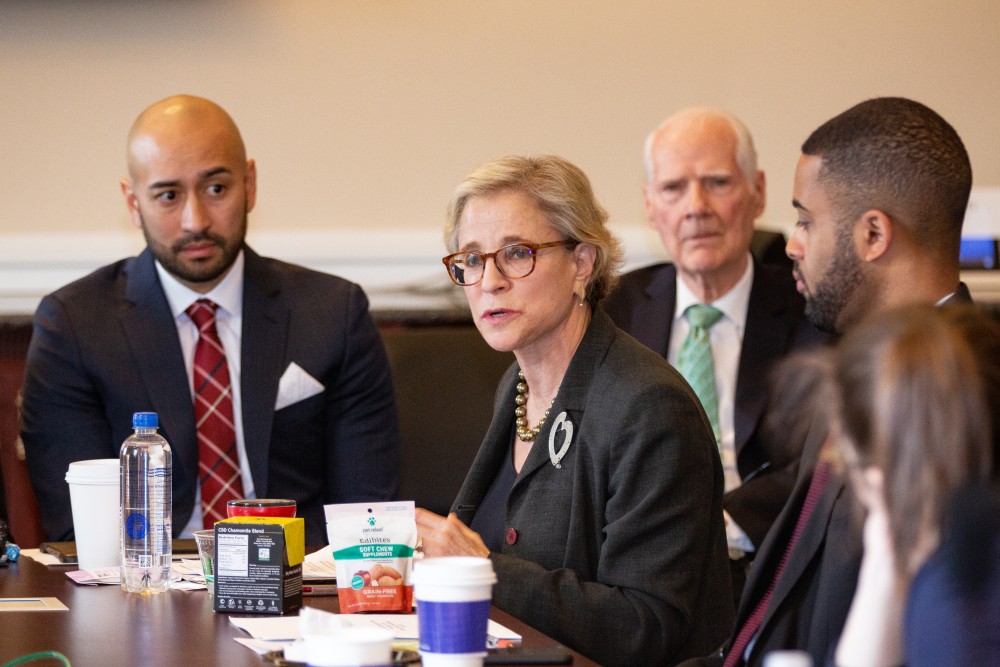
That was the compelling message participants took from a congressional staff briefing last week on “The Future of Cannabis as a Drug.” Expert speakers, including National Consumers League Executive Director Sally Greenberg, issued a two-pronged call for action: to intensify clinical research into new medical treatments containing CBD, while encouraging the Food and Drug Administration (FDA) to proactively regulate non-medical, over-the-counter CBD products that are frequently mislabeled and contain potentially harmful ingredients.

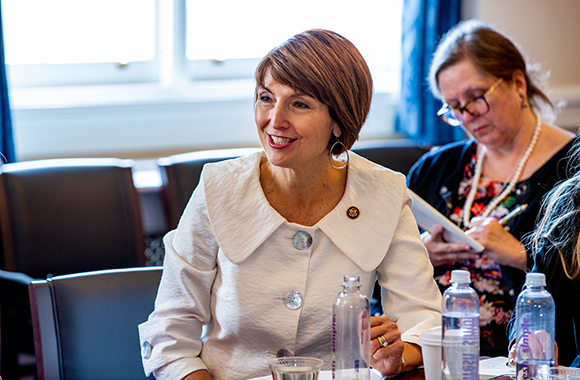
The briefing featured opening remarks by U.S. Representatives Scott Peters (D-CA) and Cathy McMorris Rodgers (R-WA) and was moderated by Ron Manderscheid, Executive Director of the National Association of County Behavioral Health and Developmental Disability Directors and the National Association for Rural Mental Health. “We would like to have more understanding and more confidence in CBD products,” Rep. Peters explained. “You should know what you’re getting”.

Attendees received eye-opening data about the ways in which readily-available CBD products—sold in the form of oils, lotions, food additives, and more—have the potential to make consumers ill. Few realize, for example, that an independent study found 70 percent of the top-selling CBD products contain substances such as pesticides, arsenic, and toxic mold.

NCL’s Greenberg previewed upcoming academic research that will place a spotlight on the questionable science being utilized by CBD and cannabis companies, often in partnership with academia, to lend legitimacy to these products and short-cut the regulatory approval process. “Not only are these products untested, but they are inaccurately labeled,” said Greenberg. “We want FDA to do what it’s supposed to do, and what we as consumers expect it to do.”

NCL launched Consumers for Safe CBD to warn the public of the potential health and safety risks associated with unregulated and unlawfully marketed CBD products.

Susan Audino, a board member of the Center for Research on Environmental Medicine in Maryland, shared her findings on the lack of quality controls currently in the CBD marketplace and how product marketing is accelerating faster than the science used to substantiate claims of enhanced health and well-being. “We even trust McDonald’s to inform us of the number of calories in a Big Mac,” said Audino. “When it comes to cannabis, we are not afforded that same safety and assurance.”

James Werline, a pharmacist and the father of a daughter with a severe form of epilepsy, spoke to the promise and importance of CBD-related research. The only CBD medication currently approved by the FDA is used to prevent seizures caused by rare forms of childhood epilepsy. Angelique Lee-Rowley, Vice President, Global Chief Ethics and Compliance Officer at Greenwich Biosciences, discussed the importance of clinical research into new CBD treatments and shed light on the restrictions pharmaceutical companies have in educating consumers on product efficacy versus the retail and online marketers who have few boundaries in the claims they can make.

“We are on the verge of a major breakthrough,” said Rep. McMorris Rogers. “We want to be encouraging those breakthroughs. I am committed to helping with those developments.”

The briefing served to alert congressional staff to the seriousness of this issue. By 2022, the CBD marketplace is expected to reach $1.8 billion in sales, more than triple what it was just four years earlier. As the commerce expands, so do—without adequate consumer protections—the threats to health and safety.

Enough is enough! It’s time for the FTC to protect consumers from deceptive automatic renewal clauses

Brian Young

If you’re like most Americans ,you have probably had a bad experience with an automatic renewal oras they are sometimes referred toa negative option clause. Regardless of the name they go by, these clauses cause contracts and subscriptions (ranging from equipment leases to gym memberships) to renew if a consumer fails to cancel the contract. Unfortunately for consumers, these clauses are increasingly being slipped into the fine print of contracts or misleadingly disclosed to customers during the checkout process.  

Some companies take this practice a step further by offering a free or low-fee trials to a customer only to later lock them into an expensive and lengthy contract without obtaining their informed consent. One survey found that this has happened to 59 percent of consumers, and that number appears to be growing. A Better Business Bureau study of FTC complaint data found that complaints about free trials doubled between 2015 and 2017. With the average loss rates for deceptive free trials reaching $186 per incident, it is clear that action is sorely needed.

While states like California and the District of Columbia have taken steps to protect their residents from these disreputable “gotcha” clauses, a majority of Americans still lack adequate protections. Some businesses will not only utilize deceptive negative option clauses, but also place unnecessary barriers in the cancelation process to prevent consumers from managing or canceling their subscriptions and contracts. Indeed, nearly 42 percent of Americans have complained about the difficulty companies have created  in the cancellation process.

Thankfully, the Federal Trade Commission (FTC) is finally considering improving consumer protections in this space. While the FTC already offers a few modest protections through laws and regulations like the Restore Online Shoppers Confidence Act (ROSCA), a series of loopholes exist, allowing companies to mask rate hikes, roll consumers into lengthy trials without their informed consent, and hide these clauses in the fine print.

To help encourage the FTC to require meaningful protections, NCL recently filed a comment letter urging the Commission to:

  • Require clear and conspicuous disclosure of any automatic renewal clause, regardless of where or how the consumer enters into it;
  • Require companies to provide meaningful notifications prior to any contract or subscription renewal;
  • Ensure that businesses receive a consumer’s consent for their free or low-fee trial to be rolled over into a contract; and
  • End the practice of businesses making it difficult for consumers to amend, manage, or cancel their subscription.

NCL believes that the FTC has a real opportunity to extend long overdue automatic renewal protections to all Americans. As more companies incorporate the use of negative option clauses in their contracts, consumers need meaningful notifications and protections that ensure that they remain in control of their financial decisions. A strong FTC negative option rule will ensure that businesses compete over quality and price, not over who can create the most painful cancellation procedures or earn the most revenue by slamming consumers with unexpected and costly contracts. The time is now for the FTC to act.

Read NCL’s full comment filing here (PDF).

How consumers must respond to the security threat inside nearly every computer

Nearly two years ago, researchers revealed flaws in the chips of virtually every computer made since the mid-1990’s. The flaws—primarily found in Intel’s chips—create a vulnerability that can be exploited by allowing hackers to obtain unauthorized access to privileged information.

Since the initial exploits were first exposed, new versions have continued to be discovered—the most recent of which was found this past NovemberWhile software “fixes” have been released, they tend to reduce the speed and performance of computers—as much as 40 percent, according to some reportsIn additionsince the flaw is hardware-based, the “fix is only good until the next exploit is discovered. 

At the time of the discovery of one of the “worst CPU bugs ever found,” there was significant alarm expressed in the news as well as across the cybersecurity communitySince that timepublic attention has waned. Unfortunately, the problem has only grown worse. And while there has been considerable discussion of the impact these flaws have on businessesthe impact on consumers has been somewhat overlooked. 

That’s why NCL’s #DataInsecurity Project recently released a paper detailing the threat that these bugs—with scary names like MeltdownSpectre, and Zombieloadpose to consumers, their data, and the performance of their computers.  

Every organization or individual running a server or computer with affected hardware should take action to protect themselves. Unfortunately, consumers are less likely to know what to do or have the resources to do it, leaving them more exposed 

For example, consumers are more likely to be running older or outdated software. Consumers are also likely to keep their computers much longer than a business, making their hardware older as well. The way these flaws work, older hardware generally sees a greater slowdown when the security patches are applied. 

Additionally, the small businesses that consumers interact with may also be running “legacy” hardware or software. These businesses may not be able to afford the high cost of additional servers to offset the speed loss from the patches or of entirely replacing old systems. This difficult choice for small businesses could mean that some decide against applying patches – with potentially severe consequences for consumers’ data security.  

Google has taken preemptive steps to protect consumers, but it also warned that as a result of these security measures, “some users may notice slower performance with some apps and games.” Apple, conversely, has offered software patches but left other security measures as an “opt-in” for consumers.  

So, while consumers may not face the same type of risk as businesses, they do face a lot of challenges when it comes to addressing these exploits. Consumers already live in heightened threat environment, filled with phishing emails and computer viruses. They shouldn’t have to choose between the security of their data or the performance of their computers.  

To learn more about these issues and the best way to protect yourself, you can find NCL’s white paper here.