NCL celebrates 30 years of LifeSmarts, recognizes its lifelong partners at annual Spring Soiree

February 28, 2024

Media contact: National Consumers League – Melody Merin, melodym@nclnet.org, 202-207-2831

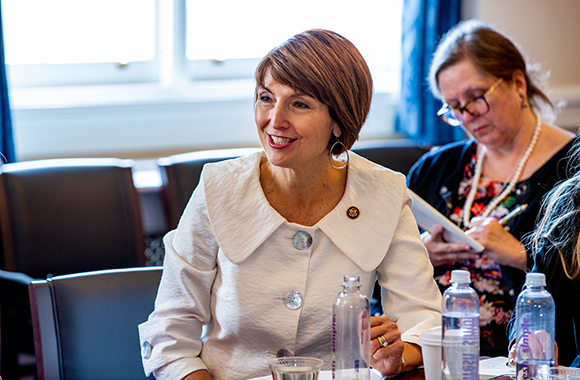
Washington, DC – NCL celebrates the 30th anniversary of its LifeSmarts program at the National Press Club in Downtown Washington, DC, on Wednesday, February 28. LifeSmarts is the organization’s national consumer literacy program that gives young people in middle and high school the necessary skills to become successful adults, preparing them to be informed consumers and workers.

“We want this evening to celebrate 30 years of this incredible program and honor our partnership with four wonderful organizations that have made LifeSmarts the extraordinary program that it is today,” said NCL CEO Sally Greenberg.

Receiving NCL’s LifeSmarts Lifetime Partnership Award were Steven Mitchell, Executive Director and CEO of Business Professionals of America (BPA); Alex Graham, President and CEO of Future Business Leaders of America (FBLA); Sandy Spavone, Executive Director of Family, Career and Community Leaders of America (FCCLA); and Chelle Travis, Executive Director of SkillsUSA.

The program also included LifeSmarts Advisory Board member Molly Alawode of Kenvue, a longtime partner of LifeSmarts, and Andrew Harris, Director of Public Policy at Amazon, which has also been a major supporter of LifeSmarts.

“I want to congratulate all our LifeSmarts Lifetime Partnership Award honorees,” said Lisa Hertzberg, LifeSmarts program director. “We are honored to work with each of them and we appreciate the opportunities to have partnered with them and make a difference in the lives of so many youths.”

For more information on this year’s event, visit the 2024 Spring Soiree.

###

About the National Consumers League (NCL)

The National Consumers League, founded in 1899, is America’s pioneer consumer organization.  Our mission is to protect and promote social and economic justice for consumers and workers in the United States and abroad.  For more information, visit nclnet.org.

A coalition of consumer, health groups – including NCL – call for nutrition, ingredient, and allergen labeling on alcoholic beverages

February 27, 2024

Media contact: National Consumers League – Melody Merin, melodym@nclnet.org, 202-207-2831

Washington, DC – A coalition of consumer and health groups is urging Treasury Secretary Janet Yellen to ensure that the agency responsible for regulating most alcoholic beverages in the U.S. – the Alcohol and Tobacco Tax and Trade Bureau (TTB) – keeps its commitment to require standardized alcohol labeling on all beer, wine, and distilled spirits products by initiating three promised rulemakings on nutrition, ingredients, and allergen labeling on an accelerated basis.

The appeal comes in the form of a February 27 letter from five leading public interest groups as TTB begins a series of “listening sessions” on labeling and advertising of alcoholic beverages on February 28. Raising concerns that the listening sessions are no more than a delay tactic to maintain the status quo and “slow walk deliberations for months,” the organizations – the Asthma and Allergy Foundation of America (AAFA), Center for Science in the Public Interest (CSPI), Consumer Federation of America (CFA), Food Allergy Research and Education (FARE), and National Consumers League (NCL) – called for TTB to publish the rulemakings by June 2024.

The Treasury Department promised that TTB would issue mandatory alcohol labeling rules in a November 17, 2022 letter in response to a lawsuit filed by CSPI, NCL, and CFA. The Department stated its intention to publish the three rulemakings before the end of 2023.

“We write … to express our dismay and serious concern that TTB has backtracked from its written undertaking of the November 17, 2022 agreement,” the groups wrote to Secretary Yellen. “TTB has, in effect, enabled recalcitrant companies by delaying indefinitely rulemakings on mandatory alcohol labeling while opting for a voluntary rule under which labeling “Serving Facts” or “Alcohol Facts” and ingredients are optional.”

Focusing on the health consequences of delaying action on alcohol labeling, the letter from advocates to Secretary Yellen describes how better alcohol labeling will benefit the 84 percent of U.S. adults who drink alcoholic beverages – 216 million people – and who currently do not have the facts about the alcohol they are consuming to protect their health and safety. Overconsumption of alcohol is a costly public health problem that has become much worse in recent years, as alcohol-related deaths have risen substantially. Among the key concerns, alcohol is involved in about 30 percent of all traffic crash fatalities in the U.S, is a source of empty calories that contributes to obesity, can impact blood sugar control in people with diabetes, and labeling can be a life-or-death matter for people with food allergies. Additionally, excessive drinking increases the risk of liver disease, hypertension, cardiovascular disease, alcohol use disorders, certain cancers and severe injuries.

“The consensus among public health and nutrition experts and consumers themselves, in favor of mandatory and complete alcohol labeling is overwhelming,” said Thomas Gremillion, Director of Food Policy at the Consumer Federation of America. “By reneging on its promise to initiate rulemakings, TTB continues to deny Americans the same helpful and easily accessible labeling information now required for conventional foods, dietary supplements, and nonprescription drugs.”

The letter to Secretary Yellen also stresses that alcohol manufacturers have the capability to put standardized Serving Facts labels on their products, when required. This is the case for products such as some hard ciders, hard seltzers, and wine coolers that are regulated by the Food and Drug Administration, which requires such products to have the same Nutrition Facts panel and ingredients statements on nonalcoholic beverages, from soft drinks to juices.

“To date, TTB has taken the position that requiring standardized nutrient content labeling on alcoholic beverages is too costly and burdensome for beverage alcohol manufacturers,” said Sally Greenberg, CEO of the National Consumers League. “However, the inconvenient truth for the industry is that some of the very same companies whose products do not include a Serving Facts statement if they are regulated by TTB already put complete alcohol labeling on their hard ciders, hard seltzers, wine coolers, and other FDA regulated wines and beers.”

Highlighting that the time has come for mandatory alcohol labeling, the letter makes clear that the agency’s current voluntary labeling rules are not working. Although the rule gives companies the option of putting “Serving Facts” or “Alcohol Facts” and ingredients information on their products, new research from the Center for Science in the Public Interest finds that most manufacturers have opted out of TTB’s voluntary program. Using TTB’s COLA database to examine the labels for 132 of the nation’s top beer and wine brands, CSPI’s study found that only 11 labels of the 65 beer brands examined (17%) and none of the 67 wine brands included ingredients lists while 18 beers (28%) and no wines used the voluntary “Serving Facts” label, and one additional beer brand carried the voluntary “Alcohol Facts” label. CSPI’s review also showed that even when serving information is included on beer and wine labels, there is no standard format for where and how the disclosures appear, making it hard for consumers to find information easily and compare different brands.

“We have the data that demonstrate that Treasury’s voluntary rule has failed to adequately improve transparency in alcohol labeling,” said Dr. Peter G. Lurie, President of the Center for Science in the Public Interest. “Ensuring that the agency ends this ineffective voluntary regime by issuing mandatory labeling rules necessitates national leadership. This is why we are appealing directly to Secretary Yellen to intercede personally to require the agency to commit to publish all three proposed rules by June 2024.”

The 2022 letter whereby TTB undertook to publish standardized alcohol content, calorie, and allergen labeling by the end of 2023 resulted from a lawsuit filed by Center for Science in the Public Interest, Consumer Federation of America, and the National Consumers League on October 3, 2022. The suit charged TTB with failing to act on a citizen petitionsubmitted to the Treasury Department in 2003 to mandate alcohol labeling. CSPI, CFA, and NCL filed the petition along with a coalition of 66 other organizations and eight individuals, including four deans of schools of public health.

###

About the National Consumers League (NCL)

The National Consumers League, founded in 1899, is America’s pioneer consumer organization.  Our mission is to protect and promote social and economic justice for consumers and workers in the United States and abroad.  For more information, visit nclnet.org.

NCL applauds FTC action to stop imminent grocery monopoly 

February 26, 2024

Media contact: National Consumers League – Melody Merin, melodym@nclnet.org, 202-207-2831

Washington, DC – Today, the Federal Trade Commission (FTC) and bipartisan state attorneys general sued to block the proposed merger between Kroger and Albertsons. The $24.6 billion deal—the largest supermarket merger in U.S. history—would create a near monopoly by consolidating 5,000 stores and 4,000 pharmacies under one corporation. Without FTC action, consumers would see inflated prices and workers would be stuck with anticompetitive compensation.

“Decades of ignoring federal law have allowed industry consolidation to grow unchecked, leaving everyone worse off except for a handful of executives at the top,” said NCL CEO Sally Greenberg. “The FTC is rightfully asserting its authority and putting the interest of consumers and workers first. Monopolists should know that they can no longer take advantage of the American public without facing legal challenges.”

The proposed deal would eliminate competition between Kroger (including Fred Meyer, Fry’s, and Harris Teer) and Albertsons (among its subsidiaries are Haggen, Safeway, and Vons). Last year, a coalition including NCL and 250 national, state, and local organizations urged the FTC to prevent this merger from taking place. Joining the FTC’s lawsuit are bipartisan attorneys general representing Arizona, California, D.C., Illinois, Maryland, Nevada, New Mexico, Oregon, and Wyoming.

###

About the National Consumers League (NCL)

The National Consumers League, founded in 1899, is America’s pioneer consumer organization.  Our mission is to protect and promote social and economic justice for consumers and workers in the United States and abroad.  For more information, visit nclnet.org.

PBM reforms needed now in order to expand access to lower cost biosimilars that would benefit all Americans

February 22, 2024

Media contact: National Consumers League – Melody Merin, melodym@nclnet.org, 202-207-2831

Washington, DC – The National Consumers League (NCL) recently submitted a letter to the U.S. House and Senate leadership expressing our collective support for Pharmacy Benefit Managers (PBM) reforms to improve consumer and patient access to biosimilars. Given the ongoing surge in prescription drug costs, expanding access to lower cost biosimilars represents a bipartisan solution that would benefit all Americans.

“We are hopeful PBM reforms will be included in a final March healthcare package,” said NCL CEO Sally Greenberg.

The letter can be found here.

###

About the National Consumers League (NCL)

The National Consumers League, founded in 1899, is America’s pioneer consumer organization.  Our mission is to protect and promote social and economic justice for consumers and workers in the United States and abroad.  For more information, visit nclnet.org.

NCL urges Congress to improve air travel as FAA reauthorization progresses

February 15, 2024

Media contact: National Consumers League – Melody Merin, melodym@nclnet.org, 202-207-2831

Washington, DC – Last week, the U.S. Senate Commerce Committee advanced the five-year reauthorization of the Federal Aviation Administration (FAA). The legislation does contain some victories for consumers, but it does not contain the deep reforms of an uncompetitive industry that are sorely needed.

“Passengers are crying out to Congress to implement real reforms that make flying less miserable,” said NCL Vice President of Public Policy, Telecommunications, and Fraud John Breyault. “The Senate Commerce Committee could have used its twice-a-decade opportunity to swing for the fences on behalf of the flying public. Unfortunately, they settled for a bunt single.”

NCL, in coalition with other consumer and passenger rights organizations, has called for stronger safeguards to be included in the FAA reauthorization bill for years. Last February, NCL and eight other advocacy groups sent a letter to House and Senate Commerce Committee leaders urging support for a range of critical reforms to the airline industry. Key among those demands was a change to allow state attorneys general to enforce consumer protection laws against airlines, something that federal law currently prohibits them from doing. Thirty-seven bipartisan state attorneys general have also supported this reform, which both the House of Representatives and the Senate have so far ignored in their bills.

“Congress is running out of time to get this right,” said Breyault. “We strongly urge members of the Senate to make protecting the flying public a bigger priority as this bill moves to a floor vote.”

Several of the passenger rights coalition’s other priorities were included in the bill reported out of the Senate Commerce Committee. These reforms include a requirement that children be seated with their family and caregivers without additional fees, a requirement that air travel vouchers not expire before five years, standards for refunds in the event of a delay or cancellation, minimum customer service call center requirements, and creating an assistant Secretary of Aviation Consumer Protection.

###

About the National Consumers League (NCL)

The National Consumers League, founded in 1899, is America’s pioneer consumer organization.  Our mission is to protect and promote social and economic justice for consumers and workers in the United States and abroad.  For more information, visit nclnet.org.

Top Ten Scams report: Explosion of crypto reports raises alarm 

February 6, 2024

Media contact: National Consumers League – Melody Merin, melodym@nclnet.org, 202-207-2831

WASHINGTON, D.C. — Cryptocurrency is being used in an increasing number of scams, leading to some of the highest median losses every reported to the National Consumers League (NCL). In its annual 2023 Top Ten Scams report, NCL found that the percentage of crypto-linked scam reports more than doubled year-over-year, making up almost 1-in-10 complaints received. The report, published annually, analyzed more than 2,700 consumer fraud complaints filed with NCL’s Fraud.org campaign last year.  

The median loss for reported investment frauds, including cryptocurrency, ballooned to $20,000. Just two years prior, the number was $1,750. The complaints in this category frequently described schemes where victims were encouraged to put money into cryptocurrencies and cryptocurrency-linked investments that later turned out to be fraudulent.  

“Year after year, complaints to Fraud.org paint a heartbreaking picture,” said NCL Vice President of Public Policy, Telecommunications, and Fraud John Breyault. “It is clear that the problem of fraud is not going away on its own. It is past time for policymakers at every level to take this issue seriously and do everything they can to crackdown on this epidemic.” 

A record year for natural disasters appears to have been reflected in the numbers as well: reports of fake charity scams were up almost 200% compared to 2022. These complaints often involve fraudsters impersonating non-profit aid groups, particularly following crises like the wildfires in Maui. 

The top ten scam categories reported to Fraud.org in 2023 were:  

  1. Prizes/Sweepstakes/Free Gifts  
  2. Internet: General Merchandise  
  3. Phishing/Spoofing  
  4. Investments: Other (incl. cryptocurrency) 
  5. Fake Check Scams 
  6. Advance Fee Loans, Credit Arrangers  
  7. Friendship & Sweetheart Swindles  
  8. Charitable Solicitations 
  9. Family/Friend Imposter  
  10. Home Repair 

“Reporting fraud is an important step for victims,” said NCL Consumer Services Coordinator James Perry. “When someone reaches out, we can connect them with the right resources and begin to walk them through the recovery process. The information they share also helps inform decisions around fighting these scams.” 

Scammers contacting victims through the internet and phone calls initiated three out of four fraud incidents, with the internet replacing phone calls as the number one method of contact in 2023. The Top Ten Scams report also showed a worrying trend in scams targeting young consumers. Compared to 2022, complaints from consumers aged 18-25 increased by 13.12%. 

“The prevalence of scams online should worry everyone, especially as more of daily life becomes virtual,” said NCL Public Policy Manager Eden Iscil. “This is particularly troubling for younger individuals who we know statistically are more likely to become victims of fraud than any other age group. As consumers now grow up online, this problem will only get worse if we don’t dedicate resources to safeguarding our most vulnerable.”  

To view the full 2023 Top Ten Scams report, click here.  

Methodology  

The National Consumers League Top Ten Scams report analyzed 2,756 complaints submitted by consumers to NCL’s Fraud.org campaign in 2023. This data is self-reported by victims and should not be considered a nationally representative sample. NCL shares complaint data with a network of law enforcement and consumer protection agency partners who combine it with other data sets to identify trends in fraud and build cases. 

###

About the National Consumers League (NCL)

The National Consumers League, founded in 1899, is America’s pioneer consumer organization.  Our mission is to protect and promote social and economic justice for consumers and workers in the United States and abroad.  For more information, visit nclnet.org.

NCL testifies before Senate, urges stronger protections against scams

February 1, 2024

Media contact: National Consumers League – Melody Merin, melodym@nclnet.org, 202-207-2831

Washington, DC – Highlighting the ongoing epidemic of fraud across the country, NCL Vice President of Public Policy, Telecommunications and Fraud John Breyault testified today before the Senate Committee on Banking, Housing, and Urban Affairs. Breyault advocated for stronger consumer protections alongside Carla Sanchez-Adams, a senior attorney at the National Consumer Law Center.

“When NCL last testified before this committee in 2021, we warned that peer-to-peer payment platforms such as Zelle, Venmo, Cash App, and PayPal had become ‘payment methods of choice for scammers.’ Unfortunately, the problem has only worsened since then,” Breyault told the committee. “No amount of consumer education, better disclosure, or ‘friction’ put into payment flows will solve this problem alone. The payment platforms where fraud occurs must have a bigger financial incentive to stop scams before they happen.”

The Federal Trade Commission, the primary federal agency for reporting fraud, continues to receive record numbers of complaints, with 5.4 million reports in 2022. Since the last time Vice President Breyault appeared before the Senate Banking Committee, median losses to scams nearly doubled, from $374 per incident to $650. The emergence of new and unregulated technologies, such as peer-to-peer payment apps and cryptocurrencies, has also facilitated staggering losses. Crypto-linked fraud losses exceeded $1 billion annually in 2022 and 2023.

“We are not winning the fight against fraud,” said Breyault. “We need Congress to Act.”

Breyault urged the Banking Committee to swiftly pass bills like the Protecting Consumers From Payment Scams Act and Senator Elizabeth Warrens (D-MA) Digital Asset Anti-Money Laundering Act of 2023 to crack down on scams targeting peer-to-peer payment apps and cryptocurrencies, respectively.

This was Breyault’s fourth time speaking before Congress on policy solutions to address the incessant scams targeting Americans daily. Breyault’s full written testimony can be found here.

###

About the National Consumers League (NCL)

The National Consumers League, founded in 1899, is America’s pioneer consumer organization.  Our mission is to protect and promote social and economic justice for consumers and workers in the United States and abroad.  For more information, visit nclnet.org.

NCL’s Greenberg urges MD Senate Finance Committee to support living wage legislation

February 1, 2024

Media contact: National Consumers League – Melody Merin, melodym@nclnet.org, 202-207-2831

Washington, DC – The CEO of the National Consumers League, Sally Greenberg, today testified before the Maryland Senate Finance Committee urging them to end the subminimum wage for tipped workers under Senate Bill 160.

“The restaurant industry is still not fully recovered from the pandemic,” says Greenberg. “States that pay tipped workers the full minimum wage report higher restaurant sales, employment growth rates.”

Greenberg’s full testimony can be found here.

###

About the National Consumers League (NCL)

The National Consumers League, founded in 1899, is America’s pioneer consumer organization.  Our mission is to protect and promote social and economic justice for consumers and workers in the United States and abroad.  For more information, visit nclnet.org.

Americans now have an Obesity Bill of Rights

January 31, 2024

Media contact: Nancy Glick, 202-320-5579, nancyg@nclnet.org; Simona Combi, 571-527-3982, simona.combi@ncoa.org

Washington, DC – Because obesity – the most prevalent and costly chronic disease in the United States –remains largely undiagnosed and untreated a decade after the American Medical Association (AMA) classified it as a serious disease requiring comprehensive care,[1] the National Consumers League (NCL) and National Council on Aging (NCOA) today introduced the nation’s first Obesity Bill of Rights and launched a grassroots movement – Right2ObesityCare – to advance changes in federal, state, and employer policies that will ensure these rights are incorporated into medical practice.

Developed in consultation with leading obesity specialists and endorsed by nearly 40 national obesity and chronic disease organizations, the Obesity Bill of Rights establishes eight essential rights, so people with obesity will be screened, diagnosed, counseled, and treated according to medical guidelines and no longer face widespread weight bias and ageism within the health care system or exclusionary coverage policies by insurers and government agencies.

“Our goal with the Obesity Bill of Rights is to define quality obesity care as the right of all adults and empower those with the disease to ask questions and demand treatment without discrimination or bias regardless of their size or weight” said Sally Greenberg, Chief Executive Officer of the National Consumers League. “For too long, adults with obesity have encountered a health care system that is working against them. They have been stigmatized, discriminated against, not treated with respect by their health providers, and have faced significant hurdles and burdensome requirements to receive obesity care.”

As described by Patricia Nece, J.D., Immediate Past Chair of the Obesity Action Coalition, “For my entire life, I’ve been a target of ridicule simply because of my weight. People rarely take time to look beyond my weight to see me.”

Currently, only 30 million[2] of the estimated 108 million adults living with obesity[3] have been diagnosed with the condition, and only about 2% of those eligible for anti-obesity medications have been prescribed these treatments.[4] The consequence of untreated obesity for the nation is worsening outcomes for over 230 obesity-related chronic diseases,[5] approximately 400,000 premature deaths a year,[6] and an estimated $1.72 trillion in direct and indirect costs to the U.S. economy.[7]

Defining Quality Obesity Care for All
The Obesity Bill of Rights establishes and promotes eight essential rights to drive transformational change and define the core requirements for people with obesity to receive person-centered, quality care:

  1. The Right to Accurate, Clear, Trusted, and Accessible Information on obesity as a treatable chronic disease
  2. The Right to Respect by all members of the integrated care team when screening, counseling, and providing treatment
  3. The Right to Make Treatment Decisions about one’s health goals and obesity care in consultation with the individual’s health providers
  4. The Right to Treatment from Qualified Health Providers including counseling and ongoing care from health providers with expertise in obesity care
  5. The Right to Person-Centered Care that is personalized, respects the individual’s cultural beliefs, meets their specific health goals, and considers the person’s whole health and not just their weight status
  6. The Right to Accessible Obesity Treatment from Health Systems, so those with severe obesity receive care in settings that allow for privacy, using size and weight-accessible equipment and diagnostic scans
  7. The Right for Older Adults to Receive Quality Obesity Care that comprises a respectful, comprehensive care approach consistent with their personalized medical needs
  8. The Right to Coverage for Treatment with access to the full range of treatment options for the person’s disease as prescribed by the individual’s health provider

“Collectively, these rights will ensure that adults with obesity have trusted, accurate information about their disease, respectful and nondiscriminatory care from medical professionals, and insurance that provides access to all treatments deemed appropriate by their health providers,” said Ramsey Alwin, NCOA President and CEO. “In town halls across the country, older adults told us they often feel invisible when seeking obesity care. The Obesity Bill of Rights recognizes and aims to address their unique challenges.”

Putting the Bill of Rights into practice

With the goal of reversing the trajectory of the nation’s obesity epidemic, NCL and NCOA will spearhead Right2ObesityCare, a new grassroots movement to engage people with obesity, their caregivers, health professionals, community leaders, employers, and a network of obesity and chronic disease organizations to drive adoption of the Obesity Bill of Rights in clinical settings.

Using the online hub www.right2obesitycare.org to mobilize stakeholders, Right2ObesityCare will focus on national and state policy efforts, including developing a set of national “obesity goals” for full implementation of the Obesity Bill of Rights by December 31, 2029. Plans include hosting regional town halls, workshops, and advocacy forums across the country; scheduling meetings with federal and state legislators and regulators; and arming interested citizens and advocacy leaders with materials and tools to advocate for implementation of the Obesity Bill of Rights in their communities and workplaces. NCL and NCOA also will pursue development of a model law that stakeholders can use to incorporate the Obesity Bill of Rights into state law.

“The Obesity Bill of Rights brings us a step closer to creating a society where all individuals are treated with respect and without discrimination or bias regardless of their size or weight. Establishing eight essential rights for people living with obesity strengthens efforts to end such blame, shame and discrimination and give individuals who want and need it, access to safe and effective options to improve their health,” added Joe Nadglowski, President and CEO of the Obesity Action Coalition.

Advocacy on implementing the Obesity Bill of Rights also gives policymakers new impetus to pass legislation that will remove the regulatory and insurance obstacles that keep many people with obesity from getting the care prescribed by their health providers.

According to Rep. Brad Wenstrup, DPM (R-OH), “By tackling obesity head on, we can better prevent numerous additional diseases like type 2 diabetes, high blood pressure, and heart disease. My bill, the Treat and Reduce Obesity Act (TROA), expands Medicare beneficiaries’ access to treatment options to include FDA-approved medications, clinical psychologists, registered dieticians, and nutrition professionals. Not only would this legislation help Americans live healthier and longer lives, but it can also save taxpayer dollars over the long run.”

Added Rep. Gwen Moore (D-WI), “Obesity is a chronic condition – not a personal or moral failing. We need to ensure our health care system treats it as a disease, so that Americans with obesity can access holistic, high-quality care that meets the full spectrum of their needs. I am proud to be a co-lead of the Treat and Reduce Obesity Act, which puts us on a path toward effectively treating obesity, helping create healthier outcomes for Americans and supporting enhanced quality of life for Medicare beneficiaries who need comprehensive care.”

Development of the Obesity Bill of Rights

A year in development, the Obesity Bill of Rights is the product of extensive research combined with four town hall meetings hosted in senior centers and churches in California, Delaware, Mississippi, and Oklahoma between June and August 2023. At these town halls, more than 250 older adults, community leaders, and local clinicians described a health care system that is inhospitable to delivering quality obesity care, and physicians described having limited time for counseling, not enough training in obesity management, and inadequate coverage and reimbursement for obesity care.

After turning this knowledge and the lived experiences of older adults into a first draft, NCL and NCOA hosted a roundtable at The Obesity Society annual meeting in October 2023 where leading obesity experts reviewed the preliminary document and made recommendations. NCL and NCOA then sought feedback from specialists in minority health, aging, and rural health, as well as health professionals and other stakeholders who provided additional guidance. The final step was to circulate the updated Obesity Bill of Rights to a wide group of stakeholder organizations, resulting in initial endorsements from 36 obesity, public health, and chronic disease organizations and medical societies.

Nearly 40 consumer, aging, and public health organizations endorse the Obesity Bill of Rights

To date, the following organizations have endorsed the first-ever Obesity Bill of Rights: 1) the Academy of Nutrition and Dietetics; 2) Alliance for Aging Research; 3) Alliance for Women’s Health & Prevention; 4) American College of Occupational and Environmental Medicine; 5) American Medical Women’s Association; 6) American Nurses Association; 7) American Society on Aging;  8) American Society for Nutrition; 9) Association of Black Cardiologists; 10) Association of Diabetes Care & Education Specialists; 11) Bias180; 12) Black Women’s Health Imperative; 13) Choose Healthy Life; 14) ConscienHealth; 15) Council on Black Health; 16) Defeat Malnutrition Today; 17)  Gerontological Society of America; 18) Global Liver Institute; 19) Health Equity Coalition for Chronic Disease; 20) HealthyWomen; 21) Lupus Foundation of America; 22) MANA; 23) National Asian Pacific Center on Aging; 24) National Black Nurses Association; 25) National Hispanic Council on Aging; 26) National Hispanic Health Foundation; 27) National Kidney Foundation; 28) Noom, Inc.; 29) Nurses Obesity Network; 30) Obesity Action Coalition; 31) Obesity Medicine Society;  32) Patients Rising;  33) Partnership to Advance Cardiovascular Health; 34) Preventive Cardiovascular Nurses Association; 35) The Obesity Society; and 36) WeightWatchers.

###

About NCL

The National Consumers League, founded in 1899, is America’s pioneer consumer organization. The organization’s mission is to protect and promote social and economic justice for consumers and workers in the United States and abroad. For more information, visit www.nclnet.org.
About NCOA

The National Council on Aging is the national voice for every person’s right to age well. We believe that how we age should not be determined by gender, color, sexuality, income, or ZIP code. Working with thousands of national and local partners, we provide resources, tools, best practices, and advocacy to ensure every person can age with health and financial security. Founded in 1950, we are the oldest national organization focused on older adults. Learn more at www.ncoa.org.


[1] Obesity Medicine Association. June 19, 2013. “AMA House of Delegates Adopts Policy to Recognize Obesity as a Disease. Accessible at https://obesitymedicine.org/blog/ama-adopts-policy-recognize-obesity-disease/:

[2] PharMetrics-Ambulatory EMR database, 2018. Novo Nordisk Inc.

[3] Hales CM, et al. Prevalence of Obesity and Severe Obesity Among Adults: United States, 2017-2018. Centers for Disease Control and Prevention. NCHS Data Brief. No. 360. February 2020.

[4] PharMetrics-Ambulatory EMR database, 2018. Novo Nordisk Inc.

[5] Obesity Care Advocacy Network. Fact Sheet: Obesity Care Beyond Weight Loss

[6] Hurt Rt, et al. Obesity epidemic: overview, pathophysiology, and the intensive care unit conundrum. J Parenter Enteral Nutr. 2011 Sep;35(5 Suppl):45-135

[7] Milken Institute (October 2018), “America’s Obesity Crisis: The Health and Economic Costs of Excess Weight.”

National Consumers League sues Starbucks, alleging coffee giant deceives customers with claims of “100% ethical” coffee, tea

January 10, 2024

Media contact: Matt Lopez, 805-377-2950, matt.lopez@berlinrosen.com; Melody Merin, 202-207-2831, melodym@nclnet.org

Washington, DC – The National Consumers League (NCL), America’s pioneering consumer advocacy organization, on Wednesday, January 10, 2024, filed a lawsuit alleging that Starbucks is falsely and deceptively claiming “100% ethical” coffee and tea sourcing, detailing widespread evidence the company relies on farms and cooperatives that commit egregious labor and human rights violations. 

The lawsuit, filed in the Superior Court of the District of Columbia, notes that Starbucks has responded to its consumers’ demand for responsible corporate practices by launching a yearslong campaign to brand itself as a leader in ethical coffee and tea sourcing, including by developing its own set of “Coffee and Farmer Equity (C.A.F.E.) Practices” verification standards. In one promotional video featured during the 2023 holiday season, a Starbucks spokesperson says that when he drinks Starbucks coffee, “I know it was ethically sourced.” 

In reality, the lawsuit alleges, the company’s marketing misleads consumers and fails to convey the rampant sourcing from coffee and tea farms and cooperatives with a documented history of child labor, forced labor, sexual harassment and assault and other human rights abuses. 

“On every bag of coffee and box of K-cups sitting on grocery store shelves, Starbucks is telling consumers a lie,” said Sally Greenberg, chief executive officer of the National Consumers League. “The facts are clear: there are significant human rights and labor abuses across Starbucks’ supply chain, and consumers have a right to know exactly what they’re paying for. NCL is committed to exposing and reining in these deceptive practices and holding Starbucks accountable for living up to its claims.” 

In 2022, for instance, the Brazilian labor prosecutor issued a complaint against Starbucks’ largest Brazilian supplier, citing working conditions analogous to slavery, including illegally trafficking more than 30 migrant workers. At the Cooxupé collective, which accounts for 40 percent of Starbucks’ Brazilian coffee supply and has received the “C.A.F.E. Practices” certification, investigators found that workers put in excessive hours and carry coffee sacks weighing over 100 pounds on their backs. 

“Starbucks’ failure to adopt meaningful reforms to its coffee and tea sourcing practices in the face of these critiques and documented labor abuses on its source farms is wholly inconsistent with a reasonable consumer’s understanding of what it means to be ‘committed to 100% ethical’ sourcing,” the complaint reads. “Similarly, Starbucks’ failure to disclose to consumers the unreliability of these certification programs and their limitations as a guarantee of ethical sourcing are misleading omissions material to the decision-making of a reasonable consumer.”

To protect consumers who may unknowingly be buying unethically sourced coffee or tea — and paying a premium for those products — National Consumers League seeks an order enjoining Starbucks from further engaging in deceptive advertising and requiring the company to run a corrective advertising campaign. Making good on its representations to consumers would require Starbucks to significantly reform its sourcing and monitoring practices to ensure that workers on the farms and cooperatives that supply its coffee and tea products are treated fairly and in accordance with the law. 

Across Starbucks’ Global Supply Chain, Pattern of Abuses Emerges

Over the last decade, a broad range of investigations by government agencies and journalists has uncovered a clear pattern of labor and human rights abuses at Starbucks’ preferred farms and cooperatives — even those that have received the company’s own “C.A.F.E. Practices” certification.

  • At the James Finlay plantation in Kenya, a Starbucks tea source, undercover reporters with the BBC exposed rampant sexual abuse, including supervisors forcing women into having sex in exchange for work. Thousands of Finlay workers have also filed a class action lawsuit alleging grueling working conditions that wore down their bodies and detailing Finlay’s practice of firing chronically injured workers instead of providing them with healthcare. Finlay workers are reportedly paid the equivalent of $30 per week. 
  • At the Starbucks-certified Mesas Farm in Brazil, law enforcement officers in 2022 rescued 17 workers, including a 15-, 16- and 17-year old, from slavery-like conditions, which included outdoor work, unprotected from the elements, that required workers to lift coffee sacks weighing over 130 pounds. The Mesas Farm has also failed to provide the workers with the personal protective equipment that is required by Brazilian law. 
  • At three different Starbucks certified farms in Guatemala, Channel 4 found children under 13 years old working 40 or 50 hours per week. 

Although Starbucks has repeatedly been made aware of the rampant abuses at its supplier and “C.A.F.E. Practices” certified farms and cooperatives, the company has failed to respond with meaningful action.

“Starbucks misleadingly fails to disclose facts material to consumer purchasing decisions, including that many of its supposedly ethical suppliers have in fact relied on forced and/or child labor, i.e. that C.A.F.E. Practices certification does not guarantee the absence of forced and child labor,” the complaint reads.

###

About the National Consumers League (NCL)

The National Consumers League, founded in 1899, is America’s pioneer consumer organization.  Our mission is to protect and promote social and economic justice for consumers and workers in the United States and abroad.  For more information, visit nclnet.org.