The meningitis B vaccine must be added to the routine vaccine schedule – National Consumers League

Meningitus B (MenB) is a frightening illness. It can overtake and kill in 24 hours. College-age students who live in close quarters are the usual victims.  If it doesn’t kill, it often causes grievous injury—especially to the extremities—including loss of fingers, toes, feet, or parts of the face. While vaccines against other strains of meningitis have long been available, those for MenB have only been approved in the U.S. for a few months. Thanks to Pfizer and Novartis, we now have two effective FDA approved vaccine choices to protect against this terrible MenB strain. Unfortunately, neither is required on the routine schedule of vaccinations. 

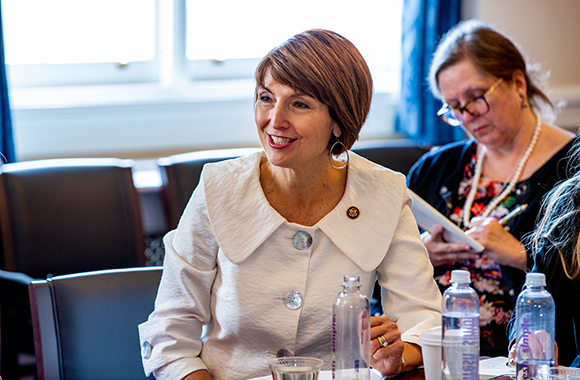
In February, I joined with a group of advocates at the Centers for Disease Control and Prevention’s (CDC) Advisory Committee on Immunization Practices (ACIP) in Atlanta to change that. At the top of ACIP’s agenda was a vote on MenB’s inclusion on the routine vaccine schedule for persons at increased risk. While the ACIP discussed various topics such as the, “Economic evaluation of vaccinating US adolescents and college students against serogroup B meningococcal disease” or “Considerations for routine use of MenB vaccines in adolescents,” ACIP wasn’t scheduled to vote on including MenB vaccines on routine schedule for adolescents. That was unfortunate, as those who came to Atlanta with personal experience about the horrors with MenB told the committee – many in graphic terms. 

Dr. Mary Ferris, student health director at the University of California Santa Barbara, a campus of 30,000 students, faculty and staff led off. In November 2013, her campus experienced an outbreak of four cases of the MenB disease. A 19-year-old lacrosse team member suffered amputations of both legs and extensive skin grafts and scarring to his arms and face. Every word she said resonated. I have excerpted her comments here:

 “I know you’re well aware of the devastating consequences of this terrible disease, but you may not know the impact it has on a university when an outbreak occurs. National news outlets camped out on the campus. There was widespread fear and even panic among students, faculty, staff, and the surrounding city. The local school district initially prohibited our student teachers from their sites, and parents drove in to remove their children from the campus. Our campus childcare center asked student volunteers to stay away. Parents demanded that we close the campus, and others did not want their students to come home for Thanksgiving holidays. Our local public health department and CDC had to establish special phone lines to handle the large volume of incoming distress calls. We greatly appreciate all the help they gave us, including handling even international media attention, but we would have much rather avoided this disaster completely by protecting our students in advance with a vaccine that covers MenB. Outbreaks WILL happen again at other colleges, and in fact is happening right now at the University of Oregon, where they are struggling to find a source to pay for the vaccines. Even ONE CASE in a college setting has major repercussions on the institution, and most colleges will not have the resources to pay for vaccines when the outbreaks occur.

We need the ACIP to establish MenB vaccine as part of routine adolescent immunizations, so that our entering students can be protected before they arrive on campus and are exposed to meningococcus, not just after an outbreak occurs. We also need your recommendation for vaccination before college entry so that we can enforce it as an entrance requirement along with MCV4 coverage. The majority of our students are the first generation in their families to attend college, and they come from low income families that will not be able to afford this vaccine unless it is included in their health insurance coverage.” 

That is exactly NCL’s position.

The father of a young boy who tragically died of MenB last year spoke of his grief at this terrible event and asked the ACIP why MenB is not on the routine schedule. Andy Marzo, who contracted MenB as a college student in Kansas, described what it felt like to spend weeks in intensive care, his family not knowing whether he would live. And how it felt to lose all of his fingers—he has one remaining thumb—and portions of both feet. His care cost $2 million. Andy has no idea how he contracted MenB. That’s a universal theme among patients. Most are healthy and active. Andy had never spent a day in the hospital and was a healthy and happy journalism student when the infection struck. He gave me a signed copy of his book ,which is a riveting account of his ordeal. 

Frankie Milley lost her only child, Ryan, 18 years old, to MenB. She turned tragedy into action by forming the Meningitis Angels. Their mission: Meningitis Angels educates the public, health professionals, child care facilities, schools and universities on not only meningitis but other vaccine preventable diseases and the preventions including vaccines, through personal stories, our educational brochures, posters and videos.

The Angels’ video details the tragedy of menB. She implored the Committee to include the MenB vaccine on the routine schedule. 

NCL applauds the Meningitis Angels for their advocacy on vaccines and for mobilizing their members to lobby state legislatures and Congress, to educate consumers on the importance of vaccines and to attend meetings at the CDC and advocate for widespread vaccination.

Adding a vaccine to the recommended schedule is not without controversy. All vaccines cost money—MenB is around $130 a dose. Novartis’ vaccine is two doses spread out over a few months. Pfizer’s is three.  Requiring these on the routine schedule means health plans have to cover them. 

CDC, like other government agencies, does a cost benefit analysis to determine whether the expense is justified. But after I listened to the director of health in Santa Barbara, to patients, and to parents of deceased children talk about the ravages of this terrible disease, the cost of vaccinations is tiny compared to the cost of treatment, which in many cases exceeded $2 million per patient.

Frankie told me that she has been accused of being in the “pocket of industry” by the very destructive anti-vaccination groups that—in my view—traffic ignorance and fear.

Supporting the efforts by companies that develop these critical vaccines to get these lifesaving products out into the community makes sense. How someone could say to a mother who lost a child to a very preventable disease is to be faulted as too close to industry is beyond me. 

Dr. Ferris from Santa Barbara notes that other outbreaks will and have happened at other schools and that is critical to know. I worked with my own son’s health office at Oberlin College to order the vaccine for him. He lives in a dorm and plays on a sports team. He’s in the demographic that is susceptible to this disease. I’d like the see his college inoculate every student on campus and have encouraged them to do so. Until that happens, I’m going to make sure he is protected.

Vaccines have all but wiped out diseases like polio, German measles, diphtheria, influenza, mumps, small pox, measles, and many others that in previous generations caused the death and disability of millions of children and adults. They are safe and they are very effective. We join with the Meningitis Angels in asking ACIP to include MenB on the routine schedule. NCL’s letter and statement at the ACIP meeting are attached.


March is National Nutrition Month: What’s the Buzz on Caffeine? – National Consumers League

By Kelsey Albright & Sally Greenberg

March is National Nutrition Month making it the perfect opportunity to reflect on the state of the American diet. This year, with March being Caffeine Awareness Month, caffeine is on our mind. Whether it’s a strong cup of morning Joe, a green tea with sushi, a chocolate bar at the movies, or an energy drink to get through the work day, the fact is that 85 percent of the U.S. population consumes caffeine daily. And, while we know where to find it, what do we really know about caffeine? During National Nutrition Month, NCL is taking a closer look at the world’s most commonly consumed “pick-me-up.”

DISCLOSURE: Three cups of iced black tea–approximately 180 mg of caffeine–were consumed in the writing of this blog post!

National Nutrition Month is an annual initiative led by the Academy of Nutrition and Dietetics and a good time to reflect on things like the Dietary Guidelines for Americans, food labeling, meal and beverage portion sizes, and physical activity and exercise. Additionally, the latest proposed Dietary Guidelines for Americans were just released and for the first time in its 35-year history, the Dietary Guidelines for Americans proposes to provide guidance on caffeine intake.

Caffeine is consumed from a variety of sources every day, all over the world, as it has been for hundreds of years. In addition to being a natural part of over 60 different types of plants, like coffee beans, kola nuts, cocoa beans, tea leaves, and guarana, it is also synthetically produced for use in various foods and beverages. Regardless of whether the caffeine is naturally occurring (in coffee or tea) or used as an added ingredient (in cola or energy drinks), there is no chemical or biological difference–our bodies respond to it in exactly the same way.

We all choose whether, when, where, and how to consume caffeine and for those who do consume it, it is for a reason–caffeine is well-known for its stimulative or “pick-me-up” quality.  Apart from that, how much do we know? Caffeine is one of the most researched ingredients in the world. From the white coats conducting rigorous scientific assessments to the number crunchers analyzing consumption data, to the billions of people globally who consume coffee, tea, chocolate, cola, or energy drinks daily, caffeine has been scrutinized time and again.

A comprehensive study of more than 35,000 Americans published in 2014 confirmed that 85 percent of Americans consume caffeine daily, with 98 percent of the intake coming from beverage sources. The largest contributor is coffee, which is responsible for 64 percent of all caffeine intake. Coffee actually has a lot of healthful properties. A Consumer Reports piece from January 2015 noted that people aged 50-71 who drank at least one cup of coffee per day had a lower risk than nondrinkers of dying from diabetes, heart disease or other health problems when followed for more than a decade. Coffee has been linked to a lower risk of depression and provides more antioxidants than any other food. Other primary sources of caffeine include tea (17 percent), soda (17 percent), and energy drinks (2 percent). Other beverages make up the balance and the average total intake per day is approximately 165 mg.

There is a general agreement among U.S., Canadian, and European public health agencies that healthy adults, except for pregnant women, may consume moderate levels up to 400 mg of caffeine (an amount equivalent to four or five cups of 8 fl. oz. home brewed coffee) per day without risk of long term adverse health effects. Health Canada recommends that women who are pregnant, planning to become pregnant, or breastfeeding, should consume no more than 300 mg per day.  Broadly speaking, children and teens should consume less due to lower body weight.  Health Canada recommends specific ranges for different age groups, whereas the European Food Safety Authority (EFSA) suggests a level of 3 mg per kilogram of body weight for children (about 150 mg for an average 110 lb. teenager).Individual sensitivity to caffeine varies, and those who are especially sensitive may also want to limit their intake.

To stay within recommended moderate levels, however, a consumer would need to know how much caffeine is in the foods and beverages he or she consumes and that’s where the problem lies. Very few products list the amount of caffeine they contain though some companies, like Red Bull and Monster, have begun voluntarily labeling.

So, how much caffeine is in a common portion of some of the most popular products?

In the recent report of the Dietary Guidelines Advisory Committee, they concluded that moderate caffeine consumption up to 400 mg of caffeine per day is not associated with increased risk of chronic diseases, including cardiovascular disease and cancer. In fact, the Committee agreed that there is evidence coffee has some health benefits including some protection against Parkinson’s disease and potential to lower risk of Alzheimer’s disease and cognitive impairment.

In comments filed with the Dietary Guidelines Advisory Committee in 2014, NCL suggested the following.

  1. All products containing caffeine should disclose the total amount of caffeine per serving – and per container – on their product labels or packaging; that means all products, including those marketed as dietary supplements, which often contain extremely high levels of caffeine. This should also apply to coffee, tea, and soda – the top three sources of caffeine in the diet. Quantitative labeling of caffeine would provide transparency and help consumers determine their daily intake and make sure it is in line with current recommendations. The Food and Drug Administration should provide the public with clear guidance on safe upper limits of caffeine intake for the general population of healthy adults and for other relevant age and gender groups. If the FDA is still reviewing the science, it can at least provide interim advice, as Health Canada has done, so that consumers have some guidance to go on in the meantime.
  2. We also recommend that the Dietary Guidelines for Americans should address caffeine holistically instead of implying, as recommended by the Dietary Guidelines Advisory Committee, that caffeine is a potential problem when it is consumed in the form of “high caffeine” energy drinks.  One area of real concern is dietary supplements (caffeine pills, powders, and shots) that contain excessive and potentially harmful levels of caffeine that can be easily abused. We tell consumers to steer clear of caffeine capsules, powders, sprays, and shots.
  3. We also recommend looking at energy drinks alongside other caffeinated products. The recently released report of the Dietary Guidelines Advisory Committee clearly states that ‘the main sources of caffeine among both adults and children are coffee, tea, and carbonated soft drinks.’ In addition, the Dietary Guidelines should educate the public about these primary sources of caffeine, including from sodas – which is missing entirely in the dietary guidelines dialogue.

Despite our familiarity with caffeine, common sense and moderation should always prevail.  Caffeine may not be for everyone.  Even though some may believe it is an essential part of their day, it is not a nutrient. Consumers should keep in mind that caffeinated products are not recommended for pregnant or lactating women or those sensitive to caffeine. Up to 3 mg per kilogram of body weight per day for children should have no adverse effects. The same goes for light weight adolescents, while those that are older/heavier may abide by adult guidelines. A common sense approach for caffeine management – which starts with caffeine labeling and guidance on daily levels – is paramount to ensure all consumers can make informed choices.

WalMart’s raising wages. Yay? – National Consumers League

Walmart is getting a lot of attention for pledging to raise the minimum wages it pays employees to $9 an hour by April and $10 an hour within a year. As the economy recovers and more jobs are available, apparently WalMart is having trouble filling its workforce. 

Because Walmart is such a dominant force in the economy, with over 1.3 million employees, 500,000 of whom will be affected by this increase, we can cheer this news. But the fact remains that Walmart, even with these increases, will still lag behind retailers like Gap and Ikea, that current have hourly wages at or above $9, and way behind the compensation offered by Costco, with wages closer to $20 an hour, or the Container Store, whose owner wants to ensure that all his employees earn a salary with benefits equal to $50,000. 

Container Store and Costco are among a small—but we hoping growing—group of employers, that understand that families cannot live on $10 an hour let alone the stingy $7.25 minimum wage.

The companies with the worst policies play havoc with their employees’ schedules – not scheduling them for full time work so they don’t have to pay full time benefits, and changing their schedules day to day so they can’t organize day care or pick up from schools with any regularity. 

So this news from WalMart is positive $10 is better than $7.25; and the benefits will ripple throughout the economy. Still, trying to live on this pay is impossible and WalMart workers will continue to have to rely on public benefits to get by. We agree with Chris Owens from the National Employment Law Project who said, “When compared to the $16 billion in profit that the company rakes in annually, Walmart’s promise of $10 an hour — which even for a full-time worker is not enough to keep a family of four out of poverty — is meager.”

That taxpayers subsidize WalMart’’s workforce is unacceptable and a $10 minimum wage won’t change that.


Why maintaining 529 tax benefits was the right decision – National Consumers League

Sometimes, even people you respect do stupid things. I’m talking about the Obama Administration’s proposal for taxing families that put money into 529 college savings plants. Right now, parents can set aside funds for their kids’ college education which gets invested in mutual funds and any growth in investment is tax free. In other words, when your son or daughter is ready for college, if you put $20,000 away and it’s now worth $30,000, that $10,000 gain goes untaxed. 

So according to Ron Lieber, financial columnist for the NYT, the proposal would have the IRS hitting families with capital gains tax on the increases from the investment going forward, but also grandfathering the proposal to tax past gains. I admit to having a direct stake in this. We’ve been saving for my son’s college tuition since he came into the world. He’s now a sophomore in college and that 529 fund has paid his tuition. There’s no way we could have paid the hefty cost of college without those savings.  Don’t we want to reward families who put away money for their kids’ college education? Why would we ever take away those tax advantages?

According to Lieber, it was an idea that was never going to happen but it was floated. The idea is that people who have enough money to put away for college savings could part with some of it and pay higher taxes. But Lieber also noted that

money from affluent families have helped lower administrative costs in the 529 plans, which used to be much too high. Everyone benefits from that, including families with less money. There was also the fear that if there’s little or no tax advantage, wealthier families wouldn’t invest in 529s, forcing many states to close down their plans. That would discourage people with less from saving what they can.

The Administration didn’t press forward with the plan. “I think what they failed to recognize is how proud parents are of their decision to set aside money for college,” said Joe Hurley, the founder of a savingforcollege.com. “It isn’t money for a fishing boat. It’s money that they are sacrificing. Anything that threatens that is essentially telling them that they did the wrong thing when they felt like they did the right thing.” That’s right. And that’s why this idea of taxing growth on 529s made no sense and was a sure fire way to get people riled up and angry.  Glad the story has a happy ending and they scratched the plan.


President’s budget brings good news to food safety advocates – National Consumers League

Monday, the president released his budget and with it, a proposal to create one single federal agency focused on food safety. The proposal came days after Sen. Dick Durbin (D-IL) and Rep. Rosa DeLauro (D-CT) introduced bills to create an independent federal food safety agency. Both the budget and this legislation seek to reallocate food safety inspections, labeling, and enforcement into a single agency cutting government costs and overlap.  

As it presently stands, most food safety responsibilities are split between the Food and Drug Administration (FDA) and the Food Safety Inspection Service (FSIS), a division of the U.S. Department of Agriculture (USDA). The current setup is redundant and fragmented. FSIS is responsible for meat, poultry and eggs while FDA regulates everything else. The system becomes confusing for some foods like eggs where FDA is responsible for the health of the hens but FSIS must ensure that the eggs are safe for consumption.

Food safety advocates have long called for the consolidation of these agencies into one. Streamlining the food safety operations would reduce unnecessary overlap between the agencies. The proposed new food safety agency would also be responsible for coordinating with state and local health departments after a food borne illness outbreak, a job the Centers for Disease Control and Prevention (CDC) currently is responsible for. Moving this responsibility to the new agency could allow for faster reaction times and better trace back to contaminated food sources.

The food safety policies presented by the President and Congress in the past week are cause for celebration among both food safety advocates and consumers. While these policies have only just been proposed, they are a promising sign of positive changes for our food safety. Members of Congress should make implementing a new agency similar to the one President Obama laid out a priority.

Wage stagnation may threaten democracy itself – National Consumers League

Why have wages stagnated so badly in the US compared to Australia and Canada? The report notes that while US wages have stagnated and not gone up, since 2000, Canadian wages have risen 10 percent and wages in Australia by 30 percent. A group of eminent economists has taken on that question and developed a detailed analysis—to be issued imminently—of this vexing problem in a project underwritten by the Center for American Progress. 

Their report includes this statement: “Today, the ability of free market democracies to deliver widely shared increases in prosperity is in question as never before. This is an economic problem that threatens to become a problem for the political systems of these nations and for the idea of democracy itself.”

These statements were not written by followers of Karl Marx or Frederick Engels (Engels, by the way, was a socialist whose work was translated first by Florence Kelley, NCL’s indomitable first leader). The report’s authors include Rockefeller Foundation President Judith Rodin and former White House economic adviser Larry Summers.

What does the report recommend? Among other things, helping to ensure that more people attend and finish college, more intervention in the free market on behalf of the poor and working class. For example, Canada and Australia have more generous childcare and family leave, they impose higher taxes on the affluent, and they impose stronger regulations on banks and financial institutions. But of greatest impact is that workers have more power and there is higher union concentration.

Some believe this report will be an important document for Democratic and Republican candidates as we go into the 2016 presidential campaign. Its premise is that democracy and freedom are threatened when not everyone shares in prosperity and when income disparities get so out of whack that the top 5 percent earn as much as the bottom 95 percent. If Australian and Canadian citizens can enjoy a 10-30 percent increase in wages, certainly the richest country in the world can afford to share our affluence across the economic spectrum. The health of our democracy depends on it.


MLK Day tribute – National Consumers League

This week marks our nation’s annual celebration of Martin Luther King Jr. day. As we honor a truly great American icon we keep in mind two parallel and pertinent events that are occurring in America. One is the increasing awareness of the epidemic of police killings of black men (and black women too, though not as frequently). “The Root” enumerates 20 unarmed African Americans and the stories surrounding their killings by police.

The killing of Tamir Rice, is particularly troubling. Tamir, 12, was killed by a Cleveland cop as he waved a toy gun around in a park – this very officer had been fired from a suburban Cleveland police force for being too impulsive and lacking in good judgment. The Cleveland police department hired him without doing a background check.

As protests have sprung up across the country, with proclamations like “Black Lives Matter,” surely King would have led the marchers across America to protest these terrible killings and seek solutions.

The second event revolves around the movie “Selma.” The film, currently in theaters and directed by a black woman, stars a black actor and focuses on MLK’s campaign for voting rights in America.

While the reviews are positive, neither the director – an African American woman – nor the actor who vividly portrays Dr. King’s struggle to achieve the right to vote for African Americans – have received an Oscar nomination.

In the movie, King’s political skills are in sharp relief: he refused to be cowed by President Lyndon Johnson. He led his followers through a phalanx of dangerously racist cops and locals wielding nightsticks nail studded clubs, whips and guns. These scenes are depicted so graphically I could hardly watch.

The tense phone conversations between King and LBJ have viewers on pins and needles. LBJ capitulates and eventually passes the Voting Rights Act, because he has to. He accuses King of reckless opportunism, but the civil rights leader triumphs because he makes the case that without voting rights, blacks are denied power to throw out white office holders who deny them the right to vote, the right to march, the right to be free of harassment and discrimination.  Martin Luther King, a disciple of Mahatma Gandhi, wins the day,

There’s something else – something troubling – being played out on another totally different stage: neither the African American female director nor the actor playing King were nominated for Academy Awards.

So how important is an Oscar nomination anyway? Very important, and for a variety of reasons. Over the weekend CNN featured two men debating whether the Academy was racist. The white commentator said no, absolutely not, The Help and 12 Years A Slave, the first about black maids in the South as the civil rights movement unfolded and the latter, about a free black man in the 1850s kidnapped and sold into slavery, both won major awards in the last few years . The African American commentator laughed. “I thought you were kidding. The Academy is only comfortable acknowledging black actors playing servants or slaves. But in a film like Selma, black actors and directors don’t get any recognition.”

The director of “Selma,” Ava DuVernay, is a black woman who for years sought studio backing to make the movie. And, as David Carr wrote in the New York Times this week, “No club in the United States — over the last several years, the academy has been around 93 percent white, 76 percent male and an average of 63 years old — is in more need of new blood than Hollywood.”

Carr further argues for the importance of Oscar recognition. He says the Oscars, “convey recognition at the highest level of a craft that is seen by millions.”

These two seemingly vastly different issues are not so different after all. They are both focused on the value of African American life in America and African American contributions, social, political, and cultural. Yes, we have an African American president and that is a milestone, but America still suffers from the ugly legacy of slavery and I fear that we continue to minimize the value of African American life and African American achievement in America.

2015 is a historic year  – it marks the 50th anniversary of both the Selma marches and the Voting Rights Act. We could recognize these events by acknowledging the risk black men face every day at the hands of the police – and that police officers have a hard job – and supporting campaigns like “Black Lives Matter.” We need also to recognize the talent and achievement of black directors, actors and producers at the Oscars. Martin Luther King would have been very proud, I think, of Selma, and especially its directors, actors, and producers. Happy MLK celebration to all.

Chicago conference explores Multi-Level Marketing in minority communities – National Consumers League

This week, I participated in a town meeting held at a local Methodist church on Damen Street, in the heart of Chicago’s Hispanic community.  I was invited by the League of United Latin American Citizens (LULAC) to discuss frauds and pyramid schemes that prey on members of minority communities. 

NCL has a longstanding history of opposition to pyramid schemes and other fraudulent business opportunities. We are the only consumer group with a Fraud Center. In 2009, we published a guide to help consumers distinguish between legitimate sales opportunities (Multi-Level Marketing) and pyramid schemes, with the support of the Direct Selling Association, the industry group that represents MLMs.   

Last night’s town meeting began when I walked through a wall of pro-Herbalife demonstrators, who waited outside for an hour on a very cold Chicago night, wearing t-shirts bearing the words “Yo Soy Herbalife.” Inside we started the evening with prayers, the Pledge of Alliance, and the Star Spangled Banner.

Brent Wilkes, executive director of LULAC, opened the forum by describing the problem of Hispanics falling victim to fraud. He discussed notarios, who pose as lawyers—as well as actual lawyers, who promise to help clients obtain legal status, but then take large sums of money, lie to them, and do no work on their behalf.

It was this work fighting fraud perpetrated against Hispanics that led to his interest in pyramid schemes and phony business scams. He described meeting with officials at the Federal Trade Commission (FTC) about Herbalife, a company with $3.2 billion in revenues that has aggressively pursued Hispanics to distribute their products. Indeed, 60-83 percent of Herbalife distributors are Latino. The chances of making any money at all—after expenses—as a distributor of Herbalife are tiny, estimated at less than one percent, according to the company’s own filings with the Securities and Exchange Commission.

My part of the evening’s agenda focused on what consumers should ask to avoid falling victim to pyramid schemes that are posing as legitimate MLMs.

I noted that NCL wrote to the FTC in March of 2013, asking the agency to sort out the truth. Herbalife claims it’s a legitimate business, hedge fund manager and Herbalife critic Bill Ackman and Pershing Square argue that it’s an illegal pyramid scheme. NCL asked the FTC to use its resources to clear the company’s name if these allegations aren’t true or to determine that the allegations against Herbalife are accurate and take steps to put a stop to illegal practices. The FTC agreed to investigate, but alas, the wheels of bureaucracy grind slowly and we have yet to hear the results of their probe.

The most powerful part of the evening for me—and I think for everyone in the room—were the voices of the community telling their stories. At least five people described paying lawyers and notarios their last dollar to get a husband or wife into the U.S. or to get them papers, only to find out they’d been duped by an unscrupulous actor. Many people spoke about investing thousands of dollars in Herbalife, their life savings, and having nothing to show for it. Several said they were encouraged to buy more and more products they couldn’t sell, to attend conferences, and to exaggerate Herbalife’s ability to treat cancer, diabetes, or high blood pressure in order to make sales. They also spoke of being ashamed to come forward until now.

We hope that the FTC’s investigation will lead to a reexamination of practices that may be widespread throughout MLM industry. For example, our review of the income disclosure statements of several other MLM’s showed that the vast majority of MLM participants have little profit to show for the large amounts of time and money they are often asked to devote to these businesses.

Data aside, it is the personal stories I heard last night that reinforced for me how important NCL’s work is. No one there last night could avoid feeling the pain flowing from these individuals. Single fathers, out-of-work carpenters, and struggling musicians all shared their Herbalife woes.

My life’s work is fighting fraud and championing consumer protection. The stories I heard in Chicago last night galvanized me to stand with these communities and to demand that regulators and bar associations crack down on the illegal, criminal practices that steal money from the poor. Depriving those who only want to pursue the American Dream of their opportunities and hopes is intolerable. What last night told me is that I—and NCL—must redouble our efforts to protect the most vulnerable of our citizens.  

Seven tips to creating a winning LifeSmarts team – National Consumers League

This post originally appeared on the LifeSmarts blog.

Hello all, I hope everyone had a wonderful holiday. Over the break the members of the LifeSmarts team were hard at work making sure that the 2015 Nationals will be the best one yet! In addition to our usual preparation we have put together the top 7 tips to creating a winning LifeSmarts team. Below, I have included a few highlights from our list.

The first tip for a winning team is of course…PRACTICE, PRACTICE, PRACTICE. Work with your teammates daily using our quizzes and vocab calendars. When practicing, make sure to use buzzers if at all possible. Buzzers help to simulate live matches and make sure you are following all of the rules correctly.

Another tip includes looking back at previous LifeSmarts questions as well as creating your own questions. By creating your own questions and checking archived questions you will be able to create personal flashcards that help to reinforce knowledge that can be shared with your coach and teammates during practice sessions.

Lastly, USE IT ALL. LifeSmarts.org has tons of resources to help students prepare for competition. For example, be sure to check out our monthly TeamSmarts quizzes, they are a wonderful way to stay ahead of the game.

If you follow these tips, have a positive attitude, and remember to have fun, I guarantee you will be prepared for anything in LifeSmarts!

Check out our LifeSmarts infographic. 

An end to secret settlements could save lives – National Consumers League

en, corporations are able to settle lawsuits brought against them in secret, paying off litigants and hushing up the hazards that lurk in their products. Consumers deserve more transparency and accountability from these corporations. USA Today editorialized last week on this very problem, focusing on a product I’d never heard discussed in this debate, ironically a rifle. 


In 2000, a nine-year-old Montana boy, Gus Barber, on a family hunting trip, was killed when his mother released the safety on a Remington 700 rifle to unload it and the gun discharged. Gus’ father later discovered that the company knew they had a safety problem for decades and never changed the design, admitted the problem, or recalled the rifles. By the time Gus was shot, more than 100 people had been injured and two-dozen killed. All these cases were buried through secret settlements, with judges sealing these confidential settlements, thus depriving the public from knowing about this deadly hazard.

The practice of sealing health and safety hazards, many of them deadly is unconscionable and dangerous. NCL and our fellow safety advocates have supported legislation introduced over the years in Congress to stop this practice, requiring judges to reject requests from plaintiff and defense lawyers to enter into secret settlements where dangerous products remain in the marketplace.

Gus Barber’s case is so outrageous that Montana joined four other states in adopting an anti-secrecy statute that prohibits their state courts from concealing information about public hazards.

Things may finally be turning around on this issue. In a recent case in Missouri, federal judge Ortrie Smith refused to seal a case against Remington for safety issues. That’s a hopeful sign. If we could get a federal bill passed, every judge would be required to follow Judge Smith’s example and refuse to deprive citizens of critical safety information that could have saved nine-year-old Gus Barber’s life.