NCL’s latest podcast highlights the disparities with the 340B drug pricing program

January 6, 2025

Media contact: National Consumers League – Lisa McDonald, lisam@nclnet.org, 202-207-2829

Washington, DC – The National Consumer League (NCL) has released a new episode of its We Can Do This podcast, shedding light on the inequities and lack of transparency surrounding the 340B Drug Pricing Program. This federal initiative was designed to provide medications at reduced prices to low-income patients, but it has been manipulated by large healthcare entities to generate billions in profits with minimal oversight. As a result, the program’s intended beneficiaries—low-income patients—are often forced to pay full price for medications they cannot afford.

In this episode, NCL’s CEO Sally Greenberg is joined by Amy Hinojosa, President and CEO of MANA, a National Latina Organization, and founding member of the Health Equity Collaborative, and Dr. Ge Bai, an expert on healthcare accounting, finance, and policy at Johns Hopkins University about the shocking lack of transparency around a program that has more than doubled in cost to taxpayers reaching more than $120 Billion in 2022. Both experts emphasize the importance of accountability to ensure that the 340B program truly benefits those it was designed to serve.

“The 340B program was created as a ‘buy-low-sell-low’ initiative. But over the years, it has evolved into a ‘buy-low-sell-high’ program,” said Dr. Ge Bai. “Hospitals can still buy drugs at a low price, but when they sell those drugs, they do so at full price—without any discount. This allows hospitals to reap substantial profits from the difference between the discounted purchase price and the high selling price.”

The episode also discusses the bipartisan 340B ACCESS Act (HR 8574), proposed legislation aimed at restoring transparency and accountability to this critical healthcare program.

The 340B Access Act (HR 8574) seeks to:

  • Ensure that discounts directly reduce patient costs
  • Modernize contract pharmacy arrangements
  • Strengthen eligibility requirements
  • Implement public reporting measures
  • Prevent abuse by middlemen

“Entering this new legislative session, there is a real opportunity to leverage bipartisan support and push the 340B ACCESS Act across the finish line,” said NCL CEO Sally Greenberg. “The bottom line is that this program needs stronger guardrails to ensure that everyday Americans—especially those in underserved communities—have access to affordable medications.”

Additional Resources:

Dr. Ge Bai, PhD, CPA, Johns Hopkins University: Do Nonprofit Hospitals Deserve Their Tax Exemption?

340 B State Press Releases


###

About the National Consumers League (NCL) 

The National Consumers League, founded in 1899, is America’s pioneer consumer organization. Our mission is to protect and promote social and economic justice for consumers and workers in the United States and abroad. For more information, visit www.nclnet.org.

Statement on the death of President Jimmy Carter from NCL CEO Sally Greenberg

January 1, 2025

The National Consumers League (NCL) extends condolences to the family, friends, and community of former President Jimmy Carter upon his death this week. In addition to being an honest and effective Commander in Chief and humanitarian who expanded access to housing for low-income families through his work on Habitat for Humanity, President Carter should also be remembered as a great consumer champion.

During his presidency, Mr. Carter championed consumer protection in a variety of ways. He appointed labor and consumer champion Esther Peterson, who also served as president of the National Consumers League, to head the White Office of Consumer Affairs. Like President Lyndon Johnson (LBJ)  before him, who first named Peterson to the post of Special Adviser to the President Jimmy Carter understood that consumer rights permeate citizens’ experiences with companies and with government.

Unlike his processor, Mr. Carter gave Mrs. Peterson a staff and access to him personally in the Oval Office. As such, Mr. Carter elevated consumer protection far beyond LBJ’s decree. Along with re-appointing Esther Peterson, Carter issued a historic decree in April of 1978, “Memorandum from the President on Consumer Affairs,” the first of its kind, directing the heads of every government agency to take a series of steps to prioritize consumer protection. 

Notably, Mr. Carter stated that “the Agency for Consumer Advocacy is mainly designed for participation in very large administrative proceedings; it is only one of a number of steps which will better protect the consumer.”

On a personal note, I had the honor of meeting President Carter in 1978, when he appointed my aunt, Geri Joseph, to serve as Ambassador to the Netherlands. I was lucky to be able to attend her swearing-in ceremony in the Oval Office. I found him to be kind and charming; despite a number of pressing matters, he took the time to introduce himself to every member of our family who was gathered for the occasion. 

###


NCL celebrates landmark progress in ticket fee reform 

December 18, 2024

Contact: National Consumers League – Lisa McDonald, lisam@nclnet.org, 202-207-2829

Washington, DC – The National Consumers League (NCL) applauded Congress for including the bipartisan TICKET Act (S. 1303/H.R. 3950) in the year-end funding legislation. This marks a significant milestone in NCL’s decade-long fight to secure stronger consumer protections for live event fans. NCL looks forward to working with Congress and President Biden to see these landmark reforms signed into law.

The TICKET Act, backed by more than a dozen consumer and fan advocacy organizations and live event industry stakeholders, introduces key regulations to protect consumers, including:

  • Requiring all-in pricing to eliminate hidden fees.
  • Banning speculative ticketing and deceptive marketing practices.
  • Guaranteeing refunds for canceled or postponed events.
  • Mandating an FTC study on BOTS Act enforcement.

The following statement is attributable to John Breyault, NCL Vice President of Public Policy, Telecommunications, and Fraud:

“Live event fans are one step closer to saying goodbye to hidden ticket fees that have frustrated consumers for decades. The TICKET Act will also end deceptive speculative ticket sales and ensure fans get their money back when events are canceled or postponed. These long-overdue reforms are a victory for consumers, and we thank congressional leaders for their commitment to making this law a reality.

Special thanks go to Senators Cantwell, Cruz, Klobuchar, and Schumer and Representatives McMorris Rodgers, Pallone, Schakowsky, Bilirakis, and the co-sponsors of S. 1303/H.R. 3950, whose dedication made this bipartisan consumer protection victory possible.”

###

NCL hails FTC ban on hidden junk fees in ticketing and lodging

December 17, 2024

Media contact: National Consumers League – Lisa McDonald, lisam@nclnet.org, 202-207-2829

Washington, DC – Today, the FTC announced its final rule banning hidden junk fees in live-event ticketing and short-term lodging. NCL has long advocated for such a ban at the federal level and applauds the Commission for enacting this critical consumer protection regulation.

“Sellers in these industries can no longer lie to consumers to make a buck. The FTC’s final rule is a common-sense policy that will make the ticketing and lodging marketplaces fairer for everyone involved,” said NCL Vice President John Breyault. “The price that’s advertised is the price that you should pay.”

This single rule by the FTC will result in billions of dollars in savings for consumers. A non-partisan federal study of the ticketing industry found that primary and secondary ticket sellers charged fees averaging 27% and 31%, respectively, of the ticket’s price. Regarding lodging, the Council of Economic Advisers *estimated that consumers lose $3.3 billion annually to hotel junk fees.

Further reading:

2024 public comments of the National Consumers League and 51 other organizations supporting the FTC’s proposed rule to ban junk fees

2024 public comments of the Break Up Ticketmaster Coalition (NCL and 14 other organizations) supporting the FTC’s proposed rule

2023 testimony of NCL’s CEO before the United States Senate on the need to prohibit junk fees

2023 public comments of the National Consumers League and 41 other organizations supporting the FTC’s advanced notice of proposed rulemaking on junk fees

2022 public comments of the National Consumers League supporting a petition for rulemaking to ban drip pricing, which resulted in this final rule

2018 public comments of the National Consumers League and the Sports Fans Coalition urging FTC intervention in the ticketing industry

*Links are no longer active as the original sources have removed the content, sometimes due to federal website changes or restructurings

###

About the National Consumers League (NCL) 

The National Consumers League, founded in 1899, is America’s pioneer consumer organization. Our mission is to protect and promote social and economic justice for consumers and workers in the United States and abroad. For more information, visit www.nclnet.org.

NCL calls on Congress to include TICKET Act in continuing resolution

December 16, 2024

National Consumers League Calls on Congress to Include TICKET Act in Continuing Resolution

Contact: National Consumers League – Lisa McDonald, lisam@nclnet.org, 202-207-2829

Washington, DC – The National Consumers League (NCL), America’s oldest consumer and worker advocacy organization, is urging Congress to include the bipartisan TICKET Act (H.R. 3950) in any Continuing Resolution (CR) passed this session. The TICKET Act represents the most significant live event ticketing reform in nearly a decade, addressing key concerns in the live event marketplace for all stakeholders.

Key provisions of the TICKET Act include:

  • Banning hidden fees through all-in pricing requirements.
  • Prohibiting speculative ticketing and other deceptive marketing practices.
  • Requiring refunds for canceled and postponed events.
  • Commissioning an FTC study on enforcement of the BOTS Act.

Earlier this year, the TICKET Act passed the House with overwhelming bipartisan support (388–24) and gained endorsements from a broad coalition of stakeholders, including the, Consumer Reports, Artist Rights Alliance, Recording Academy, Live Nation/Ticketmaster (LNE), Coalition for Ticket Fairness, Vivid Seats, StubHub, and the National Independent Venue Association and other consumer groups.

Despite previously supporting the bill, the Fix the Tix Coalition—has backed away from the bill. We think that is misguided.

“The TICKET Act is a hard-fought compromise and, we believe, Congress’ best chance to deliver meaningful reforms that benefit fans, venues, and artists as early as next summer’s concert season,” said John Breyault, NCL’s Vice President of Public Policy, Telecommunications, and Fraud. “We are disappointed that groups that had previously supported the bill have reversed themselves, though the bill has not significantly changed since they originally endorsed it. We are concerned that Ticketmaster/Live Nation, which owns primary and secondary ticketing platforms, manages hundreds of artists and owns, controls, or has exclusive contracts with hundreds of venues, may be exerting undue influence at the expense of consumers. Congress should resist special interests, and stand up for consumers by including this package of positive reforms in the CR.”

###

NCL calls on FDA to ban Red No. 3 from the food supply

Contact: National Consumers League – Lisa McDonald, lisam@nclnet.org, 202-207-2829

Washington, DC – The National Consumers League (NCL) anxiously awaits FDA’s final action on a citizen petition to ban Red No. 3 from the food supply, something that has been too long in coming. Red No. 3 is a petroleum based color additive known to cause cancer in laboratory animals and is now banned for used in cosmetics and externally applied drugs. Yet, the food dye is still widely used in foods and beverages consumed by children who are more susceptible to the effects of chemicals in foods. The bigger problem is that the FDA has been impeded for years in taking action against additives like Red No. 3 because Congress has not given the agency the same authority as the Environmental Protection Agency has to make safety decisions about chemical safety, nor has it appropriated the funds for the FDA to respond effectively. At a time when more than 10,000 food chemicals are allowed in foods and beverages, it is time for Congress to make food additive safety a priority and give the FDA the authority it needs.

###

About the National Consumers League (NCL) 

The National Consumers League, founded in 1899, is America’s pioneer consumer organization. Our mission is to protect and promote social and economic justice for consumers and workers in the United States and abroad. For more information, visit www.nclnet.org.

NCL applauds CFPB final rule on overdraft fees

December 12, 2024:  NCL Applauds CFPB Final Rule on Overdraft Fees

Contact: National Consumers League – Lisa McDonald, lisam@nclnet.org, 202-207-2829

Washington, DC— Consumers across the U.S. burdened by abusive overdraft fee practices will receive some relief after today’s announcement that the Consumer Financial Protection Bureau (CFPB) has finalized its overdraft rule. The rule will curb many large banks’ fees from $35 to approximately $5, and is estimated to save American consumers up to $5 billion annually.

The National Consumer League (NCL) applauds the CFPB’s rule as it will prevent big banks and credit unions with more than $10 billion in assets from charging junk overdraft fees that burden families with hundreds of dollars a year in unfair charges and push marginalized communities out of the banking system. The rule will push banks to offer straightforward, affordable forms of coverage protection instead.

“Predatory overdraft fees disproportionately harm communities of color and low-income families, but no one is immune to the damaging effects of these exploitative practices,” says Sally Greenberg NCL’s CEO. “By finalizing its overdraft rule, the CFPB is standing up to big banks, protecting American consumers and their hard-earned money.”

The CFPB’s action to protect consumers provides clear rules of the road to ensure consistency and clarity regarding overdraft products. The final rule requires financial institutions with over $10 billion in assets to choose from one of three options for overdraft fees:

  1. Cap fees at $5 to cover the actual costs to oversee an overdraft program.
  2. Charge fees based on actual costs and losses as a service, rather than a profit center.
  3. Treat overdraft coverage like loans, with disclosures, opt-in options, and payment flexibility.

Read the comments submitted by NCL and 143 organizations submitted in support of this rule here.

###

FTC’s win in lawsuit against the makers of dietary supplement Prevagen

December 11, 2024

Media contact: National Consumers League – Lisa McDonald, lisam@nclnet.org, 202-207-2829

Washington, DC – The National Consumers League (NCL) commends the Federal Trade Commission for its successful action against Quincy Bioscience, the makers of Prevagen, a supplement marketed as improving memory. By holding companies accountable for deceptive health claims, the FTC continues to protect consumers—particularly older Americans—from misleading marketing. Quincy Bioscience is just one of many dietary supplement manufacturers with a long history of making false claims, and we are so grateful to the FTC for pursuing this case successfully.  It should serve as a cautionary tale to all companies who engage in false and deceptive marketing and advertising.  This victory reaffirms the importance of rigorous scientific evidence in health-related advertising and demonstrates the FTC’s unwavering commitment to consumer protection.

###

About the National Consumers League (NCL) 

The National Consumers League, founded in 1899, is America’s pioneer consumer organization. Our mission is to protect and promote social and economic justice for consumers and workers in the United States and abroad. For more information, visit www.nclnet.org.

The U.S. Department of Education’s role is critical for consumers

December 9, 2024

Media contact: National Consumers League – Lisa McDonald, lisam@nclnet.org, 202-207-2829

Washington, DC – The National Consumers League (NCL) rejects proposals to abolish the U.S. Department of Education (ED) and urges Members of Congress to strengthen the agency and its critically important role for consumers.

ED provides irreplaceable services for our public schools, alongside programs administered by other agencies like Head Start at the Department of Health and Human Services and the National School Lunch program at the Department of Agriculture. Despite making up only 3% of the federal budget, ED plays an outsized role in supporting K-12 and college education. Many underserved schools across the nation rely on ED’s Title I funding to continue operating a full range of educational and care services.

The US has long recognized a need for a limited but important federal role ineducation. Indeed, the original Department of Education was created in 1867 to collect information on schools and teaching that would help the States establish effective school systems. ED has evolved and changed with the times, but this early emphasis on getting vital information to teachers and education policymakers continues into the present.

Moreover, ED supports the essential role played by our public schools across America, schools that teach reading, writing, math and science, and are free to all students. The public school system represents the best of American democracy, fostering civic engagement and opportunity for all.

ED also pursues its twin goals of access and excellence through programs that cover every area of education and range from preschool education through postdoctoral research: including civil rights protections, Title IX rights, and  over $150 billion in new and consolidated loans annually. Without these loans, millions of students would not have access to higher education, so ED plays a truly essential consumer support role.

Finally, while ED’s programs and responsibilities have grown substantially over the years, the Department has the smallest staff of the 15 Cabinet agencies and has suffered funding cuts from Congress.

NCL calls on leaders across the political spectrum to reject proposals that would jeopardize the future of our nation’s children and instead focus on improving, refining, and supporting ED’s many positive contributions. NCL continues to advocate for policies to minimize the costs associated with seeking higher education, including legislation to bring the US in line with other developed nations by making college affordable for all.

Further reading

###

About the National Consumers League (NCL) 

The National Consumers League, founded in 1899, is America’s pioneer consumer organization. Our mission is to protect and promote social and economic justice for consumers and workers in the United States and abroad. For more information, visit www.nclnet.org.

NCL applauds DOT advancement of delay compensation rules

December 5, 2024

Media contact: National Consumers League – Lisa McDonald, lisam@nclnet.org, 202-207-2829

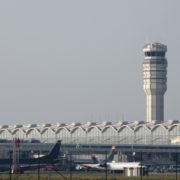
Washington, DC – Today, the U.S. Department of Transportation (DOT) issued an advanced notice of proposed rulemaking (ANPR) on compensating travelers for significant flight delays and cancellations. The Department is exploring remedies for passengers who are affected by disruptions that occur due to reasons within an airline’s control. Should DOT finalize a rule requiring cash compensation alongside food, lodging, and ground transportation when necessary, the U.S. would join other jurisdictions that have had similar regulations for decades, like the European Union and Canada.  

“Passengers shouldn’t bear the costs of poor business performance. Especially if you’re traveling with a family, expenses add up quickly for last-minute rebooking and accommodations when an airline has a meltdown,” said NCL Vice President of Public Policy, Telecommunications, and Fraud John Breyault. “In taking this step, the Department is continuing its important work to protect airline travelers. We look forward to supporting DOT’s rulemaking effort.” 

NCL has supported a delay compensation mandate for years. In recent airline meltdowns, it has become commonplace for families to lose significant sums of money in out-of-pocket expenses, with reports highlighting losses of $2,000 to $7,500 in costs associated with rebooking flights, finding lodging, and contending with price gouging. U.S.-based air carriers already pay compensation for significant delays and cancellations when servicing certain overseas routes, like those in Europe, but do not provide those same protections when flying domestically.  

Additional reading: 

Consumer groups file amicus brief supporting DOT’s airline fee transparency rule 

NCL urges Congress to strengthen consumer protections against aviation cyber incidents, including delay compensation 

Advocates call on Biden Administration to act on airline passenger protection mandates 

NCL applauds Congress’s passage of aviation consumer protection improvements 

Full list of advocates’ legislative priorities for aviation consumer protection 

###

About the National Consumers League (NCL) 

The National Consumers League, founded in 1899, is America’s pioneer consumer organization. Our mission is to protect and promote social and economic justice for consumers and workers in the United States and abroad. For more information, visit www.nclnet.org.