With Communities of Color Consumer Protection Symposium, NCL helps celebrate Black History Month – National Consumers League

February is Black History Month and reminds us of NCL’s deep historical connections to the Black community. W.E.B. DuBois, the renowned civil rights leader and first editor of the NAACP’s newspaper, The Crisis, was a brilliant scholar and close friend of Florence Kelley, NCL’s General Secretary. Kelley came from a Philadelphia Quaker family, raised with fiercely abolitionist beliefs with no tolerance for racial prejudice or discrimination.

4

She was furious when racial segregation practiced in hotels and restaurants made it difficult for her African American colleagues to attend meetings on minimum wage and child labor.

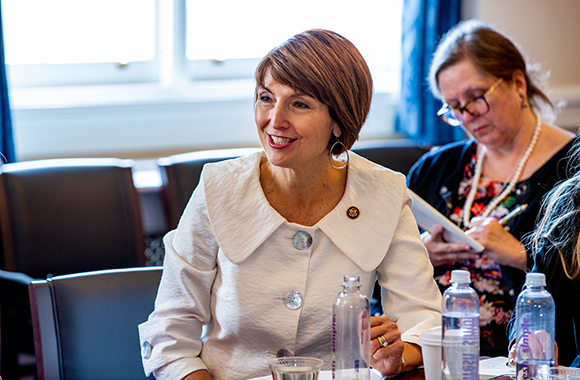
Earlier this month, NCL sponsored the Communities of Color Consumer Protection and Financial Services Symposium. The Joint Center for Political and Economic Studies – the only African America think tank in the US – co-hosted the program with the Center for Responsible Lending. The conference focused on telecom, fraud, student loans, auto loans and mortgage financing, with an emphasis on protecting the most vulnerable communities. These communities experience higher interest rates, rip off contract terms, and have had their family wealth wiped out by the subprime mortgage crisis in far larger proportions than their white counterparts.

We organized this conference to bring new voices into the consumer protection discussion. Representatives from La Raza, LULAC, NAACP and Urban League spoke at the event, along with Senator Elizabeth Warren (D-MA) and Congressman Keith Ellison (D-MN).

I learned a lot at about how financial institutions, car dealers and lenders, for profit colleges, and so many others target the black community for predatory practices and make billions in profits at the expense of these communities.

So as we celebrate Black History Month in 2014, it’s more important than ever that communities of color have the benefit of consumer protections and that regulators and legislators work on their behalf. NCL hopes to do a conference like this at least once a year. We will be following the wonderful example of great leaders like Florence Kelley and W.E.B. Dubois who 100 years ago worked together as partners and colleagues for the cause of social justice in America.

Getting in touch with your inner farmer – National Consumers League

kelseyIt’s unseasonably warm this week, and I’ve found myself longing to populate my deck with plants despite the cold that may lie ahead. Growing up, my parents spent summer weekends landscaping and planting, and I feel a deep satisfaction in caring for plants. We never had a successful garden exactly, maybe some tomatoes or herbs in pots — but there was something beautiful and amazing about creating something sustaining and useful from tiny seeds.

I worry that Americans are becoming less and less connected with their food. What we buy in the grocery store can be so vastly different than its origins.  Lately there has been some buzz about micro-gardening.  It’s perfect for people who have very little land to grow on, such as those of us who live in cities or apartments.  Micro-gardening focuses on fitting as many plants, and thus produce, into as few square feet as possible.

Companies like Earth Starter are creating aids to achieve maximum space use.  Their creations, the Nourishmat and Herbmat may soon be available for purchase but are currently only available through donation to the Kickstarter Campaign.  The mats come with “seed bombs” that are planted in designated spots. Window gardening is an even better, yet somewhat involved, solution for apartment dwellers.  If you’re able to set up one of these hydroponic window systems, kudos to you.

Encouraging the average American to cultivate his or her green thumb could, through education and assistance, help the urban poor get more fresh food to their tables.  Maybe if we all grew fruits and veggies, we’d feel a little more connected to them, more motivated to eat them.  Its reason enough for me to give it a try.  And for those of you who have absolutely no interest in gardening but still long for extremely fresh locally grown fruits and vegetables, there’s always Community Supported Agriculture which allows consumers to buy directly from farmers and in some cases affords you the opportunity to visit the farm.

Health IT: The next patient frontier – National Consumers League

By Sarah Hijaz, Health Policy Intern

Modern technology has dramatically improved the way we communicate, connect, and learn. It is also beginning to improve the way we practice medicine and treat patients. On the 5th anniversary of the Health Information Technology for Economic and Clinical Health (HITECH) Act, which created a platform for health information technology to revolutionize our health care system, we are taking a look at what technology has and will do for our health care.

Health information technology (HIT) is the new driving force in the health care system. It allows health care providers to quickly search for patient records, have automatic filing systems, and in the future can create an inter-operable electronic database connecting patient records in real-time. Electronic health records (EHRs) present an amazing opportunity to advance care and improve health care provider workflow. For instance, EHRs make it easier to find out what tests have been ordered and medications prescribed by other providers. This cuts down on the chance of unnecessary, duplicate testing and inappropriate prescribing for medicines that should not be taken together.

Health IT also empowers patients.  Prior to the rise of electronic records, many patients, especially those unfamiliar with the healthcare system, thought that their health records were only for the health care provider. When in fact, your health record is yours—and patients should feel free to access it and know what information is in their record.  Now with EHRs, patients can go online and access their health information and make queries of the provider in real time. Some EHRs even allow patients to input information about their health to share with their doctor. By being able to quickly access and easily retain and send out copies of their EHRs, patients have a greater level of control of their personal information. In fact, a recent survey by the National Partnership for Women & Families has shown that 80% of individuals who have online EHR access take advantage of that access.

Anti-union propaganda leads to defeat for UAW – National Consumers League

Last Friday the workers at a Volkswagen plant in Tennessee voted against joining the UAW. In the weeks and months leading up to this vote, VW had agreed to stay neutral and over half the workers had indicated they were in favor of union membership. But that all changed due to a sustained propaganda campaign lead by Bob Corker the notorious anti-union Senator from Tennessee and the Koch brothers.

They, and their right wing allies, believe that if Tennessee  – a right-to-work (for less) state – opens the door to the union, the rest of the South will open up to labor.

Other threats were lobbed – Senator Corker claimed to have been told by an unnamed top company executive that a vote against the union would guarantee that Chattanooga would be chosen as the production site for a new line of SUVs — the union denied it. State officials apparently said if the plant were unionized, the legislature would refuse to appropriate an estimated $700 million in state subsidies necessary to build out an SUV plant.

I don’t understand why these Southern politicians are so threatened by the union. European companies, like VW, which stayed neutral in this discussion, are used to the notion of workers and employers having a place at the table; they support the concept of worker representatives sitting down with management and arriving at mutually beneficial policies, including work rules, wages, safety and health requirements, and vacation benefits. Everyone understands that there’s money to be made  – a lot of it – by both workers and industry. What is so infuriating about so many American businesses, and this campaign against UAW so demonstrates this problem, is that they don’t get that sharing the wealth is GOOD for companies and workers. So many American companies are all about grabbing profits for their higher ups and skimping on wages and benefits whenever possible.  Here was a chance to change that paradigm with the company’s support.

But because this is the US, that wasn’t to be.

The anti UAW propaganda was effective, comparing Tennessee to Detroit and scaring the current VW workforce, which currently makes a good salary, by blaming the UAW for Detroit’s current financial disaster.  Talk about blaming the victim! Workers making decent wages and benefits are to blame for Detroit’s decades of mismanagement and white flight?  It makes no sense but it’s a potent sound bite.

Suppliers threatened to boycott TN if VW unionized. Is giving workers a voice really so scary? Yes, to Southern politicians and business. But Steve Pearlstein in the Washington Post points out that:

[I]n the faster-growing and more prosperous regional economies of the North and West, companies are trying to boost performance by increasing employee engagement and empowerment, not suppressing it. Their business strategies are based not on assuring a steady supply of cheap labor but on increasing the number of highly paid and highly skilled workers. Rather than trying to nullify federal labor law and crush what remains of the much-diminished union movement, these companies, like VW, are looking at new models of workplace cooperation and collaboration.

That’s more likely the wave of the future. And the South, and Senator Corker, the Koch’s, and their ilk – will be left behind If they continue this all out attack against empowering workers and giving them a voice.

Love and food: Old friends – National Consumers League

kelseyFood is a cornerstone of love. Think of all the ways we use food to bond: cooking for loved ones, eating together as a means to share conversation, gifting food. I grew up in a family for whom food was a form of love, and while this might not be every person’s experience, I think we can all understand the association. This Valentine’s Day, couples will flock to restaurants, cookies will be baked for families, and young valentines will exchange candy at school.  

It has me thinking about what are our most loving/loveable/love inducing foods.

Some foods that we associate with love are comforting. Peanut butter and jelly, for example, might have been what your mom made you for lunch every day growing up. Other foods, commonly called aphrodisiacs, supposedly evoke passion. As defined by Webster’s Dictionary, aphrodisiacs are “something that excites” but scientific evidence doesn’t necessarily prove that aphrodisiacs work as we intend. Despite their somewhat ambiguous nature, many aphrodisiacs have other positive health effects.

  • Some of the most notorious aphrodisiacs are oysters. They are known to have high levels of zinc, a mineral proven to increase testosterone in men, and iron, which can increase energy in people with an iron deficiency (most commonly women).
  • Hot peppers, another common aphrodisiac, are packed with vitamins and an antioxidant called capsaicin which may fight cancer, suppress appetite, burn calories and relieve pain.
  • Honey is known for its antibacterial properties (one of the many reasons a hot toddy is so good for a cold) and it contains boron which aids in estrogen and testosterone regulation. The term honeymoon comes from an old tradition of giving mead, fermented honey, as a gift to newlyweds.
  • Strawberries, cherries and pomegranates are all juicy red fruits packed with vitamins and anti-oxidants. Both strawberries and pomegranates have plentiful vitamin c which improves blood flow and cherries are high in melatonin, an antioxidant that’s helps to regulate the heart.
  • Chocolate is a Valentine’s Day favorite and has been proven to release phenylethylamine and serotonin, two brain chemicals that produce a euphoric feeling like that of falling in love.  Keep in mind it doesn’t take very much chocolate to reap its antioxidant and mood enhancing benefits so try to keep consumption to a minimum.

So friends if you’re looking for food to get in the mood this Valentine’s Day, I can’t make any promises but these might help. Even if they don’t, each has positive health benefits — and you really can’t argue with that.

We remember Robin Romano – National Consumers League

At a eulogy in New York, Pharis Harvey, the founder of the International Labor Rights Fund and a pioneer in modern child labor advocacy, called him “a loose cannon for justice.”

“The heat of his moral imperative was more than he could contain,” said Sam Morris, who worked with Robin on multiple films.

We lost Robin in early November, when he passed away unexpectedly. It seemed impossible that this firebrand could be gone. As I attended his memorial service in New York, I don’t think I was alone in expecting him to walk in the door and say, “The joke’s on you…the rumors of my demise have been greatly exaggerated.”

Robin was only 57, but everyone thought he was younger. He had piercing blue eyes that were constantly smiling or glowering. Robin was often outraged. How could you not be? A quarter of a billion children were toiling in the most harrowing of circumstances and no one seemed to care. Millions were enslaved. Millions were trapped in bonded labor.

Robin’s outrage was often tempered with a mischievous delight in making people laugh.  He was a jokester who loved making prank phone calls. He would call and, in an exaggerated, exotic accent—with mock-outrage—accuse us of using child labor or failing to pay our taxes.
SCI first met Robin over a dozen years ago when I learned that he and his filmmaking partner Len Morris were working on the first feature length film about child labor, Stolen Childhoods. At the time, 250 million children were trapped in child labor, but the child labor advocacy community was having a hard time getting people to care about them.  We needed to put a face on the problem and Stolen Childhoods promised to do just that. Robin and Len roamed around the globe filming shocking scenes of child labor—often at great peril. They fled for their lives on more than one occasion.

Their lens captured young boys on fishing platforms, young girls working as domestic servants or forced into prostitution. They filmed children laboring in stone quarries, brick kilns, and coffee plantations. They showed a range of child labor and conditions that horrified the public.

When we met, Robin and Len were interested in adding to the nearly completed Stolen Childhoods a segment about child farmworkers in the US—a vestige of child labor that still haunts America today.

At the time, I worked for the Association of Farmworker Opportunity Programs, a CLC member that had been trying to highlight this issue for years. Through our contacts with local farmworker groups in Texas, we helped Robin and Len locate working children hidden on back country roads in the vast expanse of Texas.

I accompanied Robin and Len on the shoot for a few days, and watched them film dozens of children working with razor-sharp scissors, harvesting onions for about a penny a pound. Temperatures were in the high 90s and sometimes went over 100. One girl, 10, was so sick she could barely talk. One small boy, also 10, worked barefoot at a pace that most men could not match. The work was back-breaking and many families had three generations toiling in the fields. It wasn’t difficult to see what the future held for many children.

Robin and Len worked tirelessly to get their story. Robin stood in the fields with a video camera and SC1several still cameras draped over his shoulders and on his belt, going back and forth, shooting stills in color and black and white. He was so covered in cameras, he almost didn’t look human.
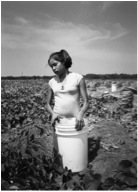
Field shots were followed by visits to some of the homes of the workers 90 miles away. Robin would put in a 10 hour day and then once back at the hotel, chain smoke a few cigarettes and go for a long run. I didn’t know how he did it. “He had no body clock,” said Pharis Harvey. Eventually, “he would just collapse.”

Other films followed. In 2010, he and Dutch journalist Miki Mastrati made The Dark Side of Chocolate, unveiling the hidden child labor and trafficking in West Africa that helps produce the chocolate that we all love. In 2011, he directed The Harvest/La Cosecha, a feature length film that explored the physical and emotional toll on three child farmworkers.

The NGO community heralded these films, organizing public education and advocacy around each of them. Robin pushed tirelessly for solutions to the problems he exposed, regularly participating in our Child Labor Coalition strategy sessions long after his films were made.

Occasionally, he would get groups to pay for his brilliant photography, but when they could not find the budget for them, he shared them for free. He knew we needed the ammunition for the war we were waging. “He went everywhere and shot everything,” noted Harvey.

In the years since Robin and Len started filming Stolen Childhoods, the number of child laborers in the world has dropped by 80 million. I feel certain that Robin Romano played a crucial role in helping bring that decrease about. Robin has been such an integral part of our advocacy it is hard to imagine our work moving forward without him, but we know that he would have demanded that we continue.

If you would like to join the Child Labor Coalition and its members  for our “Remembering Robin” memorial event this Thursday, February 13, in Washington, DC, please RSVP  here.

Chipotle beefs up sustainable agriculture efforts – National Consumers League

kelsey As if it weren’t enough that the restaurant chain Chipotle revolutionized the extremely affordable, locally sourced and 100% delicious fast food meal, now they’re speaking out against the unsustainable and inhumane nature of industrial agriculture. And they’re doing so in the most entertaining way. The satirical series, “Farmed and Dangerous,” calling out big agriculture is set to debut February 17, on Hulu.

When I first heard about this series, I was skeptical. But then it dawned on me that Chipotle does some great things when sourcing their meat and dairy products, holding their producers to higher standards than pretty much every other fast food chain.

The 30 minute, four episode, series seeks to raise consumers’ awareness about industrial farming issues by taking a very serious, grim subject and satirically highlighting its biggest problems. This “values integration” raises awareness about issues the company combats and in return consumers view Chipotle in a positive light and will eat there in an opportunity to support their efforts.

It’s not Chipotle’s first stab at this blended marketing approach they’re calling ‘strategic entertainment.’ The Scare Crow (2013), Back to the Start (2011) and Meat Without Drugs (2012) are all short films about the disturbing tactics used by large industrial farms.  As a matter of fact, this approach isn’t new at all.  Proctor & Gamble created “soap operas” as a means of cross promotion; as did Ovaltine with shows like Captain Midnight back in the 1950s.  The return to such marketing tactics is most likely driven by consumers ability to skip commercials altogether, with technology like DVR and Netflix.  Even Whole Foods is slated to be releasing a new reality series called “Dark Rye.”

The series mentions Chipotle only once, as a means of debunking the current rumor that McDonald’s owns a controlling stake in the company. The share was indeed held by McDonald’s for eight years but they divested in 2006.

Full disclosure, the episodes will air on a Chipotle branded Hulu account but maybe they deserve to claim these efforts. So often we see commercials with entertaining but meaningless messages. Chipotle could have just as easily spent their money on a thirty second super bowl ad, but instead they chose to spread a message they believe in while getting the most possible bang for their buck. I know I’ll be watching.

Meet NCL’s new public policy intern – National Consumers League

Hello readers, my name is Evelyn Wong and I’m the new intern here at NCL. I’m a Political Science major from the University of the Pacific (UOP) in California and I’ve decided to trade sunshine and temperate weather for the snow, wind, and rain of DC. I actually love the weather so far, because I think all Californians are enamored with snow. We’re also very covetous of rain right now!   

I’m here as part of the Washington Semester Program of American University. It’s a program that all my professors extolled as “life changing” and “an unforgettable experience.” I had actually found out about NCL and had met one of the staff, Lucinda Cassidy, at AU’s internship bazaar.

As part of the Justice and Law program at American, I am interested in a wide range of public policy issues, which is why I was drawn towards the internships of advocacy organizations like NCL. In particular, I’m interested in public policy areas that are focused on protecting consumer and workers’ interests . Since everyone is in this category, it is clear that the NCL plays a crucial role that affects everyone’s lifestyles and decisions. I am happy to be a part of such an important mission and I hope to contribute to their efforts while I’m here.

Consumer health advocates continue work on health coverage at the Families USA Conference – National Consumers League

With only 60 days left for consumers to enroll in the Health Care Marketplace, I joined health care advocates from across the country to hear from healthcare experts at the annual Families USA conference.  Keynote speaker, Vice President Joe Biden, opened the conference with rousing words stating, “Now for the first time, health care coverage for all, is the law of the land.”

The law is a testament to the power of advocates and others, who worked tirelessly to secure this basic right for Americans.

Vice President Biden kicked off the conference with a challenge to remember what life was like before the passage of the Affordable Care Act (ACA) – when pregnancy was a pre-existing condition, young adults were kicked off their parents’ health plan, lifetime dollar limits were in effect, and patients could be denied coverage because of a pre-existing condition.  Americans no longer go to sleep at night worrying that if a family member gets sick, they might lose their house, their savings, and go bankrupt due to high medical bills and inadequate health insurance. “It is not just about physical health coverage anymore, but about peace of mind,” said Biden.

Many speakers, including Biden, noted that the conversation about health care has changed.  Instead of talking about health care as a privilege, it’s now agreed that health care is a right everyone deserves access to.  People who previously had no access to preventive care are going to the doctor and getting much needed care as a result of the ACA.

However, the conversation needs to shift to making sure this law works.  The current challenge, as we all know, is getting people enrolled.  As Ezra Klein of The Washington Post noted, “The problem will not be if the website is working properly, the problem will be that some people don’t even have a computer to access a website.” We will need to make sure those populations on the fringe are able to enroll and benefit from the health law.

Kentucky was held up as an example of what can happen when a state opens up its own exchange and recognizes the value of ensuring all its citizens have health insurance. Ranked at the bottom of most national health statistics, Kentucky decided that this was an opportune time to improve its citizens’ health by putting the people before politics. Kentucky is the only southern state to expand Medicaid and open a state-based exchange.  This decision meant providing coverage to nearly 640,000 uninsured people in the state. Expanding Medicaid allows those people who earn too much to qualify for Medicaid and too little to enter into the Marketplace access to coverage under the law. Kentucky Governor Steve Beshear stated that an independent analysis proved that expanding Medicaid will inject over $16 billion into Kentucky’s economy over the next 8 years and create at least 17,000 new jobs. It is clearly a win-win situation.

“The time for politics is over,” proclaimed Klein.  Over 3 million have signed up for private plans through federal and state exchanges as of January 24.  It is expected that a million more will be signing up in January.   As Biden noted, the “ACA is the most consequential piece of legislation” in decades.  Let’s make it work.

Fewer children forced to toil in the Uzbek cotton fields – National Consumers League

makiFor several years, the Child Labor Coalition (CLC), which NCL co-chairs with the American Federation of Teachers, has worked closely with the Cotton Campaign to reduce child labor and forced child labor in Uzbekistan’s cotton harvest. Uzbekistan, run by totalitarian dictator Islam Karimov, is the only country in the world where the central government has recently played a major role in causing large-scale forced child labor. 

For many years, Uzbekistan’s leaders emptied schools and literally forced school children—sometimes very small children—to harvest cotton, a grueling, painful, sometimes dangerous job. The country is one of the largest cotton producers in the world, and Uzbek cotton sometimes finds its way into the U.S. apparel industry, despite a pledge by more than 130 apparel companies that they will not knowingly use Uzbek cotton in their garments.

For years, Uzbek children worked beside similarly conscripted college students and older adults for four to eight weeks at a time, missing much-needed school in the process. The workers were paid so little that their labors should be considered a form of temporary slavery. Those who refused were expelled from school, fired from their jobs, denied public benefits, or worse. Some harvesters have reported being beaten because they did not meet their cotton quota.  The forced labor of children and adults did not enrich struggling local farmers, but benefited the country’s ruling elite.

Despite aggressive advocacy by the Cotton Campaign, Karimov had intractably refused to ease the use of child labor and forced labor. Recently, however, the situation in Uzbekistan has shown signs of changing.

Advocacy by the Cotton Campaign led to a very surprising success last summer, when the US State Department issued its annual Trafficking in Persons (TIP) country-by-country report and it included a downgrade of Uzbekistan to the lowest tier ranking, signaling that the Uzbek government was simply not doing enough to reduce forced labor and the worst forms of child labor in the country. Although the advocacy community had worked hard and long to bring about this downgrade—and it was completely deserved—it was still a surprise. The US government has many strategic concerns in Uzbekistan related to supply routes for the war in Afghanistan, and it was assumed that the State Department would not be willing to issue the deserved downgrade for fear of alienating Uzbek leaders. Fortunately, the State Department honored the intent of the TIP report and in so doing, applied additional pressure to the Uzbek government.

Soon afterwards, advocacy pressure may have led the Karimov regime to allow, for the first time, an inspection team by the International Labour Organization (ILO) for the 2013 cotton harvest, which began last fall. The Cotton Campaign had been pressing for an ILO inspection for several years. Uzbek officials relented and agreed to allow in an ILO team comprised of staff members, not the “high level” mission that civil society had hoped for that would have included representatives of workers, employers, and civil society. Despite this, getting the ILO in to monitor the harvest was a small victory and an important step towards a fuller monitoring visit.

What did this year’s harvest look like? For the second year in a row, it appears fewer schools with young students were closed and fewer young students were compelled to harvest cotton. However, like last year, a greater number of teens and young adults were forced to go to the fields toil under conditions that are often very difficult. ILO investigators say they did not see “systematic forced child labor,” but acknowledge they saw numerous children working. The advocacy community still believes that children are compelled to work against their wishes, but number of young children is decreasing.

Much work remains to be done in Uzbekistan, a million Uzbeks still toil in forced labor every autumn and the country continues to repress civil society and human rights. The CLC and the international advocacy community, under the leadership of the Cotton Campaign will continue to pressure Uzbek officials to end the forced labor of children and adults in Uzbekistan. We hope to build on the promising developments of last year.