When it comes to GMOs, how much do we really know? – National Consumers League

kelseyJust last week, Vermont took the initiative to pass a state bill requiring GMO labeling. While Connecticut and Maine have also each passed GMO labeling acts, that legislation will only go into effect once a certain number of other states have passed similar labeling requirements. Vermont’s law won’t go into effect for two years — and only if lawsuit doesn’t knock it down first!

State legislators expect pushback from major genetically engineered seed producers, like Monsanto. An extra $1.5 million legal fund was added into the legislation to help cover any costs a lawsuit may incur in court.

gmoThe recent GMO labeling buzz has got me thinking. What do we, as a nation, really know about GMOs? Turns out we know surprisingly little. Only 26 percent of consumers believe that they have eaten genetically modified foods and 60 percent believe they haven’t. For anyone who has taken the time to research this issue, they would know that it is incredibly unlikely that someone has never eaten genetically modified foods. Ten years ago in 2004, 85 percent of soybeans and 45 percent of corn grown in the U.S. were genetically modified. It is very likely that these numbers have only grown since then. What I find most disturbing is that among consumers who claimed to know the most about GM foods, 43 percent still thought that they had never eaten any GMOs.

If we as a nation are so uneducated about how much of our food is genetically modified then it is a good idea that GM foods be labeled as such. The sheer volume of GM foods in this country might disturb some consumers and lead to self-education about GMOs. Some consumers might conclude that they aren’t as detrimental as some anti-GMO activists make them out to be. Many argue these modified foods have the capacity to feed the ever-growing, ever-hungry population of this planet.

What’s more, I doubt that consumer habits will greatly change based on GMO labeling.  The people who are passionately anti-GMO likely know which foods contain GMOs already and avoid them. The people who don’t care, well they might not even notice the labels, and those that are curious might read up on genetic modification and learn more about what genetically modified really means. It is important that food producers include robust labels on their products so consumers know exactly what they are eating. For this reason, labeling food that contains GMOs is the right decision for consumers.

Target CEO is out – National Consumers League

This week, the CEO of Target, Gregg Steinhafel, resigned. He was unable to recover from the damage caused by a massive data breach at the company – which happened right in the middle of the holiday shopping season last year. Last December, Target announced that 40 million customers’ credit and debit cards and personal information had been compromised.  Steinhafel was with the company for 35 years.

Target’s experience is a cautionary tale for corporate leadership. The company was slow to respond to the panic that set in when consumers learned their card information had been compromised. I remember reading the advisory the company posted in December telling consumers all the things they had to do to protect themselves. There was precious little the company shared with its valued customer base – many of whom were Target credit card holders  – about what it intended to do to protect customers after the breach and into the future.

NCL issued a statement after the breach calling on retailers in the US to get with the program and adopt a more secure credit card system of Chip-and-PIN. That protocol is used widely in Europe and is less vulnerable to hacking at the point of sale. Criminals are busy 24/7 figuring out how to hack into retailer databases. We need to fight fire with fire. American consumers deserve the best protection for our financial transactions that the industry has to offer. Companies that don’t adopt these protections will find themselves much like Target  – losing customers’ trust and their business along with it.

Announcing the #DataInsecurity Project – National Consumers League

Last December, millions of consumers busily rang up more than $600 billion in holiday purchases. Unfortunately, hackers were also having a field day — at consumers’ expense. We learned that lax security procedures combined with an insecure payment mechanism resulted in as many as 110 million shoppers at retail giant Target having their personal information compromised.

Security researcher Brian Krebs, who first broke the story of the Target breach, recently published a startling set of numbers that demonstrates the impact of this one incident. They include:

  • $200 million – The cost to credit unions and community banks for reissuing 21.8 million credit and debit cards;
  • $18-35.70 – The media price range per card stolen from Target and resold on the black market in the months after the breach;
  • 1-3 million – The estimated number of cards stolen in the Target breach that were sold on the black market and successfully used to commit fraud;
  • $53.7 million – The estimated income that hackers generated from the sale of 2 million cards stolen from Target (at a median price of $18-35.70); and
  • $55 million – The size of outgoing Target CEO Gregg Steinhafel’s golden parachute.

Sobering as these numbers are, they represent the fallout from a single data breach, albeit a massive one. In 2013, the Verizon RISK team reported more than 1,300 data breaches. The non-profit Privacy Rights Clearinghouse, which tracks data breaches, reported that more than 257 million records were compromised last year as well. A recent study by the Ponemon Institute found that the average total cost of a data breach in the U.S. is $5.85 million per incident. The probability that a U.S.-based organization will experience a breach of at least 10,000 records in the next 2 years is 18.7 percent, according to the Ponemon study.

By 2020, annual global data production is expected to hit 35 zettabytes, (or 35 trillion gigabytes). This data explosion will power unfathomable changes to consumers’ daily lives. However, the existence of that much data – much of it personal and very valuable to malicious actors – demands stronger security practices. Federal agencies like the FTC are doing yeoman’s work to hold companies to account for lax data security. But the FTC’s authority in this area is in question in the courts, and case-by-case adjudication is unlikely to sufficiently address the larger problem. Organizations like the National Institutes of Standards and Technology have developed voluntary frameworks for cybersecurity, but companies and other entities are not compelled by law to adopt it. Standards bodies like the PCI Security Standards Council have industry backing, but they are sector-specific.

While no one can wave a magic wand and solve the problem of data security, more can and should be done in Congress to give enforcement agencies the tools they need to protect consumer data and prod industry to make data security a top priority.

That is why we are announcing today the launch of the NCL #DataInsecurity Project. We are calling on policymakers in Congress, federal agencies and the states to be champions for data security. For too long, policy inertia has prevented meaningful reform on Capitol Hill and elsewhere that would better protect consumers’ data. There are a number of promising bills currently pending in Congress, but more can and must be done. Pro-consumer steps to enhance data security include:

  • Creating a national data breach notification standard, modeled on strong state protections such as California’s;
  • Requiring businesses that maintain consumers’ personal data to protect that information via specific data security requirements;
  • Giving the Federal Trade Commission and state Attorneys General civil penalty authority to enforce violations of data security requirements;
  • Increasing civil and criminal penalties for malicious hacking;
  • Increasing efforts to enhance cooperation with international partners to bring overseas hackers to justice;
  • Requiring retailers and banks to implement the highest level of security available to protect consumers’ payment data

In an era when vast amounts of data are being collected about them, consumers must have confidence that their information is safe. The Target breach was a wake-up call. We can no longer sit idly by while sophisticated hackers steal with impunity and businesses accept the status quo as just another cost of doing business. The time for reform is now.

Women CAN have it all! – National Consumers League

I finally got around to reading Sheryl Sandberg’s book, Lean In. I confess that from the reviews, I wasn’t sure if I’d like or hate the book. I liked it a lot, but even more, I think it’s an important book. It’s a feminist manifesto for the current generation of working women. Sandberg counsels her peers not to drop out of the workforce because someone convinced you that “you can’t have it all.” I’ve always disliked that phrase.

It’s self-defeating and ultimately meaningless. She tells women to use their brains, their education, their families, spouses and moxie to figure out a work-life balance. Having children and working full time is do-able with the right support systems in place. She acknowledges that not every woman has those support systems; but if you do, don’t shy away from a promotion, a new job, or new opportunity.

This is an inspiring book. It’s true that Sandberg’s led a charmed life –which is why I had my doubts about the advice she was dispensing – she’s has two degrees from Harvard – undergrad and the Business School (when I lived in Boston they called it Preparation H!) , she’s a protégé of former Treasury Secretary Larry Summers and his chief of staff at Treasury, was recruited by Eric Schmidt to work at Google, then recruited to be CEO at LinkedIn and turned it down, and is now one of Mark Zuckerberg’s general’s at Facebook.  She’s also a Jewish girl who managed to find the ideal, supportive Jewish husband and have two perfect kids. Plus, she’s reported to be worth over a billion dollars. I’ll get to that point in a minute.

In spite of this gilded path, it’s hard not to like Sandberg:  she’s supportive of colleagues and friends, she’s funny and self deprecating, she acknowledges leading a privileged life, and notes that she learned  along the way – to her surprise – that she’s actually a feminist, a description she rejected in her younger years. Many in my generation of working women cheer when we hear that, since so many younger men and women have accepted the negativity foisted on the word “feminist” by a culture threatened by empowered women.

Sandberg’s had a few bumps in the road. She got divorced after a hasty marriage right out of college and experienced some old fashioned sexism while serving as a page to a New York Congressman. When she was introduced to House Speaker Tip O’Neill he commented “She’s pretty,” and turning to Sandberg asked her “Are you a Pom Pom girl.”  Every working woman has experienced that kind of sexism.

But her advice to working women is solid. History is replete with examples of women who did it all – raised families and had remarkable careers.  The women who first ran the National Consumers League are a case in point.  Florence Kelley had three children, fled an abusive husband to land at Hull House in Chicago, relied on friends to care for her small children while she pursued her remarkable career of exposing the evils of child labor, drafting the nation’s first minimum wage laws and getting the Supreme Court to hear the first maximum hours’ case laws. She traveled far and wide, speaking at women’s clubs and conferences. Frances Perkins served as Secretary of Labor all four of FDR’s terms and is largely responsible for lifeline programs like social security, workers compensation, and unemployment insurance. She lived in Washington, traveling to see her husband (who suffered from mental illness so she couldn’t depend on him to care for their daughter) and daughter on weekends. Neither of them was rich, nor did they have parents they could rely on for support. Both Kelley and Perkins felt guilty about being away from their families, but each had a calling and what an enormous debt we owe them for their impact on social reforms in America – and what a loss it would have been had they chosen not to work.

So thank you to Sheryl Sandberg advising working women to lean in and to stay in the workplace if they want to. Don’t believe that adage that you “can’t have it all.” What bunk!  Women in America today have far too much education, talent, and valuable skills to let themselves be talked out of a fulfilling career. I recommend Sheryl Sandberg’s book women of all generations.

That said, I also think Sandberg should put some of the cash – of which she has so much – toward bettering the lives of low income working women and families. Below are six organizations that I would put on my Hanukah giving list if I was worth what she’s worth (of course, the National Consumers League get my first $100 million!):

National Employment Law Project (NELP) – NELP works in partnership with national, state and local allies, promotes policies and programs that create good jobs, strengthen upward mobility, enforce hard-won worker rights, and help unemployed workers regain their economic footing through improved benefits and services.

National Partnership for Women and Families – Founded in 1971 as the Women’s Legal Defense Fund, the Partnership promotes  fairness in the workplace, reproductive health and rights, access to quality, affordable health care, and policies that help women and men meet the dual demands of work and family.

MomsRising – MomsRising combines the best of American innovation and ingenuity. They are a transformative on-the-ground and online multicultural organization of more than a million members and over a hundred aligned organizations working to increase family economic security, to end discrimination against women and mothers, and to build a nation where both businesses and families can thrive.

9to5 – 9to5 is one of the largest, most respected national membership organizations of working women in the U.S., dedicated to putting working women’s issues on the public agenda. Their mission is to build a movement for economic justice, by engaging directly affected women to improve working conditions.

Interfaith Worker Justice  – IWJ has many work and job sites around the country where workers, many of them low income women, can come for advice when they’ve been deprived of fair wages, are being discriminated against for being pregnant or are facing dangerous working conditions    https://www.iwj.org/

Economic Policy Institute – EPI was created as an economic think tank to address the needs of low- and middle-income workers in economic policy discussions. EPI believes every working person deserves a good job with fair pay, affordable health care, and retirement security.  To achieve this goal, EPI conducts research and analysis on the economic status of working America, with a focus on low and moderate income workers.

Spotlight on e-cigs – National Consumers League

The Food and Drug Administration announced in April proposed new regulations that would cover for the first time e-cigarettes as well as other tobacco products, including pipe tobacco, cigars and waterpipe (hookah) tobacco. Electronic (or e-cigarettes) have become a huge billion dollar industry which had escaped federal oversight until now. As tobacco remains the leading cause of death and disease in this country, this expanded FDA oversight is an important moment for consumer protection.

As part of its implementation of the Family Smoking Prevention and Tobacco Control Act signed by President Obama in 2009, the rule sets forth additional tobacco products that would be “deemed” to be subject to FDA regulation. “This proposed rule is the latest step in our efforts to make the next generation tobacco-free,” said HHS Secretary Kathleen Sebelius.

Under the proposed rule, makers of these tobacco products would, among other requirements:

  • Register with the FDA and report product and ingredient listings;
  • Only market new tobacco products after FDA review;
  • Only make direct and implied claims of reduced risk if the FDA confirms that scientific evidence supports the claim and that marketing the product will benefit public health as a whole;
  • Not distribute free samples;
  • Have minimum age and identification restrictions to prevent sales to underage youth;
  • Include health warnings on the products; and
  • Prohibit vending machine sales, unless in a facility that never admits youth.

E- cigarettes resemble traditional cigarettes but they use a heat source, usually powered by a battery, to turn a liquid that usually contains nicotine and flavorings, into an aerosol that is inhaled by the user. Over the last few year e-cigarette usage has exploded, with a doubling of e-cigarette use from 2011 to 2012 among middle and high school students and adults (18-34), according to the Centers for Disease Control (CDC) figures.

Of concern to public health experts is that e-cigarette makers appear to be targeting youth. E-cigarette makers spent $39 million on ads from June through November 2013, much of it on programming targeting youth, the anti-tobacco organization Legacy found. The fear is a whole new generation of people will become addicted to nicotine.

Of note to anti-smoking advocates is that the proposed rule does not contain any proposal to ban flavors in e-cigarettes or cigars. They worry that e-cigarettes sold in flavors such as bubble gum and gummi bear will entice teenagers and children. Public health experts say 90 percent of smokers start by the age of 20.

There are also was no suggestion in the proposed rule to restrict the marketing of e-cigarettes, as is done for regular cigarettes, which are banned from television advertising. According to Legacy, while cigarette advertising is prohibited on television, it is currently fair game to use television to promote electronic cigarettes. Using broadcast and online advertising has allowed the e-cigarette industry to promote its products in a way that has broad reach.

While the proposed regulation takes some very important steps to protect public health by regulating these new tobacco products, especially e-cigarettes, it is essential that FDA continue to look at what further regulation is needed to ensure these products are not marketed to youth.

The proposed rule will be available for public comment for 75 days. The FDA is particularly interested in comments on how cigars should be covered by the rule, and how e-cigarettes should be regulated.

LifeSmarts celebrates its 20th anniversary at the national championship in Orlando, Florida – National Consumers League

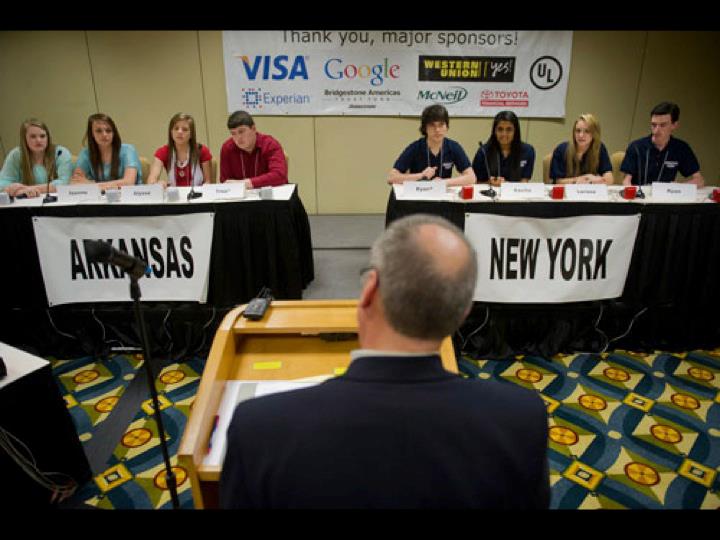
2Students across the country will travel to Orlando, Florida this weekend for the National LifeSmarts Championship. This tournament marks the 20th anniversary for the program, which arms high school students around the country with the knowledge needed to be savvy consumers and responsible adults. The tournament begins on Saturday and will culminate on Tuesday (4/29) with a live broadcast at LifeSmarts.org of the semi-finals and finals.

Teams representing states around the country, the District of Columbia, and student organizations FCCLA and FBLA will compete for LifeSmarts glory.

These teams began competition online with the top scoring teams participating in live state competitions. Those winners punched their tickets to Orlando and earned an opportunity to be crowned the 2014 National LifeSmarts Champions. Follow the action on our Nationals Scoreboard housed on LifeSmarts’ Facebook page. We will be updating the scoreboard in live time. Follow your state’s team to track their success. You can also follow the action on Twitter using #LifeSmarts. This year marks the second-annual LifeSmarts Twitter contest. Top tweeters throughout the national championship tournament will win prizes.

Flying high, the airlines look to push anti-consumer legislation through Congress – National Consumers League

Republished with permission from Flyersrights.org. The airlines are at it yet again. Those deceptive and infuriating ads that were banned years ago are sneaking back.

Making its way thorough the U.S. House, without public submissions or any debate, is a bill called H.R. 4156, deceptively named the “Transparent Airfares Act of 2014”. Translation: the “Keep Air Travelers in the Dark Act”.

Written by airline lobbyists, this bill is completely anti-consumer while at the same time denigrating customers and constituents alike. It is all about makingairfares less transparent. The name of the bill is just the start of the false advertising.

It is a thoroughly corrupt racket being perpetrated against the very taxpayers that have repeatedly bailed out the airlines time after time.

How would a proposed ‘Transparent’ Law mislead consumers? It seeks to overturn and reverse our hard-fought 2012 Department of Transportation ruling that requires the airlines to prominently feature the full total price of their airfares.

The proposed law would give airlines free rein to quote artificially low ticket prices, minus taxes and government fees, leaving you with the mistaken belief that your total airfare is far cheaper than it is.

The supporters of this bill want airlines to be able to advertise a flight without the fees and taxes added on. For example, a $300 flight would be advertised for $239 – omitting the fees and taxes.

The DOT’s advertising rules were meant to eliminate shocking surprise fees and add transparency to the airfare booking process.

So the first question is, who in our Congress is responsible for attempting to perpetrate this deception?

They are Bill Shuster (R-PA) and Peter DeFazio (D-OR), the sponsors of the bill, who also happen to be members of the House Transportation and Infrastructure Committee. Review  the list of co-sponsors at https://btcnews.co/Rlxfy2.

Second question, how much did the airlines give to the re-election campaigns of the sponsors of this bill?

CONGRESS DRINKS THE AIRLINE KOOL-AID

The airlines dupe Congress again and again, blogs the Travel Insider. There is no justification for this legislation, which is why there was no debate allowed prior to approving the bill and passing it out of its markup stage and sending it on to the full House.
Transparency or confusion?

According to Reps Shuster and DeFazio, the American public “wants” and is “calling for” this law.

The problem with that assertion is that it is untrue. There are NO consumer groups actively supporting this bill.  In fact, FlyersRights and virtually all other aviation consumer groups are strongly OPPOSED to it.

Another argument for this legislation is that it exposes the level of taxes and fees the government imposes on air travel.

But why would any congressman wish to expose their greedy grab of such a large slice of our air travel expenditures, the Travel Insider asks athttps://btcnews.co/1hR12DK.

All airlines are already free to make as prominent a statement as they choose about how much of the ticket price you pay goes to the government and what it is for.

Another of the bill’s justifications is that it places the same disclosure rules on airfares as on anything else you’d buy.

Yes it’s true prices are usually quoted without sales tax, yet that is necessary because sales tax rates vary not only from state to state and from county to county, but even from city to city.  Air taxes and fees are a constant for any given airline, route and fare, no matter where the ticket is purchased.

Gas prices are a lot like airfare pricing – the price per gallon of gas includes all federal, state and local taxes and fees.

Imagine if gas stations were to start advertising just the base cost of the gas on their signs, and only after you’d filled your tank you discovered the total cost!

What this legislation would most risk is a return to the most egregious examples of ‘bait and switching’ where you’d see a low advertised airfare, but only after getting all excited, and working through 95% towards paying it, do you then discover a morass of fees and surcharges – carrier imposed as well as government imposed – that total more than double the price you thought you were going to pay.

The airline industry, along with banking, cable and telecommunications, oil, healthcare, and numerous others, want less regulation, but they have demonstrated, time and time again that they are incapable of regulating themselves.

The consumer deserves to have the final price of an airline ticket prominently displayed BEFORE taking out a credit card to pay for it.  As it is today, the consumer CAN see the whole price before booking, no last-page surprises–and that should never be changed.

Please contact your congressional representatives and ask them to vote against HR 4156, the Transparent Airfares Act, because it does not promote transparent airfares, but rather does quite the opposite.

Easter Candy — How to buy worker-friendly sweets? – National Consumers League

With Easter nearly upon us, consumers will be purchasing a lot of candy over the next several days. In recent years, the chocolate industry has been rocked by a child labor scandal, when it became known that 80 percent of chocolate derives from the West African nations of Ghana and the Ivory Coast, where large numbers of children help harvest cocoa–the main ingredient of chocolate–under conditions that are extremely dangerous and difficult.

In many cases, they use razor-sharp machetes and work without pay under circumstances that some advocates have likened to slavery. How can consumers buy responsible candy—candy free from slavery and abusive child labor? First, we recommend you check this chocolate scorecard developed by the group Green America in 2010. The groups that have been given an “A” grade are making a substantial effort to eliminate child labor and ensure that workers and farmers are fairly treated.

We know “Divine” chocolate the best; they work with farmers cooperatives to reduce child labor and help farmers earn better prices. The scorecard also explains various consumer certification programs like Fair Trade that try to ensure decent livelihoods for farmers and take steps to protect against child labor, although many child labor advocates recognize that monitoring efforts may not successfully ensure products are child-labor free.

In addition to purchasing chocolate that is child-labor free, NCL also advises consumers to purchase union-made products because we believe collective bargaining helps guarantee fair wages and decent benefits for workers. Check out this list of union-made candy, complied by Union Plus. The list represents the products produced by members of the Bakery, Confectionery, Tobacco Workers and Grain Millers International Union (BCTGM); the United Food and Commercial Workers (UFCW); and the fruit and nuts from members of the United Farm Workers of America (UFW).

Included on the list, which Green America compiled in 2010, are Hershey and Nestle – two companies that produce union made candy but have received poor grades on the chocolate scorecard. Hershey’s products (excluding “Hershey’s Bliss”) have been given an “F” grade in large part because of its extremely slow, lackluster response to child labor allegations. More recently, the company announced a certification scheme to ensure their products are child-labor free by the year 2020, but it doesn’t seem to be making any progress in enacting that scheme. Hershey currently is also facing a shareholder lawsuit over its refusal to release documents about the presence of child labor in its supply chain.

Additionally, a few years ago, Hershey’s used a contractor that was accused of trafficking foreign students, essentially tricking them into signing up for a cultural exchange program and then forcing them to work in a factory. In 2009, a 29-year-old worker drowned in a vat of chocolate in a New Jersey factory that supplied chocolate to Hershey, raising questions about the company’s willingness to risk worker safety in its pursuit of low product cost.

You’ll note that Nestle, another major manufacturer of chocolate, received a “D” grade. The company was long criticized for its slow response to child labor allegations. In 2011, after it received the poor grade, Nestle took a step forward by hiring the Fair Labor Association (FLA), an independent third party monitoring group that is helping it identify supply chain problems. University of San Francisco Professor Beth Hoffman, a Forbes contributor, has recently accused the chocolate industry of undercutting prices to farmers and farm workers.Prices for cocoa stand at less than half of what they were in 1980, her piece notes. She adds that in the 1970s, “fifty percent of the cost of a chocolate bar went to pay for cocoa, today that is less than 6 percent.”

For more information about the list of union-made candy, please visit Union Plus and if you’d like a mobile version of the Union Plus list sent to your phone, please text CANDY to 22555.

Closer look at Tax Day – National Consumers League

By Sally Greenberg, NCL Executive Director
Tomorrow is Tax Day. People resent the Internal Revenue Service because they take your money. Republican candidate for president Mike Huckabee said during a 2008 candidates debate, “People would love to see the IRS abolished. The harder you work, the more you earn, the more the IRS and the government wants from you.” That’s called “the progressive taxation” system. The more money you make, the more you can pay.

Seems fair to me. So I’m not of the Huckabee school – I much prefer this quote, from Progressive era Supreme Court justice Oliver Wendell Holmes Jr. — and in fact, it is emblazoned on the front of the IRS building in Washington DC: “Taxes are the price we pay for a civilized society.” Indeed. And this is also good time to take a look at where our taxes go. Thanks to Campaign for America’s Future and their “National Priorities Project” for excellent information on this topic. Across the United States, the average taxpayer paid $11,715 in 2013 federal income taxes. The military received the largest share that of tax payment: 27 cents on every dollar, compared to 22.5 cents for health care. Defense spending doubled from 2001 to 2011. So we’ve doubled defense spending in one decade. I was surprised to see that military spending outpaced money going to support social programs, given all the griping and grumbling from conservatives about “entitlement programs.” This means the average taxpayer paid $3,174.25 to the military in 2013. Health care received $2,662 for programs like Medicaid and the Children’s Health Insurance Program. Meanwhile, only $238 went to education programs, and just $15.84 and $6.56 went to the Low-Income Home Energy Assistance Program and National Forest System, respectively. National Priorities has also looked at each state’s average taxpayer and calculated where taxes from every state are going. These state-by-state tax receipts show the state with the highest average taxes paid (Connecticut, $18,988) and lowest (Mississippi, $7,402), and everything in between. Although these state receipts show the average taxpayer’s contribution to the budget, Americans don’t all pay taxes equally. In theory the tax code is progressive, meaning those who make more money pay higher tax rates – yet in practice that’s not always the case. As Warren Buffett made famous, billionaires sometimes pay lower rates than middle-class workers. And some corporations, like Bank of America and Citigroup, have gotten away with paying zero federal income taxes, even when they make billions in profit. That’s because the tax code is chock-full of tax breaks. Ten of the largest tax breaks that together totaled more than $750 billion in tax savings in 2013 overwhelmingly benefited the top 1 percent of households, with 17 percent of the benefits going to those top earners. That’s in part because tax deductions – one important type of tax break – are far more likely to benefit the wealthy than middle- and low-income folks, because deductions only offer savings to taxpayers who itemize deductions. Only 16 percent of households making between $25,000 and $30,000 itemize tax deductions, while nearly 100 percent of those making over $200,000 itemize.

Mega-breaches and the importance of the Wyndham decision – National Consumers League

By John Breyault, Vice President of Public Policy, Telecommunications and Fraud

Consumers can be excused for not following the minutiae of U.S. district court decisions, but developments this week in New Jersey marked an important victory for data security. On Monday, Judge Esther Salas allowed a lawsuit brought by the Federal Trade Commission against Wyndham Worldwide Corp. (the parent entity of Days Inn, Howard Johnson’s and Ramada, among other hotel chains) to move forward.

From 2008 to early 2010, hackers breached Wyndham’s computer network, stealing credit and debit card information of approximately 500,000 customers. In 2012, the FTC sued Wyndham for the company’s alleged failure to adequately protect its customers’ information from theft. To date, the FTC has settled more than fifty similar cases resulting from businesses’ failure to put in place reasonable data security measures.  However, in the Wyndham case, the company is challenging the FTC’s authority to regulate corporate data security practices. This is important because the FTC is the only federal regulator charged with holding companies accountable for failure to protect their customers’ data. Had Judge Salas agreed with Wyndham, it would have threatened to eliminate the FTC’s authority to hold companies to account. The importance of Judge Salas’ decision was put in stark relief yesterday when security firm Symantec published its latest Internet Security Threat Report. The report, one of the most comprehensive security assessments in the industry, didn’t mince words when they called 2013 the “Year of the Mega Breach,” when “cybercriminals unleashed the most damaging series of cyberattacks in history.” Headlines from the report include:

  • 91% increase in targeted attacks campaigns in 2013
  • 62% increase in the number of breaches in 2013
  • Over 552 million identities were exposed via breaches in 2013
  • Spear-phishing campaigns saw a 91% rise in 2013
  • 38% of mobile users have experienced mobile cybercrime in past 12 months
  • 8 of the breaches in 2013 exposed more than 10 million identities each
  • 1 in 8 legitimate websites have a critical vulnerability
  • 500% increase in ransomware scams in 2013

The Symantec numbers are just the latest in a string of warnings coming out of the cybersecurity community about the growing threat from hackers. For example, Tuesday also marked the end of Microsoft’s support for the Windows XP operating system, which may still be installed on nearly 28 percent of desktop computers, as well as ATMs and government computer systems. Reports indicate that this could result in a field day for hackers as remaining security vulnerabilities in the operating system are exploited. News about a major vulnerability in the widely used OpenSSL security technology could expose the two-thirds of websites that run it to hackers. And those are just the warning coming out this week! While Monday’s decision in the Wyndham case was encouraging, the issue is far from resolved. Wyndham has stated that it will continue to challenge the FTC’s authority to regulate companies’ data security practices. This means consumers are still in danger of losing the most important data security cop on the beat. Given the constant stream of data security warnings, it’s imperative that uncertainty about the FTC’s ability to regulate data security be addressed. A number of bills currently pending in Congress would do just that. The FTC should also convene a workshop to examine the issue in depth, as NCL and others suggested last month. To be clear, there isn’t just a cybercrime wave going on right now. What consumers and businesses across the country are experiencing is more like a cybercrime tsunami. Policymakers in Washington need to make sure the FTC can continue to respond to this threat before we’re all washed away.