AAPI Heritage Month: The ‘Model Minority Myth’ and its negative impact on health disparities

Nissa Shaffi

By Nissa Shaffi, NCL Associate Director of Health Policy

The month of May marks Asian American Pacific Islander (AAPI) Heritage Month, a time where we celebrate, honor, and reflect upon the vast contributions members of the AAPI community have made to our collective society. The AAPI community comprises more than 23 million individuals with origins from 20+ countries, who speak more than 200 languages or dialects, and it is the fastest growing subset of the population.

The AAPI community is one that harbors complex cultural and historical narratives, and varied generational traumas, such as colonialism, war, and the trials of immigration. The AAPI community’s resilience against these factors, while commendable, has contributed to the myth of the “Model Minority,” and has led to a host of social and health inequities. The model minority myth is one rooted in “positive” stereotypes. It is the assumption that deems AAPI individuals as docile, over-achieving, high-earning, and well-educated—denoting AAPI individuals as exemplars to other communities of color. While at face value these qualities are considered desirable, they tend to relegate an astoundingly diverse community to a monolith, resulting in a detrimental impact on their overall wellbeing.

Due to these unrealistic cultural standards, AAPI consumers face a host of internal and external barriers when interacting with the healthcare system, and are often deterred from seeking necessary care. According to a 2019 Substance Abuse and Mental Health Services Administration (SAMHSA) study, AAPIs have the lowest help-seeking rate for mental health services than any racial or ethnic group. Cultural identity, faith, stigma, and fear contribute to lower utilization of mental health services. Other systemic barriers such as disparities in access to culturally competent care also influence underutilization.

AAPIs are also the only racial or ethnic group for whom cancer is the leading cause of death. Despite facing a confluence of cancer risks, due to unique exposures and environmental factors, AAPIs are screened significantly less for cancers compared to other Americans. Because the model minority myth implies that AAPIs are “better off,” screening, public health, and cultural needs are often masked.

This is best demonstrated by the case of Susan Shinagawa, a leading Asian American breast cancer activist and cancer survivor, whose multiple attempts to obtain screening for a suspected lump in her breast was denied, due to the belief that “Asian women don’t get breast cancer.”

The pandemic has illuminated disparities experienced by AAPIs, such as being overrepresented among frontline healthcare workers, increasing risk of exposure to COVID-19. As a result, case fatality among AAPI healthcare workers is three times greater than their white counterparts. AAPIs also tend to live in multigenerational households, more than other minorities, where 29 percent of AAPI households consist of two or more generational families, further increasing risk of household transmission. Approximately 30 percent of AAPIs have limited English proficiency, augmenting overall barriers to care and government relief resources. This disparity has been especially cumbersome for AAPI consumers seeking telehealth, an integral part of our lives throughout the pandemic, where 50 percent of AAPIs with limited English proficiency were less likely to utilize telehealth than individuals with English proficiency.

One way to dispel the model minority myth and encourage greater health equity for AAPI consumers, is to disaggregate racial and ethnicity data in research studies. Disaggregation of data simply means breaking data into smaller, more precise segments. For example, recent United States census data reveal that AAPIs were less likely overall to live in poverty. However, when that data is disaggregated, it shows that Hmong, Bhutanese, and Burmese Americans experience higher incidence of poverty, in contrast to the greater AAPI community. Disaggregating data not only paints a more accurate picture regarding the different social and demographic characteristics that impact varied health statuses within the community, it influences proper allocation of community resources.

Disaggregation of data can only also happen when there is a prioritization of AAPI participants in research. The most illuminating example of this is highlighted by a 2019 study, which revealed that in the past 26 years, only 0.17 percent of the National Institute of Health’s (NIH) budget was allocated to research focused on the AAPI community. These gaps in funding have led to a paucity in data necessary for public health officials and policy makers to meaningfully address AAPI-specific health disparities. A lack of representation in research impacts how AAPI consumers seek, access, and utilize healthcare. It also impacts the greater community public health goals, impacting health equity for everyone.

Greater investments in culturally competent care, AAPI-focused research, and preventive services, such as screening and early intervention, can help improve overall health outcomes for AAPI consumers. The National Consumers League commends the Biden-Harris Administration’s efforts, such as the COVID-19 Hate Crimes Act and the establishment of a *subcommittee on Structural Drivers of Health Inequity and Xenophobia, which aim to ensure the federal government’s response to COVID-19 mitigates anti-Asian xenophobia and bias. These measures are critical in addressing structural inequities experienced by the AAPI community, enhancing community health outcomes as a whole.

*Links are no longer active as the original sources have removed the content, sometimes due to federal website changes or restructurings

NCL supports the Protecting Seniors through Immunizations Act of 2021

Media contact: National Consumers League – Carol McKay, carolm@nclnet.org(412) 945-3242 or Taun Sterling, tauns@nclnet.org(202) 207-2832

Washington, DC—The National Consumers League (NCL) is delighted to support the Protecting Seniors through Immunizations Act of 2021 (H.R. 1978/S. 912), introduced by Senators Mazie Hirono (D-HI), Tim Scott (R-SC), Sheldon Whitehouse (D-RI), and Shelley Moore Capito (R-WV), and Representatives Ann Kuster (D-NH) and Larry Bucshon (R-IN). The bill would expand access to immunizations for seniors by eliminating cost sharing for vaccines covered under Medicare Part D.

The legislation would eliminate out-of-pocket costs for all vaccines recommended by Centers for Disease Control and Prevention (CDC) and covered under Medicare Part D. This would apply to crucial immunizations such as the Shingles and tetanus, diphtheria, and pertussis, or Tdap, vaccines, along with future vaccinations. Currently all CDC recommended vaccines are covered with no out-of-pocket costs under private insurance, Medicaid, and Medicare Part B. Unfortunately, Medicare beneficiaries must often pay out-of-pocket costs of up to $160 for vaccines covered under Part D.

“As healthcare costs continue to skyrocket, policymakers should support legislation that eliminates financial barriers for Medicare beneficiaries to get their CDC recommended vaccines,” said NCL Director of Health Policy Jeanette Contreras. “Research shows that higher cost-sharing means fewer seniors will elect to receive their vaccines. By eliminating out-of-pocket costs for immunizations, older Americans will be better protected from vaccine preventable illnesses.”

More than 50,000 American adults die from vaccine-preventable diseases every year. Among other provisions, this bill would increase education about vaccines for Medicare beneficiaries and would authorize a study to find ways to boost adult vaccination rates. These steps are important at a time when misinformation regarding vaccine safety is spreading rampantly throughout society. Improving access to and utilization of vaccinations will enhance overall health outcomes and help to address existing racial and socioeconomic health disparities.

“Vaccines are amongst the most effective public health measures at our disposal. Routine immunizations can prevent diseases that have the potential to cause severe disease and wreak havoc on our most vulnerable communities,” said Contreras. “We urge Congress to pass the Protecting Seniors Through Immunization Act, to ensure greater equity in access to vaccines, in turn protecting the most vulnerable members in society from unnecessary and easily preventable illness and death.”

###

About the National Consumers League

The National Consumers League, founded in 1899, is America’s pioneer consumer organization. Our mission is to protect and promote social and economic justice for consumers and workers in the United States and abroad. For more information, visit www.nclnet.org.

Jeanette Contreras portrait

Como detectar el COVID-19 en casa

By NCL Director of Health Policy Jeanette Contreras

Tras la efectiva campaña de vacunación, las pruebas de detección serán claves para seguir evitando contagios del coronavirus y resumir a la normalidad. Reconociendo que estamos en buen camino para controlar la pandemia del coronavirus, los estados están eliminando las restricciones de la cuarentena. Pero el 11 de mayo, el director de la Organización Mundial de la Salud (WHO, por sus siglas en inglés) nos alerta que seguimos en una situación peligrosa porque los estudios de la variante que se ha propagado en la India indican que esta se transmite más fácilmente y provoca una enfermedad más grave.

Expertos de salud siguen cuantificando y analizando los casos positivos para vigilar las variantes. Una recomendación importante es seguir administrando las pruebas de detección de COVID-19 aunque las personas sean asintomáticas. En abril, la Administración de Alimentos y Medicamentos de los Estados Unidos (FDA, por sus siglas en inglés) autorizó varias pruebas de uso personal que detectan el COVID-19 y que se pueden comprar en las tiendas y farmacias como CVS, Walgreens y Walmart sin receta médica .

Para los fines de mayo esperamos ver estas pruebas caseras disponibles en todo el país. Los Centros para el Control y la Prevención de Enfermedades (CDC, por sus siglas en inglés) *ofrecen consejos sobre cómo usar un kit de recolección y realizarse la prueba en casa. Todas funcionan igual: toma el espécimen de tu nariz o de saliva, envíala al laboratorio por correo, y recibirás los resultados por el internet en un par de días.

Como todavía falta vacunar a los niños menores de 12 años, a las personas que por su religión no han sido vacunados, y personas con enfermedades graves que no se les permite vacunarse, los expertos de salud pública temen no poder eliminar el coronavirus por completo. Una de cada tres personas en el EE. UU. no confía en la vacuna. Y si la mayoría de la población no se vacuna, el COVID-19 será endémica en nuestro país. Solo el país de Israel ha logrado llegar a la inmunidad de grupo- incluso jóvenes de 16 años de edad se han vacunado.

Con acceso a estas pruebas personales, organizaciones y empleadores pueden comprar cantidades de kits de recolección para uso en sus comunidades. Las *escuelas y lugares de trabajo ya están estableciendo programas de pruebas para detectar el COVID-19 rápidamente. Para proteger los más vulnerables en nuestras comunidades, todos los casos positivos se deben reportar al departamento de salud del condado en donde vives y al estado para iniciar un rastreo de contactos. Es importante saber dónde se inició el contagiado y con quien ha tenido contacto cercano las personas infectadas.

Aunque el CDC afirma que *las personas con la vacuna completa que no presentan síntomas del COVID-19 no necesitan hacerse la prueba de detección después de haber estado expuestas a una persona contagiada con el COVID-19, es muy posible que personas que quieran viajar tengan que mostrar una prueba de detección negativa para entrar a otro estado o país. Mientras que no haya un pasaporte de vacunas, muchos países requirieran que los visitantes demuestren una prueba de COVID-19 negativa para ingresar a su territorio. El CDC tiene un *planificador de viajes que las personas pueden utilizar para buscar información sobre el COVID-19 en las comunidades estatales, locales, territoriales y tribales que atraviesen en ruta a sus destinos.

La facilidad de obtener pruebas caseras nos ayudar a detener la propagación del COVID-19 e identificar los orígenes de contagio. Poder hacer un seguimiento de contactos en las comunidades afectadas no solo puede prevenir enfermedad, pero también controlar la evolución de nuevas variantes del COVID-19. La conveniencia de poder hacerse la prueba del coronavirus desde la comodidad de la casa y sin receta de un doctor significa tener un mejor control del bienestar de cada persona en nuestras comunidades.

*Links are no longer active as the original sources have removed the content, sometimes due to federal website changes or restructurings

The decline in COVID-19 testing nationwide could derail pandemic response wins

Nissa Shaffi

By Nissa Shaffi, NCL Associate Director of Health Policy

COVID-19 testing has been a critical component of the nation’s pandemic response, as health officials monitored the virus’s progression and set policies that supported back-to-school and return-to-work initiatives. Increased testing capacity has enabled our most essential industry sectors to resume activities that continue to carry us through the pandemic. However, as vaccines become more accessible and we surpass initial goals for population-wide immunizations, testing has declined by 35 percent daily since mid-January.

Testing provides a reliable snapshot into the virus’s trajectory that allows for proper allocation of vital resources (e.g., supplies, personal protective equipment (PPE), and medical equipment) and essential personnel. Data from testing rates are also critical for vaccine manufacturers, as they evaluate how the virus is mutating and further efficacy of the vaccine. The uptick in vaccinations, while incredibly promising, may have induced an inflated sense of security and diminished caution towards the virus. However, in the midst of rising variants, the decline in testing may very well be the Trojan horse that derails national efforts to combat the virus.

Testing has also declined in part due to a shift in focus to getting vaccinated. While vaccines are equally important, we need adequate COVID-19 testing for public health surveillance purposes. There needs to be sufficient capacity and public health messaging in place to encourage individuals who have potentially been exposed to SARS-CoV-2, or coronavirus, to get tested immediately.

Dr. Nasia Safdar, Medical Director for Infection Prevention at UW Health, states “we are seeing a decline in testing,” she said. “If we see the numbers continue to decline sharply, at some point then it may not be worthwhile to do widespread testing, but we’re certainly not there yet.” Without these measures, our healthcare system will be rendered unequipped to deal with dormant and emerging threats, like potential outbreaks and continuous mutations of the virus.

There are a couple of strategies that could help us get a hold on precipitous testing rates. It is estimated that a national program for universal mass testing for unvaccinated people would cost a few billion dollars a week—an amount that still presents a cost-benefit when considering potential shutdowns. The American Rescue Plan has appropriated $50 billion for expanded testing, which could help the situation significantly.

Another aspect of the problem is a lack of testing sites. With so many resources currently devoted to expanding vaccination sites at pharmacies and hospitals, people need places to get tested. Greater corporate involvement in the response could be a potential avenue for increasing capacity.

Finally, the Food and Drug Administration (FDA) is working to advance development and approval for over-the-counter (OTC) and point-of-care (POC) tests. Obtaining a greater number of FDA-approved OTC and POC COVID-19 tests could help address issues with logistics and access, and would give schools, workplaces, and communities more options for reliable and accurate screening.

The pandemic is far from over and experts predict that COVID-19 will likely be endemic, meaning it will be detected regularly, even if within small pockets of the population. We need all possible public health interventions at our disposal to ensure that we can effectively limit the spread of the virus and preserve ongoing plans to reopen the economy so that we can start the process to sustainably reintegrate back into society.

Dr. Safdar further emphasized, “the vaccines are great as they are, they’re not 100 percent. There will be a certain number of people that will…contract the illness despite having been vaccinated. It might be a milder condition which is very welcome news, but nonetheless, to make a diagnosis and figure out what treatment is required, you have to get a test.” Testing continues to be a simple, yet powerfully effective measure to prevent the massive spread of COVID-19 and we must persist in our efforts towards early detection.

NCL statement regarding efforts to ban menthol tobacco products

Media contact: National Consumers League – Carol McKay, carolm@nclnet.org(412) 945-3242 or Taun Sterling, tauns@nclnet.org(202) 207-2832

Washington, DC—The National Consumers League (NCL) commends the Food and Drug Administration (FDA) for its efforts to ban menthol cigarettes and flavored cigars. The FDA states it will work to keep menthol flavored tobacco products off the market by enforcing a potential ban against manufacturers, distributors, wholesalers, importers, and retailers. The ban on menthol-flavored tobacco products is a historic measure to address health disparities present in vulnerable communities as a result of unfair marketing practices.

Menthol cigarettes continue to be heavily advertised, widely available, and priced cheaper in Black communities. Tobacco manufacturers have long deployed tactics that lure and entice young people with their menthol-flavored tobacco products, consequently contributing to a gateway for children to initiate cigarette smoking.

“For generations, tobacco companies have disproportionately targeted communities of color with advertisements of highly addictive menthol flavored tobacco products”, said NCL Executive Director, Sally Greenberg. The sales resulting from these predatory marketing practices have ravaged vulnerable communities, particularly African American youth. We applaud this Administration’s effort to protect consumers, particularly from the most marginalized areas of society, from the adverse effects of menthol-flavored tobacco products.

###

About the National Consumers League

The National Consumers League, founded in 1899, is America’s pioneer consumer organization. Our mission is to protect and promote social and economic justice for consumers and workers in the United States and abroad. For more information, visit www.nclnet.org.

Consumer group urges FDA and CDC to remain vigilant in enforcing hand sanitizer standards

April 27, 2021

Media contact: National Consumers League – Carol McKay, carolm@nclnet.org(412) 945-3242 or Taun Sterling, tauns@nclnet.org(202) 207-2832

Washington, DC—This week, the National Consumers League (NCL) wrote a letter to the Food and Drug Administration (FDA) and the Centers for Disease Control and Prevention (CDC), urging them to remain vigilant on the enforcement of proper manufacturing and distribution of hand sanitizers as we continue to fight the COVID-19 pandemic.

During the initial surge in demand for hand sanitizers, the federal government relaxed certain regulations in order to get over-the-counter products into consumers’ hands. The combination of a need for an immediate ramp-up of hand sanitizer distribution and reduced oversight led to a concerning trend of what NCL believes is a case of mislabeling — and unfortunately misleading — information regarding hand hygiene products.

While local and small businesses stepping up to produce products for their communities is admirable, hastily manufactured hand sanitizer operations have resulted in lower efficacy rates, with even some reports of products being made with dangerous ingredients. As a result, the FDA has currently identified 230 hand sanitizer products marketed in 2020 as unsafe or ineffective.

NCL commends the FDA and the CDC for their ongoing efforts to keep the American people safe. But the fight against this virus is far from over, and under-regulated hand sanitizer production and distribution will only prolong this public health crisis.

The following statement is attributable to NCL Executive Director Sally Greenberg:

“For more than a century, the National Consumers League has fought for access to quality products, honest labeling, and safe, effective medicines for American consumers and workers. And leaving this growing issue alone would be a disservice to the many people NCL has worked so hard to protect.”

NCL urges the FDA and the CDC to enforce the law and hold accountable those businesses engaged in the production and distribution of poorly manufactured and dangerous hand sanitizer products.

###

About the National Consumers League

The National Consumers League, founded in 1899, is America’s pioneer consumer organization. Our mission is to protect and promote social and economic justice for consumers and workers in the United States and abroad. For more information, visit www.nclnet.org.

NCL supports permanently lifting restrictions on access to mifepristone

April 26, 2021

Media contact: National Consumers League – Carol McKay, carolm@nclnet.org(412) 945-3242 or Taun Sterling, tauns@nclnet.org(202) 207-2832

Washington, DC—The National Consumers League (NCL) applauds the U.S. Food and Drug Administration (FDA) for moving to increase access to the abortion pill, mifepristone. As of April 12, the FDA will temporarily allow mifepristone to be dispensed by mail for the duration of the COVID-19 public health emergency. Patients are now able to obtain a safe and effective abortion pill through a telemedicine consult, without risking exposure to COVID-19 with an in-person visit.

Though mifepristone has been used in the United States for more than 20 years to safely and effectively end early pregnancies and treat early miscarriage, the FDA has placed particular restrictions on mifepristone when it’s used for pregnancy termination. Unlike other medications, patients can only obtain the abortion pill directly from a certified medical provider who has a prescriber agreement with the drug manufacturer.

In the early months of the pandemic, the American College of Obstetricians and Gynecologists (ACOG) and other provider groups filed a lawsuit that challenged these restrictions and subsequently won the suit to temporarily lift the restrictions to abortion care during the pandemic.

“This was a win for women’s health, but more importantly for women who live in rural and medically underserved communities who rely on telemedicine for their health care,” said NCL Executive Director Sally Greenberg.

The win, however, was short-lived. In January 2021, the Supreme Court ruled in favor of an appeal by the Trump Administration that put an end to the temporary lift, effectively restricting patient access to medication abortion care.

On April 11, Acting FDA Commissioner Janet Woodcock, sent a letter to ACOG and the Society for Maternal-Fetal Medicine (SMFM), stating that the FDA reviewed recent evidence and found that using telemedicine to provide abortion pills would not increase risks and would help patients avoid potential exposure to COVID-19.

“While we welcome this temporary change, we urge the FDA to continue to review the evidence and scientific data and permanently lift unnecessary restrictions beyond the public health emergency. If it’s safe enough to prescribe through telemedicine during COVID, then it is clearly safe enough to use beyond COVID,” said Greenberg. “We hope the FDA will consider the vast health and socioeconomic benefits that increased access to medically safe abortion via telemedicine would pose for women who rely on this essential reproductive service.”

###

About the National Consumers League

The National Consumers League, founded in 1899, is America’s pioneer consumer organization. Our mission is to protect and promote social and economic justice for consumers and workers in the United States and abroad. For more information, visit www.nclnet.org.

Giving a voice to women facing preterm birth

By Sally Greenberg, NCL Executive Director

Born out of our historical focus on reducing health inequities in the United States, and a nearly year-long movement to preserve access to approved therapies that fight premature birth, NCL supported the launch of the Preterm Birth Prevention Alliance (PBPA), which brings together a coalition of 15 patient advocacy organizations who share concerns about the grave state of preterm birth in the United States and its disproportionate impact on Black, Indigenous, and women of color.

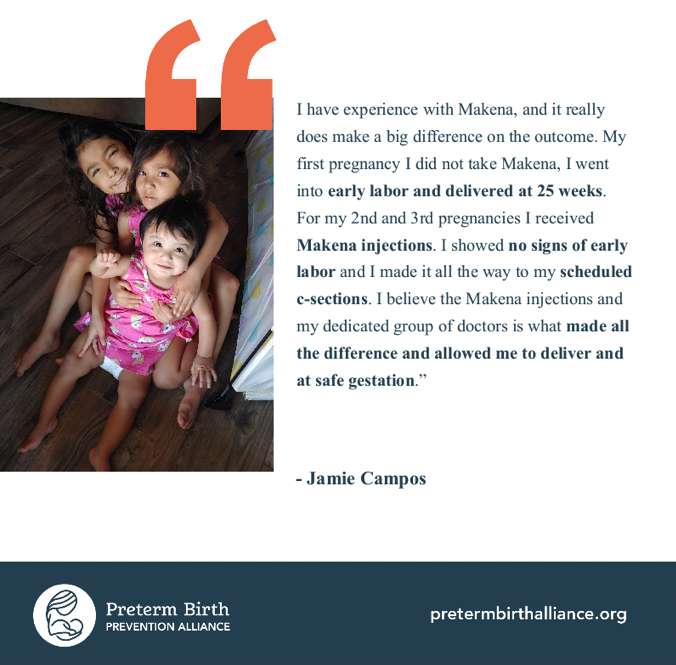
For the past decade, hydroxyprogesterone caproate, commonly called “17P,” has been the only available FDA-approved treatment option to reduce the risk of recurrent preterm birth. Patients and the healthcare providers who serve them currently have access to one branded and five generic versions of the prescription product. However, in 2020, the FDA proposed withdrawing all forms of 17P, based on conflicting efficacy data from two studies composed of vastly different populations — one inclusive of women in the U.S. most vulnerable to preterm birth and one not. Both studies showed that this class of treatment is safe for both mother and baby.

Despite multiple formal requests to consider additional data and alternate ways to study the efficacy of this class of drugs before effectively depriving women of access, FDA made its recommendation without engaging the most important stakeholders—patients who are at the highest risk and their providers. And even after a recently published meta-analysis showed that 17P injections reduced the risk of preterm birth before 34 weeks in high-risk women with singleton pregnancies, FDA persisted in its recommendation.

The Alliance was formed to stand up for the needs of moms and babies of every race and ethnicity and urge regulators to hear directly from women facing prematurity and their providers about their real-world experiences — in a public hearing — before making a decision on withdrawal.

We believe that evidence of efficacy for Black, Indigenous, and women of color in the United States — who are at highest risk of adverse outcomes — should be more determinative than a lack of demonstrated treatment efficacy on primarily white women from other countries. And we believe that more inclusive studies and data are needed, across more racially and ethnically diverse patient populations, to better understand the causes and impact of disparate outcomes in preterm birth.

Alliance partners currently include:

  • 1,000 Days
  • 2020 Mom
  • American Association of Birth Centers
  • Black Mamas Matter Alliance
  • Black Women’s Health Imperative
  • Expecting Health
  • Healthy Mothers, Healthy Babies Montana
  • HealthyWomen
  • Miracle Babies
  • National Birth Equity Collaborative
  • National Black Midwives Alliance
  • National Consumers League
  • National Partnership for Women & Families
  • Sidelines High-Risk Pregnancy Support
  • SisterReach

Organizations or advocates concerned about the needs of women facing prematurity — whether you are a healthcare professional, maternal and infant health advocate or a health equity champion — are invited to join us and add your voice to this effort.

Learn more and join the Alliance: https://nclnet.org/pbp/

NCL testimony at CDC emergency meeting on J&J vaccine safety

April 23, 2021

Media contact: National Consumers League – Carol McKay, carolm@nclnet.org(412) 945-3242 or Taun Sterling, tauns@nclnet.org(202) 207-2832

Washington, DC—Today the National Consumers League (NCL) testified before the emergency meeting of the Centers for Disease Control and Prevention (CDC) Advisory Committee on Immunization Practices (ACIP) to discuss updates on the recommendations to pause the Janssen COVID-19 vaccine. The full testimony appears below:

José R. Romero, MD, FAAP, Chair
Advisory Committee on Immunization Practices
Centers for Disease Control and Prevention
1600 Clifton Road, N.E., Mailstop A27
Atlanta, GA 30329-4027

RE: Docket No. CDC-2021-0044; Advisory Committee on Immunization Practices (ACIP)

For over 120 years, the National Consumers League (NCL) has championed vaccine education and access for consumers to these lifesaving medical interventions. We extend our gratitude to the Advisory Committee on Immunization Practices for the opportunity to serve as a voice for consumers.

NCL commends the Centers for Disease Control and Prevention (CDC) and U.S. Food and Drug Administration (FDA) for their concerted efforts to promptly address the recent adverse events observed by the Johnson & Johnson COVID-19 vaccine. The decision for a momentary pause in the distribution of the vaccine enacted out of “an abundance of caution” illustrates how swiftly the agencies acted on vaccine surveillance data.

Consumers should be comforted to know that the vaccine safety monitoring system in place to protect them is working effectively, and further encourages transparency, following the reports of severe cases of a rare form of blood clots observed in young women. The pause allowed the agencies to gather and review additional evidence to ensure the safety of the American people.

Over 560,000 Americans have already died from COVID-19. The risk Americans face for dying from COVID-19 is one in 600 persons. While the risk of dying from COVID clearly outweighs the risk of forming blood clots from the vaccine, we commend the efforts of public health officials to evaluate the specific effects of the vaccine on women, to help ensure further safety and efficacy.

Due to its ease of transport and one-shot delivery, the Johnson & Johnson COVID-19 vaccine is the most accessible and convenient vaccine presently available. The vaccine has been administered to over 7 million Americans, with overwhelming success. Further delay of administering this vaccine only delays our ability to end the pandemic that much sooner.

The reports of adverse events experienced by patients who received the Johnson & Johnson COVID-19 vaccine are concerning and we appreciate the transparency afforded to the public during this time to identify and resolve the situation. NCL has long advocated for vaccine safety and for consumers to feel confident that they are safe, especially in the midst of a mass vaccination campaign.

In closing, we encourage the CDC to maintain effective public messaging to instill vaccine confidence. Consumers should rest assured that vaccines are effective measures to protect public health and vital to national efforts in ending the pandemic.

Thank you for your consideration of our views on this important public health issue.

Sincerely,

Jeanette Contreras, MPP
Director of Health Policy
National Consumers League

###

About the National Consumers League

The National Consumers League, founded in 1899, is America’s pioneer consumer organization. Our mission is to protect and promote social and economic justice for consumers and workers in the United States and abroad. For more information, visit www.nclnet.org.

Leading patient advocates launch preterm birth prevention alliance to protect critical access to the sole fda-approved class of therapies to reduce recurrent preterm birth

April 20, 2021

Media contact: National Consumers League – Carol McKay, carolm@nclnet.org(412) 945-3242 or Taun Sterling, tauns@nclnet.org(202) 207-2832

Washington, DC—Today, the National Consumers League (NCL), along with a coalition of patient advocacy organizations dedicated to advancing the health of mothers and infants, announced the launch of the Preterm Birth Prevention Alliance.

Members of the Alliance are joining forces in an effort to preserve patient access to the only Food & Drug Administration-approved class of treatments for pregnant women who have previously had an unexpected, or spontaneous, preterm birth. Together, Alliance members seek to ensure that the Food & Drug Administration (FDA) hears concerns from the full range of stakeholders about the potential risks and impact of withdrawal for at-risk pregnant women and their providers.

For the fifth year in a row, the U.S. preterm birth rate has increased (to 10.2 percent of births), and preterm birth and its complications were the second largest contributor to infant death across the country. Preterm birth also represents a significant racial health disparity, with Black women in the U.S. experiencing premature delivery at a rate 50 percent higher than other racial groups throughout the country.

However, in 2020, the FDA proposed withdrawing hydroxyprogesterone caproate, commonly called “17P” or “17-OHPC”, the only FDA-approved class of branded and generic treatments to help prevent the risk of preterm birth in women with a history of spontaneous preterm birth. The FDA is currently determining whether to hold a hearing on the status of 17P, based on conflicting efficacy data from two studies composed of vastly different patient populations, one inclusive of women in the U.S. most vulnerable to preterm birth and one not.

“We’re fighting for a more inclusive healthcare system that gives everyone an equal chance to have the best outcomes possible,” said Sally Greenberg, executive director of the National Consumers League. “We don’t believe that removing 17P from the market without gaining a better understanding of who could benefit the most from its use is in the best interests of patients, nor their healthcare providers, particularly as there are no other approved treatment options available.”

To date, 14 organizations have joined NCL to advocate for the health interests of at-risk pregnant women and infants, including: 1,000 Days; 2020 Mom; American Association of Birth Centers; Black Mamas Matter Alliance; Black Women’s Health Imperative; Expecting Health; Healthy Mothers, Healthy Babies Montana; HealthyWomen; Miracle Babies; National Birth Equity Collaborative; National Black Midwives Alliance; National Partnership for Women & Families; Sidelines High-Risk National Support Network; and SisterReach.

“As a trained obstetrician and gynecologist, I know firsthand the impact of preterm birth on Black women and birthing people. I also know that racism – not race – is the driving factor leading the disproportionate impact of preterm birth on Black women and birthing people thereby exacerbating systemic inequities in maternal and infant health. To achieve birth equity, which is the assurance of the conditions of optimal births for all people with a willingness to address racial and social inequities in a sustained effort, we must work to protect and uphold a standard of care for spontaneous, recurrent preterm births and ensure it remains accessible and affordable for all who stand in need,” added Dr. Joia Crear Perry, founder and president of the National Birth Equity Collaborative.

The Preterm Birth Prevention Alliance is calling for the FDA to grant a public hearing to fully consider all of the data, additional research methods, and stakeholder perspectives before deciding whether to withdraw approval of this critical class of therapies. The health of America’s moms and babies warrants the utmost care and consideration.

###

About the Preterm Birth Prevention Alliance

The Preterm Birth Prevention Alliance is a coalition of maternal and women’s health advocates who share a common concern about the state of preterm birth in the United States and the proposed market withdrawal of 17P, the only FDA-approved class of treatments to help prevent spontaneous, recurrent preterm birth. Formed in 2021 by the National Consumers League, we seek to improve preterm birth outcomes in the United States by maintaining access to safe, FDA-approved treatment options and advocating for more diverse medical research that adequately represents the experiences of women and newborns of color. Women of color need a seat at the table. To learn more, visit www.pretermbirthalliance.org.

Initial support for the Preterm Birth Prevention Alliance is provided by Covis Pharma.