NCL Executive Director testifies before the DC Council in support of the Sunshine in Litigation Act

December 9, 2022

Media contact: National Consumers League – Melody Merin, melodym@nclnet.org, 703-298-2614

WASHINGTON, D.C. – Sally Greenberg, NCL’s Executive Director, testified before the D.C. Council Committee on Judiciary & Public Safety yesterday to express support for the “Sunshine in Litigation Act of 2022.

Read her full testimony here.

Guest Blog: Urgent push to get the Senate to pass the Pregnant Workers Fairness Act by end of year

By Robin Strongin

Pregnancy discrimination in the workplace is real and it’s dangerous.  But, if the Senate acts quickly, it can pass S. 4431, the Pregnant Workers Fairness Act (PWFA) which provides reasonable accommodations for pregnant and postpartum workers.

The legislation, which has already passed in the House, enjoys strong bipartisan support and has garnered wide-ranging support from business associations, the US Chamber of Commerce, labor unions, faith organizations, civil rights organizations, maternal health groups, and others.  The US Conference of Catholic Bishops has stated that “These and other efforts to protect pregnant workers and new mothers should be applauded as they demonstrate a respect for life, family, and the dignity of workers.”

NCL stands with these organizations in urging the Senate to pass the legislation.  Pregnancy discrimination in the workplace is not only medically dangerous, but disruption to a woman’s career hurts her earning power and has implications for the labor supply.  More than 85 percent of women will become mothers at some point in their working lives, the majority of whom cannot afford not to work.

Despite passage of the federal Pregnancy Discrimination Act (PDA) of 1978, employer bias against pregnant women still exists, especially when it comes to employers providing reasonable accommodations to pregnant workers.

In early February 2022, the Bipartisan Policy Center and Morning Consult conducted a survey of 2,200 adults on the prevalence of pregnancy discrimination in the workplace. The survey found that “pregnancy discrimination is common across race, incomes, and other demographics, causing fear about informing employers about a pregnancy and leading many pregnant workers to consider a career change. These trends are particularly elevated among younger women and those who are currently working.”

Key Results:

  • Nearly 1 in 4 (23%) mothers have considered leaving their jobs due to a lack of reasonable accommodations or fear of discrimination from an employer during a pregnancy.
  • 1 in 5 mothers (20%) say they have experienced pregnancy discrimination in the workplace.
  • Adults are witnessing pregnancy discrimination in their workplaces.
  • Over 1 in 5 mothers have been afraid to tell an employer about a pregnancy.
  • A comparable portion of adults report that their partner or spouse has experienced pregnancy discrimination at work.

In their November 10, 2022 letter to the Senate Majority and Minority Leaders, urging swift passage of the Senate bill, the bipartisan members underscored what pregnancy discrimination looks like, and the terrible toll it takes:  …”a warehouse employee in Tennessee who suffered a miscarriage after lifting heavy boxes and being denied light duty; a retail worker in Kansas who was fired because she needed to carry a water bottle to stay hydrated, and a hardware assembler in Ohio who was terminated after her doctor recommended she not lift more than 20 pounds.”

Advocates are raising the alarm: if the Senate doesn’t enact the bill by the end of this year, opposition from Republicans over a lack of religious exemptions could jeopardize the passage of the legislation as Republicans take over the House.

The bill that passed the House did so with a strong bipartisan vote of 315 – 101.  And the Senate bill enjoys strong bipartisanship as well, according to Senate HELP Chair, Patty Murray (D-WASH), who is working across the aisle to get it passed.

If a stand-alone vote in the Senate doesn’t materialize, backers of the bill are considering its inclusion in the year-end spending package. Sen. Bill Cassidy (R-LA) warned, “The clock is ticking… This is a bipartisan bill that’s pro-mothers, pro-healthy pregnancies, and pro-workers,”…”Let’s get it through the Senate by the end of the year.”

NCL urges FTC to use rulemaking to protect consumers’ data rights 

November 22, 2022

Media contact: National Consumers League – Katie Brown, katie@nclnet.org, 202-823-8442

WASHINGTON, D.C. – The National Consumers League (NCL) this week filed comments in support of a Federal Trade Commission (FTC) regulation to protect Americans’ data privacy. In its comments, NCL urged the FTC to ensure that consumers have the rights to data confidentiality, access, deletion, portability, and ethical use. Such safeguards are critical for stemming the torrent of privacy abuses that Americans have suffered in the digital age—perpetrated by both corporate and governmental entities. 

“Given our dependency on the internet to conduct our daily lives, the fact that we have gone this long without federal privacy protections is profoundly disappointing. The FTC is doing critical work in initiating this rulemaking process,” said John Breyault, NCL Vice President of Public Policy, Telecommunications and Fraud. “Consumers should not be at risk of identity theft, financial loss, or other privacy intrusions simply by having an internet connection.” 

The League urged the Commission to give special consideration to sensitive data types, such as location and genetic information, as well as students’ data utilized by educational technology companies. 

“With the proliferation of ed-tech, classrooms have become another area of vulnerability regarding privacy. This follows students when they take their school-issued devices and software home with them,” said Eden Iscil, NCL Public Policy Associate. “Ed-tech is a particularly worrying sector as students typically have no choice but to use the technology mandated by their institution, regardless of its insecurity.”

NCL has made fighting for consumers’ privacy a priority. Earlier this year, the League released a slate of proposed genetic privacy rights for policymakers to implement. Additionally, the organization is in its seventh year of publishing the #DataInsecurity Digest, a semi-weekly newsletter containing policy analysis and news coverage related to digital privacy. 

NCL’s full comments to the FTC can be read here. 

###

About the National Consumers League (NCL)

The National Consumers League, founded in 1899, is America’s pioneer consumer organization. Our mission is to protect and promote social and economic justice for consumers and workers in the United States and abroad. For more information, visit https://nclnet.org.

Coalition of consumer organizations urge supermarket industry to address “digital discrimination”

November 17, 2022

Media contact: National Consumers League – Melody Merin, melodym@nclnet.org, (703) 298-2614

This week a coalition of national consumer organizations urged leading supermarket chains to offer alternatives to digital-only discounts. Currently, many senior citizens and lower-income shoppers cannot take advantage of digital-only discounts due to smartphone or internet inaccessibility.

In the past couple of years more and more weekly specials advertised by some supermarkets for meat, fish, poultry, produce, and store-brand items are digital-only deals. They typically require shoppers to first go online to electronically “clip” the offers to add them to their loyalty card account to be charged the sale price in the store.

Because 25 percent of seniors don’t use the internet and 39 percent don’t have smartphones, according to a 2021 study by the Pew Research Center, they are effectively shut out of these deals. Similarly, 43 percent of low-income households lack broadband internet access.

The consumer groups suggested multiple ways that supermarkets can offer an offline alternative to digital-only deals to accommodate both the digitally-disconnected and the digitally-challenged shoppers, which include: 

  •  Utilizing barcoded “clip or click” store coupons in store circulars so the customer can choose their preferred redemption method (e.g., Vons and The Giant Company).
  • Empowering cashiers to charge the digital price upon request.
  • Offering physical store coupons next to digital-only deals for those who did not/could not electronically “clip” the offer (e.g., H-E-B).

The letter to supermarket executives was sent on November 15 to the following chains: Kroger, Albertsons, Stop & Shop, Star Market/Shaw’s, Ralphs, QFC, Jewel Osco, Randalls, Fred Meyer, King Soopers, Smart & Final, and Safeway.

Consumer Action, Consumer Reports, Consumer World, National Consumers League, and U.S. PIRG are the consumer organizations pressing supermarkets to expand the way they offer digital-only deals.

The full letter can be viewed here.

###

About the National Consumers League (NCL)

The National Consumers League, founded in 1899, is America’s pioneer consumer organization. Our mission is to protect and promote social and economic justice for consumers and workers in the United States and abroad. For more information, visit https://nclnet.org.

DC Attorney General files consumer protection lawsuit against football team and its owners

November 9, 2022

Media contact: National Consumers League – Katie Brown, katie@nclnet.org, (202) 207-2832

Washington D.C.— District of Columbia Attorney General Karl Racine announced today that he has filed a consumer protection lawsuit against the Washington Commanders, their owner Daniel Snyder, the National Football League (NFL), and NFL Commissioner Roger Goodell for allegedly colluding to deceive DC residents about an NFL investigation into the team’s toxic workplace culture, which includes sexual harassment.

The National Consumers League is pleased that DC Attorney General Karl Racine can use the District of Columbia Consumer Protection Procedures Act (DC CPPA) to address broad ranging issues of public concern with respect to this lawsuit. NCL had a hand in the drafting and passage of this important consumer protection legislation, which was originally introduced by DC Councilmember Mary Cheh and adopted into law in 2012 and further strengthened with later amendments.

“We think that Attorney General Racine’s application of this consumer protection statute underscores the importance of broadly protective statutes that address fraud and deception,” says NCL Executive Director Sally Greenberg.

###

About the National Consumers League (NCL)

The National Consumers League, founded in 1899, is America’s pioneer consumer organization. Our mission is to protect and promote social and economic justice for consumers and workers in the United States and abroad. For more information, visit https://nclnet.org.

Consumer groups call for moratorium on smaller airplane seats pending FAA safety review

November 2, 2022

Media contact: National Consumers League – Katie Brown, katie@nclnet.org, (202) 207-2832

Advocates caution that out-of-date emergency evacuation testing standards could put flyers at risk 

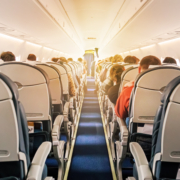
Washington D.C.— A coalition of six consumer advocacy organizations yesterday filed comments in response to a Federal Aviation Administration’s (FAA) inquiry regarding minimum passenger seat dimensions. The groups called for the FAA to prohibit airlines from installing smaller seats in commercial jets while the agency reviews and updates its decades-old emergency evacuation testing standards.

“Airlines have a profit incentive to cram more people on their planes,” said Sally Greenberg, Executive Director of the National Consumers League, which organized the letter. “This trend has created a dangerous environment that could impede safe evacuation in the event of an emergency. The FAA has looked the other way for decades as the airlines have increasingly prioritized their bottom lines over passenger safety.”

U.S. law requires air carriers to ensure that they can evacuate their aircraft in 90 seconds or less. In an alarming number of real-world emergencies in recent years, evacuations took between two and five minutes, even though every airline has certified that their planes comply with federal standards. Despite this, the FAA continues to rely on emergency evacuation testing standards that reflect what flying was like in the 1990’s, not the environment that passengers encounter today.

To address the insecurity of current flying conditions, the consumer groups called on the FAA to take immediate action, including:

  • Instituting a moratorium on the further shrinking of passenger seats. Airlines have reduced the sizes of seats to record lows, having shaved off several inches from when the federal government last updated U.S. evacuation standards.
  • Updating federal evacuation standards to reflect the modern cabin environment, accounting for smaller seat sizes, increased baggage around the cabin, and the proliferation of personal electronic devices.
  • If necessary, provisionally requiring that airline seats be no smaller than 32 inches in pitch (commonly referred to as legroom) and 20 inches in width. These dimensions would ensure that seat sizes are not smaller than the typical minimum dimensions that airlines utilized in the early 1990s.

“In addition to hampering evacuation speeds, it’s important to consider how diminished seat sizes impact traveler health, even when there is not an emergency,” said John Breyault, Vice President of Public Policy, Telecommunications, and Fraud at NCL. “Cramped airline seating increases the risk that passengers will experience deep vein thrombosis and pressure sores. Current seat sizes make flying more dangerous and often embarrassing for many passengers, particularly those with disabilities or those who are too large to safely fit into the seats.”

In addition to NCL, the letter was signed by the American Economic Liberties Project, Consumer Action, Consumer Federation of America, Ed Perkins on Travel, and U.S. PIRG.

To read the coalition’s full comments to the FAA, click here.

###

About the National Consumers League (NCL)

The National Consumers League, founded in 1899, is America’s pioneer consumer organization. Our mission is to protect and promote social and economic justice for consumers and workers in the United States and abroad. For more information, visit https://nclnet.org.

LifeSmarts announces partnership with FICO

During Financial Planning Month, LifeSmarts, the National Consumers League’s teen consumer education program, has introduced a new lesson focused on credit scores and establishing credit.

October 3, 2022

Media contact: National Consumers League – Katie Brown, katie@nclnet.org, (202) 207-2832

Washington, D.C.— The National Consumers League’s (NCL) youth consumer education program, LifeSmarts, kicked off its 29th year in September 2022. Through LifeSmarts, students learn about real-life consumer issues and compete to win prizes and scholarships at the National LifeSmarts Championship in April each year. October is both Financial Planning Month and the month in which LifeSmarts students focus on personal finance. To kick off the month, NCL is proud to announce a new lesson about credit scores and how to establish credit, made possible through support from FICO and the FICO® Score, the credit score used by 90% of top lenders.

Beginning today, the 125,000 students and 3,000 educators from across the country who participate in LifeSmarts will have access to lessons and activities from FICO’s new Score A Better Future (SABF) Fundamentals program, a credit education curriculum developed for high school students. These lessons will provide students with a firm understanding of credit scores and how to establish and maintain good credit histories throughout their lives.

Thanks to the FICO SABF Fundamentals program, LifeSmarts has created a new lesson on credit scores, with questions that will be featured throughout competition, culminating with the National LifeSmarts Championship in April 2023. New lessons and competition questions are being integrated into the 2022-23 program year.

“We are pleased to work with FICO to help our students and educators learn more about credit reporting and credit scores,” said National Program Director Lisa Hertzberg. “LifeSmarts gives students the skills they need to succeed as adults, and we see students applying what they learn immediately at home and in their communities. We are thrilled to offer this focus into a critical aspect of personal finance, and we look forward to rolling out new resources for educators and opportunities for student participants.”

LifeSmarts is active in all states and the District of Columbia, where NCL is headquartered.

“We are excited to have the opportunity to focus on personal finance for consumers at this age when they are beginning to make decisions for themselves and influencing decisions made by their parents,” said Sally Greenberg, executive director of NCL. “Too often, traditional high school curriculum fails to teach students vital information to become successful adults, and LifeSmarts helps to close that gap.”

“Financial literacy is vital because it’s the foundation to helping students make smart decisions when they navigate their financial futures,” said Joanne Gaskin, vice president of Scores and Analytics at FICO. “Our team created Score A Better Future Fundamentals program to provide valuable free credit education that readies young adults to confidently take control of their financial health.”

###

About LifeSmarts

The goal of the LifeSmarts program is to create consumer-savvy young people who will be better equipped for adult life in today’s complex, global marketplace. Visit LifeSmarts.org for more information. LifeSmarts: Learn it. Live it.

About the National Consumers League (NCL)

The National Consumers League, founded in 1899, is America’s pioneer consumer organization. Our mission is to protect and promote social and economic justice for consumers and workers in the United States and abroad. For more information, visit https://nclnet.org.

About FICO

FICO is a leading analytics software company, helping businesses in 90+ countries make better decisions that drive higher levels of growth, profitability, and customer satisfaction.

Learn more at http://www.fico.com.

NCL launches campaign to warn Americans about Chinese government’s collection of U.S. consumers’ genetic data 

September 7, 2022

Media contact: National Consumers League – Katie Brown, katie@nclnet.org, (202) 207-2832 

WASHINGTON, D.C. – The National Consumers League (NCL) today announced it is launching a national campaign – www.protectmypatientdata.com – to warn Americans of the threat posed by the Chinese government’s collection of U.S. healthcare and genomic information. The campaign will target consumers, healthcare leaders, and lawmakers and will highlight the privacy and national security risks resulting from this bulk collection of data.

According to a February 2021 report from the U.S. National Counterintelligence and Security Center (NCSC), the Chinese government has made the collection of American healthcare information a top strategic priority and has gained access to large datasets in the U.S. and around the world through both illegal and legal means. This includes partnering with prominent research and healthcare entities in the U.S. to provide them with genomic sequencing services, allowing them to gain access to Americans’ health records.

On June 3, 2021 President Biden signed an *Executive Order to further “address the threat of Chinese surveillance technology firms that contribute – both inside and outside China – to the surveillance of religious or ethnic minorities or otherwise facilitate repression and serious human rights abuses.”

“Genetic data remains one of the most sensitive and least protected types of personal information and yet the consequences of it falling into the wrong hands are profound,” said Sally Greenberg, executive director of NCL. “Authoritarian governments have already used genomic data to potentially surveil and control their own citizens and to conduct unsanctioned scientific research. That is why NCL is sounding the alarm and urging consumers and healthcare providers to be more diligent than ever when sharing personal healthcare information with third parties, particularly those funded or operated by the Chinese government.”

NCL has a long history of calling for consumer protections in the genetic testing industry. In February 2019, NCL issued a statement calling for investigation of direct-to-consumer genetic testing services like FamilyTreeDNA in the wake of reports that these services were sharing genetic data with law enforcement agencies.

On August 29, 2022, MGI Americas, an affiliate of Chinese genome research giant BGI, re-entered the U.S. next-generation sequencing market, having been previously barred from selling its genome sequencing machines in America. BGI is closely affiliated with the Chinese Communist Party (CCP) and People’s Liberation Army (PLA) and the data it collects has no legal protection against disclosure to the Chinese government.

A recent Reuters investigation found that BGI had scraped the DNA data of pregnant women from its pre-natal test kits and added them to the China National GeneBank, which it manages for the Chinese government. BGI has also been implicated in the repression of the Uighur minority in Xinjiang, for which two of its entities were sanctioned by the U.S. Department of Commerce.

NCL is urging providers and researchers to be cognizant of the risks of partnering with BGI and other Chinese healthcare companies, whose collection of data could be used to advance the country’s precision medicine industry and for more nefarious purposes, including the potential surveillance, exploitation, and manipulation of American citizens. NCL recently published a Genetic Privacy Bill of Rights and released a Policy Framework detailing steps that Congress, the Biden Administration, and industry can take to protect these consumer rights.

In addition to the education campaign, NCL will also embark on a series of initiatives to protect consumers:

  • Working with Members of Congress to create and implement new protections for genetic data, such as the Protecting Americans’ Data from Foreign Surveillance Act, introduced by Sen. Wyden (D-OR), Sen. Whitehouse (D-RI), Sen. Rubio (R-FL), Sen. Lummis (R-WY), and Sen. Hagerty (R-TN).
  • Engaging with the Biden Administration as they develop a potential Executive Order aimed at increasing protections for sensitive personal information, like genetic data.
  • Participating in the Federal Trade Commission’s (FTC) rulemaking process regarding privacy and data protection, to ensure that genetic data is also protected.
  • Educating health care research institutions and major health care associations about the unique risks posed by a lack of safeguards for genetic testing, and what they can do to increase protections.


*Links are no longer active as the original sources have removed the content, sometimes due to federal website changes or restructurings.


###

About the National Consumers League (NCL) 

The National Consumers League, founded in 1899, is America’s pioneer consumer organization. Our mission is to protect and promote social and economic justice for consumers and workers in the United States and abroad. For more information, visit www.nclnet.org.

Consumer and passenger rights organizations send letter to Congress urging inclusion of airline reforms in 2023 FAA Reauthorization

July 5, 2022

Media contact: National Consumers League – Melody Merin, melodym@nclnet.org, (202) 207-2831

Washington, D.C. — The National Consumers League (NCL), along with eight other consumer advocacy groups, sent a joint letter to the House Committee on Transportation & Infrastructure and to the Senate Committee on Commerce, Science, & Transportation urging action on travelers’ urgent needs and priorities that have been exacerbated by the pandemic. In the letter, the nine organizations identified a range of legislative reforms needed to address consumers’ concerns—all of which can be enacted via next year’s reauthorization of the Federal Aviation Administration (FAA). This includes allowing minor children to be seated with their parents and caregivers at no extra cost, enabling travelers to board the next available flight (regardless of airline) when their original flight is delayed, and requiring ancillary fees to be transparent and proportional to the cost of the service provided.

The full list of passenger priorities can be found in the letter to Congress below.


July 1, 2022


The Honorable Peter DeFazio

Chairman

Committee on Transportation & Infrastructure

United States House of Representatives

Washington, DC 20515


The Honorable Maria Cantwell

Chair

Committee on Commerce, Science, & Transportation

United States Senate

Washington, DC 20510


The Honorable Sam Graves

Ranking Member

Committee on Transportation & Infrastructure

United States House of Representatives

Washington, DC 20515


The Honorable Roger Wicker

Ranking Member

Committee on Commerce, Science, & Transportation

United States Senate

Washington, DC 20510


RE:        Consumer and Passenger Rights Organizations’ Priorities for the 2023 FAA Reauthorization Legislation

Dear Chairman DeFazio, Chair Cantwell, Ranking Member Graves, and Ranking Member Wicker,

The undersigned consumer and passenger rights organizations urge you to use the opportunity of reauthorizing the Federal Aviation Administration (FAA) next year to address a range of urgently needed consumer protections and industry reforms. Following Congress’s appropriation of more than $50 billion to the air travel industry during the pandemic,[1] travelers across the United States have been clear in their demands for changes to the business practices of air carriers. We believe the following legislative reforms are urgently needed to address consumers’ concerns.

Minimize Flight Cancellations and Delays

Congress should institute an industry-wide reciprocity requirement. When a flight is significantly delayed or cancelled for any reason, passengers of that flight should be transferred to another carrier if the second carrier could transport the travelers more quickly than the original carrier. This would benefit travelers by ensuring minimal disruption to their schedules and incentivize airlines to reliably maintain their flight schedules, increasing competition in the airline industry.

Hold airlines accountable for chronically delayed and cancelled flights. Air carriers should be required to maintain a minimum percentage of on-time flights per month based on a review of the carrier’s published schedule and actual performance. This would allow the Department of Transportation (DOT) to hold airlines accountable when they routinely publish inoperable flight schedules.

Require plain language notices of passenger compensation rights under U.S. and international law throughout public airports. Such notices should specifically include rights afforded by the Montreal Convention[2] and the EU’s Flight Compensation Regulation[3], as many American travelers may be unaware of the international rights to which they are entitled.

Reform Airline Fees, Seating, and Rewards

Include the Forbidding Airlines from Imposing Ridiculous (FAIR) Fees Act in the 2023 FAA Reauthorization. The FAIR Fees Act would prohibit air carriers from charging fees (including baggage, seating, and reservation change fees) that are not reasonable and proportional to the costs of the services provided.[4]

Ensure that parents and caregivers can be seated with their minor children at no additional charge. Congress has previously urged the DOT to act on family seating requirements in the 2016 FAA Reauthorization[5], yet the only action the Department took was to update a web page on the issue. Parents and caregivers should not be required to pay a fee to ensure they can sit next to their minor children on a flight.

Establish basic services standards for air travel. Passengers should be entitled to, at a minimum: a seat, a boarding pass, check-in services, a personal item, a carry-on item, water, and an accessible lavatory included in the ticket price. Additionally, air carriers should be required to maintain a toll-free customer service phone number, with adequate staffing to ensure wait times do not exceed 30 minutes.

Require transparent, upfront pricing of airfare at the outset of the purchase process. Consumers respond to an advertised ticket price, but are then faced with additional fees for basic services like baggage, seat reservation, and other ancillary charges throughout the purchase process. This often results in a much higher total cost than originally advertised. Clearly displaying what is included in the fare from the onset will help alleviate the sticker shock many travelers face by the end of their purchase and promote competition between airlines.

End the excise tax exemption for ancillary service fees. Ancillary fees—a multi-billion dollar source of revenue—currently escape excise taxation, depriving the Airport & Airway Trust Fund (AATF) of resources needed to maintain critical infrastructure.[6] This loophole is a significant incentive for airlines to pass ever more ancillary fees on to consumers.

Narrowly define “service” as it relates to federal preemption and the Airline Deregulation Act of 1978 (ADA). Judicial interpretations of the ADA’s preemption of the regulation of conduct which “relates to service” are expansive and preclude the regulation of virtually any action an air carrier takes during a flight or customer service operation. This effectively preempts states from protecting travelers in most situations. Removing the phrase “relates to” and clarifying that “service” only includes the frequency and scheduling of transportation on a certain route will reinstate Congress’s original intent in the ADA while enabling state consumer protection agencies to backstop the DOT’s role in protecting the flying public.

Establish a minimum passenger seat size. Shrinking seat sizes cause health risks, passenger discomfort, and create potential evacuation hazards. The 2018 FAA Reauthorization required the FAA to set minimum passenger seat width and pitch within one year of the Reauthorization’s enactment. Almost four years later, the FAA still has not fulfilled this mandate. Congress must act when the agency will not.

Require reasonable notice to consumers before devaluation of their frequent flyer program miles. Currently, miles accrued via frequent flyer programs lack important consumer safeguards. A minimum of 60-day notice before devaluing travelers’ frequent flyer miles will increase transparency and allow consumers to make better informed decisions.

Enable Stronger Enforcement of Passenger Protections

Empower state attorneys general to enforce federal consumer protection laws. The DOT lacks the resources to address many valid complaints from travelers. For example, despite a record surge in consumer complaints during the pandemic, the DOT has initiated only a single enforcement action against an airline.[7] Allowing state attorneys general to share enforcement of federal consumer protection laws with the DOT will provide additional avenues for consumers to seek redress.

Establish a private right of action to allow consumers to enforce federal consumer protection laws. Empowering passengers to bring their own actions in response to unfair, deceptive, and discriminatory practices will help to hold air carriers accountable without waiting for federal intervention.

Direct the Government Accountability Office (GAO) to report on DOT rulemaking efficiency. The DOT’s failure to issue statutorily required regulations regarding passenger seat size is not an isolated instance. Congress should direct the GAO to produce a report examining the reasons that the DOT has not yet completed statutorily mandated regulations from previous FAA reauthorization bills.

Prioritize Consumer Voices and Experiences

Renew the charter for the Aviation Consumer Protection Advisory Committee (ACPAC). The ACPAC has provided expertise on matters of consumer protection to the DOT for over a decade. It will continue to play a critical role as the air travel industry recovers from the COVID-19 pandemic. The ACPAC has been an important venue for consumers to make their voices heard at the DOT. Absent Congressional action, the authorization for the ACPAC will expire on June 28, 2023.

Require at least two passenger representatives on airport authority governing boards. Underrepresentation of passenger interests on airport authority governing boards has allowed many airports to deprioritize passenger convenience, faster travel time, and consumer expenses. Conditioning federal subsidies and licensure for airports on passenger representation on airport authority governing boards would incentivize airports to make travelers’ airport experience a priority.

Ease the creation of new airports. The last major airport was built in 1995; increasing the number of airports would help with congestion and create new, possibly shorter flight paths. Ending the prohibition on federal ownership of airports would free up additional resources for airport construction projects. Additionally, state and local governments should be encouraged to build new airports, especially at major hubs.

The undersigned consumer and travel advocacy organizations thank you for your attention to these important passenger protection issues as you begin the process of reauthorizing the FAA.

Sincerely,


American Economic Liberties Project

Business Travel Coalition

Consumer Action

Consumer Federation of America

EdOnTravel.com

FlyersRights.org

National Consumers League

Travelers United

U.S. Public Interest Research Group


[1] Politico. Congress to airlines: Where did all the Covid money go? 2021. https://www.politico.com/news/2021/11/20/airlines-pandemic-bailout-cancellations-523100

[2] The International Air Transport Association. Convention For The Unification Of Certain Rules For International Carriage By Air. 1999. https://www.iata.org/contentassets/fb1137ff561a4819a2d38f3db7308758/mc99-full-text.pdf

[3] EUR-Lex. Regulation (EC) No 261/2004 of the European Parliament and of the Council of 11 February 2004 establishing common rules on compensation and assistance to passengers in the event of denied boarding and of cancellation or long delay of flights, and repealing Regulation (EEC) No 295/91 (Text with EEA relevance) – Commission Statement. (2004). https://eur-lex.europa.eu/legal-content/en/TXT/?uri=celex:32004R0261

[4] Congerss.gov. H.R.6215 – FAIR Fees Act of 2021. (2021). https://www.congress.gov/bill/117th-congress/house-bill/6215

[5] Congress.gov. Public Law 114–190—July 15, 2016: Sec. 2309. Family Seating. (2016). https://www.congress.gov/114/plaws/publ190/PLAW-114publ190.pdf

[6] U.S. Department of Transportation, Office of Inspector General. Changes in Airline Service Different Significantly for Smaller Communities but Limited Data on Ancillary Fees Hinders Further Analysis. (2020). https://www.oig.dot.gov/sites/default/files/Airline%20Service%20to%20Small%20Communities%20Final%20Report_0.pdf

[7] U.S. Department of Transportation. Air Canada Settlement Agreement. (2021). https://www.transportation.gov/individuals/aviation-consumer-protection/air-canada-settlement-agreement

###

About the National Consumers League (NCL) 

The National Consumers League, founded in 1899, is America’s pioneer consumer organization. Our mission is to protect and promote social and economic justice for consumers and workers in the United States and abroad. For more information, visit www.nclnet.org.

National Consumers League urges Congress to strengthen Bipartisan Privacy Bill

June 17, 2022

Media contact: National Consumers League – Katie Brown, katie@nclnet.org, (202) 207-2832 

WASHINGTON, D.C. – The National Consumers League is encouraged by the bipartisan, bicameral American Data Privacy and Protection Act (“ADPPA”), a long-overdue step to protect the privacy and security of consumers’ personal information. However, there remain some concerns that must be addressed to ensure that the bill provides basic consumer remedies for failure to comply with the rules of the road and preserve the best aspects of the privacy laws that are already in place in the states.

“The lack of a comprehensive data protection law has left Americans at the mercy of criminal hackers who are making billions of dollars stealing consumers’ personal data,” said NCL Executive Director Sally Greenberg. “At the same time, many companies have built their business models on the collection of sensitive data that exacerbates existing inequities in our economy.”

NCL has long pushed for stronger protections for consumer data. In 2011, NCL supported a bill to regulate the use of sensitive location data. In the wake of the Target data breach in 2013, NCL launched the #DataInsecurity Project to raise awareness about how the lack of data security standards increases the risks to consumers of identity fraud and other scams. Most recently, NCL released a genetic privacy reform roadmap detailing actions Congress, the Biden administration and industry could take to protect consumers’ genetic data.

NCL shares the concerns about the ADPPA raised by privacy and consumer advocates. Importantly, we believe that the bill’s private right of action provisions should be strengthened and a prohibition on mandatory binding arbitration clauses should be included in the legislation.

In addition, NCL supports allowing states with strong privacy and data security laws to preserve those provisions where they provide additional consumer protections.  NCL also supports preserving the Federal Communication Commission’s role in regulating the privacy practices of common carriers. Given the bill’s proposal to expand the role of the Federal Trade Commission in protecting consumer data, Congress must ensure that the FTC has the resources it needs to be effective in that role.

“We applaud members of Congress for putting forward a bipartisan bill to provide comprehensive privacy and security protections,” said John Breyault, NCL’s Vice President of Public Policy, Telecommunications and Fraud. “Compromises by all sides in this debate have led us to this moment. There is much promise in this legislation, but key consumer protections need to be addressed before the bill moves forward.”

###

About the National Consumers League (NCL) 

The National Consumers League, founded in 1899, is America’s pioneer consumer organization. Our mission is to protect and promote social and economic justice for consumers and workers in the United States and abroad. For more information, visit www.nclnet.org.