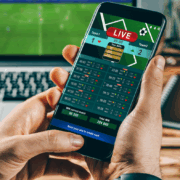
Advertising sports betting with smartphone notifications: what NCL learned and how regulators can act.

By, Eden Iscil, Senior Public Policy Manager

Following the growth of online sports betting and increased data documenting associated harms, NCL has released its first report on sports betting companies’ advertising practices. The report focuses on sports betting apps and how they use smartphone notifications to advertise to consumers. After concluding its study, NCL believes that sports betting companies’ use of push notifications for marketing purposes may violate federal law as a prohibited unfair practice. The full report is available here.

Why does this matter?

It sounds benign at first, but using push notifications to advertise an addictive product is a rather aggressive practice. Notifications on your phone will demand your attention whether you are on the street, at work, at home, or in bed. From the minute you wake up to the second you fall asleep, app notifications can be hard to dodge once they get going. Should a corporation really be able to use that channel to market its products?

Sports betting is not a typical product or service. These companies are not selling shoes or T-shirts. They are aggressively advertising their platforms for gambling, an activity that has well-documented addictive and harmful effects, from increased rates of suicide and intimate partner violence to an elevated risk of bankruptcy.

The U.S. government (rightfully) considered the advertising of cigarettes over the radio to be too extreme and banned those marketing practices decades ago. Now imagine if a tobacco company sends a text every day, multiple times a day, to encourage you to smoke their cigarettes. That is basically what sports betting apps are doing.

Findings

Over the course of four weeks, NCL collected more than 100 notifications from the three biggest sports betting apps—FanDuel, Draft Kings, and BetMGM. We found that, overall, 93% of the notifications contained advertising material. 62% contained what we refer to as “bet pushes,” or language urging the user to open the app and place a bet, often explicitly with words like “bet now.” Fifty percent of the notifications contained promotional offers (bonuses, bonus bets, and odds boosts), a practice which would be largely prohibited by the NCL-endorsed legislation in Congress known as the SAFE Bet Act. (These rates varied among the three companies.) More detailed findings on the content of the notifications can be found in the full report.

We also noted additional practices from the apps that raise concerns beyond the content of the notifications. FanDuel, which is the biggest sports betting platform by market share, automatically grants itself permission to send users notifications once it has been downloaded on an iPhone. This is especially worrying given the general expectation among users that apps will ask for consent before sending notifications. The other two apps downloaded for the study, Draft Kings and BetMGM, did ask for permission before beginning to send notifications, but did not disclose the extensive amount of advertising that would follow. None of the three apps’ native settings on iPhone allow the user to disable advertising notifications.

If a sports betting company wants to send a consumer marketing text messages, federal law requires it to receive express written consent first. If it wants to send marketing emails, it must provide a way to unsubscribe within the email. But when it sends marketing push notifications—more customizable and information-dense than an SMS, while more visible than an email—it does neither of those things, delivering marketing notifications without express written consent and without an embedded mechanism to opt out of the practice.

Considerations for regulators

Consumer protection agencies already have the legal authority to act. The Federal Trade Commission (FTC) should take a serious look at how these apps are using push notifications to advertise to consumers, many of whom are likely to have a gambling disorder. The FTC has extensive resources to tackle this issue, including its ability to prohibit unfair and deceptive acts or practices (15 USC §§ 45, 57a) and its broad authority to investigate market practices (15 USC § 46).

After concluding its study, NCL believes that the aggressive use of push notification advertising by sports betting apps’ may be an unfair practice prohibited by the FTC Act.

Substantial injury

The chance for substantial injury to consumers is a real and documented threat. Microsoft has published data showing that personalized push notifications can increase user engagement for mobile apps by up to 300%.[1] One company’s analysis of 63 million app users found that users receiving notifications at least once a day had 820% higher app retention rates compared to users receiving zero notifications.[2] Another firm’s analysis reported that push notifications boost average app sessions per user by 182%, purchases per user by 116%, and average user lifetimes by 73%.[3] That is an extremely high level of attention-capture for any product, but especially one as addictive (and potentially harmful) as sports betting.

Consider the impact of these advertising practices on a user who suffers from a gambling disorder. Research has shown:

  • 19% of individuals with a gambling disorder had considered suicide in the past year compared to 4.1% of the general population.[4]
  • 7% attempted suicide compared to 0.6% of the wider population.
  • One study found a 10% increase in intimate partner violence rates in households engaged in sports betting after their preferred team lost.[5]
  • In states that legalized online sports betting, bankruptcy filings increased by as much as 25-30% compared to pre-legalization rates.[6]

Sports betting apps are using a highly effective marketing practice to push a product that has strong links to substantial bodily and financial injury.

Not reasonably avoidable

The three sports betting apps do not clearly disclose that allowing notifications will result in the receipt of advertising notifications. FanDuel did not ask for permission before sending notifications. BetMGM did not first disclose that it would send advertisements over push notifications when requesting permission for notifications. BetMGM used the standard iPhone notification request language: “‘BetMGM Sports’ Would Like to Send You Notifications[.] Notifications may include alerts, sounds, and icon badges. These can be configured in Settings.” Draft Kings included the following language before requesting permission to send notifications: “Stay in the Know[.] Make your betting experience even better. Turn on notifications, and we’ll keep you in the know with exclusive offers like deposit matches, bonus bets, and more.” From this language, the consumer would not know that approximately 98% of the notifications they are consenting to will contain advertising, or that roughly 86% will contain bet pushes (language directly aimed at inducing betting, often with the words “bet now”). An individual cannot reasonably avoid something they are not made aware of.

If a consumer decides they want to opt out of advertising notifications, the apps do not natively make it possible to do so (at least for the versions available on iOS at the time of the study). None of the in-app settings for FanDuel, Draft Kings, or BetMGM allow users to disable advertising push notifications, despite providing controls for other advertising channels, such as email. BetMGM has a checkbox for “individual offers” delivered to the user’s “phone,” but BetMGM customer support clarified that it applies only to phone calls, not app notifications. iPhone settings allow users to disable notifications entirely for an app, but doing so would block important notifications that may otherwise be desired, like notifications of new login attempts or cash balance withdrawals.

In short, a consumer looking to avoid advertising notifications would first have to be aware of the practice (which the apps do not clearly disclose), find the settings to disable all notifications for the app, and then decide between continuing to receive the invasive marketing or potentially missing critical account security alerts. The companies do not design or implement their practices to be reasonably avoidable.

Not outweighed by countervailing benefits

The use of push notifications by sports betting apps to advertise creates a high risk of substantial injury for consumers for the sole purpose of increasing the companies’ profits. NCL is not aware of any credible research documenting a countervailing benefit from consumers experiencing regular exposure to sports betting advertising.

Opportunity for large-scale research

The FTC has investigative authority under § 6(b) of the FTC Act and access to greater resources than NCL. The agency could fully document and publish its findings on the sports betting industry’s use of push notifications for advertising purposes, providing much-needed insight into current business practices and better informing policy work at the Commission, in Congress, and in the states.

NCL’s full report on sports betting apps’ advertising notifications can be found here.

[1] “Push notifications: Help or hindrance,” Microsoft Azure, March 3, 2016. https://azure.microsoft.com/en-us/blog/mobile-push-notifications-help-or-hindrance/

[2] “How Push Notifications Impact Mobile App Retention Rates,” Airship, 2019. https://grow.urbanairship.com/rs/313-QPJ-195/images/airship-how-push-notifications-impact-mobile-app-retention-rates.pdf

[3] “Why Push Notifications Are Important to Your Cross-Channel Strategy,” Braze, June 10, 2024. https://www.braze.com/resources/articles/why-push-notifications-are-important-to-your-cross-channel-strategy

[4] Vijayakumar and Vijayakumar. “Online gambling and suicide: Gambling with lives,” Indian Journal of Psychiatry, January 13, 2023. https://pmc.ncbi.nlm.nih.gov/articles/PMC9983450/

[5] Matsuzawa and Arnesen. “Sports Betting Legalization Amplifies Emotional Cues & Intimate Partner Violence,” October 30, 2024. https://papers.ssrn.com/sol3/papers.cfm?abstract_id=4938642

[6] Hollenbeck, Larsen, and Proserpio. “The Financial Consequences of Legalized Sports Gambling,” October 23, 2024. https://papers.ssrn.com/sol3/papers.cfm?abstract_id=4903302

NCL Report Finds Largest Sports Betting Apps Overwhelmingly Use Push Notifications to Advertise

The National Consumers League urges policymakers: stop sports betting apps from pushing 24/7 gambling ads

Media Contact: Lisa McDonald, Vice President of Communications, 202-207-2829 

In a first-of-its-kind report, NCL has found that 93% of smartphone notifications sent by the three biggest sports betting companies during a 4-week period contained advertising material. The findings are based on the collection of more than 100 notifications. To stop the flood of marketing, NCL is advocating for a prohibition on sports betting advertising, especially the use of push notifications for this purpose. NCL is not advocating for a ban on sports betting.

“Sports betting companies have 24/7 access to consumers through their phones, from the minute they wake up to the second they fall asleep. The use of app notifications for advertisements is an extremely invasive marketing practice that should not be normalized,” said NCL Senior Public Policy Manager Eden Iscil. “The government regulates advertising on television, email, and text messages. But when it comes to push notifications, something that’s arguably more effective than each of those older mediums, there are no protections.”

From the notifications collected by NCL, 62% contained language urging the user to place a bet, often explicitly with words like “bet now.” 50% contained promotional offers, including bonuses, bonus bets, “no sweat” bets, and odds boosts. 28% advertised betting odds and 15% marketed parlays, a risky type of bet with little chance of payout for the bettor. (These rates varied among the three companies.)

To better protect the public from these practices, NCL is endorsing three legislative proposals currently under consideration:

  • The SAFE Bet Act in the U.S. Congress—a proposal that includes a prohibition on sports betting ads containing promotions. The bill would also ban the use of AI to create individualized offers or promotions, and it would significantly restrict the hours that sports betting companies can advertise. NCL found that the apps sent 91% of their advertising notifications outside of the hours that would be permissible under the SAFE Bet Act.
  • The Regulating Addictive Notifications Act in the New York State Senate—a proposal that would prohibit the use of push notifications or text messages for the solicitation of sports wagers.
  • A5207 in the New Jersey General Assembly—a proposal that would prohibit the advertising of sports betting via the internet, including mobile apps.

NCL is also urging the Federal Trade Commission to investigate the aggressive use of push notifications for marketing, which may violate the federal prohibition on unfair and deceptive acts or practices. A blog post outlining how the FTC should consider these advertisements can be found here.

NCL’s full report on sports betting companies’ use of push notifications can be found here.

###

About the National Consumers League (NCL)      

The National Consumers League, founded in 1899, is America’s pioneer consumer organization. Our mission is to protect and promote social and economic justice for consumers and workers in the United States and abroad. For more information, visit www.nclnet.org.    
NCL Decries SCOTUS Decision Allowing Dismissal of CPSC Commissioners to Stand

Media Contact: Lisa McDonald, Vice President of Communications, 202-207-2829 

Washington, DC – The Supreme Court of the United States, in a 6-3 decision, has upheld the President’s dismissal of three Democratic Commissioners of the Consumer Product Safety Commission (CPSC) as the broader merits of the firing are being adjudicated in the courts. 

“This is a sad day for product safety and the rule of law in the United States,” said Daniel Greene, Senior Director of Consumer Protection & Product Safety. “Congress deliberately established an independent, nonpartisan agency with exclusive authority over the safety of consumer products. This independence ensures that the CPSC is mission-driven, guided by experts and science, and insulated from changing political tides. In allowing this illegal firing to stand, the Court’s stay is inconsistent with the spirit and letter of the law.” 

On May 8, the Trump administration attempted to illegally fire Commissioners Alexander Hoehn-Saric, Richard Trumka, and Mary T. Boyle, who were later reinstated by court order. In contravention of the law, no “neglect of duty or malfeasance” has been alleged. 

Yesterday, 100 stakeholders sent a letter to President Trump calling on the administration to cease its illegal attempt to fire the three Democratic CPSC Commissioners. A copy of the letter can be found HERE 

### 

About the National Consumers League (NCL)      

The National Consumers League, founded in 1899, is America’s pioneer consumer organization. Our mission is to protect and promote social and economic justice for consumers and workers in the United States and abroad. For more information, visit www.nclnet.org.    
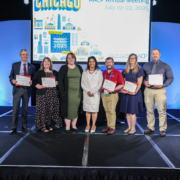
From Campus to Community: NCL’s 2025 Script Your Future Competition Winners Announced

Media Contact: Lisa McDonald, Vice President of Communications, 202-207-2829  

 Washington, DC – The National Consumers League (NCL) is proud to announce the winners of the 2025 Script Your Future Team Challenge, an annual competition that engages pharmacy students in raising awareness about the importance of medication adherence.  

“The creativity and community spirit these students displayed is inspiring,” said NCL CEO Sally Greenberg. “From reaching traditionally underserved populations to building interdisciplinary collaborations, this year’s Script Your Future participants tackled some of the most pressing barriers to medication adherence head-on.”    

2025 Award Winners:  

  • National Award – Presbyterian College School of Pharmacy 
    • The team focused on reproductive health, pediatric medication safety, and drug misuse prevention. They hosted live educational events, launched a student-led health blog for ongoing outreach, and partnered with community groups to expand their impact both in person and online. 
  • Media/Communications Award – Wilkes University Nesbitt School of Pharmacy 
    • Wilkes students executed a strong media campaign that included a live segment on PA Live!, coverage in the Times Leader, and creative social media outreach. Their use of engaging materials, like a medication adherence bingo board, helped boost interaction and visibility. 
  • Under-Represented Community Outreach Award – Temple University School of Pharmacy 
    •  Temple students conducted outreach across North Philadelphia, partnering with grocery stores, churches, libraries, and senior centers to reach underserved populations with information on safe medication use, drug disposal, and vaccine confidence. 
  • Inter-Professional Award – University of New Mexico College of Pharmacy 
    •  UNM integrated their Challenge campaign into the leadership of the ASHP student chapter and collaborated with students in nursing and medicine. Their events included Legislative Day at the State Capitol and a clinic at a men’s homeless shelter. 
  • Inter-Professional Award – Lake Erie College of Osteopathic Medicine School of Pharmacy 
    • LECOM students ran 33 events and partnered with nearly 20 organizations. Their campaign, themed “Be SAFE, Be Well,” included collaborations with public health departments, professional associations, and campus-based health advocacy groups. 

This year’s Challenge saw participation from 14 colleges and schools of pharmacy across eight states, reaching approximately 30,000 individuals through in-person events and dynamic media and social media outreach. Teams also partnered with on-campus organizations and even participated in advocacy efforts before their state legislatures.  

The Script Your Future Team Challenge is coordinated by NCL and supported by partners and sponsors including Bayer, Eli Lilly, Kenvue, Pfizer, USP, ASOP Global, ASHP, the Biosimilars Council, the Biosimilars Forum, NABP, and NCPA.  

###  

About the National Consumers League (NCL)       

The National Consumers League, founded in 1899, is America’s pioneer consumer organization. Our mission is to protect and promote social and economic justice for consumers and workers in the United States and abroad. For more information, visit www.nclnet.org.  
100 Stakeholders Call on the Trump Administration to End Assault on the Independence of the CPSC 

Media Contact: Lisa McDonald, Vice President of Communications, 202-207-2829 

Washington, DC— The National Consumers League, Consumer Federation of America, and Consumer Reports led a letter signed by 100 stakeholders calling on President Trump to rescind the unlawful attempted removal of the Democratic Commissioners at the Consumer Product Safety Commission (CPSC).  On May 8th, the Trump administration attempted to illegally fire Commissioners Alexander Hoehn-Saric, Richard Trumka, and Mary T. Boyle, who were later reinstated by court order. 

“This unlawful effort to dismantle the leadership and bipartisanship of the CPSC will significantly undermine the Agency’s ability to protect the health and safety of the American people through the creation of strong safety standards, recalls of hazardous products, and educational campaigns,” the letter states.  “Diverse perspectives improve safety.  Silencing the voices of subject matter experts with whom you politically disagree would have a chilling effect on the CPSC’s functions.  We urge you to reverse course and ensure that Commissioners Hoehn-Saric, Trumka, and Boyle are reinstated to serve the remainder of their statutorily granted terms.” 

A copy of the letter can be found HERE 

Letter cosigners: 

National Consumers League 

Consumer Federation of America 

Consumer Reports 

Access Ready Inc. 

Aden Lamps Foundation 

Aging Life Care Association 

America Walks 

American Academy of Pediatrics, Arizona Chapter 

American Academy of Pediatrics, Florida Chapter 

American Academy of Pediatrics, Georgia Chapter 

American Academy of Pediatrics, Idaho Chapter 

American Academy of Pediatrics, Virginia Chapter 

American Academy of Pediatrics, Washington D.C. Chapter 

American Academy of Pediatrics, West Virginia Chapter 

Bicycle Alliance of Minnesota 

Bicycle Coalition of Greater Philadelphia 

Bicycle Colorado 

Bicycle Helmet Safety Institute 

Bike Cleveland 

Bike LA 

Bike Pittsburgh 

BioInjury, LLC 

California Bicycle Coalition 

Center for Auto Safety 

Center for Digital Democracy 

Center for Economic Integrity  

Center for Economic Justice 

Center for Justice & Democracy 

Center for Pet Safety 

Child Care Aware of Virginia 

Claire Bear Foundation 

Consumer Action 

Consumers for Auto Reliability and Safety 

Cribs for Kids 

Derrick Stone Safe Sleep 

Disability Rights Education and Defense Fund 

Earth Ethics, Inc. 

Families for Safe Streets 

First Candle 

Food Empowerment Project 

Government Information Watch 

Green America 

Hawai’i Bicycling League 

Healthy Babies Bright Futures 

Homestretch Nonprofit Housing Corp. 

Housing and Economic Rights Advocates 

Just Strategy 

Keeping Babies Safe 

Kids and Car Safety 

League of American Bicyclists 

Living Streets Alliance 

Local Motion 

Main Street Academies 

Maine People’s Alliance 

Massachusetts Bicycle Coalition 

Missourians for Responsible Transportation 

Napa County Bicycle Coalition 

National Bicycle Dealers Association 

National Coalition for Safer Roads  

National Drowning Prevention Alliance 

Oregon Consumer Justice 

Oregon Consumer League 

PediMom LLC 

People Power United 

Responsible Sourcing Network 

Ride Illinois 

Safe Infant Sleep 

Safety Research & Strategies  

Sciencecorps 

Shepard’s Watch 

Stop Drowning Now 

StopDistractions.org 

The National Carbon Monoxide Awareness Association  

The Center for Science in the Public Interest (CSPI) 

The Wisconsin Bike Federation 

Together We Thrive, Inc.  

Trailnet 

Truck Safety Coalition 

United States Swim School Association 

Unleaded Kids 

US Swim School Association  

Virginia Citizens Consumer Council 

Washington Area Bicyclist Association 

West Virginia Citizen Action Group 

Women in Fire 

Justin Raphael, Product Safety Advocate 

Kelli Schweigart, Product Safety Advocate 

Kristina Knapp, Product Safety Advocate 

Mary Jagim, Product Safety Advocate 

Mayra Romero-Ferman, Product Safety Advocate 

Melissa Wandall, Product Safety Advocate 

Michael Haggard, Product Safety Advocate 

Nina Batista, Product Safety Advocate 

Pamela Gilbert, Product Safety Advocate 

Paul Susca, Product Safety Advocate 

Sandeep Khatua, Product Safety Advocate 

Sara Thompson, Parent Advocate 

Sofia Diaz, Product Safety Advocate 

Stephen Hargarten MD MPH, Product Safety Advocate 

Taylor Bethard, Parent Advocate 

### 

About the National Consumers League (NCL)      

The National Consumers League, founded in 1899, is America’s pioneer consumer organization. Our mission is to protect and promote social and economic justice for consumers and workers in the United States and abroad. For more information, visit www.nclnet.org.    
121 Stakeholders Call on Congress to Protect the Independence and Integrity of the CPSC

Media Contact: Lisa McDonald, Vice President of Communications, 202-207-2829  

Washington, DC– Today, the National Consumers League, Consumer Federation of America, Consumer Reports, and 118 other stakeholders sent a letter to congressional leaders calling on Congress to preserve an independent, bipartisan Consumer Product Safety Commission (CPSC) and ensure the agency has the appropriate tools, resources, and personnel to carry out its lifesaving mission. 

“We strongly support the Fiscal Year (FY) 2026 CPSC budget submitted on June 26, 2025, and urge you to provide the vital resources and support requested,” the product safety advocates write.  “These resources and personnel will enable the CPSC to better stop hazardous products at U.S. ports of entry, vigorously enforce product safety laws, investigate product hazards, effectively convey safety information to the American public, and accelerate the modernization of mission-critical technology.” 

The FY 2026 Department of Health & Human Services’ (HHS) budget and a rescinded FY 2026 CPSC budget recommend that CPSC’s functions be transferred to HHS.  In their letter, the product safety advocates detail why HHS is not well-suited to oversee household product safety. 

“Product safety will likely be deprioritized,” the letter states.  “HHS already has a vast mission, which includes food and drug regulation, communicable disease prevention, public health emergency preparation and response, medical research, and administration of Medicare, Medicaid, and the Children’s Health Insurance Program.”  

The 121 stakeholders also argue that transferring the CPSC to HHS would impede the nation’s product safety regulator.    

“The additional layers of bureaucracy will lead to less effective and efficient governance of household product safety,” the product safety advocates write.  “Rulemakings, enforcement actions, research initiatives, and education campaigns may be subject to review, modification, and approval by the Secretary of HHS and the Office of Management and Budget.  Such processes could add months if not years to product safety actions, if the action is permitted at all.”     

A copy of the letter can be found HERE  

A video of victims’ parents advocating to protect the CPSC can be found HERE 

Letter cosigners: 

National Consumers League 

Consumer Federation of America 

Consumer Reports 

Access Ready Inc. 

Action on Smoking and Health 

Aden Lamps Foundation 

Advocates for Highway and Auto Safety 

Aging Life Care Association 

America Walks 

American Academy of Pediatrics 

American Academy of Pediatrics, Arizona Chapter 

American Academy of Pediatrics, Arkansas Chapter 

American Academy of Pediatrics, Delaware Chapter 

American Academy of Pediatrics, Florida Chapter 

American Academy of Pediatrics, Georgia Chapter 

American Academy of Pediatrics, Idaho Chapter 

American Academy of Pediatrics, New York Chapter 2 

American Academy of Pediatrics, New York Chapter 3 

American Academy of Pediatrics, Pennsylvania Chapter 

American Academy of Pediatrics, Virginia Chapter 

American Academy of Pediatrics, Washington D.C. Chapter 

American Academy of Pediatrics, West Virginia Chapter 

Bicycle Alliance of Minnesota 

Bicycle Coalition of Greater Philadelphia 

Bicycle Colorado 

Bicycle Helmet Safety Institute 

Bike Cleveland 

Bike LA 

Bike Pittsburgh 

BikeWalkKC 

BikeWalkNC 

BioInjury, LLC 

California Bicycle Coalition 

Center for Auto Safety 

Center for Digital Democracy 

Center for Economic Integrity  

Center for Economic Justice 

Center for Justice & Democracy 

Center for Pet Safety 

Child Care Aware of Virginia 

Claire Bear Foundation 

Consumer Action 

Consumers for Auto Reliability and Safety 

Cribs for Kids 

Derrick Stone Safe Sleep 

Detroit Greenways Coalition 

Disability Rights Education and Defense Fund 

Earth Ethics, Inc. 

Epilepsy Foundation of America 

Families for Safe Streets 

First Candle 

Food Empowerment Project 

Government Information Watch 

Green America 

Hawai’i Bicycling League 

Healthy Babies Bright Futures 

HealthyWomen 

Homestretch Nonprofit Housing Corp. 

Housing and Economic Rights Advocates 

Just Strategy 

Keeping Babies Safe 

Kids and Car Safety 

League of American Bicyclists 

Living Streets Alliance 

Local Motion 

Main Street Academies 

Maine People’s Alliance 

Massachusetts Bicycle Coalition 

Missourians for Responsible Transportation 

Napa County Bicycle Coalition 

National Bicycle Dealers Association 

National Center for Health Research 

National Center for Healthy Housing 

National Coalition for Safer Roads  

National Drowning Prevention Alliance 

National Safety Council 

Oregon Consumer Justice 

Oregon Consumer League 

Parents Against Tip-Overs 

PediMom LLC 

People Power United 

Pool and Hot Tub Alliance 

Responsible Sourcing Network 

Ride Illinois 

Safe Infant Sleep 

Safe Kids Worldwide 

Safety Research & Strategies  

Sciencecorps 

Shepard’s Watch 

Stop Drowning Now 

StopDistractions.org 

That Water Bead Lady 

The National Carbon Monoxide Awareness Association  

The Center for Science in the Public Interest (CSPI) 

The Wisconsin Bike Federation 

Together We Thrive, Inc.  

Trailnet 

Truck Safety Coalition 

U.S. Public Interest Research Group 

U.S. Swim School Association  

United States Swim School Association 

Unleaded Kids 

Virginia Citizens Consumer Council 

Washington Area Bicyclist Association 

West Virginia Citizen Action Group 

Women in Fire 

Justin Raphael, Product Safety Advocate 

Kelli Schweigart, Product Safety Advocate 

Kristina Knapp, Product Safety Advocate 

Mary Jagim, Product Safety Advocate 

Mayra Romero-Ferman, Product Safety Advocate 

Melissa Wandall, Product Safety Advocate 

Michael Haggard, Product Safety Advocate 

Nina Batista, Product Safety Advocate 

Pamela Gilbert, Product Safety Advocate 

Paul Susca, Product Safety Advocate 

Sandeep Khatua, Product Safety Advocate 

Sara Thompson, Parent Advocate 

Sofia Diaz, Product Safety Advocate 

Stephen Hargarten MD MPH, Product Safety Advocate 

Taylor Bethard, Parent Advocate 

### 

About the National Consumers League (NCL)      

The National Consumers League, founded in 1899, is America’s pioneer consumer organization. Our mission is to protect and promote social and economic justice for consumers and workers in the United States and abroad. For more information, visit www.nclnet.org

With 44,000 dead every year, now is not the time to defund traffic safety

Media Contact: Lisa McDonald, Vice President of Communications, 202-207-2829 

Washington, DC – The National Consumers League (NCL) and 17 other safety organizations today sent a letter to the House Appropriations Committee calling on Congress to provide the National Highway Traffic Safety Administration (NHTSA) with the resources necessary to reduce the unacceptably high number of deaths and injuries caused by traffic crashes.    

“NHTSA is our nation’s principal automobile safety regulator, charged with reducing deaths and injuries associated with traffic crashes,” says NCL Senior Director of Consumer Protection & Product Safety, Daniel Greene.  “With NHTSA on the beat, traffic safety is a priority, not an afterthought. We urge the committee to reject significant cuts to NHTSA proposed in the FY 2026 Transportation, Housing, and Urban Development (THUD) Appropriations bill.” 

A copy of the letter can be found HERE 

Letter cosigners: 

National Consumers League 

Advocates for Highway and Auto Safety 

Center for Auto Safety 

Consumer Federation of America 

Consumer Reports 

Consumers for Auto Reliability and Safety 

Families for Safe Streets 

Impact Teen Drivers 

Kids and Car Safety 

League of American Bicyclists 

National Coalition for Safer Roads 

National Safety Council 

Safe Kids Worldwide 

Safety Research & Strategies 

Stopdistrations.org 

The Dawn Project 

Truck Safety Coalition 

Vision Zero Network 

Whirlwind Wheelchair International 

### 

About the National Consumers League (NCL)      

The National Consumers League, founded in 1899, is America’s pioneer consumer organization. Our mission is to protect and promote social and economic justice for consumers and workers in the United States and abroad. For more information, visit www.nclnet.org.  
NCL, 17 safety organizations, call on Congress to provide robust resources to NHTSA  

Media Contact: Lisa McDonald, Vice President of Communications, 202-207-2829  

Washington, DC – The National Consumers League (NCL) and 17 other safety organizations today sent a letter to the House Appropriations Committee calling on Congress to provide the National Highway Traffic Safety Administration (NHTSA) with the resources necessary to reduce the unacceptably high number of deaths and injuries caused by traffic crashes.   

“Traffic crashes do not have to be the price we pay for commuting to work, dropping the kids off at school, or picking up groceries,” says NCL Senior Director of Consumer Protection & Product Safety, Daniel Greene.  “By providing NHTSA with sufficient resources to support revolutionary safety technologies, educate the motoring public, and improve the design, construction, and performance of motor vehicles, we can dramatically improve roadway safety.”     

Today, the Transportation, Housing, and Urban Development (THUD) Subcommittee is marking up the FY 2026 THUD bill.  On Thursday, the Appropriations Committee is marking up the FY 2026 THUD bill.  

A copy of the letter can be found HERE 

Letter cosigners:  

National Consumers League  

Advocates for Highway and Auto Safety  

Center for Auto Safety  

Consumer Federation of America  

Consumer Reports  

Families for Safe Streets  

Impact Teen Drivers  

Kids and Car Safety  

League of American Bicyclists  

National Coalition for Safety Roads  

National Safety Council  

PeopleForBikes  

Safe Kids Worldwide  

Safety Research & Strategies  

The Dawn Project  

Truck Safety Coalition  

Vision Zero Network  

Whirlwind Wheelchair International  

###  

About the National Consumers League (NCL)       

The National Consumers League, founded in 1899, is America’s pioneer consumer organization. Our mission is to protect and promote social and economic justice for consumers and workers in the United States and abroad. For more information, visit www.nclnet.org

NCL outline priorities for the consumer product safety commission

Media Contact: Lisa McDonald, Vice President of Communications, 202-207-2829 

Washington, DC – In response to a Notice of Public Hearing, the National Consumers League (NCL) provided comments on the agenda and priorities of the Consumer Product Safety Commission (CPSC) for fiscal year 2026 and 2027. In their comments, NCL conveys its support for a strong, independent CPSC and encourages the agency to establish standards and conduct enforcement activities necessary to address unacceptable risks posed by product hazards.

“NCL strongly opposes any attempt to eliminate or otherwise transfer the functions of the CPSC to the Department of Health and Human Services (HHS),” writes Daniel Greene, NCL’s Senior Director of Consumer Protection & Product Safety. “Congress deliberately established an independent, nonpartisan agency with exclusive authority over the safety of consumer products. Such independence ensures that product safety issues are treated like the public safety imperative they so clearly are. That independence should be preserved.”

NCL also expresses its strong support for increasing resources and personnel for the CPSC.

“Efforts to dramatically reduce the CPSC’s resources, staff, and facilities could substantially diminish the Commission’s ability to carry out its mission,” Greene continues. “More resources and personnel will enable the CPSC to better stop hazardous products at U.S. ports of entry, vigorously enforce product safety laws, investigate product hazards, effectively convey safety information to the American public, and accelerate the modernization of mission-critical technology.”

The comments conclude by detailing several vital safety standards and authorities, including table saw safety standards, increased accountability for e-commerce sites, and more personnel for import surveillance.

“Previous voluntary standards [for table saw safety] have been ineffective in preventing injuries, thus justifying the need for this mandatory safety standard using proven effective technology that prevents serious injuries from table saws,” Greene writes. “The matter of table saw safety has been an ongoing concern of NCL for more than a decade. It’s time to get this vital standard over the finish line.”

A copy of NCL’s comments can be found HERE.

### 

About the National Consumers League (NCL)      

The National Consumers League, founded in 1899, is America’s pioneer consumer organization. Our mission is to protect and promote social and economic justice for consumers and workers in the United States and abroad. For more information, visit www.nclnet.org.    

NCL sounds the alarm on bigger freight trucks: “a dangerous gamble for public safety and our roads”

Media Contact: Lisa McDonald, Vice President of Communications, 202-207-2829    

Washington, DC – The National Consumers League (NCL) is strongly opposing federal proposals to allow significantly longer and heavier freight trucks on U.S. highways, calling the move a significant threat to public safety, infrastructure, and taxpayers.  

In an opinion piece published today in The Hill, NCL’s Senior Director of Consumer Protection & Product Safety, Daniel Greene, joined David Williams, the President of the Taxpayers Protection Alliance, to warn lawmakers and the public about the dangers of weakening truck size and weight limits.  

Increasing size and weight limits would exacerbate the nation’s traffic safety crisis,” write Greene and Williams.The heavier the truck, the greater the crash forces, increasing the lethality accidents.”  

Data cited in the article show that trucks weighing 91,000 pounds or more are up to 400 percent more likely to be involved in major crashes and cause significantly more damage to roads and bridges. Replacing weakened infrastructure to accommodate these trucks could cost taxpayers $80 billion, according to a 2023 analysis.  

Politicians and advocacy groups across the political spectrum may not always agree on the best way to fix America’s roads, but they should agree that introducing larger and heavier vehicles is a recipe for disaster,” Greene and Williams continued. Lawmakers should swerve away from these policy potholes and commit to real bipartisan protections.”  

 NCL is calling on Congress to uphold current truck size and weight limits and reject efforts to allow heavier trucks or longer multi-trailer rigs on U.S. highways. 

###  

About the National Consumers League (NCL)       

The National Consumers League, founded in 1899, is America’s pioneer consumer organization. Our mission is to protect and promote social and economic justice for consumers and workers in the United States and abroad. For more information, visit www.nclnet.org.