2007 Fraud Trends Offer Much to Ponder – National Consumers League

by National Consumers League staff We’ve been working with NCL’s Fraud Center staff lately to crunch some data on fraud complaints from consumers in 2007, and what we’ve found is amazing! This week, the Savvy Consumer blog will bring you a series of highlights of what we tracked last year: the top scams in Internet and telemarketing, victim trends, locations of crooks, etc. First things first: the Top 10 Internet Scams of 2007

  1. Fake Check Scams. Frauds in which consumers receive a realistic-seeming check from a crook as payment for something with instructions to wire a portion back. The scam has many variations, but the common thread is the wiring of money from a check that appears to be good but ultimately isn’t. We were involved in a massive educational effort on these scams last year.
  2. General Merchandise. Scams involving items purchased online that either never show up or aren’t as they were described.
  3. Auctions. Problems in online auctions, as reported by buyers, including items never being delivered, being a grossly different product, etc. Online auction fraud has been at or near the top of the list for years.
  4. *Nigerian Money Offers. These “419” scams originated as letters but now commonly happen via email.
  5. *Lotteries. Congratulations! You’ve won a foreign lottery and millions of fabulous dollars. All you have to do is pay us up-front for some processing fees.
  6. *Advance Fee Loans/Credit Arrangers. Con artists target consumers who may have bad credit and are vulnerable to sketchy loan offers.
  7. Prizes/Sweepstakes/free gifts. See “lotteries” above.
  8. Phishing/Spoofing. We have an entire Web site devoted to this scam, wherein phishers seek personal financial information from consumers in order to perpetrate ID theft.
  9. Sweetheart Swindles. We blogged about this one recently. When Cupid strikes consumers in these scams, they end up with a broken heart and empty wallet; criminals pose as lovebirds, cultivate relationships, and make a plea for financial help.
  10. *Internet Access Services. Scams surrounding email, Web site building, or Internet connection services.

*Links are no longer active as the original sources have removed the content, sometimes due to federal website changes or restructurings.

Future blog: Top Telemarketing Scams of 2007
Rubbing Elbows on Capitol Hill for NCPW – National Consumers League

By Tim McNutt, NCL Public Policy Intern

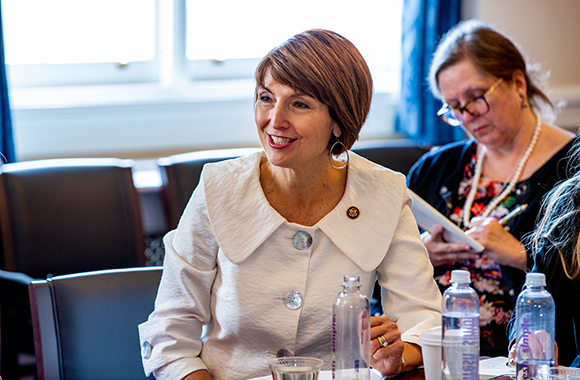
Last week, the League descended upon Capitol Hill to participate in a National Consumer Protection Week fair with hill staffers, federal, state, and local government agencies, and national consumer advocacy organizations. As a member of the NCPW steering committee, NCL meets with other orgs and agencies each fall to plan the next year’s NCPW theme and events to promote the educational week in early March.

NCPW highlights consumer protection issues and education efforts around the country. The focus of this year’s event is financial literacy, and the official week is March 2-8. Whether it is tips for shopping for a mortgage; learning to decipher credit card statements or utility bills; choosing savings or retirement plans; comparing health insurance policies, or simply learning to be a savvy consumer, NCPW has got you covered.

The fair was a great forum for National Consumers League to promote the LifeSmarts Program to members of Congress and similarly aligned organizations. LifeSmarts helps students from 6 – 12th grade test their consumer knowledge and equip them with the tools needed to be a better consumer. The educational program, whose national competition is right around the corner in April (in Minneapolis this year), was a hit with visitors and participants of the fair. Most importantly, we received positive feedback on our efforts to focus on financial literacy for school-aged consumers. Most organizations had ample information to assist adults in becoming better consumers, but few programs empowered young adults to achieve greater financial literacy.

Cheers to the League and look for more updates from your resident intern blogger soon!

Honoring History – National Consumers League

Did you know that *Black History month started out as a week?

In 1926, Carter G. Woodson, the son of former slaves and a scholar who went on to get a Ph.D. in history from Harvard, created “Negro History Week.” February’s theme honors Woodson, who, along with Jesse E. Moorland, co-founded the Association for the Study of Negro Life and History. ASNLH’s mission was to recognize and raise awareness of the importance of African Americans in history. Woodson’s work with the ASNLH led to the creation of “Negro History Week,” which was extended to the entire month of February in its 50th year of observance, 1976.

Black History Month is a great time for our organization, the National Consumers League, to remember our own historical connections to the Civil Rights Movement. NCL supported racial equality from the beginning, as its first leader, Florence Kelley, was a founding member of the NAACP. During the New Deal, NCL called for including domestic and agricultural workers in labor laws and social security programs, and was alone among women’s groups in demanding racial justice. Lucy Mason, head of the league during the 1930s, also served on the NAACP’s board, and she cautioned against “that tendency to believe that the colored worker needs less than the white worker.”

One of the great watershed events in African American history is the 1954 U.S. Supreme Court ruling in Brown v. Board of Education of Topeka. The Court found that “separate educational facilities are inherently unequal.” The landmark case ended federally-sanctioned racial segregation in public schools. It’s of unique interest to NCL not just for the role it played in the Civil Rights Movement, but because the winning side’s legal arguments had roots in another human rights issue that NCL was closely involved in a few decades earlier.

The brief prepared by Thurgood Marshall (who went on to become a Justice of the Supreme Court) in Brown was a “Brandeis Brief.” This is a brief that’s filled with more sociological data than legal argument. Marshall’s brief demonstrated the corrosive effects of segregated schools on African American students and that separate was not equal. The first Brandeis Brief, written by Louis Brandeis himself (who also went on to become a Supreme Court Justice), came about in the 1908 case of Muller v. Oregon. Brandeis, who successfully represented the interests of women laundry workers, was persuaded to write the brief by NCL’s Kelley and Vice President Josephine Goldmark. Muller upheld workers’ rights to work only 10 hours a day, and laid the groundwork for the *Fair Labor Standards Act of 1938.

NCL proudly acknowledges Black History Month, and we salute the accomplishments of all of the great historical figures and leaders who have paved the way for justice and equality for us all.

*Links are no longer active as the original sources have removed the content, sometimes due to federal website changes or restructurings.

Can you hear me? – National Consumers League

Consumers who have cell phones that operate on analog signals are out of luck. As of midnight last night, cellular telephone companies are no longer required to provide analog service.

If you suddenly find yourself searching for a new wireless phone plan, it is important that you find one which best fits your needs. Here are some tips to help you stay connected to colleagues, family and friends at an affordable cost.

Find out:

  • What’s included in the calling plan. How many minutes will you be allowed as part of your monthly fee? How much will you be charged if you use more? Are unused minutes lost or do they carry over to the next month?
  • What’s the cancellation policy?
  • Whether you can check how many minutes and text messages you have left.

For more information on the switch from analog to digital for wireless phone service, visit the FCC’s Consumer & Governmental Affairs Bureau Web site at www.fcc.gov/cgb.

Remembering Tom Lantos (1928-2008) – National Consumers League

By National Consumers League staff

We were saddened to hear of last week’s passing of longtime friend to NCL and workers’ rights advocates, Representative Tom Lantos (D-CA), who died February 11 at the age of 80. Five years ago, the National Consumers League honored Lantos with a Trumpeter Award for his advocacy for modernizing America’s child labor laws, work which started when he chaired the House Government Reform Employment and Housing Subcommittee hearings on the state of child labor in 1990.

We partnered with Lantos and his legislative staff in 2003 to introduce the Young Worker Protection Act, a bill proposed to eliminate exploitative child labor in the United States. Lantos was a firm believer in the need for updating antiquated child labor laws governing young American workers, and his bill would have made amendments to the 1938 Fair Labor Standards Act to reflect the realities of the 21st century workplace.

“The exploitation of child labor cannot be tolerated in America. It is not a thing of the past but a very real problem that continues to jeopardize the health, education, and lives of many of our nation’s youth workers. These youth work long, hard hours, often under dangerous conditions. [We seek] to eliminate the all-too-common exploitation of teen workers—working late into the night while school is in session and working under hazardous conditions,” Lantos said at a 2003 press conference on Capitol Hill.

It was a pleasure to have worked with Congressman Lantos. He will be missed.

Kids and Cars Bill en Route to President Bush! – National Consumers League

By National Consumers League staff

Great news! We just got word that the Kids and Cars bill has passed the Senate and is on its way to the Oval Office! We blogged about this bill a while back – it’s a bill that would protect young children from being backed over and hurt or killed by cars driving in reverse by making the cars themselves safer.

NCL’s Executive Director Sally Greenberg worked on this issue when she was a senior attorney at Consumers Union, and we’re thrilled that the lobbying has paid off! Today, the Senate unanimously passed the bill, which was sponsored by Congresswoman Jan Schakowsky (D-IL) and Congressman Peter King (R-NY), (the bill bears the name of his young constituent, Cameron Gulbransen, a victim of backover) and cosponsored by more than 40 other senators from both sides of the aisle.

Once President Bush signs the bill into law, eventually every new light vehicle will be required to meet a standard for rear visibility, allowing drivers to detect objects behind them. Additionally, vehicles will be required to be set up so that the brake must be depressed to shift into gear, preventing young children from playing with a gear shift and setting a car in motion. Finally, the new law will call for data collection by the federal government for these types of nontraffic, noncrash incidents, which are not systematically tracked now by the government.

Stay tuned for more as we continue to track this important bill’s progress!

Love Stinks! – National Consumers League

by NCL staff

A little while back, we blogged about a relatively new scam we’ve been tracking at NCL’s Fraud Center: the Sweetheart Swindle. We’ve been crunching numbers lately to look at the top scams of 2007, and we found something that’s really surprised us: despite the fact that NCL’s Fraud Center has only been tracking this type of scam since July 2007, it gained enough momentum in the second half of the year to move to the top 10 scam list. According to complaints logged at www.fraud.org, the average victim lost more than $3,038 last year to Sweetheart Swindles. However, the full extent of the fraud is unknown, given many victims’ reluctance to admit to being scammed.

Yikes!

Here’s one such sad story:

In April 2007, “Donna” cautiously ventured into the world of online dating. Within a week, she was contacted by a man with whom she began to chat. They chatted multiple times a day for seven months. He said he was a wealthy business man, who lived in a nearby city and was temporarily in Africa on business. In October, he said his contract in Africa would soon be up and that he wanted to meet, but he needed $250 to hold him over until a check cleared. Donna offended her new sweetie when she expressed her hesitancy to give money to a stranger. So she sent him the money, and later another $1,500, never to hear from him again.

Stay tuned for more stories of love – and money – lost through Sweetheart Swindles.

Tell ‘Em What You Really Think about America’s Health Care – National Consumers League

By Ria Eapen

When it comes to health care, what matters most to you?  And what changes would you make to our country’s health care system?

AFL-CIO, the largest organization of working people in America, and Working America, the 2 million-member community affiliate of the AFL-CIO, are interested in what Americans think about these issues and have sponsored the 2008 Health Care for America Survey to hear what you have to say.

Survey findings will be given to the presidential candidates, every U.S. Senator and Representative, every candidate for Congress, and state and local officials in every state in our country.  This survey gives you the chance to have your voice heard by leaders and candidates at every level. And everyone who completes the survey will have an opportunity to view the results. Neat!

Alcohol Facts – National Consumers League

By National Consumers League staff

What’s a dieter to do? A solid month into the new year, resolutions going strong: counting calories, exercising, avoiding late-night binges.

But the weekend’s just around the corner, and one can only avoid Friday happy hours for so long. Wouldn’t it be nice if somehow you could actually look at any bottle of beer or wine or tequila and find out how many calories or grams of fat are in it?

Have allergies? Wouldn’t it be nice to know the ingredients in what you’re drinking? Counting carbs? Watching your alcohol intake? What’s an info-seeking consumer to do?

Currently, the labeling on beverages containing alcohol is all across the board, with most drinks lacking easy-to-find information about calories, serving sizes, etc. For years, NCL has been asking the federal government to make a change for the positive and better regulate this stuff with a standardized, useful “Alcohol Facts” label. (Think “Nutrition Facts” for beer.)

Here’s our latest call for change.

Child Labor Coalition Hosts Guests to Hear about Sweatshop, Child Labor in China – National Consumers League

by Sally Greenberg, NCL Executive Director

Two activists from the China Labor Watch came to Washington DC January 15, 2008 to speak to the Child Labor Coalition, a national organization of child labor advocates and activists lead by the National Consumers League. *Li Qiang, Executive Director of China Labor Watch, and David Shih, executive assistant and translator for Li Qiang, spent an hour with the CLC. Li Qiang described how he came from a union family and worked in factories until he went to law school. He was able to experience personally the exploitation of workers in Chinese factories.

Li began organizing and has been at the forefront of the workers rights movement in China, encouraging businesses to develop a legal framework for the enforcement of local and national labor law. CLW has produced more than 20 in-depth reports on a wide range of topics. One of the most controversial, released in August 2007, showed that between December 2006 and August 2007, toy factories in China had violated labor laws, including employing teenagers from rural areas in their factories. Toys associated with Disney, Gosh International and Hasbro, among others, were implicated.

Li Qiang noted that Mattel has a better record than most companies because in recent years its corporate leadership determined to make improving factory and worker conditions a priority.

The CLC also heard from Han Donfang, founder and director of the China Labour Bulletin, who spoke about his work defending and promoting workers rights in China. Based in Hong Kong, CLB has ties to labor organizations and finds that child labor is “widespread, systemic, and an increasingly serious problem in China.” CLB’s report, “Small Hands: a Survey Report on Child Labor in China,” is based on research carried out in 2005, and explores the demand for child labor and the causes, including serious failings in the rural school systems. Researchers for CLB talked with school teachers, labor officials, factory owners and administrators, child workers, and their parents to develop the profile of living and working conditions of child laborers. Han Donfang talked about the report, the research, and efforts to combat the exploitation of child labor in China.

*Links are no longer active as the original sources have removed the content, sometimes due to federal website changes or restructurings.