NCL Decries Trump Administration’s Proposed Rule to Weaken Fuel Economy Standards

Media Contact: Lisa McDonald, Vice President of Communications, 202-207-2829 

Washington, DC – The Trump administration today released a proposed rule to weaken fuel economy standards for light-duty vehicles.  The National Highway Traffic Safety Administration (NHTSA) estimates that the proposed standards would achieve a fleet average fuel economy of 34.5 miles per gallon by model year 2031, a dramatic decrease from the 50.4 miles per gallon that the Biden era standards were projected to achieve. 

“The Trump administration’s proposed rule ignores a simple truth: costs are low when fuel economy standards are high,” said Daniel Greene, Senior Director of Consumer Protection & Product Safety.  “Slamming the brakes on robust fuel economy standards will inflict more pain at the pump, hamper American competitiveness, exacerbate the climate crisis, and harm public health.  The National Consumers League urges the administration to reverse course and help address the affordability crisis through meaningful increases in fuel economy standards.” 

### 

About the National Consumers League (NCL)      

The National Consumers League, founded in 1899, is America’s pioneer consumer organization. Our mission is to protect and promote social and economic justice for consumers and workers in the United States and abroad. For more information, visit www.nclnet.org.   
An Important Day for Safer Cars and Products

By Sally Greenberg, NCL CEO

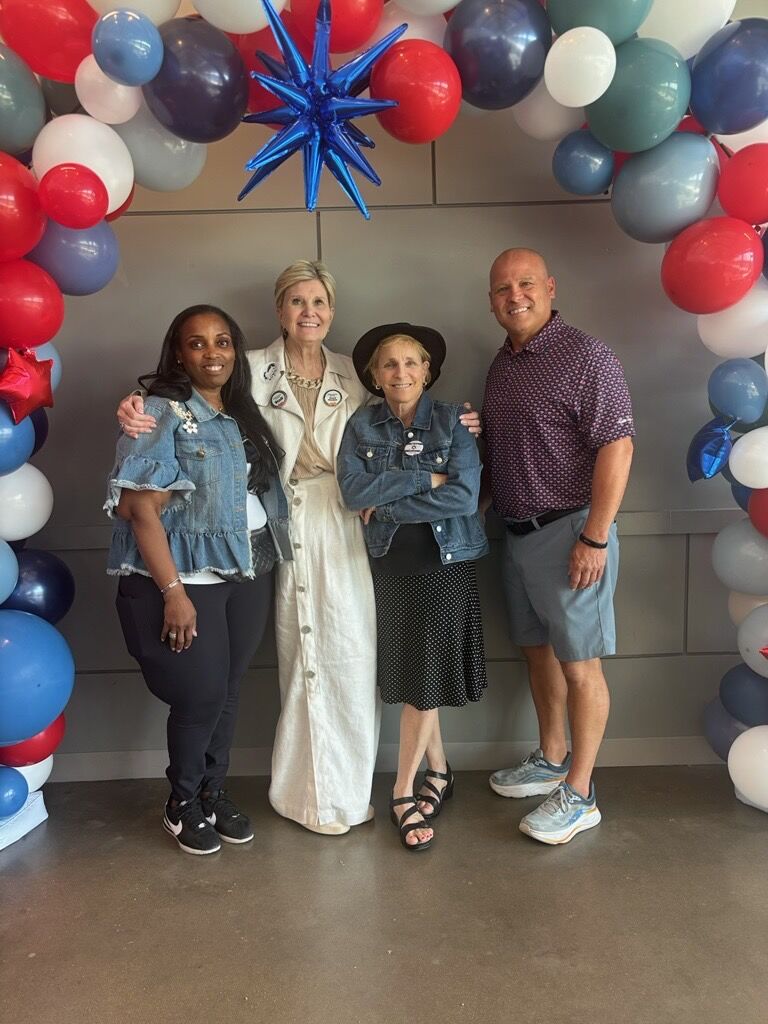
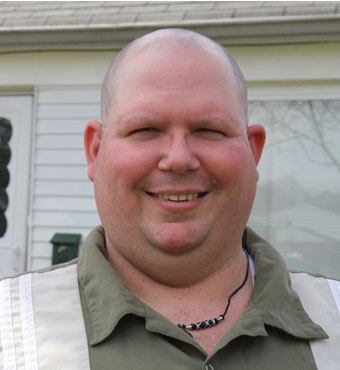
From left to right: Torine Creppy, Safe Kids Worldwide President; Janette Fennel, Kids and Car Safety President; Sally Greenberg; Brett Horn, Charlie’s House Founder

On a recent Sunday in October, I flew to Kansas City to celebrate the 30th Anniversary of Kids and Car Safety. The organization was formed by my friend and colleague, Janette Fennell, who dedicated her life’s work to preventing injury to children after she and her husband were kidnapped in their car. More on this story later, but it has a happy ending.

As a general matter, it’s often hard to celebrate advances in product and auto safety because they happen in the aftermath of injuries to children and adults from poorly designed products. 

Indeed, I began working with Janette in 2002 to address the danger of drivers backing over children, typically toddlers, who are too small to be seen behind cars with no camera, which cars didn’t have in 2002.  The first time I met Janette, she was hosting a press conference in suburban Washington, D.C. She had a speaker at the microphone who described the agony of backing over his grandchild. Hard to believe I hadn’t thought about this obvious hazard to children before. 

Back to Janette’s history. In 1996, she and her husband Greig were forced into their trunk one evening when returning from a party in San Francisco, their 9-month-old strapped in his car seat in the backseat.  The kidnappers thankfully kept the baby in his seat and placed him on the front lawn. He was unharmed. The robbers drove the couple to a remote location, demanded their ATM cards and PINS and cleaned out their accounts. She and Greig found a cable inside their Lexus that allowed them to pop open the trunk. 

Janette swore that if she got out alive, and thankfully she did, she would dedicate the remainder of her life to saving kids in and around cars.  

After this harrowing press event, I drove back downtown and on the way, decided Consumers Union, where I worked as product safety counsel at the time, should work with Kids and Cars to get a safety standard enabling drivers to see behind them as they backed up their vehicles. 

As of Model Year 2018, after a decade and a half of passing a law, then bringing a lawsuit against the National Highway Traffic Safety Administration (NHTSA) to get it implemented, (this included many families who had lost children coming to Washington and a concerted consumer advocacy campaign), every passenger motor vehicle is required to have a backup camera. 

Back to my story about sadness and product safety. While in Kansas City, I met up with child safety advocate, Brett Horn and toured Charlie’s House, the model home he built as a tribute to his 2 ½ year old son, who was crushed 20 years ago under a chest of drawers that toppled over on him. Over 400 kids have died in furniture tip overs. Thanks to Brett and other safety advocates the STURDY Act passed in 2022, requiring the Consumer Product Safety Commission to set mandatory safety standards for all dressers and similar products made or sold in the U.S.  

Every room in Charlie’s House – which is used to train parents and community members – has examples of hazards to children, such as lighters shaped as toys, colorful laundry pods, power tools, handguns with locks, refrigerators that lock shut,  and small batteries that can be swallowed and children can die from. Believe me, there are things you’ve never thought of that kids get into. We all need to be educated about those hazards and ensure every home is made as safe as possible for kids. 

 While at Charlie’s House, the CEO of Safe Kids Worldwide, Torine Creppy, arrived to tour the house and afterward we all headed out to Olathe, Kansas, for the Kids and Cars 30th Anniversary Celebration. As we enjoyed Kansas barbecue, Janette told her compelling story once again. To me the most rewarding part of the event was hearing these encouraging statistics: 

  • The number of children strangled by power windows has drastically decreased thanks to safer switches. Kids and Car Safety (KACS) is responsible for the passage of a law that mandated a regulation on all new vehicles manufactured on or after October 1, 2010, to have the safer ‘pull up to close/push down car window switches.  

In addition, many people are surprised to learn that hundreds of cars are stolen with children in the back seat every year. Cars are stolen from gas stations, convenience store parking lots, and even home driveways. Kids and Cars keep the data as no other group does, the first step to attacking the problem.  

Though the most well-known and beloved technology in cars today are those backup cameras – not only because they provide a critical measure of safety, but they also give drivers a vast view of what is behind them as they backup into parking spots, garages, parking ramps and around dangerous corners. If I had a dollar for every person who tells me how much they love their car cameras, I’d be rich!   

Don’t ever forget, the auto industry did not want to implement these safety changes, nor did the NHTSA, and both fought against them. But the advocates prevailed. And as with so many safety technologies, they provide a myriad of additional benefits. 

My day in Kansas City reminded me once again why I do this work. Saving lives of children first, and protecting the rest of us, will never get old. My hat is off to Brett Horn and Janette Fennell and Kids and Cars – who have set a high bar, refused to cave to industry or government resistance, and told their stories over and over again and invited others to tell theirs. Hats off to them and others who have dedicated their lives to making our lives safer and more rewarding.   

NHTSA Delays Updates to the Five-Star Safety Rating Program

Media Contact: Lisa McDonald, Vice President of Communications, 202-207-2829  

Washington, DC— The National Highway Traffic Safety Administration (NHTSA) postponed the effective date of updates to the New Car Assessment Program (NCAP), which is a Five-Star Safety Rating Program that provides consumers with important information to compare the safety of different vehicles.  

“Safety delayed is safety denied,” said Daniel Greene, the Senior Director of Consumer Protection & Product Safety.  “NHTSA’s New Car Assessment Program should be a valuable tool of illumination, providing consumers with vital information necessary to compare the safety of different vehicles.  Regrettably, the five-star safety rating has become a mere participation trophy, with nearly all manufacturers earning four or five stars.  NHTSA must abide by the law and consumer consensus and update NCAP.” 

As required by the Bipartisan Infrastructure Law, NHTSA updated NCAP in 2024 to establish pedestrian crashworthiness ratings, update automatic emergency brake ratings, and create ratings for blind spot warning, blind spot intervention, lane keeping assist, and pedestrian automatic emergency braking.  In response to a request from the automobile manufacturers’ trade association, NHTSA has postponed the effective date of these updates for one model year. 

### 

About the National Consumers League (NCL)      

The National Consumers League, founded in 1899, is America’s pioneer consumer organization. Our mission is to protect and promote social and economic justice for consumers and workers in the United States and abroad. For more information, visit www.nclnet.org.   
With 44,000 dead every year, now is not the time to defund traffic safety

Media Contact: Lisa McDonald, Vice President of Communications, 202-207-2829 

Washington, DC – The National Consumers League (NCL) and 17 other safety organizations today sent a letter to the House Appropriations Committee calling on Congress to provide the National Highway Traffic Safety Administration (NHTSA) with the resources necessary to reduce the unacceptably high number of deaths and injuries caused by traffic crashes.    

“NHTSA is our nation’s principal automobile safety regulator, charged with reducing deaths and injuries associated with traffic crashes,” says NCL Senior Director of Consumer Protection & Product Safety, Daniel Greene.  “With NHTSA on the beat, traffic safety is a priority, not an afterthought. We urge the committee to reject significant cuts to NHTSA proposed in the FY 2026 Transportation, Housing, and Urban Development (THUD) Appropriations bill.” 

A copy of the letter can be found HERE 

Letter cosigners: 

National Consumers League 

Advocates for Highway and Auto Safety 

Center for Auto Safety 

Consumer Federation of America 

Consumer Reports 

Consumers for Auto Reliability and Safety 

Families for Safe Streets 

Impact Teen Drivers 

Kids and Car Safety 

League of American Bicyclists 

National Coalition for Safer Roads 

National Safety Council 

Safe Kids Worldwide 

Safety Research & Strategies 

Stopdistrations.org 

The Dawn Project 

Truck Safety Coalition 

Vision Zero Network 

Whirlwind Wheelchair International 

### 

About the National Consumers League (NCL)      

The National Consumers League, founded in 1899, is America’s pioneer consumer organization. Our mission is to protect and promote social and economic justice for consumers and workers in the United States and abroad. For more information, visit www.nclnet.org.  
NCL, 17 safety organizations, call on Congress to provide robust resources to NHTSA  

Media Contact: Lisa McDonald, Vice President of Communications, 202-207-2829  

Washington, DC – The National Consumers League (NCL) and 17 other safety organizations today sent a letter to the House Appropriations Committee calling on Congress to provide the National Highway Traffic Safety Administration (NHTSA) with the resources necessary to reduce the unacceptably high number of deaths and injuries caused by traffic crashes.   

“Traffic crashes do not have to be the price we pay for commuting to work, dropping the kids off at school, or picking up groceries,” says NCL Senior Director of Consumer Protection & Product Safety, Daniel Greene.  “By providing NHTSA with sufficient resources to support revolutionary safety technologies, educate the motoring public, and improve the design, construction, and performance of motor vehicles, we can dramatically improve roadway safety.”     

Today, the Transportation, Housing, and Urban Development (THUD) Subcommittee is marking up the FY 2026 THUD bill.  On Thursday, the Appropriations Committee is marking up the FY 2026 THUD bill.  

A copy of the letter can be found HERE 

Letter cosigners:  

National Consumers League  

Advocates for Highway and Auto Safety  

Center for Auto Safety  

Consumer Federation of America  

Consumer Reports  

Families for Safe Streets  

Impact Teen Drivers  

Kids and Car Safety  

League of American Bicyclists  

National Coalition for Safety Roads  

National Safety Council  

PeopleForBikes  

Safe Kids Worldwide  

Safety Research & Strategies  

The Dawn Project  

Truck Safety Coalition  

Vision Zero Network  

Whirlwind Wheelchair International  

###  

About the National Consumers League (NCL)       

The National Consumers League, founded in 1899, is America’s pioneer consumer organization. Our mission is to protect and promote social and economic justice for consumers and workers in the United States and abroad. For more information, visit www.nclnet.org

NCL sounds the alarm on bigger freight trucks: “a dangerous gamble for public safety and our roads”

Media Contact: Lisa McDonald, Vice President of Communications, 202-207-2829    

Washington, DC – The National Consumers League (NCL) is strongly opposing federal proposals to allow significantly longer and heavier freight trucks on U.S. highways, calling the move a significant threat to public safety, infrastructure, and taxpayers.  

In an opinion piece published today in The Hill, NCL’s Senior Director of Consumer Protection & Product Safety, Daniel Greene, joined David Williams, the President of the Taxpayers Protection Alliance, to warn lawmakers and the public about the dangers of weakening truck size and weight limits.  

Increasing size and weight limits would exacerbate the nation’s traffic safety crisis,” write Greene and Williams.The heavier the truck, the greater the crash forces, increasing the lethality accidents.”  

Data cited in the article show that trucks weighing 91,000 pounds or more are up to 400 percent more likely to be involved in major crashes and cause significantly more damage to roads and bridges. Replacing weakened infrastructure to accommodate these trucks could cost taxpayers $80 billion, according to a 2023 analysis.  

Politicians and advocacy groups across the political spectrum may not always agree on the best way to fix America’s roads, but they should agree that introducing larger and heavier vehicles is a recipe for disaster,” Greene and Williams continued. Lawmakers should swerve away from these policy potholes and commit to real bipartisan protections.”  

 NCL is calling on Congress to uphold current truck size and weight limits and reject efforts to allow heavier trucks or longer multi-trailer rigs on U.S. highways. 

###  

About the National Consumers League (NCL)       

The National Consumers League, founded in 1899, is America’s pioneer consumer organization. Our mission is to protect and promote social and economic justice for consumers and workers in the United States and abroad. For more information, visit www.nclnet.org.     
NCL calls on Congress to improve traffic safety 

Media Contact: Lisa McDonald, Vice President of Communications, 202-207-2829 

Washington, DC — In advance of a subcommittee hearing on motor vehicle safety, the National Consumers League (NCL) sent a letter to the House Energy and Commerce Committee urging lawmakers to take decisive action to curb the unacceptable number of deaths and injuries that occur due to traffic crashes.  

“The death and destruction on our nation’s roads does not have to be the price we pay for commuting to work, dropping the kids off at school, or picking up groceries,” the letter states.  “By harnessing revolutionary safety technologies, educating the motoring public, and improving the design, construction, and performance of motor vehicles, we can make our roadways safer.” 

In the letter, NCL provides several policy proposals to improve traffic safety. 

A copy of the letter can be found HERE 

### 

About the National Consumers League (NCL)      

The National Consumers League, founded in 1899, is America’s pioneer consumer organization. Our mission is to protect and promote social and economic justice for consumers and workers in the United States and abroad. For more information, visit www.nclnet.org.    

Don’t throw auto safety in reverse

By Daniel Greene, Senior Director of Consumer Protection & Product Safety Policy

If traffic safety were a war, we’d be losing.   

Our nation suffers approximately 40,000 deaths and 2.6 million injuries to traffic crashes each year.   

That’s enough fatalities to fill the average Major League Baseball stadium.  Enough injuries to affect nearly every resident of the state of Alabama. 

Traffic crashes cost society nearly a trillion dollars in medical bills, emergency services, lost productivity, insurance costs, workplace loss, legal costs, and property damage.  That’s enough money to buy more than 26 million mid-size SUVs; ten million more than the total number of cars sold in 2024.   

No Congressional district has been spared.  No community is immune.   

Yet, the death and destruction on our nation’s roads does not have to be the price we pay for commuting to work, dropping the kids off at school, or picking up groceries.  By harnessing revolutionary safety technologies, educating the motoring public, and improving the design, construction and performance of motor vehicles, we can dramatically improve roadway safety.   

Fortunately, there is a federal agency responsible for carrying out such activities.  The National Highway Traffic Safety Administration (NHTSA) is our nation’s principal automobile safety regulator, charged with reducing death and injuries associated with traffic accidents.  NHTSA carries out its lifesaving mission by establishing safety standards, investigating defects, enforcing recalls, and providing states resources for driver education, risky driving countermeasures, and roadside safety. 

NHTSA has delivered.  Safety features that were once rare and unique are now common and conventional: seatbelts, airbags, and crumple zones, to name a few.  Many of these features were adopted to comply with increasingly ambitious safety standards. The result: fewer fatalities and injuries on our nation’s roads. 

From 1968 through 2019, NHTSA’s safety standards prevented over 860,000 deaths, 49 million injuries, and damage to 65 million vehicles, generating over $17.3 trillion in societal benefits.  In 2019 alone, standards prevented 40,000 deaths, 1.9 million injuries, and damage to 3.8 million vehicles.  

NHTSA has also successfully taken unsafe vehicles off our nation’s roadways.  Since 1968, NHTSA has participated in the recall of more than 390 million vehicles, 66 million pieces of motor vehicle equipment, 46 million tires, and 42 million car seats due to safety defects.   

NHTSA has compelled manufacturers to replace tens of millions of volatile and explosive airbags, millions of defective tires prone to tread separation, and millions of sticky car seat buckles that entrap children.  The agency has facilitated the remedy of millions of vehicles with incidents of unintended acceleration, millions of faulty ignition switches that deactivate the engine and airbags while a vehicle is in motion, and “self-driving” technology that cannot safely perform the driving task. 

NTHSA is on the cusp of ushering in new transformational safety technologies that may exceed the lifesaving effects of seatbelts and airbags.  The Bipartisan Infrastructure Law mandates that NHTSA support the deployment of several sophisticated safety technologies:   

  • Drunk and impaired driving prevention technology: Over 13,000 people were killed in drunk driving crashes in 2022.    
  • Crash avoidance technology: Forward collision warning and automatic emergency brakes have been shown to reduce injuries associated with front-to-rear crashes by 56 percent.  Lane departure warnings could reduce single-vehicle, sideswipe, and head-on crashes causing injury by 21 percent.  Blind-spot detection has been shown to reduce lane-change crashes that result in injuries by 23 percent.   
  • Driver monitoring systems: Distracted driving claimed an estimated 12,405 lives in 2021.  Drowsy driving caused 664 deaths that same year.   

Many of these requirements are actively being implemented but are not yet finalized.   

With NHTSA on the beat, safety is a priority and not an afterthought.  It must be built into the design, construction, and performance of each vehicle.  It must be engrained in every bolt, sensor, and line of code of a vehicle.   

But this vital safety agency is under unprecedented assault.  Championed by Elon Musk and the Department of Government Efficiency, the Trump Administration has launched a shock and awe campaign, taking a chainsaw to the key pillars of a well-functioning government.  The indiscriminate firing of civil servants, unlawful impoundment of congressionally directed spending, and work stoppages have had deeply destabilizing effects across the federal government.  The chaos has wreaked havoc on NHTSA’s ability to carry out its most basic functions.    

Approximately 1 in 20 NHTSA employees were fired in the February purge of probationary workers.  That included researchers studying impaired driving and traffic safety measures.  Several members of the Office of Defect Investigations, which is responsible for investigating defects and mandating recalls, have been dismissed.  The Office has been increasingly scrutinizing Tesla, which Elon Musk owns.  Employees within the Department of Transportation cannot access their former colleagues’ files, making it virtually impossible to continue their work.  

Through an Executive Order, the Trump Administration has directed federal agencies to “identify at least 10 existing rules, regulations, or guidance documents to be repealed” for every new rule, regulation, or guidance that is promulgated.  As of December, NHTSA had yet to finalize 19 rulemakings mandated by Congress, all through bipartisan legislation.  In the Fall Unified Regulatory Agenda, NHTSA identified 56 ongoing rulemaking proceedings, some of which had been completed prior to Trump taking office.  It may not even be possible for NHTSA to identify the hundreds of existing rules, regulations, and guidance documents necessary to finalize Congressionally directed and ongoing rulemakings while complying with the 10-to-1 rule. 

If the past is a prologue, vital automobile safety activities may fall by the wayside.  During the Biden Administration, NHTSA finalized 29 rules creating or modernizing safety standards.  The first Trump Administration finalized only nine such rules.  The Biden Administration conducted 224 investigations of potential safety defects.  The first Trump Administration initiated only 103.   

Worse yet, deeper cuts may be forthcoming.  Every federal agency was required to produce an Agency Reduction in Force and Reorganization Plan by March 13, 2025.  Such plans must seek to achieve significant staff reductions, reduced budgets, and reduced real property footprint. 

Some are calling on NHTSA’s budget to be slashed by 60 percent and the workforce reduced by 30 percent, returning the agency to 1990s-era levels.  Such plans include cutting state safety grants by 75 percent, slashing crash test facilities and testing by 75 percent, and ending vital safety initiatives like the adoption of the first female crash test dummy.  Most Americans do not want to trade in their current vehicle for a 1990s model.  We shouldn’t revert to a 1990s-era auto safety regulatory agency.   

The death and destruction on our nation’s roads is not an inevitability, but a choice. A choice to not treat traffic safety like the public health emergency it so clearly is. A choice to remain complacent.  A choice to accept the status quo.   

I contend that America should make a different choice: no more victims.  Let’s chart a course towards vision zero, in which there are no traffic fatalities or serious injuries.  And let’s ensure we equip NHTSA with the resources, staff, and authorities necessary to make that vision a reality.   

NCL blasts the purge of the nation’s auto safety regulator

Media Contact: Lisa McDonald, Vice President of Communication, 202-207-2829  

Washington, DC – The National Consumers League (NCL) opposes the Trump Administration’s firing of public servants working at the National Highway Traffic Safety Administration (NHTSA), the nation’s principal automobile safety regulator.  According to reports, the Trump Administration fired hundreds of people at the Department of Transportation, including employees at NHTSA.

“NHTSA cannot oversee and promote automotive safety without world-class staff, many of whom have served behind the scenes for decades doing the day to day work of making the cars safer and making the agency run,” said Daniel Greene, Senior Director of Consumer Protection & Product Safety.  “Yet, in their reckless attempt to dismantle the core functions of the federal government, the Trump Administration is purging the dedicated public servants working tirelessly to eliminate the approximately 40,000 deaths and 5 million injuries suffered in traffic crashes every year.  Ultimately, the American people will feel the effects of this unconscionable action through more unnecessary crashes.  That means more death, more injuries, more broken families, and more shattered communities.”

###

About the National Consumers League (NCL)

The National Consumers League, founded in 1899, is America’s pioneer consumer organization. Our mission is to protect and promote social and economic justice for consumers and workers in the United States and abroad. For more information, visit www.nclnet.org.

NCL blasts NHTSA’s delay and reconsideration of automatic emergency braking standard

Biden-era standard was projected to save hundreds of lives and prevent thousands of injuries each year

Media Contact: Lisa McDonald, Vice President of Communications, (202)- 207-2829

Washington, DC – Today, the National Highway Traffic Safety Administration (NHTSA) delayed the implementation of a Biden-era rule that would require all passenger cars and light trucks to be equipped with automatic emergency brakes (AEB), which are automobile safety systems that automatically detect when a frontal collision with a vehicle or pedestrian is imminent and automatically applies the brakes to prevent or mitigate impact. The final rule was projected to save at least 362 lives and mitigate 24,321 injuries each year. Manufacturers would have to come into compliance with the rule by 2029.

“Mistakes should not cost lives, and with modern automobile safety technologies, they no longer have to,” said Daniel Greene, Senior Director, Consumer Protection & Product Safety Policy. “The Biden Administration took bold action to address the automobile safety crisis by requiring automatic emergency brakes to be standard safety features, not luxury items, on all new cars and light trucks. The Biden-era rule balanced the need to support safety innovation and compliance while addressing unacceptable carnage on our nation’s roads. Delaying or weakening these standards simply makes our streets more dangerous.”

###

About the National Consumers League (NCL)

The National Consumers League, founded in 1899, is America’s pioneer consumer organization. Our mission is to protect and promote social and economic justice for consumers and workers in the United States and abroad. For more information, visit nclnet.org.