Voices, Urgency, and Hope at the National Health Council Annual Meeting

By Sally Greenberg, NCL CEO

Have you heard of Alpha-1 Disorder? I hadn’t either until I had a conversation with the Alpha-1 Disorder team that’s gathered in Ft. Lauderdale for the National Health Council Annual Meeting. I love coming to this gathering because of the energy and drive behind the diverse patient groups and companies working to develop treatments and cures. Lisa Bercu, our Senior Health Policy Director, and I are here talking with and learning from colleagues across the health care spectrum.

Back to Alpha 1 or Alpha-1 Antitrypsin Deficiency (AATD) it’s a genetic condition that can cause damage to the lungs and/or the liver and is often misdiagnosed as COPD. There is no cure for Alpha-1, but symptoms can be managed with treatment. The Foundation is here and exists to advocate for research, more effective treatments and cures, and benefits for patients with Alpha 1.

Tracy Garner from Easter Seals is describing what lies ahead for Medicaid patients whose benefits will be slashed, as called for in HR 1, the so-called “Big Beautiful Bill” that Congress passed in 2025. One in four people in the US identifies as having a disability. One-third of those receive Medicaid benefits. That will have a huge impact on these patients.

Tracy and her team are working with states and their over seventy affiliates to hold meetings with the Centers for Medicare & Medicaid Services and state Medicaid administrators.

Ashlie White’s with the American Orthotic and Prosthetic Association. Her patient base is made up of amputees, and her challenge is ensuring that they get the Medicaid coverage they need, as many of them are on the program. The slashing of Medicaid could be devastating to these patients.

Cheryl Wicks’ group, Mosaic, provides support to 5,000 people with disabilities, mental and behavioral needs, and autism. I asked her what she thought legally about Sheltered Workshops for people with disabilities, where they get to go to work but get paid subminimum wage. NCL has never thought those Sheltered Workshops were a good thing, as they take advantage of people with disabilities, having them work for dirt cheap wages on the theory that at least they are getting out of the house or home. She agreed and used a term I had never heard – Community Integrated Employment, which means people with developmental and intellectual disabilities have jobs like everyone else that pay the legal minimum wage and work out much better. They are at grocery stores or pharmacies, stocking shelves or doing other similar work. Walgreens is particularly outstanding as an employer of people in her community. Hear, hear!

I cannot possibly capture the impact and dedication I feel among these patient advocates and the companies that develop the drugs and cures to treat the conditions described above, and so many more.

Guest Blog: Lives on the Line: Dialysis Patients Fight for Innovative Medicine

By Katie Riley, Vice President of Communications, Alliance for Aging Research

For many older Americans with kidney failure, life isn’t just about surviving the next dialysis session, it is about protecting their hearts, keeping their transplant hope alive, and preserving dignity and independence.

When kidneys stop working and patients rely on dialysis, phosphorus levels build up. That small-but-dangerous imbalance massively raises the risk of cardiovascular events and can threaten someone’s eligibility for a transplant.

Enter a lifesaving tool: oral Phosphate Lowering Therapies (PLTs). These medications help keep phosphorus under control and are especially important for older adults, including those on fixed incomes or using nursing-home care. But a federal policy change at the start of 2025 cut off easy access. Under the new rule, oral-only PLTs were moved into the ESRD payment bundle meaning many patients outside dialysis centers or in nursing homes have to jump through hoops to get access to them.

That policy shift is more than inconvenient…it’s harmful. Reports reveal that aging dialysis patients in nursing homes are being denied coverage altogether, resulting in higher phosphorus levels, greater risk of heart problems, and shrinking transplant chances.

Patients across the country have been impacted by the bundle and are sharing their concerns with policymakers and the public. Here are a few of their stories:

CKD care is not always straightforward, and encompassing every patient into a single fixed-payment bundle system takes away the key patient and provider relationship, where decisions are made to save lives, not time.

Ensuring that older adults can get the treatments they need to manage chronic conditions like kidney failure demands action.

The solution to this problem is simple. Medicare must reverse the decision to include oral-only Phosphate Lowering Therapies into the ESRD Bundle and restore coverage access to Medicare Part D. This change would immediately expand treatment options, reduce avoidable harm, and help keep thousands of older Americans eligible for transplant.

But the call for action is not just coming from advocates or clinicians, it is coming directly from patients. Their experiences are clear, consistent, and urgent. They are telling us what is at stake: their health, their independence, and their chance at a better life. Policymakers must listen.

Seniors and kidney patients deserve policies shaped by the realities they live every day not by technical payment decisions that ignore those realities. We urge the administration to return to a patient-centered Medicare approach that respects individual needs and ensures that older adults can age with health, dignity, and hope.

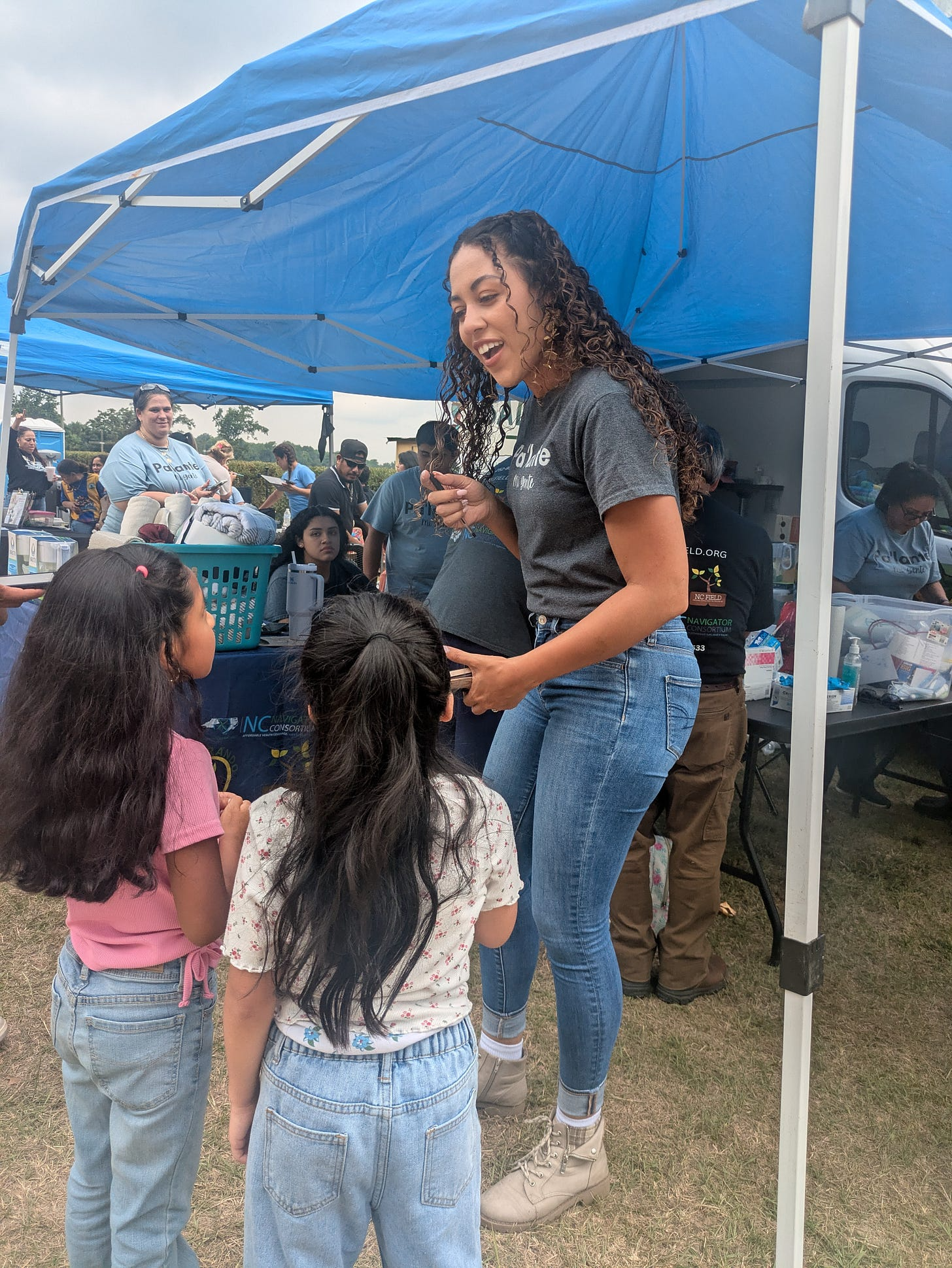
Guest Blog: A Life in the Shadows of North Carolina Fields

By Yesenia Cuello

A former child farmworker and the daughter of immigrants reflects on her life and the current moment.

Frances Perkins Is Rolling in Her Grave: Today’s Child Labor Rollbacks Are a National Shame

By Sally Greenberg, NCL CEO

America once swore we would never go back. Never again would children be robbed of their childhoods—or their lives—in sweatshops, factories, and slaughterhouses. That promise was won through the relentless efforts of Florence Kelley and Frances Perkins, pioneering leaders of the National Consumers League.

Kelley’s crusade began in childhood, when her father, a Pennsylvania Congressman, took her into steel and glass factories where she saw children her own age toiling under dangerous conditions. That early exposure fueled her career as a factory inspector, documenting abuses, and pushing for laws to ban factory work for children under 14.

Perkins shot into the political limelight in March 1911 in the wake of the Triangle Shirtwaist fire, which tore through a high-rise industrial building in Greenwich Village, killing 146 workers, most of them young immigrant women, some only 14 years old. The doors were locked to prevent theft. Perkins was working for the National Consumers League, and was visiting a friend nearby when the fire erupted and became an eyewitness to the disaster. She dedicated her life to ensuring children never again died—or lost their childhood—in pursuit of profit.

Years later, as Secretary of Labor (1933-1945) under President Franklin D. Roosevelt, Perkins helped structure the Fair Labor Standards Act (FLSA) of 1938, which banned most child labor and enshrined worker protections built on compassion and common sense.

Fast forward to 2025—and we’re tearing their legacies apart. Legislative efforts in Florida, Iowa, and Ohio in 2025 attempted to loosen child labor standards in opposition to the federal Fair Labor Standards Act. The media has been reporting for years about the widespread abuses in meatpacking, roofing, and manufacturing—jobs once legally off-limits to the youngest workers who are now given the “opportunity” to risk life and limb for their employers.

In Florida, lawmakers tried to gut protections for teens: bills like HB 1225 and SB 918, would allow 16- and 17-year-olds to work unlimited hours and days without meal or rest breaks—even during school—and open the door for 13-year-olds to work in summer months. The Governor’s office drafted the legislation and talking points for sponsors, revealing a coordinated effort to exploit child workers.

In 2023, Iowa openly defied the Fair Labor Standards Act, as legislators loosened limits on hazardous work, weakening work-permit requirements for 16- and 17-year-olds, in direct conflict with FLSA rules.

In Ohio, Republicans reintroduced legislation to allow 14- and 15-year-olds to work longer hours during the school year, in direct conflict with FLSA protections.

These aren’t just local outrages; they echo a national effort to rollback child labor protections. According to the Economic Policy Institute, since 2021, at least 28 states have introduced legislation to weaken child labor laws, and 17 have passed them. From 2015 to 2022, the number of minors employed in violation of child labor laws increased by 283% and the number of minors employed in violation of hazardous occupation orders increased by 94%.

Let’s be honest: this isn’t about kids receiving work experience. It’s about cheap labor replacing the immigrant labor we are losing, or so says Governor Ron DeSantis of Florida. Allowing minors to work longer hours—sometimes overnight, in dangerous jobs—diminishes their education, endangers their safety, and undermines their future earnings. It’s a race to the bottom, sanctioned by lawmakers, cheered on by corporations driving profits, and in some cases cloaked in deception as apprenticeships or workplace training at less than minimum wage.

Back on that clear Spring day in 1911, Frances Perkins watched in horror as young girls leapt from the burning Triangle Shirtwaist factory. She vowed never again—and built laws that put children’s safety above profit. But today, lawmakers are dragging us backward, gutting protections and treating children as disposable labor to feed corporate bottom lines. This Labor Day, we say no. No rollbacks. No to profiteers. No to products being produced with child labor. And, no to a United States where children are once again sacrificed for profit.

Guest Blog: What Protections Generation Z Needs from Artificial Intelligence

By Logan Baker, Communications Summer Intern

Artificial intelligence is not on the way; it’s already here. It’s recommending your next playlist, filtering your job applications, deciding what shows up on your feed, and even answering your Google search. As AI gets smarter, faster, and more prominent in our lives, it raises the question: What is protecting my generation, Generation Z, from AI? 

Gen Z is the first to grow up with AI incorporated into our everyday lives. It is beginning to shape how we think, how we learn, and how we see the world. While AI has created exciting possibilities, it also brings serious risks we cannot afford to ignore. 

One of my biggest concerns is how AI affects our mental health. The algorithms behind our favorite apps are designed to maximize engagement, not our well-being. AI pushes content that keeps us scrolling, even if it feeds anxiety and depression. This generation needs protection from those systems and companies need limits on how they can target young users and how often. 

Privacy is another huge issue. Every time we interact with AI, we are asked to give up our personal data. That data is not forgotten; it is stored, analyzed, and used to train more algorithms. We are all guilty of opting into data collection without truly understanding what we’re agreeing to. Gen Z, like all consumers, needs clearer privacy policies as well as the ability to opt out of privacy agreements without losing complete access. Additionally, stronger laws are needed to protect sensitive information like location and facial recognition data. 

Although misinformation has been a growing threat, AI makes it easier than ever to generate fake news and content that looks real but isn’t. This is especially dangerous in a world where 54% of U.S. adults get their news from social media. Platforms (especially social media) should be required to label AI-generated content clearly so that Gen Z has the tools to spot AI-generated content. Such protections would help people feel more comfortable navigating social media and would reduce the fear of falling for harmful AI-generated content. 

It is no secret that AI has the power to do incredible good, but with great power comes great responsibility. Me and my fellow members of Gen Z should not have to sacrifice our mental health or privacy for to power the AI revolution. To continue thriving in this brave new world, protections need to be put in place to help us co-exist with AI without companies using it to take advantage of us.

Guest Blog: Modernizing Government or Undermining Worker Protections? A Closer Look at the Secretary of Labor’s Agenda

By Alyssa Bredefeld, NCL Child Labor Intern

The U.S. House Committee on Education and the Workforce held a hearing on Wednesday, June 6th, where Secretary of Labor Lori Chavez-DeRemer was questioned. The hearing focused on what Committee Chairman Tim Walberg (R-Mich.) described as the “Trump administration’s plans for a smaller and more effective government for taxpayers”—a statement that reflects the administration’s “slash and burn” ideology, set in place by the Department of Government Efficiency (DOGE). This department rapidly dismantled vital policy and aid programs in the name of streamlining. Unsurprisingly, the hearing was riddled with empty promises and evasive answers that signaled a lack of commitment to stopping child labor and the exploitation of American workers. The Secretary’s responses foreshadowed diminished protections for American workers and an increase in the number of children working in unsafe conditions.

One of the most urgent concerns was the proposed budget cuts to the Department of Labor’s Wage and Hour Division, which investigates labor violations and enforces labor laws. Representative Lucy McBath (D-Ga.) highlighted the current severe staffing shortages, noting that the division went from went from 1,000 staff in 1948 to 611 by the end of the Biden administration—despite our workforce being much larger. She added that “investigators in a dozen states told The New York Times that their understaffed offices could barely respond to the number of complaints, much less open their own independent investigations.” With the Trump administration shuttering many state Wage and Hour offices and pressuring federal employees to retire or accept buy outs, that number of 611 inspectors could continue to drop quickly and significantly.

Chavez-DeRemer’s response to questioning did little to alleviate concerns. “If you say that more money will always solve the problem, I would probably have to disagree,” stated Chavez-DeRemer, returning to the message of “modernizing and streamlining” the government promoted by DOGE. Chavez-DeRemer refused to answer whether the number of investigations into child labor would decrease, stating only, “I will do everything in my effort to protect against child labor.”

While her promise to protect against child labor may sound reassuring, it means little without policy and action. As Rep. Ilhan Omar (D-Minn.) put it, “the math isn’t mathing.” Without adequate staffing, investigations can’t proceed, allowing wage theft, misclassification, and dangerous conditions to continue unchecked. According to UNICEF, the United States saw an 88% increase in child labor violations between 2018 and 2023. Addressing these numbers before they worsen is critical to protecting the future of the American workforce. The Secretary of Labor’s inability to answer basic questions about investigative staffing signals an unwillingness to put children first and ensure protection for the most vulnerable. This hearing made it abundantly clear that Chavez-DeRemer’s loyalty lies with the Trump administration, not with American workers or children.

Click to access UNICEF_USA_ChildLaborReport.pdf

Alyssa Bredefeld is a senior at the University of Connecticut studying Human Rights and Allied Health Sciences.

Want Lower Drug Prices? Transparency is The Answer. 

By Sally Greenberg, NCL CEO 

Pharmacy benefit managers (PBMs) have become the uniquely American actors of behind-the-scenes drama in the healthcare system. They are the classic middleman in that they wield enormous power and get between patients and their prescribed medications. They control how much we pay for the medications and decide whether we can get access to the treatments our doctors prescribe.   

Through vertical integration, PBMs have become so intertwined with other players in the healthcare system, including health insurers, chain and mail order pharmacies, group purchasing organizations, and provider groups, it has been difficult for regulators and lawmakers to untangle their oversized – and frankly, anti-consumer – role in the healthcare infrastructure. 

This has been verified by outside researchers and investigations time and time again – a bipartisan Senate Finance report noted that PBMs – not drug makers – were driving up the cost of insulin with their demands for higher and higher rebates on an old and very effective drug for diabetes.  

And recently, the Federal Trade Commission (FTC) reported that the top three PBMs reaped $7.3 billion in profits from marking up drug prices—a clear indication that these middlemen are not negotiating lower prices for consumers but profiting handsomely at their expense. 

As Congress enters the final stretch of negotiating the budget reconciliation bill, we urge our elected officials to include meaningful and broadly supported reforms to pharmacy benefit managers (PBMs).

While PBM reform provisions were included in the House version of the bill, we are disappointed that the Senate version lacks these critical measures. We strongly urge our Senators to incorporate these reforms, which have bipartisan backing in Congress, the support of the White House, and widespread approval from the American public.

The National Consumers League has expressed concern about health policy decisions made in the early months of the Trump administration, including dismantling critical public health programs and undermining public confidence in vaccines. There’s an additional issue, and that is the president’s executive order on prescription drug prices

But in calling for prescription drug prices in the U.S. to be tied to the lowest price charged in other countries, Trump said intriguingly, “We’re going to cut out the middleman and facilitate the direct sale of drugs at the most favored national price directly to the American citizen.” Tying prices to those of other nations is an entirely separate issue that requires additional scrutiny, but questioning the role of the PBMs as middlemen in driving up prices with little value added for consumers is long overdue. 

It’s also not unprecedented in today’s marketplace. Three years ago, entrepreneur Mark Cuban started Cost Plus Drugs, bypassing the PBM middlemen and negotiating directly with manufacturers for low list prices. It has been a model of transparency, in which consumers know they are paying the list price plus a 15% markup and a $5 pharmacy fee. By and large, consumers are getting their medicines much more cheaply than through the conventional process. 

And we’ve seen large drug manufacturers launch their own direct-to-consumer platforms to help Americans directly and more affordably get certain medicines and gain access to other healthcare services. 

This is the kind of “market disruption” that can be beneficial to patients. An immediate advantage is price transparency. In today’s conventional drug prescribing system, few patients can understand what the costs are and who is making money. We have a byzantine system of rebates and discounts that gives PBMs excessive revenue, hiding behind their opaque rebate and other practices, while patients pay higher out-of-pocket costs, and only the PBMs themselves understand how it works – and they like it that way.   

In an ideal world, PBMs would return to their original mission – using their buying power to negotiate lower prices for consumers and self-insured employers. The problem is that the three large PBMs that control over 80% of the drug prescribing market have no motivation to compete for lower prices or offer them to consumers. 

We support alternatives to PBMs – programs like Cost Plus Drugs that deliver pharmaceuticals to consumers directly and do so affordably and transparently. That might be the best medicine for the problem of middlemen reaping billions of dollars of value from the healthcare system without much gain to anyone but themselves. Call it a new way of looking at PBM reform, which Congress has been pushing for many years. Patients and consumers want transparency, so what is Congress waiting for? 

Guest Blog: Reparations Aren’t a Fad. They’re a Bill That’s Still Due

By Michele Miller

This opinion previously ran June 5, 2025 in The Afro-The Black Media Authority.  

Last week, a Wall Street Journal columnist dismissed reparations as “yesterday’s fad,” praising Maryland Governor Wes Moore for vetoing a bill that would have created a state commission to study them.

Reparations are not a trend that’s passed. They are a moral and material debt — centuries old, still unpaid. To call them “yesterday’s fad” isn’t just wrong. It’s offensive. And it follows a long American tradition: declaring the fight for justice over before it has even begun.

What’s been a fad in American politics isn’t reparations — it’s invoking justice when it’s convenient, then backing away when it requires courage. With all due respect to Governor Moore, that is the real trend. That is the real exhaustion. People are tired of waiting while leaders perform empathy but veto action.

The notion that reparations have been “studied to exhaustion” is misleading — and, frankly, a convenient excuse to avoid responsibility. H.R. 40, the bill that would simply study reparations, has been introduced in Congress for more than 30 years. It has never passed. Research doesn’t settle a debt. Payment does.

For more than 250 years, American law, policy, and commerce upheld the enslavement of Black people. Leaders permitted it. Courts defended it. Churches justified it. Families profited from it. Human beings were bought and sold. Raped. Bred. Whipped. Worked to death. Children were taken from mothers. Black people were insured as property, taxed as assets, and traded like capital.

That labor generated immense and enduring wealth. It built industries. It funded institutions. It powered a nation. And the Black people whose lives and labor made that possible received nothing in return — only more exclusion.

Not at emancipation. Not during Reconstruction. Not in the New Deal. Not now.

And the damage didn’t end with slavery. It evolved. Black Americans endured convict leasing, lynching, Jim Crow, redlining, school segregation, medical experimentation, mass incarceration. Families were torn apart not just by violence, but by policy. That harm wasn’t buried in the past. It lives in maternal mortality rates, in childhood poverty, in housing discrimination, in the criminal legal system. It lives in the wealth gap that never closes.

Reparations are not symbolic. They are a material response to material theft. They address not only what was taken, but what was broken — and what still has not been repaired.

And yet, even now — even with all of this in plain view — we see leaders stepping back. Governor Wes Moore, the nation’s only Black governor, defended his veto of Maryland’s reparations commission by saying it’s time to “focus on the work itself.” But vetoing a study commission is not doing the work — it’s deferring it. Dr. David J. Johns, CEO of the National Black Justice Coalition, called the move “a painful rejection of the very communities that helped make his historic election possible.”

In a single Wall Street Journal opinion column, Jason Riley managed to dismiss reparations as “racial pandering,” reduce them to “yesterday’s fad,” and accuse advocates of trying to “redistribute wealth.” Mr. Riley was wrong on all three counts.

Reparations are not pandering. They are not some trendy appeal to Black voters. They are a serious moral and economic response to state-sanctioned theft. If anything is pandering, it’s the performance of justice at ribbon cuttings while blocking actual repair.

Reparations are not a fad. A movement that spans generations, from the Freedmen’s Bureau to H.R. 40, cannot be dismissed because today’s political leaders lack the courage to carry it forward. If support has waned, it’s not because the moral claim has weakened. It’s because too many in power are hoping it will.

And reparations are not wealth redistribution. What do they think slavery was? Slavery was wealth redistribution — by force. It transferred land, labor, capital, and generational security from Black families to white ones. Reparations don’t take what’s not owed. They return what was never paid.

Another favorite deflection: point to cities like Chicago and ask why inequality still exists under Black leadership. It’s a lazy, cruel argument — one that pretends centuries of disinvestment can be reversed by representation alone. Reparations aren’t about instant transformation. They’re about redressing harm and rebuilding what was systematically denied.

In my town of Amherst, Massachusetts, we did something rare. In 2021, we made a financial commitment — two million dollars for Black residents — before we had a final plan, a full public process, or even full consensus. We understood something most communities still avoid: reparations without money isn’t repair. It’s performance.

We knew two million dollars wouldn’t right centuries of injustice. No local effort can match the scale of a national debt. But we didn’t let that fact paralyze us. We did what was within our power. And that early commitment made everything else possible. Today, Amherst has completed a public process, delivered a set of recommendations, and kept the full $2 million intact — waiting for implementation.

Amherst and Evanston aren’t exceptions — they’re signs that the moral arc of history is bending, slowly but deliberately, toward justice.

And they are not alone. Across the country, states, cities, universities, and even churches are examining their own roles in slavery and taking concrete steps toward repair. Just last year, Loyola University in Maryland released a report on its historical ties to slavery — part of the quiet, steady work of reckoning happening across institutions.

These efforts don’t pretend to close the wealth gap on their own. The scale of national harm demands a federal response. But local and institutional action is not a distraction from that goal — it’s how justice advances in the real world. It’s the necessary groundwork for a broader reckoning. It is not a fad. It is a movement.

The political window for reparations may be narrowing. But local governments still have power. Universities still have power. States still have power. They can act. They can lead. They can pay.

This is the work.

Michele Miller is a former Town Councilor representing District 1 in Amherst, Massachusetts.
Nancy Glick

World Food Safety Day 2025 is a call to action

By Nancy Glick, Director of Food and Nutrition Policy

Most Americans know about Earth Day and World AIDS Day. But World Food Safety Day, an observance established by the World Health Organization (WHO) and celebrated around the world on June 7, largely goes unnoticed in the U.S.  

This is why the National Consumers League is flagging June 7 as a day when consumers should stop and think about the importance of preventing foodborne illnesses. Each year, this collection of diseases sickens an estimated 48 million people in the U.S., resulting in 128,000 hospitalizations and 3,000 deaths, according to the  Centers for Disease Control and Prevention (CDC). The toll in costs to the nation is as much as $90 billion annually in medical expenditures, lost productivity, and premature deaths.  

Foodborne illness is not a new problem. Since NCL’s founding in 1899, the organization has been fighting to protect Americans from exposure to the harmful bacteria, viruses, parasites, and chemical substances in food that cause foodborne illness. We helped expose the unsanitary practices of the meat-packing industry, which led to the passage of the Pure Food and Drug Act in 1906, laying a foundation for the nation’s first consumer protection agency, the Food and Drug Administration (FDA). We also championed the passage of the Federal Meat Inspection Act of 1906 (FMIA), a landmark law aimed at guaranteeing meat is slaughtered and processed under sanitary conditions and ensuring adulterated or misbranded meat and meat products are not sold in interstate and foreign commerce.  

After these successes, NCL focused on pesticide residues in food, putting pressure on lawmakers to protect consumers from impure, improperly labeled products by passing the first pesticide legislation in 1910. We next fought to establish the Environmental Protection Agency (EPA) and to enact the Food Quality Protection Act in 1996, which set stricter safety standards for pesticide residue levels in food.  

Then came the infamous 1993 foodborne illness outbreak when people ate undercooked hamburgers at Jack-in-the-Box restaurants in Washington state, Idaho, California, and Nevada. The hamburger meat was contaminated with E. coli O157: H7 bacteria, a potentially deadly strain, and the pathogen severely sickened approximately 700 people, caused 171 hospitalizations, and killed four young children.  

This tragedy propelled NCL and other consumer and food safety organizations to fight to transform meat and poultry inspection and many things changed.
E. coli O157: H7 was declared an adulterant in raw ground beef, triggering a mandatory testing program for the organism in federally inspected plants and retail stores. The FDA issued rules requiring that the food industry follow a food safety management system called Hazard Analysis Critical Control Point (HACCP) that identifies, evaluates, and controls hazards throughout the food production process, from raw materials to the finished product.  

Later, with the passage of the Food Safety Modernization Act in 2010, the FDA ushered in a series of food safety regulations and new systems, such as the proficiency testing program that integrates the FDA’s Food Emergency Response Network (FERN), the nation’s food laboratories at the local, state, and federal level that collectively test food for pathogens and contaminants to prevent foodborne illness. Similarly, the USDA’s Food Safety and Inspection Service (FSIS) published a proposed rule to require poultry producers to use new technologies for early detection of foodborne pathogens to keep Salmonella-contaminated chicken carcasses and poultry parts from entering the market. 

But, even with these developments, the nation is not where it should be to keep the food supply safe. In late 2024, an E. coli O157:H7 outbreak linked to romaine lettuce sickened 89 people across 15 U.S. states, resulting in 36 hospitalizations and one death. The FDA investigated the outbreak and traced it to romaine lettuce, but the agency chose not to publicly announce the outbreak, which food safety advocates believe was a failure to protect the public.  

And now, the Trump administration is taking steps that could seriously roll back food safety protections. Among the actions, the administration has laid off scientists at food safety labs and eliminated two important food safety committees comprising top scientists and researchers with expertise on regulatory standards. Additionally, the administration delayed a requirement that food companies and grocers rapidly trace contaminated food through the supply chain and pull it off the shelves. Sadly, the administration also withdrew the USDA proposed rule to reduce Salmonella risk in poultry.  

Officials at the Department of Health and Human Services have issued statements proclaiming food safety as a priority concern. But, unless there is a strong, coordinated, and comprehensive food safety system in the U.S., there will be declining public confidence in the food supply. More significantly, we are likely to witness an increase in outbreaks and illnesses that could have been prevented.  

This is not a time to hope for the best. Foodborne pathogens are widespread, and they can kill. Accordingly, NCL and many concerned consumer and food safety organizations will continue to speak out about putting the safety of the public ahead of deregulation and federal cost-cutting.  

Guest Blog: Trump’s war on the CPSC is the most dangerous yet

By Robert Adler and R. David Pittle, Ph.D.

If you think that President Trump’s legally dubious war on regulatory agencies like EEOC, NLRB, and FTC is outrageous, be prepared to recognize the tiny Consumer Product Safety Commission (CPSC) as the hands-down winner for most savaged regulatory agency in this administration.

CPSC is the federal body whose sole mission is to reduce the estimated 49,000 deaths and 28 million medically treated injuries from using consumer products; these losses cost the country $1 trillion annually.

Not only has Trump just illegally fired the Democratic commissioners – and only the Democrats – at CPSC, he has also, according to a leaked OMB budget document, coupled this action with a proposed dismantling of the agency. If he gets his way, he will send CPSC’s substantially reduced staff and diminished authority into the bowels of the Department of Health and Human Services (HHS) never to be seen again.

This situation is so dire for consumers because unlike the independent agencies where Trump has fired commissioners but left their basic structures intact, his demolition of CPSC will prevent the agency from doing its core work or ever reconstituting itself. Once it has been torn apart, entombed in HHS, and its already minuscule budget skeletonized, the odds of restoring CPSC’s ability to function effectively to protect consumers will be virtually nil. The consequences for consumers will be increased deaths and injuries.

To say the least, parents throughout the country should be alarmed. For the past fifty years, CPSC has been the one agency most dedicated to protecting children from dangerous products. Worst of all, many of these hazards are not obvious to the naked or untrained eye.

Parents should particularly worry because not only is it likely that the new emasculated HHS safety division’s existing standards will be weakened but also future safety rules to protect their children will simply not be written. Behind the scenes, it will take only a wink-and-a-nod from the political idealogues overseeing the new division to stop safety actions in their tracks. And such inaction will go unnoticed given its newly imposed invisibility.

What makes CPSC so valuable to consumers and especially parents is its focus on hidden hazards, i.e., those risks to children that the most safety-conscious parents would not discover even after carefully inspecting a crib or a toy they’re about to purchase. For instance, determining whether a crib’s slats are too far apart—permitting a child’s body but not their head to slip through the slats too often resulting in the child’s strangulation – is not obvious. Nor can careful inspection reveal whether a doll has excessive amounts of toxic lead or contains small parts that could easily break free and choke a child.

CPSC can uncover these hazards because it meticulously and relentlessly surveys the market for injuries, illness, and deaths associated with consumer products. Once it has determined that a hazard needs to be addressed, CPSC can quickly mobilize manufacturers, consumers, voluntary standards groups, retailers, product designers, and the media to attack the problem.

Unfortunately, no one has yet found a way to eliminate products with design defects and manufacturing errors from creeping into the marketplace. The press of fierce competition has shown over the years that such mistakes are inevitable, and consumers pay a painful price. An effective CPSC to find and correct these mistakes is an essential guardrail for consumers.

One might ask why it’s so important that CPSC remain as an independent, highly visible agency. As former CPSC Commissioners who have worked at, monitored, and written about the agency for the past fifty years, we believe the answer is unambiguous: To be effective in protecting consumers from serous safety hazards, the agency needs to be free of improper control from political and commercial interests – concerns that led Congress in 1972 specifically to reject placing CPSC within what was then known as Health, Education & Welfare (HEW). And, it must have the ability to take swift action that gets the public’s attention without going through endless, time-consuming levels of review.

In short, were CPSC to be subsumed in a monolith like HHS and stripped of its independence and visibility, the likelihood of timely and effective safety action would be seriously compromised.

Consumers have benefited greatly from CPSC’s actions. Since the agency opened its doors in 1973, it has reduced the number of crib deaths by nearly 80 percent, childhood poisonings by over 80 percent, injuries from fire by 41 percent, injuries from baby walkers by almost 90 percent, and virtually eliminated childhood suffocations from playing in abandoned refrigerators. The complete list goes on and on, but the fact remains that CPSC provides one of the biggest bangs for the buck in government.

Product safety is not a political issue. The battle against human losses from unreasonably dangerous products must go on without political interference. To do otherwise would be a major injustice against consumers and their families, prompting us to recall Reinhold Niebuhr’s famous observation:

“Man’s capacity for justice makes democracy possible, but man’s inclination to injustice makes democracy necessary.”