Rising Grocery Prices Continue to Hammer American Families Says National Consumers League

Media Contact: Lisa McDonald, Vice President of Communications, 202-207-2829 

Washington, DC – New federal food price forecasts paint a troubling picture for American consumers: grocery prices are expected to keep rising in 2026, further straining household budgets nationwide. According to the 2026 Consumer Price Index Summary, prices increased 0.6% on a seasonally adjusted basis in a single month, pushing annual inflation to 3.8% — the highest level recorded since May 2023.

“Consumers feel battered every time they walk into a grocery store,” said Sally Greenberg, CEO of the National Consumers League. “Families are paying more for basics like meat, bread, beverages, and produce while wages simply are not keeping pace with the rising cost of living. For millions of Americans, grocery shopping is no longer routine — it’s financially stressful.”

Some of the sharpest price increases are hitting everyday essentials that consumers rely on most. Grocery prices rose 2.9 percent over the past year, while fruits and vegetables jumped 6.1 percent, and nonalcoholic beverages increased 5.1 percent. Restaurant prices also climbed 3.6 percent over the last year, continuing to strain household budgets.

“At a moment when Americans are already stretched thin, consumers deserve transparency, accountability, and meaningful action to address affordability,” Greenberg added. “No family should have to choose between putting food on the table and paying for medicine, rent, or utilities. To add insult to injury are the skyrocketing gas prices.”

NCL warns that rising food prices disproportionately harm working families, seniors on fixed incomes, and low-income households already burdened by higher housing, healthcare, and childcare costs. We are calling on policymakers to closely examine market conditions, supply chain pressures, and industry practices that contribute to persistently high food prices — particularly in concentrated industries where consumers have little protection from price spikes.

###

About the National Consumers League (NCL)

The National Consumers League, founded in 1899, is America’s pioneer consumer organization. Our mission is to protect and promote social and economic justice for consumers and workers in the United States and abroad. For more information, visit www.nclnet.org.
Georgia Wins the 2026 Junior Varsity National LifeSmarts Championship

Congratulations, Georgia!

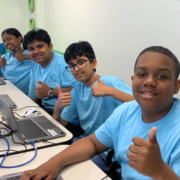
The third annual Virtual Junior Varsity National LifeSmarts Championship was held May 6th and 7th, with seventeen LifeSmarts State Junior Varsity Champion teams from across the country competing.  The LifeSmarts Junior Varsity level involves students who are currently in grades 6 – 8.

Teams of 4 to 5 students competed virtually in East and West Divisions with the top two teams in each division advancing to the semi-finals on Thursday, May 7th.  The winner of each semi-final competition advanced to the final competition match.

The teams from Georgia (Cobb County 4-H Junior Varsity, Georgia 4-H) and Missouri (Red – y to Win, Miller Middle School) were the East division semi-finalists while Nebraska (Cross County JV, Cross County Community Schools) and Colorado (Larimer County 4-H JV) were the West division semi-finalists. In very close semi-final matches, Georgia and Nebraska advanced to the 2026 Junior Varsity National Championship Finals.

In a hard-fought match where the lead went back and forth, Georgia won the Junior Varsity National LifeSmarts Championship title.  The Georgia team members are Navin Natarajan; Ky’Lan Mullins, Joy Patadia, and Tara Manickaraj, and coaches are Colleen Bakhsh and Kathleen McElroy.

The team earns the title of Junior Varsity National LifeSmarts Champion, LifeSmarts Champion medallions, a cash award for the team, and other prizes courtesy of LifeSmarts and LifeSmarts sponsors.

Nebraska took second place, with Missouri and Colorado tying for third place. Also competing in the National Championship were teams from Arkansas, California, Delaware, Florida, Idaho, Iowa, Kansas, Kentucky, North Dakota, South Dakota, Texas and Wisconsin.

LifeSmarts is the youth consumer education, leadership, and scholarship program run by the Washington, DC-based National Consumers League (NCL), the nation’s oldest consumer advocacy organization. It competitively tests junior high / middle school, and high school student’s knowledge of five topic areas including consumer rights & responsibilities, personal finance, health & safety, technology & workforce preparation, and the environment in online and in-person competitions using a quiz bowl-style format. LifeSmarts is available in all 50 states, the District of Columbia, and in partnership with student leadership programs including Student Government, 4-H, BPA, FBLA, FCCLA, and SkillsUSA. To learn more about, visit LifeSmarts.

Chocolate Scorecard 2026 Reveals Most Companies Still Failing Children and Cocoa Farmers —but Making Progress on Transparency

Media Contact: Lisa McDonald, Vice President of Communications, 202-207-2829

Washington, DC – The National Consumers League (NCL) and its organization, the Child Labor Coalition (CLC), are proud to participate in the Annual Chocolate Scorecard, an initiative coordinated by Be Slavery Free, an Australian coalition campaigning against modern slavery. This campaign aims to raise awareness about child labor in chocolate production, promote ethical sourcing, and empower consumers to choose chocolate that aligns with their values.

The Chocolate Scorecard evaluates 49 leading chocolate companies and retailers representing about 90 percent of the global cocoa supply chain. Now in its seventh year, the Scorecard shows meaningful progress in corporate transparency, especially on child labor reporting and farmer income. Yet most companies still fall short of ensuring that farmers earn a living income or of addressing the root causes of child labor.

“The chocolate industry can no longer hide behind promises or partial progress,” said NCL CEO Sally Greenberg. “If companies are serious about ending child labor, they must pay farmers fairly and invest in the communities that sustain their supply chains. Transparency is a start—but accountability is what will drive real change. The CLC calls on companies, policymakers, and consumers to use the Scorecard as a mandate for immediate action: demand concrete steps, clear timelines, and measurable progress in protecting children and ensuring farmer livelihoods throughout the chocolate industry.”

Participation has grown, and nearly all companies with relevant data now disclose their child labor practices. The share of farmers with “unknown” incomes fell sharply from 55 percent last year to 15 percent, greatly improving supply chain visibility.

A few companies, such as HALBA, demonstrate that ethical sourcing at scale is possible—HALBA earned top marks for living income, traceability, and sustainability. Across the industry, 80% of companies do not ensure a living income for farmers; 70% fall short on reducing pesticide risks, and most address symptoms rather than the causes of child labor. The Scorecard also recognizes a handful of companies making meaningful strides, including Original Beans, Coop, The Hershey Company, and Tony’s Chocolonely.

###

About the National Consumers League (NCL)  

The National Consumers League, founded in 1899, is America’s pioneer consumer organization. Our mission is to protect and promote social and economic justice for consumers and workers in the United States and abroad. For more information, visit www.nclnet.org

National Consumers League Urges Travelers to Act Quickly to Recover Funds Following Spirit Airlines Shutdown

Media Contact: Lisa McDonald, Vice President of Communications, 202-207-2829 

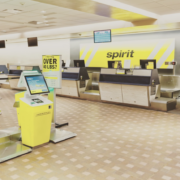
Washington, DC – In the wake of Spirit Airlines abruptly ceasing operations and canceling all flights, the National Consumers League (NCL) is advising affected travelers to take immediate steps to secure refunds and protect their financial interests. 

The sudden shutdown has left millions of passengers with unusable tickets and limited customer service options, while refunds for some purchases may be delayed or uncertain due to bankruptcy proceedings. Travelers who paid with vouchers, points, or cash may face longer recovery timelines, and frequent flyer miles may ultimately lose their value.  

“Not all Spirit customers should assume a refund will automatically appear,” said John Breyault, Vice President of Public Policy, Telecommunications, and Fraud at the National Consumers League. “When an airline shuts down this suddenly, it’s up to travelers to take proactive steps to have the best chance of getting their money back.” 

What Consumers Should Do Now 

NCL recommends that impacted travelers: 

  • Review your credit or debit card accounts
    According to Spirit, refunds for any flights purchased through Spirit with a credit or debit card will be automatically refunded to the original form of payment. Flyers with unused tickets purchased with a credit or debit card should monitor their accounts to ensure the refund is processed expeditiously. 
  • For tickets purchased via travel agents, contact the agent
    If you purchased your ticket through a travel agent (including online travel agents), they are responsible for providing you with a refund.  
  • Contact your credit card issuer
    If your refund is not processed in a timely manner, you should request a chargeback for services not rendered. Federal protections may allow you to dispute the charge.
  • Take advantage of capped and reduced ticket prices for rebooking flights
    The Department of Transportation has announced that United, Delta, JetBlue, and Southwest have agreed to temporarily cap ticket prices for impacted Spirit customers who need to rebook cancelled flights. Customers wishing to take advantage of these offers will need to provide their Spirit flight confirmation number and proof of payment. Some airlines are also offering discounted fares on certain former Spirit routes. Time periods to take advantage of these vary by airline, so passengers should act quickly. Additional details on what each airline is doing to support impacted Spirit customers are available here.
  • Check your travel insurance policy
    Some policies include coverage for airline insolvency or service cessation. Customers should review their policies and contact the insurance provider to file a claim. 
  • File a claim in bankruptcy proceedings if necessary
    Consumers who paid using any other method, including a voucher, credit, or Free Spirit points, may need to submit claims through the airline’s bankruptcy process, which can take significant time and may not result in full reimbursement.
  • Keep all documentation
    Save receipts, booking confirmations, cancellation notices, and any correspondence with the airline.
  • Act quickly
    Chargeback windows and insurance claim deadlines may be time sensitive. 

The shutdown also highlights broader challenges in the airline industry, where rising fuel costs, financial instability, and a lack of competition can leave travelers stranded with little warning. “The failure of Spirit Exhibit A for how difficult it is to break the Big 4 U.S. airlines’ stranglehold on the marketplace,” said Breyault. “As Congress looks to the next FAA reauthorization cycle, how to create real competition in this industry should be at the forefront of legislators’ minds.” 

### 

About the National Consumers League (NCL)      

The National Consumers League, founded in 1899, is America’s pioneer consumer organization. Our mission is to protect and promote social and economic justice for consumers and workers in the United States and abroad. For more information, visit www.nclnet.org