


Media Contact: Lisa McDonald, Vice President of Communications, 202-207-2829
Washington, DC — The National Consumers League applauds Governor Janet Mills and the Maine legislature for their notable legislation to stem the destructive effects of medical debt collection practices.
“Governor Janet Mills’ action sends a clear and unequivocal message: no patient should be financially punished for getting sick. By prohibiting liens and wage garnishment for medical debt, Maine has established a critical safeguard for working families. But this must be a starting point—not the finish line. We need comprehensive reforms that prevent medical debt before it begins, including stronger charity care policies, greater transparency, and real accountability from the institutions entrusted with patient care,” said Lisa Bercu, J.D., Senior Director of Health Policy, National Consumers League.
At a time when medical debt continues to drive millions of Americans into financial distress, Maine’s decisive action represents a meaningful and necessary advancement in patient protection. By banning some of the most harmful debt collection practices—specifically property liens and wage garnishment—the state has drawn a firm and principled line: access to healthcare should never come at the cost of losing one’s home or livelihood.
For too long, patients—particularly those confronting serious illnesses such as cancer—have been forced to navigate not only complex medical treatments, but also the looming threat of financial devastation. Research from the National Consumers League shows that aggressive medical debt collection practices remain widespread, even among institutions that benefit from the 340B program, which is intended to support vulnerable populations.
While Maine’s leadership is commendable, it also highlights the urgent need for broader, systemic reform. Safeguards against the most egregious collection tactics are essential—but insufficient on their own. Policymakers nationwide must take proactive steps to prevent medical debt from arising in the first place. This includes strengthening hospital financial assistance programs, ensuring patients are clearly informed of available aid, and holding healthcare providers accountable for using resources—such as 340B program savings—to directly benefit patients rather than funnel them into collections.
“Maine’s legislation contributes to the broader conversation of having patient rights grounded in compassion and common sense. Now, we call upon leaders across the country to follow suit and create a healthcare system where financial hardship is no longer an inevitable consequence of receiving medical care,” said Bercu.
###
About the National Consumers League (NCL)
The National Consumers League, founded in 1899, is America’s pioneer consumer organization. Our mission is to protect and promote social and economic justice for consumers and workers in the United States and abroad. For more information, visit www.nclnet.org.
Media Contact: Lisa McDonald, Vice President of Communications, 202-207-2829
Washington, DC — As March Madness reaches the Final Four—with billions of dollars on the line and millions of Americans placing high-stakes wagers—the National Consumers League (NCL) is warning that sports betting apps are doing more than fueling the excitement—they may be quietly draining consumers’ savings and damaging their financial health.
New research from the Federal Reserve Bank of New York shows that as sports betting expands, credit card delinquencies rise, credit scores fall, and bankruptcy rates increase—especially among younger and lower-income Americans.
At the same time, NCL’s 2025 report revealed how aggressively betting apps are pushing users to keep wagering. In a first-of-its-kind analysis, NCL found that 93% of all push notifications sent by the three largest sports betting apps over a four-week period contained advertising content—with many designed to prompt immediate bets.
“March Madness isn’t just entertainment anymore. Predatory gambling companies are constantly pressuring fans to spend more money when they should be having fun,”said Eden Iscil, NCL Senior Public Policy Manager. “Unlike TV, email, or text message ads, push notifications have no formal regulation, despite being very effective in capturing our attention. Advertising practices that are illegal over email have become normalized in smartphone apps. That’s not acceptable.”
NCL’s findings reveal how these notifications drive betting behavior:
Americans are expected to wager more than $3 billion on this year’s NCAA tournament alone.
To protect consumers during high-intensity betting moments like the Final Four, NCL is urging policymakers to act immediately: restrict sports betting advertising, especially marketing sent via smartphone push notifications.
NCL’s full report is available here.
###
About the National Consumers League (NCL)
The National Consumers League, founded in 1899, is America’s pioneer consumer organization. Our mission is to protect and promote social and economic justice for consumers and workers in the United States and abroad. For more information, visit www.nclnet.org.
The work of the National Consumers League is making a difference in people’s lives across the country. Meet some of the consumers touched by our programs.
Read about NCL’s impact
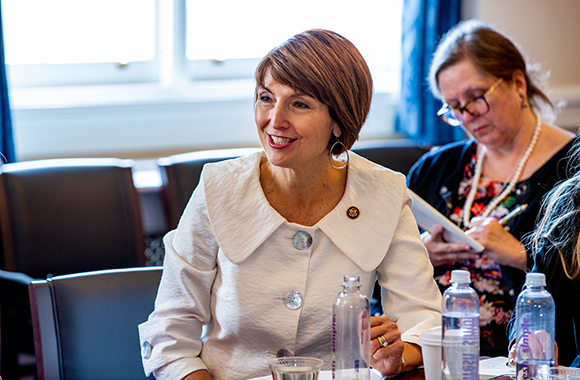
Paige, 55, a Nashville wife and mother of two, answered an employment ad for secret shoppers. Before sending payment to the scammers, she reached out to NCL.
Read about NCL’s impact
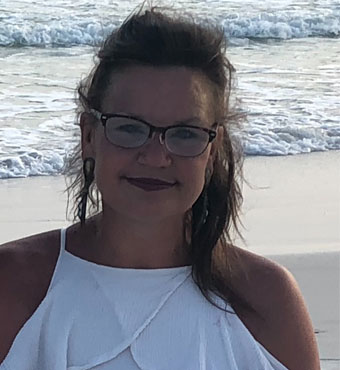
A grease fire flared up in Decklan’s kitchen. As his family scrambled and panicked, fearing that the whole house might erupt in flames, Decklan remained calm. He hurried over to the pantry, grabbed some baking soda, and dumped it on the fire quickly extinguishing the blaze.
Read about NCL’s impact

Cincinnati resident Charles, 45, lost his computer business — and health insurance— during a time of economic downturn. A diabetic, Charles was now unable to afford his medication. He stopped taking it which made him seriously ill and put his life at risk.
Read about NCL’s impact

Jeremy is a fast-food worker who has been employed at a number of Chipotle restaurants in New York City. When he was just 20 years old, he took part in an NCL research project that revealed that management practices within the fast food chain were putting workers—and food safety for customers—at risk.
Read about NCL’s impact





By Sally Greenberg, NCL Executive Director
While the COVID-19 pandemic has led to hardship for all Americans, it is clear that people of color have been disproportionately burdened. Across the health care continuum, addressing this disparity has become part of the broader conversation about the history of systemic racism and the underlying social determinants of health that negatively affect the mental, physical, and economic health of individuals and entire communities.
The pandemic has underscored persistent health disparities, and there is growing recognition that representation in research and clinical trials can have a profound impact on health outcomes. A lack of representation from racially and ethnically diverse groups in research and clinical trials have typically led to gaps in data, missing the opportunity to assess the full impact of various treatments and drugs across a range of populations. The collection and use of real-world research and data to inform the potential use, risks, and benefits of medical products and treatments can ultimately lead to better health outcomes, particularly for those who have been underrepresented in the past.
Existing efforts to improve inclusion
Efforts to expand diversity and representation in medical research are underway in Congress. Policymakers are encouraging the incorporation of Real World Evidence (RWE) in drug development through the recent Cures 2.0 draft legislation released by Reps. Diana Degette (D-CO-1) and Fred Upton (D-MI-6). While the status quo limits us from effectively reaching underserved populations, the proposed legislation would allow studies that include RWE for some drugs after they have been approved. At the heart of this issue is a growing appreciation that the same therapy can affect different populations in different ways, which is why Cures 2.0 supports collecting data that more accurately reflects the unique experiences and needs of patients across diverse populations.
Recognizing the potential for RWE in maternal health
The lack of representative research in the field of maternal health is undeniable, and its implications are staggering. The dismal state of maternal care in the United States reflects how our health care system has failed women of color, including by not adequately studying treatment options to prevent maternal morbidity and mortality. The need for RWE is clear when you consider the persistent disparities in health outcomes that plague minority communities.
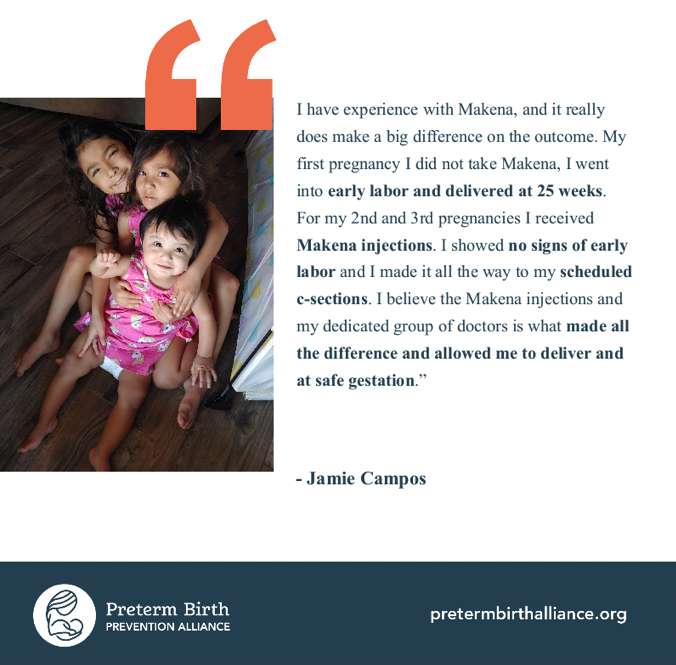
Preterm birth and its disproportionate impact on women of color is a stark illustration of the need to make progress on representative research in maternal health. Preterm birth is the second-largest contributor to infant death in America today. Despite the tremendous physical, emotional, and financial toll that preterm birth continues to take on our country — disproportionately so on women and families of color — not enough therapeutic tools currently exist to prevent it.
Today, “17P,” the only FDA-approved treatment to help reduce the likelihood of spontaneous, recurrent preterm birth in the United States is at-risk of being withdrawn from the market in all its forms, including the branded product and five generic versions. Unfortunately there is conflicting evidence from two different clinical trials, one representative of a diverse U.S. population and another studied in a largely white population in Europe. It’s not a straightforward comparison. If 17P is withdrawn, the women most affected by preterm birth, predominantly women of color, would be left without an FDA-approved treatment option.
The FDA is considering the path forward, including additional data collection through leveraging RWE from past patient use. The success of the first (approval) trial for 17P in the impacted communities signals the importance of RWE. Continued access to 17P is, at its core, a matter of health equity. Black women must not yet again be left vulnerable to a system that historically has overlooked them.