
NCL Urges Conditions on Any Spirit Bailout

Media Contact: Lisa McDonald, Vice President of Communications, 202-207-2829 

 Washington, DC – NCL, the Consumer Federation of America, and the Revolving Door Project are urging the Trump Administration to ensure any potential bailout of Spirit Airlines includes consumer and worker protections as well as prohibitions on stock buybacks and excessive executive compensation. The groups also advocated against industry lobbying to waive certain taxes that fund critical American air traffic infrastructure.  

“This is just the latest chapter in a decades-long story of consolidation, bankruptcy, and market failure in the air travel industry,” said NCL Vice President of Public Policy, Telecommunications, and Fraud John Breyault. “If the government is going to prop up Spirit, it needs to act on behalf of the public, not the C-Suite.” 

Recent news reports have claimed that the Trump Administration is considering providing $500 million in public funds for Spirit. In the federal government’s bailout of airlines during the President Trump’s first term, financial aid was conditioned on worker protections and a prohibition on stock buybacks. Such standards should be the baseline going forward should the government decide to intervene again. The organizations also urged the Department of Transportation to ensure Spirit passengers are taken care of should the airline suddenly be unable to continue operating.  

The full letter to DOT can be found here.   

Additional reading: 

### 

About the National Consumers League (NCL)      

The National Consumers League, founded in 1899, is America’s pioneer consumer organization. Our mission is to protect and promote social and economic justice for consumers and workers in the United States and abroad. For more information, visit www.nclnet.org.   

NCL Urges DOT Investigate Airline Pricing 

Media Contact: Lisa McDonald, Vice President of Communications, 202-207-2829 

Washington, DC – In the wake of JetBlue Airways’ apparent admission of surveillance pricing to determine airfares, NCL and six other public interest organizations are urging the U.S. Department of Transportation to investigate the industry’s pricing practices. Airlines have long used confusing pricing algorithms that make the ticket-buying experience frustrating for travelers. Every major airline has made news in the past two years for their dynamic pricing practices, including rollouts of AI-set prices in 2025 and allegations of price gouging targeting travelers escaping Hurricane Milton in 2024.  

“Budgeting for airline tickets shouldn’t be a guessing game,” said NCL Vice President of Public Policy, Telecommunications, and Fraud John Breyault. “There is too much confusion around what consumer data these companies use to set their prices and what we can do about it. It is time for DOT to step up and get to the bottom of this.” 

After a consumer complained that the price of a JetBlue plane ticket to attend a funeral unexpectedly jumped $230, the carrier suggested tips to reduce the amount of data the business collects from its consumers. JetBlue later deleted its response, claiming that a representative misspoke. This was the latest in years of contradictory and unclear statements from airlines regarding what data they do and do not use to set airfares. DOT has authority to investigate airline pricing practices and to intervene to prevent consumer harm.  

In addition to the National Consumers League, the Center for Digital Democracy, Consumer Action, the Consumer Federation of America, the Electronic Privacy Information Center, FlyersRights, and U.S. PIRG joined the letter. The full letter to DOT can be found here 

Additional reading: 

### 

About the National Consumers League (NCL)      

The National Consumers League, founded in 1899, is America’s pioneer consumer organization. Our mission is to protect and promote social and economic justice for consumers and workers in the United States and abroad. For more information, visit www.nclnet.org.   

 

Strengthening the Consumer Voice Across the Atlantic

By Sally Greenberg, NCL CEO

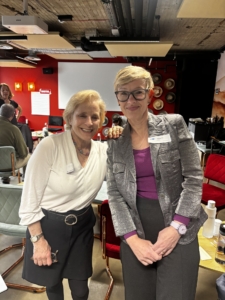
This week, I had the pleasure of attending the Transatlantic Consumer Dialogue (TACD) meeting in Brussels. TACD provides a formal mechanism for U.S. and EU consumer representatives to contribute to transatlantic policy discussions, negotiations, and agreements, while also advancing the consumer perspective in international forums. The organization plays a critical role in ensuring that policy dialogue between the United States and Europe promotes consumer welfare and reflects the real-world impact of decisions on people’s daily lives.

The meeting offered a unique opportunity to spend time with consumer advocates from both Europe and the United States—comparing notes on shared challenges and learning from one another’s experiences. We also met with European officials to discuss their priorities for the coming year. Notably, the Trump Administration declined to send representatives, marking a departure from past administrations that have participated in these important conversations.

As always, a key issue on the agenda was how to counter ongoing efforts by big tech companies and other industry groups to weaken consumer protections. In that context, I am continually inspired by my colleagues, whose creativity and determination have led to meaningful wins for consumers. Their work often sparks new ideas for legislation and regulation to create a more level playing field.

For example, in the United Kingdom, regulators have introduced new rules banning “drip pricing”—fees added late in the purchasing process that obscure the true cost of goods and services. In the United States, we commonly refer to these as “junk fees.” I was also reminded of the stronger airline passenger protections in the European Union—protections we still lack here at home, despite efforts to advance similar measures through proposals like the FAIR Fees Act.

Across both sides of the Atlantic, consumers face a familiar set of challenges: digital services that collect and sell personal data, rising costs for essentials like food and housing, product safety concerns, and business practices that trap consumers in automatically renewing contracts with no easy exit. Hidden fees continue to proliferate—from rideshare “booking fees” to salon “convenience charges” to daily resort fees added to hotel bills at checkout. Airfare prices remain strikingly high, and live event ticketing is increasingly dominated by excessive fees and systems that favor companies like Ticketmaster and secondary sellers at consumers’ expense. Our responsibility is to call attention to these practices and advocate for laws and regulations that rein them in.

Finally, I want to recognize the dedicated TACD staff—Lea Auffret, Oriana Henry, and Kirke Siimso—who bring together dozens of consumer leaders from both sides of the Atlantic. They expertly coordinate logistics, organize meetings with officials, and ensure everything runs seamlessly.

Each TACD meeting is an energizing reminder of the importance of this work—and of the collective strength of those committed to protecting consumers.

Georgia Floyd County 4-H Team Wins the 2026 Varsity LifeSmarts National Championship

Media Contact: Lisa McDonald, Vice President of Communications, 202-207-2829 

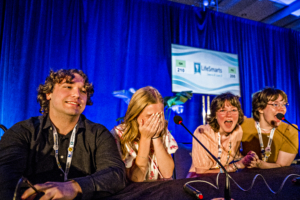
Orlando, FL – The Floyd County 4-H Team was crowned the 2026 Varsity LifeSmarts National Champions in Orlando, Florida. Coached by Phyllis Allee and Abbie Salmon, the winning team consisted of Joe Rutledge (12th grade), Abigail Moon (12th grade), Tabitha Smith (11th grade), Finley Smith (9th grade).

The 2026 LifeSmarts National Championship competition featured 46 teams from 32 states and the District of Columbia vying for the national title. LifeSmarts, a program of the National Consumers League (NCL), continues to provide students with the tools and knowledge needed to navigate today’s complex, global marketplace.

Congratulations to the Floyd County Georgia 4H students on their victory,” said NCL CEO Sally Greenberg. “Your enthusiasm, knowledge, and teamwork truly blew everyone away. We are beyond proud of you and can’t wait to see all the amazing things you’ll accomplish next. Way to represent Floyd County, Georgia!”

LifeSmarts has empowered teens for more than 30 years, teaching vital skills like financial literacy to create savvy, market-ready consumers. High schools often miss these life lessons, but LifeSmarts ensures students are ready for college, careers, and independence.

LifeSmarts contributors include Amazon, American Express, CBM Credit Education Foundation, Comcast, Experian, FICO, Gen, JPMorgan Chase, Kenvue, Melaleuca, Meta, SmartNews, and Tide.

###

LifeSmarts: Learn it. Live it.

LifeSmarts is a program of the National Consumers League. State coordinators run the programs on a volunteer basis. For more information, visit https://LifeSmarts.org or email lifesmarts@nclnet.org.

Trumpeter Awards 2026

Lower Prices, Real Savings: Competition Is Key at the Pharmacy Counter

Media Contact: Lisa McDonald, Vice President of Communications, 202-207-2829
Washington, DC — The National Consumers League (NCL) today welcomed the Senate HELP Committee’s hearing on generics and biosimilars as an important bipartisan step toward lowering prescription drug costs through increased competition.
“For patients, lower drug prices only matter if they translate into real savings at the pharmacy counter,” said Lisa Bercu, Senior Director of Health Policy at the National Consumers League. “A competitive market for generics and biosimilars is critical to delivering lower-cost options to patients and driving down prescription drug prices, and this hearing is an important step toward making that a reality.”

For patients and families, generic drugs and biosimilars can mean the difference between accessing needed treatment and going without. But realizing those savings depends on policies that support a robust and viable market—one where lower-cost alternatives can enter, compete, and reach patients. Today, significant barriers continue to delay competition and limit savings for consumers, including a biosimilar “void” where lower-cost options have failed to materialize.

NCL encourages policymakers to focus on practical, high-impact steps to strengthen competition, including:

  • Removing unnecessary barriers to biosimilar uptake, including outdated distinctions that create confusion for patients and providers;
  • Protecting and accelerating generic and biosimilar entry, including targeted fixes to address challenges with skinny labeling and other unintended barriers to competition; and
  • Curbing practices that limit competition, such as patent gaming and other strategies that extend monopolies beyond their intended scope.

A strong and sustainable market for generics and biosimilars is essential to delivering meaningful, long-term savings for consumers. NCL urges lawmakers to build on this hearing with targeted reforms that increase competition, improve access, and ensure patients benefit from lower-cost treatment options.

### 

About the National Consumers League (NCL)      

The National Consumers League, founded in 1899, is America’s pioneer consumer organization. Our mission is to protect and promote social and economic justice for consumers and workers in the United States and abroad. For more information, visit www.nclnet.org.   
Verdict Opens the Door to Lower Prices, Transparency, and Real Competition

Media Contact: Lisa McDonald, Vice President of Communications, 202-207-2829 

Washington, DC“Today’s verdict confirms what millions of fans already knew: Live Nation and Ticketmaster used their dominance to build and protect an illegal monopoly at the direct expense of consumers,” said John Breyault, Vice President of Public Policy, Telecommunications, and Fraud at the National Consumers League. “For years, concertgoers have been stuck paying inflated prices and excessive fees in a marketplace where competition was pushed aside. This ruling must be a turning point—and policymakers should move quickly to break up this stranglehold and restore real competition, transparency, and fair prices for fans.

The National Consumers League (NCL) welcomes today’s landmark jury verdict finding that Live Nation and its Ticketmaster subsidiary maintained an anticompetitive monopoly over major concert venues and ticketing.

For years, NCL has warned that Live Nation’s dominance—spanning concert promotion, venue ownership, and ticketing—has distorted the marketplace, limited consumer choice, and driven up prices for fans across the country. Evidence presented at trial showed the company used its market power to deter venues from working with competing ticketing services, reinforcing its grip on the industry and inflating costs.

Today’s verdict is a critical step toward accountability. By affirming that Live Nation’s conduct violated antitrust laws, the jury has opened the door to meaningful remedies that could finally rebalance the live event marketplace.

NCL urges the court and policymakers to pursue strong remedies that restore competition, increase transparency in ticket pricing, and ensure that consumers are no longer subjected to excessive fees and limited choices when purchasing tickets.

Concertgoers deserve a fair, competitive marketplace—not one dominated by a single company with the power to dictate prices and terms across the industry.

### 

About the National Consumers League (NCL)      

The National Consumers League, founded in 1899, is America’s pioneer consumer organization. Our mission is to protect and promote social and economic justice for consumers and workers in the United States and abroad. For more information, visit www.nclnet.org.   
NCL Urges FTC To Revive Click To Cancel In New Proceeding

Media Contact: Lisa McDonald, Vice President of Communications, 202-207-2829 

Washington, DCYesterday, the National Consumers League (NCL), the Consumer Federation of America (CFA), and the National Consumer Law Center (NCLC) submitted comments in response to a renewed Federal Trade Commission (FTC) effort to update its 1973 Negative Option Rule. The three public interest organizations urged the agency to fully address the modern subscription environment, including requiring subscription cancellation to be as easy as signing up, addressing unwanted conversions of free trials into paid subscriptions, and requiring notice consumers before each recurring charge.

“Click to cancel is commonsense policy, plus its extremely popular,” said NCL Senior Public Policy Manager Eden Iscil. “The FTC is doing the right thing in refreshing its outdated Negative Option Rule. Now we need to make sure the FTC doesn’t hold back from using its full authority to protect the public from predatory business practices. At a minimum, updates to the rule should include a click to cancel component.”

In 2024, the FTC had finalized a modernization effort for the antiquated Negative Option Rule, including a “click to cancel” provision requiring cancellation to be as easy as signing up. A panel of federal judges had struck down the updated rule in 2025 on procedural grounds. The Commission’s 2026 initiation of a new regulation on negative option plans provides the agency with an opportunity to revive the Click to Cancel Rule as finalized in 2024, but the FTC has not yet confirmed that it intends to do so.

NCL, CFA, and NCLC were extensively involved in the promulgation of the 2024 Click to Cancel Rule, including filing an amicus brief to support the regulation in the court. The FTC’s 2026 rulemaking effort on negative option plans comes after CFA and the American Economic Liberties Project submitted a formal petition for the FTC to revive the Click to Cancel Rule, which was supported by NCL.

NCL, CFA, and NCLC’s full comments in the proceeding can be found here.


### 

About the National Consumers League (NCL)      

The National Consumers League, founded in 1899, is America’s pioneer consumer organization. Our mission is to protect and promote social and economic justice for consumers and workers in the United States and abroad. For more information, visit www.nclnet.org.