NCL officially launches the Script Your Future campaign! – National Consumers League

Yesterday, NCL launched the Script Your Future campaign to a packed GW Hospital auditorium. NCL Executive Director Sally Greenberg gave the opening remarks and introduced keynote speaker, U.S. Surgeon General Dr. Regina Benjamin.

Fellow panelists included Assistant Professor of Medicine at Harvard Medical School, Dr. William Shrank, Assistant Professor at the University of Maryland School of Pharmacy, Cherokee Layson-Wolf, and patient and Heart Health Advocate, Ron Michaud.

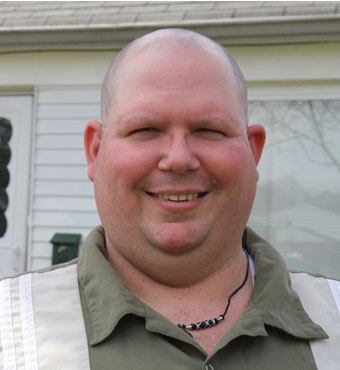
NCL Executive Director Sally Greenberg, U.S. Surgeon General Dr. Regina Benjamin, and patient and Heart Health Advocate Ron Michaud

ScriptYourFuture.org, the campaign’s centerpiece site, went live and audience members were introduced to the website’s many features, including free text message medication reminders, sample questions to ask health care professionals, lists and charts to keep track of medicines, videos on how to properly use certain medical devices, and fact sheets on chronic conditions like asthma and high cholesterol.

NCL also debuted two campaign television spots: a PSA featuring the Surgeon General and the motivational, patient-focused “I Will” ad.

For a more complete run through of yesterday’s launch, please click here. If you’d like to view the live stream of the launch, visit our Facebook page by clicking here.

[youtube=https://www.youtube.com/watch?v=6KoRLv5WzrA&feature=fl_lolz&playnext=1&list=FLbFRYUGfC95E]

[youtube=https://www.youtube.com/watch?v=WIO4tiH1_gw]

NCL unveils the Script Your Future campaign! Watch live! – National Consumers League

NCL is proud to announce that Script Your Future, our national public education campaign, launches today! The campaign is designed to help consumers take back their health by helping them take their medicine as directed.

The U.S. Surgeon General, Dr. Regina M. Benjamin, will help kick off the campaign at The George Washington University Hospital. Watch the live stream on our Facebook page or on our Ustream page starting at 11 am!

Non-adherence, or failing to take medicine as directed, is a growing problem in the Unites States. Research shows that three out of four Americans are non-adherent and approximately 125,000 deaths per year in the U.S are linked non-adherence.

To combat this troubling trend, the centerpiece of the first-of-its-kind, multi-year campaign is the www.ScriptYourFuture.org website, which provides tools to help patients follow their prescribed medication schedule. The site includes a variety of helpful features such as free text message reminders, sample questions, medication lists and charts to keep track of medicines, and fact sheets on common chronic conditions such as diabetes, asthma and high blood pressure.

Today’s launch introduces the consumer face of the campaign. A companion site with adherence tools for health care professionals, www.ScriptYourFuture.org/HCP, was launched in March.

For more information on the importance of medication adherence click here to view the briefing paper co-authored by NCL and Duke University.

What Bin Laden’s death means to women – National Consumers League

By Sally Greenberg, NCL Executive Director

When President Obama went on TV to announce that Osama bin Laden had been killed by American Navy Seals, I was in Los Angeles at NCL’s national LifeSmarts competitions. Over the last few days I’ve been thinking about why this is such a critically important event for me, my friends, and colleagues. After all, as the Executive Director of the National Consumers League, I’m a consumer advocate and a labor supporter; we don’t work on foreign policy issues unless they affect child labor. Last I checked, Al Qaeda’s issues weren’t affecting child labor issues. So, how could his death have any real relevance to what we do at NCL?

But last Monday night, as I met three other working women in Phoenix for dinner to prepare for an important meeting the next day, I realized the answer to why bin Laden’s death is so significant: because a world ruled by bin Laden and his followers in Al Qaeda represents a life of repression and subjugation for women and girls.  That my colleagues and I have the freedom to pursue careers, travel, raise children and earn a living is a world unknown to the women in bin Laden’s world.

In fact, bin Laden took refuge in Afghanistan when it was run by the Taliban, the notorious regime that, immediately upon taking power, forbade girls to go to school. Bin Laden had a close working relationship with Al Qaeda. Under the Taliban, women were barred from working outside the home, precipitating a crisis in healthcare and education. Women were also prohibited from leaving their home without a male relative—those that did so risked being beaten, even shot, by officers of the “ministry for the protection of virtue and prevention of vice.” A woman caught wearing fingernail polish may have had her fingertips chopped off. All this, according to the Taliban, was to safeguard women and their honor.

So the death of Osama bin Laden means that the key iconic leader of this repressive, anti-American political movements gone. So as four working women – my three dinner companions were all very accomplished women –  sat at a lovely Phoenix restaurant on Monday and discussed the news of Osama’s death, I took satisfaction in the freedoms we women in the Western world enjoy but so often don’t stop to appreciate.
Moin Kahn’s Tragic Death May Help other children in India – National Consumers League

By Reid Maki, Child Labor Coalition Coordinator, National Consumers League

Moin Khan isn’t a name known by most Americans, but it should be.

Moin Khan went to work in New Delhi at age seven—one of several million child laborers working in India (estimates by advocacy groups of the number ofchildren working in India range from 44 million to 100 million, according to the U.S. Department of Labor).

Moin’s case stands out though because he had a particularly brutal employer—his uncle, Kalimullah Khan —allegedly beat him to death with a blunt weapon on April 16 because the boy was working too slow.
Moin was only 10 when he was murdered.

Three years earlier, the Moin left his home on a train and traveled to New Delhi, about 300 miles away, in a deal arranged between the uncle and the boy’s grandfather. For the last three years of his life—for the rest of his life– Moin did not see his parents. He worked tirelessly, rolling bidis or beedes—thin cigarettes popular in India. Imagine a seven-year-old bent over 14 hours a day working feverishly at a repetitive task and you may start to sense what Moin’s new life was like. But the reality was even worse than you might imagine.

“Kalim was a really bad man. He beat up all of us if we made the smallest of mistakes. His punishments were severe,” said a seven-year-old boy rescued when Khan was arrested.

“He would put hot iron rods into our pants or he would hang us upside down from the fan or even throw us hard on the floor,” added the boy, one of five children who worked in the factory. “We were not allowed to go out or talk to anyone.”

On the day he killed his nephew, Kalimullah Khan beat all five children he “employed,” including Moin’s brother who is mute. Employed is in quotes because many child laborers in India do not get paid. Many are, in fact, slaves.

The sad details of Moin’s life were only discovered because a mortician noticed horrible bruises all over the young boy’s body and called authorities.

One wonders how many more children are being abused like Moin.

In the wake of Moin’s death, vigils have been held in New Delhi and a bright light has shown on exploitative child labor which is technically illegal in India. To improve enforcement, authorities just announced that they will be adding a hotline in New Delhi. India also banned child labor in circuses last month.

The public and officials in India are increasingly aware of child labor horrors. Moin Kahn did not intend to make his tragic death stand for something, but it has.

Readers interested in child labor should visit the web site of the Child Labor Coalition (CLC), which is co-chaired by the National Consumers League and the American Federation of Teachers. News from the CLC may also be followed under the Twitter name ChildLABRcoaltn.

LifeSmarts in Hollywood – National Consumers League

Hello from sunny Southern California! NCL and LifeSmarts staff have arrived at the Sheraton Universal in Universal City, CA, where 33 teams are en route to compete at the 2011 National LifeSmarts Championship event.

Can’t join us in Hollywood? Follow the action online:

2011 National LifeSmarts Championship official event blog

Final day of competition streaming live online, Tuesday, May 3 at noon Eastern / 9 am Pacific

Follow us on Twitter for live score info

Become an NCL and LifeSmarts Facebook fan

The power of a seal of approval – National Consumers League

When NCL was founded in 1899, one its primary objectives was to achieve better working conditions for workers across the country; the League’s first constitution states, “goods [should] be produced and distributed at reasonable prices and in adequate quantity, but under fair, safe, and healthy working conditions that foster quality products for consumers and a decent standard of living for workers.”

NCL White LabelFlorence Kelley, NCL’s first leader, created the NCL White Label campaign to promote decent working conditions by encouraging the sale of products produced under a set of regulatory guidelines. The League implemented a system of inspecting production sites and offered the NCL White Label to products that met the League’s requirements. The League also educated consumers about the negative effects of subsidizing sweatshop labor and urged consumers to boycott goods that failed to carry the label. Eventually, much of the league’s legislative agenda – including a minimum wage and the abolition of child labor – was enacted, forcing manufacturers to reform their abusive production practices.

GoodWeave labelToday, *GoodWeave is conducting a similar, outstanding campaign also aimed at eradicating child labor. According to the organization’s website, GoodWeave was founded on a simple premise: If enough people demand certified child-labor-free rugs, manufacturers will employ only skilled, adult artisans, and children will no longer be exploited in the carpet industry. GoodWeave inspects and certifies carpet-weaving facilities and offers its trademarked label to rugs that meet its production standards. However, the nonprofit’s work goes beyond certification, the group also rescues children directly from the looms, helps fund educational opportunities for children, and provides resources for weaving families and communities.

GoodWeave is a member of the NCL co-chaired Child Labor Coalition. Click *here to watch a recent CNN news clip or view the video below to learn more about GoodWeave’s valuable work and mission.[youtube=https://www.youtube.com/watch?v=xVsxCT8ogb0]

*Links are no longer active as the original sources have removed the content, sometimes due to federal website changes or restructurings.

Advocates to CPSC, industry: making window blinds safer an easy fix – National Consumers League

By Sally Greenberg, NCL Executive Director

It’s hard to believe that something as seemingly benign as a window blind shade could kill a child, but as a recent New York Times story illustrated, we haven’t yet solved the fatal hazard window blinds present to children. Andrew Martin’s Times story is a cautionary tale about what happens when regulators wait and wait for industry to get off the dime and design a safer product. It doesn’t happen without regulatory pressure toward a mandatory standard.

As Martin’s story illustrates, regulators have been aware of the hazards of window cord blinds since at least the early 1980s, when a federal study to determine the causes of child strangulation tied 41 deaths to drapery and blind cords. Everything from warnings to discontinuing certain styles like horizontal blinds with pull cords ending in a loop, to other fixes like a breakaway device, have been tried. In fact, one manufacturer, Comfortex, produced an ad that highlighted its own solution to the cord problem. Comfortex advertised: “In 1996, only one company offered a real solution to the problem of injuries due to cords. While the industry searched for ways to make cords safer, Comfortex found a way to make shades without cords.”

Over a period of many years, the Consumer Product Safety Commission (CPSC) has been talking about cracking down on the industry and insisting on a cord-free design. Corded window blinds continue to present dangers to kids. It seems that no matter how well the cords on these blinds are hidden, when a child’s crib or bed is near a window with such a blind, the danger that the child will reach into the window blind and become entangled in the cord is always present.

For years, CPSC has asked manufacturers to devise a way to eliminate the risks from window cords or face the possibility of mandatory regulations. But manufacturers have dragged their feet on addressing safety hazards for decades, making minor tweaks or putting the onus on parents to shorten cords or buy tie-down devices.

CPSC has a task force to look at the issue. As an NCL friend and safety expert Carol Pollack-Nelson told the Times, “It was my understanding that we were eliminating the hazard. Now they are talking about reducing the hazard. We don’t want reduced strangulation. We want no chance of it.” We agree with Carol.

As the Times story also noted, a solution has been available for several decades: cordless blinds. The industry has testified that the additional cost of making a cordless blind is $1 to $2. And industry says cordless blinds are more difficult to manufacture than corded blinds.

Are these extra cost and other concerns worth the cost of a child’s life? Talk to parents who’ve lost a child – or seen their child suffer brain damage from being entangled in a window blind cord – and the answer will be, unequivocally yes. Would any of us disagree if our own children’s lives were in question?

The CPSC should stop pussyfooting around. We have a product that with a pattern of injury, there’s a technology to make it safe, and doing so is not prohibitively expensive. After years of handwringing, the CPSC should move forward at long last and put a mandatory standard in place for window blinds. No child should have to die because regulators and industry can’t make a simple decision to adopt a safer design for window shades.

It’s National Parks Week! – National Consumers League

If you are fortunate enough to live close to a national park, consider getting out there and discovering something new about one of the 394 national parks in the United States.

For one year each week, the National Park Service waives admission fees in order to encourage people can affordably witness the connection between human and environmental health and the vital role America’s national parks play in both.

Did you know that America’s national parks aren’t just protected forests and deserts? The National Park Service is the U.S. federal agency that manages all national parks, many national monuments, and other conservation and historical properties with various title designations. It was created on August 25, 1916, by Congress through the National Park Service Organic Act.

Whether you prefer a 20-mile backcountry hike in Yosemite or a leisurely stroll around Philadelphia’s Independence Hall, moving outside is good for you and offers a chance to explore these places you own. Search the events calendar to find your National Park Week “must-dos,” and share your national park experience

Lessons to be learned from a newsworthy medical malpractice case – National Consumers League

By NCL Executive Director Sally Greenberg

Medical malpractice and abuse of the government payment systems tend to go hand in hand, but the medical profession rarely blows the whistle on its own members. Vishal James Makker, a Portland, Oregon doctor, has finally lost his operating privileges after an investigation – launched by the Wall Street Journal – showed that he performed multiple spinal fusion surgeries on the same patients and billed Medicare for huge reimbursement charges. Makker is also facing multiple malpractice lawsuits, with one filed last week, for a total of 9 such suits in seven years. What’s interesting here is that the medical profession does such a poor job policing itself; several years ago the Oregon Board of Medicine, clearly perceiving that Dr. Makker’s surgeries were subpar, forced the doctor to undergo remedial training for unnecessary surgeries and billing for procedures he didn’t perform. But they let him continue practicing.

The result is that Dr. Makker continued to harm patients with unnecessary and harmful surgeries while bilking the government to cover the cost. From January 2009 to May 2010, Dr. Makker was performing two to three surgeries a week—the highest rate of spinal fusion surgeries among 3,407 surgeons who performed the procedure on 20 or more Medicare patients in 2008 and 2009. Dr. Makker’s rate was ten times the national average. He operated on some of his patients as many as seven times.

Further adding to the intrigue is the fact that Makker had a sweetheart deal with a spinal implant maker, which gives financial incentives to doctors who use its products in their surgeries. The Wall Street Journal says that the surgeon received $519,674 from the spinal implant manufacturer in a year and a half’s time.

There are a couple of lessons to be learned from this scenario. First, the American Medical Association fights medical malpractice lawsuits with a vengeance but doctors do a lousy job of policing their own. A tiny percentage of doctors commit the vast majority of malpractice and physicians know who are the bad apples are, but, as with Dr. Makker, they don’t police them effectively. This doctor is under scrutiny largely because of a newspaper article. The second lesson to take from the Makker case is that it’s unhealthy to have doctors get financial rewards to do more surgeries with a manufacturer’s devices. It puts all the wrong incentives in place.

Lastly, as Congress debates deep cuts in Medicare, policing doctors who abuse the system by overbilling for unnecessary procedures would save many millions. That’s a far better approach than punishing patients who rely on Medicare for their health care.

Food manufacturers’ claims ‘ripe’ with deception – National Consumers League

When you reach for a bottle of spaghetti or pizza sauce at your local supermarket, would you rather the product be made from fresh, California vine-ripened tomatoes or reconstituted from industrial tomato concentrate? Food manufacturers like Del Monte and Contadina are guessing you prefer fresh ingredients in your food, and are going so far as to place false, misleading labeling on some of their products to entice consumers to buy them.

Unscrupulous food manufactures slapping inaccurate statements on their products to justify premium prices is nothing new. In the tomato sauce industry, concentrated tomato paste is often mixed with water to produce a common, accepted, and budget-friendly tomato sauce, and the ingredients list on such a product should indicate a concentrate was involved. If a product made from concentrate, however, includes claims such as “packed full of premium vine-ripened tomatoes,” “select 100% California tomatoes” and “packed in season,” these are deceptive practices under federal food labeling law.

NCL has been keeping an eye on this “from concentrate” and other food labeling issue for decades. In 2009 NCL wrote to the FDA asking the federal watchdog to crack down on misleading claims on tomato sauces. Products that NCL points to as deceptively labeled today include:

  • Del Monte Seafood Cocktail Sauce that claims “Made from California Vine-ripened Tomatoes” on the front of the package when, in fact, it is made from concentrate (tomato paste and added water). An image of a vine-ripened tomato appears directly below the claim.
  • Classico Tomato & Basil Pasta Sauce that states on the label “In colorful Naples, pasta sauces are pure and simple, with ripe, red tomatoes…” when the product is actually made from concentrate. The claim has been deleted from new “value size” jars of the sauce, but still appears on the label of the regular size product.
  • Contadina Pizza Sauce and Contadina Puree that state “Contadina picks the Freshest Tomatoes,” and “Our vine-ripened Roma style tomatoes are grown to a rich red color before picking…”

Back in 2009 NCL wrote to FDA to urge the agency to warn the food industry that claims implying that products are made from fresh ingredients when they are actually made from concentrate are deceptive under federal law. NCL also requested that FDA require that all fruit and vegetable products remanufactured from concentrate state “From Concentrate” on the fronts of food packages.

NCL is happy to report that since issuing the FDA complaint, the largest producer of tomato sauces, ConAgra Foods, has taken some corrective steps. The company’s Hunt’s brand removed the claim “Packed full of premium vine-ripened tomatoes” from its tomato sauce label, and the words “packed in season” were removed from the company’s Angela Mia Pizza Sauce label. Other misleading claims remain and work still needs to be done, but ConAgra has taken strides in the right direction.

In tough economic times, when consumers are still carefully monitoring their budgets and fuel and food prices continue to rise, having accurate pricing and product information is more important than ever; there is simply no room for duping consumers with false product information.