Triangle Factory Fire legacy commemorated in Washington, DC – National Consumers League

By Sally Greenberg, NCL Executive Director

Monday the National Consumers League paid tribute to the victims of the Triangle Shirtwaist Factory Fire that took place 100 years ago. This Friday, March 25th, is the 100th anniversary of the infamous New York City fire that took the lives of 146 immigrant men and women, some of them as young as 14 and 15 years old.

The fire changed the course of labor history and opened the nation’s eyes to the terrible and abusive working conditions of millions of their fellow citizens. The shocking way the victims died helped to bring about a sweeping series of workplace reforms and fire safety codes that caught on across the country. NCL has a special relationship to the fire because Frances Perkins, who went on to become the first female Secretary of Labor under Franklin Delano Roosevelt, was working for NCL in New York City at the time of the fire and witnessed with her own eyes the sight of young women leaping out the building’s upper-story windows. Perkins took her experience to the New York State legislature to bring these reforms to fruition, this fire affirmed her lifetime commitment to bettering conditions for working men and women.

Monday’s symposium – which drew more than 100 attendees – (see the full program) started out with a Senate Resolution, read by a member of New York Senator’s Kirsten Gillibrand’s staff, commemorating the fire and passing unanimously in the Senate. The first panel featured historians and writers who reflected on the working and labor conditions at the time of the fire in New York City. Moderated by the head of the Women’s Bureau at the Department of Labor, panelists included Joe McCartin of Georgetown University, Robyn Muncy of the University of Maryland, and Kirstin Downey, former Washington Post business reporter and author of a wonderful biography of Frances Perkins. Panelists discussed the conditions of immigrants working in factories like Triangle, where, in fact, workers were better off than many sweatshop workers, earning up to $5 a week and getting Sundays off. But the largely young immigrant women had struck the plant the year before the fire and earned better working conditions and higher wages. This was the first major women’s strike in the history of the United States.

The second panel focused on workplace conditions today and was moderated by American Rights at Work’s Kim Freeman Brown. Panelists talked about injuries among hotel workers that render them unable to use one arm or shoulder because of their constant need to lift heavy mattresses. Association of Farmworker Opportunity Programs’ Norma Flores described her experience as a farmworker child, spending sometimes 12 hours at a time working under a hot sun, without access to toilet facilities. And Judy Gearhart of the International Labor Rights Fund described working conditions in Bangladesh, where severe fires in factories that have taken many lives.

Before lunch, we watched the film made for this event, TRIANGLE’S ECHOES: The Unfinished Struggle for Worker Protection, Safety and Health and then we heard a sobering address from “Goose” Stewart – a miner who survived the Massey Mine Collapse, which took place less than a year ago and killed 29 of his fellow miners. He brought a tear to many in the packed audience.  And we had a rousing lunchtime speech from Cecil Roberts, President of the United Mine Workers, followed by a “Call to Action” as the program was brought to a close.

Co-sponsoring organizations at the event included a cross-section of labor, consumer, civil rights, progressive student, and environmental groups: AFL-CIO; Alliance for Justice; American Rights at Work; BlueGreen Alliance; Change to Win; Coalition of Labor Union Women; Consumer Action; Communications Workers of America; International Labor Rights Forum; Kalmanovitz Initiative for Labor and the Working Poor, Georgetown University; National Consumers League; Public Citizen; Roosevelt Institute Campus Network; Service Employees International Union; United Food and Commercial Workers; UNITE HERE!

Advocates left the event energized to continue the fight for workers’ rights, especially in light of current anti-worker efforts in many parts of the country, keeping the memory of the victims of the Triangle Shirtwaist Factory fire alive, and seeing to it that the men and women who perished in the notorious fire in 1911 didn’t die in vain.

TRIANGLE’S ECHOES: The Unfinished Struggle for Worker Protection, Safety and Health – National Consumers League

[youtube=https://www.youtube.com/watch?v=xN8cjH5qfRk]

Consumer Assembly 2011 – National Consumers League

Consumer Federation of America’s (CFA) Consumer Assembly kicked off today! Since 1967, the assembly has served as the consumer movement’s principal meeting where consumer issues are reviewed, policy reforms are discussed, and new initiatives are presented.

Both NCL Executive Director, Sally Greenberg, and NCL Vice President of Public Policy Telecommunications & Fraud, John Breyault, participated in discussion panels.

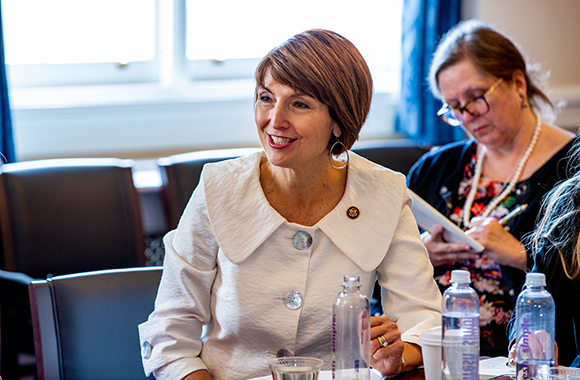
Sally Greenberg discussing the congressional and regulatory agenda and effective strategies for defending old protections, writing new rules, and winning needed reforms. Ed Mierzwinski, Consumer Program Director at U.S. PIRG is pictured to her right.


John Breyault discussing the top and newest complaints that NCL's Fraud Center is receiving and approaches for more effectively resolving, and preventing, these grievances. John is pictured with Eduard Bartholme, Executive Director Call For Action, and Beverly Baskin, Senior VP & Chief Mission Officer Council of Better Business Bureaus

Kudos to CFA for hosting such a great event!

10 amputations a day: the need for a safer table saw – National Consumers League

By Sally Greenberg, NCL Executive Director

I spent two days earlier this month at the Consumer Product Safety Commission (CPSC), listening to the pros and cons of setting a mandatory safety standard for table saws. Ten people every day – according the CPSC’s own data – have their fingers amputated in power saw accidents. 10 a day!  I’ve wanted to push the CPSC for a mandatory standard ever since hearing a story on NPR in May of 2006.

The inventors of a saw that senses an electrical current in a finger, as opposed to a piece of wood, and stops before serious harm is done, named their company SawStop. They also took the commendable step of petitioning the Commission and asking that it adopt a mandatory safety standard – that was in 2003. The petition was acted upon a few years later – the Commissioners voted to start the process toward a mandatory standard – but one of the three commissioners resigned and the process came to a halt. Even with a new and democratic administration in 2009, no action had been taken until now.

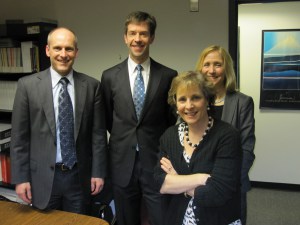
SawStop inventors Stephen Gass and David Fanning, Pamela Gilbert, former Executive Director of the CPSC, and NCL Executive Director Sally Greenberg at NCL’s office.

NCL helped jumpstart the process with a letter to the Commission in late November of 2010, which was followed a few months later by an article in USA Today.

The article got the attention of Commissioner Robert Adler, who hosted meetings this month with the Power Tool Industry, the trade group that is resisting adopting safety technology by arguing that it’s too expensive, that it’s unreliable, and that consumers don’t want it. Blah, blah blah. We’ve heard all that before – from the automakers, from lawnmower manufacturers and the swimming pool industry. Always an excuse for why they can’t do something that will prevent injury or save lives; it almost always comes down to putting profits before the safety of their customers.

In any event, Commissioner Adler also met with the SawStop inventors themselves, and with one other inventor who says his technology will also provide a margin of safety. The SawStop manufacturers have also received the Chairman’s Commendation from the CPSC back in 2001.

As NCL told USA Today, if you have a pattern of injury, a safety technology that can address it, and it’s affordable, you should move toward a mandatory safety standard so that all parts of the industry comply. That also creates a level playing field so that no one manufacturer can get by on the cheap and NOT install the technology.

We eagerly await the Commission’s further action on this after a busy series of meetings. 10 amputations a day and thousands more injuries every year, is an unacceptable toll when a ready fix is affordable, available, and waiting.

LifeSmarts: Teens’ Consumer Rights Information Destination – National Consumers League

By John Breyault, Vice President of Public Policy, Telecommunications and Fraud

As National Consumer Protection Week 2011 draws to a close, it is appropriate to reflect on why this week is set aside to celebrate consumer protection.  NCL has been at the center of the consumer movement since its inception over a century ago.  A short an incomplete list of consumer protection triumphs in that time would include the Pure Food and Drug Act of 1906 which created the FDA, the Federal Trade Commission Act of 1914, the Fair Credit Reporting Act of 1970, the Consumer Product Safety Act of 1972, the Patient Protection and Affordable Care Act of 2010 and the Dodd-Frank Wall Street Reform and Consumer Protection Act of 2010.

What do all of these disparate pieces of legislation share in common?  They all sought to make the market safer and fairer for consumers.  They all recognized that absent safeguards and prudent regulations, consumers stood little chance against the vastly greater resources of industry.  During National Consumer Protection Week, we encourage consumers to take full advantage of the consumer rights gained over this century of advocacy to make better-informed marketplace decisions.

It is the desire to pass on these rights and responsibilities to the next generation that motivates NCL’s LifeSmarts program.  LifeSmarts is about more than just teens memorizing esoteric consumer trivia.  It’s about giving young people on the cusp of adulthood the knowledge they will need to enter life as empowered consumers.  Every time that a LifeSmarts alumna uses the skills she gained from LifeSmarts to get a better deal on a mortgage, steer clear of an Internet scam or spot a safety hazard in her home, consumers win just a little bit more.

It is with this purpose in mind that we encourage LifeSmarts competitors to learn and understand their rights as American consumers.  In other countries, citizens must too often accept the lot that their markets deal to them.  In America, we are protected by a web of consumer protections that ensure that the water we drink is clean, that banks can’t cheat us, and that the products we buy for our children aren’t accidents waiting to happen.  When these rights are violated, LifeSmarts teens know that they can speak up and seek redress.  In an increasingly interconnected and global marketplace, having the knowledge and the tools to use it has never been more important.

National Consumer Protection Week ends March 12, but the lessons and responsibilities of NCPW and of LifeSmarts will last a lifetime.

LifeSmarts: teens’ technology education destination – National Consumers League

By John Breyault, Vice President of Public Policy, Telecommunications and Fraud

The thought of teaching a modern teenager about technology may seem counterproductive to many people. Indeed, it is teens who seem to be the ones on the cutting edge of technology. The vast majority of teens not only use the latest social networking sites like Facebook, but they are also often inseparable from their cell phones.

Unfortunately, expertise about how to use these technologies doesn’t always equate to knowledge of how to do so safely.  Today, it is more important than ever for teens to know how to use technology wisely. For example, snooping on unsecure wifi connections (such as those found in many coffee shops) is increasingly easy for unscrupulous scam artists. Privacy, which for many Facebook-obsessed teens may seem to be an afterthought, could actually be critically important in college admissions and getting jobs later in life.  Online scholarship and grant scams is also an area where NCL has noticed an uptick as well.

Fortunately, there are tools and smart practices that teens can use to avoid some of the most common technology pitfalls. It is these good technology habits that LifeSmarts’ technology curriculum seeks to promote. LifeSmarts team members learn, for example, the importance of taking advantage of their privacy settings on Facebook to make sure third parties can’t get access to sensitive personal information. Knowing how to differentiate a secure Web site from an insecure one can save teens from having nasty malware surreptitiously installed on their computers. Understanding the importance of using strong passwords (as opposed to easy-to-guess common words) can save teens from seeing their laptops become part of a botnet or worse.

During National Consumer Protection Week, we urge teens and their parents to consider the important value of this knowledge in today’s 24/7 digitally-connected world. By becoming savvy technology consumers, LifeSmarts participants become better prepared to choose their own cell phone plans, get broadband service at their first apartments, and pass on lessons learned in LifeSmarts to friends, family members and, eventually, their own children.

For more information on the LifeSmarts technology curriculum, visit LifeSmarts.org. To learn more about National Consumer Protections Week, visit www.ncpw.gov.

LifeSmarts: Empowering Teens to Be “Green” Consumers – National Consumers League

By John Breyault, Vice President of Public Policy, Telecommunications and Fraud

It seems not a day goes by without a warning about threats faced by our environment. From toxic runoff to climate change to endangered species, the planet has never been in greater need of protection and care. Fortunately, there are small things that individual consumers can do to help protect the planet. From recycling trash, to using less energy-intensive forms of transportation, to just turning off the lights when leaving a room, small actions can add up in a big way.

It is these individual contributions to “green” living that LifeSmarts seeks to teach teen participants. LifeSmarts competitors learn how to lessen their impact on the environment in the numerous hours spent studying for the online and live competitions that form the heart of the LifeSmarts program.

The theme of this year’s National Consumer Protection Week is “NCPW.gov: Your Information Destination.” Fortunately for our LifeSmarts teams, information on how to live greener is only a mouse click away. The LifeSmarts program features numerous study guides to help teens get smart about being more environmentally conscious consumers.

As the teens get closer to their competition dates, they learn about the meanings of terms like “carbon footprint,” “greenwashing,” and “smart meters.” Getting educated about these topics not only helps teams do better in the competitions, but also provides teens a solid grounding in living responsibly.

For more information on LifeSmarts, visit LifeSmarts.org.  For more information on National Consumer Protection Week, visit ncpw.gov.

LifeSmarts: Teens’ Health and Safety Information Destination – National Consumers League

By John Breyault, Vice President of Public Policy, Telecommunications and Fraud

As a child of the 1980’s I vividly remember looking forward to taking my daily “Flintstones” vitamin. It was such an ingrained part of my daily ritual that I can recall being disappointed when my mother shook an orange Barney — not my preferred purple Dino — out of the brightly-colored bottle at breakfast. Many of my fellow Generation X’ers tell me they did the exact same thing as children. Why? Because “common knowledge” was that kids should take their daily vitamins, a message reinforced by frequent marketing on children’s television shows.

As a 33-year old father of two today, I’m hypersensitive about my kids’ health. I compare labels on cereal boxes at the grocery store. I try to steer them towards healthy snacks instead of the rapidly dwindling supply of leftover Halloween candy. Instead of a daily Flintstones vitamin, I try to make sure they get servings of fresh fruits and vegetables at every meal.  Why?  Because “common knowledge” about kids nutrition has been replaced by a near-infinite supply of information online.  Instead of relying a word-of-mouth, marketing, and infrequent advice from a pediatrician, I can stay up to date on the latest developments in children’s nutrition at the touch of a button.

With a growing obesity epidemic in America, particularly among teens, the value of this information is greater than ever. This is why one of the five sections of NCL’s LifeSmarts curriculum is devoted to health and safety. LifeSmarts participants gain an understanding of the value of a healthy lifestyle and the tools to help them achieve it. Teens in the LifeSmarts program study a variety of topics in this part of the curriculum, including how to effectively compare nutrition labels, what to do in case of a food recall, and what kinds of foods are best for maintaining a healthy weight.

The goal of the LifeSmarts health and safety curriculum is to reach teens at a critical juncture in their young lives, when they are developing the consumer habits that they will likely maintain for a lifetime. This information is conveyed in a fun, competitive manner that helps teens stay focused on the topic areas and feel real accomplishment in their progress.

For more information on LifeSmarts’ health and safety curriculum and to learn how you can organize a LifeSmarts team in your own schools, please visit www.LifeSmarts.org.


LifeSmarts: Teens’ Personal Finance Information Destination – National Consumers League

By John Breyault, Vice President of Public Policy, Telecommunications and Fraud

If the recent economic meltdown taught consumers anything, it’s that “common knowledge” about personal finance topics shouldn’t be relied upon. For instance, the old axiom about real estate always being a safe investment is little comfort to the millions of consumers who have lost their homes to foreclosure.

Unfortunately, too many consumers today leave high school without the basic personal finance skills they need to avoid the tricks and traps that litter the marketplace. For example, students unable to balance their own checkbooks are very likely to incur significant overdraft fees from their banks. Young adults without a firm grasp of how a credit card works are likely to rack up big balances that can cripple them financially for years to come.  Recent graduates in the market for their first car may be lured in by unscrupulous dealers who trap them with a high-cost loan that they barely afford.

Perhaps now, more than ever, consumers understand the need for a solid education in the fundamentals of personal finance. For the thousands of teens that participate in NCL’s LifeSmarts competition every year, this component of their schooling gives them the tools they need to be an informed consumer.

Teens participating in LifeSmarts form teams with classmates under the direction of an adult coordinator. They use the LifeSmarts.org website to learn about a variety of topics, including personal finance. They take practice tests to sharpen their knowledge and eventually compete in online competitions.  The teams that score the highest move on to a live, “Jeopardy”-style state championship, with state winners heading to the LifeSmarts National Championship.

Given the impact of the real estate bust on the state, it is especially apt that this year’s LifeSmarts National Championship will be held in Los Angeles, California. With proper education in the fundamentals of personal finance, teens can learn to spot a good load from a bad one and avoid being put into a situation where they take on more home than they can afford. As we begin National Consumer Protection Week, the lessons of LifeSmarts are more valuable and necessary than ever. Consumers interested in getting a LifeSmarts team started at their local high schools and middle schools can visit LifeSmarts.org to get more information.

Medicine: a widespread culprit in ER visits – National Consumers League

No one would argue that the point of taking medicine, both prescription and over-the-counter, is to stay healthy and prevent or treat illness. However, the opposite—in which patients become ill, or in extreme cases die, due to medicine related poisoning—is an all too common occurrence. According to a study published in *the March issue of The American Journal of Emergency Medicine, upwards of 700,000 Americans are taken to the emergency room each year after ingesting (both illegal and legal) drugs, totaling $1.4 billion in ER charges alone.

The problem of medicinal poisoning is widespread; the study is based on government data on 27 million visits to 970 emergency rooms in 27 states, yet some areas and age groups remain more at risk than others. The number of drug-related hospitalizations in rural areas is nearly three times that of more developed areas, and children younger than 6 experience more ER visits than any other age group.

Health-care workers and patient advocates point to a number of reasons for the last decade’s increase in medicinal related injuries. One is the growing prevalence of prescription opioid painkillers such as methadone, oxycodone, and hydrocodone which are being increasingly prescribed. In 2007, the year covered by the reports, pain medication and antidepressants were responsible for 44 percent of drug-related ER visits.

In the face of such unprecedented rates of injury, the issue of adherence, or the degree to which a patient correctly takes his or her medicine, is becoming an increasing hot topic in health and medicine safety circles. A recent New York Times article on adherence blamed Americans’ “alarmingly low” level of health literacy, or the ability to understand and use health information, as one of the most pervasive and under-recognized problems in medicine. The article referenced a 2006 study by the U.S. Department of Education that found that 90 million Americans can understand medical instructions only when written at a fifth-grade level or lower.

To address this growing issue, NCL, with planning funds from the Agency for Healthcare Research and Quality (AHRQ), is organizing a groundbreaking, national multi-media campaign to improve public health by raising consumer awareness of the importance of good medication adherence. The campaign involves a broad cross-section of public and private stakeholders. 

*Links are no longer active as the original sources have removed the content, sometimes due to federal website changes or restructurings.