In defense of Surgeon General Dr. Regina Benjamin — Thank you for your service – National Consumers League

By Sally Greenberg, NCL Executive Director
Earlier this month, Forbes magazine contributor Henry I. Miller penned a needlessly nasty assessment of Dr. Regina M. Benjamin’s tenure as U.S. Surgeon General. Dr. Benjamin, who on Tuesday stepped down from the office she has held for more than four years, leaves behind a robust record of health advocacy, having tackled some of our country’s most challenging public health issues. In his piece, Miller declaims Dr. Benjamin for being “nowhere to be found since the beginning of President Obama’s first term.”

This could not be further from the truth! In promoting her National Prevention Strategy campaign, Dr. Benjamin regularly traveled to cities across the country, touting the importance of physical activity and wellness in often underserved communities that receive little media attention. Granted, Dr. Benjamin was not a press hound. And unlike her well-known predecessor Dr. C. Everett Koop—famed for flouting the will of politicians who wanted to suppress discussion of the nation’s AIDS epidemic, an extremely controversial and media-grabbing issue in the 1980s—Benjamin preferred to confront some of America’s most pernicious public health challenges without fanfare. Her priority initiatives included: combating the nation’s growing obesity problem (she helped to implement First Lady Michelle Obama’s “Let’s Move” campaign), reducing tobacco use, trumpeting the importance of breastfeeding, and raising awareness of the country’s suicide epidemic, among others.

Dr. Benjamin’s commitment to confronting the greatest public health challenges working-class Americans face may not prompt the kind of controversy that would draw much media attention, but her impact in engaging this community has been unsurpassed. Dr. Jocelyn Elders, Surgeon General under President Clinton, (in)famous for controversial comments regarding sex education, confirmed that Benjamin “hadn’t been out on the firing line getting picked at like some of us in the past.” She added that Benjamin’s efforts have mostly taken place behind the scenes. Indeed, Dr. Benjamin clearly has dedicated herself to serving Americans in those places where she might not elicit a lot of public attention, but where she could make the biggest difference.

As Executive Director of the National Consumers League, I can personally attest to Dr. Benjamin’s commitment to educating Americans. Dr. Benjamin became an early champion for our Script Your Future Campaign to improve medication adherence. Poor adherence – patients not taking their medications as directed – is a $290 billion problem; 3 of 4 patients say they haven’t taken their medication as directed and 125,000 die each year on account of poor adherence. The Surgeon General helped NCL to launch the campaign at the George Washington University School of Public Health.

In early 2011, Dr. Benjamin launched a “Call To Action” in support of breastfeeding aimed at communities of color. If every woman who was able nursed her baby, we would save the health care system billions of dollars. The Surgeon General, who has gotten behind these and many other initiatives (with unprecedented outreach to minority communities), has made all the difference for community organizations dedicated to overcoming America’s most crippling public health challenges. Dr. Benjamin has been everything that Miller portrays her not to be, as the nation’s top public health official HHS Secretary Kathleen Sebelius suggests. Sebelius said that the Surgeon General has “touched the lives of millions of Americans and has had a positive impact on the health of this Nation.” Dr. Georges Benjamin (no relation), President of the American Public Health Association, said that “Regina Benjamin taught America how to walk again … and has been a remarkable advocate in promoting the value of prevention as a national health priority. Instead of lobbing ad hominem insults at Dr. Benjamin (Miller says she is obese, for example, which she is not) for her work as Surgeon General, we should be thanking her for her four years of distinguished service as the nation’s doctor.

Beware of door-to-door magazine sales, it may be a scam – National Consumers League

Sam Hamer, Public Policy Intern Summer is finally here! Unfortunately, along with cicadas and lazy afternoons by the barbecue, door-to-door magazine sales scams are likely to appear in many consumers’ neighborhoods. These scams typically begin with a knock at the door and a young person on the other side claiming to be raising money for a charity, school trip, or other seemingly worthy cause by selling magazine subscriptions. In fact, consumers who take the bait and sign up for a subscription often report that they receive nothing in return.

Every year, young people fan out across the country, looking to make easy money from unsuspecting consumers. In Medford, Ore. last month, two young adults were arrested after they were discovered depositing into the bank over $4,500 collected from fraudulent door-to-door book and magazine subscription sales.

This couple acted as isolated perpetrators, yet several companies that annually employ young salespeople to peddle suspect magazine subscriptions have drawn hundreds of complaints about their sales tactics and product, earning them a rating of ‘F’ from the Better Business Bureau. Indeed, subscription fraud is not a rare occurrence. The Federal Trade Commission (FTC) receives over 10,000 complaints each year from consumers that witness this variety of fraud. Nor is subscription fraud endemic to a particular area of the country. The Better Business Bureau has logged complaints from virtually every state in the union. Tragically, the intentions of magazine sales crews may not stop at subscription fraud. One former sales crew member interviewed by the New York Times testified that he regularly stole from his customers, including such items as “wedding rings, watches, necklaces, money, checks, shoes, clothing, glasses, [and] hats.” Unlicensed peddlers can be especially dangerous. Columbia County (Ga.) law enforcement apprehended 17 members of a sales crew, 5 of whom had criminal records involving violent crimes, in February 2011.

Given the potential for fraud anytime a salesperson rings the doorbell, consumers should take some basic precautions that can improve their safety and security. First of all, as the consumer protection blog Consumerist suggests, “there are better ways of buying magazine subscriptions and of supporting teens, charities, and troops, and there’s no reason the two worlds need to be mashed together on your front porch without warning.” Instead of handing a check to a stranger right then and there, consider asking the salesperson for more information about the charity he or she represents, and commit to making a donation online or over the phone.

Subscribing to a magazine can be achieved just as easily through the Internet or phone. For consumers who have already made a “front-porch” purchase or might consider doing so in the future, the FTC has instituted a “Cooling-off Rule” that gives consumers three business days to cancel purchases of $25 or more made at their home for a full refund. Also, under the Rule, the salesperson must convey the customer’s right to cancel at the time of sale and provide two cancellation forms along with a receipt. Any salesperson that does not explain how to cancel or provide forms to do so should automatically raise a red flag. Moreover, consumers who have made a purchase within the past three days but distrust the legitimacy of their purchase have the right to a full refund from the seller.

Government officials have attempted to stem the subscription fraud epidemic, but since the problem persists, consumers should also exercise vigilance to help root out fraud. Before making a purchase, always ask the salesperson to see a valid solicitation license and, if possible, research the company or charity with the Better Business Bureau (www.bbb.org). If the salesperson pressures you to make a decision immediately, tell him or her to come back tomorrow once you’ve done your homework. Consumers who suspect they’ve been victims of fraud should file a complaint with local law enforcement, as well as with the BBB or FTC. Newspaper and magazine publishers are also on the lookout for fraud (e.g. The Wall Street Journal and The Nation magazine) so make sure to check with them to see whether your subscription has been registered in their system. FIGHT FRAUD: Steps to take when a magazine salesperson approaches you

Join us in a twitterchat about online and mobile safety while traveling #ChatSTC – National Consumers League

By Nikola Sirovica, Communications Intern School is out, graduations are over, and the time for your summer vacation has arrived! You have your sunscreen, your giant cooler, and the beach chairs – all you need is that dream destination. Whether you are embarking on a last-minute getaway with friends or a family vacation planned months in advance, keeping your mobile devices safe and secure in unfamiliar places can be a challenge. Join us this Thursday, July 18 for a Twitterchat to discuss how to keep yourself safe online when traveling.

There are many tricks that criminals use to defraud vacationers via their mobile devices. How do you know if your Wi-Fi network is secure? What do you do if you lose your phone away from home? Should you change your privacy settings when traveling? As consumers, it is very important to know your rights and take extra precautions while traveling. Be extra wary of any prizes and sweepstakes telling you that you’ve won a trip to the Bahamas, Florida, or any other dream location. These scams will ask you to pay a fee up front before you can receive your prize. Anyone who pays the fee will unfortunately find out the trip doesn’t exist and they have fallen victim to a scam. On Thursday, NCL will be a guest expert in a Twitterchat organized by the National Cyber Security Alliance’s (NCSA) global cyber security campaign Stop. Think. Connect. Among the topics covered will be how to spot travel scams, how to identify reliable Wi-Fi connections, safe online banking, and which apps can be helpful to protect you when you are on the road. Ask questions in advance using the hashtag #ChatSTC, and the panel of experts will answer. Or, follow the conversation live at #ChatSTC. When: Thursday, July 18th at 3 p.m. EDT/noon PDT Who: National Consumers League (@ncl_tweets), STOP. THINK. CONNECT. (@STOPTHNKCONNECT), the U.S. Department of Homeland Security (@cyber), McAfee (@McAfeeConsumer), the FCC (@FCC).

The House splits the Farm Bill, is this a good strategy? – National Consumers League

By Teresa Green, Linda Golodner Food Safety & Nutrition Fellow For anyone interested in the food policy, and many people who aren’t, it has been difficult to avoid discussion of the farm bill over the last few months.  This expensive and important piece of legislation has historically been passed every five years and regulates both farm and nutrition policy.

Last year, however, the farm bill was not voted on as it should have been.  Stymied by election year politics, the bill was never brought forward for a vote in the House of Representatives, despite passage in the Senate.  The result was a one year extension of the 2008 farm bill and plans to deal with the bill this year instead.  The bill did come up for a vote in the House this year as planned, however, much to the shock of many observers, it was voted down.  Struggling to reassert their leadership after this surprising defeat, Republican leaders in the House decided to reintroduce the bill with one notable difference; to ensure passage they removed the nutrition title (SNAP funding and other nutrition programs) from the bill. This change has nutrition and farm groups deeply concerned.  Since the 1970s, the farm bill has included both farm programs and nutrition programs.  It is this pairing that has facilitated an alliance between Democrats and Republicans, urban and rural constituencies, to pass this important piece of legislation year after year.  By separating the two parts of the bill, Republicans have won a short term victory—passage of a farm bill in the House—but likely face a more difficult struggle to reach agreement with a Democratically led Senate. Consumer, nutrition and farm groups are all concerned about this move.  Nutrition programs, especially SNAP (formerly food stamps), are an essential part of the social safety net, particularly in tough economic times.  These programs have been under attack in recent years, and this move only heightens concern.  Those who believe the government has a responsibility to assure its citizens can put food on the table should call their Congressmen, in both the Senate and the House, to urge them to push hard for continued nutrition spending and a final farm bill that adequately addresses hunger.

A reason to whine about wine – National Consumers League

By Sam Hamer, Public Policy Intern  To all the Romeos and Juliets out there, your romantic dinner may have become more expensive than you anticipated. That’s because wine prices in American restaurants have risen to prodigious heights, or so contends The Wall Street Journal wine columnist Lettie Teague.

In her June 2013 column, “Highs and (Rare) Lows in Restaurant Wine Prices,” Teague surveys the wine lists of several fine-dining restaurants in New York City, revealing that the practice of marking up the price of wine bottles to four or five times their wholesale value has become commonplace. Teague cites such upscale restaurants as Montmartre, a French bistro in Chelsea, where the Pinot blanc (wholesale price $16) sells for a whopping $67 in house. For patrons of Manhattan’s fine dining scene—likely the most gourmet in North America—splurging on a $67 white wine may not be so outlandish. Yet diners across the United States and Canada are feeling the pinch. When CTV, a Canadian news station, surveyed a dozen restaurants around Winnipeg, Manitoba, they found price markups of over 300%.

As Teague warns, this sort of pricing can keep people from drinking wine, a real shame for more than just the Journal’s wine columnist. Of course, no restaurant patron can expect to pay merely retail price for a glass or bottle of wine, and virtually every restaurant wine purchase includes some price markup. Inputs such as a liquor license, fancy glasses, cellar space, and binders and stationary for the wine list don’t come without a price. Restaurant owners must also pay a sommelier and/or train waitstaff in how to pair and serve wine. Moreover, the fact that fine restaurants earn relatively small margins on their entrees makes alcohol sales necessary to maintain relatively high expenses. Even Teague concedes that wine is a “revenue center.”

Whether or not restaurants can justify a four-fold uptick in the price of wine can and will be debated. Some wine aficionados have contended that wine prices should be even higher, analogizing that “it costs 25 cents to make a cup [of coffee], but they’re going to charge $4 because there’s labor, cleaning and all of those factors that get priced into the markup.” With or without markups, wine prices have risen recently as the industry faces considerable production challenges.

In 2012, wine inventories dipped 6.1% to their lowest stock in over 30 years on account of poor weather. Vineyard prices also swelled, with a prime acre in Bordeaux soaring to $1.3 million, 10% higher than the 2011 price. Prices were also driven higher by consumer demand. As the LA Times reported, “Last year, wine sales in the U.S. reached a record high, rising 2% from 2011 to 360.1 million cases worth an estimated $34.6 billion.” The combination of a production shortage, heightened demand, and amplified markups(?) have buoyed wine prices by an average of 5.35% at upscale restaurants in the past 6 months, according to a report released by Restaurant Sciences.

For consumers looking to skirt restaurant markups, 26 states and 6 Canadian provinces grant diners the privilege of carrying in their own wine to be served with dinner. But BYOB laws, as they are called, don’t always let diners escape the additional costs of consuming wine in house. Many restaurants will charge a “corkage fee”—frequently $25 or more at high-end restaurants—to cover the costs of glasses, table service, and lost revenue on account of a customer’s decision to not purchase wine from the menu. So then what is a cash-strapped Romeo to do when he wishes to woo Lady Juliet over dinner and a bottle of Merlot? As one blogger put it, the wine-buying public should seek out establishments that put emphasis on a fairly-priced wine list. By the same token, diners should call out restaurateurs who charge for excessively priced wine, i.e., more than three times the wine’s retail value. For individuals particularly passionate about the issue, the upstart nonprofit American Wine Consumer Coalition (AWCC) provides an outlet for advocacy on behalf of wine consumers.

Google’s Transparency Report reveals widespread global malware – National Consumers League

By Sam Hamer and R.J. Smith, Public Policy Interns Last week, tech giant Google released its semiannual Transparency Report, which for the first time included data about malware and security threats drawn from the company’s Safe Browsing program. The program began in 2006 as a way to identify infected sites and warn browser users who attempt to access them.

According to Google: “Our security team built Safe Browsing to identify unsafe Web sites and notify users and webmasters so they can protect themselves from harm. By providing details about the threats we detect and the warnings we show, we hope to shine some light on the state of web security and encourage safer web security practices.” As part of the Safe Browsing program, Google scans a fraction of sites in each country and utilizes the data to indicate the prevalence of sites hosting malware. A country-by-country breakdown of the prevalence of malware-infected sites shows, for instance, that approximately 2 percent of the over 14 million sites in the United States contain malware or phishing scams.

By comparison, roughly 15 percent of sites in India tested positive for malware, one of the highest rates in the world. Google’s worldwide tracker identifies as many as 90,000 unsafe Web sites per week, notifying webmasters each time fraudulent code is discovered. In addition to delivering a warning page to browser users who attempt to access these infected sites, webmasters receive a report notifying them of the corruption and instructing them to fix the problem. Google’s disclosure of malware infection data has received significant media coverage, with the New York TimesNBC News, and *CNN covering the release, in addition to a smattering of online magazines and tech blogs. Many credit Google with increasing popular awareness of “just how unsafe the Internet has become,” as the New York Times put it.

Google’s Dorothy Chou disclosed in an email that, “the coverage has been fairly neutral to positive.” But, she notes, “[it is] probably too early to know what people are doing with the data release yet.” Indeed, while Google’s collection of malware and phishing data over the past half-decade has provided greater certainty of where malicious online activity persists, just what the vanguards of online security should do with the data is less certain. As privacy blogger John Hawes notes on the blog Naked Security, webmasters can now monitor the Safe Browsing site for data about their site provider service.

If Google’s data show that a particular site provider comes up as a host for a number of infected sites, then webmasters will know that they should start asking questions, Hawes suggests. Moreover, webmasters can better inform themselves about which site providers have a clean record, and flag those providers who host numerous infected sites. If anything, the Safe Browsing program has contributed to a heightened awareness of Internet scams among the general populace. While many Internet users have heard of the words “phishing” and “malware,” Google has shed additional light on the scope of the problem. As Google engineer Niels Provos put it, “[Safe Browsing] is about making the Internet a safer environment… We want to make as much information available about the state of the Web as we see it…By putting [the data] out there, we want to educate Web masters that this is very real, that the danger of you getting infected is very large.”

*Links are no longer active as the original sources have removed the content, sometimes due to federal website changes or restructurings.

Beware of pomegranate seeds as Hepatitis A outbreak spreads – National Consumers League

By Zoe Stahl, Food and Labor Policy Intern
Over the past month, the food safety community has been gathering more and more information about a recent Hepatitis A outbreak. The outbreak, which has infected 140 people, has been linked to pomegranate seeds imported from Turkey and can be found in the Townsend Farms Organic Antioxidant Blend. The U.S. Food and Drug Administration (FDA) continues to investigate how the outbreak occurred.

But, in the meanwhile, let’s get the facts straight. What’s Hepatitis A? Hepatitis A is a virus that causes liver disease.  The virus is typically spread through the ingestion of fecal matter, usually through contaminated food or close contact with an infected person. What’s been done? The business community responded quickly. Costco, which had sold the Townsend Farms Organic Antioxidant Blend to over 240,000 customers since February, has been calling customers to notify them of the outbreak.  They have also announced the recall and pulled the product off of their shelves. The Coordinated Outbreak Response and Evaluation (CORE) Network, an FDA-led team of state agencies, and the Centers for Disease Control and Prevention, have been working hard to trace the virus as well. So, could this outbreak have been prevented? It is likely that this outbreak could have been prevented through the implementation of the Food Safety Modernization Act (FSMA), which creates a food safety system more focused on prevention than response.  The import portion of the law, which would help make imported foods meet the same food safety standards as the ones in the U.S., has yet to be implemented. If the rule had been put into effect, this outbreak could very easily have been prevented. Unfortunately, the rule has been stuck in the bureaucracy of government agencies and has not yet been released. Perhaps this tragic outbreak will provide the impetus the government needs to release this essential import rule before any more outbreaks occur.

STRIKE: Workers protest wage theft at the Reagan Building – National Consumers League

By Michell K. McIntyre, Outreach Director, Labor and Worker Rights On Tuesday July 2, low-wage workers employed at the largest U.S. federal office building, Washington D.C.’s Ronald Reagan Building, went on strike. They were not striking for better health benefits (most don’t receive any health benefits), they were not striking for higher wages, and they were not striking for pensions (most will never see a pension). They went on strike to standup against their employers after being victims of wage theft – they have not been paid legally.

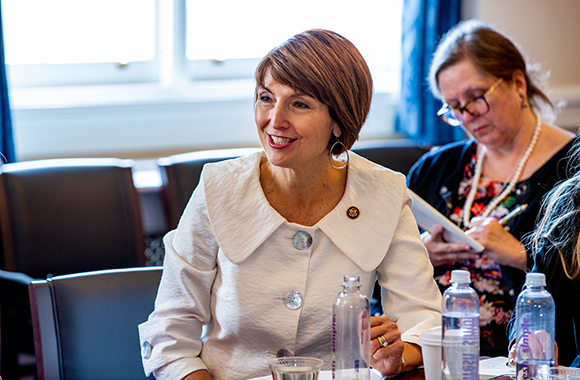
These low-wage workers are employees of federal contractors operating on federal land – the Reagan Building is owned by the federal government and paid for by our tax dollars. However the federal contractors are NOT following the law. Some of these workers have not been paid the federal minimum wage ($7.25 an hour) much less than the D.C. minimum wage of $8.25 an hour, while others have not been paid the overtime they’ve earned after 40 hours of work a week. Most fear retaliation if they dare to speak up. In many cases, these workers continue to work while being victimized by their bosses because they’re struggling to survive paycheck to paycheck. Good Jobs Nation, the group responsible for organizing the protest, is made up of workers, community members, and clergy. They have partnered with worker groups and unions to stand with and support disenfranchised workers and raise awareness of the plight of low-wage workers. Today’s protests included speeches by D.C. City Council Members Tommy Wells and Kenyan McDuffie, clergy, and, most importantly, the workers who have been suffering from wage theft. The D.C. City Council recently passed a law allowing workers to not only receive their back wages, but also receive triple the amount of damages. This is a problem with a simple solution. Since the employers are federal contractors leasing space from the federal government, the federal government needs to add a lease provision that makes all contractors adhere to all the labor laws in their jurisdiction, ensure routine labor enforcement, and have concrete consequences for breaking the law. For more information on Good Jobs Nation please check out their website and sign the petition asking that President Obama to make sure that federal contractors pay living wages and respect worker rights to join together and have a voice on the job.

A budding relationship between LifeSmarts and FBLA – National Consumers League

OLYMPUS DIGITAL CAMERABy Lisa Hertzberg, LifeSmarts Program Director LifeSmarts staff has just returned from our first Future Business Leaders of America (FBLA) National Leadership Conference (NLC) and is excited about the many possibilities for connections and growth. Our partners at FBLA have been accommodating and encouraging, and, beginning this fall, we’re pleased to offer FBLA’s 250,000 High School members a full-fledged LifeSmarts competitive event.

In our pilot this year 400 teams from FBLA chapters across the country competed online in the fall and spring challenges for the right to advance to compete live at the NLC, where the top 18 teams joined us for individual assessments, team activities, and traditional buzzer matches. While in Anaheim teams demonstrated consumer smarts – answering questions across LifeSmarts topics such as:

  • banking, credit, and marketplace economics
  • the three R’s, deforestation, and the greenhouse effect
  • government oversight, the legal system, and fighting fraud
  • nutrition, personal hygiene, and disease prevention
  • hardware, mobile phones, and Internet services

By being quick on the buzzers and backing it up with knowledge across all of the LifeSmarts topics, these teams took home top honors: Cheney HS FBLA, Washington 2. George Marshall HS FBLA, Virginia 3. Barrington HS FBLA, Rhode Island 4. West Platte HS FBLA, Missouri 4. West Chicago HS FBLA, Illinois Congratulations to all of our participants – matches were very competitive and the teams showed great sportsmanship throughout the competition. We invite FBLA Chapter Advisers and student leaders to mark your calendars for the 2013-14 LifeSmarts competitive events: Fall Challenge: October 15 – November 15, 2013 Spring Challenge: February 1 – 28, 2014 FBLA NLC in Nashville: June 29 – July 2, 2014

New Web site helps consumers navigate health insurance exchanges – National Consumers League

By Nikola Sirovica, Communications Intern Many Americans are confused about how to enroll in the new health insurance exchanges which will take effect on January 1, 2014.  A new resource will help you navigate options when registration begins on October 1, 2013.

The Obama administration last week kicked off the Health Insurance Marketplace education effort with a consumer-friendly Healthcare.gov Web site and a 24-hour-a-day consumer call center to help Americans sign up for private health insurance. The new tools will help consumers select the coverage that best suits their needs. Open enrollment for free or low-cost coverage available through Medicaid or the Children’s Health Insurance Program (CHIP) begins October 1. Key features of the Web site include integration of social media, sharable content, and consumer-friendly information to help Americans find the right coverage for their budget. The new design allows consumers to access it from their desktops, smart phones, and other mobiles devices, and also features a web chat for those who need live assistance. By October, consumers will be able to create accounts, complete an online application, and shop for qualified health plans. As Kathleen Sebelius, Health and Human Services Secretary, put it, “the Web site will make sure every American who needs health coverage has the information they need to make the choices that are right for themselves, their families, and their businesses.” Learn more about the Web site at www.HealthCare.gov. For Spanish speaking consumers, CuidadoDeSalud.gov, will be updated to match the information found in the new Web site. Customer service representatives are available for assistance via a toll-free number at 1-800-318-2596