Testimony in Support of SB463: Ending Child Marriage | Presented to Louisiana Senate Judiciary Committee – National Consumers League

April 10, 2018

Testimony in Support of SB463: Ending Child Marriage | Presented to the Louisiana Senate Judiciary Committee A

by Reid Maki, Director of Child Labor Advocacy, National Consumers League and Coordinator of the Child Labor Coalition

Hello, my name is Reid Maki and I represent the National Consumers League (NCL)—the nation’s oldest consumer advocacy group, based in Washington. I am also the coordinator of the Child Labor Coalition (CLC)—38 groups committed to reducing abusive child labor here in the U.S. and abroad. NCL founded the CLC nearly three decades ago and continues as one of its two co-chairs. Our members include seven of the largest unions in America, as well as child rights, human rights, and faith-based groups. I am here representing millions of Americans concerned about the safety, education, and welfare of children in the US.

We support a ban on child marriage in Louisiana without exemption. Exceptions are rarely worth the risk that they entail. In many cases, parental consent really means parental coercion. Pregnancy exemptions often means that many girls will be pressured into marrying the man who committed statutory rape. Teenagers who marry are disproportionately women and often they are marrying men who are adults.

The exploitation of children in marriage is well recognized by human rights experts around the globe. When the International Labour Organization and the anti-slavery group Walk Free announced new global estimates of the number of individuals in “modern slavery” last September, they defined the 15.4 million individuals who are in forced marriages as being victims of slavery; 84% of these victims are girls. Six in 10 victims of forced marriage internationally are children.

Recently, the Child Labor Coalition member American Federation of Teachers, one of the largest unions in America whose members are teachers, nurses, and public employees passed a resolution asserting that child marriage is a form of child labor and that child marriage and forced marriage are human rights violations.

In 2016, the U.S. State Department released a document called U.S. “Global Strategy to Empower Adolescent Girls.” In it, the State Department describes marriage before age 18 “a human rights abuse that contributes to economic hardship and leads to under-investment in girls’ educational and health care needs.”  The State Department asserts that early marriages – which are often forced – “enable or exacerbate violence and insecurity, including domestic violence.”

It’s well-recognized that child marriage has very negative health impacts and economic impacts on girls. Women who marry before 18 have significantly higher risks for heart attacks, diabetes, cancer, and stroke, as well as having higher risk of mental health issues. They are 50 percent more likely to drop out of school, and four times less likely to graduate from college. The divorce rate for girls who marry before 18 is 70-80%.

Louisiana risks more than it gains by allowing these early marriages. So do the teens getting married.

A 16-year-old in America cannot vote. They cannot fight in combat. They cannot obtain a credit card. In Louisiana, you must be 18 to buy cigarettes. You must be 21 to drink. Does it make sense to allow individuals under 18—children–to wed?

We believe that by reserving marriage for adults, the likelihood of exploitation in that marriage, whether sexual, labor-related, or financial decreases significantly.

###
NCL disappointed in rollback of vehicle emissions, fuel efficiency standards – National Consumers League

April 5, 2018

Contact: NCL Communications, Carol McKay, carolm@nclnet.org, (202) 207-2831

Washington, DC–The National Consumers League (NCL) today expressed “profound disappointment” in response to the announcement by the Environmental Protection Agency (EPA) that it will roll back automobile fuel-efficiency standards.

“The NCL is profoundly disappointed with the EPA’s decision to renege on the Obama-era administration fuel efficiency standards: this irresponsible decision is detrimental to consumers and harmful to the environment,” said NCL Executive Director Sally Greenberg.

According to a *Consumer Reports survey, 53 percent of all American vehicle owners expect better fuel economy with their next car purchase. Consumers want more fuel-efficient vehicles that will save them money by reducing the cost of gas. In addition, a Consumer Federation of America (CFA) poll compared sales figures for 2016 SUVs and light duty trucks with the 2011 models and found that vehicles with a 10 percent increase in mileage sold nearly 20 percent more than vehicles with a less than 10 percent mileage improvement.

“Not only will these rollbacks cost hardworking Americans financially, but they will compromise air quality across America,” said Greenberg.

Fully implemented, the 2012 fuel efficiency and emissions standards would have reduced carbon dioxide pollution by about six billion tons over the lifetime of all the cars affected by the regulations, according to EPA projections. As transportation is the leading source of carbon dioxide emissions in the United States, reducing or scrapping these standards will also make it impossible for the nation to meet its obligations under the Paris agreement and stay on track to hold global warming to 2 degrees Celsius.

Interestingly, the perceived winners from the lowered standards–the automakers–are apparently not pushing for these rollbacks. In fact, the New York Times stated in an April 3, 2018 *editorial, “Bill Ford, the chairman of Ford Motor Company, and Jim Hackett, the company’s chief executive, wrote in a blog last week that while they would like more ‘flexibility’ on meeting the rule, ‘we support increasing clean car standards through 2025 and are not asking for a rollback.’”

“Weakening these fuel efficiency and emissions standards is indefensible; the industry isn’t even demanding it. These actions threaten the health and welfare of every American. The NCL urges the EPA to reconsider this reckless and unnecessary decision,” said Greenberg.

###

About the National Consumers League
The National Consumers League, founded in 1899, is America’s pioneer consumer organization. Our mission is to protect and promote social and economic justice for consumers and workers in the United States and abroad. For more information, visit https://nclnet.org.

*Links are no longer active as the original sources have removed the content, sometimes due to federal website changes or restructurings.

80 years of the Fair Labor Standards Act and its unfinished business – National Consumers League

The Fair Labor Standards Act (FLSA) of 1938 is celebrating its 80th Anniversary this year. The work of the National Consumers League (NCL), founded in 1899, and Florence Kelley, laid the groundwork for this landmark worker protection legislation. The FLSA set the first federal regulations for child labor, minimum wages, and maximum hours laws. It was signed into law by Franklin Delano Roosevelt, whose labor secretary, Frances Perkins, started her career with the NCL.
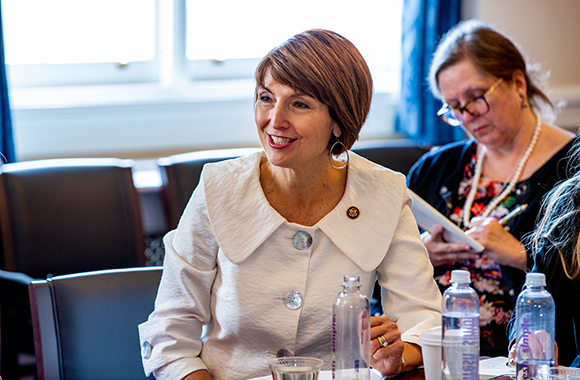
So 80 years later, NCL thought it would be useful to review the history and impact of the FLSA by inviting experts from across the country to speak. NCL and the American Constitution Society cosponsored our Unfinished Business: The Fair Labor Standards Act 80 Years Later” at Georgetown University Law Center March 28.

At the outset, it’s important to note that worker rights are under attack all the time: the trucking industry is trying to lower the age to allow teens as young as 18 to drive 80,000 pound rigs because there’s a manufactured labor shortage, thanks to threats to immigrant workers from ICE and the Trump Administration. Indeed, the state of New Hampshire is increasing the hours to 56 that teens can work each week when they aren’t in school.

That said, the conference attendees were able to cheer the recent victory—and how great advocacy prevented eroding restaurant workers’ salaries—when Congress included in the Omnibus bill signed by President Trump last week a prohibition on restaurant owners’ keeping workers’ tips. Saru Jayaraman, who spoke at the conference, and the Restaurant Opportunity Center, launched an all-out campaign to protect $5.8 billion in tips and, with the help of democrats in Congress, won these protections.

The conference included a panel on the history of the FLSA, testimony from three hourly workers talking about the sexual harassment and wage theft they experience daily on the job, a keynote by Obama-era DOL Wage and Hour Director David Weil – who brought with him many of his former DOL colleagues, and a rousing keynote from SEIU International President Mary Kay Henry. Panelists also talked about efforts to erode worker protections – like states preempting localities that want to raise their local minimum wage or making employees sign forced arbitration papers that prevent them from going to court if there’s discrimination or wage theft on the job. By the way, NCL wants forced arbitration banned in labor and consumer contracts, but that is a hard sell in a conservative Congress.

Gaps in the law and erosion of the FLSA were very much at the top of our conference agenda. Workers labor on farms sometimes up to 90 hours a week during the harvest with no protections. They should be making overtime pay.

Other agenda items:

  • Adding paid sick leave and vacation leave to federal law
  • Banning forced arbitration contracts for workers
  • Enforcing the FLSA for gig economy jobs like driving for Uber or Lyft
  • Resisting incentives to turn employees into independent contractors
  • Adding restaurant workers to be covered by the FLSA
  • Expanding overtime pay
  • Enforcing the law against persistent violators and double the penalties
  • Legalizing private class-action suits under the FLSA
  • Changing policy to make sure immigrants aren’t exploited and allow them to take the thousands of vacant jobs where there’s much demand

While the list of unfinished business is long, everyone agreed that the worker reforms brought by passage of the FLSA in 1938 provided desperately needed protections that helped workers in America improve their experience as workers, their incomes, and their quality of life. Setting the agenda is critically important because – like the victory on tipping – we have to be ready to move quickly to get provisions enacted when opportunities come up. The NCL is proud to be continuing our 118-year history of advocating for workers’ rights with this conference.

National Consumers League commends tipped worker protections in omnibus – National Consumers League

March 27, 2018

Contact: NCL Communications, Carol McKay, carolm@nclnet.org, (202) 207-2831

Washington, DC—The National Consumers League (NCL) is hailing a provision in the omnibus spending bill—signed into law this past weekend—that protects the tips workers receive and bans employers from claiming them. Restaurant workers suffer some of the lowest wages in America and depend on tips to keep their incomes at least at minimum wage. Secretary of Labor Alexander Acosta had previously proposed a new rule that would permit restaurant owners to pocket the tips of millions of restaurant and service workers—a shocking example of a legal form of wage theft.

Saru Jayaraman, co-founder and president of Restaurant Opportunities Centers (ROC) — an NCL ally and friend who is speaking at the 80th Anniversary of the Fair Labor Standards Act conference this Wednesday at Georgetown Law Center—led the charge, working with partners and submitting more than 350,000 comments in opposition to the proposed rule. ROC and National Employment Law Project helped to organize testimony on Capitol Hill and rallies at local Department of Labor and National Restaurant Association offices across the country. Facing bipartisan pressure and overwhelming public disapproval, Acosta eventually agreed to work with both sides of the aisle to support the TIP Act.

“These victories are the result of intense organizing, advocacy, and—in this case—shaming those who were ready to hand over tips to employers,” said Sally Greenberg, NCL’s executive director. “Without this organizing and leadership from these heroic groups and key allies in the House and Senate, the Labor Secretary likely would not have changed course.”

Greenberg noted that members of the Democratic minority in the House Appropriations Subcommittee hearing March 6 grilled Acosta about DOL’s intentions on tipped wages. Representatives Rosa DeLauro (D-CT) and Katherine Clark (D-MA) introduced legislation after the Secretary said he would support a ban on employers keeping worker tips. That led to the introduction of the TIP Act of 2018.

At least $5.8 billion in workers’ tips, according to a recent study done by the Economic Policy Institute, would have been at risk. NCL thanks these members of the House and Senators Patty Murray (D-WA) and Chuck Schumer (D-NY) for their work to get these protections in the Omnibus spending bill. 

###

About the National Consumers League
The National Consumers League, founded in 1899, is America’s pioneer consumer organization. Our mission is to protect and promote social and economic justice for consumers and workers in the United States and abroad. For more information, visit https://nclnet.org.

Dietary Guidelines 2020: Back to the future for portion sizes – National Consumers League

Sally GreenbergWith 47 percent of the U.S. population projected to be obese by 2030 – and more than 2.1 billion people expected to weigh in as overweight or obese – it’s no surprise that governments worldwide have waged war on a health crisis which not only causes 5 percent of all deaths every year, but also has a $2.0 trillion economic impact annually. So what new measures can be taken that haven’t already been tried?

Is the solution based in advanced technology or medicine? Or do we need to take a step back and take a look at the bigger picture, and tackle a complex problem with simpler solutions by going back to basics? Research seems to indicate that portion control is one of the most promising strategies.

Advances in technology and entertainment over the past 40 years mean we are moving less. At the same time, our meals and snacks have been supersized. In its latest revision of the nutrition facts panel, the Food and Drug Administration (FDA) has increased some of the standard serving sizes for various food and beverage products to better reflect the total calories people are actually consuming. This could, however, send the wrong message about proper portions of food. And while there are some great nutrition tools and fact sheets available (see for example the National Institute of Health’s page on Portion Distortion), this puts responsibility on the individual to make the right choices. There are also initiatives about portion control from the American Heart Association and the American Cancer Society.

The 2015 Dietary Guidelines for Americans discussed adapting portion sizes to help individuals make choices that align with the Dietary Guidelines´ other recommendations. But this was more of a passing comment without further guidance, and simply not actionable by consumers, health and wellness professionals, or even policy makers.

If real change is going to happen, it not only has to start at an individual level but also via policy based intervention and through corporate action. And there’s compelling evidence to show that portion size reduction, as a collective movement, could be the single most effective solution to an expanding problem.

The food industry’s own research – from the International Food Information Council’s 2017 Health and Wellness Survey – highlights this unmet opportunity, showing that consumers want to consume smaller portions as one of the steps to be healthier, however they are not acting on it, and are instead prioritizing value.

An interesting comprehensive analysis conducted by the McKinsey Global Institute (MGI) is worthy of consideration. The paper found that while education and personal responsibility are critical elements of any program to reduce obesity, they are not the only solutions. Interventions that rely less on conscious choices by individuals and more on changes to the environment and societal norms are what’s needed—an example of this includes reducing portion sizes of packaged foods and fast food.

According to MGI’s research, portion control, as opposed to other obesity intervention methods such as product reformulations, labeling, weight-management programs, surgery, etc., is the single highest-impact intervention for reducing obesity; and the most cost-effective strategy.

Has it been tried? Not really—there was a previous attempt that was never implemented when in 2012, NYC Mayor Bloomberg tried to regulate portions by proposing the “Sugary Drinks Portion Cap Rule” prohibiting certain places from selling sugar-sweetened beverages that exceeded 16-fluid ounces. While the intention of the regulation was not to ban sugar-sweetened beverages, but to assist consumers with portion control, industry succeeded in defeating this initiative – apparently the rule exceeded NYC Board of Health’s regulatory authority.

Since 2012, and despite the supportive research of reducing portion sizes, little has been done to execute an effective policy that would seek to ‘re-size’ all of our packaged foods and beverages to take them back to healthier portion sizes. With the 2020-2025 Dietary Guidelines around the corner, there is no better time than now for policy makers to make a difference. Consumers need and deserve a clear, authoritative voice to provide impactful and easy to implement guidance on portion sizes and portion control for all foods and beverages.

Happy 8th anniversary to the Affordable Care Act – National Consumers League

Janay JohnsonOn March 23, 2010, in landmark legislation, President Barack Obama signed the Patient Protection and Affordable Care Act (ACA) into law. For the first time, Americans joined the rest of the developed world in hopes the law would bring us closer to realizing a health system where quality, affordable healthcare is available for all, and not a luxury for the privileged few. This sweeping overhaul of our healthcare system was met with mixed emotions: Democrats felt that the work of generations to see universal health care provided was finally fulfilled; the Republican party called it “Obamacare and railed about its many ills.

In the years since that historic day, those partisan sentiments persist. But despite a roller coaster of triumphs and setbacks, the ACA has been a huge success; millions had access to health care and in regions where pent-up demand was particularly acute – rural and urban areas alike.

The early leaders of the National Consumers League – from Florence Kelley to Frances Perkins – strongly supported health care for all Americans, so Obamacare was a fulfillment of our earliest agenda. And Obamacare, despite efforts to destroy its protections is the law of the land. The way health care is accessed and delivered in this country has been has been forever changed—most would say for the better. The ACA ushered in a new era in which comprehensive health coverage is finally within reach for millions of Americans who had been forgotten for way too long. And so today, this eighth anniversary of President Obama putting pen to paper, we acknowledge the ways the ACA has improved our health system. And we have no intention of going back.

Before the ACA was passed, the health insurance landscape looked significantly different. One in four Americans either lacked insurance or was underinsured, sick patients could be turned down for coverage because of pre-existing conditions, plans could charge women more than men for no reason other than their gender, and the cost of insurance was outpacing  Americans’ incomes. In short, our health system was about as lawless as the Wild  West. With the passage of the ACA, sweeping reforms not only outlawed many of the predatory and exclusionary practices that permeated our health care system, but expanded access to coverage and established a list of ten basic services that all health plans were mandated to meet.

Today, more consumers than ever before can get the care they need when they need it. Because of the ACA, nearly 20 million more Americans have gained health insurance. One of the primary ways the ACA achieved this was through the expansion of Medicaid, which extended coverage to millions of previously uninsured low-income individuals. The ACA also permitted young adults to stay on their parents’ insurance until age 26. Perhaps one of the most popular signature features of the ACA is the 10 Essential Health Benefits, including contraception, maternity care, mental health services, prescription drug coverage, and other services that all plans are mandated to provide. Other benefits and consumer protections we can thank the ACA for include a ban on lifetime coverage limits; the abolition of the “gender rating” practice, which allowed plans to charge women more than men; cost-sharing subsidies to help low-income Americans afford their coverage; the elimination of out-of-pocket costs for preventive care services such as immunizations, contraception, and cancer screenings; and a guarantee that an individual cannot be denied coverage or charged more because of a pre-existing condition.

Now of course it’s no secret that the Affordable Care Act has taken a beating. Despite a myriad of unsuccessful attempts by the Republicans to repeal and replace the ACA since its inception, the Trump Administration has made it a point to use whatever regulatory options are available to dismantle the ACA in any way it can. Though tribal loyalty within Congress has intensified exponentially in recent years, it’s time to put partisan politics aside and put the well-being of the American people first. Is the Affordable Care Act perfect? No. Is there room for improvement? Of course. But rather than tearing it apart, Republicans and Democrats should come together and strategize on how we can work together to strengthen and improve the ACA to better serve everyone.

At the White House signing ceremony in 2010, President Obama said in reference to the passage of the ACA, ” Our presence here today is remarkable and improbable. It’s been easy at times to doubt our ability to do such a big thing, such a complicated thing, to wonder if there are limits to what we as a people can still achieve.  But today we are affirming that essential truth…that we are not a nation that scales back its aspirations. We are a nation that does what is hard, what is necessary, what is right. Here in this country, we shape our own destiny.” And so even in these topsy-turvy political times, when it may seem that the protections we hold most dear are under attack and the progress we have made is at risk of being undone, we must remember that when we stand together, anything is possible – no matter how big, complicated, or improbable. The power of the people has always been stronger than the people in power and we have shown, particularly in the efforts to protect the Affordable Care Act, just how powerful we are. It is this spirit that vitalized advocates and everyday citizens to demand something better from our healthcare system, this spirit that saw the Affordable Care Act through to fruition, and the same spirit that will embolden us to defend it in the days ahead. And while we will continue to be steadfast in the fight to protect our care, today, we take a moment to celebrate how Obamacare revolutionized America’s health care system, provided access to health care for millions of underserved Americans in need, and has shown how fundamental it is for a nation with America’s riches to provide health care to all.

NCL statement on forced arbitration and autonomous vehicles – National Consumers League

March 23, 2018

Washington, DC–The National Consumers League applauds the Senators who signed a letter requesting information from Uber on its policy on forced arbitration clauses. This statement was attributable to Sally Greenberg, NCL executive director:

“The National Consumers League opposes the use of forced arbitration in both consumer and employment contracts. These clauses have the effect of protecting and even encouraging toxic corporate conduct by shielding companies from accountability in the event of reckless behavior or bad acts. We support legislation that bans these odious clauses and thank the Senators who have written to Uber asking for additional information on whether they intend to include such classes as they roll out autonomous vehicle technology.”
###

About the National Consumers League

The National Consumers League, founded in 1899, is America’s pioneer consumer organization. Our mission is to protect and promote social and economic justice for consumers and workers in the United States and abroad. For more information, visit https://nclnet.org, contact: Carol McKay, carolm@nclnet.org.

MEDIA ADVISORY: Unfinished Business: The Fair Labor Standards Act 80 Years Later

March 21, 2018

CONTACT: Carol McKay, carolm@nclnet.org, or Katherine Shek, kshek@acslaw.org;

WHAT: The American Constitution Society and the National Consumers League will co-host a symposium at Georgetown University Law Center on the Fair Labor Standards Act (FLSA) on Wednesday, March 28, 2018. Leading scholars, advocates, and current and former federal and state officials will celebrate the history and success of the FLSA while also building a positive agenda for how we can improve our laws to meet the needs of our 21st century workforce. More details on the agenda here.

Imagine these scenarios: children working with toxic chemicals, Americans expected to work 80 hours a week, seven days a week, workers making as little as $1 a day. This is what America looked like in the 1930s until President Roosevelt passed the FLSA. Enacted at the height of the Great Depression, the FLSA fundamentally changed the American economy by outlawing most forms of child labor, instituting a 40-hour workweek, and guaranteeing a minimum wage. Today’s advocates argue that the FLSA needs to be updated to fight back against the current assault on working Americans. Our panels of experts will discuss what these reforms should look like.

WHO:

Fatima Goss Graves, President and CEO, National Women’s Law Center, author of 50 Years and Counting: The Unfinished Business of Achieving Fair Pay

Mary Kay Henry, President, Service Employees International Union (SEIU)

Saru Jayaraman, Co-Founder and President, Restaurant Opportunities Center (ROC) United

David Weil, Dean, Heller School for Social Policy and Management, Brandeis University

More on the speakers here 

WHEN:

Wednesday, March 28, 2018 at 9:30 a.m. – 5:00 p.m. ET

WHERE:

Georgetown University Law Center, 600 New Jersey Ave NW, Washington, DC 20001

Gewirz Student Center, 12th Floor

RSVP please email Katherine Shek at kshek@acslaw.org

###

The National Consumers League, founded in 1899, is America’s pioneer consumer organization. Our mission is to protect and promote social and economic justice for consumers and workers in the United States and abroad. For more information, visit https://nclnet.org, contact: Carol McKay, carolm@nclnet.org.

The American Constitution Society (ACS), founded in 2001 and one of the nation’s leading progressive legal organizations, is a rapidly growing network of lawyers, law students, scholars, judges, policymakers and other concerned individuals dedicated to making the law a force to improve lives of all people. For more information about the organization or to locate one of the more than 200 lawyer and law student chapters in 48 states, please visit www.acslaw.org.

National Consumers League statement on on Appeals Court vacating DOL’s fiduciary rule – National Consumers League

March 16, 2018

Contact: NCL Communications, Carol McKay, carolm@nclnet.org, (202) 207-2831

Washington, DC–In response to the news that the U.S. Department of Labor’s (DOL) fiduciary rule was struck down, in a 2-1 decision by two judges on the 5th Circuit Court of Appeals, Sally Greenberg, executive director of the National Consumers League, has issued the following statement: 

“The Fifth Circuit Court of Appeals, in a 2-1 vote with Chief Justice Carl Stewart offering a spirited dissent,[1] has issued a legally flawed decision that undoes a critically important Labor Department rule intended to protect the financial interests of retirees and other investors. Simply put, the DOL rule requires financial advisors to put the interests of their clients first. This seems pretty straightforward, but the Chamber of Commerce and other industry interests have consistently opposed this common sense requirement.

The majority misapplied the law, issued an opinion that conflicts with the decisions of every other court that has considered the rule, and discounted the dramatic changes in the retirement landscape over the last 40 years. The results could potentially cost retirement savers as much as $17 billion annually.

The Fifth Circuit’s decision is a setback for all investors, especially those planning for or currently in retirement. It also threatens the Labor Department’s ability to protect investors now and in the future. We urge the Justice Department to appeal this decision, put retirement savers’ interests first, and defend DOL’s authority to impose reasonable standards on those who make a living investing other people’s money.”

[1] Judge Stewart notes, “That the DOL has extended its regulatory reach to cover more investment-advice fiduciaries and to impose additional conditions on conflicted transactions neither requires nor lends to the panel majority’s conclusion that it has acted contrary to Congress’s directive.”

###

About the National Consumers League
The National Consumers League, founded in 1899, is America’s pioneer consumer organization. Our mission is to protect and promote social and economic justice for consumers and workers in the United States and abroad. For more information, visit https://nclnet.org.

NCL statement on rollback of Dodd-Frank – National Consumers League

March 15, 2018

Contact: NCL Communications, Carol McKay carolm@nclnet.org, (202) 207-2831

Washington, DC—The National Consumers League (NCL) today responded to the passage of new legislation that marks the “biggest loosening of financial regulations since the economic crisis a decade ago.”

The following statement may be attributed to NCL Executive Director Sally Greenberg:

“We regret that the Senate has endorsed a bill to roll back essential protections against ‘too-big-to-fail banks and other measures ensuring the stability of our financial markets. This move ignores the potential for reckless speculative activity by financial industry players who are too often focused on short-term gains and have no regard for the long-term implications of financial collapse for workers and consumers. We urge Congress not to repeat history and think about the long-term financial well-being of all of Americans, not just the financial services industry.”

###

About the National Consumers League
The National Consumers League, founded in 1899, is America’s pioneer consumer organization. Our mission is to protect and promote social and economic justice for consumers and workers in the United States and abroad. For more information, visit https://nclnet.org.