SCOTUS Decision Delivers FCC Victory for Consumers, Says National Consumers League

Media Contact: Lisa McDonald, Vice President of Communications, 202-207-2829 

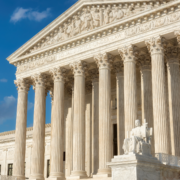
Washington, DC – Today, the U.S. Supreme Court decided 8-1 in FCC v. AT&T that the Federal Communications Commission (FCC) can continue assessing fines under the agency’s founding statute. Wireless carriers AT&T and Verizon attempted to escape liability for tens of millions of dollars related to consumer privacy violations by suing to disarm the FCC, rather than defending their business practices. NCL, two former chairs of the FCC, and five other public interest organizations filed an amicus brief at the Supreme Court to defend the agency earlier this year. 

“As our personal data has become more insecure than ever, it is critical that we have strong regulators who are equipped to protect us from privacy violations,” said NCL Vice President of Public Policy, Telecommunications, and Fraud John Breyault. “Congress made clear that the FCC’s job is to make sure that consumers’ sensitive communications data is protected. The FCC, across bipartisan administrations, has faithfully applied these mandates. This ruling affirms that federal agencies should indeed be using their resources to protect the American public. Companies should not be able to escape accountability after harming consumers by concocting radical legal theories—and luckily today, they were unsuccessful.” 

Democracy Forward Foundation provided pro bono counsel services for NCL in this proceeding. The full list of signatories to the March 2026 amicus brief are the Benton Institute for Broadband & Society, Consumer Reports, the Electronic Privacy Information Center, the National Consumer Law Center, the National Consumers League, Public Knowledge, former FCC Chair Reed Hundt, and former FCC Chair Tom Wheeler.    

Further reading: 

### 

About the National Consumers League (NCL)      

The National Consumers League, founded in 1899, is America’s pioneer consumer organization. Our mission is to protect and promote social and economic justice for consumers and workers in the United States and abroad. For more information, visit www.nclnet.org.   

CLARITY Act fails to protect consumers from fraud, conflicts of interest, and financial instability, say public-interest groups 

Media Contact: Lisa McDonald, Vice President of Communications, 202-207-2829 

Washington, DC – The National Consumers League (NCL) today along with a coalition of public-interest organizations, today sent a letter to Senate Majority Leader John Thune and Senate Minority Leader Chuck Schumer urging them to oppose the Senate version of the Digital Asset Market Clarity Act (CLARITY Act) as it fails to provide adequate consumer protections, combat financial crime, or address serious ethics concerns. 

“Consumers have already lost billions of dollars to cryptocurrency scams, hacks, fraud schemes, and market failures,” said John Breyault, Vice President of Public Policy, National Consumers League. “Congress should not reward the crypto industry’s lobbying campaign by passing legislation that leaves consumers exposed while giving the industry the legitimacy it has spent years trying to buy. Any crypto market structure bill must put consumer protection first—not treat it as an afterthought.” 

The legislation, recently approved by the Senate Banking Committee, is being promoted as a framework to bring clarity to cryptocurrency markets. However, consumer advocates warn that the bill leaves dangerous gaps that could expose consumers to fraud, facilitate illicit finance, and permit public officials, including the Trump family, to profit from the very industry they are charged with regulating. 

The coalition’s letter identifies three major concerns with the legislation: 

  • Weak anti-money laundering and Bank Secrecy Act requirements that fail to hold key cryptocurrency intermediaries accountable; 
  • A failure to address conflicts of interest involving public officials and their families who stand to profit from cryptocurrency ventures while influencing federal policy; 
  • Loopholes that could allow stablecoin issuers and crypto platforms to offer yield-like rewards that siphon deposits from community banks and reduce local lending. 

The Senate bill arrives amid increasing scrutiny of the cryptocurrency industry’s influence in Washington and growing concerns about whether current proposals adequately protect consumers and the broader financial system. Recent negotiations over anti-money laundering requirements, ethics provisions, and stablecoin rewards underscore the unresolved issues that remain before the legislation reaches the Senate floor. 

“Americans deserve financial innovation that is safe, transparent, and accountable,” Breyault added. “Instead, the CLARITY Act asks consumers to trust an industry that continues to generate enormous losses from scams and fraud while failing to close critical loopholes involving illicit finance and political corruption. Congress should not give this industry a congressional seal of approval until those problems are addressed.” 

The coalition includes the National Consumers League, American Economic Liberties Project, Americans for Financial Reform, Consumer Action, Consumer Federation of America, Consumer Federation of California, Demand Progress Action, Indivisble, National Community Reinvestment Coalition (NCRC), the National Consumer Law Center (on behalf of its low-income clients), and Public Citizen. 

The full letter is available here.

### 

About the National Consumers League (NCL)      

The National Consumers League, founded in 1899, is America’s pioneer consumer organization. Our mission is to protect and promote social and economic justice for consumers and workers in the United States and abroad. For more information, visit www.nclnet.org.   
Stronger Consumer Protections in Structured Settlements Urges National Consumers League

Media Contact: Lisa McDonald, Vice President of Communications, 202-207-2829 

Washington, DC – Following a recent segment on HBO’s Last Week Tonight with John Oliver examining the structured settlement factoring industry, National Consumers League (NCL) CEO Sally Greenberg joined the National Structured Settlements Trade Association (NSSTA) for a discussion on protecting consumers from predatory financial practices. 

The conversation highlighted Maryland’s successful reform model, which reduced structured settlement factoring transactions by more than 99 percent after the state strengthened judicial oversight and consumer protections. 

“If you put the proper restrictions and protections in place, people with a structured settlement—who often do not understand these financial transactions—will not give away all their future payments for pennies. That is what Maryland accomplished, and it can be done in every state,” said Greenberg. 

NCL has worked alongside NSSTA for more than a decade to advance safeguards that help ensure structured settlement recipients are protected from abusive factoring practices. 

“Structured settlements are designed to protect people through the most difficult chapter of their lives. The guardrails we are calling for do not change that arrangement. They make sure that if a recipient is approached to sell those payments, the court that hears the petition is the one closest to the recipient, the judge has the information needed to ask the right questions, and the recipient has the time and the independent advice to make a real decision,” said Eric Vaughn, NSSTA Executive Director

The organizations continue to advocate for reforms that provide stronger court oversight, limit aggressive solicitation, and protect vulnerable consumers’ financial futures. 

### 

About the National Consumers League (NCL)      

The National Consumers League, founded in 1899, is America’s pioneer consumer organization. Our mission is to protect and promote social and economic justice for consumers and workers in the United States and abroad. For more information, visit www.nclnet.org.   
Congress: Don’t Put Affordability in the Rear View, says National Consumers League

Media Contact: Lisa McDonald, Vice President of Communications, 202-207-2829 

Washington, DC – Today, the National Consumers League (NCL) submitted a letter for the record in advance of the House Energy and Commerce Committee hearing on “Rules of the Road: Examining Legislation to Modernize the Clean Air Act’s Mobile Source Requirements.”  As families across the country reel from the ongoing affordability crisis, NCL encourages lawmakers to consider the substantial effect fuel economy features have on alleviating household budgetary pressure, as detailed in the report titled Sticker Shock. 

“The American people do not have to choose among vehicle affordability and safety, energy independence, public health, and environmental stewardship,” the letter states. “Compliance with federal fuel economy and safety standards accounts for a small fraction of vehicle expenditures, but it generates thousands of dollars in benefits per household and trillions of dollars in societal benefits.” 

The letter notes that all equipment upgrades—which include changes in fuel economy, comfort, convenience, durability, nonmandatory safety improvements, and safety standards that first require compliance after 2019—account for only $3,040.20, or 13 percent, of the increase in average expenditures per new passenger vehicle since 2002.  Yet fuel-economy improvements save owners of model year 2024 cars $9,099.75 and owners of model year 2024 light trucks $9,920.23 in avoided gasoline expenditures over the lifetime of the vehicle. 

A copy of the letter can be found here. 

### 

About the National Consumers League (NCL)      

The National Consumers League, founded in 1899, is America’s pioneer consumer organization. Our mission is to protect and promote social and economic justice for consumers and workers in the United States and abroad. For more information, visit www.nclnet.org.