Ahead of World Day Against Child Labor, the Child Labor Coalition Urges Federal Legislation to Combat Child Labor

Media Contact:  Lisa McDonald, Vice President of Communications, 202-207-2829 

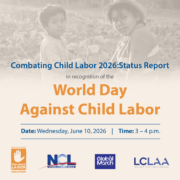
Washington, DC — As the world prepares to observe World Day Against Child Labor on June 12, the Child Labor Coalition (CLC) joins today with Members of Congress, labor leaders, human rights advocates, and policy experts for Combating Child Labor 2026. Hosted by Ranking Member Congressman Bobby Scott (VA-03), House Committee on Education and Workforce, in the Rayburn House Office Building at 3 p.m., experts will discuss today’s child labor challenges and recent legislative efforts to protect vulnerable children from exploitation here in the U.S. as well as in global supply chains.

Sally Greenberg, Chair of the Child Labor Coalition and CEO of the National Consumers League, will discuss  legislation pending before the 119th Congress, including measures designed to strengthen workplace protections for minors, increase penalties for violators, improve transparency in supply chains, and enhance federal enforcement efforts. For example, legislation such as the Children Don’t Belong on Tobacco Farms Act (H.R. 3335 / S. 1742), sponsored by Representative Rosa DeLauro and Senator Dick Durbin, would prohibit minors from direct contact with tobacco plants, protecting young workers from nicotine poisoning.

The United States should be leading the world in protecting children—not debating whether children should work longer hours, later nights, or in more hazardous conditions,” says Sally Greenberg, Chair of the Child Labor Coalition. “The answer to labor shortages is not to put children at greater risk. The answer is stronger enforcement, meaningful accountability for employers who break the law, and a national commitment to protecting young workers. We cannot allow the clock to be turned back on child labor protections that generations fought to secure.

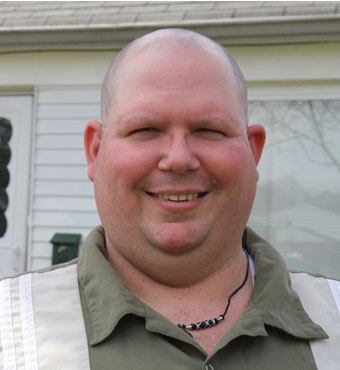
Dr. Ray Serrano, Director of Research and Policy at the League of United Latin American Citizens (LULAC), will share his firsthand experience as a child farmworker in Idaho highlighting the need for stronger protections for young workers and greater public awareness of the conditions faced by many children in the nation’s fields. Few Americans are aware that 300,000 to 400,000 children work in U.S. agriculture each year, harvesting fruits, vegetables, and other crops for our dinner tables under conditions that often fall outside the labor protections afforded to workers in other industries.

Also speaking are Congressman Donald Beyer (VA-08), Jon Jacoby, CEO of GoodWeave International, and Sonia Vásquez Luna, Board Member of the Labor Council for Latin American Advancement (LCLAA).

The discussion comes amid renewed attention to forced labor and child labor exploitation in the global supply chain as related to the international tariffs proposed by President Trump. International organizations estimate that nearly 138 million children remain engaged in child labor globally.

As policymakers debate tariffs and global trade, we cannot lose sight of the millions of children and vulnerable workers who remain trapped in abusive labor conditions around the world. Trade policy should do more than protect economic interests—it should help ensure that products entering U.S. markets are not made with child labor or forced labor. Consumers deserve confidence that the goods they purchase reflect the values of fairness, dignity, and human rights,” says Greenberg.

The coalition will introduce The Nation’s Report Card on Child Labor, which is scheduled for release in August 2026, as a comprehensive assessment of state child labor laws, enforcement trends, and policy developments nationwide.

Child labor is not an unfortunate byproduct of our economy—it is a policy failure and a moral failure,” says Sally Greenberg. “At a time when children are still working in dangerous jobs, and some state lawmakers are advancing proposals that would weaken long-standing protections, we should be moving forward, not backward. Every child deserves a childhood, an education, and a future free from exploitation.

The event is co-sponsored by the Global March Against Child Labor and Labor Council for Latin American Advancement (LCLAA).

###

About the Child Labor Coalition: The Child Labor Coalition is a leading alliance of 38 labor, human rights, consumer, faith-based, and child advocacy organizations working to eradicate child labor in the United States and around the world. Together, coalition members advance policies and partnerships that protect children from exploitation and promote opportunities for every child to thrive.

A Wake-Up Call About What’s Hiding in America’s Favorite Snacks

By Sally Greenberg, NCL CEO

A new Consumer Reports investigation released this week left me shocked—and frankly, disgusted. 

Consumer Reports, working with the food transparency app Yuka, tested more than 120 samples of 40 popular processed foods and found troubling levels of additives and contaminants in many of the products Americans consume every day. Even more disturbing, many of these foods are heavily marketed to and consumed by children. 

The findings should concern every parent, consumer, and policymaker. Consumer Reports found that about 25 percent of the products tested contained additive levels high enough that a single serving exceeded what some public health authorities consider a safe daily limit. When contaminants were factored in, that figure rose to more than one-third of the products tested. Eleven products exceeded safety benchmarks for adults, while 14 exceeded recommended limits for children. 

One finding stood out in particular. A single serving of Hostess Donette’s Powdered Mini Donuts contained nearly 19 times the amount of glycidyl esters—a probable carcinogen—that experts consider safe to consume in a day. Other popular products, including Flamin’ Hot Cheetos, Gushers, Fruit Roll-Ups, Takis Fuego, and grape Kool-Aid, contain elevated levels of additives or contaminants linked to neurobehavioral effects, DNA damage, and other potential health risks. 

As the staff at the National Consumers League knows, I occasionally indulge in junk food. After reading this report, those favorites have lost their appeal. 

But this issue is much bigger than my snack choices. 

Consumers should not have to rely on independent investigations to discover what may be lurking in foods sold on grocery store shelves. Food manufacturers have a responsibility to monitor their products, test contaminants, and ensure that the foods they market—especially to children—meet the highest possible safety standards. 

That is why I want to thank Consumer Reports for conducting this investigation and bringing these findings to light. This is what consumer protection looks like. Independent testing, rigorous research, and a willingness to ask hard questions are essential to protecting the public and holding corporations accountable. 

The report also raises broader questions about the adequacy of our nation’s food safety system. As Consumer Reports notes, the United States often permits additives at levels that exceed those allowed in other countries, and some substances lack meaningful regulatory limits altogether. Consumers deserve stronger oversight and greater transparency from both industry and regulators. 

Food companies should not wait for negative headlines to act. I urge food manufacturers to proactively identify and address these problems before products reach store shelves. Regulators must also strengthen oversight and set clearer, enforceable safety standards. Consumers deserve prompt, transparent explanations and concrete plans for improvement when issues are found. 

The National Consumers League will be watching closely to see how the companies named in this report respond. Americans place their trust in the brands they purchase for themselves and their families. That trust must be earned—and protected. 

Consumer Reports has done consumers a tremendous service. Now I call on food manufacturers to rigorously ensure product safety and transparency and urge regulators to enact stricter oversight and clear standards. It’s time for them to protect consumers as diligently as this investigation has. 

SCOTUS Decision Delivers FCC Victory for Consumers, Says National Consumers League

Media Contact: Lisa McDonald, Vice President of Communications, 202-207-2829 

Washington, DC – Today, the U.S. Supreme Court decided 8-1 in FCC v. AT&T that the Federal Communications Commission (FCC) can continue assessing fines under the agency’s founding statute. Wireless carriers AT&T and Verizon attempted to escape liability for tens of millions of dollars related to consumer privacy violations by suing to disarm the FCC, rather than defending their business practices. NCL, two former chairs of the FCC, and five other public interest organizations filed an amicus brief at the Supreme Court to defend the agency earlier this year. 

“As our personal data has become more insecure than ever, it is critical that we have strong regulators who are equipped to protect us from privacy violations,” said NCL Vice President of Public Policy, Telecommunications, and Fraud John Breyault. “Congress made clear that the FCC’s job is to make sure that consumers’ sensitive communications data is protected. The FCC, across bipartisan administrations, has faithfully applied these mandates. This ruling affirms that federal agencies should indeed be using their resources to protect the American public. Companies should not be able to escape accountability after harming consumers by concocting radical legal theories—and luckily today, they were unsuccessful.” 

Democracy Forward Foundation provided pro bono counsel services for NCL in this proceeding. The full list of signatories to the March 2026 amicus brief are the Benton Institute for Broadband & Society, Consumer Reports, the Electronic Privacy Information Center, the National Consumer Law Center, the National Consumers League, Public Knowledge, former FCC Chair Reed Hundt, and former FCC Chair Tom Wheeler.    

Further reading: 

### 

About the National Consumers League (NCL)      

The National Consumers League, founded in 1899, is America’s pioneer consumer organization. Our mission is to protect and promote social and economic justice for consumers and workers in the United States and abroad. For more information, visit www.nclnet.org.   

CLARITY Act fails to protect consumers from fraud, conflicts of interest, and financial instability, say public-interest groups 

Media Contact: Lisa McDonald, Vice President of Communications, 202-207-2829 

Washington, DC – The National Consumers League (NCL) today along with a coalition of public-interest organizations, today sent a letter to Senate Majority Leader John Thune and Senate Minority Leader Chuck Schumer urging them to oppose the Senate version of the Digital Asset Market Clarity Act (CLARITY Act) as it fails to provide adequate consumer protections, combat financial crime, or address serious ethics concerns. 

“Consumers have already lost billions of dollars to cryptocurrency scams, hacks, fraud schemes, and market failures,” said John Breyault, Vice President of Public Policy, National Consumers League. “Congress should not reward the crypto industry’s lobbying campaign by passing legislation that leaves consumers exposed while giving the industry the legitimacy it has spent years trying to buy. Any crypto market structure bill must put consumer protection first—not treat it as an afterthought.” 

The legislation, recently approved by the Senate Banking Committee, is being promoted as a framework to bring clarity to cryptocurrency markets. However, consumer advocates warn that the bill leaves dangerous gaps that could expose consumers to fraud, facilitate illicit finance, and permit public officials, including the Trump family, to profit from the very industry they are charged with regulating. 

The coalition’s letter identifies three major concerns with the legislation: 

  • Weak anti-money laundering and Bank Secrecy Act requirements that fail to hold key cryptocurrency intermediaries accountable; 
  • A failure to address conflicts of interest involving public officials and their families who stand to profit from cryptocurrency ventures while influencing federal policy; 
  • Loopholes that could allow stablecoin issuers and crypto platforms to offer yield-like rewards that siphon deposits from community banks and reduce local lending. 

The Senate bill arrives amid increasing scrutiny of the cryptocurrency industry’s influence in Washington and growing concerns about whether current proposals adequately protect consumers and the broader financial system. Recent negotiations over anti-money laundering requirements, ethics provisions, and stablecoin rewards underscore the unresolved issues that remain before the legislation reaches the Senate floor. 

“Americans deserve financial innovation that is safe, transparent, and accountable,” Breyault added. “Instead, the CLARITY Act asks consumers to trust an industry that continues to generate enormous losses from scams and fraud while failing to close critical loopholes involving illicit finance and political corruption. Congress should not give this industry a congressional seal of approval until those problems are addressed.” 

The coalition includes the National Consumers League, American Economic Liberties Project, Americans for Financial Reform, Consumer Action, Consumer Federation of America, Consumer Federation of California, Demand Progress Action, Indivisble, National Community Reinvestment Coalition (NCRC), the National Consumer Law Center (on behalf of its low-income clients), and Public Citizen. 

The full letter is available here.

### 

About the National Consumers League (NCL)      

The National Consumers League, founded in 1899, is America’s pioneer consumer organization. Our mission is to protect and promote social and economic justice for consumers and workers in the United States and abroad. For more information, visit www.nclnet.org.   
Stronger Consumer Protections in Structured Settlements Urges National Consumers League

Media Contact: Lisa McDonald, Vice President of Communications, 202-207-2829 

Washington, DC – Following a recent segment on HBO’s Last Week Tonight with John Oliver examining the structured settlement factoring industry, National Consumers League (NCL) CEO Sally Greenberg joined the National Structured Settlements Trade Association (NSSTA) for a discussion on protecting consumers from predatory financial practices. 

The conversation highlighted Maryland’s successful reform model, which reduced structured settlement factoring transactions by more than 99 percent after the state strengthened judicial oversight and consumer protections. 

“If you put the proper restrictions and protections in place, people with a structured settlement—who often do not understand these financial transactions—will not give away all their future payments for pennies. That is what Maryland accomplished, and it can be done in every state,” said Greenberg. 

NCL has worked alongside NSSTA for more than a decade to advance safeguards that help ensure structured settlement recipients are protected from abusive factoring practices. 

“Structured settlements are designed to protect people through the most difficult chapter of their lives. The guardrails we are calling for do not change that arrangement. They make sure that if a recipient is approached to sell those payments, the court that hears the petition is the one closest to the recipient, the judge has the information needed to ask the right questions, and the recipient has the time and the independent advice to make a real decision,” said Eric Vaughn, NSSTA Executive Director

The organizations continue to advocate for reforms that provide stronger court oversight, limit aggressive solicitation, and protect vulnerable consumers’ financial futures. 

### 

About the National Consumers League (NCL)      

The National Consumers League, founded in 1899, is America’s pioneer consumer organization. Our mission is to protect and promote social and economic justice for consumers and workers in the United States and abroad. For more information, visit www.nclnet.org.   
Congress: Don’t Put Affordability in the Rear View, says National Consumers League

Media Contact: Lisa McDonald, Vice President of Communications, 202-207-2829 

Washington, DC – Today, the National Consumers League (NCL) submitted a letter for the record in advance of the House Energy and Commerce Committee hearing on “Rules of the Road: Examining Legislation to Modernize the Clean Air Act’s Mobile Source Requirements.”  As families across the country reel from the ongoing affordability crisis, NCL encourages lawmakers to consider the substantial effect fuel economy features have on alleviating household budgetary pressure, as detailed in the report titled Sticker Shock. 

“The American people do not have to choose among vehicle affordability and safety, energy independence, public health, and environmental stewardship,” the letter states. “Compliance with federal fuel economy and safety standards accounts for a small fraction of vehicle expenditures, but it generates thousands of dollars in benefits per household and trillions of dollars in societal benefits.” 

The letter notes that all equipment upgrades—which include changes in fuel economy, comfort, convenience, durability, nonmandatory safety improvements, and safety standards that first require compliance after 2019—account for only $3,040.20, or 13 percent, of the increase in average expenditures per new passenger vehicle since 2002.  Yet fuel-economy improvements save owners of model year 2024 cars $9,099.75 and owners of model year 2024 light trucks $9,920.23 in avoided gasoline expenditures over the lifetime of the vehicle. 

A copy of the letter can be found here. 

### 

About the National Consumers League (NCL)      

The National Consumers League, founded in 1899, is America’s pioneer consumer organization. Our mission is to protect and promote social and economic justice for consumers and workers in the United States and abroad. For more information, visit www.nclnet.org.