Guest Blog: Lives on the Line: Dialysis Patients Fight for Innovative Medicine

By Katie Riley, Vice President of Communications, Alliance for Aging Research

For many older Americans with kidney failure, life isn’t just about surviving the next dialysis session, it is about protecting their hearts, keeping their transplant hope alive, and preserving dignity and independence.

When kidneys stop working and patients rely on dialysis, phosphorus levels build up. That small-but-dangerous imbalance massively raises the risk of cardiovascular events and can threaten someone’s eligibility for a transplant.

Enter a lifesaving tool: oral Phosphate Lowering Therapies (PLTs). These medications help keep phosphorus under control and are especially important for older adults, including those on fixed incomes or using nursing-home care. But a federal policy change at the start of 2025 cut off easy access. Under the new rule, oral-only PLTs were moved into the ESRD payment bundle meaning many patients outside dialysis centers or in nursing homes have to jump through hoops to get access to them.

That policy shift is more than inconvenient…it’s harmful. Reports reveal that aging dialysis patients in nursing homes are being denied coverage altogether, resulting in higher phosphorus levels, greater risk of heart problems, and shrinking transplant chances.

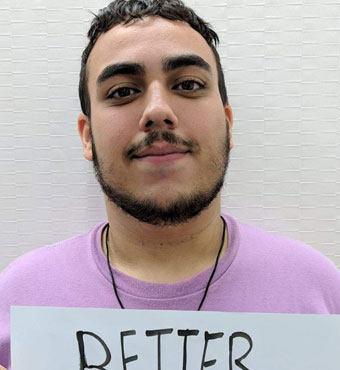
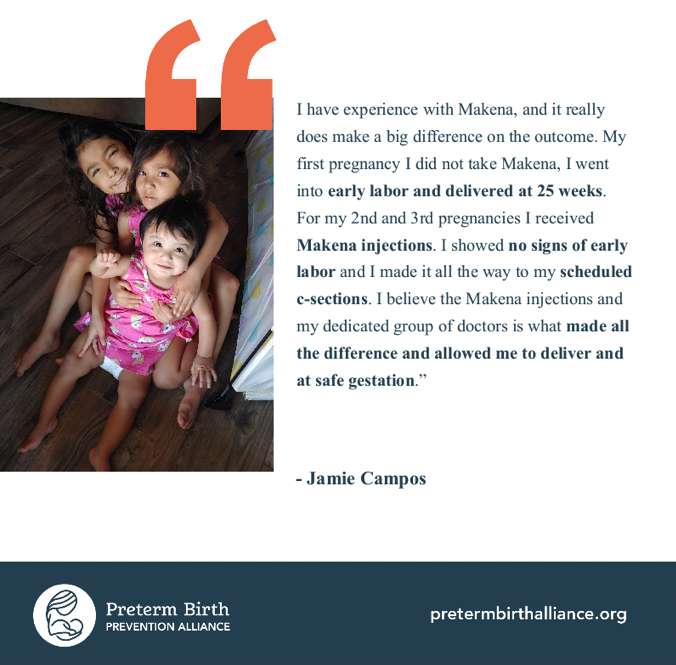
Patients across the country have been impacted by the bundle and are sharing their concerns with policymakers and the public. Here are a few of their stories:

CKD care is not always straightforward, and encompassing every patient into a single fixed-payment bundle system takes away the key patient and provider relationship, where decisions are made to save lives, not time.

Ensuring that older adults can get the treatments they need to manage chronic conditions like kidney failure demands action.

The solution to this problem is simple. Medicare must reverse the decision to include oral-only Phosphate Lowering Therapies into the ESRD Bundle and restore coverage access to Medicare Part D. This change would immediately expand treatment options, reduce avoidable harm, and help keep thousands of older Americans eligible for transplant.

But the call for action is not just coming from advocates or clinicians, it is coming directly from patients. Their experiences are clear, consistent, and urgent. They are telling us what is at stake: their health, their independence, and their chance at a better life. Policymakers must listen.

Seniors and kidney patients deserve policies shaped by the realities they live every day not by technical payment decisions that ignore those realities. We urge the administration to return to a patient-centered Medicare approach that respects individual needs and ensures that older adults can age with health, dignity, and hope.
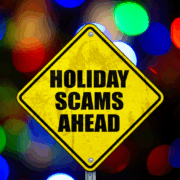
‘Tis the Season for Scammers: National Consumers League Unveils the Top 10 Holiday Shopping Scams of 2025

From fake deals to phony deliveries, consumers urged to stay alert as holiday fraud surges  

Media Contact: Lisa McDonald, Vice President of Communications, 202-207-2829  

Washington, DC — As holiday shopping kicks into high gear, the National Consumers League (NCL) is warning Americans to beware of the wave of scams designed to cash in on the season of giving. “Scammers know the holidays are the perfect storm—consumers are busy and spending more online looking for deals,” said John Breyault, NCL’s Vice President of Telecommunications and Fraud Policy. “They count on you being distracted. Before you click that link or grab that ‘flash deal,’ take a breath and verify it’s real. A few extra seconds of skepticism can save you hundreds—or even thousands—of dollars.”  

Whether it’s counterfeit products on social media, bogus “too good to be true” deals, or texts about fake delivery problems, scammers are working overtime to take your hard-earned dollars.  

To help shoppers protect themselves, NCL has identified 10 Holiday Shopping Scams to watch out for and offers advice to navigate tricky situations.   

Top 10 Holiday Shopping Scams to watch     

  • Fake “Too-Good-To-Be-True” Deals – Deep discounts on luxury brands or electronics that never arrive.  
  • Counterfeit Products on Marketplaces – Fraudsters posing as legitimate sellers with knockoff goods.  
  • Gift Card Grifts – Used or drained cards, or scammers demanding payment via gift card.  
  • Phishing Emails and Texts – Fake order confirmations and delivery alerts that steal personal info.  
  • Charity Scams – Imposters preying on goodwill with fake donation appeals.  
  • Package Delivery Scams – Texts claiming “delivery issues” that link to phony tracking sites.  
  • Subscription Traps – “Free trials” that quietly charge recurring fees.  
  • Social Media Shopping Scams – Fraudulent ads or influencer posts for non-existent stores.  
  • Travel Deal Cons – Bogus vacation rentals or airfare “specials” that disappear after payment.  
  • Buy Now, Pay Later Pitfalls – Fake financing offers or hidden fee traps.  

NCL’s Tips to Stay Scam-Free This Season:  

  • Stick to trusted retailers and check URLs before purchasing.  
  • Don’t click on links in unsolicited texts or emails—go directly to the retailer’s site.  
  • Pay by credit card for better fraud protection.  
  • Verify charities through trusted databases before donating. 

For more tips or to report suspected scams, visit Fraud.org.  

###  

About the National Consumers League (NCL)       

The National Consumers League, founded in 1899, is America’s pioneer consumer organization. Our mission is to protect and promote social and economic justice for consumers and workers in the United States and abroad. For more information, visit www.nclnet.org.     

Child Labor Coalition Applauds Introduction of the CARE Act of 2025 on Universal Children’s Day

Media Contact: Lisa McDonald, Vice President of Communications, 202-207-2829 

Washington, DC — Today, on World Children’s Day, Representative Raul Ruiz (CA-25) reintroduced the Children’s Act for Responsible Employment and Farm Safety (CARE Act) in the U.S. House of Representatives. The Child Labor Coalition (CLC) strongly supports this essential legislation, which modernizes outdated federal child labor laws and extends long-overdue protections to child farmworkers—among the nation’s most vulnerable laborers. 

“Our nation has a moral duty to protect every working child,” said Reid Maki, Director of Child Labor Advocacy and Coordinator of the CLC. “Farmworkers remain among the most exploited and unprotected workers in America. Children deserve safe working conditions and the same rights afforded to young workers in every other industry. Updating these antiquated laws is long overdue.” 

The CARE Act closes loopholes that have long allowed children in agriculture to perform hazardous work at age 16—an age two years younger than what is required in all other sectors. It raises the minimum age for children to work on farms from 12 to 14, and it makes these critical changes while preserving long-standing family farm traditions by ensuring that new protections do not restrict children working on their parents’ farms. 

Maki emphasized the deep historical harm caused by these outdated rules:
“It’s astonishing that discriminatory loopholes allowing very young children to work 70- or 80-hour weeks in dangerous conditions have existed since the 1930s. These exemptions undermine children’s education and put their health at serious risk.” 

The CARE Act of 2025 marks a critical step toward safety, equity, and dignity for child farmworkers. The Child Labor Coalition urges Congress to act swiftly to pass this legislation and ensure that every child in America is protected—no matter where they live or work.  

### 

About the National Consumers League (NCL)      

The National Consumers League, founded in 1899, is America’s pioneer consumer organization. Our mission is to protect and promote social and economic justice for consumers and workers in the United States and abroad. For more information, visit www.nclnet.org.   


DOJ’s Scam Center Strike Force Is a Major Win for Consumers

Media Contact: Lisa McDonald, Vice President of Communications, 202-207-2829 

Washington, DC — The National Consumers League (NCL) applauded the Justice Department’s creation of a new federal Scam Center Strike Force to crack down on cryptocurrency-related fraud. NCL, through its Fraud.org campaign, has long urged stronger action to hold both scammers—and the communication and financial networks they use—accountable for the hundreds of billions lost to fraud each year.

The following statement is attributable to John Breyault, NCL’s Vice President of Public Policy, Telecommunications, and Fraud:

“These criminals don’t just drain bank accounts—they destroy lives. This Strike Force is a major step toward putting global fraudsters on notice. For too long, overseas crypto-investment scammers have been operating with impunity, stealing billions from Americans. This new coordinated approach sends a clear message: the U.S. is fighting back.

Crypto scams are the new face of global fraud. They’re high-tech, transnational, and devastating for victims. By treating these operations as the national-security threat they are, DOJ is showing real leadership. The announcement that law enforcement has already seized over $400 million in cryptocurrency is a powerful sign that these criminals can—and will—be caught. But it’s not just about arrests; it’s about getting money back into the hands of victims.

We urge policymakers not to stop here. Consumers need stronger education, more accountability from the platforms and telecom networks that enable scams, and better systems for restitution. This is a fight we can win—but only if we work together.”

Consumer who have been targeted by scammers should not be silent. By filing a complaint via Fraud.org’s secure online complaint form, we can share your story with our network of law enforcement and consumer protection agency partners.

### 

About the National Consumers League (NCL)      

The National Consumers League, founded in 1899, is America’s pioneer consumer organization. Our mission is to protect and promote social and economic justice for consumers and workers in the United States and abroad. For more information, visit www.nclnet.org.   

The East Wing Was More Than a Building — It Was a Legacy of Women’s Leadership

By Maggie Oliverio, NCL Media Relations Associate

As a child, I always dreamed of living in Washington, working in politics, making a real difference, and having a life like the ones my favorite characters in books, movies, and television shows led. I idolized women like our first ladies —Jackie Kennedy, Lady Bird Johnson, Nancy Reagan, Laura Bush, and Michelle Obama —as well as working women in Washington, like Judy Smith, Representative Jan Schakowsky, and Diane Sawyer.

In 2023, it was finally my time. I had graduated from college and was elated to start my first job on Capitol Hill. In my role, I had the opportunity to take part in many extraordinary experiences, but the most joyous was the White House. The East and West Wing, Rose Garden, Executive Office building, and yes, even the private bowling alley.

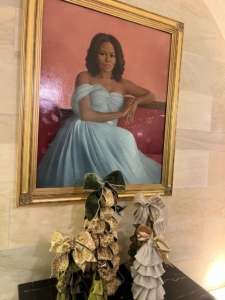
The East Wing was one of those places: pale light, quiet footsteps, portraits watching from the walls, time slowed as you walked in. It felt like a bridge between the ceremonial and the practical, between the pageantry of the presidency and the daily work of the people who kept the place running. So, when I learned that the East Wing would be reduced to rubble to make room for a ballroom, I was devastated. How could that be possible? I was just there a mere 10 months ago, touring with my friends, admiring the First Lady’s portraits and holiday lights. This wasn’t just a building being torn down. It was history—personal and national—being erased with startling speed.

Built during World War II under Franklin Roosevelt, the East Wing’s above-ground structure was created partly to conceal an underground emergency bunker system. Over time, the East Wing evolved into something more than an architectural appendage. It became the domain of the First Ladies, a space where women—often dismissed as presidential appendages — ran complex portfolios, crafted policy initiatives, and built their own leadership teams. For decades, some of the most influential work affecting American families, education, public health, and military families happened in those rooms.

For someone like me, who came into government service believing deeply in the power of female representation, that mattered. Our first ladies are not ornamental; they are public servants. These hard-working women have given up privacy, personal dreams, and peace of mind to serve a role that demands grace under relentless scrutiny.

When the ballroom project was first introduced, we were assured that the East Wing would be preserved. That promise evaporated the moment the demolition equipment rolled in. The American people understand homes need repairs and renovations, but this was not a facelift. We were lied to. The East Wing wasn’t renovated—it was demolished; its structure and symbolism treated as disposable.

Buildings carry stories. The East Wing was full of them: Roosevelt’s wartime bunker construction, Jackie Kennedy’s restoration plans, Laura Bush’s library and literacy work, Nancy Reagan’s social office machine, and Michelle Obama’s Let’s Move! Team. Even the less visible staff—ushers, schedulers, policy aides, military social aides—left their fingerprints. It held generations of American life inside its walls.
The administration says the new ballroom is privately funded, and on paper, that may be true. The construction costs—hundreds of millions—are being covered by a mix of Trump’s money and a network of donors but “cost to the taxpayer” isn’t just about a line in the federal budget.

There are other costs, less obvious but more corrosive:
· Security costs, which inevitably fall to taxpayers, will rise with a new, larger, more complex structure.
· Maintenance of the expanded footprint will fall to federal budgets long after the donors’ checks stop clearing.
· Oversight shortcuts taken during the rapid approval process set precedents that future administrations will inherit—and taxpayers will pay for those mistakes.

A privately funded government building is never truly free. Who gets invited to give? Whose interests align with the White House? What foreign actors see as a “donation” is an investment with expected returns?
These aren’t abstract concerns. They strike at the heart of the very system the East Wing represented: public service rooted in institutional and historical continuity, not personal favor.

For me, the loss is both political and personal. The knowledge that a place where women led, organized, strategized, and influenced national conversations has been erased. There is something eerily prolific for our current climate that a place that held so much history—specifically women’s history—was removed out of preference, not necessity. Out of vanity. And with no public input, even though this was truly the people’s house.

This one stings, and it should, for every taxpayer, every young girl who dreamed of walking those historic halls once inhabited by our First Ladies, and every American who believes in “for the people, by the people.”


From Farm to Feast: National Consumers League Says You Should be Concerned About Food Safety This Holiday Season

Avoid foodborne illness this Thanksgiving with simple steps for safe thawing, cooking, and leftovers.  

Media Contact: Lisa McDonald, Vice President of Communications, 202-207-2829  

Washington, DC – As Thanksgiving and Christmas quickly approach, the National Consumers League (NCL) reminds consumers that foodborne illnesses are on the rise. Still, some simple food safety practices will keep holiday meals safe and enjoyable for family and friends.  

“Food safety during the holidays should be a priority,” said NCL Director of Food and Nutrition Policy, Nancy Glick. “Foodborne illnesses affect about 48 million Americans annually, but spike over the holiday season when larger gatherings and leaving food out for extended periods create more opportunities for bacteria to grow and spread.”

Knowing how to prevent foodborne illness requires understanding what this health problem is, who is most at risk, and the types of foods that are most likely to become contaminated and harbor the bacteria that cause most cases of foodborne illness during the holidays.  

However, within these food categories, the USDA has identified a number of holiday foods that are known to carry food safety risks because they are more vulnerable to contamination.  These foods include stuffing made with raw poultry, stuffing, or casseroles, undercooked poultry (like turkey), raw eggs in dishes such as eggnog, and deli meats, especially if they are store-prepared deli salads. Other holiday foods that require attention are leafy greens, ready-to-cook dough and batter, raw or undercooked shellfish and especially oysters, and cooked rice left at room temperature, which can become breeding grounds for bacteria.   

Towards this end, information from the Centers for Disease Control and Prevention (CDC) is invaluable. Starting with a definition, CDC describes foodborne illnesses, also known as “food poisoning,” as diseases transmitted to people by eating or drinking something contaminated with bacteria, viruses, parasites, or chemicals, such as toxins or metals.  While a foodborne illness can be severe, leading to hospitalization, long-term health problems, and even death, most cases are mild and involve symptoms like upset stomach, diarrhea, and vomiting that resolve in a few days.   

The problem, however, is that certain groups of people are more susceptible to foodborne illness than others – meaning they are more likely to get sick from contaminated food. If they do get sick, the effects are often more serious. Thus, it is essential to be vigilant in following safe food-handling practices when shopping for, preparing, and storing foods that will be served to children under age 5, older adults, pregnant women, and people being treated for diabetes, cancer, autoimmune diseases, and HIV.   

The US Department of Agriculture (USDA) cautions consumers to be aware of holiday foods that can harbor bacteria like Salmonella, E. coli, and Listeria if not cooked or stored correctly. Using data reported from studying foodborne outbreak-related illnesses occurring between 1998 and 2008, USDA researchers determined that plant-based foods, including fruits, nuts, and vegetables, accounted for the most cases of foodborne illness (51 percent), followed by meat and poultry (42 percent) and dairy products (14 percent).      

Glick continues, “Knowing the risks associated with foodborne illness and the common holiday foods that may cause people to get sick are the keys to having a safe and healthy holiday. Foodborne illness is preventable, but this requires being serious about food safety practices, from handwashing, safe thawing methods, preventing cross-contamination, and keeping foods at safe temperatures.”

It’s not too early to brush up on safe food preparation and storage practices. As you gather with loved ones to celebrate the holidays, keep these practices in mind to help prevent foodborne illness.  

NCL’s Top Food Safety Tips for a Healthy Holiday  

  1. Thaw safely: Never Thaw a turkey on the counter. Defrost in the refrigerator (24 hours per 4–5 pounds) or in cold water, changing the water every 30 minutes. 
  2. Cook thoroughly: Use a food thermometer — turkey breast should reach 165°F, thighs 175°F. Don’t rely on color alone.  
  1. Avoid cross-contamination: Keep raw poultry separate from other foods. Wash your hands, utensils, and cutting boards often.  
  1. Handle leftovers with care: Refrigerate within two hours, store in shallow containers, and reheat to 165°F. Discard after 3–4 days.  

###  

About the National Consumers League (NCL)       

The National Consumers League, founded in 1899, is America’s pioneer consumer organization. Our mission is to protect and promote social and economic justice for consumers and workers in the United States and abroad. For more information, visit www.nclnet.org. 

Consumer Group Applauds FDA’s Action to Update Hormone Replacement Therapy Warnings 

Media Contact: Lisa McDonald, Vice President of Communications, 202-207-2829  

Washington, DC The National Consumers League (NCL)’ s CEO attended the FDA announcement today that the agency will no longer require the “black box warning” on local estrogen products.  NCL applauds the decision, which follows science and removes warnings that don’t follow the medical data for menopausal women and related conditions.  

“For too long, outdated and misleading warnings have discouraged women from using very safe and effective local estrogen medications to relieve the often-debilitating symptoms of menopause,” said Sally Greenberg, CEO of the National Consumers League. “We have been asking for the removal of the black box warning for decades. The FDA’s action reflects current evidence and acknowledges the important role these local estrogen therapies can play in improving women’s health and quality of life.”   

NCL is particularly pleased to see the removal of boxed warnings for local vaginal estrogen products — a step that will expand options for managing menopause-related conditions. At the same time, we urge consumers to be vigilant, seek the advice of their health care providers and look for transparency to ensure that they receive clear, evidence-based information about all treatment risks and benefits.  

“Women deserve science-driven policies and access to care that reflects the best available research. The Administration listened to female patients, their doctors, providers, and women’s health researchers and for that we are grateful,” Greenberg concluded. 

### 

About the National Consumers League (NCL)      

The National Consumers League, founded in 1899, is America’s pioneer consumer organization. Our mission is to protect and promote social and economic justice for consumers and workers in the United States and abroad. For more information, visit www.nclnet.org.   

The National Consumers League Applauds the Trump Administration For Lowering the Price of GLP-1 Weight Loss Drugs

Media Contact: Lisa McDonald, Vice President of Communications, 202-207-2829  

Washington, DC – On behalf of the estimated 100,000 million US adults with obesity, many of whom are seeking treatment with FDA-approved anti-obesity medicines, the National Consumers League (NCL) applauds the Trump Administration for negotiating lower prices for the popular GLP-1 (glucagon-like peptide-1) weight loss drugs, Wegovy© (semaglutide) and Zepbound© (tirzepatide), so these medicines are more accessible to those needing quality obesity care.

According to an agreement the White House reached with the manufacturers of Wegovy and Zepbound, as of mid-2026, the Medicare program will purchase injectable semaglutide and tirzepatide – and later the pill forms when approved by the FDA — at $149 per month for the lowest dose and $245 per month for larger doses. This means that Medicare will be able to cover GLP-1 weight loss drugs for the first time, with Medicare beneficiaries responsible for co-pay of just $50 per month. Moreover, state Medicaid programs will benefit from these discounts, thereby allowing more people with obesity to receive quality obesity care in the country.

Also of note, starting in January 2026, Americans not eligible for Medicare or Medicaid will be able to buy Wegovy and Zepbound directly from the government website, Trumprx.gov, for $350 or less per month. This represents a significant discount from the price the manufacturers currently offer to consumers through their direct-to-consumer online pharmacy programs.

Collectively, the actions by the Administration will improve the lives of millions of Americans with obesity, who for too long, have been denied access to medicines that are clinically effective in achieving significant weight loss.

However, NCL joins with other members of the obesity community in calling on Congress to pass the Treat and Reduce Obesity Act (TROA) this year. By enacting this legislation, Congress will ensure that Medicare beneficiaries have coverage for GLP-1 drugs. At the same time, TROA will expand access to intensive behavioral therapy (IBT) in more clinical settings, allowing more adult Americans to receive counseling that promotes sustained weight loss through high intensity interventions on diet and exercise.

###  

About the National Consumers League (NCL)       

The National Consumers League, founded in 1899, is America’s pioneer consumer organization. Our mission is to protect and promote social and economic justice for consumers and workers in the United States and abroad. For more information, visit www.nclnet.org.   

NCL Urges FDA to Reject Misleading Petition on Acetaminophen Labeling

Warns against politicizing drug safety decisions and spreading misinformation to pregnant women 

Media Contact: Lisa McDonald, Vice President of Communications, 202-207-2829 

Washington, DC – The National Consumers League (NCL) has submitted comments urging the U.S. Food and Drug Administration (FDA) to reject a petition from the Informed Consent Action Network (ICAN) that calls for new warnings on over-the-counter acetaminophen products. NCL warns that ICAN’s proposed labeling changes are not supported by credible science and could needlessly alarm pregnant women. 

“Decades of high-quality research show no causal link between acetaminophen use in pregnancy and neurodevelopmental disorders such as autism,” said NCL CEO Sally Greenberg. “The science is clear: acetaminophen remains the safest and most effective option for managing fever or pain during pregnancy. Overstating unproven risks will only confuse and endanger women and their babies.” 

“Inserting politically motivated warnings into drug labeling would erode public trust in the FDA and risk discouraging appropriate treatment for pregnant women, potentially leading to greater harm,” Greenberg added. “Pregnant women deserve clear, evidence-based information to protect their health and their children’s health.”  

NCL notes that medical experts, including the American College of Obstetricians and Gynecologists, the Society for Maternal-Fetal Medicine, and the American Academy of Pediatrics, have all reaffirmed acetaminophen’s safety when used as directed. In addition, FDA’s own notice to physicians issued in September states that “a causal relationship has not been established.” 

NCL’s full comments are available here. 

### 

About the National Consumers League (NCL)      

The National Consumers League, founded in 1899, is America’s pioneer consumer organization. Our mission is to protect and promote social and economic justice for consumers and workers in the United States and abroad. For more information, visit www.nclnet.org.   

NCL Responds to FDA Action on Fluoride Supplements: Access Still in Question

Media Contact: Lisa McDonald, Vice President of Communications, 202-207-2829  

Washington, DC – Last week, the Food and Drug Administration (FDA) announced actions to restrict the sale of unapproved ingestible fluoride prescription drug products for children. The agency has notified four companies of its intent to take enforcement action against those marketing unapproved fluoride-containing drugs labeled for use in children under age three or for older children at low or moderate risk for tooth decay.  

“Fluoride remains one of the most effective and affordable tools we have to protect children’s teeth,” said NCL CEO Sally Greenberg. “While we are relieved that this is not a ban on fluoride supplements, the FDA’s actions highlight an ongoing concern about access to safe and effective fluoride sources for children. Millions of families, especially those without access to fluoridated water, depend on fluoride supplements prescribed by their healthcare providers to prevent painful and costly cavities.  There is scant evidence that fluoride supplements harm children, as the FDA alleges. I myself took them when I was pregnant, and he took them as an infant, and millions of other children enjoy great dental health with no neurological effects.”  

“Preventing cavities is always better than treating them. Without prevention, families face unaffordable dental bills, and children face serious long-term health consequences,” Greenberg concluded. “It is imperative not to deprive children without access to fluoridated water of other safe sources of fluoride.”  

###  

About the National Consumers League (NCL)       

The National Consumers League, founded in 1899, is America’s pioneer consumer organization. Our mission is to protect and promote social and economic justice for consumers and workers in the United States and abroad. For more information, visit www.nclnet.org.