NCL urges ACIP to expand RSV vaccine recommendations at April 2025 meeting

Media Contact: Lisa McDonald, Vice President of Communications, 202-207-2829

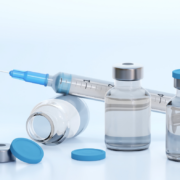
Washington, DC — This week, the National Consumers League this week strongly recommended expanding respiratory syncytial virus (RSV) vaccines for high-risk adults 50-59 years old to protect against a condition that can become severe for infants and older adults. NCL was selected to make remarks before the critically important Advisory Committee on Immunization Practices ( ACIP)  Additionally, NCL encouraged the Committee to continue its work in support of increasing vaccine confidence and transparency for the public.  On April 11, 2025, the National Consumers League submitted comments in response to a request for comments at the April 15 and 16 in Atlanta, Georgia.

ACIP also discussed the COVID-19, flu, RSV, and meningococcal vaccines. At the meeting, additional discussion and updates were provided on the ongoing and growing measles outbreaks and cases across the nation. The Committee voted on recommendations for three vaccines, including RSV.

Samantha Sears, NCL’s Health Policy Associate, told the ACIP committee to expand access to RSV and other vaccines and advised that a middle ground, called shared clinical decision-making, has proven too often to result in patients not choosing to get vaccinated, which runs counter to NCL’s support for broader vaccine adoption given the vast data to support the overwhelming safety and efficacy of vaccines in preventing infection disease.

Originally, ACIP was scheduled to meet in February, but the meeting was indefinitely postponed after the confirmation of the Secretary of the US Department of Health and Human Services, Robert F. Kennedy, Jr. NCL is pleased that the Secretary rescheduled this meeting and hopes that the remaining two meetings of ACIP in 2025 will continue as scheduled.

The Advisory Committee on Immunization Practices (ACIP), comprising fifteen medical and public health experts, is charged with advising the CDC Director on the use of vaccines and the immunization schedules for adults and children. ACIP meets regularly to review data, studies, and proposals for vaccines and, as needed, for emergency cases. Meetings are open to the public and, since COVID, streamed online. The recordings of the livestream of the April 15 and April 16 meetings are available online.

### 

About the National Consumers League (NCL)   

 The National Consumers League, founded in 1899, is America’s pioneer consumer organization. Our mission is to protect and promote social and economic justice for consumers and workers in the United States and abroad. For more information, visit www.nclnet.org

CFPB layoffs significantly raise consumers’ risk of fraud 

Media Contact: Lisa McDonald, Vice President of Communications, 202-207-2829    

Washington, DC – The National Consumers League (NCL) is calling on the Trump Administration to immediately stop the sweeping layoffs announced at the Consumer Financial Protection Bureau (CFPB). Reports that the Administration plans to lay off 1,500 positions across the CFPB’s enforcement and supervision divisions will drastically reduce the agency’s ability to fulfill its core mission of protecting consumers.    

“This is a reckless move that will leave millions of Americans more vulnerable to financial fraud and abuse,” said NCL VP of Public Policy John Breyault. “With only about 200 personnel left to oversee the financial marketplace, the Bureau’s effectiveness will be severely compromised at a time when scams, identity theft, and predatory lending are on the rise. This is yet another attempt by this administration to dismantle one of the most effective consumer protection watchdogs in the federal government.” 

The move to narrow the CFPB’s focus to only the most “tangible” harms and retreat from regulating nonbank financial actors—such as payday lenders, peer-to-peer platforms, and digital payment services—ignores the rapidly evolving threats consumers face in the financial marketplace. Many of these sectors are precisely where fraud and abuse thrive due to a lack of oversight.   

###  

About the National Consumers League (NCL)  

The National Consumers League, founded in 1899, is America’s pioneer consumer organization. Our mission is to protect and promote social and economic justice for consumers and workers in the United States and abroad. For more information, visit www.nclnet.org. 

Guest Blog: Sweet treats, bitter reality: The human cost of cocoa

By Emily McKay, NCL Spring Communications Intern

For many, April brings the joy of Easter with children awakening to an Easter Basket filled with treats or searching in the grass for eggs and chocolate. But while children here delight in eating a chocolate bunny, 1.56 million children are working in West African cocoa fields, harvesting the very cocoa that makes our Easter candy possible. [^1]  How does a consumer know if the chocolate they are eating involves child labor?    

Thankfully, organizations like Be Slavery Free, an Australian coalition campaigning against modern slavery are making it easier for consumers to hold chocolate companies accountable. By ranking brands based on their child labor policies and transparency, the 6th annual chocolate scorecard has helped bring meaningful change.  

Cocoa, one of West Africa’s major exports, is predominantly grown in Côte d’Ivoire and Ghana, which together produce 50% of the world’s cocoa supply.[^2] The region’s cocoa industry began booming in the late 19th century when Ghanaian farmers discovered they could earn ten times more from cocoa than from palm oil. By 1886, British colonial authorities began promoting cocoa cultivation through training programs and seed distribution. By 1936, Ghana’s annual cocoa output had reached 311,000 tons.    

Around the same time, in Côte d’Ivoire, the Kru people—an indigenous ethnic group—began cultivating cocoa as well. [^3] In 1946, French colonial authorities recognized cocoa’s potential and expanded its cultivation across the country. By 1960, Côte d’Ivoire had gained independence, and the chocolate industry was flourishing. In 1977, Côte d’Ivoire surpassed Ghana to become the world’s leading cocoa producer.[^3]   

Sadly, exploitative labor practices have long plagued the chocolate industry. Today, the global chocolate market is worth over $100 billion, yet many cocoa farmers live on less than a dollar a day. [^4] Child labor is widespread, and many children involved in cocoa farming are subjected to exploitation and, in some cases, modern slavery.    

In recent years, the U.S. government has withdrawn funding for programs aimed at fighting child labor and slavery worldwide—including within the cocoa industry. As government efforts wane, the responsibility falls to consumers to become informed and take action against child exploitation.   

Today, 82% of chocolate companies publicly disclose data on child labor—up from just 45% a few years ago. This progress is encouraging, but disclosure alone is not enough. Consumers must continue pushing for real change. Twenty-five years ago, chocolate companies pledged to eliminate child labor. Yet the practice remains entrenched. In a time when regulatory action is lacking, it is up to us—as informed, ethical consumers—to make responsible choices and demand accountability from the companies behind our favorite treats.   

[1] https://www.dol.gov/agencies/ilab/our-work/child-forced-labor-trafficking/child-labor-cocoa   

[2] https://www.kakaoplattform.ch/about-cocoa/cocoa-facts-and-figures#:~:text=In%20the%20last%20cocoa%20season,is%20the%20largest%20producer%20country.   

[3] https://www.antislavery.org/wp-content/uploads/2017/01/1_cocoa_report_2004.pdf   

[4] https://fairworldproject.org/wp-content/uploads/2020/10/GA-NORC-report-press-release-Child-Labor-and-Farmer-Poverty.pdf  

NCL warns: DOGE’s FTC infiltration puts consumer privacy at risk

Media Contact: Lisa McDonald, Vice President of Communications, 202-207-2829
Washington, DC The National Consumers League (NCL) is outraged by the recent actions of Elon Musk’s “Department of Government Efficiency” (DOGE), which has reportedly infiltrated the Federal Trade Commission (FTC). These actions pose a direct and immediate threat to consumers and parents nationwide. By interfering with the FTC’s ability to protect the public—especially children’s data—from harmful privacy violations, fraud, and anti-competitive practices, DOGE has crossed the line.
“The infiltration of the FTC by DOGE, an entity driven by the interests of a few powerful billionaires, is a dangerous step toward dismantling vital consumer protections and furthering the corporate capture of government agencies,” said NCL VP of Public Policy, Telecommunications, and Fraud, John Breyault. “The public’s safety and privacy are already under constant threat from corporate surveillance, and DOGE’s actions simply give even more power to those who prioritize profit over people. Consumers stand to lose the most from DOGE’s interference, and parents should be alarmed, especially since the FTC plays a critical role in safeguarding children’s digital privacy.”
###
About the National Consumers League (NCL)
The National Consumers League, founded in 1899, is America’s pioneer consumer organization. Our mission is to protect and promote social and economic justice for consumers and workers in the United States and abroad. For more information, visit www.nclnet.org.

New anti-child labor campaign targets major U.S. meat companies for illegal child labor in slaughterhouses

Media Contact: Lisa McDonald, Vice President of Communications, 202-207-2829 

Washington, DC – Green America and the Child Labor Coalition launched a new campaign aimed at eradicating child labor and labor violations in the food production industry, with a focus on the four top U.S. meat processing companies. The campaign will focus on child labor and labor violations at Perdue Farms, JBS, Tyson and Cargill, including launching a consumer petition and engaging a network of allied grassroots groups on the ground across the country.

Once thought a relic of the past, child labor is on the rise in the United States. Major U.S. corporations are putting children as young as 13 to work in dangerous jobs they are too young to perform and that are hazardous to their health. An estimated 300,000 to 500,000 children are working in the agriculture industry alone.

In January, Perdue Farms and JBS, two of the country’s largest meat-packers, were fined a combined $8 million for relying on children to work in their slaughterhouses. Children also have been reportedly working in dangerous conditions at Tyson and Cargill facilities. To make matters worse, 31 states have worked to loosen child labor and safety laws since 2021.

Reid Maki, Child Labor Advocacy Director for the Child Labor Coalition and National Consumers League, said: “Children’s lives are on the line and there is no time to waste. In just the last two years, the U.S. has experienced fatalities and permanent, traumatic injuries involving children working at dangerous and exploitative jobs in meat-processing facilities. Companies have a legal and moral obligation to eliminate child labor in the food production industry.”

Charlotte Tate, Labor Justice Campaigns Director at Green America, said: “In the United States today, illegal child labor is resurgent because of the irresponsible business practices of corporations, including some of the top meat-packing companies. It’s appalling that multi-billion-dollar meat producers are profiting from children carrying out dangerous work cleaning in their facilities. Cargill hit record profits of up to $6 billion in recent years. JBS is even bigger, with a reported $20 billion profit last year alone. While companies are taking steps in response to federal investigations, more needs to be done to protect children from child labor and unsafe working conditions throughout their entire supply chains.”

Todd Larsen, Executive Co-Director at Green America said: “Sadly, there have been several reports of minors who suffered injuries that included mangled arms and chemical burns in food processing facilities cleaned by contractors hired by meatpacking companies. These children are working long hours, often late in the night, to do work that should only be performed by adults.”

JBS  JBS is the world’s largest meat processor. The Department of Labor recently uncovered serious child labor violations at multiple JBS facilities, revealing minors as young as 13 years old working in hazardous working conditions. These violations were found in locations in Grand Island, Nebraska; Greeley, Colorado; Worthington, Minnesota; and Marshall, Minnesota. The Department of Labor report states that these minors were exposed to and cleaned hazardous machinery during overnight shifts. JBS paid $4 million in fines in January 2025 for child labor violations in several states.

Tyson – Tyson is the second-largest meat processor after JBS. The Department of Labor recently found minors as young as 13 working in hazardous conditions at Tyson Foods facilities in Green Forest, Arkansas and Goodlettsville, Tennessee. The Department of Labor also began investigating Tyson for child labor violations at two poultry processing plants in Arkansas.

Perdue – The Department of Labor recently found children as young as 13 working in hazardous conditions in a Perdue Facility in Virginia. Tragically, while sanitizing power-driven meat-processing equipment, a child working an overnight shift was traumatically injured when his arm was caught in a machine that he was cleaning and cut to the bone in February 2022. Perdue recently agreed to pay $4 million in fines based on investigations of child labor in Virginia.

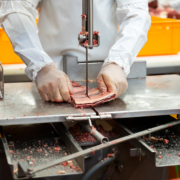
Cargill – Cargill is the world’s largest ground beef producer. The Department of Labor recently uncovered child labor violations at Cargill facilities in Dodge City, Kansas and Fiona, Texas. The investigation of Packer Sanitation Services Inc. (PSSI), which was contracted by Cargill and other meatpackers, found children working with hazardous chemicals and cleaning equipment such as brisket saws and “head splitters,” often on overnight shifts.

Green America is a non-profit organization representing over 250,000 individual members and 2,000 small businesses. Our mission is to harness economic power—the strength of consumers, investors, businesses, and the marketplace—to create a socially just and environmentally sustainable society.

The Child Labor Coalition (CLC) represents millions of Americans through 37 organizations that fight to protect worker rights, human rights, and child rights. CLC members include the nation’s largest union, the National Education Association, the National Consumers League, Human Rights Watch, and the Fair Labor Association, as well as numerous groups that are also concerned about the welfare of vulnerable children at risk of child labor exploitation.

###

About the National Consumers League (NCL)      

The National Consumers League, founded in 1899, is America’s pioneer consumer organization. Our mission is to protect and promote social and economic justice for consumers and workers in the United States and abroad. For more information, visit www.nclnet.org

U.S. House vote exposes more families to fraud  

Media Contact: Lisa McDonald, Vice President of Communications, 202-207-2829       

Washington, DC – The National Consumers League (NCL) is outraged by today’s partisan vote by the U.S. House of Representatives to repeal the Consumer Financial Protection Bureau’s (CFPB) Larger Participants Rule. The vote approving S.J. Res 28 solidifies a gaping regulatory loophole that will allow Big Tech payment apps like PayPal, Venmo, and CashApp to evade accountability for their use by criminals to defraud millions of Americans.  

“Peer-to-peer payment app operators know that their platforms are being used by criminals to enable hundreds of millions, if not billions, of dollars in fraud against American families,” said NCL Vice President of Public Policy, Telecommunications, and Fraud John Breyault. “Instead of giving the CFPB the ability to crack down on this fraud, Elon Musk and his allies Congress have instead given a green light to scammers to raid the life savings of vulnerable Americans.”  

The CFPB’s Defining Larger Participants of a Market for General-Use Digital Consumer Payment Applications regulation (Larger Participant Rule) last year leveled the playing field between banks and Big Tech companies by establishing much-needed CFPB oversight over operators of digital wallets and payment apps. Should S.J. Res 28 become law, the operators of these apps will also have free rein to collect vast quantities of data about individual’s transactions with few, if any guardrails.   

NCL similarly criticized the House’s vote to overturn the CFPB’s overdraft fee rule (S.J. Res 18). The rule closed an outdated loophole that allows major banks to generate billions from excessive overdraft fees. Overdraft fees generate $5 billion in junk fee profits each year,  costing households hit with such fees approximately $225 annually. The CFPB’s overdraft fee rule lowered overdraft fees from $35 to $5 per overdraft.  

“The overdraft fee rule sent a clear message that banks should work for everyday Americans, not nickel-and-dime them with outrageous fees,” Breyault continued. “Instead of protecting this commonsense consumer protection, Republicans in Congress chose to stand with big banks and to let them continue padding their bottom lines with billions in junk fees.”  

###  

About the National Consumers League (NCL)       

The National Consumers League, founded in 1899, is America’s pioneer consumer organization. Our mission is to protect and promote social and economic justice for consumers and workers in the United States and abroad. For more information, visit www.nclnet.org.    

Don’t throw auto safety in reverse

By Daniel Greene, Senior Director of Consumer Protection & Product Safety Policy

If traffic safety were a war, we’d be losing.   

Our nation suffers approximately 40,000 deaths and 2.6 million injuries to traffic crashes each year.   

That’s enough fatalities to fill the average Major League Baseball stadium.  Enough injuries to affect nearly every resident of the state of Alabama. 

Traffic crashes cost society nearly a trillion dollars in medical bills, emergency services, lost productivity, insurance costs, workplace loss, legal costs, and property damage.  That’s enough money to buy more than 26 million mid-size SUVs; ten million more than the total number of cars sold in 2024.   

No Congressional district has been spared.  No community is immune.   

Yet, the death and destruction on our nation’s roads does not have to be the price we pay for commuting to work, dropping the kids off at school, or picking up groceries.  By harnessing revolutionary safety technologies, educating the motoring public, and improving the design, construction and performance of motor vehicles, we can dramatically improve roadway safety.   

Fortunately, there is a federal agency responsible for carrying out such activities.  The National Highway Traffic Safety Administration (NHTSA) is our nation’s principal automobile safety regulator, charged with reducing death and injuries associated with traffic accidents.  NHTSA carries out its lifesaving mission by establishing safety standards, investigating defects, enforcing recalls, and providing states resources for driver education, risky driving countermeasures, and roadside safety. 

NHTSA has delivered.  Safety features that were once rare and unique are now common and conventional: seatbelts, airbags, and crumple zones, to name a few.  Many of these features were adopted to comply with increasingly ambitious safety standards. The result: fewer fatalities and injuries on our nation’s roads. 

From 1968 through 2019, NHTSA’s safety standards prevented over 860,000 deaths, 49 million injuries, and damage to 65 million vehicles, generating over $17.3 trillion in societal benefits.  In 2019 alone, standards prevented 40,000 deaths, 1.9 million injuries, and damage to 3.8 million vehicles.  

NHTSA has also successfully taken unsafe vehicles off our nation’s roadways.  Since 1968, NHTSA has participated in the recall of more than 390 million vehicles, 66 million pieces of motor vehicle equipment, 46 million tires, and 42 million car seats due to safety defects.   

NHTSA has compelled manufacturers to replace tens of millions of volatile and explosive airbags, millions of defective tires prone to tread separation, and millions of sticky car seat buckles that entrap children.  The agency has facilitated the remedy of millions of vehicles with incidents of unintended acceleration, millions of faulty ignition switches that deactivate the engine and airbags while a vehicle is in motion, and “self-driving” technology that cannot safely perform the driving task. 

NTHSA is on the cusp of ushering in new transformational safety technologies that may exceed the lifesaving effects of seatbelts and airbags.  The Bipartisan Infrastructure Law mandates that NHTSA support the deployment of several sophisticated safety technologies:   

  • Drunk and impaired driving prevention technology: Over 13,000 people were killed in drunk driving crashes in 2022.    
  • Crash avoidance technology: Forward collision warning and automatic emergency brakes have been shown to reduce injuries associated with front-to-rear crashes by 56 percent.  Lane departure warnings could reduce single-vehicle, sideswipe, and head-on crashes causing injury by 21 percent.  Blind-spot detection has been shown to reduce lane-change crashes that result in injuries by 23 percent.   
  • Driver monitoring systems: Distracted driving claimed an estimated 12,405 lives in 2021.  Drowsy driving caused 664 deaths that same year.   

Many of these requirements are actively being implemented but are not yet finalized.   

With NHTSA on the beat, safety is a priority and not an afterthought.  It must be built into the design, construction, and performance of each vehicle.  It must be engrained in every bolt, sensor, and line of code of a vehicle.   

But this vital safety agency is under unprecedented assault.  Championed by Elon Musk and the Department of Government Efficiency, the Trump Administration has launched a shock and awe campaign, taking a chainsaw to the key pillars of a well-functioning government.  The indiscriminate firing of civil servants, unlawful impoundment of congressionally directed spending, and work stoppages have had deeply destabilizing effects across the federal government.  The chaos has wreaked havoc on NHTSA’s ability to carry out its most basic functions.    

Approximately 1 in 20 NHTSA employees were fired in the February purge of probationary workers.  That included researchers studying impaired driving and traffic safety measures.  Several members of the Office of Defect Investigations, which is responsible for investigating defects and mandating recalls, have been dismissed.  The Office has been increasingly scrutinizing Tesla, which Elon Musk owns.  Employees within the Department of Transportation cannot access their former colleagues’ files, making it virtually impossible to continue their work.  

Through an Executive Order, the Trump Administration has directed federal agencies to “identify at least 10 existing rules, regulations, or guidance documents to be repealed” for every new rule, regulation, or guidance that is promulgated.  As of December, NHTSA had yet to finalize 19 rulemakings mandated by Congress, all through bipartisan legislation.  In the Fall Unified Regulatory Agenda, NHTSA identified 56 ongoing rulemaking proceedings, some of which had been completed prior to Trump taking office.  It may not even be possible for NHTSA to identify the hundreds of existing rules, regulations, and guidance documents necessary to finalize Congressionally directed and ongoing rulemakings while complying with the 10-to-1 rule. 

If the past is a prologue, vital automobile safety activities may fall by the wayside.  During the Biden Administration, NHTSA finalized 29 rules creating or modernizing safety standards.  The first Trump Administration finalized only nine such rules.  The Biden Administration conducted 224 investigations of potential safety defects.  The first Trump Administration initiated only 103.   

Worse yet, deeper cuts may be forthcoming.  Every federal agency was required to produce an Agency Reduction in Force and Reorganization Plan by March 13, 2025.  Such plans must seek to achieve significant staff reductions, reduced budgets, and reduced real property footprint. 

Some are calling on NHTSA’s budget to be slashed by 60 percent and the workforce reduced by 30 percent, returning the agency to 1990s-era levels.  Such plans include cutting state safety grants by 75 percent, slashing crash test facilities and testing by 75 percent, and ending vital safety initiatives like the adoption of the first female crash test dummy.  Most Americans do not want to trade in their current vehicle for a 1990s model.  We shouldn’t revert to a 1990s-era auto safety regulatory agency.   

The death and destruction on our nation’s roads is not an inevitability, but a choice. A choice to not treat traffic safety like the public health emergency it so clearly is. A choice to remain complacent.  A choice to accept the status quo.   

I contend that America should make a different choice: no more victims.  Let’s chart a course towards vision zero, in which there are no traffic fatalities or serious injuries.  And let’s ensure we equip NHTSA with the resources, staff, and authorities necessary to make that vision a reality.   
Consumers deserve slave-free chocolate: new scorecard holds brands accountable     

Media Contact: Lisa McDonald, Vice President of Communications, 202-207-2829     

Washington, DC – The National Consumers League (NCL) and its organization, the Child Labor Coalition (CLC), are proud to participate in the launch of the Annual Chocolate Scorecard, an initiative coordinated by Be Slavery Free, an Australian coalition campaigning against modern slavery. This campaign aims to raise awareness about child labor in chocolate production, promote ethical sourcing, and empower consumers to choose chocolate that aligns with their values.     

“Consumers deserve to enjoy their chocolate without the bitter aftertaste of exploitation. The Annual Chocolate Scorecard empowers shoppers to make informed choices and demand better from the industry,” said Reid Maki, Director of the Child Labor Coalition. “While we acknowledge progress, the persistence of child labor and lack of transparency from major companies is unacceptable. It’s time for real accountability and action—not just empty promises.”     

The Chocolate Scorecard ranks companies based on traceability and transparency across supply chains, whether they pay farmers a living income, make efforts to prevent the use of child labor, take action on climate and deforestation, and eliminate the use of harmful pesticides.           

This year’s Annual Chocolate Scorecard highlights both progress and ongoing challenges in the chocolate industry. Mars Wrigley, the maker of Snickers, Twix, and Maltesers, was recognized for its efforts to support women, which helps reduce child labor. On the other hand, Cadbury’s parent company, Mondelēz, received the “Bad Egg” award for refusing to participate, raising concerns about transparency and accountability. While some companies report a drop in child labor, NGOs warn of “cocoa washing,” where progress is exaggerated.        

“Consumers are being asked to swallow record chocolate prices and shrinking products. The least they expect is chocolate free from slavery. The Chocolate Scorecard will help shoppers make smart purchases this Easter,” said Fuzz Kitto, Co-Director at Be Slavery Free. “Chocolate companies love to talk about policies and commitments, but 25 years since they promised to eliminate child labor from the supply chain, it’s time to stop ‘cocoa washing’ and innovate more effective action.”        

Overall, this year’s findings have shown improvements in transparency across the industry, with 82% of companies sharing data on child labor, compared to 45% in 2023.  Additionally, several companies were recognized for their progress and achievements this year. Dutch Company Tony’s Chocolonely, received the “Good Egg” award for excellence and transparency in the marketplace. USA chocolate manufacturer Beyond Good, gained recognition for using beans from Madagascar and Uganda, receiving the “Good Egg” Award for smaller companies. Finally, US company Mars Inc. received the Gender Award for policies and programs to empower women.   

To learn more the official scorecard is available here.    

###  

About the Child Labor Coalition (CLC)     

In 1989, NCL helped launch the Child Labor Coalition (CLC) to stamp out the worst forms of child labor and to protect teen workers from health and safety hazards. Today, it is co-chaired by NCL and the American Federation of Teachers and is staffed by NCL. For more information, visit https://stopchildlabor.org/   

NCL hails bipartisan committee vote on TICKET act

Media Contact: Lisa McDonald, Vice President of Communication’s, 202-207-2829

Washington, DC – The National Consumers League today applauded the House Energy and Commerce committee for its overwhelming and bipartisan vote to approve the TICKET Act (H.R. 1402). The TICKET Act would, for the first time in history, ensure accountability and fairness in live event ticketing across the United States. The bill, which passed the U.S. House last Congress 388-24, was recently reported unanimously out of the Senate Commerce Committee. The bill has previously received support from nearly every stakeholder in the live event ecosystem, including consumer organizations, free-market advocates, venues, artists, primary and secondary ticketing platforms, and more than 37,000 individual fans.

“The TICKET Act is the result of a hard-negotiated, bipartisan compromise that reflects the reality that the modern live event ticket-buying experience is an exercise in frustration for millions of consumers,” said John Breyault, National Consumers League Vice President of Public Policy, Telecommunications & Fraud. “This bill is the solution that millions of fans have been seeking to finally get rid of hidden junk fees, crack down on predatory ticket resale practices, and guarantee refunds in the event of event postponements and cancellations. We thank Representatives Guthrie, Pallone, Bilirakis, and Schakowsky for their continued support for the TICKET Act and we urge the full House to once again swiftly pass this common sense, bipartisan, consumer protection bill.”

Key provisions of the TICKET Act include:

  • Banning hidden junk fees through all-in pricing requirements;
  • Prohibiting speculative ticketing and other deceptive resale practices;
  • Requiring refunds for canceled and postponed events; and
  • Commissioning an FTC study on enforcement of the BOTS Act.

The TICKET Act’s provisions are strongly supportive of President Trump’s March 31 Executive Order on “Combating Unfair Practices in the Live Entertainment Industry.” Specifically, the bill addresses the Order’s directive to “protect fans from exploitative ticket scalper practices,” “[e]nsure price transparency at all stages of the ticket-purchase process, including the secondary ticketing market,” and “bring commonsense reforms to America’s live entertainment ticketing industry.”

###
About the National Consumers League (NCL)
The National Consumers League, founded in 1899, is America’s pioneer consumer organization. Our mission is to protect and promote social and economic justice for consumers and workers in the United States and abroad. For more information, visit www.nclnet.org.

NCL slams introduction of resolutions weakening tailpipe emission standards

Media Contact: Lisa McDonald, Vice President of Communications, 202-207-2829

Washington, DC – Congressional Republicans today introduced three Congressional Review Act (CRA) resolutions that restricts states’ rights to establish robust tailpipe emission standards. 

Under the Clean Air Act, the Environmental Protection Agency (EPA) may issue the State of California a waiver to exceed federal emission standards for motor vehicles.  Other states are permitted to adopt California’s standards.  In 2024, the EPA provided California waivers for the State’s Advanced Clean Cars II (ACC II), Advanced Clean Trucks, and Omnibus NOx rules.  These standards, which have been adopted in full or in part by 17 states, have nationwide benefits: conserving energy, combating the climate crisis, improving health, and reducing pain at the pump.

“Slamming the brakes on robust emission standards will inflict pain at the pump, hamper American competitiveness, exacerbate the climate crisis, and harm public health,” said Daniel Greene, Senior Director of Consumer Protection & Product Safety Policy. “These resolutions ignore a simple truth: costs are low when clean car standards are high. The United States must create a thriving EV industrial base to preserve the nation’s automobile manufacturing capacity.  Further, strong clean car standards are vital to combatting the climate crisis and preventing harmful pollutants from entering our atmosphere, which improves public health.  Congress should stop this assault on American competitiveness, affordability, health, and the environment at its inception.”

Please see this fact sheet detailing the CRAs and their effect on American competitiveness, affordability, health, and the environment

### 

About the National Consumers League (NCL)      

The National Consumers League, founded in 1899, is America’s pioneer consumer organization. Our mission is to protect and promote social and economic justice for consumers and workers in the United States and abroad. For more information, visit www.nclnet.org.