America the outlier – National Consumers League

By Sally Greenberg, NCL Executive Director

I recently spoke – alongside other national consumer organizations – to the consumer specialists in the state attorneys general offices. These are the folks who are hugely important in representing the interests of consumers in the 50 states, fighting scams and going after consumer fraud.

At this session, I listed the consumer victories we’ve won during the Obama administration and before that under President Bush (top-to-bottom reforms of the Consumer Product Safety Act and the National Highway Traffic Safety Administration). But for me, the most incredible consumer victory is the landmark passage of a national healthcare bill for American citizens, the law known as the Affordable Care Act. All the while I was aware that a number of state Attorneys General office represented in that room, in spite of their advocacy on behalf of consumers, are behind lawsuits to overturn the ACA. Why would state AG’s want to fight against the first bill ever to guarantee healthcare coverage to most consumers? This seems contrary to their role as defenders and advocates for consumers. In addition, surely the richest country in the world can afford to provide healthcare to our citizens.

Which put me in mind of an article I read recently. Fifteen percent of Americans have no healthcare coverage. But many far less affluent countries are moving to provide medical insurance coverage for all. China, for example, is on track to provide healthcare to 90 percent of its residents and its population dwarfs ours by almost 4 to 1. (According to the World Bank, China has 1 billion 300 million people.) Mexico has just completed an 8-year drive for universal coverage that has dramatically expanded Mexicans’ access to life saving treatments for diseases like leukemia and breast cancer.

Thailand’s GNP is 1/5 of the US, and 99 percent of Thais have health insurance. Rwanda and Ghana – two of the world’s poorest nations – are working to create insurance networks to cover their citizens. Countries are coming to the conclusion that for their long-term economic viability, universal healthcare is critical. They believe that remaining competitive globally and sustaining economic growth will depend on universal healthcare for citizens.

How does that work? Well, for example, the Chinese government found that citizens were saving excessively to cover healthcare costs and weren’t spending much-needed money to stimulate the economy. In Mexico, poor families who had to pull a child from school because of health would have to spend scarce assets – livestock or equipment — to cover healthcare costs. That reduced the viability of their operations. Mexico also found its citizens were being driven into bankruptcy because of healthcare costs. The same is true for the United States! at one point half those facing bankruptcy from credit card debt incurred that debt paying for unexpected healthcare costs. According to the experts, providing universal healthcare coverage is preventing millions of people worldwide from financial ruin.

So it really does makes you wonder why state AGs are fighting this basic protection and why the U.S. population is deadlocked over the issue. In March, a Kaiser poll showed that 41 percent of Americans support the ACA, while 40 percent oppose. A former World Bank Vice President, David de Ferranti, said about the United States: “We are really an outlier.” When you factor in what other far less affluent nations are providing near universal healthcare for their citizens, de Ferranti’s comments seem like an understatement. We can only hope that the ACA survives the challenge in the Supreme Court. If it does not, and the individual mandate is struck, we should go back to the drawing table and provide single payer insurance system for all citizens.

Sweet victory for advocates: ‘Corn Sugar’ rejected by FDA – National Consumers League

Consumer advocates are claiming a victory today, as the Food and Drug Administration has rejected a bid by the Corn Refiners Association (CRA) to change the name of High Fructose Corn Syrup (HFCS) to “corn sugar.”

“This is an important victory as it upholds the principle of ‘truth in labeling’ for consumers,” said Sally Greenberg, Executive Director of the National Consumers League. “We applaud the FDA for acting as the ‘cop on the beat’ to ensure consumers aren’t misled by changing the name of High Fructose Corn Syrup to something it is not.”

Consumer groups signed a letter to FDA Commissioner Margaret Hamburg in April asking that the agency reject the anti-consumer name change.

The consumer letter called on the agency to “promptly deny” the CRA petition for the name change and noted that the FDA had received “nearly 5,000 comments submitted to the agency opposing the name change on a ratio of 100:1.” The groups urged the agency to act quickly because “FDA’s failure to promptly deny the CRA petition allows the trade association to continue to run deceptive marketing campaigns calling HFCS ‘corn sugar’ and confuses consumers who wish to avoid the ingredient.”

True cost of healthy eating – National Consumers League

By Teresa Green, Linda Golodner Food Safety & Nutrition Fellow

The Economic Research Service (ERS) has recently released a study entitled “Are Healthy Foods Really More Expensive? It Depends on How You Measure the Price.”  This study dispels a common myth: the myth that it is in fact more expensive to buy healthy foods than it is to buy junk food.

The authors of the study looked at price in several ways.

  • Price per calorie
  • Price by weight
  • Price by serving

Previous studies have shown that when price is measured the first way, that is by how much you pay for each calorie, healthy foods like fruits and vegetables are more expensive that foods like cookies and chips. However, this new study by ERS shows that when price is measured by weight and serving size, healthier foods are actually more affordable.

And really, price per calorie is a misleading way to think about this. Who, after all, can easily consume 500 calories of broccoli? It is much easier to eat 500 calories worth of sweets or salty snack foods. Unhealthy foods have more calories per serving than do food like fruits, vegetables and whole grains. Looking at average serving size, while still not perfect, presents a clearer picture of cost than does cost per calorie.

The major takeaway from this story is that it is possible to eat healthy foods and not break the bank. Even those with lower incomes can feed their families in accordance with MyPlate recommendations in a cost-effective way. The real problem is that, according to a new study done by the International Food Information Council, 52 percent of Americans think “figuring out what you should and shouldn’t eat to be healthier” is more difficult than doing their taxes.

Right now many people don’t know what to eat to be healthy and even if they do know, they don’t think these options are affordable. Education about healthy foods is the place to start if we want to conquer the growing obesity epidemic.

Happy anniversary, Script Your Future! – National Consumers League

Poor medication adherence is a $290 billion problem annually, with three out of four Americans reporting that they do not always take their medication as directed, and causing more than one-third of medicine-related hospitalizations and nearly 125,000 deaths in the United States each year.

This month, NCL, the United States Surgeon General, and health care allies are celebrating the first anniversary of the national medication adherence campaign, Script Your Future, launched in May of 2011. The Script Your Future campaign addresses the need for tools and resources to support improved medication adherence across the country and to open dialogue between health care professionals and patients about the health consequences of non-adherence.

To date, through its dynamic Web site, public service announcements, materials distributed directly to consumers and health care providers across the country, social media communities, text message alert services, local field organizers on the ground in six regional target markets, and its Student Pharmacist Challenge, the Script Your Future campaign has seen more than 300 million media impression and interfaced directly with tens of thousands of health care professionals and patients, many of whom have taken the pledge to take their medicines as directed at www.ScriptYourFuture.org.

If you haven’t already taken the pledge, there’s never been a better time! Celebrate the first anniversary of Script Your Future by taking a moment with a loved one to pledge to take your medicines and do your part to improve your personal – and our nation’s – health!

Pop on the decline – National Consumers League

By Sally Greenberg, NCL Executive Director

It’s hard to know whether there’s good news about American eating habits –actually, make that drinking habits, and not the alcoholic kind. It seems that consumption of sugary sodas – what I grew up calling “pop,” is on the downswing. A New York Times article featured one school in South Dakota that has banned sugary soft drinks entirely.

Americans now drink under two sodas a day, a drop in per capita consumption of about 16 percent since its high in 1998. Apparently a slow decline has accelerated in recent years because of health concerns and the variety of non-fizzy alternatives. As a result, the big soft drink makers – Coke and Pepsi – are busy at the food labs looking for alternatives, including several new versions of sodas that have half or less than the usual amount of sugar.

This decline in soda consumption ought to be good news, because soft drinks are the number one source of calories in the diets of Americans – more than cake, cookies, or pizza. And convenience stores and fast food outlets have huge cups – like “The Big Gulp” that encourage consumers to ingest hundreds of calories  in one sitting.

Experts are warning that 42 percent of Americans will be obese by 2030, rising from 36 percent today.

But nutrition gurus like our colleague Margo Wootan at Center for Science in the Public Interest are worried that soda will be replaced by high-sugar sports drinks and energy drinks, which offer their own problems. My teenage son has been warned by his dentist to stop drinking Gatorade, for example, because the combination of high acid on the tooth enamel and sugar is a nightmare on the teeth.

My cynical side believes that, despite the encouraging trends on reduced soda consumption, beverage makers will find ways to entice Americans to drink equally caloric or high sodium or high sugar and high sodium drinks. I hope I’m wrong and that the American love affair with empty calories in what I used to call “pop” is truly waning.

Times op-ed ‘too little, too late’ – National Consumers League

By Sally Greenberg, NCL Executive Director

We read with mixed feelings Sunday’s New York Times op-ed (“What if it weren’t called pink slime?”) by Philip Boffey about the loss of jobs at Beef Products Inc. BPI is the company nearly driven out of business because of unjustified media hype about so-called “pink slime”. NCL was one of the groups Boffey mentioned that came to the defense of  BPI’s product, “lean finely textured beef” (LFTB), not only  because the company has been a leader in food safety but also because LFTB – which uses trimmings previously considered waste or used for tallow only–is both safe and nutritious, as well as lean.

While we applaud Boffey  for taking a dispassionate look at the this unfairly maligned product—as well as cooking up hamburgers made with BPI’s product and attesting to their good taste—there’s some irony that he is commenting on “pink slime” in his position as a New York Times writer.  Boffey’s Times colleague, Michael Moss, whom Boffey also mentions, wrote a piece in 2009 that helped to fuel the attack on BPI, a piece full of negative reporting on the company’s use of ammonia to kill e. coli. That along with other media hype about “pink slime”—which without justification suggested it was inedible or unsavory for America’s families – has indeed meant a loss of jobs at BPI—nearly 650 to date—and an ad hominem attack on a safe, low-fat, and tasty beef product.  So Boffey’s wistful reflections on what happened to BPI through media hype and hysteria comes too little and too late. The damage is done, and it’s unclear whether a company with a good safety record that makes a good product will survive. What a shame.

Early thoughts on return of BOSS ACT – National Consumers League

By John Breyault, Vice President of Public Policy, Telecommunications and Fraud

Last week, Congressman Bill Pascrell *announced his intention to reintroduce the Better Oversight of Secondary Sales and Accountability in Concert Ticketing Act, or BOSS ACT.  While the bill hasn’t been introduced formally, we do have an idea of what will likely be in the bill based on *press accounts from the Paramus Post. This is an important bill for ticket-buying consumers, so let’s dig in to the details.

New provisions

The new BOSS ACT includes the same provisions of the *2009 version of the bill as well as some new parts that seek to address some of the anti-consumer practices that have become more prevalent in recent years. First up, ticket-buying “bot” software:

The bill will make it a crime to use computer software to circumvent the security features of a ticket selling website or flood it with requests. The bill also establishes tough civil and criminal penalties for this behavior, ensuring that this provision will be an effective deterrent.

The bill will create a task force at the Department of Justice dedicated to investigating these crimes

Ticket “bots” are software programs that are used try to get around ticketing website security measures (think captchas, trivia questions, etc.) and flood the ticket queue with requests.  The goal is to buy up choice seats before regular ticket-buyers (i.e., you and me hovering over our mice at 10 a.m. Saturday morning) have a shot at them.  All too often, they succeed. The most infamous of these operators was Wiseguy Tickets, an outfit that used such software to suck up more than 1.5 million tickets that they then resold for more than $25 million in profit before the FTC and state attorneys general caught up with them in 2010.  Unfortunately, there are likely dozens, if not hundreds of Wiseguy clones still cutting the front of the line and sucking up the best seats, particularly for high-demand events.

Many states have already made ticket “bots” illegal.  However, given the interstate nature of most “bots” (they operate on the Internet, after all), it makes sense to address the problem on a national scale.  Just as importantly, the BOSS ACT directs the DOJ to investigate the issue, which should highlight the extent of the problem.  Indeed, getting serious about “bots” is exactly what we invited primary ticketers like Ticketmaster to do when we invited them to a dialogue on this issue earlier this year (still waiting on your response, guys!).

The next two new provisions address an issue that has been an increasingly hot topic in the live event industry over the past year – paperless tickets:

  1. The bill requires a refund option all non-transferrable paperless tickets if requested up to two weeks before date of the event.
  2. The bill further requires that if paperless tickets are made transferrable, one transfer at face value must be permitted with no fees, and requires primary sellers to issue third-party platforms licenses to facilitate transfers if they are permitted over the face value.

NCL has expressed concerns about restrictive paperless tickets that prevent consumers from giving away, trading or selling their tickets.  A two-week refund window may help consumers who buy a paperless ticket and then can’t make the event.

Making transferrable paperless tickets fee-free for the first transfer and requiring the issuance of third-party licenses for resale is a good first step.  We would urge, however, a stronger protection that ensures consumer choice in the secondary market.  New York state has a strong law that requires ticket companies to give consumers the option of purchasing a traditional paper ticket if an event has paperless tickets.

Returning provisions
Primary market regulations

  • Disclosure Requirements – primary ticket seller must make public the total number of tickets offered for sale to the public, disclose all tickets being withheld from public sale (e.g. fan clubs, pre sales, artists allocations) and the number of tickets held back under each method, disclose all ancillary charges to customers when the price of tickets are advertised, and print these charges and total cost on each individual ticket.
  • Prohibits registered ticket brokers from purchasing tickets during the first 48 hours of the primary sale.
  • Requires the primary seller to refund all ancillary charges, in addition to the base ticket cost, when concerts or other events are cancelled.

These are all pro-consumer protections.  In particular, the disclosure requirements will help to shed light on the pernicious issue of undisclosed ticket holdbacks.  It’s a dirty little secret in the concert industry that much of the inventory that appears on the secondary market comes not from ticket “bots” but from tickets obtained through fan club pre-sales, credit card rewards clubs and artist, promoter and venue allocations. Katy Perry, for example, required ticket allocations for resale for her 2011 world tour and the U.K, investigative program “Dispatches” *exposed other cases of ticket holdbacks earlier this year.

Secondary market regulations
Secondary ticket sellers will be required to register with the FTC and provide basic contact information (phone number, address). Each broker will receive a unique identifier number.

Disclosure requirements – secondary ticket sellers must disclose the following information when offering a ticket for resale:

  • The face value of the ticket (including ancillary charges)
  • The original distribution method or how the seller obtained the ticket.
  • The precise location of the seat, or if this information is not available, descriptive information about the location (such as row or section)
  • The broker’s FTC identifier number.
  • A clear statement whether or not the seller possesses the ticket at the time of the sale.
  • Clear indications on secondary resale websites that they offer tickets for resale so that consumers are properly informed.
  • Primary ticketing companies, artists, promoters and their employees will be prohibited from reselling tickets to any event that their employer is involved in hosting, promoting, performing in, or ticketing for more than face value, or reselling tickets to parties with actual knowledge that they have the intention of reselling for higher than face value.
  • Artists, promoters, venues, and primary ticketing sites must disclose publicly when they are selling tickets directly online secondary marketplaces.

These provisions will do much to address the problem of brokers setting up look-alike websites that mimic the sites of venues and confuse customers into thinking that they are buying primary tickets instead of resale tickets. Speculative selling –the practice of selling tickets the seller doesn’t actually have in hand – would also rightfully need to be disclosed.  Sections 4 and 5 essentially prohibit resale above face value by anyone associated with an event and requires that even face value resale by such a person be disclosed.

In sum, the new BOSS ACT has a lot to like from a consumer point-of-view. Getting serious about the ticket “bot” problem is long overdue and the transparency requirements would do much to address the opaqueness of the industry at all levels. We appreciate  Congressman Pascrell’s leadership on this important and often overlooked consumer issue.

The bill’s provisions on paperless ticketing are a good place to begin discussion of this important issue.  We think that the bill could be made even stronger, however, by adopting the New York State standard and required that consumers have the option of getting a transferable paper ticket if an event is using paperless ticketing.

The new BOSS ACT has yet to be introduced formally, so we won’t know for sure what’s in it.  Until then, we’ll be keeping a close eye on developments in Congress that affect the ticket-buying consumer.

*Links are no longer active as the original sources have removed the content, sometimes due to federal website changes or restructurings

Welch’s point of view on women obnoxious, enlightening – National Consumers League

By Sally Greenberg, NCL Executive Director
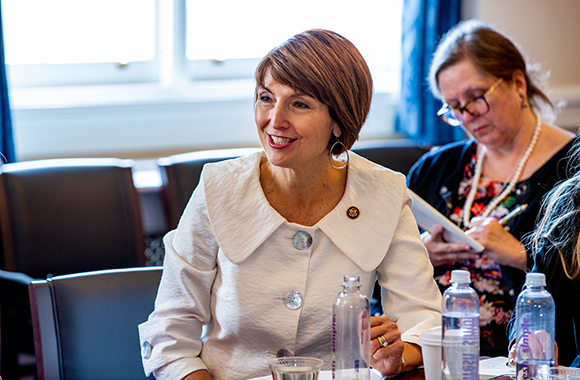
Jack Welch, former CEO of General Electric made the pages of the Wall Street Journal this past week for making truly offensive comments to a Task Force organized by the Journal to study why women aren’t better represented in the corridors of power in American business.  Welch’s comments added unexpected fireworks. WSJ  columnist John Bussey covered it like a normal news story, front page of the Marketplace section with the headline “Women, Welch, clash at forum.”
I actually found it amusing – if unbelievable – that this man would have the audacity to go before a group of  very high-powered women and make comments like these:  “Over deliver. Performance is it!”  An angry rumble resonated throughout the room, according to Bussey. Regarding a women’s forum inside GE when he was CEO: “the best of the women would come to me and say I don’t want to be in a special group, I’m not in the victim’s unit.” Then he turned to the audience and quipped: “Stop lying about it. Great women get upset about getting into the victim’s unit.” This isn’t new for Jack Welch apparently; in 2009  he told another audience: “There’s no such thing as work-life balance. There are work-life choices and you make them and they have consequences. “
Welch’s point of view is helpful – if obnoxious – because it shows the many subtle ways in which women are held back in corporate America. NCL is an organization founded by women who fought old-fashioned ideas about  the proper role of women in American society. Florence Kelley, in her letters, talks about women not having the right to vote,  to serve on juries, to earn the same wages as a man despite their often being the family breadwinner, or own property in their own names. Jack Welch’s comments are a reminder that while the face of sexism and discrimination has changed, many sexist attitudes remain. In the meantime, while Jack Welch disses women for taking time off to raise children, he was able to have four children and go full steam ahead:   naturally, because he had a wife at home to raise them. Women usually don’t have that luxury.
But let’s say hats off to the Wall Street Journal for doing something quite incredible: organizing a Task Force of 60 mostly women to study the “XX Factor: What’s Holding Women Back?” This body of academic, business and government leaders met and made  recommendations. The Journal  hired McKinsey and Co. to conduct the research, asking senior executives at these 60  large  companies why they were trying to advance women.  The result is a whole section of the newspaper devoted to interviews with a variety of leaders and recommendations for addressing the problems women face.
Participants included Madeleine Albright, former Secretary of State, Denise Morrison, CEO of Cambell’s Soup, Carol Bartz, former Yahoo CEO, Helena Foulkes of CVS Caremark, Susan Odenthal of Johnson and Johnson and Dee Dee Myers, press secretary to President Bill Clinton.

I read every word and thought only that NCL’s leaders would have been simultaneously appalled at Jack Welch’s ridiculous comments  but delighted that the bastion of business conservatism, the Wall Street Journal, tackled the important issue of women’s advancement in business in what is still, in 2012, largely a man’s world.

Pressure on to reduce 529 college savings plan fees – National Consumers League

By Sally Greenberg, NCL Executive Director
To their credit, a handful of states have moved to improve performance, expand investment choices, and lower fees on the funds parents invest in 529 college savings plans. Nevada is replacing its 529 investment manager with another investment group with lower fees; the group will also add other fund choices; California closed its Fidelity Investment 529 plan and transferred the funds to another manager. Wisconsin is following suit. The beauty of a 529 is that returns from the investments are tax-free if used to pay for qualifying higher education expenses.

What is interesting is that pressure to lower fees for parents investing in 529s is reducing the number of managers interested in getting the business. When California put out their 529 for bids last year, no investment firms applied. In 2011 parents put $18.5 billion into 529 plans. The average new account totaled at $4,565. Average fees in one state – Arkansas – at 0.6 percent are a lot lower than fees on the average adviser-sold investment account, which run more like 1.14 percent of investments.

This close scrutiny of fund options and fees made on behalf of parents is exactly what we should be expecting from those who choose where 529 money is invested. I found this story interesting because it would be great if all investment advisers or funds could be as closely scrutinized for excessive fees and broader choices as states are doing for their 529 parents of college-age kids who have invested in their child’s education.

Corporate lawyers’ ‘Declining Prospects’ – National Consumers League

By Sally Greenberg, NCL Executive Director

Longtime corporate lawyer Michael Trotter has written a book called “Declining Prospects,” about the upheaval in the corporate legal profession and its prospects for the future. Trotter argues that not even big companies can afford – or want to pay – the inflated prices of high-priced lawyers. And young lawyers at the big firms are expected to put in ridiculously long days to bill out the expected 1,800-2,000 billable hours – that’s 50 hours a week, 50 weeks a year, and that’s just the billable time. In order to do this, they must work 65-70 hours a week. Not surprisingly, Trotter discovered through interviews, lawyers at every level are unhappy with this unsettling transformation of the practice.

We are turning out 45,000 law graduates a year, and Trotter says though the quality of their education is high, there aren’t enough jobs for them. Half the lawyers are sole practitioners, 70 percent are in firms with fewer than 20 lawyers, and those lucky enough (if you don’t mind 70 hours a week at the office) to get jobs at elite firms have only a 10 percent chance of making partner.

What does all this have to do with consumers? A lot, for several reasons. First, when business has to pay enormous legal fees, they of course pass those costs along to consumers. Some of the elite lawyers in Washington charge $1,000 per hour for their services; I was in a meeting recently where a lawyer was on-hand to work with the nonprofit – I asked the attorney what he was being paid and he said “$650 an hour.” Who pays those fees? We consumers do.

Then there is access to legal services for middle and lower income Americans. Most of us don’t have $250 an hour – which today is considered a modest rate – to spend on getting a will written, closing on a real estate deal, settling a legal dispute, getting a divorce, writing a living will, or for many parents and families, defending a relative on a DUI or drug possession case, which can truly break the bank.

Though Trotter’s book seems to be speaking largely to the legal community, it has implications for the rest of us. I’m encouraged that half the new lawyers are solo practitioners. Perhaps the upheaval and the oversupply of legal talent will mean that average Americans will have access to more affordable and basic legal services.