Senate briefing: How congressional mandates are thwarted by our broken regulatory process – National Consumers League

By Michell K. McIntyre, Outreach Director, Labor and Worker Rights From the safety of the food we eat to the air we breathe and the cars we drive—Congress has enacted landmark laws to tackle these threats to the public. Yet today, many of the rules required to execute these laws have been delayed and/or weakened as a result of a sluggish regulatory process.

Due to unnecessary delays, Congressional mandates and sensible safeguards are being held up, and the results can be catastrophic. While most people understand the basics of how a bill becomes a law, many don’t realize that federal laws that create new regulations must first clear the White House’s Office of Information and Regulatory Affairs (OIRA) before going into effect. OIRA might be the most powerful federal agency consumers haven’t heard of. OIRA analyzes the costs and benefits of new rules passed by Congress and takes into consideration comments by the public and affected industries. Many significant rules have been trapped in OIRA purgatory. NCL and partnering organization will hold a Senate briefing tomorrow, October 25, to discuss our broken regulatory process. These common sense rules, passed by Congress, should not face years of unnecessary delays. Sign up for the event here.

A real-life example of how a government shutdown hurts food safety – National Consumers League

kelsey By Kelsey Albright, Linda Golodner Food Safety & Nutrition Fellow Early last week the Food Safety Inspection Service (FSIS) put out a *public health alert warning American consumers that Foster Farms chicken from three of the four processing plants it had been investigating since July could be unsafe to consume.  What is a public health alert, you may be asking, and why not issue a recall if the USDA knows where this salmonella-ridden chicken is coming from?

The government shutdown was a disconcerting affair for food safety advocates like myself. FSIS, a subdivision of the USDA, maintains that their choice to issue a public health alert instead of a recall had nothing to do with the shutdown.  I think otherwise.  Although food inspectors in plants were not furloughed, many other workers that are necessary to keep processes speedy (such as workers who monitor food borne illness outbreaks at the CDC, laboratory technicians that analyze their findings, and other employees that assist with food monitoring) were sent home to twiddle their thumbs while Congress duked out their budget battle.

A fully staffed USDA and CDC are more effective in detecting food borne illness and acting to prevent it than agencies that are “mostly open”. The lack of manpower behind these operations may have led to the issuance of a public health alert instead of a recall.  Finding the origin of an outbreak and proving that a person got sick from a specific product purchased from a specific store that came from a specific plant is a difficult endeavor.

USDA cannot issue a recall if these strict, time intensive processes are not conducted. Instead of going through this lengthy process, FSIS used what information they had gathered and issued a public health alert notifying consumers to cook their chicken to 165⁰F to kill any Salmonella Heidelberg present.  In doing so they also allowed Foster Farms 72 hours to clean up their act or be shut down When 317 people from 20 states have been *confirmed ill with an abnormally high hospitalization rate of 42%, is a public health alert alone enough to protect the public?  Stores like Krogers and Costco have taken matters into their own hands by issuing a recall of products they sold and paying out of pocket for a mistake that was not of their making.   Unsurprisingly, Foster Farms did clean up their act and were not shut down, but it doesn’t change the fact that Salmonella Heidelberg contaminated chicken is still on the shelves of many grocery stores.  Foster Farms has yet to own up to their egregious mistake by recalling their chicken and the USDA isn’t holding them to it either.

*Links are no longer active as the original sources have removed the content, sometimes due to federal website changes or restructurings.

Spreading consumer awareness about dietary supplements around the globe – National Consumers League

By Sally Greenberg, NCL Executive Director

NCL was invited to present at a conference on health and nutrition at the charming seaside town of Dalian, a one and a half hour flight east of Beijing. Our past work surveying consumers on dietary supplements and NCL’s focus on the safe use of medication, no doubt, generated the invitation. The tour guide described China’s shape on a map as that of a rooster, with Beijing being the eye and Dalian being the beak. So there I was in the rooster’s beak, meeting academics, scientists, community workers, and doctors from around the world.

Much to my surprise, the hosts of the conference included NCL’s presentation entitled “Dietary Supplements: What Consumers Should Know,” as one of the conference’s keynote addresses. That put me at the podium with seven other presenters, all of them men who were either doctors or academics. This was an eminent group: for example, another keynoter, Sir Roy Calne, a doctor at Cambridge University in the UK, had performed the first liver, heart, and other organ transplants during the 1960s.

From the outset, the connection between the different presentations seemed to be a stretch. Many of us found ourselves at this conference asking each other, how is it you came to be invited? No one was quite sure. But looking back over the past several days, I don’t think I’ve ever been with a group of such accomplished, smart, thoughtful, and interesting people. One group of presentations focused on reports and research in pediatrics. That brought together an incredible group of mostly female pediatricians including surgeons, pediatric cardiologists, radiologists, and many more who discussed issues ranging from child abuse to ER and child trauma. These women were uniformly impressive, friendly, and approachable. The nice thing, too, is that because I was the only female in the opening session and talked about the importance of consumer awareness and a consumer voice on dietary supplements (based on a terrific presentation that our staff prepared for me about dietary supplements and how they can be beneficial or dangerous), these women doctors instantly knew who I was, were grateful a woman was represented as a keynoter, and came to know and like the work NCL is doing to reach out to consumers.

I also had the chance to meet Australian Paul Miller, who is with the Olive Council in his country. He is working to help expose and ferret out the problem of adulterated olive oil in markets around the world. This is a rampant problem that degrades the quality of olive oil world wide, creates a competitive disadvantage for those olive oil producers who play by the rules, and steals money from the wallets of consumers who pay far higher prices than they should for adulterated olive oil. This issue hits home for NCL, given our experience fighting food fraud, and testing products such as adulterated lemon juice. We hope to work with Miller and government regulators in the US and elsewhere to help expose this problem. NCL is grateful to the organizers of this BIT First Annual Conference on Food and Nutrition for including a consumer voice in the program. I found the gathering unusually rewarding, made many new friends and contacts for NCL, and learned a great deal from the many academics and doctors from around the world who are engaged in such noble and important work.

To have power means to have responsibility – National Consumers League

This post originally appeared on SOCAP International’s Web site Guest blog by Matt D’Uva, President of the Society of Consumer Affairs Professionals I had the absolute privilege to attend the Trumpeter Award Dinner on Tuesday night hosted by the National Consumers League.  NCL, founded in 1899, is an inspiring organization.  They have been fighting the good fight for important causes such as workers’ rights, consumers’ rights, and equal pay for equal work.  Although the organization is well over 100 years old, this year marks the 40th Anniversary of the Trumpeter Awards Dinner which, of course, made me think about the interesting connection between this celebration and SOCAP’s own 40th anniversary.

Organizations like NCL have been a critical player in important movements in the history of our country, such as the consumer movement which helped create new legislation, practices and accountability which ultimately led to the creation of SOCAP and literally the customer care profession.  I believe that leaders like Florence Kelly, the first general secretary of the NCL (and the namesake of one of the Trumpeter Awards), would be thrilled to see the power of consumers today.  I believe she would be challenging organizations like SOCAP and our members to ensure that the Voice of the Consumer is alive, strong and elevated within companies on every issue.  Ms. Kelly once famously said, “To buy means to have power, to have power means to have responsibility”. This responsibility is born by consumers, by customer care executives and by organizations like SOCAP and NCL.  To that end, SOCAP has worked hard to build a partnership with the National Consumers League to ensure that we are living up to Ms. Kelly’s challenge of taking our responsibility seriously to consumers.  For example, SOCAP—working through our local chapters and our national members—actively supports NCL’s LifeSmarts program which works with young people in grades 6 – 12 to help them learn important skills to better and more educated consumers.

Our members help write questions, volunteer their time, and donate funds to help the LifeSmarts program grow.  As SOCAP’s President and CEO, I also serve as a member of the Advisory Board. We have also been working with NCL on other programs such as their Fraud.org project protecting consumers from bad players who mean to do them harm, the very opposite of customer care.  Additionally, we have started important dialogue with NCL about the issue of consumer privacy.  Privacy is an important topic for customer care and business, especially as we see the great opportunities to use Big Data to build meaningful, authentic relationships with consumers.  It is through these important partnerships like this that SOCAP can contribute to your internal conversations.   To that end, I invite you to participate with us at our 2013 Annual Conference (October 27-30 in Scottsdale, AZ) where we will convene a panel session with NCL leaders as well as industry representatives from Microsoft and Publishers Clearinghouse to discuss issues around consumer privacy and what we can learn from consumer organizations and industry working together.  This will be the first of many discussions on this important topic and we hope you will join us. I am proud of SOCAP’s history of supporting customer care experts who are the heart and soul of industry and who bring the voice of the consumer to decision makers.  I am also proud to share a bit of our history with the consumer groups like NCL who have fought to push for the transparency and openness that customer care provides.  As we look to the future, our partnership will ensure that SOCAP members remain at the forefront of pushing our profession and service to customers through listening and engagement.

During the shutdown, House bill for selective relief of FDA is short sighted – National Consumers League

92_ayannaBy Ayanna Johnson, Health Policy Associate The government shutdown continues to negatively impact the health and safety of Americans. Vital government agencies like the NIH, FDA, CDC, EPA, and others are operating with a much-reduced staff, endangering the public, not to mention the families of government workers who may not be able to pay their mortgage or bills. But don’t worry, Congress to the rescue!

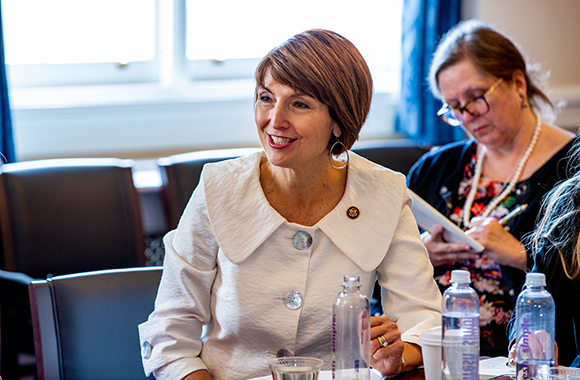
On October 3, the House GOP introduced H.J. Res 77, the Food and Drug Administration Continuing Appropriations Resolution, 2014, which passed four days later H.J. Res 77 singles out the Food and Drug Administration for funding during the partial government shutdown. This bill aims to provide funding to FDA to continue normal operations, but fails to provide the necessary funding for the other equally important government agencies. The republican approach of passing piecemeal legislation to address one small aspect of the government shutdown at a time does not adequately solve the problem.  As *President Obama stated during his Tuesday press conference, these bills help agencies with high visibility but neglect others. With other patient and health advocates, NCL signed on to a letter to Speaker John Boehner and Leader Nancy Pelosi expressing concern with this proposed legislation. While we do believe FDA to be an essential government agency, we cannot support this approach by the House GOP. Click on the link below for the full letter. Health coalition opposed to H.J. Res 77

*Links are no longer active as the original sources have removed the content, sometimes due to federal website changes or restructurings.

Do big changes lie ahead for nonprofit organizations? – National Consumers League

A message from our development team. America’s nonprofit organizations, including the National Consumers League, are caught on the horns of a dilemma. Current tax law permits NCL and all 501(c)(3), meaning tax-exempt, nonprofit organizations to advocate for policy changes, provided that advocacy doesn’t supplant their charitable purpose. We’re prohibited from endorsing candidates for public office.

Despite occasional missteps, these laws and regulations have worked pretty well. There were howls of protest, however, when word leaked out that the IRS was making a clumsy attempt to identify Tea Party-related organizations that might not qualify for tax-exempt status. Now comes a report from the Commission on Accountability and Policy for Religious Organizations (CAPRO), established by the Evangelical Council for Financial Accountability, that recommends eliminating the ban on political speech by charities like NCL and religious organizations, including churches. Preachers could endorse political candidates from the pulpit, in other words. Diana Aviv, head of Independent Sector, the largest association of national nonprofit organizations, spoke out forcefully against the CAPRO recommendations, and the Bright Lines Project (BLP), spearheaded by the Center for Effective Government, is developing its own recommendations to clarify what charitable organizations may do and say in nonpartisan (meaning, mainly, non-electoral) activities. It’s a safe bet that freeing evangelical preachers to endorse candidates on Sunday morning will not be on the BLP’s recommendations list.  

A DC resident’s letter to Mayor Gray about the LRAA – National Consumers League

The Large Retailer Accountability Act (LRAA) was vetoed by DC Mayor Vincent Gray and then the veto was sustained by the DC City Council earlier this month. This was a defeat for DC’s low wage workers and a missed opportunity for Washington to set an example for the rest of the country that workers deserve a living wage.

This is a compelling letter from Daniel Solomon, a DC resident, to the Mayor urging him to sign the LRAA in the days leading up to his decision. Dear Mayor Gray, I have been following the progress of the Large Retailer Accountability Act since it first attracted public attention last year.  I find the arguments of its proponents compelling and the arguments of its opponents weak at best.  I urge you to act on your best instincts and sign the bill.

My grandfather, N. M. Cohen, founded Giant Food in Washington, DC in 1936.  From the beginning, he regarded his workers as his most important asset.  He would say, “This company is built on three things: people, people, people.” He paid his people well.  He dealt fairly with the union that represented them, even ordering coffee for strikers in the rare instance when his workers went on strike in winter.  He built Giant on the shoulders of his workers, not on their backs.

He made a lot of money as a high-road employer.  He plowed that money back into the community in a variety of ways, not the least of which is through the Naomi and Nehemiah Cohen Foundation, which continues to give back to the District of Columbia. N. M. would be appalled to watch WalMart’s hijinks.  Threatening to leave D.C. or cut back on its planned investments here if we don’t keep their workers’ wages down.  Using the needs of our poorest communities as leverage, rather than as a reason to build new stores and pay workers living wages.

Refusing to testify publicly on the Large Retailer Accountability Act, but seeking to kill the legislation  behind the scenes through highly-paid lobbyists and using other businesses and business associations as its surrogates.  Pursuing a low road to growth rather than the high road pursued by Giant Food and such other companies as Costco and Trader Joe’s and Quick Chek. Your campaign theme of One City meant a great deal to me, both as a member of the Giant family and as a prosperous resident on the prosperous side of town.

I believe DC will be One City and a thriving city only when the least fortunate residents have good jobs, excellent schools and the opportunities now available almost exclusively to those West of the River.  Good jobs are not retail jobs at or near minimum wages.  Those jobs will only perpetuate poverty.  Of course, not every retailer can afford to provide living wage jobs.  Those that can should.  Surely big box retailers whose parent companies earn $1 billion or more a year can afford far more than many of them choose to provide. You and some of the Council opponents of LRAA say that the residents of Ward 7 want the jobs WalMart may bring, no matter what they pay.  Elissa Silverman of the DC Fiscal Policy Institute has found otherwise.

Here is a link to her article: https://www.dcfpi.org/all/one-thousand-dc-residents-have-signed-on-for-a-living-wage-and-counting/ Your Administration has done much to raise the prospects and hopes of those East of the River.  I urge you to harness the wealth of the large retailers who want to do business here to provide the next boost. Please sign the LRAA. Sincerely, Daniel Solomon

Clarification on “refill reminder” programs, a win for patients and consumers – National Consumers League

By Rebecca Burkholder, NCL Vice President for Health Policy In a significant win for patients and consumers, the U.S. Department of Health and Human Services (HHS) Office for Civil Rights (OCR) issued important Guidance on pharmacy-run sponsored medication adherence (i.e., “refill reminder”) programs last week, reinforcing that patient health cannot take a back seat to privacy concerns.

In the wake of widespread confusion following OCR’s January 2013 final rule on medical privacy, the Guidance clarifies that “refill reminder” programs may include a wide array of patient communications, including messages about prescriptions that lapsed within the last 90 days.  OCR clarified that the payments that sponsors (e.g., pharmaceutical companies) provide to pharmacies for running these often costly programs may include all of the pharmacy’s “reasonable direct and indirect costs … including labor, materials, and supplies, as well as capital, and overhead costs.”

As a founding member of the Best Privacy Practices Coalition, the National Consumers League (NCL), strongly supported the final rule’s enhancement of patient privacy and data security protections.  But patient health is an equally important goal. Poor medication adherence is $290 billion problem in this country, resulting in an estimated 125,000 deaths annually.  In an effort to combat this ongoing public health challenge, NCL leads Script Your Future, a medication adherence public awareness campaign with partners across the health care spectrum.  The sponsored “refill reminder” programs addressed in OCR’s Guidance are critical support for our efforts. To help clear up misunderstandings about HHS’s January rule, NCL met with OCR leadership this summer, emphasizing the importance of compliance programs and asking for clarification on the two key issues discussed above.

We are pleased that OCR heard the concerns NCL and many others expressed and responded with this important Guidance. This much-needed clarification is a big win for patients and, given the September 23, 2013, compliance date of the final rule, arrived in the nick of time.  Recognizing the essential nature of sponsored medication adherence programs, OCR announced that it will not enforce the “refill reminder” provisions of the final rule until November 7, 2013.  This will pave the way for these vital programs to continue, and should encourage those pharmacies -such as CVS -and their sponsors that discontinued their programs in the wake of recent uncertainty to jumpstart them again. The new Guidance is also a win for American consumers.

The non-partisan Congressional Budget Office estimates that even a very small 1% increase in the number of prescriptions that are refilled translates into more than $1 billion in annual Medicare savings.  By helping address the ever-growing deficit in the Medicare program, OCR’s Guidance helps save tax dollars and benefits all American consumers. NCL applauds OCR for responding to these concerns and balancing the important public interests of patient privacy with patient health.

Air travel insurance big bucks, little protection – National Consumers League

In a new report, NCL took a close look at travel insurance associated with airline tickets and found a string of disturbing trends in the industry.  Among the finds in the report are rising cancellations fees, the four U.S. legacy airlines just increased cancellation/change fees to $200 per ticket; an increase in revenue from travel insurance, in 2010 travel insurance was a $1.8 billion industry and between 2006-2010 travel insurance sales increased 39%; and the widespread use of misleading language and dense policy descriptions in airline insurance policies increasing consumer confusion over what these policies actually cover. We urge consumers to inform themselves about these policies before paying extra money for insurance.

Tips for consumers:

  1. Be sure to read over the exclusions and fine print of any travel insurance policy before you buy.
  2. Some travel insurance policies include a cooling off period during which you can cancel and receive a refund on your premium. Check you certificate of insurance for details.
  3. Before purchasing travel insurance, check to see if you’re already covered by other policies. For example, many credit card companies offer travel insurance protection to their cardholders.
  4. Check out an airline or online travel agencies’ cancellation fee policy before your buy. Some airlines charge low or no fees and instead bank the value of the ticket for a future flight.

Find out more about these travel insurance policies and check out our Facebook page to find out what your insurance actually covers.

The undeserved reputation of “Pink Slime” is tested again – National Consumers League

By Sally Greenberg, NCL Executive Director
Schools not only educate the next generation, they play an important role in the nutritional development of our children.  With concerns over obesity, we expect schools to provide meals that not only taste good, so students will eat the meals, but that are also healthy from both a nutritional and food safety perspective.  The schools are to do all this at a time of increasing fiscal constraints.  Not an easy task.

Unfortunately, there are public misconceptions on products that can help schools meet these competing demands.  Case in point, lean finely textured beef (LFTB), or as it has been pejoratively referred to as, “pink slime.”  This term is inflammatory and has nearly eliminated the possibility of constructive dialogue over the benefits of this lean beef supply for our school systems or other commercial uses.  The negative buzz led many states to reject its use in schools and caused retail outlets to limit its use.  When the dust settled last year after the “pink slime” controversy, only three states opted to purchase products with LFTB.  This school year, four additional states are providing schools with the option.  We applaud this action.

Not surprisingly, with the increase in the number of schools making the conscious decision to purchase products with LFTB, the negative buzz is starting again.  This is a good product. The product is as lean as meat can be, so its use cuts down on fat and calories.  As I noted in a blog last year, “NCL is in agreement with the Consumer Federation of America that manufacturers of hamburger patties may replace LFTB with something that has not been processed to assure the same level of safety. CFA also expressed concerns that NCL shares about the potential effect this recent controversy may have on companies who seek to apply innovative solutions and new technologies to enhance food safety.”

It’s also interesting to remember that Phillip Boffey of the New York Times cooked hamburger made with LFTB and attested to its good taste. Of more importance than taste, the product has an exemplary safety record of over 20 years; it is produced in a state-of-the-art facility, and it is tested repeatedly for safety. Al Almanza, Administrator of USDA’s Food Safety and Inspection Service, in the recent Politco piece on schools reintroducing LFTB into their menus, noted that the product is safe.  “Isn’t that what we want – a safe product to feed our families?” he said.

If consumers and school lunch administrators can get past the false information and the negative buzz, the fact is, LFTB can answer many of the competing demands of low fat, good taste, and product safety consistent with fiscal constraints.

We expect a lot from our schools.  We should not limit their choices in how to meet our expectations, especially not when the limitation is based on politics or publicity rather than facts and sound science.