Thanksgiving: A time for family, good food, and exploiting workers – National Consumers League

By Larry Bostian, Vice President, Development Isn’t it a little strange that the day after Thanksgiving should come to be called Black Friday? Black implies dreariness, oblivion, death. Odd that we’ve come as a nation to believe it’s our duty, almost before the turkey’s cold, to rush out and buy stuff, maybe to help retailers compensate for lost sales on the holiday itself. Now we learn that many retailers, not content to open early on Black Friday, are throwing tradition and the holiday out the window entirely and opening for business on Thanksgiving Day. Before we rush to the mall, however, let’s pause a moment and consider.

Have these retailers given their workers a choice about coming to work on Thanksgiving? Are they offering holiday pay, even for the legions of their employees who are stuck working part-time? When Walmart is placing baskets in its stores for “associates” to contribute to their needy fellow associates, well, isn’t there something wrong with this picture? Working people need time with their families, not just to give thanks once a year, but regularly. It takes time to nurture connection, to rest and recover from the stress and strain of work that, for too many Americans, doesn’t pay well enough for them to get by. There are many people and organizations who decry the breakdown of the family. Let’s invite them to join us worker and consumer advocates in saying to the big retailers: Enough! Stand down and let your “associates” have an uninterrupted day with their families. If you must open for business on Thanksgiving Day, give them a choice, and compensate them fairly. And for us all, whenever we’re out looking for a bargain, let’s thank that hardworking and underpaid associate and remember he or she likely has a family too.

The USDA plan to “modernize” poultry inspection is a step backwards – National Consumers League

The post originally appeared on scienceblogs.com. By Celeste Monforton, DrPH, MPH of George Washington University School of Public Health & Health Services 

The Obama Administration’s USDA *continues to insist that their proposed rule to “modernize” poultry slaughter inspections will improve food safety. Just last week, Secretary Vilsack’s office said it is *sticking with their plan, saying: “comprehensive effort to modernize poultry slaughter inspection in ways that will reduce the risk for American families.” For the last 18 months, however, the USDA Secretary has heard loud and clear that his agency’s proposal is certain to do much more harm than good.

Advocates for and experts on food safety, workers safety, consumers, animal rights, and even USDA’s own inspectors, have provided evidence of this during the agency’s public comment period. They’ve also follow-up with letters and petitions reiterating why the proposal should be scrapped. It’s fallen on Vilsack’s and his staff’s deaf ears. USDA’s response is particularly offensive because it contradicts one of *President Obama’s declarations.   The President insists that his Administration wants input from the public. He may say his team wants input, but they’ve demonstrated no interest in being persuaded by it. And the evidence continues to pile up. The USDA’s proposed rule on a new poultry slaughter inspection process must be withdrawn.  The most recent evidence added to the hefty stack includes:

  • An investigation by the Government Accountability Office (GAO) concluding that USDA does not have evidence from its pilot project to support its proposed new inspection process. GAO found problematic that USDA: “will not complete another evaluation before it issues a final rule.” That’s the final rule that USDA insists it will issue very soon.
  • Legislation introduced in September 2013 by Senator Kirsten Gillibrand (D-NY) would halt USDA’s action. Responding to the GAO report, the Senator wants to ensure USDA gathers the necessary evidence to justify its assertions that the new system will improve food safety.
  • A coalition of 16 civil rights, worker safety, and faith groups *petitioned USDA (and the Secretary of Labor) to withdraw the proposed rule, and adopt a rule to protect poultry- and meat-processing workers from the extreme production line speeds which injury and disable them.  These workers—many of them Latino and African-American, and female—are vulnerable to employer abuse and already experience severe injury and disability because of their work.
  • And, food safety experts persist in assembling the most current evidence on defects in the USDA’s pilot project and proposed rule. As new evidence emerges, they provide it to USDA. They have repeatedly asked USDA Secretary Vilsack to revoke the the equivalency determinations because the HIMP model in swine slaughter is flawed. The most recent letter informed USDA (just in case they didn’t already know) that the European Union seems to have rejected the Australian privatized meat inspection model. As Food & Water Watch explained, the EU’s concern is the

“apparent conflict of interest of having company-paid employees inspect meat for safety and wholesomeness. In its zeal to privatize inspection here in the U.S., USDA’s Food Safety Inspection Services may have created a trade crisis by hastily approving its ill-conceived program abroad. It’s time to revoke those equivalency determinations before there is a major international food safety incident.” All of this—combined with the overwhelming rejection of the USDA approach in comments submitted to the agency during the formal public comment period—should be more than enough for the agency to scrap their plan. But there’s more. Icing on the Cake The icing on the cake is stellar reporting by the Washington Post’s Kimberly Kindy. For the last seven months she’s investigated the potential impact of USDA’s proposed changes to poultry slaughter inspection. In April, *Kindy wrote about the death of USDA poultry inspector Jose Navarro. The 37 year-old father died from a pulmonary hemorrhage likely related to exposure to chemicals used to disinfect poultry. Navarro’s assignment was inspecting poultry at Murray’s Chicken in upstate New York. Her investigation led to a private report provided by USDA to the House Appropriations Committee. The agency acknowledged that in plants which have already accelerated line speeds, workers have been exposed to larger amounts of chemical disinfecting agents. “The use of powerful antimicrobial chemicals has increased in order to decrease microbial loads on carcasses.” Increasing production line speeds is exactly what USDA is proposing to do. The chemical agents in which the poultry soaks, poses a serious risk of harm to USDA inspectors, as well as the thousands of workers employed in these plants. Jose Navarro’s death is the gravest example of that point. In September, *Kindy reported on USDA’s failure to control contaminated meat produced at plants that are using the agency’s “modernized” inspection system from reaching consumers. In exchange for adopting the new system, poultry and meat producers can substantially increase lines speeds, use employees to inspect the product throughout the process (which means fewer USDA inspectors) and come up with their own scheme to identify contaminated meat and poultry. The system has been adopted by some oversees producers whose meat is imported to the U.S. Kindy interviewed members of USDA’s own scientific advisory committee. Commenting on the USDA’s pilot and plans to implement it nationwide, one committee member told Kindy: “We should not be putting it out there, saying it is okay for other countries to use, when it has so many flaws and when contaminated meat is coming in.” Last week, Kindy *added to her series on USDA’s plan. She reported that the proposed increase in line speed will not only be a danger to workers, lead to increase use of chemicals, and could allow contaminated meat into the food supply, but that the “USDA plan to speed up poultry-processing lines could increase risk of bird abuse.”  [This next part is not for the faint of heart.] “Nearly 1 million chickens and turkeys are unintentionally boiled alive each year in U.S. slaughterhouses, often because fast-moving lines fail to kill the birds before they are dropped into scalding water, Agriculture Department records show.” USDA reacted to Kindy’s Oct 29 story with a *post on the agency’s blog. They insist their proposal is just hunky-dory, adding “Experts agree that it would significantly reduce foodborne illnesses – reducing dangerous pathogens like Salmonella to protect American families.  Improving America’s food inspection system will do just that, and USDA is committed to undertaking this effort in a way that ensures even stronger humane handling measures in the future.” As far as I can tell, the “experts who are agreeing” are two individuals on whom the USDA relies. One is Professor Billy Hargis from the University of Arkansas. He is the Sustainable Poultry Health Chair, and endowed position, funded in part, by the Tyson Family (Tyson, as in the mammoth poultry company.)  The other expert is *Douglas Fulnechek, DVM, a manager and veterinarian at USDA. Personally, I don’t consider either unbaised experts.  In contrast, many public health experts, who have no financial or professional stake in the outcome, submitted scads of evidence to USDA on the likelihood of grave harm should its proposal be adopted. From contaminated meat and crippled workers, to toxic chemicals and tortured chickens, surely the White House will ask Secretary Vilsack to withdraw this ill-conceived rule. If not, we’ll be asking the Obama Administration, which side are you on?  I take that back, we’ll know which side they’re on.

*Links are no longer active as the original sources have removed the content, sometimes due to federal website changes or restructurings

RIP trans fats – National Consumers League

kelsey By Kelsey Albright, Linda Golodner Food Safety & Nutrition Fellow I hope you aren’t a margarine fan because the U.S. Food and Drug Administration’s announcement to ban trans fats may have marked its death.  FDA plans to no longer qualify partially hydrogenated oils (PHOs) as a safe additive for use in food, making foods with unapproved PHO additives illegal.  PHOs are infamously known as the main source of artificial trans fat in processed foods such as frozen pizza, coffee creamer, microwave popcorn and, of course, margarine.

It’s no secret that FDA has had its sights set on reducing Americans artificial trans fat intake for a while.  In 1990, a surgeon general’s report publicized the formerly unknown harmful effects of trans fats in food.  Prior to this report, trans fats were commonly thought of as healthy alternatives to saturated fats from animal products like butter and lard.  Such misconceptions caused numerous food makers to switch from butter to partially hydrogenated vegetable oil. Many food manufacturers have voluntarily reduced or eliminated trans fats in their products.  In fact, the average American’s trans fat intake has decreased from 4.6 grams per day in 2003 to 1 gram per day in 2012. 

Even with this drastic reduction in trans fat consumption, the FDA was still concerned, maintaining that current levels of trans fat intake is a public health problem.  It is now well known that trans fats increase the risk of heart disease.  In its statement the FDA said that further reduction of trans fat in Americans diets could prevent an additional 20,000 heart attacks and 7,000 heart disease related deaths each year.  The Institute of Medicine concluded that there is no safe level of trans fat consumption. It’s my hope that other consumers see the benefits of FDAs determination and are pleased by the new nutritional requirements.

Another nominee for the US Court of Appeals in DC needlessly blocked – National Consumers League

By Sally Greenberg, NCL Executive Director

The US Senate has rejected President Obama’s pick to the United States Court of Appeals for the District of Columbia yet again. The nominee, Georgetown Professor Cornelia Pillard, is a highly qualified lawyer who has very strong credentials and a very moderate record.

Senate was not able to reach the 60 votes needed to overcome a GOP procedural blockade as the measure failed by a vote of 56 to 41. Two Republican women Senators – Susan Collins of Maine and Lisa Murkowski of Alaska, voted to support the nominee. Nina – the name Professor Pillard goes by – is a friend of consumers and a personal acquaintance. I know her to be moderate in every way.

Senator Patrick Leahy, who chairs the Senate Judiciary Committee, stated that he believes the minority in the Senate doesn’t want women on the Court. “Women are grossly underrepresented in our federal courts. So what kind of message are Senate Republicans sending by refusing to even allow a vote on three of the most qualified female attorneys in this country?” When I say Pillard is a moderate, I’m talking about the fact that she worked twice in the administration of President Bill Clinton — at the solicitor general’s office, which handles Supreme Court cases, and later in the Justice Department.

Democratic White Houses in the last 30 years, and democratic DOJs, in my experience, don’t hire anything but moderates or moderate liberals. Republican administrations, by contrast, tend to hire people far more on the right wing side of the spectrum than democrats hire on the left. For whatever reason, that is the reality. Yes, Professor Pillard supports a woman’s right to choose, a position held by the majority of Americans, but it doesn’t make her a radical of any description. She is utterly moderate in every way.

Nina also worked for the NAACP Legal Defense and Educational Fund, and has argued nine cases before the Supreme Court.  How many lawyers can say they even argued one case before the Supreme Court? And several were cases in support of consumer’s access to the courts. Senator Dick Durbin, a member of the Judiciary Committee, and Senator Leahy, the chair are now saying the time has come to change the rules, perhaps requiring only a majority vote for confirmation. That has its pitfalls for the Democrats if they were to lose the Senate.

In the meantime, there are 18 vacancies in the US Courts of Appeals nationally and 74 vacancies in US District Courts that need to be filled. Holding up nominees for no good reason – they are all highly qualified and all are moderates who embody the President’s vision – could cause a showdown in the coming weeks. I hope the minority in the Senate comes to its senses and approves these qualified candidates.

Free webinar: Improving communication between patients and health care professionals – National Consumers League

Dr. Ira Wilson of Brown University will lead the webinar “Medication Adherence in Practice” on November 19. Three out of four Americans do not take their medications as prescribed. Open communication between health care professionals and their patients can be a powerful tool for improving rates of medication adherence.

Health care professionals including nurses, doctors, and pharmacists can inform patients about the importance of taking their medicines as directed in order to improve overall health outcomes. Often, it is difficult to know the right questions to ask for both the patient and health care professional.

NCL’s Script Your Future campaign is holding its first-ever free webinar for health care professionals to learn how to talk with patients about taking medication as directed.  This webinar, on November 19 at 12noon Eastern, is a part of ongoing efforts to provide resources to both patients and health care professionals about medication adherence and how to improve communication in the health care setting. There are many reasons why people don’t take their medicine as directed, including forgetfulness, side effects, not sure they need medicine, and cost. Having that conversation to understand the patients’ concerns can help health care professionals provide better care.

Featuring Dr. Ira Wilson from Brown University, the webinar will present health care professionals with tools to communicate effectively with patients. Dr. Wilson will include real-world examples and solutions that he has developed over the years to establish trust with his patients and improve care.

This webinar is a must-attend for any professional who is looking to improve their skills.Join this free webinar today by registering here. Bring your questions to this exciting and interactive event! What: Webinar for health care professionals – doctors, nurse practitioners, pharmacists, nurses, etc. When: Tuesday, November 19, 12noon – 1 pm Eastern Contact Ayanna Johnson at ayannaj@nclnet.org with any questions. For more information about the Script Your Future campaign, visit www.ScriptYourFuture.org.

New report might make you think twice about spicing up your food – National Consumers League

kelsey By Kelsey Albright, Linda Golodner Food Safety & Nutrition Fellow Insect parts, rodent hairs and salmonella.  According to a report recently released by the FDA, spices are twice as likely to be adulterated with these dangerous contaminants than other imported foods.  With 12% of spices containing rodent hairs, whole or partial insects and “other things” (i.e. rodent feces), as well as rates of salmonella being as high as 7%, Americans have reason to be wary of their spices. 

The problem causing such high contamination rates are the way in which spices are farmed and stored.  Spices often come from very small farms that engage in older processes such as hand harvesting and drying the spices out the in sun.  Another problem is that spices are frequently stored in warehouses for years, increasing their chances of exposure to insects and rodents.  The study found that spices imported from Mexico and India had the highest rates of contamination.  With one quarter of the world’s spices coming from India, such findings are great cause for concern.

80 different types of salmonella, the most disturbing among these contaminants, were identified throughout the three year study.  While fewer than 2,000 people had salmonella related illnesses directly connected to spices between 1973 and 2010, it’s unclear how high these numbers could actually be as many people forget to report eating spices when recalling which foods may have sickened them. The good news is that the Food Safety Modernization Act will likely clean up overseas practices for companies importing their goods to this country.  It’s a constant battle to see that these new regulations are implemented in a timely manner and comprehensively address all importation issues but the fact that change is on its way is something we, as consumers, should applaud.

Tuesday’s election results show moderation wins the day – National Consumers League

By Sally Greenberg, NCL Executive Director
Tuesday’s election results – Terry McAuliffe winning the governorship in Virginia and Chris Christie winning a second term as Governor of New Jersey, are both victories for moderation, in my view. McAuliffe’s opponent, currently the attorney general of Virginia, Ken Cuccinelli, is cut out of the Tea Party mold and is shockingly right of center. 

He supported a “personhood amendment” which granted full rights to “preborn human being[s] from the moment of fertilization”  as a state senator, and according to a  recent Washington Post editorial, “his motivating passions were God, guns, gays and abortion; as attorney general, he won notoriety mainly by fighting the Obama administration over health care and climate change.” Cuccinelli also bullied the State Board of Health into imposing such strict requirements on abortion clinics in VA that most, if not all, will have to close their doors. Well, Cuccinelli lost the election to McAuliffe by a margin of 56,000 votes, which isn’t huge,  but enough votes to give McAuliffe a decisive win.

The Governor-Elect is a democratic operative, close to the Clintons, he has never held elective office and has no governmental experience. Nevertheless,  the voters of Virginia, by and large a conservative lot, turned away from the extremism of Cuccinelli and his Tea Party beliefs. And the pundits agree that Cuccinelli would have been trounced far more decisively had the Obama Administration not managed to so badly bollix up the Affordable Care Act’s roll-out. Secondly, a more moderate republican, Chris Christie,  won a landslide second term  in New Jersey.

Christie is no liberal, far from it, but he is a pragmatist, which Cuccinelli is not. Christie was willing to accept the help of President Obama, welcomed him to the state,  and even hugged the president- much to the chagrin of Tea Party activists and other Republicans who have refused to work with Obama in any fashion –  after Hurricane Sandy destroyed big sections of the Jersey shoreline. Even Governor Christie was surprised, commenting, “President Obama came in, he did a good job, I said nice things about him, so all of a sudden, I’m a moderate.” Yes, in this environment and compared to many in his party,  that does make Governor Christie a moderate, though there are probably few ideas that NCL and Governor Christie would agree on,  he didn’t run scared from the Tea Party. So strike two votes for moderation.

It seems clear that American voters like candidates who want to get the job done, who don’t take orders from any one interest group, and who aren’t motivated by a rigid ideology. This election proves once again that moderation wins elections and is a cautionary tale as we approach the presidential race in 2016.

November is Family Caregivers Month and a time to reexamine the role of the caregiver – National Consumers League

By Sarah Hijaz, Health Policy Intern Sarah is a recent graduate of The George Washington University Trachtenberg of Public Policy and Public Administration, where she received a Master of Public Policy (MPP). Her main background is in public health, having worked in clinical trial protocol development and cancer health disparity research and outreach efforts. Sarah plans to pursue a Doctor of Public Health (DrPH) degree, concentrating on health policy. During the interim period before starting a DrPH program, an internship at NCL is a great opportunity to gain exposure to the advocacy side of public health and health policy.

November is Family Caregivers Month, and as President Obama describes it’s meant to “recognize and thank the humble heroes who do so much to keep our families and communities strong.” Family caregivers are individuals, including friends or neighbors that dedicate unpaid time and resources towards caring for the physical and/or mental health of a loved one. The Caregiver Action Network, a non-profit organization that provides support, education, and resources to family caregivers across the United States, has identified the theme for this year’s Family Caregivers Month as “Now More Than Ever.”

Family caregiver advocates are increasingly calling for a shift in the focus of national conversation away from the concept that family caregivers are simply providers of care to a more relationship in which these caregivers are also integral members of loved ones’ healthcare teams. There are 90 million family caregivers in this country; that’s two out of every five adults who care for one or more family members. Certain patient populations that depend heavily on family caregiving support are rising, such as those suffering from Alzheimer’s, children with special needs, as well as wounded veterans. The overall population of adult caregivers has correspondingly risen from 30% to 39% in the past 3 years. Often, many caregivers find themselves in this challenging and complex role suddenly and with little warning or time for preparation.

Patient health issues can be purely physical, emphasizing family care activities that focus on duties such as administration of medications or household help. However, other loved ones may suffer from psychological ailments that leave them unable to take part in their care planning, transforming the family caregiver into a healthcare decision maker. Because of the many different roles that a family caregiver can play, there are rising calls for a more formal recognition of family caregivers as key members of patient-centered teams.

This past Friday, I attended a conference at The Kaiser Permanente Center for Total Health in Washington, DC. The focus of the event was “Identifying Family Caregivers in Electronic Health Records (EHRs).” Technology is beginning to play a larger role in healthcare, especially technology aimed at compiling and organizing patient information. Proponents of EHRs claim that computerizing patient health records can have many benefits, such as reducing unnecessary testing and prescribing. The push towards expanding EHRs to all healthcare settings is gaining traction; the Patient Protection and Affordable Care Act even includes elements to support this drive. While EHRs can expand patient-provider communication and improve health care, there are concerns that family caregivers might not have equal access to electronic records. Especially since family caregivers have so far been under-recognized as valid healthcare team members.

There was no doubt in the room that supporting patients/loved ones requires expanding the healthcare team to include family caregivers. However, while this concept may seem straightforward, there are plenty of questions that need to be addressed in order to incorporate this goal into EHRs. For example, are family caregivers’ formally identified in the EHR? Does the patient identify family caregivers? If so, what if the patient is suffering from dementia? At what point do caregiver demands and the seriousness of a patient’s conditions warrant the designation of someone who is “helping out” to be an official family caregiver?  There is a great deal that needs to be clarified as the healthcare system in this country continues it push towards expanded EHR systems. Family caregiving is not only an evolving role, but also is an evolving concept.

The nature of what constitutes a family caregiver is being discussed and debated. The increasing conversation on this topic can only improve our understanding and will hopefully improve care for patients under the attention of family caregivers as well as ease the burden associated with caring for a loved one. For more than 90 million Americans, Family Caregivers Month is not the only time of the year that family caregiving is recognized and reflected upon. Patients and their professional healthcare providers have long asserted the important nature of family caregiving.

This Halloween, let the kids live a little – National Consumers League

kelsey By Kelsey Albright, Linda Golodner Food Safety & Nutrition Fellow Halloween and candy are like two peas in a pod.  It wasn’t always this way though; before candy started dominating this spooky holiday, an assortment of goodies ranging from popcorn balls and cookies to fruit were commonplace treats for trick-or-treaters.  As the holiday progressed, it made more sense to hand out candy with its ease of preparation, pre-packaged safety, and long shelf life.

Candy embodies a kind of magic.  The forbidden fruit of our childhoods, candy represents a nostalgic reminder of something simple and so irresistibly sweet.  It was more than just the candy though; it was the costume and the trading and staying up a little later than usual.  Most children and adults can relate to these memories, we remember Halloween as one of those days that was bound to be great.  I worry that with childhood obesity on the rise and the ever growing vigilance of some parents, these memories could be forever altered.  To many, candy carries an inescapable black mark as a food to always avoid, but in my opinion, that shouldn’t be so. Candy is honest.  It doesn’t masquerade as something that’s healthy or has vitamins, it’s bad for you and everyone knows it. 

I present you with an age old concept that nutritionists come back to again and again: everything in moderation.  Yes, children need to eat fruits and vegetables; they need to drink milk for strong bones.  Many parents realize these things and it’s a constant struggle to inform those that don’t but that doesn’t mean that candy is out of the question. It’s important that children occasionally have access to treats; otherwise the concept that candy is a forbidden fruit, something they always want and can never have, may be taken to extremes later in life.  I look around me and I see how confused society is about food, frequently falling on one side of the healthy eating spectrum or the other, but it’s far simpler than we make it out to be.  Indulgence is a vital part of a balanced diet and it makes it far easier to choose nutrient dense food items the other 95% of the time.  So this Halloween let your kids have some candy, just don’t let them have the whole bag!

Across the Atlantic, finding common ground with consumer advocates – National Consumers League

By Sally Greenberg, NCL Executive Director
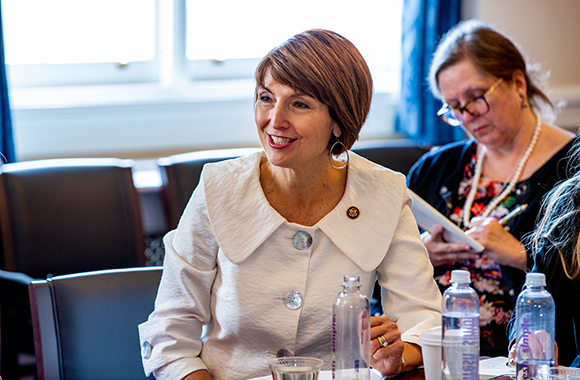
I’m spending the first part of this week in Brussels with colleagues from across the pond in a meeting with the Trans Atlantic Consumer Dialogue (TACD). The TACD is a forum of US and EU consumer organizations which develops and agrees on joint consumer policy recommendations to the US government and European Union to promote the consumer interest in EU and US policy making.

The TACD was launched in September 1998, at the end of the inaugural meeting which took place in Washington and gathered more than 60 consumer representatives from the US and the EU.TACD’s objectives are to provide a formal mechanism for EU and US consumer representatives to input to EU and US political negotiations and agreements as well as explore ways of strengthening the EU and US consumer view at the international level. TACD champions the consumer perspective in transatlantic decision making.

It is our mission to ensure that EU/US policy dialogue promotes consumer welfare on both sides of the Atlantic and is well informed about the implications of policy decisions on consumers. The TACD provides a common voice for EU and US consumer organizations ensuring that key consumer priorities are promoted and advocated within EU-US regulatory and governmental processes, helping to protect health and safety and assure truth and fairness in the marketplace. Through meetings and multi-stakeholder conferences TACD contributes to the exchange of information, dissemination of knowledge and sharing of expertise on key consumer issues in the EU and the US. 

TACD works with stakeholders such as the Transatlantic Legislators Dialogue (TLD) and the Transatlantic Business Council (TABC) through the Transatlantic Economic Council (TEC), of which TACD is a member of the advisory group, to find areas of commonality and to seek increased consensus. It was a pleasure to be a part of this conference.