Improving medication adherence for people with HIV – National Consumers League

By Rebecca Burkholder, NCL Vice President for Health Policy For the last several days I have been in Miami at the 8th International Conference on HIV Treatment and Prevention Adherence.  The conference hosts over 400 delegates from more than 30 countries, who work directly providing care to HIV patients or on HIV research.  The conference provides a forum where state of the art science and adherence research for treating HIV are presented, discussed, and translated into evidence-based approaches. While there has been remarkable progress in HIV medicine over the last several years, allowing us to imagine an end to the HIV pandemic, this is tempered by the real world challenges around adherence and prevention.  The keynote speaker, Dr. Badara Samb, Joint United Nations Programme on HIV/AIDS, made a call to action to treat 15 million with HIV by 2015.  Globally, 34 million people are living with HIV. He noted that there are still barriers to care – millions do not have access to treatment, and millions of others who are HIV positive don’t know it yet since they have not been screened. Many people who do know their status, are not getting treatment due to stigma associated with being HIV positive. General sessions and research presentations focused on various aspects of adherence.  Dr. Ira Wilson, Brown University, moderated an interactive panel of HIV health care providers about how to talk to patients about adherence. The discussion included the following tips:  ask patients open-ended questions about adherence, be non-judgmental, don’t make assumptions about a patient’s ability to understand instructions and information, and ask questions about a patient’s life in order to learn about medication-taking behavior. I was invited to give a workshop on NCL’s Script Your Future campaign to raise awareness of the importance of adherence.  While the campaign currently focuses on three chronic condition areas – respiratory, diabetes, and cardiovascular – there was interest in expanding our campaign to include HIV, since many of those with HIV suffer from other chronic conditions as well. The research and clinical work showcased at the conference, along with the clear dedication and commitment of these health care professionals, is key to the ongoing treatment and prevention of HIV.  

NCL calls on Congress to pass comprehensive device unlocking legislation – National Consumers League

June 6, 2013

Contact: Ben Klein, NCL Communications, (202) 835-3323, benk@nclnet.org

Washington, DC – In a letter to the House Subcommittee on the Courts, Intellectual Property and the Internet, the National Consumers League today called for legislation that would permanently allow consumers to unlock mobile devices without violating copyright laws.

The full text of the letter is available here.

###

About the National Consumers League 
The National Consumers League, founded in 1899, is America’s pioneer consumer organization. Its mission is to protect and promote social and economic justice for consumers and workers in the United States and abroad. For more information, visit www.nclnet.org.

Will repackaging medicine prevent suicides? – National Consumers League

By Sally Greenberg, NCL Executive Director
This week Dr. Ezekiel Emanuel wrote a persuasive column in the New York Times laying out a strategy for reducing suicides. He suggests that by simply changing the way we package medication, as Britain has done, we could sharply reduce the number of people who take fatal doses of medicine. Emanuel, the brother of the Mayor of Chicago and a physician who comments frequently on health policy, notes that every year one million people attempt suicide, more than 38,000 succeed.

It turns out that suicides and poisonings from medication have been steadily climbing since 1999. He says that “a good way to kill yourself is by overdosing on Tylenol and other pills”.  Emanuel argues that if we make it hard to buy pills in bottles of 50 or 100 capsules that can easily be dumped out and swallowed, we can prevent many deaths. If pills were packaged in blister packs of 16 to 25, anyone who wanted to use them to commit suicide would have to work really hard. The fact is that suicides occur all too often when a person is at a particularly low moment. Research shows that if the opportunity to take pills – or use a firearm – is effectively diminished – often the moment passes and the person lives. Emanuel cites very persuasive data from Britain. In 1998, Britain changed packaging for the active ingredient in Tylenol, acetaminophen, requiring blister packaging of 16 pills when sold over the counter in places like convenience stores and for packages of 32 pills in pharmacies.  The result, published in an Oxford University study, showed that over 11 years or so, suicide from Tylenol overdoses declined by 43%. Accidental poisonings declined as well. The number of liver transplants attributable to Tylenol toxicity went down significantly. In fact, in 2011 the makers of Tylenol added protective flow restrictors and dosing syringes to all liquid infant and children’s medicines, to prevent accidental overdose.  There is already a precedent here in the US to modify packaging to prevent adverse events; this isn’t a new concept for industry. Not only can repackaging acetaminophen-containing products reduce incidence of suicide caused by overdosing, but it will also prevent accidental poisoning of children. Manufacturers should work with the FDA to learn from Britain’s example and continue to improve packaging. With a change in packaging, which comes with a cost to manufacturers of course but could be carried out over time, we could potentially save thousands of lives.

NCL mourns the loss of Senator Frank Lautenberg – National Consumers League

June 3, 2013

Contact: Ben Klein, NCL Communications, (202) 835-3323, benk@nclnet.org

Washington, DC–The National Consumers League mourns the passing of Senator Frank Lautenberg of New Jersey. Senator Lautenberg was a giant in promoting the health and safety of consumers. His effective legislating against smoking and drunk driving no doubt make him responsible for saving hundreds of thousands of lives.

Senator Lautenberg was an early proponent of strict laws curbing drunk driving, pushing a measure that committed all 50 states to reducing blood alcohol levels of drivers to .08. He successfully worked to set a nationally enforced age for the legal alcohol consumption at 21 years old, and followed that with a law requiring those with histories of drunk driving to have  ignition interlocks (which prevent a vehicle from starting if a sensor detects alcohol on a driver’s breath) installed on their cars and trucks (Public Law No. 110-244). That law was enacted in 2008.

The Senator also successfully argued for a ban on smoking in federal buildings and on airplanes, noting with regard to planes, “With this legislation, nonsmokers, including children and infants, will be free from secondhand smoke. Working flight attendants will avoid a hazard that has jeopardized their health and their jobs.”

Countless thousands of Americans today have clear lungs and greatly improved health as a result of Senator Lautenberg’s efforts against smoking; others are alive as a result of the Senator’s early work to adopt stricter drunk driving laws. The Senator also championed another critically important public health issue, strict gun control, and worked to protect battered spouses by restricting the abusive partner’s access to firearms.

Senator Lautenberg’s pioneering leadership on drunk driving, smoking, and gun control make him one of the great champions of public health measures that make us all safer, healthier, and more secure. 

We salute the legacy of this great Senator, whose work left an indelible mark on America.  

###

About the National Consumers League

The National Consumers League, founded in 1899, is America’s pioneer consumer organization. Our mission is to protect and promote social and economic justice for consumers and workers in the United States and abroad. For more information, visit www.nclnet.org.

How does the new pork slaughterhouse program affect food safety? – National Consumers League

By Zoe Stahl, Food and Labor Policy Intern
 
Zoe Stahl, a food and labor policy intern at NCL this summer, is a rising senior at the University of Michigan, where she is pursuing a dual major in Art History and Environmental Science. Zoe is interested in food policy, sustainability, and labor issues. 
 

Last month, the Office of the Inspector General, essentially USDA’s internal watchdog, released a scathing report of pork slaughterhouse inspections. What particularly concerns NCL is the report’s review of the pork slaughterhouse pilot program, which increased line speeds and reduced the number of inspectors.

The report raised a number of issues with the pilot program. First, the USDA failed to conduct a comprehensive review to gauge whether it has increased food safety and plant efficiency as intended. Despite limited oversight, the report still found major flaws with the inspections. With three of the plants receiving most noncompliance reports (formal write-ups of food safety violations), the program may increase the potential for food safety risks.  This is not surprising considering these plants have faster production lines and fewer inspectors, limiting their ability to improve food safety and to comply with food safety regulations.  Even more alarming, inspectors failed to manually inspect the internal organs in which disease and contamination may lurk.

A similar program has been piloted in poultry slaughterhouses and might be expanded to all poultry plants. This is a program that NCL, along with a robust coalition of food safety and workers’ rights groups, has been fighting against. As in swine slaughterhouses, the program would increase the speed of the poultry line and replace inspectors with plant workers, who would not be required to receive any new training. Workers would have only a third of a second to examine the chicken, meaning contamination and defects could go undetected. It is not only a food safety issue, but also a worker safety issue. Faster line speeds mean higher rates of repetitive-motion injuries, such as carpal tunnel syndrome, for slaughterhouse employees. And many of these workers, who are often new, undocumented immigrants, women or non-native English speakers, may be hesitant to speak up for fear of being fired or, even worse, deported.

Given the findings in pork slaughterhouses, you may be wondering how USDA could even consider industry-wide implementation. Here at NCL, we are too. NCL’s conviction that implementing this program is a bad idea has now only deepened given the overwhelming evidence.

NCL statement on federal bankruptcy case against Patriot Coal – National Consumers League

May 31, 2013

Contact: Ben Klein, NCL Communications, (202) 835-3323, benk@nclnet.org

Washington, DC–The National Consumers League issued this statement on the federal bankruptcy case against Patriot Coal:

NCL is deeply disappointed in the Court’s decision to allow Patriot Coal to eliminate retiree health care and retirement benefits. “Allowing Peabody Coal to throw workers and retirees under the bus by simply declaring bankruptcy is unfair and unjust. This unthinkable decision now gives companies the green light to offload their health care and retiree obligations to another entity that goes bankrupt,” said Sally Greenberg, Executive Director of the National Consumers League.

NCL has long been allied with the cause of American workers and has a close and abiding relationship with the UMWA. One of NCL’s early presidents, Josephine Roche, was closely associated throughout her career with legendary UMWA president John L. Lewis, and NCL honored UMWA President Cecil Roberts in 2012.

“There’s no harder or more arduous job than going down into the mines for 12 hours a day. The work results in ailments from breathing in coal dust and Black Lung disease to injuries caused by the hard labor involved in mining. It’s only fair that these miners and their families get good health care and a decent retirement plan. Courts are there to protect these basic rights. Sadly, this court failed to do that.”

The union has recently held many rallies, and NCL joined a recent protest in St. Louis aimed at Patriot’s financial problems that are directly related to corporate actions by Peabody and Arch coal companies. “NCL believes that Patriot was set up to fail when it was formed by Peabody with more liabilities than assets in 2007,” said Greenberg. “We stand with our brothers and sisters at the UMWA in supporting an appeal to U.S. District Court in a continuing quest for justice for these mine workers and their families.”

###

About the National Consumers League

The National Consumers League, founded in 1899, is America’s pioneer consumer organization. Our mission is to protect and promote social and economic justice for consumers and workers in the United States and abroad. For more information, visit www.nclnet.org.

Mineworkers suffer after an unfair and wrong court ruling – National Consumers League

On May 30, a bankruptcy court handed a devastating blow to mineworkers across the nation. The courts ruled that Patriot Coal could declare bankruptcy and effectively end its obligation to provide healthcare and retirement benefits to mineworkers. Thousands of miners who spent up to 12 hours a day in the mines breathing in harmful coal dust that can result in Black Lung disease and other ailments have been stripped of healthcare benefits intended to alleviate the financial burdens of retirement. NCL, a long-time ally of the United Mine Workers of America, is extremely disappointed with the court’s ruling and thinks the decision ensures corporate greed wins out over everyday worker’s rights.

A closer examination of Patriot Coal’s financials indicates that the company was doomed for failure. When Peabody Energy formed Patriot Coal in 2007, the company held more liabilities than assets. “NCL believes that Patriot was set up to fail,” says Sally Greenberg, NCL Executive Director.

This ruling reinforces a dangerous precedent established by the courts wherein a company can declare bankruptcy and offload retirees’ benefits. Many Americans think that union contracts are binding agreements between workers and companies; a string of recent court rulings, however, indicate otherwise. This ruling demonstrates that big business can throw workers aside in the name of corporate greed, which will severely weaken our labor unions. This is an unthinkable decision that has far-reaching negative implications for union workers across the country.

Groups support voluntary alcohol serving facts labeling decision – National Consumers League

May 30, 2013

Contact: Ben Klein, NCL Communications, (202) 835-3323, benk@nclnet.org

Washington, DC—The National Consumers League (NCL), The Consumer Federation of America (CFA), and Shape Up America! (SUA) today expressed their support for a decision by the Tax and Trade Bureau (TTB) at the Department of the Treasury to allow voluntary serving facts statements on alcoholic beverages. However, the groups also urged TTB to finalize its long delayed regulation on the issue and ultimately require alcoholic beverages to carry serving facts labels.

“Nutrition labeling is an important tool for consumers looking to make informed decisions about consumption. Complete information is especially important today, when so many adults are either overweight or obese,” said Barbara Moore, President and CEO of Shape Up America! While nutrition labeling is mandatory on most food and beverages, it is not currently required on alcoholic beverages, a loophole consumer groups have long been working to remedy.

The decision issued by the Alcohol and Tobacco Tax and Trade Bureau (TTB) at the Department of the Treasury comes in response to earlier government action against Four Loko, a popular alcoholic beverage that originally included caffeine. As part of an agreement reached several months ago with the Federal Trade Commission (FTC), the maker of Four Loko was required to apply to TTB for permission to include an alcohol facts panel on their product. “We are pleased that TTB has decided to allow the makers of alcoholic products to voluntarily provide consumers with essential nutrition and alcohol content information, information that is sorely lacking in the marketplace. We see this move as a step in the right direction,” said Sally Greenberg, the Executive Director of the National Consumers League.

For over a decade, consumer groups have been requesting alcohol labeling, which would include both alcohol and nutrition facts, as well as recommendations from the Dietary Guidelines regarding moderate drinking, a goal complicated by the fact that while the U.S. Food and Drug Administration (FDA) oversees most consumable products, alcohol is overseen by TTB. “While we recognize the challenges inherent in developing new labeling, and see this as a good first step, we are somewhat troubled that TTB has decided to allow voluntary labeling rather then moving forward with long delayed rulemaking regarding mandatory labeling,” said Chris Waldrop, Director of the Food Policy Institute at Consumer Federation of America. “Consumer groups will continue to push for mandatory, standardized and comprehensive labels on all alcoholic products.”

###

About the National Consumers League

The National Consumers League, founded in 1899, is America’s pioneer consumer organization. Our mission is to protect and promote social and economic justice for consumers and workers in the United States and abroad. For more information, visit www.nclnet.org.

About Shape Up America!

Shape Up America! was founded in 1994 by former U.S. Surgeon General C. Everett Koop to raise awareness of the health effects of obesity and to educate the public, health professionals and policymakers on proven ways to achieve and maintain a healthy weight. The organization maintains an award-winning website – www.shapeupus.org – accessed by more than 100,000 visitors each month.

About CFA

Consumer Federation of America is an association of nearly 300 nonprofit consumer organizations that was established in 1968 to advance the consumer interest through research, advocacy, and education.

A deeper look at Angelina Jolie’s decision to undergo a double mastectomy – National Consumers League

By Sally Greenberg, NCL Executive Director

Last week the actress and celebrity Angelina Jolie came forward on the OpEd page of the New York Times with the unexpected news that she had undergone a double mastectomy. Jolie disclosed that she carries the BRCA1 gene that sharply increases a woman’s chance of developing breast cancer. Her doctors advised her that she had an 87 percent risk of developing breast cancer and a 50 percent chance of getting ovarian cancer as a result of what she calls a “faulty gene.” What made this story so compelling is that Jolie’s mother, to whom she was very close, died at age 59 after fighting ovarian cancer for over a decade. Jolie talked about how much she wants to see her children grow up and be a part of their lives for a long time in a way that her mother could not. After this procedure, Jolie was advised that her chances of developing breast cancer are under 5 percent. “I can tell my children that they don’t need to fear they will lose me to breast cancer,” she writes.

Jolie also described in great detail that she had three months of medical procedures, including having breast tissue removed and temporary fillers put in place. Nine weeks later, she had the final surgery completed and reconstruction of the breasts with an implant. This is a grueling, difficult, and painful surgery.

The reaction in most camps after Jolie’s column appeared was that she had made a very difficult but very brave decision to have the surgery, that every woman must make up her mind about what is right for her, and that going public is likely to give other women with equally dire genetic information the strength to have this kind of preventive surgery.

Then I read a very sobering piece by my friend and colleague Dr. Diana Zuckerman responding to Jolie’s announcement. Zuckerman is a PhD and president of the Cancer Prevention and Treatment Fund.

She raised serious questions about the advice Jolie received from her doctors, noting that the 87 percent figure Jolie was told was her chance of getting breast cancer, was apparently based on older and smaller studies than those available today.  Quoting Stanford University’s Cancer Institute, Zuckerman argues that newer studies have found that the risk of getting breast cancer for an average woman with BRCA1 is 65 percent. “Since being overweight and smoking increase the risk and exercising and breastfeeding lower the risk, Ms. Jolie’s risk of breast cancer, even with the BRCA1 gene, could be considerably lower.”

Zuckerman says that according to experts, a 40-year-old woman with the BRCA1 gene has a 16 percent chance of getting breast cancer before she turns 50. Compared to 87 percent, 16 percent looks a lot less dire. Zuckerman also points out that with the latest breast cancer treatments and regular screening, the survival rate from breast cancer is higher than ever.   Zuckerman adds that if  “Ms. Jolie (or any other woman with BRCA1) got breast cancer in the future–if she ever did–the treatments available would be even more effective than they are today.”

Zuckerman makes a very important point, “Nobody can second-guess Angelina Jolie’s choice–it’s hers alone to make.” Yes, that is true for any woman.

But before anyone who has the BRCA1 gene rushes out to follow Ms. Jolie’s example, we need to ensure that she fully understands what the true risks are, the improved diagnostic and treatment options, and that she doesn’t base any decision on how a celebrity acted without knowing all the facts.  Most cancer experts are doing their best to explain why double mastectomies are not the best choice for most women in the aftermath of this celebrity’s disclosure.  I hope that perspective – based in the latest science – is not overshadowed  by the publicity that Ms. Jolie’s announcement has received.  This is a teachable moment – let’s make the most of it.

Bill to improve compounding pharmacy falls short of protecting public health – National Consumers League

92_ayannaBy Ayanna Johnson, Health Policy Associate
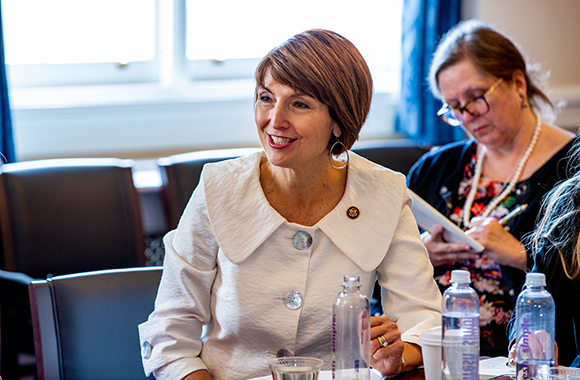

Legislation proposed to clarify the practice of compounding pharmacy falls short of protecting the public’s health. In early October, a deadly meningitis outbreak killed 55 individuals and caused 741 cases of fungal meningitis, as a result of shoddy practices and absent safeguards at a large compounding facility in Massachusetts. The proposed bi-partisan legislation from the Senate Health, Education, labor and Pension (HELP) Committee was drafted in response to this outbreak, but does not do enough to address public health threats. After a unanimous vote in the HELP committee this Wednesday, the bill, S.959 the Pharmaceutical Compounding Quality and Accountability Act, is now headed to the full Senate for deliberation.

Compounding pharmacies provide a unique service to consumers by reformulating medicines for patients with special medical needs that cannot be met by FDA-approved drugs. However, compounding processes can introduce new risk into the health care system, as evidenced by the tragedy this past fall. This proposed legislation attempts to clearly define compounding pharmacies. The legislation clarifies that traditional compounding pharmacies will continue to be regulated by the states and then creates a new category for large-scale drug compounders and calls these businesses “compounding manufacturers.” These businesses make sterile compounded drugs in advance of a prescription and sell them across state lines.

Though the FDA is given the authority to regulate the new class of compounding manufacturers, there are concerns that FDA’s authority is not complete and that the definition of compounding manufacturers is too narrowly defined. In order to qualify in this category a business must meet all three of the following criteria: 1. Compounds at least one sterile drug. 2. Compounds before receiving a prescription. 3. Ships (sells) those drugs interstate.   However, this definition leaves open several questions. What happens if a compounder operates only within one state, and does not ship across state lines?  Also this definition does not allow for monitoring of large compounding pharmacies that sell non-sterile oral drugs, such as those used in cancer treatment. There have been reports of contaminated, counterfeit, and inactive drugs in this class of non-sterile drugs as well.

The bill allows traditional compounders to be regulated under existing state law, which varies from state to state—a further loophole in the regulation. According to a recent Washington Post article, the FDA believes that the proposed legislation limits its authority to appropriately protect public health. In early May, I attended the Senate HELP Committee hearing on this legislation, where Dr. Janet Woodcock of the FDA stated that the FDA needs clarity on its oversight role, as well as, access to additional documents and records from compounders on adverse events. Additional ambiguity lies with a clause calling for licensed pharmacist oversight in compounding manufacturers.  Does the clause require a licensed pharmacist be present during manufacturing or just generally be aware of the practices?  And the bill does not provide for appropriate labeling of compounded drugs to alert both health care providers and consumers that they are administering or receiving, respectively, a compounded drug.

It remains to be seen what will happen with the bill, but hopefully it will be strengthened to appropriately protect the public.  A recent report released by the US PIRG, a consumer health group, identified a number of lapses in authority and oversight of compounded pharmacies, by analyzing FDA warning letters sent to compounding pharmacies from 2002 to 2012. Numerous instances of contaminated products, or drugs produced without FDA approval, and distributed to patients were identified along with loopholes that compounders have used to avoid legal ramifications. The Senate also conducted a similar investigation since the October outbreak, finding that 48 large-scale compounders sold drugs that were contaminated or produced in unsanitary conditions.

What’s clear is that compounding pharmacy has evolved significantly, and if not appropriately monitored, can lead to unnecessary public health crises. The Senate legislation lacks teeth; but there is a House Bill being proposed by Congressman Ed Markey (D-MA.), which seeks to address some of the shortcomings outlined here, including broader FDA authority of compounding manufacturers and more communication among state and federal government. The National Consumers League, along with members of the Patient, Consumer and Public Health Coalition, backs this new bill.