Survey: Increased communication between patients, health care providers leads to better adherence – National Consumers League

December 18, 2015

Results of the national Script Your Future campaign confirm theories of link between communication, adherence

Contact: NCL Communications, Cindy Hoang, cindyh@nclnet.org, (202) 207-2832

Washington, DC—New research conducted for a national multi-media educational campaign to raise awareness about the importance of medication adherence shows that there are clear benefits and opportunities linked to increased communication between people who take prescription medications and their health care professionals, as well as to the use of tools that make it easier to adhere to medications. Greenberg Quinlan Rosner (GQR) surveyed patients for the Script Your Future campaign, in the campaign’s pilot cities before the campaign launched in 2011, at its midpoint in 2013 and again in 2015.  The new results, released today, demonstrate improvement in communication and adherence, particularly in the campaign’s target market cities.

Bringing together more than 135 stakeholder organizations, Script Your Future hasaimed to help people with chronic conditions—cardiovascular disease, respiratory disease (asthma and COPD), and diabetes—along with their families, caregivers, and health care professionals, to talk more clearly and effectively with each other about adherence. Script Your Future’s national outreach and targeted efforts in six pilot cities have reached millions through hundreds of local events, traditional and social media, educational programs by campaign stakeholders, and the campaign website, www.ScriptYourFuture.org

The surveys  in the six pilot cities—from 2011 to the present—show that, while Americans possess a strong awareness and acceptance of the importance of taking medications exactly as prescribed, there are clear benefits and opportunities linked to increased communication between people who take prescription medicines and health care professionals, and use of tools that make it easier to adhere to prescription medicines.

According to the GQR survey data: 

The link between communication and good adherence emerged as important early on in the campaign and continues to be crucial; those who report taking medications better than a year ago also are more likely to experience increased communications by health care professionals over the same time period, while those who report a worse job taking medications say they had seen decreased communications. The increase in communications from pharmacists has been particularly notable. Continuing to work to encourage communications between patients and health care professionals will be an important piece in continuing to promote awareness around adherence to medication.

“We are pleased at the results of this research, which confirm our hypotheses on the importance of good patient-provider communication, and validate the involvement of more than135  organizations that, through their collaboration and support, brought the Script Your Future campaign to life,” said Sally Greenberg, executive director of the National Consumers League, the lead campaign organizer. 

The GQR research also found that those taking medicines in the pilot cities, where the campaign had specific outreach efforts, are significantly more likely than those in a control market to say they are taking their medicines better than in the previous year.

The Script Your Future pilot cities, or target markets, are Baltimore, Md.; Birmingham, Ala.; Cincinnati, Ohio; Providence, RI; Raleigh, NC; and Sacramento, Calif.

Key findings

Some key findings from the surveys of patients in the six pilot cities  include:

  • Americans who take prescription medications report a strong awareness and acceptance of the importance of adhering to their medications. A majority of Americans taking medications (55 percent) strongly agree with the statement “I am convinced that it is important for me to take my medicine.”
  • Self-reported levels of adherence to prescription medications have remained consistently high since 2011. More than 9-out-of-10 people who take prescription medicines (93 percent) now say that they “always” or “almost always” take their medicines exactly as instructed by their doctor, nurse, or pharmacist. This is consistent with the high levels of adherence reported in both 2011 and 2013.
  • Nearly 1-out-of-5 people taking medications in the target markets say they are taking their medicines better than they were a year ago, significantly higher than in the control market. In the control market, just 12 percent of those taking medicines say that they were doing a better job taking their medicine as directed compared to a year ago; in the target markets, 19 percent of patients note that they are doing a better job with their medicines.
  • Better communication between patients and health care professionals connects to better adherence. Those Americans who report taking medications better than a year ago also are more likely to have experienced increased communications with health care professionals during that the same time period. Those who say that they are doing a worse job taking medications report a decrease in communications with health care professionals.
  • Americans taking prescription medicines report an increase in communications with pharmacists in particular. Thirty-nine percent of those who take medications report that pharmacists are now more likely to ask about problems with medications “every time” or “occasionally.” This represents a 6-point increase compared to the campaign’s inception. Importantly, the number of individuals in the target markets who say their pharmacist “never” asks about problems with medications has also decreased since 2011, from 50 percent to 43 percent.

View the: survey brief, full survey report, as well as individual target market analysis:

Baltimore | Birmingham | Cincinnati | Providence | Raleigh | Sacramento


###

Script Your Future is a campaign of the National Consumers League (NCL), a private, non-profit membership organization founded in 1899. Our mission is to protect and promote social and economic justice for consumers and workers in the United States and abroad. The National Consumers League serves consumers across the country by providing government, businesses and other organizations with the consumer’s perspective on a range of concerns – including health care and medication information. As an advocacy organization, NCL is working to educate consumers and key health stakeholders on the importance of taking medication as directed. For more information about this campaign, visit ScriptYourFuture.org, and for more information on our other areas of focus, please visit www.nclnet.org.

NCL statement in support of Congresswoman Pingree’s Food Recovery Act – National Consumers League

December 18, 2015

Contact: Cindy Hoang, National Consumers League, cindyh@nclnet.org or (202) 207-2832

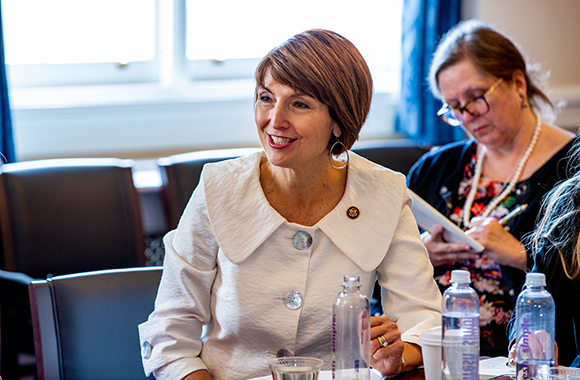
Washington, DC–In September, the USDA and EPA announced a national commitment to reducing food waste by 50 percent by 2030. However, we are lacking the comprehensive strategies that must be in place and it is hard for stakeholders to know where to start. We are pleased to support Congresswoman Chellie Pingree’s groundbreaking bill, the Food Recovery Act, aimed at reaching this national goal.

The Food Recovery Act (HR H.R.4184)  is organized by four major stakeholder groups; farms, retail and restaurants, schools and institutions, and consumers and local infrastructure. Framing legislation in such a way, presents stakeholders with policy solutions that are relevant and achievable. Solutions include standardizing date labeling, increasing funding for larger-scale state composting, and strengthening the Good Samaritan Food Donation Act, which encourages companies and organizations to donate food by protecting them from criminal and civil liability.

The issue of food waste is real and mounting. It’s easy to get discouraged when confronted with numbers such as: 40 percent of the U.S. food supply is wasted; the average American throws away between $28-433 of food each month; and we could feed 25 million people if we reduced food waste by just 15 percent. The National Consumers League (NCL), along with other non-profit and government groups, are working to address this problem throughout the food supply chain and appreciate initiatives such as the Food Recovery Act from leaders like Congresswoman Pingree. We urge Congress to pass the Food Recovery Act to help move us closer to our 2030 goal. 

###

About the National Consumers League

The National Consumers League, founded in 1899, is America’s pioneer consumer organization. Our mission is to protect and promote social and economic justice for consumers and workers in the United States and abroad. For more information, visit www.nclnet.org.

NCL statement applauding victory for retirement savers’ protections – National Consumers League

December 17, 2015

Contact: Cindy Hoang, National Consumers League, cindyh@nclnet.org or (202) 207-2832 

Washington, DC–The National Consumers League (NCL) is celebrating a victory for American workers and retirees with the recent announcement that Congress has reached an agreement on an omnibus funding bill that supports the Department of Labor’s rulemaking to improve retiree protections.  The DOL rule would make financial professionals responsible for meeting basic quality standards by closing loopholes in the Employee Retirement Income Security Act. Financial firms fought bitterly against the rulemaking, but Congress’ Wednesday vote on the funding bill ensures it will take place.

The following statement may be attributed to NCL’s Executive Director Sally Greenberg:

“We applaud Congress’ decision to stand up to special interests and protect the workers and retirees who would have been hurt by this omnibus funding bill had the previous version been passed. These people deserve to feel secure about their lifelong savings and retirement funds.”

###

About the National Consumers League

The National Consumers League, founded in 1899, is America’s pioneer consumer organization. Our mission is to protect and promote social and economic justice for consumers and workers in the United States and abroad. For more information, visit www.nclnet.org.

U.S. consumer groups slam GM for failing to put safety technologies in cars sold in developing countries – National Consumers League

December 11, 2015

Washington, DC—Four national consumer advocacy organizations – Consumers Union, Public Citizen, Advocates For Highway and Auto Safety, and National Consumers League – are asking General Motors CEO Mary Barra to address the glaring absence of basic safety equipment – like seat belts – in GM cars sold in Latin American in a letter sent this week. The letter stated:

“We were surprised and disappointed to learn of the poor performance of General Motors (GM) in auto safety tests conducted by the New Car Assessment Programme for Latin America and the Caribbean (Latin NCAP). These results are directly related to GM’s failure to provide the same safety technologies on cars sold in Latin America as the company provides as standard equipment in cars sold in the US market. We are specifically referring to basic safety features, such as airbags, but also newer life-saving technologies like electronic stability control and pre-tensioned seat belts, all of which are fitted as standard on GM vehicles in the US.”

The American consumer groups’ letter came in response to the Nov. 16 release of crash test safety results by the New Car Assessment Programme for Latin America and the Carribbean (Latin NCAP). In those tests, GM’s Chevrolet Aveo, the best-selling car in Mexico that is sold throughout Latin America, scored zero stars for protecting adults and only two stars for protecting child passengers. Latin NCAP described the model as demonstrating a “high risk of life-threatening injuries.”

Latin NCAP tested the basic version of the Aveo, which is sold in Latin America without airbags. Despite recent commitments from GM to become an industry leader on safety, Chevrolet has performed consistently poorly in Latin NCAP tests over a number of years, and ranks 8th out of 11 leading car manufacturers in the region. Only three Chinese brands averaged worse scores over a five-year period of Latin NCAP tests.

The groups’ letter noted: 

“Auto safety cannot only be for citizens living in wealthy countries; yet GM’s practice of providing some consumers with the best safety technologies, while not even providing airbags to others, strikes us as a morally indefensible decision.”  …. [I]n your capacity as CEO you have stated your commitment to auto safety technologies and doing right by consumers, and we think this is an issue that deserves your attention.”

The four American groups are aligned with Consumers International (CI) in calling for universal adoption of minimum United Nations Vehicle safety regulations by governments and voluntary compliance by car manufacturers as soon as possible. Cars scoring zero in NCAP tests fail these internationally recognized minimum safety standards.

Research commissioned by Global NCAP found that more than 380,000 deaths and serious injuries could be prevented by 2030 in Brazil alone if it adopted key UN regulations within a reasonable timeframe.

According to the World Health Organization:

  • 1.3 million people died and 50 million people were injured on roads in 2013. Unsafe cars are a major contributor to this statistic. Fifty percent of those affected were vehicle occupants. This disparity in access to safety technologies has real consequences, and contributes to unacceptable burden of road crash deaths and injuries highlighted by the World Health Organization and referenced by Consumers International in its letter. 
  • Road traffic deaths are now the 9th biggest killer globally, and are predicted to become the 7th biggest killer worldwide by 2030 unless urgent action is taken.

The groups also told Barra, “As CEO, you can demonstrate to all consumers concern for their safety and play a leading role in ensuring all vehicles comply with these safety standards regardless of where they are sold.” 

Photos of the test results are included below. 


### 

About the National Consumers League

The National Consumers League, founded in 1899, is America’s pioneer consumer organization. Our mission is to protect and promote social and economic justice for consumers and workers in the United States and abroad. For more information, visit www.nclnet.org.

NCL’s visit to Corto Olive: An examination of true EVOO production – National Consumers League

corto.jpgBy Ali Schklair, Linda Golodner Food Safety & Nutrition Fellow 

Extra virgin olive oil (EVOO) is a fairly recent addition to the American kitchen. Due to the popularity of the Mediterranean diet and the promotion of “healthy fats,” many consumers are now opting for EVOO as their primary cooking oil. Over the past few decades, olive oil producers worldwide have scrambled to keep up with increasing consumer demand. Unfortunately, the majority of “extra virgin olive oil” available to consumers is not truly EVOO.

Results of a 2010 UC Davis EVOO study found that approximately 69 percent of imported oil labeled “extra virgin olive oil” is mislabeled. An emphasis on imported oils is important for two reasons: one, imported extra virgin olive oil dominates 97 percent of the EVOO market in the United States; two, there are no federally mandated quality standards for imported products in the United States. As a result, we are left with an unregulated EVOO market that is inundated with low quality olive oil.

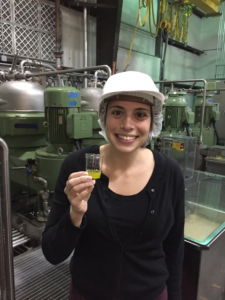
In this industry, fraud starts in the fields. This fall, NCL’s Linda Golodner Food Safety & Nutrition Fellow Ali Schklair visited Corto Olive, a family-run olive oil company based in Lodi, California. There was something distinctly different about the olive trees at Corto. Instead of large and looming, these trees were trim, contained, and steadied by lean trunks. Schklair later learned that the shape and positioning of these trees is the reason Corto is able produce such high quality oil.

Traditionally, olives were picked by hand, making the harvesting process tedious and time consuming. As imported EVOO gained popularity in the U.S., many of the companies abroad did not have enough labor to satisfy demand. Without time to inspect each olive, oil producers started waiting for olives to rot and fall to the ground. The fruit (and the dirt, sticks, and leaves along with it) could then be easily raked up and sent to the mill. To mask the rancidity, oil is often refined, mixed with small amounts of good oil, and even altered in color and consistency. Rotting fruit, refining, and the mixing of oils mean that this oil is no longer high quality EVOO. Still, the manipulated product is shipped off to the U.S., too often falsely stamped with the “extra virgin olive oil” label.

In 1990, farmers in Spain developed an alternative harvesting system that allows olives to be picked at peak freshness. The “super high-density method” has olive trees planted and pruned close together so a special harvesting machine-not able to fit around traditional trees-can easily fit between rows.  The best producers in the U.S., like Corto, have adopted this method in order to provide higher quality oil than their international counterparts.

Once olives are harvested, they are brought to the mill for sorting and washing. Unlike most mills, Corto uses a special sorting machine called the “optical sorter” to remove only undesirable materials from the batch. This technology is used in other aspects of food processing, but Corto is the first to use it for olive oil. Corto’s use of the high-density method and an optical sorter is unique and ensures their oil is fresh and authentically extra virgin.

Extra virgin olive oil has gained popularity in the U.S. because of its many health benefits, which are real and important. But with such high instances of adulteration, it’s safe to assume that most consumers aren’t really getting what they pay for. So, how can consumers know if the oil they buy is truly extra virgin? Unfortunately, it’s hard to know for certain because most of our palates are not trained to recognize the real thing.

Throughout Europe, especially in the Mediterranean, olive oil is used as commonly as salt and pepper in the U.S. Understandably, taste is very important. In the U.S., products labeled “extra virgin olive oil” are mostly used in cooking, making it easier for lower quality oil to fly under the radar. Tom Mueller, author of the book Extra Virginity, offers information and tips on his website to help consumers make more informed choices. Using resources like this, and by putting a higher value on taste, consumers can learn to shop for higher quality oil and actually reap the benefits they seek. There are a number of honest, high quality EVOO brands on the market, including Corto. Please see NCL’s EVOO testing results here.

Letter to Cordray calling on CFPB to investigate T-Mobile for abusive debt collection – National Consumers League

December 10, 2015

The Honorable Richard Cordray
Director
Consumer Financial Protection Bureau
1700 G Street, NW
Washington, DC 20552

Dear Director Cordray:

As Executive Director of the National Consumers League, I wish to call your attention to a matter that might be of concern to your agency. A group named Change to Win (“CtW”) has recently issued a report alleging abusive debt collection practices by wireless carrier T-Mobile.[1]

NCL has reviewed some of the findings in the CtW report and while we haven’t done our own investigation, we think the matters discussed in the report warrant a close look by the CFPB. In particular, we are concerned with allegations, based on a review of consumer complaints and analysis of the company’s advertising, that T-Mobile may have engaged in the following business practices:

  • Targeting low income communities and communities of color with potentially deceptive advertising; and
  • Potentially abusive debt collection practices.

NCL is concerned that, if true and left unchecked, these business practices could become commonplace throughout the entire wireless industry. We also note that T-Mobile objects to the findings of the CtW report and argues that they are inaccurate.[2]

This makes it all the more important for the CFPB – as the expert agency with jurisdiction over consumer financial products – to review the evidence and determine whether CtW’s allegations have merit. If they do, we suggest the Bureau take steps to address any conduct that runs afoul of the Bureau’s regulatory scheme and/or consumer protection laws.

Thank you for your attention to our concerns.

Sincerely,

Sally Greenberg
Executive Director
National Consumers League


[1] Change to Win. “Groups Call for Federal Investigation into T-Mobile’s Deceptive Advertising and Abusive Debt Collection Policies,” Press Release. December 8, 2015. Online: https://callingouttmobile.com/press-room/

[2] Wang, Jules. “Legere attacks USA TODAY for reporting on alegations against T-Mobile,” Pocketnow. December 8, 2015. Online: https://pocketnow.com/2015/12/08/t-mobile-allegations

Groups call on General Motors to increase safety of cars sold overseas – National Consumers League

December 4, 2015

Mary Barra
Chief Executive Officer
General Motors
300 Renaissance Centre
Detroit, MI 48265, 

Re: GM adding same safety technology to all vehicles made and sold anywhere per UN Car Safety Regulations

Dear Ms. Barra: 

We write as American consumer organizations with a history of working on auto safety. We wish to reference the recent letter you received from Consumers International, which is attached here.

We were surprised and disappointed to learn from our consumer colleagues in Latin America of the poor performance of General Motors’ (GM)  in auto safety tests conducted by the New Car Assessment Programme for Latin America and the Caribbean (Latin NCAP). These results are directly related to GM’s failure to provide the same safety technologies on cars sold in Latin America as the company provides as standard equipment in cars sold in the US market. We are specifically referring to basic safety features, such as airbags, but also newer life-saving technologies like electronic stability control and pre-tensioned seat belts, all of which are fitted as standard on GM vehicles in the US.

Indeed, the Chevrolet Aveo received a zero rating in Latin NCAP’s most recent independent crash test results, and was described as representing a “high risk of life threatening injury” in Latin America. In addition, the Chevrolet brand has shown the poorest performance of all the major global car manufacturers tested by Latin NCAP since 2010.  The basic model of the Aveo available to consumers in Latin American countries – such as Mexico (where the car is both manufactured and the top-selling model)- lacks even basic safety features, such as airbags, putting occupants at great risk. We find that information shocking.

As American consumers, we appreciate the enhanced protections these technologies provide in saving lives and preventing injuries in the US. But we find it hard to fathom that GM would not provide all consumers – no matter where they live around the world – with these same protective technologies.

Auto safety cannot only be for citizens living in wealthy countries; yet GM’s practice of providing some consumers with the best safety technologies, while not even providing airbags to others, strikes us as a morally indefensible decision. Ms. Barra, GM is not alone in this practice, but in your capacity as CEO you have stated your commitment to auto safety technologies and doing right by consumers, and we think this is an issue that deserves your attention.

Just last month, on the occasion of the 2nd Global High Level Conference on Road Safety, governments from around the world adopted a declaration for all new motor vehicles to meet minimum safety regulations:

“Promote the adoption of policies and measures to implement United Nations vehicle safety regulations or equivalent national standards to ensure that all new motor vehicles meet applicable minimum regulations for occupant and other road users protection, with seat belts, air bags and active safety systems such as anti-lock braking system (ABS) and electronic stability control (ESC) fitted as standard.”

At this propitious time, we are calling on each of the world’s largest car manufacturers to commit to comply with the UN Vehicle Safety regulations for all new cars, regardless of where they are sold.

This is particularly relevant to General Motors, as Latin NCAP has ranked it 8th out of 11 leading car manufacturers in Latin America, in terms of safety, and is the worst performing of any global manufacturer.

This disparity in access to safety technologies has real consequences, with an unacceptable burden of road crash deaths and injuries highlighted by the World Health Organization and referenced by Consumers International in its letter.  

The WHO has reported that:

  • 1.3 million people died and 50 million people were injured on roads in 2013. Unsafe cars are a major contributor to this statistic. 50% of those affected were vehicle occupants. This disparity in access to safety technologies has real consequences, and contributes to unacceptable burden of road crash deaths and injuries highlighted by the World Health Organization and referenced by Consumers International in its letter. 
  • Road traffic deaths are now the 9th biggest killer globally, and are predicted to become the 7th biggest killer worldwide by 2030 unless urgent action is taken.

The top ten car manufacturers accounted for 78% of all cars produced in 2013. It is clear that manufacturers like GM have an essential role to play in reducing traffic fatalities and injuries. 

The US is today one of the world leaders in providing consumers access to state-of-the-art safety equipment on all of our cars. As CEO, you can demonstrate to all consumers concern for their safety and play a leading role in ensuring all vehicles comply with these safety standards regardless of where they are sold. Applying these regulations voluntarily will help increase trust and confidence worldwide in the safety of your cars, and most importantly, save many thousands of lives. 

Thank you for your attention to our concerns. We would be happy to discuss further with you or your staff.

Yours Sincerely,

Ellen Bloom
Director, Federal Policy and Washington Office at Consumers Union
Consumers Union

Robert Weissman
President
Public Citizen

Jackie Gillan
President
Advocates for Highway and Auto Safety

Sally Greenberg
Executive Director
National Consumers League

Turkey day safety tips – National Consumers League

Untitled-1.jpgThe holidays are fast approaching and whatever your family’s traditions, they are sure in involve large quantities of food. With all that food comes food safety risks. Here are a few tips to make sure your family has a safe holiday season. From NCL to your table, we hope you have a great holiday season!


Turkey Tips

Defrost: Don’t leave your bird out overnight! Plan to defrost in the refrigerator, allowing 24 hours for every 4-5 pounds of bird.  If you don’t have time for that, defrost your bird in a cold water bath changing the water every 30 minutes. This method should take about 30 minutes per pound to defrost. 

Preparation: Contrary to popular belief, you shouldn’t wash the bird before cooking it. Doing so only spreads germs to other foods, utensils and surfaces. If you plan on stuffing the turkey, don’t do so until right before cooking as harmful bacteria can being to grow in stuffing left to sit inside the turkey for long periods.  

Cooking: Turkeys, especially large ones, can take a long time to cook so make sure you allow plenty of time for your bird to be completely cooked. The internal temperature should be 165⁰F. Check the temperature of the bird at multiple locations; you want to make sure the coldest part has reached the appropriate temperature. If you have stuffed your bird, check it to make sure the stuffing has reached 165⁰F as well. Even if your turkey comes with a pop up thermometer, double check the temperature with a meat thermometer to make sure it’s done.

Bacteria Free Buffets

The first step to serving safe food throughout the holidays, or any time, is to ensure you thoroughly wash your hands before and after handling food. Always use clean plates, not those that previously held raw meat or poultry as they can cross contaminate the food you are serving with bacteria. The same is true for cutting boards and other surfaces prepared foods touch, like counters. 

Ensure that all food is cooked thoroughly reaching safe minimum internal temperatures.  All poultry needs to be cooked to at least 165⁰F.   Beef, pork, lamb, and veal should be cooked to 145⁰F if they are intact and 160⁰F if they are ground.  Storing foods in shallow containers allows them to cool or freeze quickly and evenly.  When reheating hot foods for a buffet keep them in the oven with the temperature set around 200-250⁰F until they are ready to be served. 

If possible when food is put out for the buffet, keep hot foods at 140⁰F or warmer and cool foods at 40⁰F or cooler.  For hot foods, this can be done with slow cookers, warming trays and chafing dishes.  Cold foods can be nested in dishes over ice. 

Leftovers

Put all leftovers in the refrigerator within two hours.  For most efficient cooling, store large amounts of leftovers in several smaller containers.  Leftovers should be stored at 40⁰F or 4.4⁰C or frozen at 0⁰F or -17.7⁰C.  Make sure containers are sealed and keep refrigerated for 3-4 days or frozen if you plan on keeping them longer.  Reheat hot foods to 165⁰F.

Stay Active

As we all know, the holidays can be a difficult time to maintain a healthy diet.  Studies have shown that while holiday weight gain isn’t as dramatic as we think, it can contribute to weight gain over a lifetime.  Most people gain about one pound over the holiday season which is a rather manageable amount.  That doesn’t mean you have to deny yourself some of the best food you’ll have all year, instead make sure you stay active and eat everything in moderation.  It might be cold but there are plenty of fun winter activities such as ice skating, skiing, sledding or even taking a brisk walk that can help you stay active throughout the holidays. 

More Questions?

For Thanksgiving and throughout the holiday season you can download The U.S. Department of Agriculture’s (USDA) Food Safety Inspection Service (FSIS) free app called “Ask Karen” that has answers in both English and Spanish for any food safety question you might have.  As always, the USDA will have its bilingual Meat and Poultry Hotline available Monday through Friday, 10a.m. to 4 p.m.  You can call in toll free at 1-888-MPHotline (1-888-674-6854).

From everyone here at NCL, we hope you have a happy and healthy holiday season!

NCL statement on FTC Telemarketing Sales Rule amendment – National Consumers League

November 19, 2015

Contact: NCL Communications, Cindy Hoang, cindyh@nclnet.org, (202) 207-2832

Washington, DC—The National Consumers League (NCL), the nation’s pioneering consumer and worker advocacy organization, applauds the Federal Trade Commission (FTC) for its action to increase protections for consumers from telemarketing fraud. Via an amendment to its Telemarketing Sales Rule (TSR), the FTC today attacked a critical choke point that scammers have long used to defraud consumers: payment technology. By prohibiting the use of “remotely created checks,” “remotely created payment orders,” “cash to cash money transfers,” and “cash reload mechanisms,” the Commission’s action addresses key ways that con artists extract money from their victims.

The following statement is attributable to the National Consumers League’s Executive Director Sally Greenberg:

“Wire transfer, cash reload cards, and remotely created checks have long been the top ways, according to fraud victim complaint data collected by NCL’s Fraud.org, that scammers obtain their ill gotten gains. Today’s action by the FTC will not end the use of these payment mechanisms by scam artists, but it adds another tool to the FTC’s legal toolbox that the agency should use to go after fraudulent telemarketers. The FTC’s amendment to the TSR is a victory for consumers and a blow against scam artists in the fight against fraud.”

###

About the National Consumers League

The National Consumers League, founded in 1899, is America’s pioneer consumer organization. Our
mission is to protect and promote social and economic justice for consumers and workers in the
United States and abroad. For more information, visit www.nclnet.org.

Child Labor Coalition expresses concern about child and adult workers killed in recent factory collapse in Pakistan – National Consumers League

November 6, 2015

Contact: Child Labor Coalition Coordinator Reid Maki, (202) 207-2820, reidm@nclnet.org

Washington, DC—The Child Labor Coalition (CLC) laments the tragic deaths that occurred Wednesday in the collapse of a plastic-bag factory in Lahore, Pakistan. At least 23 workers died in the factory, including an unknown number of child workers. Rescuers have pulled more than 100 survivors from the rubble, but dozens of other workers still trapped are thought to remain.

Although the details are still not yet fully known, a young boy working in the factory who survived the incident told reporters that dozens of children were among the 150 workers trapped in the collapsed building. Several reports mentioned children as young as 12 working in the factory.

South Asia has been the scene of a number of factory tragedies in recent years. In 2013, more than 1,100 workers died in the Rana factory collapse in Dhaka, Bangladesh. In 2012, more than 100 workers died in the Tazreen fire just outside of Dhaka. That same year, 289 people were killed in a fire in Karachi, Pakistan, and on the same day, a shoe factory fire in Lahore killed 25 workers.

“This latest Lahore collapse highlights the vulnerability of factory workers,” said Sally Greenberg, co-chair of the CLC and executive director of the National Consumers League. “Factories must be inspected regularly, and officials should be on the constant lookout for children working in these unsafe environments. Young children should not be dying in factory collapses; they should not be working in factories at all. Western consumers bear some responsibility for creating the awful conditions that lead to these tragedies because of the constant demand for the cheapest-possible products produced at great speed.” 

“The conditions that lead to these kinds of tragedies are a violation of human rights, they are avoidable, and they must stop,” said Dr. Lorretta Johnson, secretary-treasurer of the American Federation of Teachers, a co-chair of the Child Labor Coalition.  “We know that change is possible, and we call upon the government of Pakistan to press its efforts to ensure a culture of rights, not only through inspection and monitoring of factories, but also by the critical elimination of exploitative child labor.”

“In Pakistan, according to data provided by the U.S. Department of Labor, only 72 percent of children between 5 and 14 attend school,” said Reid Maki, CLC coordinator. “Two and a half million children between 10 and 14 are estimated to work. Tragic deaths of children like those in the factory collapse in Lahore will continue without a concerted effort to remove children from exploitative work and get more children into school.”

###

About the Child Labor Coalition

The Child Labor Coalition, which has 35 member organizations, represents consumers, labor unions, educators, human rights and labor rights groups, child advocacy groups, and religious and women’s groups. It was established in 1989, and is co-chaired by the National Consumers League and the American Federation of Teachers. Its mission is to protect working youth and to promote legislation, programs, and initiatives to end child labor exploitation in the United States and abroad. The CLC’s website and membership list can be found at www.stopchildlabor.org.