
Stronger Consumer Protections in Structured Settlements Urges National Consumers League
Media Contact: Lisa McDonald, Vice President of Communications, 202-207-2829
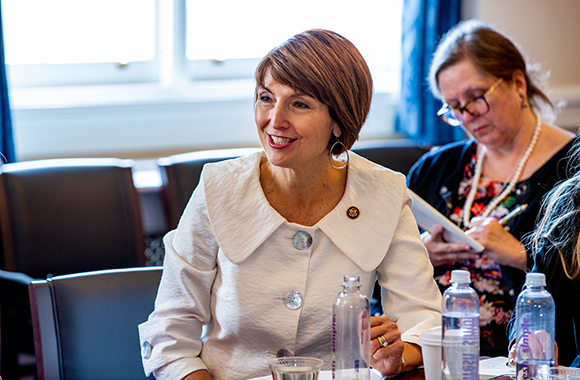
Washington, DC – Following a recent segment on HBO’s Last Week Tonight with John Oliver examining the structured settlement factoring industry, National Consumers League (NCL) CEO Sally Greenberg joined the National Structured Settlements Trade Association (NSSTA) for a discussion on protecting consumers from predatory financial practices.
The conversation highlighted Maryland’s successful reform model, which reduced structured settlement factoring transactions by more than 99 percent after the state strengthened judicial oversight and consumer protections.
“If you put the proper restrictions and protections in place, people with a structured settlement—who often do not understand these financial transactions—will not give away all their future payments for pennies. That is what Maryland accomplished, and it can be done in every state,” said Greenberg.
NCL has worked alongside NSSTA for more than a decade to advance safeguards that help ensure structured settlement recipients are protected from abusive factoring practices.
“Structured settlements are designed to protect people through the most difficult chapter of their lives. The guardrails we are calling for do not change that arrangement. They make sure that if a recipient is approached to sell those payments, the court that hears the petition is the one closest to the recipient, the judge has the information needed to ask the right questions, and the recipient has the time and the independent advice to make a real decision,” said Eric Vaughn, NSSTA Executive Director.
The organizations continue to advocate for reforms that provide stronger court oversight, limit aggressive solicitation, and protect vulnerable consumers’ financial futures.
###
About the National Consumers League (NCL)
The National Consumers League, founded in 1899, is America’s pioneer consumer organization. Our mission is to protect and promote social and economic justice for consumers and workers in the United States and abroad. For more information, visit www.nclnet.org.