Nancy Glick

A Call Not to Make Americans Hungry Again

By Nancy Glick, Director of Food and Nutrition Policy

1968 was a pivotal year in U.S. history, and not only for the anti-war protests and the assassinations of Martin Luther King Jr. and Robert F. Kennedy. That same year, CBS News aired “Hunger in America,” a Peabody-winning documentary that opened the eyes of Americans to the fact that over 10 million people – nearly 20 percent of the public – were suffering from hunger and malnutrition in a land of plenty. 

Later that year, a group of 25 religious, labor, legal, medical, and other professionals, including the Citizens’ Board of Inquiry into Hunger and Malnutrition, published a scathing report documenting widespread hunger and malnutrition across the country. Called “Hunger U.S.A.,” the report identified 282 “hunger counties,” especially in areas like Appalachia, the Mississippi Delta, and Native American reservations, and described the dire conditions for people experiencing hunger,  made worse by federal programs that discriminated against the poor and favored agricultural companies.  

The report and the documentary shocked the nation, prompting significant public and political pressure that led President Richard Nixon to convene the first-ever White House Conference on Food, Nutrition, and Health in Washington in December 1969. Attended by 5,000 delegates representing various interest groups, the conference produced more than 1,800 recommendations to improve anti-hunger programs. The conference was also the stimulus for Congress to pass landmark legislation – such as the 1974 Food Stamp Act, the 1975 School Breakfast Program and Summer Food Program, and authorization of the Supplemental Feeding Program for Women, Infants, and Children (WIC) – that now make it possible for more low-income families to have a healthy diet.   

Fast-forward 56 years after the White House Conference , and the nation is staring at the possibility of another wave of massive hunger in America. Despite how much has changed over the last five decades, an estimated 47.4 million Americans now experience food insecurity, including over 13 million children. The consequences for malnourished people are wide-ranging. Adults experience more severe illnesses, disability, muscle wasting, and chronic diseases, while children may face stunted growth, developmental delays, learning difficulties, and reduced cognitive function. 

Given this reality, one would think that reducing hunger in America would be a priority for the White House and members of Congress. Yet, passage of the President’s One Bill Beautiful Bill Act (OBBBA) in July shows this is not the case. OBBBA cut $186 billion in funding for roughly one in eight people in the U.S. who buy groceries with help from the Supplemental Nutrition Assistance Program (SNAP), also known as the food stamp program. When the cuts take effect in 2027, the Urban Institute projects that 22.3 million families will lose some or all of their SNAP benefits. Additionally, the Congressional Budget Office (CBO) estimates that 3.2 million adults will be cut from the SNAP program in a typical month due to expiring exemptions. This includes 1 million older adults, 800,000 parents, and 1.4 million adults in areas with insufficient jobs.  

But now, nearly 42 million people could lose their SNAP benefits this year – as early as November 1. This reason is an ongoing fight in Congress over how to end a federal government shutdown, where food-insecure Americans are being used as pawns. Senate Republicans insist that Democrats vote to approve a “clean” budget spending bill with no changes. In contrast, Democrats want the bill to include an extension of expiring tax credits that will make health insurance cheaper for millions of Americans and to reverse Medicaid cuts.  

The haggling has been ongoing since October 1, when the government shut down, and efforts to reach a compromise have failed. Thus, the Trump Administration is using continued funding for SNAP benefits as a pressure tactic to raise the ante on Senate Democrats. This took the form of the USDA announcing on its website on October 26 that “the well has run dry,” and there will be no SNAP benefits issued on November 1. 

What the USDA didn’t say is that the department has access to a nearly $6 billion contingency fund that paid for SNAP benefits during past government shutdowns. Many Congressional Democrats and Republicans had encouraged the Trump administration to use this funding to preserve food stamps through November, as the government was expected to remain closed. But the Trump administration declined, even though USDA said weeks ago that it could reprogram money to prevent benefit cuts. 

People receiving SNAP benefits should not be used as a bargaining chip in a game of chicken between Republicans and Democrats. Therefore, Democratic attorneys general and governors from 25 states filed a lawsuit in federal court on October 28, arguing that the federal government had a legal obligation to maintain funding for food stamps, which Congress made permanent in the 1960s.  

Soon, we will know if the federal court sides with state attorneys general and governors and compels USDA to use its contingency fund so nutritionally vulnerable Americans will continue to have enough food. If not, over 40 million children and adults can only hope that cooler heads will prevail, that Democrats and Republicans will come to the negotiating table, that the shutdown will end, and that SNAP benefits will be restored.  

But no one should declare victory. This is a dark moment in our history. 

NCL Applauds FBI’s Arrests for Fraudulent Sports Betting

Media Contact: Lisa McDonald, Vice President of Communications, 202-207-2829

Washington, DC – The FBI’s recent arrests for fraudulent NBA sports betting highlight the risk consumers take when gambling. The public deserves a fair playing field. This is an industry that has seen consumers get taken advantage of far too often. Our sports gambling and addiction report warns that easy mobile access, aggressive advertising, and weak consumer protections have facilitated a predatory business model that must be disrupted. Read more details on the report here

###  

About the National Consumers League (NCL)        

The National Consumers League, founded in 1899, is America’s pioneer consumer organization. Our mission is to protect and promote social and economic justice for consumers and workers in the United States and abroad. For more information, visit www.nclnet.org.    

National Consumers League Statement on Senate HELP Committee Hearing

The 340B program has become a billion-dollar cash cow

Media Contact: Lisa McDonald, Vice President of Communications, 202-207-2829

Washington, DC – Today, the Senate HELP Committee will hold a hearing on the 340B program, marking an important milestone in the conversation around reforming the program so it serves vulnerable patients – as it was intended to.

“The 340B program has become a billion-dollar cash cow, straying from its original mission and lining the pockets of big hospital businesses instead of helping patients,” said Sally Greenberg, CEO of National Consumers League. “We are hopeful that this hearing will finally push Congress to act. Not to put an end to 340B, but to reform it such that the program can once again serve its purpose.”

For years, the 340B program has grown unchecked, enriching large hospital systems and pharmacy chains while patients continue to face high drug costs and limited access to care. The program’s intent was simple: help safety-net providers stretch resources to reach underserved patients. But increasingly, discounts never reach those who need them most.

Now is the time for action. The National Consumers League urges Congress to use this moment to bring transparency, accountability, and patient-centered reform to 340B.

Read our comments here.

###  

About the National Consumers League (NCL)        

The National Consumers League, founded in 1899, is America’s pioneer consumer organization. Our mission is to protect and promote social and economic justice for consumers and workers in the United States and abroad. For more information, visit www.nclnet.org.    

Nancy Glick

Reversing Progress on Obesity Care

By Nancy Glick, Director of Food and Nutrition Policy

One step forward, two steps back” describes situations where progress is hindered by setbacks. This accurately reflects the state of obesity care today. 

On the positive side, the disease that now affects more than 100 million adult Americans is finally getting recognition as a priority health issue. This is due to several important developments demonstrating the value of treating obesity as a serious chronic disease: 

There is widespread scientific consensus that obesity is a high-risk condition

Starting with the American Medical Association’s (AMA) action in 2013 to classify obesity as a serious chronic disease requiring treatment, numerous chronic diseases, obesity and nutrition organizations now agree that obesity is a distinct disease due to its complex biological mechanisms and its worsening effect on over 230 other chronic diseases. Based on this consensus, in 2024, the Centers for Medicare and Medicaid Services (CMS) issued a proposed rule to establish treatment of obesity as a medically necessary service under Medicare and Medicaid, paving the way for covering weight loss drug under these programs in the future.

New therapeutic agents are revolutionizing obesity medicine

When the Food and Drug Administration (FDA) approved the first GLP-1 (glucagon-like peptide-1 receptor) agonist to treat obesity in 2021, Americans learned that these injectable medicines could help people lose between 15 percent and 25 percent of their weight on average after one year. Thus, enthusiasm for GLP-1s has soared to levels rarely seen in medical practice. According to the findings of a 2024 survey of 3,000 adults commissioned by the professional services firm PWC, between 8 percent and 10 percent of US adults are currently taking GLP-1s. 

GLP-1 medicines are cost-effective 

In September, the Institute for Clinical and Economic Review (ICER) gave its highest cost-effectiveness rating to the widely prescribed weekly injectable GLP-1 weight loss drugs, semaglutide and tirzepatide, citing price reductions and studies showing cardiovascular benefits. Additionally, FDA recently approved the first generic version of an older GLP-1, liraglutide, which is injected daily. 

New research shows that treating obesity lowers overall healthcare costs

Because even a modest weight loss (a drop of 5-10 percent) produces significant health improvements when a person has overweight or obesity, studies are beginning to project the potential savings to the economy from covering obesity medications. One large study of privately insured adults and Medicare beneficiaries published December 5, 2024, in JAMA Network Open estimated an annual savings of $2,430 per person who achieved a 10 percent reduction in excess weight and a $5,444 reduction in health expenditures with a 25 percent weight loss.  

Reflecting these developments, coverage of GLP-1 drugs increased in 2023 and 2024, particularly among large employers. According to the firm Mercer, which conducts an annual National Survey of Employer-Sponsored Health Plans, coverage for GLP-1 drugs in 2024 rose to 44 percent of all large employers (those with 500 or more employees) and up to 64 percent of corporations with 20,000 or more employees.  

Additionally, the Office of Personnel Management (OPM) required Federal Employee Health Benefits (FEHB) carriers to cover at least one GLP-1 weight loss drug in 2024, and the Civilian Health and Medical Program of the Department of Veterans Affairs (CHAMPVA) covered these medicines for chronic weight management. At the same time, several states provided some level of GLP-1 coverage for their employee health plans and 13 state Medicaid programs covered GLP-1 weight loss drugs as of August 2024.  

But, as the saying goes, that was then, and this is now. Due to dramatic cuts in federal and state budgets, the nation is shifting course with the inevitable result of moving backwards in delivering quality obesity care. While not the complete picture, the National Consumers League notes these troubling reversals:

  • In April 2025, the Trump Administration announced that Medicare will not cover anti-obesity medications, stating that the 2024 CMS proposal to cover GLP-1 weight loss drugs “is not appropriate at this time.” 

If obesity were cancer or heart disease, policymakers might think twice about not allowing access to cost-effective medications. Yet, the reality is that obesity is still not viewed as a serious disease. Thus, obesity remains largely undertreated in this country, due in part to payers, federal agencies, and state governments restricting or eliminating coverage for anti-obesity medicines that are changing the standard of care.  

Recognizing that people with obesity deserve the same level of attention and care as those with other chronic diseases, the National Consumers League partnered with the National Council on Aging (NCOA) and leading obesity specialists to develop and issue the first Obesity Bill of Rights for the nation on January 31, 2024. Specifically, the Obesity Bill of Rights defines quality obesity care as the right of all adults and establishes eight essential rights, including the right to coverage for the full range of treatment options, ensuring that Americans with obesity recieve the care specified in medical guidelines. 

To ensure Americans have these rights, NCL and obesity advocates are urging policymakers to adopt a long-term view about the importance of covering anti-obesity medications. Our message is simple: there may be short-term budget savings from restricting or eliminating coverage, but if obesity goes untreated among a large segment of the population, the nation will pay the costs in higher annual expenditures on obesity-related chronic diseases, disability, lost productivity, and premature deaths.  

Complicating matters, not having insurance coverage is what drives many consumers to go online and opt for ‘cheap, easy, and doctor-approved’ compounded GLP-1 products that may cause harm or could be fakes. According to the Food and Drug Administration, these products may contain incorrect dosages, the wrong ingredients, excessive or insufficient amounts of active ingredients, or possibly bacteria, all of which can lead to serious health consequences. Thus, while several medical organizations and state attorneys general have issued alerts to warn consumers, advocates agree that providing coverage for FDA-approved GLP-1 drugs is the best way to put a damper on this exploitative market.  

For all these reasons, NCL urges insurers and federal and state policymakers to consider the significant health and patient safety benefits, as well as the reduced medical expenditures from treating obesity, when weighing decisions about coverage.  

An Important Day for Safer Cars and Products

By Sally Greenberg, NCL CEO

From left to right: Torine Creppy, Safe Kids Worldwide President; Janette Fennel, Kids and Car Safety President; Sally Greenberg; Brett Horn, Charlie’s House Founder

On a recent Sunday in October, I flew to Kansas City to celebrate the 30th Anniversary of Kids and Car Safety. The organization was formed by my friend and colleague, Janette Fennell, who dedicated her life’s work to preventing injury to children after she and her husband were kidnapped in their car. More on this story later, but it has a happy ending.

As a general matter, it’s often hard to celebrate advances in product and auto safety because they happen in the aftermath of injuries to children and adults from poorly designed products. 

Indeed, I began working with Janette in 2002 to address the danger of drivers backing over children, typically toddlers, who are too small to be seen behind cars with no camera, which cars didn’t have in 2002.  The first time I met Janette, she was hosting a press conference in suburban Washington, D.C. She had a speaker at the microphone who described the agony of backing over his grandchild. Hard to believe I hadn’t thought about this obvious hazard to children before. 

Back to Janette’s history. In 1996, she and her husband Greig were forced into their trunk one evening when returning from a party in San Francisco, their 9-month-old strapped in his car seat in the backseat.  The kidnappers thankfully kept the baby in his seat and placed him on the front lawn. He was unharmed. The robbers drove the couple to a remote location, demanded their ATM cards and PINS and cleaned out their accounts. She and Greig found a cable inside their Lexus that allowed them to pop open the trunk. 

Janette swore that if she got out alive, and thankfully she did, she would dedicate the remainder of her life to saving kids in and around cars.  

After this harrowing press event, I drove back downtown and on the way, decided Consumers Union, where I worked as product safety counsel at the time, should work with Kids and Cars to get a safety standard enabling drivers to see behind them as they backed up their vehicles. 

As of Model Year 2018, after a decade and a half of passing a law, then bringing a lawsuit against the National Highway Traffic Safety Administration (NHTSA) to get it implemented, (this included many families who had lost children coming to Washington and a concerted consumer advocacy campaign), every passenger motor vehicle is required to have a backup camera. 

Back to my story about sadness and product safety. While in Kansas City, I met up with child safety advocate, Brett Horn and toured Charlie’s House, the model home he built as a tribute to his 2 ½ year old son, who was crushed 20 years ago under a chest of drawers that toppled over on him. Over 400 kids have died in furniture tip overs. Thanks to Brett and other safety advocates the STURDY Act passed in 2022, requiring the Consumer Product Safety Commission to set mandatory safety standards for all dressers and similar products made or sold in the U.S.  

Every room in Charlie’s House – which is used to train parents and community members – has examples of hazards to children, such as lighters shaped as toys, colorful laundry pods, power tools, handguns with locks, refrigerators that lock shut,  and small batteries that can be swallowed and children can die from. Believe me, there are things you’ve never thought of that kids get into. We all need to be educated about those hazards and ensure every home is made as safe as possible for kids. 

 While at Charlie’s House, the CEO of Safe Kids Worldwide, Torine Creppy, arrived to tour the house and afterward we all headed out to Olathe, Kansas, for the Kids and Cars 30th Anniversary Celebration. As we enjoyed Kansas barbecue, Janette told her compelling story once again. To me the most rewarding part of the event was hearing these encouraging statistics: 

  • The number of children strangled by power windows has drastically decreased thanks to safer switches. Kids and Car Safety (KACS) is responsible for the passage of a law that mandated a regulation on all new vehicles manufactured on or after October 1, 2010, to have the safer ‘pull up to close/push down car window switches.  

In addition, many people are surprised to learn that hundreds of cars are stolen with children in the back seat every year. Cars are stolen from gas stations, convenience store parking lots, and even home driveways. Kids and Cars keep the data as no other group does, the first step to attacking the problem.  

Though the most well-known and beloved technology in cars today are those backup cameras – not only because they provide a critical measure of safety, but they also give drivers a vast view of what is behind them as they backup into parking spots, garages, parking ramps and around dangerous corners. If I had a dollar for every person who tells me how much they love their car cameras, I’d be rich!   

Don’t ever forget, the auto industry did not want to implement these safety changes, nor did the NHTSA, and both fought against them. But the advocates prevailed. And as with so many safety technologies, they provide a myriad of additional benefits. 

My day in Kansas City reminded me once again why I do this work. Saving lives of children first, and protecting the rest of us, will never get old. My hat is off to Brett Horn and Janette Fennell and Kids and Cars – who have set a high bar, refused to cave to industry or government resistance, and told their stories over and over again and invited others to tell theirs. Hats off to them and others who have dedicated their lives to making our lives safer and more rewarding.   

At a Critical Moment for Consumer Protections, the National Consumers League Celebrates Champions Who Refuse to Back Down

Awards to be presented to Senator Richard J. Durbin; Representative Jan Schakowsky of Illinois; Washington State’s Attorney General Nick Brown; and 9to5 founder Ellen Cassedy  

Media Contact: Lisa McDonald, Vice President of Communications, 202-207-2829   

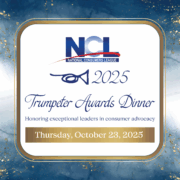
Washington, DC – The National Consumers League (NCL) will host its annual Trumpeter Awards Dinner on Thursday, October 23, 2025, at the Mayflower Hotel in Washington, DC. The evening begins with a reception at 6 p.m., followed by dinner at 7 p.m.   

“Consumers have taken a hit this year,” said NCL CEO Sally Greenberg. “But this year’s honorees remind us that the fight for consumer protection, fairness, and accountability is alive and well. They represent the best of America’s advocates—leaders who have dedicated their lives to defending consumers, workers, and families.” 

NCL will honor Senator Richard J. Durbin and Representative Jan Schakowsky of Illinois, Washington State’s Attorney General Nick Brown, and 9to5 founder Ellen Cassedy, the recipient of the Florence Kelley Award. Introductions will be made by the Governor of Illinois, JB Pritzker, NCL Board Secretary Joi Chaney and labor organizer and women’s rights activist Heather Booth. News4’s Consumer Investigative Reporter, Susan Hogan, will serve as Master of Ceremonies.  

For more than 45 years, NCL’s Trumpeter Awards have recognized trailblazers who speak out for social justice, fairness, and consumer rights. This year’s celebration comes at a pivotal time for consumers across the country, as the agencies and protections we all depend on—the Consumer Financial Protection Bureau (CFPB), the Consumer Product Safety Commission (CPSC), and the Federal Trade Commission, have their budgets slashed, their leaders dismissed, and their regulatory agendas dismantled.    

As consumer leaders navigate these unprecedented attacks in a rapidly changing marketplace, NCL’s 2025 Trumpeter Awards Dinner will serve as both a celebration and a call to action—lifting up those who have spent their careers raising their voices for fairness, safety, and justice.   

All press, RSVP to maggieo@nclnet.org. 

###  

About the National Consumers League (NCL)        

The National Consumers League, founded in 1899, is America’s pioneer consumer organization. Our mission is to protect and promote social and economic justice for consumers and workers in the United States and abroad. For more information, visit www.nclnet.org.    

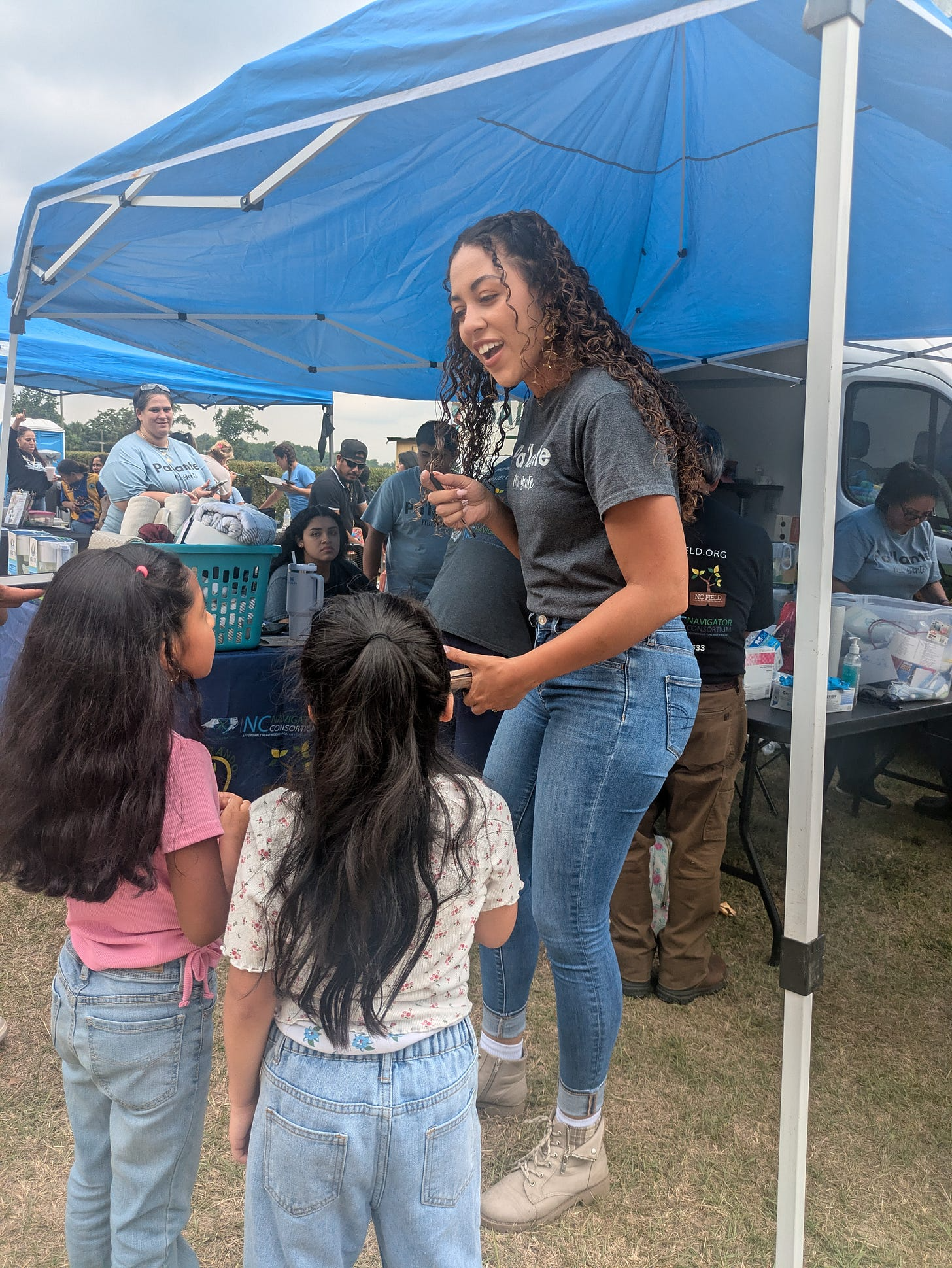
Guest Blog: A Life in the Shadows of North Carolina Fields

By Yesenia Cuello

A former child farmworker and the daughter of immigrants reflects on her life and the current moment.

NCL CEO Sally Greenberg Honored at Girls Inc. DC Champion for Girls Luncheon 

Media Contact: Lisa McDonald, Vice President of Communications, 202-207-2829  

Washington, DC — The National Consumers League (NCL) is proud to announce that CEO Sally Greenberg will be recognized at the 3rd Annual Champion for Girls Luncheon hosted by Girls Inc. DC. The event, held on Tuesday, October 7, 2025, at The Ritz-Carlton West End, celebrates leaders who champion the rights, opportunities, and futures of girls and young women.    

“I am deeply honored to receive the Bold Award from Girls Inc. DC,” said NCL CEO Sally Greenberg. “Girls Inc. has been a beacon of empowerment and hope for generations, and I am inspired by the incredible work they do to uplift and support young women. Our girls hold the promise of tomorrow, and ensuring they have every opportunity to thrive is one of the most important investments we can make as a nation.” 

“For more than 150 years, Girls Inc. has inspired girls to be strong, smart, and bold—providing mentorship, advocacy, and life-changing programs that empower the next generation of leaders,” said Joi Cheney, GIDC Board Member, Immediate Past Chair Founder & Principal, J.O.I. Strategies. “Sally Greenberg exemplifies those values through her fearless advocacy for consumers, women, and families. Her leadership, integrity, and bold voice for equity make her a natural choice for this honor.”  

###  

About the National Consumers League (NCL)       

The National Consumers League, founded in 1899, is America’s pioneer consumer organization. Our mission is to protect and promote social and economic justice for consumers and workers in the United States and abroad. For more information, visit www.nclnet.org.     

Separating Fact from Fear About Tylenol Use in Pregnancy

By Lisa Bercu, NCL’s Senior Director of Health Policy

I remember like it was yesterday when I found out I was pregnant with each of my kids, now seven and ten years old.  I felt a mix of joy, excitement, and worry all at once.  But more than anything, I felt protective, thinking about how to keep them safe and give them the best start in life. As President Obama remarked, “To have a child is to have your heart walking around outside your body,” which I think perfectly sums up the realities of being a parent.  

That’s why I was so concerned when President Trump made unsupported claims that acetaminophen (commonly known by the brand name Tylenol) may cause autism when used in pregnancy, and that young children shouldn’t take acetaminophen for “virtually any reason.”  Moms deserve clear, science-based information, and not fear or guilt.   We need to feel confident making decisions that protect our health and our children’s health.   

Here’s what we know so far: research has not proven that taking acetaminophen during pregnancy causes autism. Most of the studies that have looked at this question have not shown a clear cause-and-effect link. The two best studies we have so far, published in 2021 and 2024, give doctors and parents the most reliable evidence to date that acetaminophen is safe to use in pregnancy when needed.  

 What we also know is that autism doesn’t have a single cause and is due to many different factors, including genetics and environment. In addition, the rise in autism is due to increased awareness and the medical community better recognizing and diagnosing it 

It’s also important to know that untreated illness in pregnancy can be dangerous.  Untreated fever, particularly in the first trimester, increases the risk of miscarriage, birth defects, and premature birth, and untreated pain can lead to maternal depression, anxiety, and high blood pressure.   

Medical experts, including the American College of Obstetricians and Gynecologists, the Society for Maternal-Fetal Medicine, and the American Academy of Pediatrics, have all reaffirmed that acetaminophen is safe when taken as needed, in moderation, and after consultation with a doctor.  In addition, leading autism organizations, including the Autism Science Foundation and Autism Speaks, agree that acetaminophen use in pregnancy has not been proven to cause autism.    

Pregnancy is not easy.  While President Trump implies that moms should just “tough it out” when they’re not feeling well, that’s not how real life works. Many of us are still trying to do it all while pregnant – working, managing households, and running after older kids. Illness doesn’t politely wait until after delivery and ignoring it isn’t always safe.  

Women need options to treat pain and fever during pregnancy.  Unlike ibuprofen, which carries known risks later in pregnancy, acetaminophen has been trusted for decades as the best over-the-counter choice for managing fever or pain while pregnant.    

If you have any concerns about taking medications during pregnancy, it’s always a good idea to talk with your doctor. You can also check out MotherToBaby.org, which has reliable, evidence-based information on medications like acetaminophen, and you can even call or chat with trained specialists to get answers to your specific questions.                                   

At the end of the day, we all want the same thing: healthy moms and healthy kids. The best way to get there is to rely on up-to-date and high-quality evidence and to have open conversations with your doctors.