LifeSmarts launches 25th anniversary season of consumer literacy education, competition, scholarship opportunities – National Consumers League

September 17, 2018

1.5 million students have gained real-world knowledge through the program

Media contact: National Consumers League – Carol McKay, carolm@nclnet.org, (412) 945-3242 or Taun Sterling, tauns@nclnet.org, (202) 207-2832 

Washington, DC–Today marks the official launch of the 25th season of LifeSmarts, with a new competition going live at the online home of the program, LifeSmarts.org. LifeSmarts, a program of the National Consumers League (NCL), is a national scholarship competition and educational program for middle-school and high-school students that tests knowledge of real-life consumer issues and aims to create a future generation of consumer-savvy adults.

“We are very excited to launch our 25th season of LifeSmarts,” said national Program Director Lisa Hertzberg. “For 25 years, LifeSmarts has given students the skills they need to succeed as adults. We’ve seen more than 1.5 million students gain knowledge, confidence, leadership capabilities, and team-building skills. The competition is fun, and the impact of LifeSmarts is lifelong.”

LifeSmarts focuses on five main content areas: consumer rights and responsibilities, personal finance, technology, health and safety, and the environment. Students are quizzed on their knowledge of these subject areas during online competition. Top-performing teams then advance to statewide competitions, and state champion teams advance to the national championship held each year in a different American city. The 2019 National LifeSmarts Championship will take place April 13-16 in Orlando, Florida. Winning team members receive scholarships and other prizes.

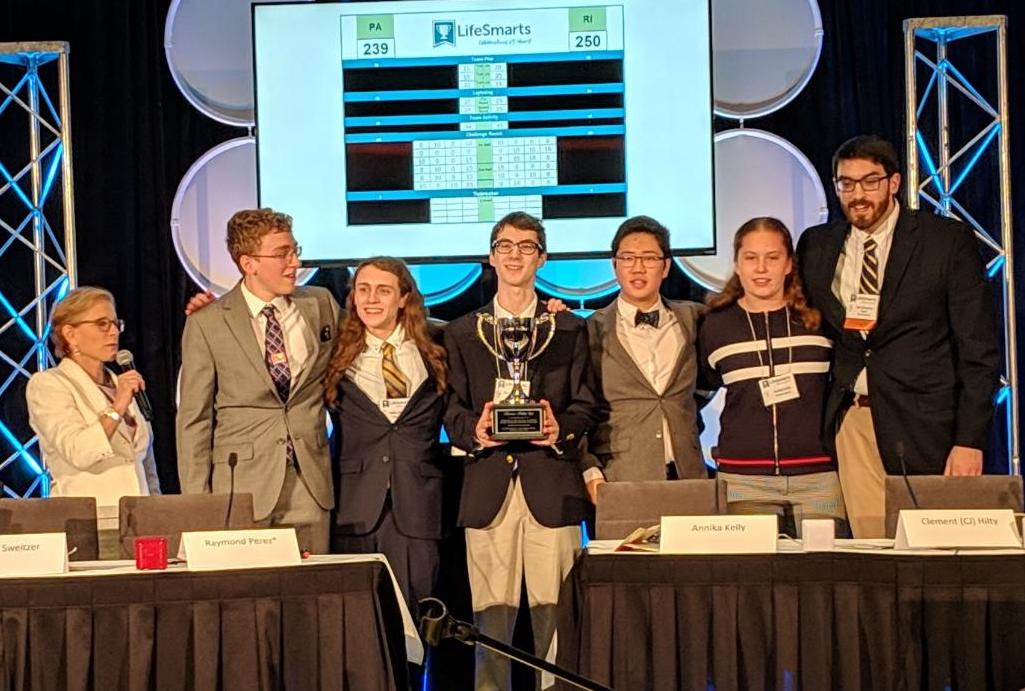
Last year, students answered more than 3.5 million consumer questions about credit reports, recycling, nutrition, social media, state lemon laws, and everything in between. By being consumer savvy and quick on the buzzers, the LifeSmarts team from Dallas High School in Dallas, PA, took home top honors at the 24th annual national event in San Diego. Dallas High was a returning champion, taking home the national title three years in a row.

In addition to online, state, and national competitions, LifeSmarts recognition and awards occur throughout the program year:

  • Teams of students vie for cash prizes in the online TeamSmarts quiz, which focuses on a specific LifeSmarts content area each month from September through January.
  • Classroom mentor programs: Five $1,000 scholarships are awarded each winter to winning LifeSmarts students who become Safety Smart Ambassadors, using LifeSmarts content to present safety messages to younger children in their communities.
  • Partnering with FBLA (Future Business Leaders of America) and FCCLA (Family, Career, and Community Leaders of America), LifeSmarts offers special competitive events for student members of both student leadership organizations. FBLA and FCCLA team members have the opportunity to compete for cash prizes, trophies, and other honors.

LifeSmarts is active in all states and the District of Columbia, where NCL is headquartered.

“We are proud of the impact LifeSmarts has made in its 25 years of educating teens, and we are excited to continue to grow the LifeSmarts program, to educate students about financial literacy, and to create a new generation of savvy, market-ready consumers and workers,” said NCL Executive Director Sally Greenberg. “Too often traditional high school curriculum fails to teach students vital information that will be crucial once students go to college, get their first job, or move out of their parents’ house.”

In addition to hosting the official LifeSmarts competition, LifeSmarts.org provides resources for educators to supplement existing lesson plans. These include daily quizzes, educational videos, social media competitions, focused study guides, and scholarship opportunities. LifeSmarts lessons closely align with courses taught in family and consumer sciences, business, technology, health, and vocational education. Math and English teachers have also had success with LifeSmarts, as have homeschool and community educators.

Major LifeSmarts contributors include: Johnson & Johnson, Underwriters Laboratories, Western Union, Comcast NBC Universal, Experian, Intuit, American Express Company, Microsoft, and others.

Visit LifeSmarts.org for more information.

LifeSmarts: Learn it. Live it.

###

About LifeSmarts

LifeSmarts is a program of the National Consumers League. State coordinators run the programs on a volunteer basis. For more information, visit: LifeSmarts.org, email lifesmarts@nclnet.org, or call the National Consumers League’s communications department at 202-835-3323.

The National Consumers League, founded in 1899, is America’s pioneer consumer organization. Our mission is to protect and promote social and economic justice for consumers and workers in the United States and abroad. For more information, visit www.nclnet.org.

Privatized foreign systems continue to fall further behind the U.S.

September 12, 2018

Contact: National Consumers League; John Breyault: (202) 207-2819

Alliance for Aviation Across America; Devin Osting: (202) 223-9523
Consumer Action; Linda Sherry: 202-544-3088
FlyersRights.Org; Paul Hudson: 410-940-8934
In The Public Interest; Donald Cohen: 202-429-5091

Washington, DC–With the busy summer travel period quickly transitioning towards the peak Fall/holiday rush, proponents of privatizing our nation’s air traffic control continue to promote the myth that privatized foreign systems work well.  They don’t.  See below for the real facts on foreign privatized systems, which have been plagued with delays, technological glitches and have not kept pace with modernization:

European air traffic control providers are plagued by massive delays and cancellations

  • According to a recent AP article, “the leading trade group for global airlines is criticizing air traffic control agencies in Europe for seeking ‘super-normal profits’ instead of investing to improve performance at a time when air travelers are facing longer waits.” (*Washington Times, July 18, 2018)
  • Specifically, according the International Air Transportation Association (IATA), privatized and non-privatized air navigation service providers (ANSPs) across Europe are experiencing increased delays. In fact, “in the first half of 2018, air traffic management delays more than doubled to 47,000 minutes per day, 133% more than in the same period last year.” (*IATA Press Release No. 42, July 18, 2018)
  • Yet at the same time, “the largest service providers have either under-invested in staff or use outdated employment practices which don’t deploy staff when and where they’re most needed, resulting in unnecessary delays for passengers.  Many European ANSPs have also failed to make planned technology investments intended to increase capacity.” (*IATA Press Release No. 42, July 18, 2018)
  • For example, across Europe, Ryanair was forced to cancel 1,100 flights in June 2018, “due to air traffic control strikes and staff shortages in the U.K., Germany, and France.” Chief marketing officer, Kenny Jacob said: “Regrettably, over 210,000 Ryanair customers had their flights cancelled in June because of four weekends of ATC (air traffic control) strikes and repeated U.K., German and French ATC staff shortages.” (The Independent, July 3, 2018)

Canada’s privatized air traffic control system has been plagued with delays, staffing shortages and is still investing in radar technology

  • Air Canada, the flag carrier and largest airline in Canada, recently was ranked last in on-time performance out of 72 global airlines that are tracked by AirHelp, a consumer advocacy group. (AirHelp, 2018)
  • In July 2018, more than 22% of flights at Canada’s nine busiest airports were delayed, with an average delay of more than 52 minutes according to FlightStats. (FlightStats, July 2018)
  • Total air travel complaints in Canada skyrocketed in recent years. According to the Canadian Transportation Agency (CTA), over the past five years total complaints have increased almost tenfold, reaching more than 5,000 complaints in 2017-2018. (CBC News, July 26, 2018)
  • Canada is in the midst of a staffing crisis as well. According to a study by the Canadian Council for Aviation and Aerospace (CCAA), Canada will need 2,000 new air traffic controllers between 2017 and 2025. (*CCAA Labour Market Information Report, March 2018)
  • A Nav Canada senior official has admitted that staffing shortages are having an impact and that the problem is most acutely felt at the largest airports, where staff is stretched. “There are always [staffing] challenges throughout Canada, especially when we get into the four majors–Montreal, Pearson, Calgary International and Vancouver International…So if we have a number of retirements, or we have someone go off sick, we can get into situations where we’ll have a reduced number of controllers.” (Skies Magazine, June 29, 2018)
  • These staffing issues also extend to airline baggage handlers. At Trudeau International Airport, Air Canada passengers report that suitcases are routinely lost. One passenger said that Air Canada had lost her luggage twice in the past month. While another passenger said, “You feel helpless, because they have your belongings, and I feel like a coat check at any restaurant does a better job of security than what Air Canada has done with these bags.” Air Canada even acknowledges the staffing issue, “An Air Canada employee at the airport told CBC there’s just not enough staff to deal with the backlog.” (CBC News, August 20, 2018) But to passenger rights activist Gábor Lukács, staff shortages are no excuse for lost luggage, and according to Lukács, airlines have “a legal obligation to transport the bag with the passenger ­– to make sure the bag is available when the passenger arrives.” (CBC News, August 26, 2018)
  • Additionally, Air Canada has said that 20,000 mobile app users may have been affected by a data breach between August 22nd and August 24th. Information that may have been accessed includes name and contact information, personal information like passport and NEXUS card numbers (which is for expedited processing when entering the U.S. or Canada), gender, birth date, nationality, and financial information like credit card numbers. (Global News, August 29, 2018)
  • Moreover, Nav Canada continues to depend on and invest in ground-based radar. In 2017, Nav Canada announced that the replacement process will take 10 years, and that “over the course of the next 10 years a massive radar replacement project will take place across the country. It’s the largest capital project NAV CANADA has ever undertaken at a cost of $159 million.” (Nav Canada Blog, Oct. 20, 2017)
  • Earlier this year, Sunwing Airlines had at least five flights that were delayed for roughly 24 hours out of Toronto’s Pearson Airport, during which passengers were unable to access their baggage, cutting them off from clothing or medication. (CityNews, Apr. 16, 2018After receiving 89 complaints involving 23 flights, the Canadian Transportation Agency (CTA) launched an investigation of Sunwing Airlines. (CBC News, Apr. 26, 2018)

UK NATS, the UK’s privatized air traffic control provider, has been plagued by flight delays and outdated technology

  • The UK’s privatized air traffic control provider, NATS, faces constant delays. According to data from the Civil Aviation Authority (CAA), flights at the top airports in the U.K. left an average of 15 minutes late in 2017. The Airport Operators Association said that “outdated” airspace infrastructure limits the efficiency of flights. (BBC, May 21, 2018)
  • In the NATS 2018 annual report, CEO Martin Rolfe stated that “our airspace structures have not changed significantly over the past 50 years and will not accommodate the forecast growth in traffic and airport infrastructure, including a new runway at Heathrow, without causing unacceptable air traffic delays to the travelling public.” (NATS, 2018)
  • According to Which? Travel, a consumer advocacy website, airlines are “padding” their schedules to say they’ve improved their on-time performance. As a result, scheduled flight times across Europe are up to 35 minutes slower this summer than they were 10 years ago. Despite padding their schedules, British Airways, Easyjet, and RyanAir were still less punctual last year than in 2009. (Which? Travel, August 27, 2018) Rory Boland, from Which? Travel, told The Mirror, “longer scheduled flight times are likely to mean passengers spend more time sitting around at the gate or on the plane itself, just so the airline can pat itself on the back for being ‘on time’ at your destination. Conveniently, it could also reduce the number of instances when an airline has to pay you compensation for a flight delay.” (The Mirror, August 27, 2018)
  • Heathrow Airport just last month experienced an airline IT glitch and a temporary closure of Heathrow’s air traffic control tower. (Sky News, July 19, 2018) While the air traffic control tower was closed, take-offs and landings were stopped, and between the two incidents, hundreds of flights were delayed and some departures were cancelled. This ultimately affected 10,000 passengers, including around 3,000 British Airways passengers stranded overnight abroad. (The Independent, July 19, 2018)
  • These issues have persisted throughout the UK’s system – according to The Independent, citing a CAA report, “high levels of sickness, unplanned retirements, and staff reluctant to work overtime all contributed to the disarray” of the air traffic control system in the UK. (The Independent, Aug. 4, 2017)
  • In addition, NATS has stated that a “massive” program of modernization is needed to keep up with demand for air travel. According to a NATS official, “We are going to have to redesign our airspace and we are going to need government support to make sure we can do that in the right way.” (BBC, June 30, 2017)
  • Staffing issues also continue to plague Gatwick Airport, the second busiest airport in Britain, where air traffic control is managed by ANS, a British subsidiary of the German company DFS Group. (Daily Mail, April 8, 2018)
  • UK passengers are becoming more and more unhappy when it comes to flying. The CAA’s August 2018 UK Aviation Consumer Survey found that only 39% of respondents agree that “the experience of travelling by air is getting better.” (*UK Aviation Consumer Survey, August 2018, p. 7) Additionally, overall satisfaction with respondents’ last flights has declined from 90% in March 2016 to 83% as of April 2018. (*UK Aviation Consumer Survey, August 2018, p. 31) While in the same time-frame, the passenger experience with airports has also gotten worse; respondents’ satisfaction with each part of the “airport experience” has declined over the last two years. (*UK Aviation Consumer Survey, August 2018, p. 40)
  • After a late-night landing due to delayed flights, Ryanair passengers were forced to wait hours at Stansted Airport to retrieve their baggage. Ryanair attributed the flight disruptions to air traffic control delays and bad weather and said the baggage delays occurred because, “Some flights are arriving much later than planned – especially at night – which has stretched available resources beyond normal shift timings.” In some cases, passengers were forced to wait up to five hours. (BBC News, August 12, 2018)
  • This isn’t an isolated incident either. About two weeks later, baggage delays at Manchester Airport caused “chaos” according to one passenger quoted by BBC News. The cause for the delay was a fire alarm, which forced an evacuation of the terminal and overextended the overnight Swissport staff of baggage handlers. Passengers vented their frustration, saying the airport told them nothing, with one passenger saying he’d been calling the airport and Swissport, the baggage handler, since 9 am and no one was answering the phone. (BBC News, August 25, 2018)
  • Gatwick Airport, the second-busiest airport, experienced what The Independent described as “chaos” after departure screens went out due to an IT issue on “one of the busiest days of the summer.” Airport staff was forced to use “temporary flight boards” which were literally whiteboards with information written on them while staff made announcements about gates. This led to many flights departing late, with some flights leaving over an hour late. (The Independent, August 20, 2018)

The source of U.S. airline delays and travel woes have nothing to do with air traffic control

  • According to data by the U.S. Department of Transportation, it’s factors within the airlines’ control, including mechanical, staffing, volume and scheduling issues, more than weather and ATC, that were responsible for the majority of delays in 2017. (Department of Transportation, Bureau of Transportation Statistics) These delays are getting worse, with over 19% of flights delayed in 2017, which is 3.5% higher than the prior year. (Department of Transportation, Bureau of Transportation Statistics)
  • Not only do the airlines make little effort to manage day-of flight operations, but very frequently they are responsible for IT glitches that cause system-wide delays. A recent news report from the Washington Post highlighted that technology-related meltdowns and outages among domestic airlines has “risen unevenly during the past decade.” (*Washington Post, Jan. 11, 2018)
  • One airline executive at Frontier recently said, “we don’t necessarily believe that it’s cost-effective to end up in the top quartile for on-time performance.” (The American Prospect, Nov. 3, 2017)
  • At an off-the-record crew forum, American Airlines President Robert Isom acknowledged that they’ve had “a really rough summer” dropping to 15th in on-time performance for North America. Isom identified a few reasons for American’s drop in on-time performance, including an older fleet of aircraft and even the degrading performance of newer aircraft. (View From The Wing, August 14, 2018)
  • In fact, the airlines and the companies they rely on to administer their technological systems were responsible for 12 massive glitches causing system-wide delays in 2017. (Quartz)
  • In June, PSA Airlines, a regional carrier of American Airlines, was forced to cancel about 3,000 flights after a computer problem occurred within PSA Airlines crew scheduling program. Of the canceled flights, 2,500 were through the Charlotte Douglas International Airport. (*Charlotte Observer, June 28, 2018)
  • A little more than a month later, all American Airlines flights were grounded for about 40 minutes by another glitch. On the same day, but unrelated to the American Airlines glitch, Delta, United, and Alaska Airlines had more than a thousand flights delayed by a system outage at SkyWest. According to the Daily Mail, “Some 1,106 SkyWest flights were delayed along with 686 American Airlines flights due to their respective malfunctions.” (Daily Mail, July 30, 2018)
  • Airline consolidation compounds the issue. According to Jack Vonder Heider, president of Technology Briefing Centers, “Carriers that have been through multiple mergers are most likely to suffer an IT outage. This is due to the patchwork of systems, components and staffing that is prone to error.” (*The Washington Post, Jan. 11, 2018)
  • Bob Edwards, former chief information officer of United Airlines has said, “when fuel prices are low and there’s extra cash on hand, they want to spend it on the cool shiny things like planes and mobile apps…Nobody gets excited about the data center.” (Reuters, Aug. 12, 2016)
  • Airlines in the United States fail to make adequate investments into their own IT infrastructure, despite collecting $7.5 billion in baggage and reservation change fees in 2017. (*Department of Transportation, Bureau of Transportation Statistics)

The examples go on and on…

  • In July of 2016, a single failed router forced Southwest Airlines to cancel 2,300 flights over four days. (The Wall Street Journal, Mar. 17, 2017)
  • United Airlines experienced almost back-to-back delays toward the end of January and early February of 2017. First a computer failure delayed 481 flights in one day. (Bloomberg, Jan. 23, 2017) While two weeks later, United experienced a system-wide computer problem that “slowed down the creation of flight plans for airline crews and employees,” and delayed hundreds of flights at airports across the country. (Chicago Tribune, Feb. 8, 2017)
  • In August 2017, a “network issue” with SkyWest led to hundreds of Delta, American, United, and Alaska Airlines flights being delayed and 62 flights being cancelled. (Quartz)
  • In November 2017, American Airlines experienced a glitch in its internal computer system that allowed thousands of pilots to be granted time off and created uncertainty as to whether there would be flight crews for more than 15,000 American flights scheduled between Dec. 17 and Dec. 31. (CBS News, Nov. 30, 2017)

As has been demonstrated over and over, privatization of air traffic control would not do anything to lessen delays and travel woes for passengers as the causes of these delays have nothing to do with ATC. The simple truth is that bad policy proposals are nothing more than beating a dead horse and will never get better with age. ATC privatization has been repeatedly debated, discredited and defeated by bipartisan majorities for years. This terrible scheme needs to be abandoned once and for all to make way for genuine air travel reforms that will provide positive benefits for the traveling public and all communities across the country.

*Links are no longer active as the original sources have removed the content, sometimes due to federal website changes or restructurings.

###

About the National Consumers League

The National Consumers League, founded in 1899, is America’s pioneer consumer organization. Our mission is to protect and promote social and economic justice for consumers and workers in the United States and abroad. For more information, visit www.nclnet.org.

FAIR Fees Act coalition letter – National Consumers League

September 12, 2018

The Honorable John Thune
Chairman, Committee on Commerce, Science & Transportation

The Honorable Bill Shuster
Chairman, Transportation and Infrastructure Committee

The Honorable Bill Nelson
Ranking Member, Committee on Commerce Science & Transportation

The Honorable Peter DeFazio
Ranking Member, Transportation and Infrastructure Committee

Re: Consumer groups’ support for inclusion of the FAIR Fees Act and other consumer protection provisions in the FAA Reauthorization Act conference agreement

Dear Chairman Thune, Ranking Member Nelson, Chairman Shuster, and Ranking Member DeFazio:

The undersigned eight consumer advocacy organizations urge you to support the bipartisan FAIR Fees Act amendment that was included in S.1405, the Federal Aviation Administration Reauthorization Act of 2017,[1] as well as additional consumer protection language in any FAA Reauthorization Act conference agreement.

The FAIR Fees Act language in the bill is a compromise provision that would require change and cancellation fees to be reasonable and bear a relation to the actual cost to provide the service. The Department of Transportation (DOT) would also be charged with developing fair standards for assessing the reasonableness of other ancillary fees.

Both the House and Senate FAA reauthorization bills include a number of pro-consumer protections that we strongly support. We are writing this separate letter to bring special attention to our strong support for the inclusion of the FAIR Fees Act compromise as a key part of our support for the FAA reauthorization bill.

For years, consumers have had to endure the airlines’ imposition of fee after fee for services like seat reservations, checked bags, and ticket changes that used to be included in the basic cost of flying. Airlines often claim that the unbundling of fees for these services has reduced the cost of flying. However, it does not take an economist to spot that airlines’ rapidly increasing fees far outpace both the rate of inflation and the cost to provide the service.

Last week, for example, both JetBlue and United raised their checked baggage fees yet again.[2] And based on experience, it is likely that other airlines will soon match this increase. Even before the recent fee hikes, statistical analysis had determined that the cost of flying is increasing. The Associated Press has found that base fares, adjusted for inflation, have increased by 5% since 2010.[3] Likewise, the Government Accountability Office has found that the cost of flying has increased, once fees for checked baggage are included.[4] Instead of reducing the cost of flying as the airline industry frequently claims, the proliferation of confusing and punitive fees has forced consumers to become travel experts in order to successfully navigate the modern aviation marketplace without being penalized.

Flight change and cancellation fees, in particular, can be very punitive in nature since consumers cannot plan for unexpected events that force them to change their travel plans. In spite of the often-unavoidable nature of needing to change travel plans, the three major legacy airlines – but not Southwest – charge a per-ticket fee from $200 to as much as $750 for an international flight to change a reservation, even if they are then able to resell the ticket for a higher price than that for which it was originally purchased.[5] While testifying before a US Senate Commerce, Science, and Transportation subcommittee, United Airlines CEO Scott Kirby admitted that the $2.9 billion annual income from change fees is “not a direct cost when somebody changes,” but rather that those fees are simply another revenue generator.[6] Contrary to industry claims that the FAIR Fees Act amounts to re-regulation of the airlines, requiring that fees bear a reasonable relation to the cost to provide the service will prevent price gouging by the airlines, which is entirely in keeping with the DOT’s legal mandate to “protect consumers from unfair or deceptive practices or unfair methods of competition” in commercial aviation.

In addition to the FAIR Fees Act language, both the House and Senate FAA reauthorization bills include many pro-consumer protections that we believe should also be included in a conference agreement. In the House bill,[8] these are among the provisions our organizations support:

  • 412 & Sec. 413 – Improving transparency and oversight for air ambulance charges
  • 541 – Ensuring safe minimum seat dimensions

Unfortunately, the House bill also includes the Transparent Airfares Act (Sec. 405), which would weaken much-needed fare and fee transparency requirements. Our groups strongly oppose the inclusion of this language in the final conference agreement.

In the Senate bill,[9] these are among the provisions our organizations support:

  • 3108 – Improving fee transparency
  • 3127 (as revised in S. 3183)[10] – Ensuring transparency and other protection for consumers wherever they purchase tickets

We do not support Sec. 3121 of the Senate bill, which would direct the DOT to study minimum seat pitch, and is significantly weaker than Sec. 541 of the House bill.

For these reasons, the undersigned consumer advocacy organizations strongly urge you to keep the bipartisan FAIR Fees Act amendment and the above-mentioned consumer protection provisions in the conference agreement to the FAA Reauthorization Act.

Sincerely,

National Consumers League
Business Travel Coalition
Consumer Action
Consumer Federation of America
Consumers Union
FlyersRights.org
Travelers United
U.S. PIRG

CC:       Members of the U.S. Senate and the U.S. House of Representatives


[1] § 3129. “Regulations prohibiting the imposition of fees that are not reasonable and proportional to the costs incurred. This section” Online: https://www.congress.gov/115/crpt/srpt243/CRPT-115srpt243.pdf

[2] Martin, Grant. “United Airlines Increases Baggage Fees In Step With JetBlue, Air Canada And WestJet.” Forbes Magazine. September 1, 2018. Online: https://www.forbes.com/sites/grantmartin/2018/09/01/united-airlines-increases-baggage-fees-in-step-with-jetblue-air-canada-and-westjet/#411a10f950ed

[3] Mayerowitz, Scott and Koenig, David. “U.S. airports increasingly dominated by 1 or 2 carriers.” USA Today. July 15, 2015. Online:  https://www.usatoday.com/story/todayinthesky/2015/07/15/us-airports-increasingly-dominated-by-1-or-2-carriers/30152927/

[4] Government Accountability Office. “Commercial aviation: Information on airline fees for optional services” September 2017. Online: https://www.gao.gov/assets/690/687258.pdf

[5] American Airlines. “Optional service fees.” July 17, 2018. Online. https://www.aa.com/i18n/customer-service/support/optional-service-fees.jsp

[6] Senate Commerce Science and Transportation Subcommittee on Aviation, Operations, Safety and Security. “Questions, answers and perspectives in the current state of airline travel. May 4, 2017. 01:28:55-01:33:48. Online: https://www.commerce.senate.gov/public/index.cfm/hearings?ID=C3586801-EFA9-493C-B3FB-74779C0AC3D2

[7] 49 U.S. Code § 41712

[8] FAA Reauthorization Act of 2018. H.R. 4. 115th Cong. (2018).

[9] Federal Aviation Administration Reauthorization Act of 2017. S. 1405. 115th Cong. (2017).

[10] Air Travel Ticketing Transparency and Protection Act, ,S. 3183, 115th Cong. (2018).

NCL joins amicus brief to protect cy pres settlements – National Consumers League

September 5, 2018

Media contact: National Consumers League – Carol McKay, carolm@nclnet.org, (412) 945-3242 or Taun Sterling, tauns@nclnet.org, (202) 207-2832

Washington, DC—In advance of a scheduled October 31 United States Supreme Court hearing of Frank v. Gaos, the National Consumers League has joined with the Center for Democracy and Technology and the Electronic Frontier Foundation to file an amicus brief in support for the judicial practice of awarding cy pres grants to charities and nonprofits in class-action settlement.

The case to be heard by the court questions the following: Whether awarding the majority of the proceeds from a class action to charities and nonprofits (known as a cy pres award), with no direct relief to members of the class, is consistent with the requirement that a settlement binding class members be “fair, reasonable, and adequate.”

In the amicus brief filed today, the organizations argue that the cy pres doctrine does, in fact, ensure that awards benefit class members by aggregating cost-prohibitively small individual payments for the greater good and by promoting the interests of the class rather than the defendant. Contrary to petitioners’ claims, the advocates recognize that cy pres grants are a well-established legal precedent that allow proceeds from class-action awards that might otherwise revert to companies that wrong consumers to instead be put to use by organizations that further the public interest.

Cy pres awards are a critical way to make sure industry is held accountable when consumers are wronged,” said NCL Executive Director Sally Greenberg. “In cases where individual class members’ payouts may not even exceed the price of a stamp, cy pres grants to advocacy organizations ensure that class-actions can continue to be a check on industry misdeeds.”

Read the brief here (PDF).

###

About the National Consumers League

The National Consumers League, founded in 1899, is America’s pioneer consumer organization. Our mission is to protect and promote social and economic justice for consumers and workers in the United States and abroad. For more information, visit www.nclnet.org.

Public comments of the National Consumers League FDA’s Nutrition Innovation Strategy – National Consumers League

August 31, 2018

Docket Number: FDA-2018-N-2381

Dockets and Management Staff (HFA-305)
Food and Drug Administration
5630 Fishers Lane, Rm 1061
Rockville, MD 20852

Executive Summary

The National Consumers League (NCL) commends the FDA for convening a public meeting on the Multi-Year Comprehensive Nutrition Innovation Strategy. The July 26, 2018 meeting was well-attended by both food industry leaders and consumer groups, serving as an informative first conversation about modernizing FDA processes in regulating production innovation and appropriate labeling.

At the meeting, NCL’s Food and Nutrition Policy Fellow, Haley Swartz, MPP, spoke about the League’s 100-year history in advocating for a safe, nutritious, and accurately represented food marketplace. NCL has been an active participant in food labeling regulation and litigation for over three decades. We have long worked with the FDA to ensure transparency on food labels, including mislabeling on:

  • “Fresh” canned tomatoes and pasta sauce (2009);
  • Artificially sweetened dried cranberries in cranberry juice (2009); and
  • Watered-down lemon juice (2012).

We work tirelessly alongside our colleagues in the National Alliance for Nutrition and Physical Activity to ensure that blatant forms of false food advertising are eliminated from the food marketplace. We also must thank the FDA for its continual willingness to consider innovative regulatory actions. As we approach new challenges in the context of changing consumer demands and rapidly evolving technology, we are thrilled to actively participate in dialogues between the food industry, regulators, and consumers.

In this document, we delve deeper into the issues Swartz raised in her speech. We list both our enthusiasm and concerns for several specific components of the Strategy.

Click here to read full comments (PDF).

NCL statement on CFPB student loan watchdog chief’s protest resignation

August 28, 2018

Media contact: National Consumers League – Carol McKay, carolm@nclnet.org, (412) 945-3242 or Taun Sterling, tauns@nclnet.org, (202) 207-2832

Washington, DC – Yesterday, Seth Frotman announced his resignation as the Consumer Financial Protection Bureau’s (CFPB’s) Student Loan Ombudsman. The following statement is attributable to Sally Greenberg, executive director of the National Consumers League:

“Every day Seth Frotman went to work, he valiantly fought for the 44 million Americans that are struggling with student loan debt. As Frotman wrote in his resignation letter, the Bureau under Acting Director Mick Mulvaney has abandoned its Congressionally-mandated mission to protect consumers from predatory lenders. Instead, current CFPB leadership seems to believe that its goal is to empower some of the most powerful financial interests in America to continue victimizing vulnerable students.

“Unfortunately for consumers, Frotman’s assessment of Mulvaney’s tenure is spot-on. Making matters worse, the current nominee to become the permanent CFPB Director, Kathleen Kraninger, has given every indication that she will continue Mulvaney’s work to undermine the CFPB’s ability to protect consumers. NCL urges Congress to only confirm a CFPB director who will fulfill the intent of Congress for the Bureau to protect consumers.”

###

About the National Consumers League

The National Consumers League, founded in 1899, is America’s pioneer consumer organization. Our mission is to protect and promote social and economic justice for consumers and workers in the United States and abroad. For more information, visit www.nclnet.org.

Senators Duckworth, Markey to receive highest honor from nation’s pioneering consumer watchdog org – National Consumers League

August 21, 2018

Identity Theft Resource Center’s Velasquez to be honored with Florence Kelley Consumer Leadership Award

Media contact: National Consumers League – Carol McKay, carolm@nclnet.org, (412) 945-3242 or Taun Sterling, tauns@nclnet.org, (202) 207-2832

Washington, DC—The National Consumers League (NCL), the nation’s pioneering consumer and worker advocacy organization, has announced it will honor Senator Tammy Duckworth (D-IL) and Senator Ed Markey (D-MA) with its highest honor, the Trumpeter Award, on Tuesday, October 16 in Washington, DC.

This year marks the 45th anniversary year of the Trumpeter Award, which honors leaders in the fight for consumer and worker rights. Past honorees include: Senator Ted Kennedy, the award’s inaugural recipient, as well as Labor Secretaries Hilda Solis, Robert Reich, and Alexis Herman, Senators Carl Levin and Paul Wellstone, Delores Huerta of the United Farm Workers, and other honored consumer and labor leaders. Last year’s recipients were the legendary social justice leader Rep. John Lewis (D-GA) and then-Director of the Consumer Financial Protection Bureau Richard Cordray.

The Trumpeter Award is given to leaders who have dedicated their lives to social justice and to fighting for those who cannot defend themselves. This year’s Trumpeter recipients, Senators Tammy Duckworth and Ed Markey will join this esteemed group as true American heroes.

“Senator Tammy Duckworth embodies America’s best values throughout her career, as an Iraq War Veteran, a Purple Heart recipient, and former Assistant Secretary of the Department of Veterans Affairs,” said NCL Executive Director Sally Greenberg. “She is an inspirational leader and justice-minded policymaker on civil rights, standing up for immigrants and veterans, and speaking out on behalf of consumers on healthcare and justice reform. We are thrilled to honor her this October with this historic award.”

“For nearly five decades, Senator Markey’s leadership has been a model for Americans of all generations,” said Greenberg. “Whether on issues dealing with commerce, protecting the environment, or in defense of privacy, healthcare, and cybersecurity, Markey’s commitment to policy that serves consumers and workers is exemplary.”

In addition to the Trumpeter Award, NCL will the honor the recipient of this year’s Florence Kelley Consumer Leadership Award: Eva Casey Velasquez, president and CEO of the Identity Theft Resource Center.

“Eva Casey Velasquez’s leadership at the Identity Theft Resource Center and her commitment to broadening public education and awareness about important issues that affect almost every consumer have earned her this honor,” said John Breyault, NCL vice president on public policy, telecommunications and fraud. “Eva’s work has helped to put consumers at the center of ID theft prevention, and we are delighted to present her with this award to honor her commitment to consumer education and protection.”

This year’s Trumpeter Awards will feature a reception, dinner, and speaking appearances by NCL leadership and the honorees, as well as Maria Cardona, CNN/CNNE Commentator & Principal of Dewey Square Group. To learn more, visit nclnet.org/about-ncl/trumpeter-awards_awards.

###

About the National Consumers League

The National Consumers League, founded in 1899, is America’s pioneer consumer organization. Our mission is to protect and promote social and economic justice for consumers and workers in the United States and abroad. For more information, visit www.nclnet.org.

LifeSmarts recognizes student scholarship recipients from ‘Year of Health and Safety’ project – National Consumers League

August 14, 2018

Media contact: National Consumers League – Carol McKay, carolm@nclnet.org, (412) 945-3242 or Taun Sterling, tauns@nclnet.org, (202) 207-2832

Washington, DC—LifeSmarts, a national consumer literacy educational program and scholarship opportunity for students in grades 6-12, has announced this year’s student leaders who have been awarded scholarships for their outstanding participation in the LifeSmarts OTC Medicine Safety Mentoring Project, a program offered during LifeSmarts’ Year of Health and Safety.

The OTC Medicine Safety Mentoring Project was unveiled in 2017 and offered as a community service opportunity to this year’s LifeSmarts participants and was underwritten by a grant from Johnson & Johnson Consumer Inc. Through the program, LifeSmarts provided materials and curriculum, bolstered by educational resources produced by Scholastic, that enabled high school students to become mentors for middle school students to help them understand the wise use and safe storage of over-the-counter medicines.

“We are so pleased with the success of the ‘Year of Health and Safety’ and the OTC Medicine Safety Mentoring Project,” said national LifeSmarts Program Director Lisa Hertzberg. “We know LifeSmarts gives students the skills they need to succeed as adults, and we see students applying what they learn immediately at home and in their communities. We were thrilled to see our students participate in this program and the enthusiasm and creativity they exhibited in serving as student mentors to pre-teens on these crucial health and safety lessons.”

2018 Safety Mentoring Scholarship Winners

More than 500 LifeSmarts students participated in the program making presentations and holding events that reached tens of thousands of middle school students and community members across the country. Student participants submitted applications about their experiences to the National Consumers League. Scholarship criteria included the number of presentations, community impact, and a personal reflective statement, with the winners receiving a $1,000 post-secondary education scholarship. This year’s recipients are:

  • Victoria Lowrance: LaFayette, GA (12th grade)
  • Samantha Martinez: Waterbury, CT (10th grade)
  • Kejsi Ozuni: Waterbury, CT (10th grade)
  • Raymond Perez: Dallas, PA (11th grade)
  • Hannah Wolfe: Dallas, PA (10th grade)

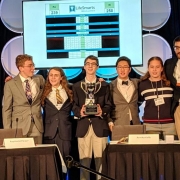
Besides health and safety, LifeSmarts focuses on four other main content areas: consumer rights and responsibilities, personal finance, technology, and the environment. Students are quizzed on their knowledge of these subject areas during online competition. Top-performing teams then advance to statewide competitions, and state champion teams advance to the national championship held each year in a different American city. The 2018 National LifeSmarts Championship took place April 21-24 in San Diego, where the state champion team from Pennsylvania was declared this year’s national champion team. Scholarship recipients Raymond Perez and Hannah Wolfe were on this year’s national champion team.

Last year, students answered more than 3.5 million consumer questions about credit reports, recycling, nutrition, social media, state lemon laws, and everything in between. More than 140,000 students participated in the program in the 2017-18 season. LifeSmarts is active in all states and the District of Columbia, where NCL is headquartered.

“Johnson & Johnson Consumer Inc. is proud to be a long-standing supporter of the LifeSmarts program and thrilled about the OTC Medicine Safety Mentoring project. As a manufacturer of over-the-counter medicines, Johnson & Johnson Consumer Inc. believes that the LifeSmarts OTC Medicine Safety Mentoring Project can help instill a healthy respect for all medicines in adolescents by teaching core concepts on the responsible use and safe storage of medicines. In doing so, we are building a healthier future for our adolescents, and helping to prevent medicine misuse, errors, and adverse events,” said Ed Kuffner M.D., Chief Medical Officer, Johnson & Johnson Consumer.

Visit LifeSmarts.org for more information.

LifeSmarts: Learn it. Live it.

###

About LifeSmarts

LifeSmarts is a program of the National Consumers League. State coordinators run the programs on a volunteer basis. For more information, visit: LifeSmarts.org, email lifesmarts@nclnet.org, or call the National Consumers League’s communications department at (202) 835-3323.
The National Consumers League, founded in 1899, is America’s pioneer consumer organization. Our mission is to protect and promote social and economic justice for consumers and workers in the United States and abroad. For more information, visit www.nclnet.org.

NCL statement on Trump Administration’s finalization of Short-Term Plan rule – National Consumers League

August 1, 2018

Media contact: National Consumers League – Carol McKay, carolm@nclnet.org, (412) 945-3242 or Taun Sterling, tauns@nclnet.org, (202) 207-2832

Washington, DC–The National Consumers League (NCL) is deeply disappointed by the finalization of the Short-Term Limited Duration Insurance (STLDI) Plan *rule, which allows the sale of short-term health insurance plans that do not comply with the requirements of the Affordable Care Act.

The following statement may be attributed to Sally Greenberg, NCL executive director:

“The ‘short-term plan’ final rule will allow insurers to offer junk insurance policies to millions of consumers that fail to meet their healthcare needs. Short-term plans exclude coverage for critically important healthcare services; vary premium rates by gender, health status, and age; and put individuals and families at significant financial risk from unpaid medical bills.

In addition, allowing the expansion of these types of plans for periods up to 364 days (and renewal for up to 3 years) undermines the individual market by pulling healthy individuals away and leaving an older, sicker risk pool behind. As a result of this rule, we fear that many who rely on comprehensive coverage – including women, older adults, and people with chronic conditions – will be left without affordable, comprehensive coverage options.”  

*Links are no longer active as the original sources have removed the content, sometimes due to federal website changes or restructurings.

###

About the National Consumers League

The National Consumers League, founded in 1899, is America’s pioneer consumer organization. Our mission is to protect and promote social and economic justice for consumers and workers in the United States and abroad. For more information, visit *https://nclnet.org.

NCL’s statement on Trump Administration’s proposed rule on Title X – National Consumers League

August 1, 2018

Media contact: National Consumers League – Carol McKay, carolm@nclnet.org, (412) 945-3242 or Taun Sterling, tauns@nclnet.org, (202) 207-2832

Washington, DC—In response to the Trump Administration’s proposed rule on the Title X health care program, the National Consumers League (NCL) has issued the following statement, which may be attributed to Sally Greenberg, NCL executive director:

As a long-time supporter of the Title X Family Planning Program, the National Consumers League (NCL) has significant concerns about the Trump Administration’s Title X “Compliance with Statutory Program Requirements” proposed rule, that would restrict the ability of millions of patients to obtain contraception and preventative care. The proposed rule would also make it significantly more difficult for physicians to explain reproductive health care options, such as family planning services.

NCL strongly believes that the Title X Family Planning Program is integral in providing women and teenagers with reproductive and preventive healthcare services across the United States. In fact, Title X centers have helped to prevent 1 million unintended pregnancies each year. These centers are important because they provide a wide range of preventive healthcare services, such as: wellness exams, birth control, contraception education, and lifesaving cervical and breast cancer screenings.

If HHS implements the proposed rule, there will be extremely detrimental effects on patients in regions of the United States with limited access to health care, as well as economically distressed adults and teenagers without health insurance. If implemented, the proposed rule would seriously restrict the ability of clinicians to explain contraceptive and reproductive healthcare options to their patients. Healthcare education and information is key in order for consumers to make informed choices.

Furthermore, NCL is very concerned about the implications of this proposed rule when it comes to the millions of patients that use Title X services. This proposed rule could result in 40 percent of patients that currently visit Title X centers losing their healthcare services.

NCL urges HHS to analyze all the possible effects that this proposed rule could have on vulnerable populations in the United States before making such sweeping changes to the Title X health care program.

###

About the National Consumers League

The National Consumers League, founded in 1899, is America’s pioneer consumer organization. Our mission is to protect and promote social and economic justice for consumers and workers in the United States and abroad. For more information, visit https://nclnet.org.