Ten Principles for Protecting Consumers in AI-Enabled Healthcare
Calling for stronger safeguards to ensure these technologies protect patients’ rights, safety, and access to care.

 AI should support—but never replace—clinical judgment. AI should be used to support healthcare professionals and improve patient care, not replace their clinical judgment or role in making decisions about a patient’s care. AI-generated recommendations should not be the sole basis for denying, delaying, or terminating medically necessary care. In addition, when AI is used in insurance decisions that could deny or delay access to healthcare, a licensed healthcare professional must make the final determination, exercise meaningful review of the patient’s individual circumstances, and possess independent authority to overturn any AI recommendation.
 Consumers should receive clear disclosure when AI plays a significant role in their healthcare. Consumers should receive clear, understandable disclosure when they are interacting directly with AI (e.g., through a chatbot) or when AI materially influences decisions about their care or insurance coverage. Transparency should be meaningful and proportionate to the role AI plays.
 Consumers should have the right to understand and challenge AI-assisted healthcare decisions. Consumers should retain robust rights to challenge AI-assisted decisions, obtain human review, understand why an adverse decision was made, correct inaccurate information underlying it, and access appeal mechanisms without administrative burden, including clear deadlines for insurer and provider responses.
 Consumers should be able to understand the capabilities and limitations of AI health tools. AI tools that provide health information or recommendations should clearly communicate what they can and cannot reliably do, including when consumers should seek professional medical care. They shouldn’t present uncertain or unvalidated information as authoritative medical advice. In addition, when relevant, AI health tools should clearly communicate whether they are FDA approved/cleared/authorized and for which uses.
 AI must be safe, accurate, and reliable for its intended use. Health AI should be validated for its intended use before deployment and monitored afterward for accuracy, reliability, safety, and changing performance
 AI must work fairly for all patients. Training data and evaluation should adequately represent the populations the technology will serve. AI systems should be tested for bias and disparate performance across patient groups, including by race, ethnicity, sex, age, disability, language, and socioeconomic status. Testing should occur before and after deployment, with corrective action when disparities emerge. Because bias and algorithmic drift (long-term change in an algorithm’s outputs) often emerge well after initial deployment, AI systems should undergo mandatory, independent audits for disparate impact on a regular schedule.
 Consumers’ health information should be protected and secure wherever it is collected. Sensitive health information should be protected regardless of where it is collected. Consumer privacy protections comparable to those under HIPAA should apply to health information collected outside of HIPAA-covered settings, including for wearable health devices, apps, and related websites, with appropriate safeguards governing how that information is collected, used, stored, and shared. In addition, organizations that collect, use, store, or share health information should maintain strong security safeguards to protect that information from unauthorized access, breaches, theft, and misuse.
 Companies should collect and use only the health data necessary to serve consumers. AI systems can collect, analyze, and combine enormous amounts of personal information, including highly sensitive health data. AI developers and healthcare organizations should collect and retain only the information necessary to provide the service a consumer requests and limit its use and sharing to that purpose. Sensitive health information should not be sold to advertisers or repurposed for unrelated uses, such as targeted advertising or training AI models.
 Consumers should have meaningful control over their health data—including the right to correct and delete their information, and, where appropriate, to be forgotten. Consumers must be able to access the personal information an AI system holds about them, easily correct inaccurate information, and delete information they no longer want retained.
 Healthcare providers, insurers, AI developers, and other entities should have clear oversight responsibilities and be accountable when AI causes harm. Entities that deploy AI must maintain public reporting of safety incidents (e.g., to appropriate regulatory authorities) and be prohibited from using pre-dispute mandatory arbitration clauses or liability waivers to block consumer claims. Organizations should provide a clear point of contact for consumers’ questions and requests, including a straightforward mechanism to report suspected errors and receive a timely response. Finally, Congress should also establish a private right of action with statutory penalties for when health AI causes harm to consumers.
The work of the National Consumers League is making a difference in people’s lives across the country. Meet some of the consumers touched by our programs.
Read about NCL’s impact

Paige, 55, a Nashville wife and mother of two, answered an employment ad for secret shoppers. Before sending payment to the scammers, she reached out to NCL.
Read about NCL’s impact

A grease fire flared up in Decklan’s kitchen. As his family scrambled and panicked, fearing that the whole house might erupt in flames, Decklan remained calm. He hurried over to the pantry, grabbed some baking soda, and dumped it on the fire quickly extinguishing the blaze.
Read about NCL’s impact

Cincinnati resident Charles, 45, lost his computer business — and health insurance— during a time of economic downturn. A diabetic, Charles was now unable to afford his medication. He stopped taking it which made him seriously ill and put his life at risk.
Read about NCL’s impact

Jeremy is a fast-food worker who has been employed at a number of Chipotle restaurants in New York City. When he was just 20 years old, he took part in an NCL research project that revealed that management practices within the fast food chain were putting workers—and food safety for customers—at risk.
Read about NCL’s impact







 National Consumers League and Child Labor Coalition Mourn the Passing of Human...

By Sally Greenberg, NCL Executive Director
While the COVID-19 pandemic has led to hardship for all Americans, it is clear that people of color have been disproportionately burdened. Across the health care continuum, addressing this disparity has become part of the broader conversation about the history of systemic racism and the underlying social determinants of health that negatively affect the mental, physical, and economic health of individuals and entire communities.
The pandemic has underscored persistent health disparities, and there is growing recognition that representation in research and clinical trials can have a profound impact on health outcomes. A lack of representation from racially and ethnically diverse groups in research and clinical trials have typically led to gaps in data, missing the opportunity to assess the full impact of various treatments and drugs across a range of populations. The collection and use of real-world research and data to inform the potential use, risks, and benefits of medical products and treatments can ultimately lead to better health outcomes, particularly for those who have been underrepresented in the past.
Existing efforts to improve inclusion
Efforts to expand diversity and representation in medical research are underway in Congress. Policymakers are encouraging the incorporation of Real World Evidence (RWE) in drug development through the recent Cures 2.0 draft legislation released by Reps. Diana Degette (D-CO-1) and Fred Upton (D-MI-6). While the status quo limits us from effectively reaching underserved populations, the proposed legislation would allow studies that include RWE for some drugs after they have been approved. At the heart of this issue is a growing appreciation that the same therapy can affect different populations in different ways, which is why Cures 2.0 supports collecting data that more accurately reflects the unique experiences and needs of patients across diverse populations.
Recognizing the potential for RWE in maternal health
The lack of representative research in the field of maternal health is undeniable, and its implications are staggering. The dismal state of maternal care in the United States reflects how our health care system has failed women of color, including by not adequately studying treatment options to prevent maternal morbidity and mortality. The need for RWE is clear when you consider the persistent disparities in health outcomes that plague minority communities.
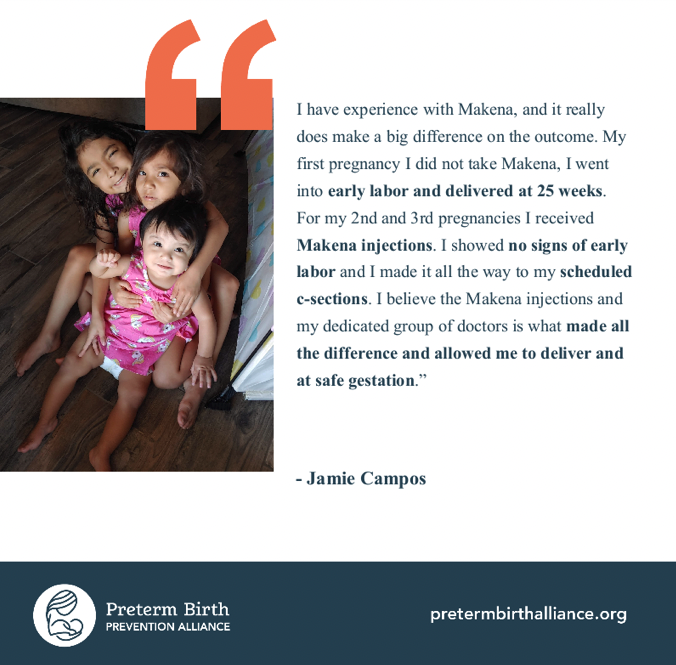
Preterm birth and its disproportionate impact on women of color is a stark illustration of the need to make progress on representative research in maternal health. Preterm birth is the second-largest contributor to infant death in America today. Despite the tremendous physical, emotional, and financial toll that preterm birth continues to take on our country — disproportionately so on women and families of color — not enough therapeutic tools currently exist to prevent it.
Today, “17P,” the only FDA-approved treatment to help reduce the likelihood of spontaneous, recurrent preterm birth in the United States is at-risk of being withdrawn from the market in all its forms, including the branded product and five generic versions. Unfortunately there is conflicting evidence from two different clinical trials, one representative of a diverse U.S. population and another studied in a largely white population in Europe. It’s not a straightforward comparison. If 17P is withdrawn, the women most affected by preterm birth, predominantly women of color, would be left without an FDA-approved treatment option.
The FDA is considering the path forward, including additional data collection through leveraging RWE from past patient use. The success of the first (approval) trial for 17P in the impacted communities signals the importance of RWE. Continued access to 17P is, at its core, a matter of health equity. Black women must not yet again be left vulnerable to a system that historically has overlooked them.