How we can improve the marketing of food to children – National Consumers League

By Teresa Green, Linda Golodner Food Safety & Nutrition Fellow

With the nation facing an obesity epidemic, the marketing of food to children has understandably become a controversial issue.  The formation of an Interagency Working Group on Food Marketed to Children, made up of the U.S. Department of Agriculture (USDA), the Federal Trade Commission (FTC), the U.S. Food and Drug Administration (FDA) and the Centers for Disease Control and Prevention (CDC), is part of the Obama administration’s attempt to find a solution to this pressing issue.

The Working Group was formed in 2009 and charged with conducting a study and developing “recommendations for standards for the marketing of food” to children.  The Working Group initially recommended that foods marketed to children meet certain nutritional thresholds and limit the inclusion of unhealthy ingredients such as saturated fat, sugar and salt.

Facing immense pressure from the industry, representatives of the Working Group announced at a hearing before Congress in October that they would be substantially altering their recommendations.  For example, marketing recommendations will now only target children up to 12 and will not include equity characters and sponsorship of team sports.

There are two important components of this discussion that bear mentioning.  The first is that, contrary to the assertion of some members of the industry, the Working Group’s report does not enact regulations.  Because the report is not part of the rulemaking process, it does not bear the force of law and thus companies are under no compulsion to follow its advice.  Even beyond that, the report does not recommend ending advertisement to children, but rather advocates that the products which are advertised to kids meet certain standards of health.

The second point is this; there is no doubt that America is facing an obesity epidemic.  The CDC estimates that 20% of children ages 6 to 11 in this country are obese.  According to a study done by the Institute of Medicine, advertising influences children to prefer high calorie foods that have little nutritional content.  This means that changing the way that food is marketed to children has the potential to be a real and meaningful part of the solution to the obesity problem facing our nation.

The Working Group has not released its new guidelines and only time will tell how much they will be altered from the original. Groups like NCL will continue to advocate for limits on marketing which protect the most vulnerable from exposure to advertising that can have long-term negative impacts on their health.

Cautions on credit card points bonanza – National Consumers League

By Sally Greenberg, NCL Executive Director

As a consumer advocate, I write a lot about tricks and traps that credit card companies and banks use to trip up customers and get them to pay all manner of penalties and fees. These techniques have enriched banks to the tune of many billions of dollars, and too often lower income Americans are paying fees they can ill afford.

But the flip-side of the banks’ clever machinations are consumers who figure out how to make the most of free mileage and gifts available by opening cards and getting mileage automatically, or by charging large enough amounts on their cards to earn mega-points. Brad Larney from San Diego, CA took a trip with his wife to Cape Town first class from the United States for $2,000—usually a $30,000 trip—on miles that he earned by buying coins from the Mint, charging the cost to his credit card, and paying the bill with the value of those coins. He was featured in a recent Wall Street Journal article, along with Rick Draper from Canton, MI, who has racked up hundreds of thousands of miles and bonuses, and carries five cards in his wallet and has 30-40 more at home.

I’m of two minds on this practice.  On the one hand, I like that clever consumers have figured out how to outsmart those evil geniuses who draft the fine print on 30-page credit card contracts. And what they are doing is totally legal.

On the other hand, this business isn’t for amateurs. You can get into real trouble by charging up cards and then losing track of who you owe money to. You’ll pay through the teeth in fines, penalties, and interest often compounded and set at least 18 percent. Moreover, holding this many cards can mess with your credit score, making it hard for you to buy a house or take out a loan. So this is truly for those who have perfected the art of tracking their credit cards, paying them off each month or—better yet—knowing when deals like just signing up for a card can earn you 75,000 miles, an offer Capital One Bank announced recently. Those seem pretty safe, as long as you don’t start charging up these accounts. But still, this business can be treacherous so consumers, if you decide to get into applying for multiple credit cards or charging on a card to rack up points, proceed with caution!

Lifesmarts: Student investing in a recession – National Consumers League

By Alex Schneider, Summer 2011 LifeSmarts and Public Policy Intern

Stocks have been taking dives for months now – not exactly great news for any investor.  But for students with little to no exposure to the market, a dip like this can lead to some pretty big investing mistakes.  Before you buy or sell, here are some tips to keep in mind.

Practical considerations

In general, students need cash.  For many students who take out loans for college and pay their own bills while taking in less than $10,000 a year from part-time jobs, investing is not practical.

Students who meet such criteria should consider alternatives that can help them make some money.  Examples include money market accounts, which offer modest interest rates in this economy but still allow access to cash on demand.  But beware – some accounts have high minimum balances, so search for a bank that has reasonable requirements.

Even those students who are making very little should avoid living paycheck to paycheck and should try their best to put 10 percent or more of income into savings for a ‘rainy day,’ whether into a money market or savings account.  Ideally, students on limited budgets should set a goal of saving enough so that if they are caught in a financial bind, they have enough money to live three months without an income. Impulsive buyers should especially try to keep cash in a money market rather than checking account, because accessing the money requires advance planning and because transfers between accounts have limits that can help students budget their money.

Money in stocks is not cash

Some students may consider putting their money into the stock market, driven by promises of high returns on investment.  But as we’ve seen these past few weeks, all investing – no matter how safe the stock or asset – is subject to economic cycles.  Students should not expect to put money into stocks during a recession and then get that money back with high returns within three years.

Three types of student investors

Based on classifications in “Dollars & Sense for College Students” by Ellen Braitman, I have put together three categories of student investors:

Type I: Those who will need their money in ‘a year or so’.  These investors may consider short-term bond funds and money market funds, available from your favorite brokerage house (my favorite is Scottrade because they do not have hidden fees.)  If you fall into this category, do not even think of putting money into stocks, and keep at least 50 percent of your money in cash, such as bank money market accounts.  While the stock market might grow, it might not, and chances aren’t bad that the day you need the money, gridlock in Washington might lead to a downgrade of the U.S. credit rating.  By the way, don’t sell your stock on a day like that.

Type II: Those who will need money at the end of three years.  These investors may consider short-term or intermediate-term bond funds.  In a recession, the best bet is to be on the safe side and keep a sizable cushion of cash in case of any financial trouble – equal to all liabilities that could arise over a three-month period.  For many students, building up savings like this is difficult: for such students, putting money into stocks has the potential to be a disastrous decision.

Type III:  Those who do not need money for more than three years, and frankly, won’t even need the money in five years.  These students might have high paying jobs or have secured jobs for after school or they received scholarships and will not have college loans.  These investors are looking for long-term rewards and will have a steady source of income to rely on in the meantime.  They will keep a good amount of their net worth as cash and can afford to lose what they put into stocks.  Only these investors should put money into the stock market, with the first $5,000-$10,000 into a mutual fund or index fund and then experiment with individual stocks.

Avoid at all  costs

Never be in a position where you need to sell a stock in order to pay day-to-day expenses, regardless of whether stock prices are rising or, as was the case this week, falling.

FDA insider sentenced for stock trades – National Consumers League

By Sally Greenberg, NCL Executive Director

It’s sad when public servants violate the trust that has been placed on them, but it’s also fairly rare in this country. Cheng Yi Liang, a 57-year-old longtime FDA chemist, was recently convicted of using inside information he gained while working at the Food and Drug Administration, to invest in pharmaceutical companies with new drugs coming onto the market. Liang worked on new drug approvals for the FDA, and apparently made more than $3.7 million trading drug company stocks. He made a series of online trades using brokerage accounts in the names of his relatives.

What’s impressive is that federal investigators were able to spot the buying and selling of these stocks by an FDA insider and trace the deals to Liang. He’ll go to prison for his crime, as well he should. Prosecutors are asking for between 5 and 7 years’ incarceration.

Many federal workers like Liang have access to sensitive information that they could use for their own purposes and for their own profit, and—in countries where corruption is rampant, those who work for government do just that—and often with impunity. We’re fortunate to live in a place that expects our public servants to abide by a strict code of ethics for public servants. We will not permit them to abuse their positions for their own benefit. Liang’s case is a cautionary tale for anyone working for the federal government—or any government agency—who abuses the public trust for personal gain: you may well end up behind bars.

Good news about heart disease – National Consumers League

NCL is the consumer organization behind the groundbreaking Script Your Future campaign, an initiative to get patients to take their medications as directed.  If they do take their prescription medications, they stay out of the hospital and end up healthier, which reduces costs dramatically.

Script Your Future focuses on three chronic diseases: diabetes, respiratory, and cardiovascular illness. In the latter category, we have recently learned of some very good news. Though heart disease is still the leading cause of death in the United States, hospital admissions for patients with heart disease has fallen 30 percent in the last decade, according to a study conducted by the Journal of the American Medical Association. These impressively improved numbers have saved Medicare an estimated $4.1 billion.

The reasons behind these results are better prevention and early treatment of high blood pressure and coronary artery disease. Also contributing to these dramatic numbers are reductions in the number of smokers; in the last decade smoking levels have dropped from about 23 percent to 20 percent of Americans. Also, the use of statin drugs to lower cholesterol levels has gone up. This good news comes even amid increased levels of obesity among adults and children in the United States. Public awareness campaigns are not always effective, but in this case, the new data suggest that discouraging smoking and encouraging the use of statins for high cholesterol is having a positive impact.

Politicians take note: Wall Street protests reflect popular sentiment – National Consumers League

By Sally Greenberg, NCL Executive Director 
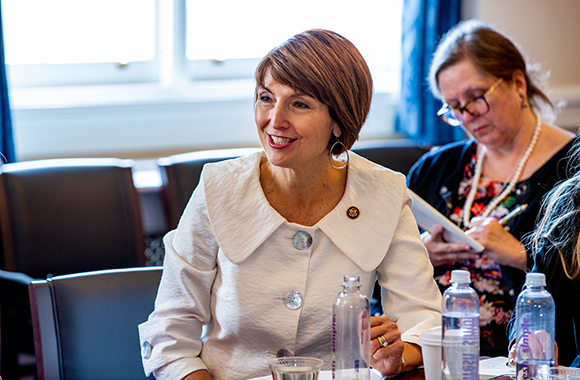
NCL has joined with consumer and labor groups over the last few years on measures to reign in the egregious executive compensation provided to heads of American corporations. Since the 1970’s, executive pay has more than quadrupled while the salaries earned by average workers has fallen by 10 percent. The Dodd-Frank Act passed in 2010 included provisions requiring companies to report the spread between the highest and lowest paid employees.

I’ve often been surprised at the lack of public outrage when CEO pay hits these ridiculous levels – rising well beyond $10 million in many companies. But now we are finally seeing public outrage in the form of the “Occupy Wall Street” protests about the excesses of too many banks and corporations – including getting bailed out with taxpayer funds, as they were several years ago, and then distributing generous bonuses and benefit packages to executives.

To their credit, the anti-Wall Street protests are going far beyond executive compensation and bailouts. They are tapping into what the Washington Post’s polling shows is widespread anger and mistrust of Wall Street: 68 percent of independents and 60 percent of Republicans have an unfavorable view of big financial institutions. Polls also show that 65 percent or so of Americans believe that millionaires should pay higher taxes – and the same number supports the President’s jobs plan.

I don’t know whether these anti-Wall Street demonstrators have begun a movement that will last – I hope they have – but I think the leadership in the House and the minority in the Senate, which has blocked the higher tax on millionaires and the Obama jobs plan, should take notice of this movement that is spreading to cities, not only in America, but across the globe. They ignore these protests at their peril.

Lessons from the Listeria outbreak – National Consumers League

By Teresa Green, NCL’s Food Safety and Nutrition Fellow

The recent outbreak of Listeria monocytogenes in Jensen Farms cantaloupes has sickened 139 and claimed at least 29 lives. Because of its long incubation period, these numbers may continue to rise for the next several weeks. Here are some things this outbreak has reinforced and taught us.

  • Like all foodborne illnesses, Listeria is especially dangerous for vulnerable populations. This includes the elderly, young children, those with compromised immune systems and pregnant women. In this outbreak, the median age of those who have passed away is 84 and four pregnant women have been affected.
  • The most unique feature of this outbreak is that it is the first time there has been an outbreak of Listeria in cantaloupe. This reiterates that while some bacteria are more common in some types of food, no food can be said to be completely safe from a given pathogen. This only makes robust safety practices that much more important.
  • While only one brand of cantaloupe has been implicated in the recent outbreak, the recall has nonetheless impacted the entire industry. This is due to the fact that in many cases, consumers do not differentiate between brands and are avoiding cantaloupe altogether. At the moment, cantaloupe growers in Arizona and California are losing millions of dollars and in some cases not even bothering to harvest their produce. The devastating impact of an outbreak and subsequent recall emphasizes the need for a focus on preventative safety measures as part of good business.
  • One of the most startling aspects of the Jensen Farm outbreak is that it received high marks in an independent audit less than a month before the start of the outbreak. Jensen Farms’ 96 out of 100 rating highlights the variability possible in third party audits and the fact that a good “grade” does not necessarily mean a firm has achieved the highest level of safety.
  • The FDA report on the cause of the outbreak cited several unsanitary conditions at the packing plant as likely causes of the Listeria outbreak. These included pooling water on the floor of the plant and machinery that was difficult to clean. The root cause investigation revealed that simple changes to the sanitary practices at the plant could have gone a long way towards preventing an outbreak.
  • The biggest takeaway from this tragic outbreak is that the produce industry needs clear regulations regarding safety practices. As part of the recently passed Food Safety Modernization Act (FSMA), the FDA will have to establish “mandatory, science-based, minimum standards” for the production of fruits and vegetables. These standards will clarify expectations around safety practices and ensure a safer supply for consumers. For those impacted by this outbreak, these standards will come too late. For the rest of us, they can’t come soon enough.

This outbreak of Listeria has taught us many things about foodborne illness, but the most important takeaway is that good food safety practices play a vital role in preventing contamination. Only when we make food safety a priority can we hope to avoid future outbreaks.

Another attempt by the House Majority to slash workers rights – National Consumers League

By Michell K. McIntyre, Project Director of NCL’s Special Project on Wage Theft 

Last week, House Majority Leader Eric Cantor’s Jobs Agenda, which he designed to end numerous regulations he termed “job killing,” pushed H.R. 3094, or the “Workforce Democracy and Fairness Act,” which passed the House Committee on Education and Workforce by a party line vote of 23 for the majority and 16 for the minority. Rep. John Kline admittedly designed H.R. 3094 to roll back decisions made by the National Labor Relations Board (NLRB) after they ruled against Boeing for its unfair treatment of union workers in Washington State.

H.R. 3094 would be better named the ‘Union Election Prevention Act’ as it seeks to delay and ultimately prevent union representation elections from happening, thus denying workers the opportunity to have a voice at work. The bill would interfere with the elections process and flood the NLRB with hundreds of appeals from companies designed to hold up elections.

In the mark-up session this week, the House majority continuously batted down any and all amendments offered by the minority, including a plan to create employment opportunities for Americans by investing in the crumbling infrastructure of America’s schools. This amendment, offered by Rep. Susan Davis (D-CA), would have meant immediate jobs for teachers, construction workers, electricians, and countless others across the country.

In a toxic environment, with one side not even willing to listen to the other, partisan rhetoric was deeply troubling. At this point, there is no way that this current committee will come together to create a bipartisan and meaningful jobs bill. H.R. 3094 will surely pass the House of Representatives with a party line vote and move on to the Senate. With any hope, the Senate will simply sit on this terrible bill and never let it become law.

Nixon-era consumer advocate dies – National Consumers League

By Sally Greenberg, NCL Executive Director

This week a consumer advocate who I admired greatly and who often attended heavily Democratic consumer conferences—even though she had worked for Richard Nixon—died. Her name was Virginia Knauer, and I regarded her as a friend and colleague. She was appointed to the post of Office of Consumer Affairs under President Richard Nixon in 1969, filling in a slot created by Nixon’s predecessor Lyndon Johnson. I introduced her a few times when I was on panels at consumer conferences and few in the audience remembered her.

Knauer won over critics and advocated for things consumers support now but that, sadly, no Republican in Congress today would ever support: she wanted consumers to have the right to bring class-action suits, not just in state, but in federal courts; she argued for a comprehensive system of product safety standards and simpler language in product warranties.

Knauer spoke her mind with her more conservative colleagues. She insisted that the fat content of hot dogs not exceed 30 percent, rather than 33 percent. Nixon took her side because, as he told her, “I’m on a low-cholesterol diet myself!”

In her day she was regarded by Ralph Nader and Senator Abraham Ribicoff (D-CT) as without clout or power. They were right that she couldn’t make many of the legislative changes they sought, but her use of the bully pulpit on behalf of consumers in speeches around the country—including her common refrain that “the consumer is getting fed up with shoddy material, poor quality, unsafe products, bad service, weak warranties, lack of adequate information…” was very important; indeed, this is a voice that is sorely missing in today’s in political discourse.

Ginny Knauer helped to create the Federal Consumer Information Center to distribute low-cost consumer publications, a program that goes on today and that NCL uses to get our materials out.

Knauer called herself a “pipeline to the President for consumers.” We could use more of those people today. If only our own President Obama would appoint someone to the post Ginny Knauer held! The world would be a better place for consumers.

Buy worker-friendly treats this Halloween – National Consumers League

Trick or treat? Soon children all across the country will cheerfully announce their presence at doorways hoping to receive sweet treats. While Halloween certainly belongs to kids, we adults, get to make some decisions too – costumes being weather- and age-appropriate and what kind of candy to stock for the big night. For costume decisions, we base it on weather conditions (how cold and wet will it be?) and the age of the kids (is a five-year-old too young to go as Snooki or Charlie Sheen?). But for candy, what should we look for?

This year, consumers can check out this list of union-made candy to rest assured that the majority of the companies listed are paying their workers a fair wage and decent benefits.

Unfortunately, one major union-made candy producer is, of late, not treating their workers so well. The Hershey Company has had more than its fair share of wage violations this year. Ranging from the exploitation of J-1 visa student workers from overseas working in its packing facility to the second class-action lawsuit being filed against the company for failing to pay its employees for overtime, Hershey has engaged in unethical and possibly illegal examples of wage theft.

With the economy still struggling to recover and Americans trying to keep their heads above water, advocates are urging consumers to make worker-friendly choices when spending money on candy for Halloween celebrations.