Experts discuss payroll fraud at Senate briefing – National Consumers League

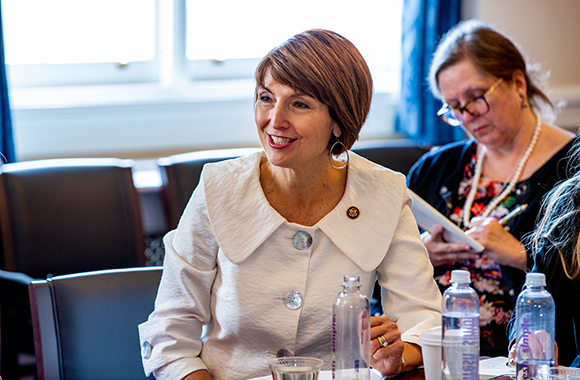
The National Consumers League’s Special Project on Wage Theft hosted a Senate briefing on March 13 to explore the under-reported and growing issue of payroll fraud. Payroll fraud is the result of misclassification, meaning that an employer will identify an employee as an independent contractor or pay them off the books, skirting certain worker protections such as minimum wage, paid leave, or worker’s compensation. This phenomenon is widespread in temporary employment industries such as construction, agriculture, trucking, and janitorial services. Unfortunately, misclassification continues to grow, with too few regulators and too many employers who see payroll fraud as an easy way to save money. Workers who do not receive proper benefits, as well as ethical businesses who follow the rules, are ultimately the biggest victims. More information about this issue can be found at the NCL Web site.

Employers responsible for payroll fraud do so knowingly and intentionally. Classifying a worker as an independent contractor is not a minor clerical error, but rather a conscious decision made by an employer. The problem is not that the laws are confusing or hard to understand. However, employers know that they can get away with not paying employees the benefits they deserve. In this tumultuous economy, with the added factor of fear over the implementation of the Affordable Care Act, many purposefully break the rules. This puts honest businesses, especially those bidding on contracts, at a distinct disadvantage and unable to compete with the violators.

Heather Rowe, the Director of the Department of Labor Standards from the Commonwealth of Massachusetts and member of the payroll fraud panel, explained how Massachusetts is handling this complex issue. Her state is a good example for how to combat violating employers. Using a joint task force and a fraud detection system, Massachusetts has begun the process of identifying employers who violate payroll rules and collecting the money they owe. From 2010 to 2011 the state of Massachusetts recovered almost 11 million dollars in unpaid revenues.

With this problem continuing to grow, the question becomes: how do you honor those companies that have followed the rules and punish the companies practicing payroll fraud? At Wednesday’s Senate briefing, panelists discussed one option: publicly shaming employers who violate the rules in order to drive business to companies that play by the rules. California included a public shaming aspect in the employee misclassification law passed in the state in 2012. Another option is to pass federal legislation such as the Payroll Fraud Prevention Act, which was proposed by Sen. Sherrod Brown (D-OH) in 2011. Kim Bobo, author of Wage Theft in America: Why Millions of Working Americans Are Not Getting Paid – And What We Can Do About It and member of the panel, says that there need to be more federal regulators monitoring payroll fraud. “The TSA was able to add 56,000 new regulators in one year. All we need is 1,000 regulators, but it’s an unpopular position in this economy, and people won’t support that,” she said.

The simple fact is payroll fraud is steadily on the rise and rapidly spreading to new industries. Today, many people who work low-wage jobs do not know that they deserve additional benefits or they are too afraid to complain to their employer for fear they will lose the job altogether. New sites such as https://finance.ubc.ca/payroll allow people to anonymously report cases of payroll fraud and helps put public pressure on employers to cease violations. The issue needs more exposure and, as more states follow the example of Massachusetts and other states that have taken action, it will become clear that preventing payroll fraud not only benefits workers, but also provides additional revenues to the states at a time when nearly every state needs the money.

LifeSmarts a Mile High – National Consumers League

By Lisa Hertzberg, LifeSmarts Program Director

When I landed at the Denver International Airport Sunday during a snowstorm the locals were calling a “blizzard,” I knew that my Minnesota driving skills would come in handy on the windy, snow-packed highways. But what a difference a day makes – by Monday morning the sun was shining, everything was melting, and the Rockies were out in full force. It was a beautiful day for the rebirth of LifeSmarts in Colorado.

We had strong competition and the students demonstrated how hard they had been preparing for the LifeSmarts competition. Over the course of the morning team members completed individual assessments, answered six lightning rounds, and competed in three buzzer matches.

Students gained points for answering “water pick,” “FTC,” and giving a textbook description of the term “opportunity cost.” But my favorite answer of the day was to the question, “What does it mean if your can of tuna says it is dolphin safe?” The student who buzzed in answered, “It means it is safe to feed to your dolphin.” (Hint: not quite the answer we were looking for.)

The competition came down to the final match between Northglenn High School and Monarch High School, with Monarch winning the state title.

It was exciting to see a new state program taking shape, and it could not have happened without the tireless work of Dalene Bricker who organized the event, our gracious host DeVry University in Westminster, and Western Union which provided volunteers for the state competition and support to NCL to expand into five new states this year, including Colorado.

Payroll fraud costing workers, government – National Consumers League

March 13, 2013

Contact: Carol McKay, NCL Communications (724) 799-5392, carolm@nclnet.org

Washington, DC–When an employer misclassifies an employee as an independent contractor, everyone suffers, from workers to taxpayers. By skirting their responsibility to pay taxes, employers pass a heavy tax burden onto workers. Additionally, workers lose crucial employment protections such as minimum wage, paid overtime, workers compensation, and unemployment insurance.

Today, the National Consumers League hosted a Senate briefing on Capitol Hill, featuring a panel of worker advocates, state agency staff, and industry experts to unveil new survey findings about consumers’ awareness of payroll fraud. The survey, conducted by ORC International and commissioned by the National Consumers League, found that most consumers are unaware of the existence of employee misclassification, but are near-unanimously opposed to the negative consequences misclassification creates for workers and tax payers.

“Honest businesses, employees, communities, states, and the federal government are all affected by payroll fraud, which is on the rise in states all across the country,” said Sally Greenberg, Executive Director of the National Consumers League (NCL), America’s pioneering consumer and worker advocacy organization.

A 2009 report by the United States Government Accountability Office (GAO) estimated that payroll fraud decreased federal revenues by $2.72 billion in 2006. Certain industries including construction, real estate, home care, trucking, and janitorial services have disproportionally high rates of misclassification. These rates continue to rise according to numerous state studies. In California, for example, the number of unreported employees identified by the Economic Development Department increased by a third between 2006 and 2008. More recent studies are needed to understand the full effect of payroll fraud on federal revenues.

“Many consumers do not know how serious and widespread cases of misclassification are in the workplace. Once we educate people about this issue, however, nearly everyone agrees that employers are benefitting at the expense of hard working Americans. People lose valuable worker protections such as paid overtime and worker’s compensation, leaving them vulnerable and without any job security,” said Michell McIntyre, Project Director for NCL’s Special Project on Wage Theft.

Survey Highlights

Awareness of “employee misclassification” is low, described to respondents as “a form of payroll fraud in which an employer intentionally classifies workers as ‘independent contractors’ instead of ‘employees’ in order to deprive workers of their workplace protections and defraud state and federal treasuries out of income taxes”.

Two in three Americans (65%) have not heard of employee misclassification.

  • Awareness of this term is substantially lower among females, 71% of whom have not heard of it versus 59% of males.
  • Lack of awareness decreases with education:  72% of those with a high school education or less have never heard of the term, compared to 63% of respondents with some college education and 55% of college graduates.

Once familiarized with the concept of “employee misclassification,” respondents expressed strong views against it, including support for punishment of the companies that engage in this practice.

  • Nine in ten consumers (90%) “strongly agree” or “agree” that it is important that companies do not misclassify workers as independent contractors in order to prevent workers from receiving minimum wage and paid overtime.
  • Agreement is higher among women, with 93% agreeing with the statement versus 87% of men.

According to 93% of Americans who express agreement, companies that intentionally misclassify workers as independent contractors in order to dodge paying minimum wage, overtime, workers compensation and taxes should be fined or punished.

  • Once again, females are more inclined to say they “strongly agree” or “agree” with fines or punishment (95% vs. 90% males).

Nearly all consumers (96%) are in agreement that workers should be clearly informed in writing that they have been classified as independent contractors at the beginning of employment.

  • Agreement is universally high among all demographic subgroups.

See NCL’s full survey and results.

Methodology

These results are based on 1,024 telephone interviews among a random sample of US adults 18 years old and older. Interviews were conducted over the period December 13-16, 2012, utilizing both landline and cell telephones. Results among total sample have an error margin of +/- 3%. Interviewing was conducted on behalf of National Consumers League using ORC International’s CARAVAN® survey.

About the National Consumers League

The National Consumers League, founded in 1899, is America’s pioneer consumer organization. Our mission is to protect and promote social and economic justice for consumers and workers in the United States and abroad. For more information, visit www.nclnet.org.

Public health thwarted – National Consumers League

By Teresa Green, Linda Golodner Food Safety & Nutrition Fellow

In our staff meeting this morning I announced that I was planning to write a blog to celebrate tomorrow’s implementation of New York City’s limits on the sale of sugary beverages over 16 ounces. Since Mayor Bloomberg announced the measure, NCL has been behind it, and our Executive Director Sally Greenberg, actually traveled to New York City to testify in support of the measure. I planned to write about the impact that sodas have on our health, and the way that sugary beverages have contributed to obesity. I planned to applaud the Major for his forward thinking when it comes to public health matters; we feel strongly that any measure which helps us consumer fewer sweetened beverages is a good one.

However, as I was working on my blog post, news began to filter in that a New York judge had issued an injunction barring the Mayor’s proposal from going into effect. My blog post of the morning was no longer the right one to post. While all of the positive things I had written about the soda ban were still true, the bigger issue now was that this common-sense ban has been delayed if not completely derailed. Judge Milton Tingling argues that the rules are “fraught with arbitrary and capricious consequences,” and I feel the same way about childhood obesity. How arbitrary for our children that they grow up in an era where the very fabric of society predisposes them towards poor health; in fact more than two-thirds of adults are overweight or obese, meaning most kids will likely end up that way as well unless we change something. Placing reasonable limits on the sale of sugary beverages by certain establishments certainly seemed like a great place to start. Mayor Bloomberg has said he will challenge the judge’s ruling, and we can only hope he will be successful.

National Consumers League calls on FTC to investigate allegations against Herbalife – National Consumers League

March 12, 2013

Contact: Carol McKay, NCL Communications, (724) 799-5392, carolm@nclnet.org or Sally Greenberg, 202-835-3323 x 830

Washington, DC – The National Consumers League (NCL), the nation’s pioneering consumer and worker advocacy organization, today urged the Federal Trade Commission (FTC) to investigate recent allegations that the multi-level marketing company Herbalife is, in actuality, a sophisticated pyramid scheme. Herbalife’s business practices have recently come under intense investor scrutiny, and NCL is now calling on federal regulators to examine both the claims lodged against Herbalife and Herbalife’s responses. NCL wants the federal agency to evaluate the evidence on both sides and make a determination that will serve as an important guide to consumers.

In December 2012, Pershing Square Capital Management, a New York-based hedge fund, published the results of an 18-month investigation of Herbalife. This report claims a range of potential violations of federal and state consumer protection and anti-pyramiding laws, including Section 5 of the FTC Act, which prohibits “unfair or deceptive acts or practices in or affecting commerce.” Herbalife responded in kind by arguing that both its products and its business model are legitimate, and that the company is a bona fide multi-level marketing enterprise.

“Having reviewed this report, Herbalife’s responses to it, and associated analyst and media coverage, we believe that the FTC should conduct a thorough investigation,” said Sally Greenberg, NCL Executive Director. “Allegations that Herbalife’s business model is a pyramid scheme are serious charges with serious consequences for consumers and those who are recruited to sell Herbalife’s products. The FTC is the federal agency with the right mandate and expertise to explore these allegations.”

The National Consumers League itself has special expertise in this area. NCL’s letter to the FTC notes that, “[I]n 2009, with a grant from the Direct Selling Education Foundation, NCL launched an consumer education campaign to help consumers spot the differences between legitimate multi-level marketing (MLM) plans and fraudulent pyramid schemes.”

NCL’s letter also notes that “NCL’s anti-pyramiding checklist informs consumers that the central difference between a legitimate MLM business and a pyramid scheme is that an MLM succeeds largely by selling products and services, whereas a pyramid scheme makes profits primarily by recruiting new distributors.” NCL is asking the FTC to determine whether Herbalife falls into the MLM category, as company officials claim, or is in fact dependent for its profits on recruiting distributors rather than selling its products.

“We believe a thorough FTC investigation looking at both sides of this issue is called for at this time,” said Greenberg.

To read NCL’s letter to the FTC, click here.

###

About the National Consumers League

The National Consumers League, founded in 1899, is America’s pioneer consumer organization. Our mission is to protect and promote social and economic justice for consumers and workers in the United States and abroad. For more information, visit www.nclnet.org.

Fishy labeling harming consumers’ health and pocketbooks – National Consumers League

By Teresa Green, Linda Golodner Food Safety & Nutrition Fellow

A new study was recently released, reaffirming something those of us who work on food fraud have known for a while: adulteration and food fraud is rampant, especially in the most vulnerable products. This most recent study addresses fish products sold in the D.C. metropolitan area, NCL’s backyard. The study found that one-third of seafood sold in both restaurants and grocery stores is mislabeled as a different type of fish. For some types of fish, like snapper, as much as 87 percent of the fish sold nationwide may be mislabeled.

The motivation for mislabeling fish is the same as the motive for any food fraud: economic profit. Whenever a cheaper product can be sold in place of a more expensive one, this increases the potential profit margin for the producer. Unfortunately, economically motivated adulteration can hurt consumers. First and most obviously, customers are not getting what they paid for. Secondly, when products are adulterated, consumers are unaware of what they are consuming and thus cannot avoid ingredients that they do not want to consume. This is particularly harmful when these ingredients are allergens. Finally, one major concern revolves around food safety. If a producer is breaking the law by substituting products, it is certainly possible that they are cutting corners in other areas. In particular, they may not be following the most up-to-date food safety practices.

Unfortunately for consumers, identifying when a product has been adulterated is very difficult. Prices that seem too good to be true can be one indicator that a product isn’t what it claims to be. Beyond that, consumers who are concerned about this issue should let the FDA know that enforcement and testing should be a high priority.

Hits, misses from DOE on college pricing tool – National Consumers League

By Sally Greenberg, NCL Executive Director

The Washington Post “Color of Money” columnist, Michelle Singletary, and I have something in common. We are both sending a kid to college next year. A recent column is focused on the financial realities of paying for college, and she is none too impressed with a new tool provided by the Department of Education to price out the cost of college. It’s available here. I agree with Singletary’s critique of the site, but I also see a lot of value, and I’ll get to that later.

Singletary wants the site to include a financial aid shopping sheet and she notes that the Obama Administration apparently will have 600 colleges providing financial aid information on the site as of 2013-2014. There will be several important pieces of information, including the costs for the year, estimate of monthly payments graduates would expect to make on federal student loans. Singletary says “and they will supply information about the percent of students who enroll, graduate and repay their loans.” Actually that information is there now and I found that incredibly helpful as a parent.

So here’s what I liked about the site. I have an aversion for for-profit colleges, as I’ve noted in this blog previously. I think they steal money from largely lower-income, military, and minority students, charge ridiculous tuition and when they do even provide a degree – their default rates are very high – that degree is often worth little in the marketplace.

I tested the information available on the site. I plugged in Strayer University in DC, a for-profit entity, to the search engine. Average tuition is $29,000+, graduation rates are 22.7 percent, and the loan default rate is 13.9 percent. Compare that to Catholic University, a well-regarded and longstanding nonprofit university, also in DC. It may be the least difficult of the four major universities in DC to get into. Tuition is $34,000, graduation rates are 68.3 percent, and default rates are 1.7 percent. Yes, it costs $5,000 more a year than Strayer, but your chances of graduating are far greater and your chances of defaulting on your student loans are far lower.

Let’s try Georgetown University, also highly regarded and in DC, and very selective. Tuition is $26,000. Graduation rates are 93.8 percent and default rates are 1.3 percent. What does that tell you? If you go, you’re likely to graduate and you are very unlikely to default. That’s a good investment.

To my mind, Catholic and Georgetown are priced similarly to Strayer, but are far better investments I think this information is critical for parents and students of all ages. The information I’d like to see added to the site now is how easily graduates find jobs and what they make once they get those jobs. The site wasn’t able to provide that critical information. I have seen that somewhere but I wasn’t able to locate that here. In the next few months, I hope the Education Department make that available.

Thanks to Michelle Singletary for giving these new tools much-needed publicity. The sites are far from perfect, but they do provide some critical information that savvy consumers should be able to use to make a good investment in theirs or their children’s education.

Celebrating Let’s Move’s third birthday – National Consumers League

By Teresa Green, Linda Golodner Food Safety & Nutrition Fellow and Michell K. McIntyre, Director of NCL’s Special Project on Wage Theft

This week, First Lady Michelle Obama is touring the country to celebrate the third anniversary of her Let’s Move initiative. The goals of Let’s Move are:

  1. Creating a healthy start for children
  2. Empowering parents and caregivers
  3. Providing healthy food in schools
  4. Improving access to healthy, affordable foods
  5. Increasing physical activity

Through her various activities, Obama has increased national focus on alarming rates of childhood overweight and obesity; currently, one-third of children fall into this category. By putting the spotlight on increasing the health of school lunches and the importance of physical activity, Let’s Move has started important national conversations about the health of our children.

Additionally, the First Lady has worked with various restaurants and grocery store chains to develop healthier options, in the case of restaurants by decreasing the amount of salt and calories across their menus and by adding healthier default options to their children’s menu. By working with grocery stores committed to decreasing the number of food deserts by building new stores, Obama is also addressing the question of equitable access to healthy food.

While all of this work to ensure our children have a fair shot at a healthy future is beyond admirable, the companies the First Lady has chosen to work with to achieve these goals are not always so admirable. Specifically, both Walmart, the largest retailer in America, and Darden Restaurant Inc, the largest restaurant group in the U.S. and owner of the Olive Garden, Red Lobster, LongHorn Steakhouse and other restaurants, face widespread criticism about their treatment of workers, including numerous cases of wage and hour violations ranging from unpaid overtime to unpaid minimum wage to forcing employees to work off the clock – all forms of wage theft.

Despite revenues easily topping $113 billion, the average Walmart associate makes just $8.81 per hour and working full-time (which Walmart defines as 34 hours per week) would make just $15,576 per year. That means hundreds of thousands of people who work full-time at Walmart still live below the poverty line, forcing many to utilize state subsidized benefits. Three major studies – one in Georgia, one in California and one in Massachusetts – found that Walmart was the company whose employees were most reliant on government assistance. Making Change at Walmart estimates that Walmart employees cost taxpayers more than $1 billion nationwide.

Between July 2005 and June 2011, Walmart settled an estimated 70 state and federal class action wage and hour lawsuits and lost one jury trail, involving well over a million current and former employees and costing the company over $1 billion. The lawsuits covered wage and hour violations that occurred between the late 1990s and 2010, including unpaid wages and lack of legally required breaks. Walmart also faces gender discrimination class action lawsuits stemming from their policies and practices on promotion and pay.

Darden has also had their share of employment problems, ranging from wage and hour violations to racial and gender discrimination lawsuits and policies that result in below poverty level wages for employees. As a part of the restaurant industry, Darden is allowed to pay tipped workers the tipped minimum wage – a mere $2.13 an hour. Tipped workers rely on restaurant customers for the majority of their wages. Even at $7.25 an hour, workers only earn $15,080 a year, well below the income level needed to lift a family of three out of poverty ($19,090 – based on data from the Department of Health and Human Services). With more than half a billion in profits in 2010 alone, Darden can surely provide better wages and benefits to its workers.

According to ROC United’s Saru Jayaraman, whose book “Behind the Kitchen Door” highlights Darden’s practices, employees report they are forced to work through their breaks, off the clock, and overtime without proper compensation.

Last fall Darden ‘tested’ a program to move full-time workers to part-time in order to avoid paying health benefits under the ACA. When consumer backlash ensued and profits tanked for the last quarter, (CNBC article “Darden Profit Sinks as Restaurant Promos Fall Flat” and Washington Post article “How Not to Succeed in Business: Promise to Dodge Obamacare Mandates”) Darden abandoned this ‘test program’. Like Walmart, Darden faces gender discrimination lawsuits as well as racial discrimination lawsuits.

We admire the First Lady’s Let’s Move initiative, but she can and should also play a much bigger role in promoting both fair and equitable workplaces while touting healthier food and lifestyles.

Smartphone theft a ‘national epidemic’? – National Consumers League

92_shopping_apps.jpgThe explosion in smartphone use has put the Internet in the palms of consumers’ hands. Consumers use smartphones every day; whether it is for work, to pay their bills, or to find out who “that guy” from “that movie” is. Now imagine that little device vanishes. Might someone use the personal and private information on your phone against you?


This is a fear that too many people are facing. Smartphone theft in the United States is increasing at an alarming rate. According to the Federal Communications Commission (FCC), in New York City alone smartphone thefts increased 40 percent in just one year. In other cities the problem is even more dire. In San Francisco, about half of all robberies involved mobile phones and nationwide one in every three robberies involve a stolen cell phone. In total, 1.6 million Americans had a handheld device stolen last year. San Francisco District Attorney George Gascon has called smartphone theft, “a national epidemic.”

High demand for stolen smartphones on the black market is fueling this trend. A typical stolen iPhone can be sold on the street for around $200. However, many stolen smartphones are sold internationally for even more money. According to the California Department of Justice, a stolen iPhone can sell for upwards of $2,000 in Hong Kong.

In 2012, former FCC Chairman Julius Genachowski, in collaboration with major police department chiefs, wireless companies, cell phone manufacturers, and members of Congress, launched a broad initiative to address the increase in smartphone thefts. The project’s two major goals were to build a national database to prevent the use of stolen cellphones and to educate consumers about how to better protect their smartphone.

So far, the initiative has proved to be a great success. Many U.S. wireless companies have set up stolen phone databases that will allow them to see if a phone, reported stolen, is reactivated and can then prohibit it from being used on their network. Many smartphone manufacturers have also taken steps to improve security. For example, Apple’s iOS7 mobile operating system includes a “Find My iPhone” app and requires the user to log in before he or she can do anything with the lost/stolen device. Also, Samsung’s Galaxy S4 smartphone customers, can purchase a LoJack system, which is very difficult for thieves to remove without damaging the phone.

While there is no guaranteed way to protect your smartphone from theft, there are several tips consumers can use to better safeguard their devices. These include:

  1. Be aware of your surroundings when using a smartphone. Thieves prey on distracted victims when they initiate the theft
  2. Use your phone’s security features, particularly password or PIN locks. Choose a hard-to-guess password and change it on a regular basis
  3. Consider installing an app that can remotely track, lock, or wipe the memory of a stolen smartphone
  4. Export sensitive personal information (photos, emails, contacts, etc.) to external devices like a computer or USB drive
  5. Consider purchasing a smartphone insurance policy if the you are prone to losing phones, particularly if the phone is a newer, more desirable model; and
  6. Write down the phone number or website to report a stolen phone to your wireless carrier and keep the information in a safe place. Report a stolen phone immediately to your carrier and local law enforcement.

More information about protecting your smartphone:

Federal Communications Commission advice
Helpful information from the wireless industry

Remembering C. Everett Koop – National Consumers League

By Sally Greenberg, NCL Executive Director

C. Everett Koop’s recent passing reminds us what it means for a public official to put America’s health over ideology. Koop served as Surgeon General of the United States from 1981-1989, appointed by President Reagan. He was a practicing physician who conducting groundbreaking surgeries on babies with birth defects, when he was appointed by Reagan to the post.

Koop’s evangelical upbringing and strong opposition to abortion evoked fear among women’s groups that he would use his post to preach against abortion. He determined early on in his tenure that since abortion wasn’t threatening the health of women, he wouldn’t spend the Surgeon General’s resources on the issue.

Instead Koop, who the New York Times calls “the most influential surgeon general in American history,” devoted his energies to fighting smoking in the United States and raising awareness about AIDS and HIV prevention.  He warned about the consequences of smoking, noting that 300,000 people every year at the time were dying from smoking.

Several senators from tobacco states wanted him ousted from the job. He was unfazed, and his campaign was effective: When he came to the SG job, 33 percent of Americans smoked. Nine years later, the percentage had dropped to 26. By 1987, 40 states were restricting smoking in public places and 17 banned it inside workplaces and offices.

Koop also prepared the first extensive report on AIDS and HIV infection during the early years of the disease’s emergence. He resisted demands from conservatives to remove the recommendations that people use condoms if they weren’t practicing abstinence or monogamy. “Too many people place conservative ideology far above saving human lives.”

He lived a long life and happy life, marrying for the second time at age 93. We owe C. Everett Koop a debt of gratitude for his brave crusades against smoking and AIDS. Americans should remember him as one of the great public health pioneers and a truly outstanding Surgeon General.