From Campus to Community: NCL’s 2025 Script Your Future Competition Winners Announced

Media Contact: Lisa McDonald, Vice President of Communications, 202-207-2829  

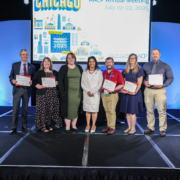
 Washington, DC – The National Consumers League (NCL) is proud to announce the winners of the 2025 Script Your Future Team Challenge, an annual competition that engages pharmacy students in raising awareness about the importance of medication adherence.  

“The creativity and community spirit these students displayed is inspiring,” said NCL CEO Sally Greenberg. “From reaching traditionally underserved populations to building interdisciplinary collaborations, this year’s Script Your Future participants tackled some of the most pressing barriers to medication adherence head-on.”    

2025 Award Winners:  

  • National Award – Presbyterian College School of Pharmacy 
    • The team focused on reproductive health, pediatric medication safety, and drug misuse prevention. They hosted live educational events, launched a student-led health blog for ongoing outreach, and partnered with community groups to expand their impact both in person and online. 
  • Media/Communications Award – Wilkes University Nesbitt School of Pharmacy 
    • Wilkes students executed a strong media campaign that included a live segment on PA Live!, coverage in the Times Leader, and creative social media outreach. Their use of engaging materials, like a medication adherence bingo board, helped boost interaction and visibility. 
  • Under-Represented Community Outreach Award – Temple University School of Pharmacy 
    •  Temple students conducted outreach across North Philadelphia, partnering with grocery stores, churches, libraries, and senior centers to reach underserved populations with information on safe medication use, drug disposal, and vaccine confidence. 
  • Inter-Professional Award – University of New Mexico College of Pharmacy 
    •  UNM integrated their Challenge campaign into the leadership of the ASHP student chapter and collaborated with students in nursing and medicine. Their events included Legislative Day at the State Capitol and a clinic at a men’s homeless shelter. 
  • Inter-Professional Award – Lake Erie College of Osteopathic Medicine School of Pharmacy 
    • LECOM students ran 33 events and partnered with nearly 20 organizations. Their campaign, themed “Be SAFE, Be Well,” included collaborations with public health departments, professional associations, and campus-based health advocacy groups. 

This year’s Challenge saw participation from 14 colleges and schools of pharmacy across eight states, reaching approximately 30,000 individuals through in-person events and dynamic media and social media outreach. Teams also partnered with on-campus organizations and even participated in advocacy efforts before their state legislatures.  

The Script Your Future Team Challenge is coordinated by NCL and supported by partners and sponsors including Bayer, Eli Lilly, Kenvue, Pfizer, USP, ASOP Global, ASHP, the Biosimilars Council, the Biosimilars Forum, NABP, and NCPA.  

###  

About the National Consumers League (NCL)       

The National Consumers League, founded in 1899, is America’s pioneer consumer organization. Our mission is to protect and promote social and economic justice for consumers and workers in the United States and abroad. For more information, visit www.nclnet.org.  

Medicaid cuts deepen coordinated assault on women’s healthcare  

Media Contact: Lisa McDonald, Vice President of Communications, 202-207-2829  

Washington, DC – The National Consumers League (NCL) is speaking out against the sweeping Medicaid cuts included in Trump’s reconciliation package, warning that they come amid a dangerous, coordinated assault on women’s access to essential healthcare services. The new law imposes deep, structural reductions to Medicaid funding and blocks people who use Medicaid from getting care at Planned Parenthood, threatening the health and well-being of millions of low-income Americans, especially women who rely on the program for critical reproductive and preventive care.  This follows a recent Supreme Court decision giving states the green light to block Planned Parenthood from receiving Medicaid funds for essential healthcare services. 

“These cuts to Medicaid and attacks on women’s health are unconscionable,” said NCL Senior Director of Health Policy Lisa Bercu. “They aren’t just numbers in a budget; they translate to fewer prenatal visits, canceled pap smears, and lost access to birth control. These attacks are not about abortion, as federal funds cannot be used for abortion services. Women who depend on Medicaid are being targeted from every angle, and it’s putting their health and lives at risk.  

When the dust settles from these preposterous cuts, the reality is that 16 million people will be left uninsured—11.8 million due to the bill itself and another 4.2 million because of the failure to renew Affordable Care Act subsidies. The bottom line is that the right to affordable, accessible healthcare should not depend on your income, gender, or zip code.  

###  

About the National Consumers League (NCL)       

The National Consumers League, founded in 1899, is America’s pioneer consumer organization. Our mission is to protect and promote social and economic justice for consumers and workers in the United States and abroad. For more information, visit www.nclnet.org

Lisa Bercu joins NCL as Senior Director of Health Policy

Media Contact: Lisa McDonald, Vice President of Communications, 202-207-2829 

Washington, DC – The National Consumers League (NCL), America’s pioneering consumer advocacy organization, is pleased to announce Lisa Bercu as the new Senior Director of Health Policy. Ms. Bercu brings more than a decade of experience in health policy, regulatory affairs, and legislative advocacy to her new role. 

Before joining the League, Lisa spent eight years at the U.S. Food and Drug Administration (FDA), where she served as Senior Regulatory Counsel in the Office of Generic Drugs and later as Senior Advisor to the Deputy Commissioner for Policy, Legislation, and International Affairs. Her extensive work at the FDA helped shape key policies related to drug access and patient safety.  

Prior to her federal service, Lisa held positions in congressional and regulatory affairs at both a medical society and a reproductive health organization, where she advanced initiatives focused on patient care and public health. 

Lisa earned her J.D. from Georgetown University Law Center and her B.A. from the University of Michigan. 

### 

About the National Consumers League (NCL)      

The National Consumers League, founded in 1899, is America’s pioneer consumer organization. Our mission is to protect and promote social and economic justice for consumers and workers in the United States and abroad. For more information, visit www.nclnet.org.   

Want Lower Drug Prices? Transparency is The Answer. 

By Sally Greenberg, NCL CEO 

Pharmacy benefit managers (PBMs) have become the uniquely American actors of behind-the-scenes drama in the healthcare system. They are the classic middleman in that they wield enormous power and get between patients and their prescribed medications. They control how much we pay for the medications and decide whether we can get access to the treatments our doctors prescribe.   

Through vertical integration, PBMs have become so intertwined with other players in the healthcare system, including health insurers, chain and mail order pharmacies, group purchasing organizations, and provider groups, it has been difficult for regulators and lawmakers to untangle their oversized – and frankly, anti-consumer – role in the healthcare infrastructure. 

This has been verified by outside researchers and investigations time and time again – a bipartisan Senate Finance report noted that PBMs – not drug makers – were driving up the cost of insulin with their demands for higher and higher rebates on an old and very effective drug for diabetes.  

And recently, the Federal Trade Commission (FTC) reported that the top three PBMs reaped $7.3 billion in profits from marking up drug prices—a clear indication that these middlemen are not negotiating lower prices for consumers but profiting handsomely at their expense. 

As Congress enters the final stretch of negotiating the budget reconciliation bill, we urge our elected officials to include meaningful and broadly supported reforms to pharmacy benefit managers (PBMs).

While PBM reform provisions were included in the House version of the bill, we are disappointed that the Senate version lacks these critical measures. We strongly urge our Senators to incorporate these reforms, which have bipartisan backing in Congress, the support of the White House, and widespread approval from the American public.

The National Consumers League has expressed concern about health policy decisions made in the early months of the Trump administration, including dismantling critical public health programs and undermining public confidence in vaccines. There’s an additional issue, and that is the president’s executive order on prescription drug prices

But in calling for prescription drug prices in the U.S. to be tied to the lowest price charged in other countries, Trump said intriguingly, “We’re going to cut out the middleman and facilitate the direct sale of drugs at the most favored national price directly to the American citizen.” Tying prices to those of other nations is an entirely separate issue that requires additional scrutiny, but questioning the role of the PBMs as middlemen in driving up prices with little value added for consumers is long overdue. 

It’s also not unprecedented in today’s marketplace. Three years ago, entrepreneur Mark Cuban started Cost Plus Drugs, bypassing the PBM middlemen and negotiating directly with manufacturers for low list prices. It has been a model of transparency, in which consumers know they are paying the list price plus a 15% markup and a $5 pharmacy fee. By and large, consumers are getting their medicines much more cheaply than through the conventional process. 

And we’ve seen large drug manufacturers launch their own direct-to-consumer platforms to help Americans directly and more affordably get certain medicines and gain access to other healthcare services. 

This is the kind of “market disruption” that can be beneficial to patients. An immediate advantage is price transparency. In today’s conventional drug prescribing system, few patients can understand what the costs are and who is making money. We have a byzantine system of rebates and discounts that gives PBMs excessive revenue, hiding behind their opaque rebate and other practices, while patients pay higher out-of-pocket costs, and only the PBMs themselves understand how it works – and they like it that way.   

In an ideal world, PBMs would return to their original mission – using their buying power to negotiate lower prices for consumers and self-insured employers. The problem is that the three large PBMs that control over 80% of the drug prescribing market have no motivation to compete for lower prices or offer them to consumers. 

We support alternatives to PBMs – programs like Cost Plus Drugs that deliver pharmaceuticals to consumers directly and do so affordably and transparently. That might be the best medicine for the problem of middlemen reaping billions of dollars of value from the healthcare system without much gain to anyone but themselves. Call it a new way of looking at PBM reform, which Congress has been pushing for many years. Patients and consumers want transparency, so what is Congress waiting for? 

Public health sabotaged: RFK Jr. purges nation’s vaccine advisory committee

Media Contact: Lisa McDonald, Vice President of Communications, 202-207-2829  

Washington, DC – The National Consumers League (NCL) is alarmed by Health and Human Services (HHS) Secretary Robert F. Kennedy Jr.’s removal of all 17 members of the CDC’s Advisory Committee on Immunization Practices (ACIP)—a body composed of independent public health experts who were vetted and appointed through a transparent, rigorous process during the previous administration.  ACIP plays a critical role in evaluating the safety, effectiveness, and public health need for vaccines. Its recommendations guide immunization practices for children, seniors, and the general public—including routine vaccines such as the annual flu shot. 

“Expertise is not a conflict of interest—it’s a safeguard,” said NCL CEO Sally Greenberg. “ACIP members are among the most respected scientists and physicians in the country. To remove them wholesale is reckless, and to do so without a clear plan for who will replace them, just weeks before a major meeting, puts the health of every American at risk.”     

ACIP plays a critical role in determining the safety, efficacy, and recommended use of vaccines—decisions that directly impact whether lifesaving immunizations are covered by public and private insurance. Removing the entire committee without naming qualified replacements risks delaying these essential decisions, weakening public trust, and politicizing what must remain an evidence-based process.    

The upcoming ACIP meeting scheduled for June 25–27 looms large, and it is unclear how newly appointed members, with no transition period or institutional knowledge, will be able to contribute to this complex and urgent work responsibly. The lack of continuity undermines the stability of our public health infrastructure and injects uncertainty into vaccine access and coverage.   

We call on Secretary Kennedy to ensure that new appointees are selected transparently, based on qualifications, not ideology, and to protect the scientific integrity of one of the nation’s most trusted advisory bodies.   

###  

About the National Consumers League (NCL)       

The National Consumers League, founded in 1899, is America’s pioneer consumer organization. Our mission is to protect and promote social and economic justice for consumers and workers in the United States and abroad. For more information, visit www.nclnet.org.     

MAHA report troubling and misleading for Americans says National Consumers League 

Media Contact: Lisa McDonald, Vice President of Communications, 202-207-2829  

Washington, DC —The National Consumers League (NCL) is concerned by the release of Robert F. Kennedy Jr.’s “Make America Healthy Again” (MAHA) report, a 69-page report masquerading as a public health strategy.    

“This report is a diagnosis without a treatment plan. It’s a muddled mix of cherry-picked, outdated, and misleading data designed to stoke fear, not solve problems,” said Sally Greenberg, NCL CEO. “It reads less like a roadmap for public health and more like a conspiracy manifesto in a lab coat.”     

On issues NCL has long championed – vaccines, food safety, and nutrition labeling – the MAHA report is troubling. It casts baseless doubt on vaccine safety, questions food regulations grounded in science, and floats vague, unworkable notions that would unravel decades of hard-won consumer protections.   

The report’s food safety claims are flawed, painting a grim picture of pesticide use in American agriculture—claims that have already sparked a backlash from farmers. A review by NOTUS found that several cited studies either don’t exist or were misrepresented, including one falsely attributed to a researcher. “You can’t call this ‘gold-standard science’ while relying on phantom studies,” said Greenberg. “This isn’t transparency—it’s recklessness.” Despite these red flags, the White House is pushing ahead, requesting $500 million to advance the report’s next phase.   

Americans deserve evidence-based policy, not scare tactics. We call on policymakers, scientists, and the public to recommit to a health system that is modern, science-driven, and focused on consumer safety. If this report is a roadmap, NCL is fearful of what the next phase could mean for Americans. Here at NCL, we agree that it is imperative to bolster public health and encourage cleaner food production and supply, but this report falls short.   

### 

About the National Consumers League (NCL)      

The National Consumers League, founded in 1899, is America’s pioneer consumer organization. Our mission is to protect and promote social and economic justice for consumers and workers in the United States and abroad. For more information, visit www.nclnet.org.   

National Survey Shows a Vast Majority of Americans Want Comprehensive Reform of the 340B Drug Pricing Program

Media Contact: Lisa McDonald, Vice President of Communications, 202-207-2829  

National Poll Demonstrates Strong Support for Policies That Ensure Qualifying Patients Benefit Directly From 340B Drug Discounts, Hold 340B Hospitals & Covered Entities Accountable

Washington, DC Today, the National Consumers League (NCL) released results from a new Morning Consult national poll of more than 20,000 American adults, revealing overwhelming concern about the burden of medical debt and strong public demand for comprehensive reforms of the 340B Drug Pricing Program. Nearly four in five surveyed adults (78%) support establishing requirements to ensure that qualifying patients directly benefit from 340B drug discounts through reduced out-of-pocket prescription drug costs. More than three in four surveyed adults (77%) believe hospitals should be required to pass 340B savings directly onto patients.

The national poll also found that:

  • 54% of surveyed adults currently have or previously had medical debt, with those in rural areas and the South disproportionately affected. Among adults who have experienced medical debt, more than half (54%) reported skipping additional needed medical care due to cost.
  • Three in four surveyed adults (76%) expressed concern that hospitals benefiting from 340B drug discounts often pursue aggressive debt collection practices against patients.
  • A majority of polled adults strongly supported proposed reforms of the 340B program, including policies to ensure qualifying patients benefit directly from 340B through reduced out-of-pocket costs, allow audits on how hospitals and pharmacies are using the 340B program, and add a requirement that 340B hospitals share a portion of the savings they generate with qualifying 340B patients.

“The 340B program is supposed to help vulnerable patients access and afford life-saving medicines and care, but the evidence shows some hospitals, the pharmacies they contract with, and middlemen are abusing 340B for profit at the expense of low-income and uninsured patients,” said National Consumers League (NCL) CEO Sally Greenberg, JD. “Americans have said loud and clear: They want a 340B program that puts patients first, not profits. Congress must act now to institute comprehensive reforms that restore integrity and accountability to 340B before more patients are left behind.”

The 340B Drug Pricing Program allows hospitals and other covered healthcare entities to access medications at discounted prices from manufacturers with the intent that they pass savings onto patients. However, over time, some hospitals, the pharmacies they contract with, and pharmacy benefit managers (PBMs) have manipulated the program into a major profit-generating enterprise. In many cases, 340B hospitals charge patients full price for discounted drugs, keep the difference as profit, provide minimal levels of charity care, and pursue aggressive debt collection practices against the very patients the program was meant to protect.

This April, Senator Bill Cassidy, M.D. (R-LA), the Chair of the Senate Health, Education, Labor, and Pensions (HELP) Committee, released a report detailing finds from a multi-year investigation of how covered entities abuse the 340B program. In the report, Sen. Cassidy outlined reforms meant to bring greater transparency to the 340B program, including requiring annual reporting on how 340B revenue is used to ensure direct savings for patients and providing clear guidelines to ensure that drug discounts actually benefit 340B-eligible patients.

By the Numbers: 340B Program Abuses Harm American Patients

  • Massive Price Markups. Medicine price markups are 6.6 times higher at 340B hospitals than at independent clinics, and research shows participation in 340B does not improve health outcomes for uninsured and low-income patients.
  • Declining Charity Care. 340B has grown exponentially to become the second largest federal prescription drug program after Medicare Part D. However, only $1 is invested in charity care for every $10 in profit collected by profitable 340B hospitals.
  • Lack of Transparency. Discounted purchases under 340B totaled a massive $66.3 billion in 2023. However, hospitals are not required to disclose their 340B profits or even whether their revenue is used to lower patient costs.

To learn more about the 340B Drug Pricing Program and the need for federal reforms of the program, visit: https://nclnet.org/340b-program/.

###  

About the National Consumers League (NCL)       

The National Consumers League, founded in 1899, is America’s pioneer consumer organization. Our mission is to protect and promote social and economic justice for consumers and workers in the United States and abroad. For more information, visit www.nclnet.org.   

NCL applauds Senator Cassidy’s effort to shine light on 340B program oversight and accountability

Media Contact: Lisa McDonald, Vice President of Communications, 202-207-2829  

Washington, DC – The National Consumers League (NCL) applauds Senator Bill Cassidy, M.D. (R-LA), Ranking Member of the Senate Health, Education, Labor and Pensions (HELP) Committee, for releasing a new report exposing significant accountability gaps in the federal 340B drug discount program.    

“The 340B program was designed to help vulnerable patients afford life-saving medications—not to boost the bottom lines of large health systems or third-party contractors,” said Sally Greenberg, CEO of the National Consumers League. “Senator Cassidy’s report rightly calls for greater accountability, transparency, and reform. We urge Congress to act quickly so this critical program delivers on its promise to help the patients who need it most.”  

The report raises serious concerns about how hospitals, clinics, and pharmacies use 340B revenue—often with little transparency or direct benefit to low-income and uninsured patients. Key findings include:  

  • Large hospital systems report hundreds of millions in 340B revenue used for vague purposes like “capital improvements,” with no clear patient benefit.  
  • Federally Qualified Health Centers show inconsistent practices in delivering discounts to patients, despite a significant 340B income.  
  • Pharmacy chains like CVS and Walgreens impose rising fees on providers, making it harder to serve vulnerable patients.  
  • Drug manufacturers report misuse of discounts, including diversion to ineligible patients and duplicate discounts.  

Senator Cassidy proposes reforms to increase oversight, require annual reporting on 340B revenue use, and ensure patients—not intermediaries—benefit from the program.  

###  

About the National Consumers League (NCL)       

The National Consumers League, founded in 1899, is America’s pioneer consumer organization. Our mission is to protect and promote social and economic justice for consumers and workers in the United States and abroad. For more information, visit www.nclnet.org.   

Trump budget proposal would dismantle core health programs          

Media Contact: Lisa McDonald, Vice President of Communications, 202-207-2829       

Washington, DC – The National Consumers League (NCL) is raising serious concerns about the Trump administration’s proposal to cut the Department of Health and Human Services (HHS) budget by more than 30%. This drastic move would gut essential public health protections, weaken food safety, and threaten scientific progress.    

“This budget is not a strategic approach to the reorganization of HHS; it is a slash-and-burn mentality for programs that everyday Americans rely on,” said NCL CEO Sally Greenberg. “Gutting vital agencies and drastically reducing funding for health care, research, and food safety will put millions of lives in danger—especially the most vulnerable. Especially following a mass layoff, these cuts appear extremely alarming and leave the functionality of programs like HRSA, CDC, FDA, and NIH up in the air.”         

Key proposed cuts include:   

  • Health Resources and Services Administration (HRSA): Proposed cuts would eliminate this agency, which supports Medicare, Medicaid, and vital rural and community health programs, leaving millions without essential healthcare.   
  • National Institutes of Health (NIH): A 40% budget reduction, from $47 billion to $27 billion, threatens crucial research on diseases like cancer and Alzheimer’s, while new funding caps could hinder innovation at universities and research centers.   
  • Centers for Disease Control and Prevention (CDC): Budget cuts would slash the CDC’s funding from $9.2 billion to $5.2 billion, eliminating domestic HIV prevention, chronic disease programs, and research on obesity and heart disease.   
  • Food and Drug Administration (FDA): Shifting food safety oversight to state agencies without adequate resources could increase foodborne illness risks and erode public trust in food safety.   
  • Centers for Medicare and Medicaid Services (CMS): The proposed budget would not only shift the remaining Administration of Community Living programs under CMS but would also move the Office of Pharmacy Affairs from HRSA, allowing CMS to regulate the 340B drug pricing program. 

The budget proposal comes in the wake of ongoing changes at HHS, including the recent dismissal of 10,000 employees. It comes as part of a larger effort to redefine the federal government’s role in healthcare and social services.      

###      

About the National Consumers League (NCL)        

The National Consumers League, founded in 1899, is America’s pioneer consumer organization. Our mission is to protect and promote social and economic justice for consumers and workers in the United States and abroad. For more information, visit www.nclnet.org

NCL urges ACIP to expand RSV vaccine recommendations at April 2025 meeting

Media Contact: Lisa McDonald, Vice President of Communications, 202-207-2829

Washington, DC — This week, the National Consumers League this week strongly recommended expanding respiratory syncytial virus (RSV) vaccines for high-risk adults 50-59 years old to protect against a condition that can become severe for infants and older adults. NCL was selected to make remarks before the critically important Advisory Committee on Immunization Practices ( ACIP)  Additionally, NCL encouraged the Committee to continue its work in support of increasing vaccine confidence and transparency for the public.  On April 11, 2025, the National Consumers League submitted comments in response to a request for comments at the April 15 and 16 in Atlanta, Georgia.

ACIP also discussed the COVID-19, flu, RSV, and meningococcal vaccines. At the meeting, additional discussion and updates were provided on the ongoing and growing measles outbreaks and cases across the nation. The Committee voted on recommendations for three vaccines, including RSV.

Samantha Sears, NCL’s Health Policy Associate, told the ACIP committee to expand access to RSV and other vaccines and advised that a middle ground, called shared clinical decision-making, has proven too often to result in patients not choosing to get vaccinated, which runs counter to NCL’s support for broader vaccine adoption given the vast data to support the overwhelming safety and efficacy of vaccines in preventing infection disease.

Originally, ACIP was scheduled to meet in February, but the meeting was indefinitely postponed after the confirmation of the Secretary of the US Department of Health and Human Services, Robert F. Kennedy, Jr. NCL is pleased that the Secretary rescheduled this meeting and hopes that the remaining two meetings of ACIP in 2025 will continue as scheduled.

The Advisory Committee on Immunization Practices (ACIP), comprising fifteen medical and public health experts, is charged with advising the CDC Director on the use of vaccines and the immunization schedules for adults and children. ACIP meets regularly to review data, studies, and proposals for vaccines and, as needed, for emergency cases. Meetings are open to the public and, since COVID, streamed online. The recordings of the livestream of the April 15 and April 16 meetings are available online.

### 

About the National Consumers League (NCL)   

 The National Consumers League, founded in 1899, is America’s pioneer consumer organization. Our mission is to protect and promote social and economic justice for consumers and workers in the United States and abroad. For more information, visit www.nclnet.org