
Are we heading into Jim Crow 2.0?
By NCL CEO, Sally Greenberg
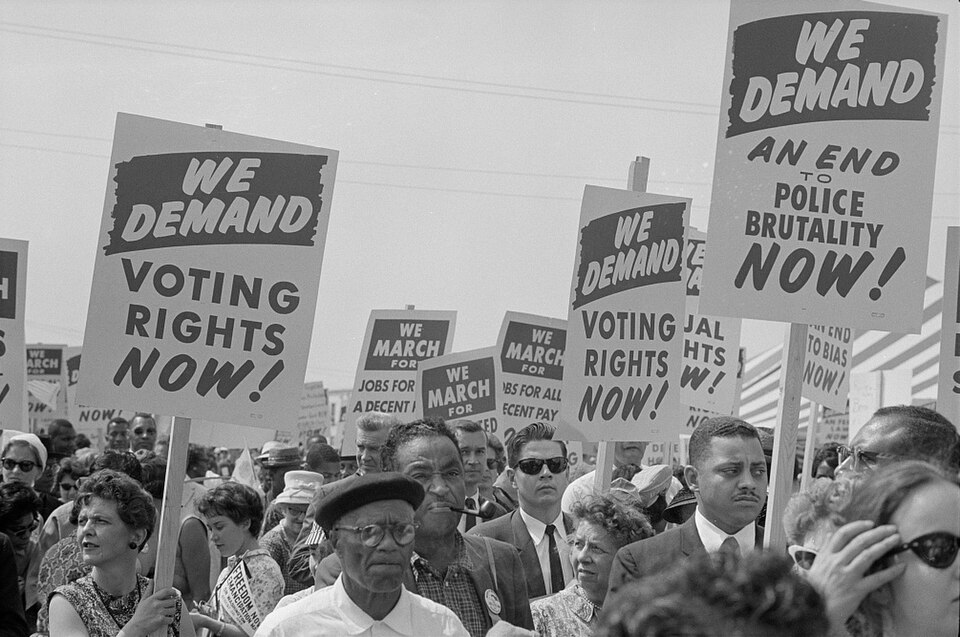 How is it possible that decades of civil rights advances can be wiped out in a single year? Well, it may be happening as we speak. Because polling numbers show the White House and Republicans in danger of losing their narrow 5-seat majority in the US House of Representatives, there’s been pressure on Republican-controlled state legislatures to redistrict out Democratic seats in hopes of keeping their majority.
Many of these seats are held by African Americans: we currently have 6 African American Senators and 63 members of the House of Representatives. But that could change dramatically this year.
There’s a potential for 14 additional Republican seats from new districts in Texas, Florida, Missouri, North Carolina, Ohio, and Tennessee. This means that as many as 15 to 20 Black lawmakers’ seats are at risk, with the threat even greater after a recent Supreme Court ruling that severely weakened the Voting Rights Act.
After the Civil War, during the period known as Reconstruction, some 2,000 Black people held public office, from the local level to the U.S. Senate.
Jim Crow changed all that. As described on PBS, the Jim Crow era was, “a formal, codified system of racial apartheid that dominated the American South for three-quarters of a century beginning in the 1890s. The laws affected almost every aspect of daily life, mandating segregation of schools, parks, libraries, drinking fountains, restrooms, buses, trains, and restaurants. “Whites Only” and “Colored” signs were constant reminders of the enforced racial order.”
Following the ratification in 1870 of the 15th Amendment, which barred states from depriving citizens of the right to vote based on race, many states in the south launched measures to keep African-Americans from voting, such as literacy tests, primaries with all-white candidates, poll taxes, felony disenfranchisement laws, fraud, grandfather clauses, and other types of intimidation.
It looks like the practice of suppressing Black representation is on track to be repeated. The wave of redrawn districts could bring the largest single-session drop in Black representation since 1877.
Why is this a concern for the National Consumers League? Because as our founders understood, racial discrimination is deeply tied to the violation of labor and consumer rights, and our mission is to promote both. Florence Kelley, NCL’s towering first General Secretary, was a signatory to the original charter of the NAACP in 1909, and her colleagues – Jane Addams, Clara Beyer, and many others – deplored Jim Crow discrimination.
In 1926, Kelley wrote to a colleague, “I write to call your attention to the shameful treatment by hotels of colored members of the Conference at Cleveland. The Statler Hotel was especially brutal. …I think there should be a written pledge from every hotel that there will be no race discrimination. Certainly, I should not dream of staying in any hotel which refused my fellow members either bed or board.” She also noted that her colleagues at the NAACP reported that Statler hotels wouldn’t allow Black people as guests or employees.
States also passed black codes limiting the jobs African Americans could hold, and their ability to leave a job once hired, and they restricted the kind of property Black people could own. African Americans faced social, commercial, and legal discrimination. Theatres, hotels, and restaurants segregated them in inferior accommodations or refused to admit them at all. Shops served them last. The Black Codes and Jim Crow Laws
Keeping Black Americans from representation in Congress was critical to Jim Crow. That changed with the historic voting rights laws and the court cases that upheld the law.
But here we are again – a Congress that is supportive of redistricting out Black representation and a Supreme Court that acts as an “amen chorus” for these discriminatory policies.
The potential loss of many Black members of Congress means silencing the voice of millions of African American constituents. We should not return to the bad old days of Jim Crow, but without fair representation, we lose the voices of so many who have stood for labor and consumer rights of their African American constituents in Congress.
So is this Jim Crow 2.0? That’s what many – including me – fear. Historic turnout could change that. This year’s elections will hopefully prove me wrong.