Broad Coalition Opposes Politicization of DC Attorney General 

Legislation Would Endanger Consumers, Nonprofits, and Civil Society Nationwide 

Media Contact: Lisa McDonald, Vice President of Communications, 202-207-2829 

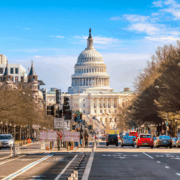
Washington, DC – The National Consumers League (NCL), joined by 29 nonprofit, consumer, civil rights, faith-based, and civic organizations, urged congressional leaders to reject H.R. 5179, the District of Columbia Attorney General Appointment Reform Act, today. The organizations warn that the bill would dangerously undermine the independence of the District’s chief law enforcement office and expose nonprofits and consumers to politicized enforcement. 

In a letter sent to Congressional leaders, the coalition stressed that replacing DC’s independently elected Attorney General with a presidential appointee would concentrate sweeping legal and regulatory power in the Executive Branch. 

“The DC Attorney General plays a critical role in protecting consumers, overseeing nonprofits, and enforcing civil and charitable laws,” said NCL CEO Sally Greenberg. “Stripping that office of its independence would create a clear pathway for political retaliation and selective enforcement—regardless of which party controls the White House.” 

The DC Office of the Attorney General (DCOAG) has broad authority over consumer protection, civil enforcement, and the oversight of nonprofits and charitable assets. Because many national 501(c)(3) and 501(c)(4) organizations are headquartered in the District, the impact of H.R. 5179 would be felt far beyond Washington, DC. 

The coalition warned that a President-appointed Attorney General could be used to launch ideologically motivated investigations, retaliatory audits, or harassing enforcement actions against organizations whose views diverge from an administration’s agenda. Such powers could chill free speech, suppress lawful advocacy, and deter donors—weakening civil society as a whole. 

“These are not abstract or hypothetical risks,” the organizations wrote. “They are the predictable consequences of placing an unaccountable enforcement authority under direct political control.” 

NCL and its partners also cautioned that politicizing the DCOAG could undermine consumer protection by shielding political allies from scrutiny while targeting perceived opponents. 

“The current system ensures accountability to DC residents, not loyalty to a single national political figure,” said Greenberg. “Congress should reject H.R. 5179 and preserve the independence that allows the DC Attorney General to protect consumers, nonprofits, and fundamental democratic freedoms.”  

To read the full letter, click here. 

### 

About the National Consumers League (NCL)      

The National Consumers League, founded in 1899, is America’s pioneer consumer organization. Our mission is to protect and promote social and economic justice for consumers and workers in the United States and abroad. For more information, visit www.nclnet.org.   
Trump’s Attempt to Nullify State AI Regulations Is a Disaster for Consumers

Media Contact: Lisa McDonald, Vice President of Communications, 202-207-2829 

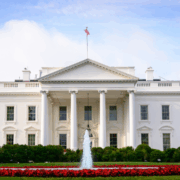
Washington, DC – Yesterday, in an Executive Order, President Trump directed his administration to block state-enacted safeguards around artificial intelligence, including the restriction of federal funding to states the White House targets and the creation of a “Litigation Task Force” to challenge states’ consumer protections. NCL wholly opposes these efforts as unregulated AI products create significant risks to the public, from serious issues regarding safety and mental health, to unauthorized uses of consumer data and creative works.    

“States have been leading consumer protection efforts on AI since the federal government has been asleep at the wheel,” said NCL Vice President of Public Policy, Telecommunications, and Fraud John Breyault. “This executive order shows that the administration’s failure to protect the public isn’t an accident—it’s an intentional policy decision. To make matters worse, they are now seeking to punish state leaders that did the right thing and stepped up for their constituents.”  

Congress has repeatedly rejected the White House’s attempt to override state laws governing AI, including a 99-1 vote in the Senate that kept state protections in place. A coalition of 36 bipartisan state attorneys general opposed a federal ban on state AI protections just two weeks ago. 

### 

About the National Consumers League (NCL)      

The National Consumers League, founded in 1899, is America’s pioneer consumer organization. Our mission is to protect and promote social and economic justice for consumers and workers in the United States and abroad. For more information, visit www.nclnet.org.   

The Biloxi Lawsuit Isn’t Just Another “Hotels vs. Short-Term Rentals” Fight

By John Breyault, NCL Vice President, Public Policy, Telecom & Fraud

When cities crack down on short-term rentals, the headlines often scream “Airbnb vs. Hotels!” — but the story is bigger than a platform feud. Behind the zoning rules and permit limits lies a high-stakes battle over who gets to control the lodging market, and whether “consumer protection” is just a cover for keeping competition out. A recent lawsuit in the Deep South may seem local, but it highlights a national trend with real consequences for travelers, homeowners, and communities alike.

At first glance, Airbnb’s recent lawsuit against the city of Biloxi, Mississippi, looks like the latest episode in the long-running hotels vs. short-term rentals war. Cities pass restrictive ordinances. Platforms sue. Hotels cheer from the sidelines. Rinse, repeat.

But this case is bigger than a zoning dispute. It raises a fundamental question about the future of competition in the travel lodging market — and whether “consumer protection” is being used as a shield for market protectionism.

Airbnb and a Biloxi property owner allege that the city, heavily influenced by the local hotel-industry trade association, implemented restrictions designed not to protect neighborhoods but to kneecap competitors. Biloxi banned short-term rentals in many residential areas and later capped permits citywide at just 75 properties — a ceiling so low that it effectively freezes out meaningful competition.

Biloxi isn’t an anomaly. In recent years, hotels have deployed lobbyists in cities like New York and Chicago to limit short-term rental competition, often under the guise of protecting housing stock or neighborhoods.

Other short-term rental platforms, such as Vrbo (formerly HomeAway), Booking.com’s home-rental business, and regional home-sharing services are also part of this broader lodging-market dynamic. These platforms have introduced competition into a hotel industry that, over the past 10–15 years, has undergone deep consolidation. Today, just a handful of mega-brands dominate global hotel markets through ownership, franchising, or branding deals. When so few companies hold so much power, local regulations can become levers to shut out newcomers.

Short-Term Rentals Serve Consumers — and Communities

Short-term rentals (STRs) are more than an “Airbnb vs. hotels” story. For many travelers — families on a budget, groups of friends, or extended-stay guests — STRs offer flexibility, affordability, and value that hotels often struggle to match. They help keep lodging markets competitive, preventing hotels from hiking prices unchecked.

STRs also benefit local homeowners seeking extra income — especially in popular vacation spots or near college campuses when demand surges. In small towns around major sporting events or seasonal tourism, STRs can provide lodging when hotel rooms are booked out or priced through the roof.

Communities also deserve a voice. Some neighborhoods worry about noise, safety, or over-tourism; others worry about long-term housing loss. Smart regulations can balance these concerns without eliminating STRs entirely or favoring incumbents.

Short-Term Rentals Are Not a Panacea

STRs need thoughtful regulations. Anyone who has lived next to an unregulated party house — with rolling suitcases at 2 a.m., overflowing trash, or revolving-door renters — knows the concerns are real. STRs have caused nuisances, safety issues, and reduced long-term housing in some cities.

There are also consumer-facing horror stories: misleading listings, last-minute cancellations, “bait-and-switch” properties, and amateur hosts who fail to maintain basic safety standards. Platforms like Airbnb and Vrbo have economies of scale, but enforcement remains uneven, and small hosts often lack resources to follow best practices. STRs are far from perfect.

Transparent Pricing and Real Competition

Hotel pricing has long been opaque. Hidden costs — resort fees, amenity charges, “service” or “destination” fees — often don’t appear until checkout, making it hard for consumers to compare options. That kind of “drip pricing” distorts markets and misleads travelers.

The Federal Trade Commission’s Junk Fees Rule addresses this. As of May 2025, all lodging providers — hotels and short-term rental platforms alike — must disclose total prices up front. Transparency allows travelers to compare real costs and enables STRs to compete fairly rather than letting hotels exploit confusion.

This aligns with broader consumer-protection efforts, including state-level actions and advocacy by organizations such as the National Consumers League, which have challenged opaque hotel fee practices.

Toward Smart Regulations That Encourage Competition

We need regulations — but the right kind. The Biloxi lawsuit, along with the broader pattern in New York and Chicago, shows the risk of blanket bans or restrictive caps that eliminate lodging options in favor of legacy operators. Local governments should pursue rules that:

  • Ensure STRs meet safety, health, and nuisance standards;
  • Provide transparent permitting and accountability;
  • Maintain a sustainable number of rentals so STRs remain viable;
  • Incorporate community input — without letting incumbents rig the system.

Federal rules, such as the Junk Fees Rule, are also critical. By standardizing pricing disclosure, they help travelers compare hotels and STRs on a level playing field and discourage deceptive resort fees.

We should welcome — not fear — competition. Multiple lodging options — hotels, inns, and STRs — keep prices down, service quality up, and innovation alive. Overly restrictive regulations, especially those influenced by hotel-industry lobbyists, undermine this dynamic.

If we care about affordability, fairness, and consumer choice, lodging policy must focus on transparency, sensible safety rules, and real community input — not protectionism dressed up as “consumer protection.”

Public Health Undermined: NCL Slams ACIP’s Dangerous Vaccine Reversal

Media Contact: Lisa McDonald, Vice President of Communications, 202-207-2829  

Washington, DC – The National Consumers League (NCL) is deeply concerned by today’s vote from the CDC’s Advisory Committee on Immunization Practices (ACIP) to eliminate the long-standing recommendation that all newborns receive a hepatitis B vaccine at birth.   

We all want to protecour children.  But this reversal disregards decades of scientific evidence, proven public health outcomes, and the consensus of the nation’s leading medical experts,” said NCL’s Senior Director of Health Policy Lisa Bercu. “Rolling back this recommendation puts infants at unnecessary and avoidable risk. As several ACIP members warned, the consequences of today’s decision will be measured in preventable childhood infections and puts them at long term risk of liver cancer.”  

NCL is particularly troubled that the vote appears to be influenced by fringe skepticism rather than by evidence-based medicine. Secretary of Health and Human Services, Robert F. Kennedy Jr. has long promoted scientifically discredited anti-vaccine claims and has financially benefited from organizations that amplify this misinformation, raising serious concerns about his credibility and motives on public health issues. The bottom line is consumers deserve guidance grounded in science—not ideology.  

“This move also risks sowing confusion among parents and undermining confidence in a vaccine that has been proven safe, effective, and vital for more than three decades,” Bercu continued. “At a time when the nation is already combating outbreaks of preventable diseases, weakening a cornerstone of childhood immunization sends exactly the wrong message.” 

NCL urges the acting CDC Director to carefully weigh this decision, reaffirm the agency’s principles of relying on scientific evidence, and maintain the universal recommendation that has protected generations of children.  

###  

About the National Consumers League (NCL)       

The National Consumers League, founded in 1899, is America’s pioneer consumer organization. Our mission is to protect and promote social and economic justice for consumers and workers in the United States and abroad. For more information, visit www.nclnet.org.   

Major Child Labor Victory in Ohio, Governor DeWine Vetoes Senate Bill 50

Media Contact: Lisa McDonald, Vice President of Communications, 202-207-2829   

Washington, DC – Today, the National Consumers League’s Child Labor Coalition is very pleased to announce a significant victory in our fight to strengthen child labor laws in Ohio. Governor Mike DeWine has vetoed SB 50, legislation that would have weakened Ohio’s child labor protections by allowing 14- and 15-year-olds to work until 9 p.m. on school nights.   

“The Child Labor Coalition, in partnership with Policy Matters Ohio and the Economic Policy Institute, strongly urged this veto, and we commend additional allies—including the Ohio AFL-CIO and many other organizations—who stood up to protect the well-being and educational success of Ohio’s youth,” said CLC Director, Reid Maki. “We are grateful to the Governor for bravely bucking the legislature and putting the interests of teens before profits and will continue to advocate for our nation’s children.”   

Last month, NCL lead numerous advocacy organizations in writing a letter to Ohio Governor Mike DeWine urging him to veto Senate Bill 50, the legislation would have allowed 14- and 15-year-olds in Ohio to work on school nights until 9 p.m., extending the current cutoff from 7 p.m. It is an additional danger to our nation’s most vulnerable to be out late while partaking in jobs that put their safety at risk.  

“Learning to work is an essential part of growing up.  Businesses across Ohio each day give young people the opportunity to learn the so-called soft skills that will serve them well when they become adults.  In analyzing this bill, it is important to define what it would do and what it would not do,” said Governor DeWine. “I believe it unwise to provide 14- and 15-year-olds to work, on a school night, that late at night.  I see no compelling reason to deviate from current law.”  

  ###  

About the National Consumers League (NCL)       

The National Consumers League, founded in 1899, is America’s pioneer consumer organization. Our mission is to protect and promote social and economic justice for consumers and workers in the United States and abroad. For more information, visit www.nclnet.org.   

NCL Decries Trump Administration’s Proposed Rule to Weaken Fuel Economy Standards

Media Contact: Lisa McDonald, Vice President of Communications, 202-207-2829 

Washington, DC – The Trump administration today released a proposed rule to weaken fuel economy standards for light-duty vehicles.  The National Highway Traffic Safety Administration (NHTSA) estimates that the proposed standards would achieve a fleet average fuel economy of 34.5 miles per gallon by model year 2031, a dramatic decrease from the 50.4 miles per gallon that the Biden era standards were projected to achieve. 

“The Trump administration’s proposed rule ignores a simple truth: costs are low when fuel economy standards are high,” said Daniel Greene, Senior Director of Consumer Protection & Product Safety.  “Slamming the brakes on robust fuel economy standards will inflict more pain at the pump, hamper American competitiveness, exacerbate the climate crisis, and harm public health.  The National Consumers League urges the administration to reverse course and help address the affordability crisis through meaningful increases in fuel economy standards.” 

### 

About the National Consumers League (NCL)      

The National Consumers League, founded in 1899, is America’s pioneer consumer organization. Our mission is to protect and promote social and economic justice for consumers and workers in the United States and abroad. For more information, visit www.nclnet.org.