Jump to Information sharing from Health Advisory Council Members
Welcome and overview
Sally Greenberg, NCL executive director
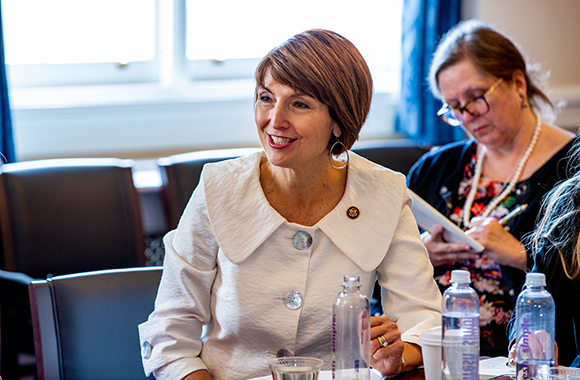
Sally Greenberg welcomed the attendees to the Second Annual Spring Membership meeting of the Health Advisory Council. Sally thanked the members of the Council for their support, engagement, and enthusiasm. She then had the pleasure of introducing distinguished speaker Dr. Kathy Hudson, deputy director for science, outreach, and policy at the National Institutes of Health.
Special guest speaker
Kathy Hudson, Ph.D., deputy director for science, outreach, and policy, National Institutes of Health
Dr. Kathy Hudson provided overviews of both the Precision Medicine and National Cancer Moonshot Initiatives and answered questions from Council members.
The Precision Medicine Initiative (PMI) Cohort Program will be the largest longitudinal study ever conducted in the United States and will unlock the door to a wealth of scientific opportunities. The PMI shifts away from the “one-size-fits-all” approach to treating disease and integrates environmental exposures and genetic factors into the development of 21st Century solutions.
The National Cancer Moonshot Initiative is a program established by President Obama to accelerate cancer research. Led by Vice President Biden, the Initiative aims to make more therapies available to more patients, while also improving our ability to prevent cancer and detect it at an early stage. Immediately following the Health Advisory Council meeting, Vice President Biden announced the National Cancer Moonshot Summit, which will take place on June 29 at Howard University. The Summit will bring together scientists, oncologists, donors, and patients and will be the first cancer conference to focus on the broad spectrum of cancers, rather than on one particular form of the disease.
National Consumers League’s health program priorities
Karin Bolte, NCL health policy director
Karin Bolte gave an overview of NCL’s health programs and policy priorities. NCL carries out its health policy work through research, education, advocacy, and convening. NCL’s key priorities are:
- Safe and appropriate use of medicines, including medication adherence, vaccines, counterfeit drugs, and 21st Century Cures/Innovation for Healthier Americans
- Helping consumers to navigate the health care system, including improving healthcare provider-patient communication, promoting health literacy, and improving healthcare transparency—on price, quality, and safety.
- Quality of care, including ensuring that consumer-friendly quality measures are developed, and that there is subsequent reporting by healthcare providers and institutions on compliance with measures and standards, and that patient-centered outcomes are emphasized.
Information sharing from Health Advisory Council Members
Following the overview of NCL’s health programs, Health Advisory Council Members had the opportunity to share updates on their programs, priorities, and initiatives. Below is a brief summary of member updates.
Kimberly Rawlings, Center for Drug Evaluation and Research, Food and Drug Administration (FDA) — Kimberly Rawlings reported that CDER’s priorities include reducing abuse of opioid painkillers, drafting pharmacy compounding guidance documents, and the reauthorization of PDUFA, GDUFA, and the Biosimilar User Fee Act (BsUFA). Kim also encouraged Council members to listen to CDER Director Dr. Janet Woodcock’s Director’s Corner quarterly podcasts on a number of topics.
Kimberly Thomas, Office of Women’s Health, Food and Drug Administration (FDA) — The Office of Women’s Health is continuing its consumer outreach and research to help women make informed health choices. This past January, in conjunction with the NIH, the FDA launched the Diverse Women in Clinical Trials Initiative to raise awareness about the importance of diverse women of different ages, races, ethnic backgrounds, and health conditions participating in clinical trials. The OWH is also working to educate women about safe medication use during pregnancy.
Alicia Subasinghe, Pharmaceutical Research and Manufacturers of America (PhRMA) — Alicia Subasinghe highlighted a number of PhRMA’s priorities, including PDUFA and GDUFA reauthorization. PhRMA is also encouraging the use of biomarkers and patient engagement as a whole and continues to be active in the conversation on value and patient-centeredness. Alicia explicitly mentioned a desire to reduce regulatory barriers that may prevent patients from getting the best care possible. Consumer education and empowerment, particularly regarding health coverage and health plans, is also a priority for PhRMA.
Dorothy Siemon, AARP — Dorothy Siemon identified cost and access, transparency, and consumer engagement as priorities of AARP. As older people tend to take more drugs, promoting comparative effectiveness and figuring out ways to help older populations better understand the healthcare system is of high importance.
Nelufar Mohajeri, U.S. Pharmacopeia (USP) — Nelufar Mohajeri discussed USP’s Verified Program for dietary supplements, as well as a recent roundtable on gummy dietary supplements. USP is also assessing the feasibility of a standard for medical marijuana, developing sterile compounding and handling of hazardous materials standards, and addressing medication labeling and nomenclature issues. USP is engaged in efforts to combat counterfeit drugs and is modernizing 1,600 monographs through public comment.
Jeffrey Ekoma, American Association of Colleges of Pharmacy (AACP) — Jeffrey discussed AACPs continued dedication to professional and graduate education and identified the reauthorization of the Higher Education Act and creating pipelines for middle and high school students who have an interest in pharmacy as AACP priorities. Interprofessional education is also a priority of AACP, as well as innovations in health.
Rob Nauman, North Carolina Alliance for Healthy Communities — Rob Nauman explained the expansion of the Script Your Future campaign from a pilot city in Raleigh-Durham to a North Carolina-statewide coalition. He also touched on the importance of leveraging the wealth of information from HAC member organizations and disseminating it to communities.
Gay Johnson/Lilly Pinto, National Association of Nurse Practitioners in Women’s Health (NPWH) — NPWH is currently working to address the lack of women’s health providers in military facilities, as well as addressing the lack of services for rape, sexual assault, and harassment victims on college campuses and in the military. Gay also announced that NPWH will be hosting a Women’s Health Summit in the fall to raise awareness about older women and their access to care.
Jillanne Schulte, American Society of Health-System Pharmacists (ASHP) — One of ASHP’s main priorities is working to have pharmacists recognized as medical providers. ASHP is also working on opioids, substance abuse and misuse, antimicrobial and antibiotic resistance, and compounding. Jillanne also announced ASHP’s summer meeting, which will be held in Baltimore, and their Midyear Clinical Meeting which will be held in December in Las Vegas.
Bri Morris, National Community Pharmacists Association (NCPA) — Bri Morris reported that there are currently 1.6 million people enrolled in Simplify My Meds, NCPA’s medication adherence program. NCPA will continue to help community pharmacists provide quality care to their patients, and work towards achieving provider status for pharmacists.
Colleen Creighton, Consumer Healthcare Products Association (CHPA) — CHPA continues to promote the safe use, storage, and disposal of drugs through the Know Your Dose and Up and Away campaigns. Both campaigns have had a significant impact on consumers, with 22 million impressions for the Up and Away campaign in this year alone. CHPA continues to utilize the messaging toolkits sent by the CDC and recently did a materials and messaging push during Poison Prevention week. The next safe storage push will be in June, which is National Safety Month.
Katie Allen, Horizon Government Affairs — Katie Allen highlighted the various coalitions that Horizon runs, including the Council for Affordable Health Coverage, Prescriptions for a Healthy America, and Clear Choices. Katie announced that Horizon launch a new campaign, Prescriptions for Value on Drug Pricing, this summer. The purpose of this coalition is to convene ALL stakeholders to participate in the discussion about drug pricing. The pharmaceutical industry is particularly encouraged to participate as an integral part of the conversation.
Lee Lynch, Lynch Advocacy Solutions, LLC — Lee Lynch discussed effective care coordination and medication adherence through the Medicare Advantage Care Coordination (MACC) Task Force. She also discussed the importance of innovations in Medicaid and bringing awareness to specific issues including preterm labor and behavioral health.
Karl Uhlendorf, Astellas — Karl Uhlendorf highlighted a few of Astellas’ priorities, including PDUFA, MACRA, the Part D Demonstration Project, 21st Century Cures, and continuing the value-based framework discussion. This April, Astellas hosted its second annual Patient Advocacy Summit, which focused on patient-centeredness, quality measures, how to incorporate the patient voice in the value discussion, and best practices for the patient advocacy community. Karl also announced the launch of Astellas’ new interactive, patient-focused website, Changing Tomorrow Together, as well as their Patient Advocacy Advisory Committee, which currently has 13 members.
Aimee Gallagher, Society for Women’s Health Research (SWHR) — Aimee Gallagher announced that the SWHR will release a report in August on the top 10 topics relevant to women living with diabetes. In October at the University of Colorado, SWHR will sponsor a conference focused on women’s health, diabetes, and cardiovascular disease. Aimee also mentioned a few of SWHR’s upcoming projects that will tackle issues such as perinatal health, oral health, and ingredient safety.
Erin Mackay, National Partnership for Women and Families (NPWF) — NPWF is currently focused on MACRA and the shift from volume-based to value-based care. Erin also discussed NPWF’s Get My Health Data campaign, which promotes patient access and supports patients in asking for and receiving their digital health data.
Mara Gandal-Powers, National Women’s Law Center (NWLC) — Mara identified reproductive rights and access to coverage of abortion and birth control as priorities of the National Women’s Law Center. Mara also called attention to coverher.org, which is a NWLC resource for women who may still be paying out-of-pocket for their preventive services.
Lindsay Clarke, Alliance for Aging Research (AAR) — Lindsay Clarke announced that the Alliance for Aging Research will be celebrating its 30th anniversary this September. The AAR will continue to work on issues that impact older populations, including safe medication selection, use, storage, and disposal, vaccine education, and stroke prevention.
Deborah Davidson, National Council on Patient Information and Education (NCPIE) — NCPIE will continue to work with SAMHSA on prescription drug abuse prevention and awareness, and with the FDA on the Talk Before You Take campaign. NCPIE also completed a consumer health project with Pfizer last year on self-care. Deborah discussed the campus dialogues NCPIE sponsored at colleges across the country. Each dialogue focused on a particular student population, such as Asian or Native American students. The reports from these dialogues will be released soon.
Michele Oshman, Eli Lilly and Company — Michele Oshman said that exploring the burden of care and determining the challenges facing everyday people across the healthcare spectrum is of particular interest to Lilly. Lilly also hosts quarterly Dialogues on Discovery events, and recently hosted one on value models.
Grace Whiting, National Alliance for Caregiving — Grace Whiting announced that the National Alliance for Caregiving will release a White Paper on cancer caregiving on June 20.
Closing remarks
Karin Bolte
Karin Bolte thanked the Health Advisory Council Members for attending and for their continued support of NCL. She asked members to send her topic and speaker recommendations for NCL’s Fall Policy Forum on Access to Healthcare.









Thought Leaders series: Interview with FTC Commissioner McSweeny
/by#DataInsecurity Digest Interview with FTC Commissioner Terrell McSweeny
Commissioner McSweeny: The good news is many firms have taken the idea of security by design to heart and have integrated security into the product design process from the start. Many companies do have robust defense in depth security architectures to protect consumer data. On the other hand, there is a wide spectrum of data security practices in the marketplace. and it can be difficult for consumers to know what is going on behind the scenes at the companies that hold their data. I’m particularly concerned about the security of so-called “Internet of Things” products – connected appliances, wearables, cars, televisions etc. The FTC’s enforcement and business education efforts are raising awareness among businesses that they must put data security front and center. But the fact remains that in our increasingly interconnected world vulnerabilities remain and, I fear, will continue to plague consumers.
Consumers should think about what types of data companies are asking for and whether it makes sense to provide the requested data in connection with whatever products or services consumers wants to use.
NCL: Congratulations on another successful Start with Security event in Chicago! What other steps or events is the FTC planning to help companies, governments and consumers protect and secure their data online?
Commissioner McSweeny: In addition to law enforcement – which is the cornerstone of our data security efforts – outreach to businesses and consumers is a critical part of the FTC’s consumer protection mission, including when it comes to privacy and data security. We strive to keep our educational materials recent and relevant, and I hope that we will produce updated versions of our Start with Security Guide. We are always refreshing our educational materials, and we communicate the relevance of current law enforcement actions on our consumer blog and business blog.
In addition, we use our convening power to bring together industry members, researchers, and consumer advocates to discuss consumer protection aspects of developing technology. For instance, this fall we’re having a series of seminars on technology issues including ransomware, drones, and Smart TVs. And in January 2017, we’re having our second annual PrivacyCon to discuss the latest research in privacy and data security. Through events such as these, the FTC can stay on top of technological trends, identify where potential data security problems may arise for consumers, and start to look at possible solutions.
NCL: Recently, we’ve learned about some pretty huge breaches involving hundreds of millions of account credentials at places like MySpace, LinkedIn and Tumblr. We’re seeing those credentials being re-used in other attacks. What role does the FTC have in preventing password re-use?
Commissioner McSweeny: Besides educating consumers about using unique strong passwords and how to identify and avoid phishing attacks, we also advise consumers to turn on two-factor authentication at sites where it’s offered. And on the business side, we tell companies that they should require strong passwords, guard against brute force attacks, and not store passwords in clear text.
NCL: You’ve become something of a regular at some of the more popular hacker conferences like Black Hat and DEFCON in recent years. What are you hearing at these conferences that has influenced how you’re doing your job at the FTC?
Commissioner McSweeny: I think it is important to understand as much as possible about how technology works. I always learn a lot from security researchers I meet at these kinds of conferences and from the presentations of research at them. Some of our cases even come to our attention thanks to the work of hackers. I think it is important for the FTC to continue to build relationships with researchers who can be important partners in our work to protect consumer data security and privacy.
NCL: In March, the Federal Trade Commission’s Consumer Sentinel Network Data Book reported a 47 percent year on year increase in identity theft complaints. We also learned recently that the FTC’s Chief Technologist, Lorrie Cranor, was herself a victim of identity fraud. What is the FTC working on to help fight the ID theft problem and what can consumers do to help protect themselves? Should consumers be concerned about the security of two-factor authentication?
Commissioner McSweeny: Lorrie Cranor blogged about her experience and explained that someone used a fake ID with Lorrie’s name and the thief’s photo, and went to a retail store to acquire new iPhones that were charged to Lorrie’s account. This type of mobile phone theft – where someone goes through the time and trouble to create a fake ID with someone else’s name on it in order to steal a mobile account – appears to be on the rise, but is still relatively rare.
The reason Lorrie wrote about the experience was to educate consumers about the problem and let them know that they can take proactive steps – such as establishing a PIN or password that must be provided before making changes to a mobile account – to reduce the risk of having it happen to them. In addition, she highlighted that mobile carriers are in a better position to help prevent identity theft and should implement a multi-level approach to authenticating both new and existing customers.
We continue to educate consumers about ID theft and emerging data security risks, such as mobile phone account hijacking, to help them protect themselves as they navigate through the connected world. And for consumers who unfortunately do become victims, our website idtheft.gov offers a one-stop shop where consumers can get a personalized plan to report and help recover from ID theft.
NCL: There has been a lot of discussion recently around the issue of encryption, backdoors, and iPhone passcodes. Earlier this year, you wrote about concerns that businesses may be implementing encryption in insecure ways. Has your view about encryption technology evolved given all of the debate around the issue? How does the FTC help consumers take advantage of the security protections that encryption provides?
Commissioner McSweeny: I personally have highlighted encryption as a vital practice that can allow firms to store and transmit personal information securely. I’m concerned that mandating back doors to break encryption would weaken security protections for consumers and make them worse off. As we connect more things in our daily lives – such as our TVs, watches, appliances, cars – we will increasingly need tools like encryption to make sure that they remain secure. The FTC advises consumers that encryption is key to keeping their information secure, whether it’s transmitted to a website, to a mobile app, or through a wi-fi hotspot.
NCL: Back in 2005, the FTC released a staff report on the threat of spyware, adware and other unwanted software. In 2008, the Commission testified about the threat of spyware and the principles it relies on in enforcement actions against spyware operators. We recently sent an alert about the related issue of unwanted software (UwS). What are your thoughts on the growing phenomenon of UwS and the threats it may pose to consumers’ online security? Can the FTC do more to protect consumers from UwS?
Commissioner McSweeny: Unwanted software remains a problem, and we have put out some consumer education on how to avoid it and remove it, including telling consumers to obtain well-known software only directly from manufacturers’ websites, and to be alert when installing new software. This is the type of problem that really needs a broad technological solution, and I know that industry members – such as browser manufacturers – are working diligently to fight the problem, including issuing alerts that will warn consumers about potentially harmful websites. In the same vein, app stores are working hard to police the app marketplaces to reduce the number of malicious apps. Depending upon the specific facts of the case, we could also potentially bring an FTC enforcement action relating to the installation of unwanted software.
NCL: In the news recently there has been a rise in coverage of so called “ransomware,” attacks especially in the healthcare space. What is the FTC doing on the issue? Do you believe this is a distinct issue or is it a symptom of the larger data security problems facing the country? What can consumers do to protect themselves from ransomware?
Commissioner McSweeny: One of our fall tech seminars in September will be devoted to the topic of ransomware, precisely because it is such an important issue that is affecting more and more consumers. This seminar should help us learn more about the scope of the problem and help consumers understand how they can reduce their risk of a ransomware attack and how they should respond to one if they do become a victim. While ransomware is a distinct problem from the type of security breach that leads to wider-spread compromise of personal information held by a third party, it’s a problem that hits affected consumers closer to home, since consumers whose files are held for ransom see the immediate concrete and negative effects of an attack. I’m concerned ransomware could become an even greater problem as more of the things in our daily lives are connected to the Internet. We continue to provide consumers with information about how to protect themselves, including not clicking on unknown links in emails, checking the security settings on their browsers, and backing up their files.
###
Published by National Consumers League’s #DataInsecurity Digest
August 3, 2016
The #DataInsecurity Digest | Issue 25
/by NCL staffIssue 25 | July 20, 2016
By John Breyault (@jammingecono, johnb@nclnet.org)
NCL Vice President of Public Policy, Telecommunications and Fraud
Subscribe here. Tell us what you think.
Editor’s Note: The FDIC is in Congress’ crosshairs after the agency covered up a significant breach perpetrated by Chinese hackers in 2012 to avoid derailing FDIC Chairman Martin Gruenberg’s confirmation hearing. Gruenberg claimed ignorance of such efforts in House testimony last week, but this is one breach whose impact is likely to linger given the super-charged election year atmosphere. In addition to the FDIC news, we also learned that the Wendy’s breach is significantly larger than originally reported, and Omni Hotels is the latest hotel chain to have been breached. In light of these and other numerous breaches, it’s not surprising that new data shows consumers are losing confidence that businesses can protect their data, according to Brunswick Insights. On a more exciting note, make sure to mark your calendars for the next issue of the #DataInsecurity Digest, which will feature an exclusive interview with FTC Commissioner Terrell McSweeny!
And now, on to the clips!
—————–
FDIC “Breachgate?” The House Committee on Science, Space and Technology released a report that found that not only did Chinese hackers install malware on 12 workstations and 10 servers (including those belonging to the general counsel, chief of staff, and chairman) at the Federal Deposit Insurance Corporation (FDIC), the FDIC also engaged in a cover-up of the breach. News of the breach came to light due to a separate investigation involving an October 2015 breach where 44,000 individuals had their personally identifiable information compromised by the FDIC (which the FDIC also neglected to inform Congress about). @CNNMoney reports that the FDIC’s Chief Information Officer Russ Pittman worked to directly mislead investigators: “One whistleblower, whose identity is not revealed in the report, claimed that Pittman ‘instructed employees not to discuss… this foreign government penetration of the FDIC’s network’ to avoid ruining [FDIC Chairman Martin] Gruenberg’s confirmation by the U.S. Senate in March 2012.” (Source: CNN Money and Ars Technica)
Gruenberg: “I can’t speak to the accuracy” of breach cover-up allegations. Grab your popcorn folks, this one is going to linger. In testimony before a House committee, FDIC Chairman Gruenberg claimed ignorance of efforts to cover up significant data breaches at the agency. Responding to questions about cover-up allegations from Rep. Don Beyer (D-VA), Gruenberg said, “I was certainly unaware, Congressman,” and that, “There hasn’t been a review of what actually occurred here. I would be cautious about the accuracy of the representation.” (Source: Wall Street Journal)
COMING SOON: #DataInsecurity Thought Leaders Series. As we mark the 25th edition of the #DataInsecurity Digest, we’re excited to announce that you’ll soon be seeing original content in the newsletter. From time to time, we’ll feature interviews with data security thought leaders and policymakers from Washington and beyond to get their insights on breaches and other data security threats and what’s being done to better secure our data. First up for our Aug. 3 Digest: FTC Commissioner Terrell McSweeny. Don’t miss it!
80 percent of North American Omni Hotels and Resorts breached. Last week, Omni Hotels announced that hackers stole payment-card information from their point-of-sale systems at 49 of their 60 North American hotels and bar locations between December 23, 2015 and June 14, 2016. Andrei Barysevich, director of cybercrime research at Flashpoint, a cyber criminal research organization found that, since the breach, “more than 50,000 payment-card numbers related to the breach have been sold on criminal online forums by a hacker calling himself JokerStash.” Barysevich believes that the hackers utilized the same technique that was used in the previous attacks against Hyatt, Starwood, and Hilton. (Source: Wall Street Journal)
Wendy’s breach much meatier than initially thought. When news of a breach at Wendy’s first broke last fall, the company claimed that point-of-sale systems at fewer than 300 locations had been affected. This month, however, Wendy’s announced that the breach was much larger, actually affecting more than 1,025 store locations. The compromised payment data includes customer names, credit and debit card numbers, expiration dates, cardholder verification values (CVV), and service codes. @briankrebs points out that this breach was particularly hard on banks and credit unions. “Not long after a new card is shipped, these customers turn around and unwittingly re-compromise their cards, prompting institutions to weigh the costs of continuously re-issuing versus the chances that the cards will be sold in the underground and used for fraud.” (Source: Krebs on Security)
Library of Congress hacked, Congress.gov downed. The recently confirmed Librarian of Congress, Carla Hayden, is already having a tough start at her new job. On Sunday, just a few days after her Senate confirmation, the Library of Congress’ systems were hit with a massive denial-of-service attack that has knocked sites maintained by the agency offline, including Congress.gov, the U.S. Copyright Office website, the Library’s internal websites, and employee email. This attack comes in spite of the U.S. Government Accountability Office flagging numerous cybersecurity areas in need of improvement in a June 2015 report on the agency. (Source: FCW)
50,000 Baton Rouge police records “hacked” and dumped in retaliation for Baton Rouge police shooting. Days after the shooting of Alton Sterling, police records including names, addresses, emails, and phone numbers appeared online. Although this is a significant data dump, the investigators believe that the breach was a result more of user error than hacking skills, or as The Daily Dot put it, “the “breach—for lack of a better term—appears to have simply been a case of unauthorized access through the use of discovered login credentials rather than through any kind of technical attack.” The hacker @0x2Taylor explained his reasoning for the leak by stating to @HowellOneill of The Daily Dot through a private Twitter message that, “The reason i did it is because of what that officer did to alton sterling…i’m sick of seeing police abuse their power and all the killings.” (Source: The Daily Dot)
Update your Pokémon Go app. Pokémon Go has taken the nation by storm, but as you were hunting down Dragonite, the game developer Niantic had, under the app’s terms of service, full access to iOS users’ Google accounts. This, according to Google, allowed Niantic to “see and modify nearly all information in your Google Account.” Not surprisingly, this created a huge backlash that led Niantic to create an update to Pokémon Go’s terms of service that would prevent them from having full access to your Google account. However, in order to be covered by new terms of service, you must update the app. (Source: Wired)
Stagefright flashback: 85 million Android phones infected with HummingBad malware. The malware was first discovered in February and has reportedly generated $300,000 a month in fraudulent ad revenue for its creators. @businessinsider reports that it goes undetected by secretly installing fraudulent apps and “setting up a permanent rootkit—a set of software tools that enable an unauthorized user to gain control of a computer system.” HummingBad’s success is yet another example of the impact of fragmentation on the overall security of the Android ecosystem, writes @BIIntelligence. However, it is clear from the report that only a small fraction of HummingBad infections (approximately 286,000) are affecting users in the U.S., with those using older versions of Android (particularly Jelly Bean and Kit Kat) most at risk. (Source: Business Insider)
Oregon Health & Science University pays $2.7 million in fines for data breaches. In 2013, Oregon Health & Science University was the subject of two breaches that compromised more than 7,000 patient records. @LynnePDX reports that, “The two breaches occurred within three months of each other. One occurred after a surgeon’s laptop was stolen from a Hawaii vacation rental. The computer, which had information on 4,022 patients, was not encrypted. The other case involved newly minted physicians in residency programs for plastic surgery, urology, and kidney transplants who used an Internet-based storage device, or cloud service, to maintain a spreadsheet of patients. The spreadsheet had information on 3,044 people.” In addition to the cash settlement, Oregon Health & Science University will undergo a “rigorous three-year corrective action plan” overseen by the U.S. Department of Health and Human Services Office for Civil Rights. (Source: The Oregonian)
Ranscam: Probably more amateur hour than real threat. The so-called “Ranscam,” may look like typical ransomware to an infected user, but instead of encrypting files, it deletes them, even if you pay. @thepacketrat explains that, “Ranscam is a purely amateur attempt to cash in on the cryptoransomware trend that demands payment for ‘encrypted’ files that were actually just plain deleted by a batch command.” The Bitcoin wallet associated with the scam has seen no activity since June, so it appears that this scam may be more hoax than threat. Still, it’s never a bad idea to take steps to defend yourself against ransomware. For tips on spotting and avoiding ransomware, read Fraud.org’s Fraud Alert on the scam. (Source: Ars Technica)
OurMine Strikes again: This week’s victim—Twitter CEO Jack Dorsey. Jack Dorsey proved to us that no one is immune to hacking when he joined Google’s Sundar Pichai and Facebook’s Mark Zuckerberg as the latest prominent tech luminary to have his Twitter account hacked. The hacker, OurMine, tweeted their standard “We are testing your security” message. The Verge’s @colinlecher reports that it’s not yet known how Dorsey’s account was hacked. Last month, Twitter took the step of locking down some accounts on the service after several million passwords—apparently thanks to breaches at non-Twitter services—were leaked. (Source: The Verge)
Brunswick: 43 percent of consumers trust companies less with their data today than a year ago. New research by Brunswick Insights, an advisory firm specializing in critical issues for business, is out with some interesting new research. According to a survey of 7,000 consumers in seven countries (including the U.S.), the rash of data breaches is affecting consumers’ confidence in the ability of businesses to protect consumer data. Another interesting nugget from the survey revealed that when a breach hits a business, affected consumers blame the breached company itself more than the hackers by a nearly 2:1 margin (69 percent vs. 39 percent). (Source: Brunswick Group)
Brits: Cybercriminals’ capability “currently outpaces the U.K.’s collective response to cybercrime.” In light of data breaches becoming an everyday occurrence—affecting everyone from the FDIC, to the House of Representatives, to large hospitals—it is perhaps not surprising that law enforcement is having difficulty keeping up. Nonetheless, our friends across the pond have reiterated a familiar call to action for organizations to take proactive steps. The British National Crime Agency’s most recent cybercrime assessment states, “It is critical that businesses not only implement and maintain the latest good practices but also actively test how well they are prepared for criminal attacks… This testing should encompass both their resistance to threats, and their ability to minimize and mitigate the damage caused by successful attacks.” (Source: National Crime Agency)
Students agree to give up first-born, share data with NSA. If the Pokémon Go app’s terms of service didn’t prove that few actually read these agreements, then perhaps this will. Researchers Jonathan Obar and Anne Oeldorf-Hirsch studied just how closely we read terms of service agreements. As @dmkravets reports, “The study said that students were intentionally deceived and told that the university was working with NameDrop (a fictitious social networking site) and that they would be ’contributing to a pre-launch evaluation,’ and they needed to sign up for the site to perform their analysis. The agreements included so-called ‘gotcha clauses’—such as agreeing to give up first-born children and sharing social networking data with the NSA—which were added to assess ‘ignoring behavior.’” Unsurprisingly, only 26 percent of users actually clicked on the TOS agreement, spending an average of about a minute reading it. (Source: Ars Technica)
Upcoming events
September 7 – Fall Technology Series: Ransomware – Washington, DC
The FTC’s first event in this year’s Fall Technology Series will take place on Wednesday, September 7, 2016 in Washington, DC. This half-day workshop will address how ransomware works, what victims should do, the role of education, and what technological measures can be taken to prevent a ransomware attack.
National Consumers League
Published July 20, 2016
The #DataInsecurity Digest | Issue 24
/byIssue 24 | July 7, 2016
By John Breyault (@jammingecono, johnb@nclnet.org)
NCL Vice President of Public Policy, Telecommunications and Fraud
Subscribe here. Tell us what you think.
Editor’s Note: Ransomware continues to make news and not in a good way. More than 650,000 patient records are being sold on the dark web thanks to data breaches in three states. The hacks underscore HHS Secretary Burwell’s urgent call on the healthcare industry to treat ransomware as a “major threat to all aspects of your business.” In a new Morning Consult piece, I take a look at this issue in depth and argue that Congress should do more to take on data security reform. Another hack of the Hillary Clinton campaign led to leaks of sensitive information, including an email discussion of how staffers can run interference on reporters. And while companies have for the most part been able to fend off lawsuits when their breaches affect consumers, that could be changing soon according to the Wall Street Journal. Alternatively, perhaps we hold consumers liable for their own lack of cyber hygiene, says a professor at the Rochester Institute of Technology. Finally, proof that not all hacks have to end badly—a NASCAR team netted a new sponsorship deal when they fell victim to a ransomware attack.
And now, on to the clips!
—————–
HHS Secretary Burwell: ransomware a “major threat to all aspects of your business.” The recent spate of ransomware attacks targeting hospitals is drawing the attention of the HHS. Last week, HHS Secretary Sylvia Burwell weighed into the data security discussion when she released guidance to healthcare providers on how to handle ransomware attacks. In addition to highlighting the importance of data security, Secretary Burwell called for “team member education, proper cyber hygiene, comprehensive backup and recovery procedures, and continuity planning,” also stating that, “Just like health care professionals wash their hands before procedures, we need to develop the habit of keeping our systems and data healthy, secure and recoverable.” (Source: Department of Health and Human Services)
Tooting my own horn: Ransomware attacks highlight need for Congressional action. Ransomware attacks at hospitals like DC’s MedStar Health are having real consequences for patient health, I write in Morning Consult this morning. The FBI reported this spring that more than $209 million in ransoms were paid in the first quarter of 2016 alone. In the MedStar hack, the hospitals actually had to turn away patients. “Hoping for the best—or worse, paying ransoms—is not an effective way to combat ransomware attacks,” I argue. The Senate took a good first step in convening a hearing in May, and the FTC will examine the issue in September, but more can and should be done by Congress. Head over to Morning Consult to read the full story.
For sale: 665,000 patient records, mostly unencrypted. This week, hundreds of thousands of records from three different poorly secured medical databases appeared on the dark web for sale—the largest of which has a price tag of 607 bitcoin. @josephfcox reports, “The breaches supposedly comes from three different healthcare organizations: one in Farmington, Missouri with 48,000 records; another in Atlanta, Georgia with 397,000 entries, and the third in the Central/Midwest US with 210,000 records.” @jdebunt observes, “All of this paints a very worrisome picture for hospital IT security in general. Storing confidential information in plain text is not acceptable. Moreover, using horrible security measures through common usernames and passwords is one of the worst ideas. Something has to change sooner rather than later, as this may only be the tip of the iceberg of what is to come.” (Source: Motherboard and The Merkle)
Could this be just the tip of the iceberg? 665,000 records is a daunting amount of personal information to be sold on the dark web, but reports are now surfacing that the same hacker selling the data could also be selling a database in excess of 9 million medical records. The database was discovered by @owlcyber and “was stolen using a zero-day exploit—otherwise known as an undisclosed software vulnerability—in Microsoft’s Remote Desktop Protocol.” (Source: Fed Scoop)
Phishing attack leads to embarrassment for Clinton campaign. News recently surfaced that the Hillary for America campaign suffered a spear phishing attack that ensnared a volunteer through a spoofed login page in March. The attacker targeted both senior and junior “individuals managing Clinton’s communications, travel, campaign finances, and advising her on policy,” reported @SecureWorks. @tsgnews obtained some of the stolen information from the campaign, which “provided hackers with a glimpse at the inner workings of a massive presidential campaign—from schedules and talking points to briefing books and assorted logistics.” @tsgnews also provided readers with an email chain from the breach where Clinton staffers coordinated interference efforts to keep certain reporters from getting close enough to ask Secretary Clinton a question at campaign events. (Source: The Smoking Gun and SecureWorks)
Hacks take Democratic House offices offline. On the heels of the DNC’s opposition research breach, one might assume that Democrats would be extra careful over their cybersecurity. Nonetheless, the official websites of 17 members were recently downed by hackers for more than a week. With this embarrassing and lengthy hack, Democrats are looking for who is to blame and that role appears to be falling on tech company DCS. Politico’s @ericgeller reports, “With the exception of (Representative) Perlmutter, all of the affected lawmakers have contracts with a company called DCS to manage their websites. DCS builds websites using Joomla, a content management system that has suffered from serious security flaws.” Despite the fix DCS was able to provide on Friday, Politico reports that aids are still unable to update and post new information to their websites through their admin account due to a new security feature. (Source: Politico)
Could your security software be your biggest vulnerability? Installing anti-virus software and keeping it updated is one of the basics of cyber hygiene. But, what can consumers do when the antivirus programs themselves have serious security vulnerabilities? That’s the question Google security researcher @taviso is asking after his research discovered critical flaws in Symantec’s entire suite of antivirus tools. Such vulnerabilities may be symptomatic of the security industry overall, writes @KimZetter. “This isn’t the way it’s supposed to be. Security software tasked with protecting our critical systems and data shouldn’t also be the biggest vulnerability and liability present in those systems. … In many cases, the same software can be running on every desktop or laptop machine on an organization’s network, exposing a large attack surface to compromise if the software contains vulnerabilities.” (Source: WIRED)
FTC opens inquiry into Ashley Madison hack. The massive breach at the dating website Ashley Madison last year cost the CEO his job, resulted in blackmail attacks, and at least one suicide among the 30 million affected users. Now the company is in the crosshairs of the FTC, according to @mmcphate. In an effort to rehabilitate itself, the site intends to now focus on more than just facilitating extramarital affairs. According to parent company Avid Life Media’s president James Millership, the new goal is “to build the world’s most open-minded dating community[.]” (Source: New York Times)
Personal information of nearly 2,500 U.S. military officers hacked and leaked. Ghost Squad, a hacking group that previously attacked the KKK and the Black Lives Matter Movement and has been associated with the Anonymous collective, recently published U.S. military personnel data as a protest against U.S. policies in the Middle East. @BatBlue confirmed the breach stating, “The leaked database is in the format of .txt file and contains nearly 5,000 lines of data on almost 2,500 United States Army officials. The leaked data includes military officials’ full names, phone numbers, email addresses, dates of birth, home addresses and credit card information.” (Source: Bat Blue)
Dating site Muslim Match hacked: Nearly 150,000 dating profiles and 790,000 private messages dumped online. Sensitive information such as user’s’ occupation, living situation, marital status, and whether they would consider polygamy were included in the data dump. The dump also contained the private messages of users discussing everything from religious debates to marriage proposals. @josephfcox provides us with a teachable moment in the wake of this poorly secured website breach (the site did not use HTTPS) by stating that, “Users should scope out a service they intend to use beforehand: Does it use encryption on login screens? Is it a forum based on a vulnerable piece of software like IP.Board? These checks could come in especially handy with services that deal with as much sensitive information as dating sites.” (Source: Motherboard)
Hackers slurp up card data at Noodles & Company. Consumers looking to get their pasta fix at the Noodles & Company chain of restaurants may have gotten more than just an excellent mac and cheese. Last week, the company announced that between January 31 and June 2, 2016, hackers installed malware on their systems, which collected customer names, card numbers, expiration dates, and CVV information. It’s unknown how many cards were affected, but the malware infected restaurants in 27 states and the District of Columbia, according to the company. The breach has been resolved, but Noodles & Company is recommending that you monitor your credit for fraudulent activity. (Source: Consumerist and Noodles & Company)
One tenth of OPM breach victims still not notified. It’s been over one year since the OPM breach that compromised the background files and Social Security numbers of 21.5 million people. Yet, upwards of 2 million victims have not yet been notified that their data was compromised. Typically, victims receive a formal letter informing them of their victimization and that, “They are eligible for identity restoration services and insurance for costs related to identity theft. While those benefits are automatic, affected persons have to enroll to gain additional free identity monitoring and credit monitoring services,” reports @EricYoderWP. OPM Acting Director Beth Cobert explained the extensive delay by stating, “About 10 percent of the letters intended to reach those impacted by the background investigation incident were returned because people had moved, the letters were incorrectly addressed, or other factors.” (Source: Washington Post)
Judges grappling with how companies should compensate consumers for breached personal data. As data breaches become increasingly common, more and more lawsuits are being filed on behalf of consumers demanding compensation for the breach of their personal and financial information. @nicole_hong reports that this has set up an interesting legal debate with plaintiffs arguing, “That [consumers] pay for a company’s services with expectations their privacy will be protected, and when that privacy is breached, it means they overpaid and should be reimbursed.” Companies on the other hand argue, “Having personal data compromised doesn’t necessarily equate to an injury that merits compensation.” (Source: Wall Street Journal)
Celebgate hacker pleads guilty. Edward Majerczyk, the man that was believed to be behind the 2014 “Celebgate” incident, in which the nude photos of more than 100 celebrities including Rihanna and Jennifer Lawrence, were leaked on the web, now faces up to 5 years in prison for his actions. Majerczyk, recently plead guilty to running a phishing campaign designed to trick celebrities into visiting malicious “security” websites to steal login names and passwords for more than 300 iCloud and Gmail accounts. Deirdre Fike, assistant director of the FBI’s Los Angeles office, condemned Majerczyk’s actions: “This defendant not only hacked into email accounts—he hacked into his victim’s’ private lives, causing embarrassment and lasting harm.” (Source: BBC)
Google CEO’s Quora account gets hacked. OurMine, the same hacker outfit that hacked Mark Zuckerberg’s Twitter account, just hacked Google CEO Sundar Pichai’s Quora account. Pichai’s hack gained notice when his Twitter account, which was linked to his Quora account, began posting updates such as “Hey, it’s OurMine, we are just testing your security please visit OurMine to update it.” (Source: The Verge)
Buy it now: Personal data still on used eBay hard drives. Security firm @BlanccoTech recently purchased 200 used hard drives on eBay and found that 67 percent contained personally identifiable data and that 11 percent contained sensitive corporate data such as emails, sales projections, and spreadsheets. @philmuncaster reports that Blanco Technology Group (BTG) purchased the “solid state drives from eBay and Craigslist in Q1 and then analyzed them to see if any data had been left behind by their previous owners. BTG warned firms that failure to properly wipe drives before putting them up for resale could result in a data breach which ultimately hits the bottom line as well as customer loyalty and the reputation of the brand.” (Source: Info Security)
Should we punish the victims of hacking? Josephine Wolff, a professor at the Rochester Institute of Technology, has raised several interesting questions in regards to whether or not data breach victims themselves should be punished. Wolff ponders, “For the most part, discussion of these careless mistakes and oversights on the part of people with poor computer hygiene centers on the need for better education and awareness-raising. Very rarely do we grapple with the question of whether, perhaps, the only way to get individuals to take this seriously and actually change their behavior––to be more attentive to issues of security––is if there are concrete penalties and consequences associated with participating in bots, falling for phishing attacks, failing to install security updates, and other basics of computer hygiene.” (Source: The Atlantic)
Dessert: NASCAR revs up the fight against ransomware. Driver Michael McDowell’s newest sponsor is not the typical NASCAR sponsor. Malwarebyte, a digital security company, recently agreed to sponsor McDowell after his entire computer system was the subject of a ransomware attack. Team Vice President Jeremy Lange was pleased that this sponsorship would enable them to spread the word about the risks of ransomware, stating that McDowell’s experience of being hacked proved that ransomware attacks can really happen to anyone. “It’s really to build awareness among the NASCAR community and elsewhere by talking to people … let them know about the story. [That] was really what drove us to reach out to Malwarebytes because it’s a real, live case study of sorts.” (Source: NASCAR and InfoSecurity)
Upcoming events
September 7 – Fall Technology Series: Ransomware – Washington, DC
The FTC’s first event in this year’s Fall Technology Series will take place on Wednesday, September 7, 2016 in Washington, DC. This half-day workshop will address how ransomware works, what victims should do, the role of education, and what technological measures can be taken to prevent a ransomware attack.
National Consumers League
Published July 7, 2016
NCL health policy updates | Health Advisory Council Newsletter | 2016 Q2
/byNCL joins campaign to educate seniors about buying drugs safely online – In June, NCL joined with the Alliance for Safe Online Pharmacies and the Center for Safe Internet Pharmacies in launching XtheRisk.com to educate seniors and their caregivers about how to protect themselves against counterfeit drugs and safely buy drugs online. A recent review of more than 11,000 websites selling prescription medications online to U.S. consumers found approximately 96 percent do not comply with U.S. laws and 50 percent of medicines sold online are fake or counterfeit. In conjunction with its partners, NCL is providing tips to help consumers stay safe and encouraging them to buy from websites ending in .pharmacy, which are verified by the National Association of Boards of Pharmacy (NABP). In addition, online pharmacies that display the VIPPS (Verified Internet Pharmacy Practice Sites) seal have successfully undergone NABP’s rigorous screening process.
OTC monograph user fees – On June 10, Sally Greenberg, NCL executive director, testified before the FDA in support of user fees for over-the-counter (OTC) drugs. OTC drugs play a vital role in keeping consumers healthy and helping them to feel better when they’re sick. The FDA OTC Division is seriously under-resourced. Additional funding for this division would enable the agency to finalize review of OTC ingredients and address safety issues faster and more efficiently. In addition, a user fee program could benefit both consumers and industry by allowing for more timely review of innovations and new ingredients, ultimately leading to the availability of new and improved OTC options. NCL offered two notes of caution: we asked the FDA to ensure that the program not squeeze out smaller companies who might not have the resources for high user fees and that strong scientific evidence accompany any approval and that a company’s ability or willingness to pay into the fund must not provide easier access to approval.
This year’s winners are the University of Charleston School of Pharmacy, pictured at right, (National Challenge Award), University of Pittsburgh School of Pharmacy (National Challenge Award), Northeast Ohio Medical University (NEOMED) (Health Disparities/Under-represented Community Outreach Award), University of North Carolina at Chapel Hill (UNC-Chapel Hill) (Communication and Media Outreach Award), and the University of Maryland School of Pharmacy (Creative Inter-Professional Team Event Award).
Hundreds of future health care professionals from 75 participating educational institutions held more than 320 events in 19 states, counseled more than 12,000 patients, and reached more than 2.3 million consumers nationwide. Since the Challenge began in 2011, more than 9,500 future health care professionals have directly counseled more than 34,000 patients and reached more than 11 million consumers.
21st Century Cures/Innovation for Healthier Americans – NCL is continuing to work with colleagues in the patient, consumer, and health advocacy communities to monitor legislation that is part of the Senate’s Innovation for Healthier Americans initiative. While we fully support innovation and approval of safe and effective medications, NCL joins with other consumer and patient groups in wanting to ensure that speeding approval of new medical products does not come at the expense of patient safety. Finding that happy medium is critically important.
Health Advisory Council Newsletter | 2016 Q2 | Member Q and A
/by2016 | Q2 Newsletter | Q & A with Health Advisory Council Members
Vice President, AARP Office of Policy Development and Integration
Q. Tell us about AARP’s mission.
A. AARP is a nonprofit, nonpartisan, social welfare organization with a membership of nearly 38 million whose mission is to help people turn their goals and dreams into real possibilities, strengthen communities, and fight for the issues that matter most to families — such as health care, employment and income security, and protection from financial abuse.
AARP leads positive social change and delivers value to members through advocacy, service, and information to make things better for society and play a positive role in communities of all kinds. AARP’s public policies serve as the foundation of our work to fight for people 50-plus and help equip them to live their best lives.
Q. What do you love about your job?
A. I have been at AARP for a long time but in different roles. Prior to joining the Office of Policy Development and Integration in 2007, I was a senior litigation attorney for more than 10 years for the AARP Foundation, writing amicus briefs in federal and state courts, including the U.S. Supreme Court. In addition, I served as counsel in class action cases involving Medicare, Medicaid, and long-term care facilities. In 2007, I came to my current department as the director for health and long term care issues, and in 2014 I became vice president of the department.
Working as a litigation attorney is very different from working on policy development. I really enjoyed both functions. The litigation work is often about narrowing the issues to resolve the dispute about the law in that particular case; while policy development allows for much more expansive thinking about what is possible, not just what is legally required. It is a different mindset but both are very interesting and challenging.
Q. What are the biggest challenges and opportunities facing AARP today?
A. AARP’s membership represents nearly 38 million Americans age 50 and over. Our members span four generations and reflect a wide range of attitudes, cultures, and lifestyles. A growing number of them work full- or part-time because they want to or must. They are business owners, entrepreneurs, teachers, caregivers, and community leaders. Some are at the peak of their earning years with comfortable standards of living, and others are living alone and struggling with minimal resources. AARP members have many of the same concerns as younger members of our society—particularly around financial security, health care, and the neighborhoods in which they live.
Our challenge is to reimagine the traditional model of aging and take advantage of the wisdom, experience, interests, and contributions that older Americans make to the social capital of the nation. We want an America where people 50-plus have access to the care, information, and services they need to lead healthier lives; have the financial resources and opportunities to match their longer life expectancy; and are seen as an integral and inspirational asset to society. We envision an America where bedrock programs like Social Security and Medicare remain strong for all older Americans, as well as their children and grandchildren.
Q. What AARP initiatives would you like to share with the Council?
A. The executive director of AARP, Jo Ann Jenkins, is taking on the challenge of reimagining the traditional model of aging. In her national bestselling book, Disrupt Aging, she suggests it’s time to redefine what it means to get older. She encourages us to re-think the negative stories we tell ourselves and each other about aging. The book chronicles Jo Ann’s journey as well as those of other fearless individuals working to change what it means to age in America. Disrupt Aging shows us how to embrace opportunity and change the way society looks at getting older.
In addition AARP has a major campaign pressing the presidential candidates to Take A Stand – and lay out their plan to update Social Security so it’s financially sound with adequate benefits.
Relating to the Council’s work, AARP is extremely concerned by high and growing prescription drug costs. Older Americans use more prescription drugs than any other segment of the population—nearly two-thirds use three or more on a regular basis. AARP continues to advocate at the state and federal level to help reduce prescription drug spending while still maintaining appropriate patient access, and recently joined the Campaign for Sustainable Drug Pricing, a broad coalition working to lower drug costs. In addition, AARP’s Public Policy Institute produces an Rx Price Watch Report that tracks price changes among over 600 widely used prescription drugs. One recent report found that the average annual cost for one widely used specialty drug reached more than $53,000 per year in 2013.
Q. What does AARP value about membership in NCL’s Health Advisory Council?
A. Bringing the consumer perspective of individuals who are 50 and older to the Council.
For example, AARP is active in promoting and supporting consumers to play a more active role in their health and health care decision-making. Greater consumer involvement can be an important component to achieving a health care system aimed at better care, better health, and lower costs (referred to as the Triple Aim). The Health Advisory Council bringing together a wide range of organizations, experts, and stakeholders provides an excellent opportunity to highlight new ideas and approaches and stimulate thinking around new solutions in this area.
Director of Alliance Development, Merck
Q. What is your role at Merck?
A. I am the director of alliance development at Merck in our Federal Policy and Government Relations office. In this role, I serve as the Merck liaison to patient groups and third party stakeholders on federal policy-related issues.
Q. What would you like Council members to know about Merck?
A. Merck is an innovative, global health care leader that is committed to improving health and well-being around the world. Our core product categories include diabetes, cancer, vaccines, and infectious disease. We continue to focus our research on conditions that represent some of today’s most significant health challenges – like cancer, Hepatitis C, cardio-metabolic disease, antibiotic-resistant infections, and Alzheimer’s disease, and we are on the front lines in the fight against emerging global pandemics, such as Ebola. We also devote extensive time and energy to increasing access to medicines and vaccines through far-reaching programs that donate and deliver our products to the people who need them around the world.
Q. Tell us about some of your current initiatives.
A. Merck has a long tradition of discovering, developing, and delivering treatments to address the most urgent medical needs of patients around the globe. For example, in response to the Ebola crisis that started in 2014, Merck joined with the international health community in efforts to eliminate the Ebola outbreak and put necessary steps in place to help prevent another. In late 2014, Merck licensed from NewLink Genetics Corporation a promising vaccine candidate to prevent Ebola Zaire virus. Merck is now collaborating with others to advance this vaccine candidate to licensure as quickly as possible. It is currently being evaluated in Phase 1, 2, and 3 clinical studies in sites across the world, including three ongoing large-scale Phase 2/3 studies. If the vaccine candidate is licensed, Merck will use our manufacturing capacity and considerable experience with the technology to work with stakeholders to make it available rapidly and effectively to the population at risk. In December 2015, Merck announced that the application for Emergency Use Assessment and Listing (EUAL) for the investigational vaccine has been accepted for review by the World Health Organization (WHO).
Q. What is Merck doing to change the way people think about and approach health care?
A. Merck collaborates with leading health care organizations to develop innovative health solutions and support for patients and their caregivers. Our consumer website, MerckEngage.com, offers ideas and tools to help people make healthy choices, have better conversations with their health care providers, and stay on track with treatments. We have joined with multiple stakeholder organizations to address the serious public health problem of medication non-adherence, and we support the development of improved evidence-based interventions that can lead to improved adherence. For example, Merck’s outcomes research led to the development of the Adherence Estimator®, a one-minute, evidence-based assessment tool that can help health care providers identify patients at risk for non-adherence.
Q. What do you value about membership in NCL’s Health Advisory Council?
A. The Health Advisory Council is a wonderful opportunity for Merck to engage and partner with a diverse group of organizations on important issues relating to health policy. We look forward to continuing our participation in the Council to help create better consumer education and empowerment and on health-related policy.
Q. Tell us about some of your partnerships.
A. Merck has been a long-standing supporter of NCL’s Script Your Future campaign. We have been very pleased with the collaboration, as we believe in the power of community-based education and awareness-building of the importance of medication adherence. Merck is also collaborating with the National Council on Patient Information and Education (NCPIE) to develop American Medical Association-approved training for medical students and residents around communication and adherence intervention strategies that meet the new Liaison Committee on Medical Education guidelines for communications training.
Health Advisory Council Newsletter | 2016 Q2
/byIn case you missed it!
On May 24, NCL hosted the Second Annual Health Advisory Council Spring Membership Meeting, featuring Dr. Kathy Hudson, Deputy Director for Science, Outreach, and Policy at the National Institutes of Health. The meeting minutes are available here.
In Q2 2016, NCL and Council members have been active on many fronts. Please read on for NCL policy updates, Q&A’s with two members, updates, and more.
NCL joins campaign to educate seniors about buying drugs safely online – In June, NCL joined with the Alliance for Safe Online Pharmacies and the Center for Safe Internet Pharmacies in launching XtheRisk.com to educate seniors and their caregivers about how to protect themselves against counterfeit drugs and safely buy drugs online. A recent review of more than 11,000 websites selling prescription medications online to U.S. consumers found approximately 96 percent do not comply with U.S. laws and 50 percent of medicines sold online are fake or counterfeit. In conjunction with its partners, NCL is providing tips to help consumers stay safe and encouraging them to buy from websites ending in .pharmacy, which are verified by the National Association of Boards of Pharmacy (NABP). In addition, online pharmacies that display the VIPPS (Verified Internet Pharmacy Practice Sites) seal have successfully undergone NABP’s rigorous screening process.
OTC monograph user fees – On June 10, Sally Greenberg, NCL executive director, testified before the FDA in support of user fees for over-the-counter (OTC) drugs. OTC drugs play a vital role in keeping consumers healthy and helping them to feel better when they’re sick. The FDA OTC Division is seriously under-resourced. Additional funding for this division would enable the agency to finalize review of OTC ingredients and address safety issues faster and more efficiently. In addition, a user fee program could benefit both consumers and industry by allowing for more timely review of innovations and new ingredients, ultimately leading to the availability of new and improved OTC options. NCL offered two notes of caution: we asked the FDA to ensure that the program not squeeze out smaller companies who might not have the resources for high user fees and that strong scientific evidence accompany any approval and that a company’s ability or willingness to pay into the fund must not provide easier access to approval.
Click here for more NCL health policy updates.
Get to know two Health Advisory Council members–AARP and Merck–with new Q&A’s.
Consumer Healthcare Products Association
In June, the Know Your Dose campaign will celebrate its fifth anniversary. The campaign is recognizing this milestone by a) highlighting the progress that has been made over the past five years in increasing acetaminophen awareness and b) by recognizing the Acetaminophen Awareness Coalition, advisors, partners, and industry leaders for their hard work and leadership on this issue. Take a moment to view a celebratory video recognizing campaign efforts, and don’t forget to follow @KnowYourDose on Twitter.
The Up and Away Campaign is recognizing National Safety Month in June. As part of this national educational rally, the campaign has developed a digital toolkit that campaign partners will disseminate to their constituencies. In addition, the campaign has partnered with the National Safety Council on an audio news release featuring both Deborah Hersman, CEO of the National Safety Council, and Dr. Dan Budnitz, director of the Medication Safety Program at the Centers for Disease Control and Prevention.
Next month the foundation will be presenting its poster “Consumers see the importance of medication disposal but don’t know or seek information about proper methods” at the One Health Conference on Pharmaceuticals & Personal Care Products in Alabama. The poster details how self-care and the use of over-the-counter (OTC) medicines is an indispensable element of healthcare in America. It also outlines how disposing of medicines from the home is an important consideration for those whose medications have expired, or for those who no longer need the medications they have previously acquired.
Bradi Granger, Duke University – Medication Adherence Alliance
The Medication Adherence Alliance is composed of key experts in the field of medication adherence including representatives from consumer advocacy groups, providers, the academic community, government officials, and industry representatives. Key goals and activities of the Alliance include setting and implementing a coordinated medication adherence research agenda, as well as evaluating current and novel interventions that aim to improve medication adherence. Visit our website for more information.
National Association of Nurse Practitioners in Women’s Health
The National Association of Nurse Practitioners in Women’s Health (NPWH) is pleased to announce that we are partnering with the American College of Obstetricians and Gynecologists (ACOG), the American Academy of Family Physicians (AAFP), and the American College of Physicians (ACP) to update the Women’s Preventive Services Guidelines and to develop new recommendations to enhance women’s overall healthcare. NPWH is proud to be a partner with ACOG, AAFP, and ACP for the purpose of reviewing and updating the HRSA supported Women’s Preventive Services Guidelines. Please read the complete press release here.
NPWH is also hosting its annual Women’s Sexual Health Course for NPs in San Diego, CA, June 23-26, 2016 and the 19th Annual Premier Women’s Healthcare Conference in New Orleans, LA, September 28-October 1, 2016. NPWH will also hold its first Summit on Women’s Health After 50 on October 26, 2016. The goal is to make healthy aging for women over 50 top-of-mind for health care advocates and policy makers.
National Council on Patient Information and Education (NCPIE)
The National Council on Patient Information and Education (NCPIE) created the Adherence Action Agenda (also known as the A3 Project) in 2013. NCPIE organized a diverse stakeholder group known as the project advisory team to assist with development of the A3 Project. The home page of the A3 site features a short video about the A3 project and NCPIE’s focus on patients with multiple chronic conditions (MCCs) and the downloadable referenced report: “Accelerating Progress in Prescription Medicine Adherence: The Adherence Action Agenda – A National Action Plan,” with key Priorities for Action that NCPIE continues to address individually and collaboratively. Most recently, this includes:
NCPIE’s Talk Before You Take program continues to reach consumers and healthcare providers with news articles and by participating in healthcare provider National Conference exhibit programs during the spring and summer, including the American Pharmacists Association (APhA), American Association of Nurse Practitioners (AANP), and the American Association of Colleges of Pharmacy (AACP). This national education campaign and its foundational research were developed through a multi-year grant provided by the FDA’s Center for Drug Evaluation and Research to encourage and improve communications between healthcare providers (HCPs) and patients about their medicines. Through the completion of a quantitative web-based survey, Knowledge, Attitudes & Behaviors Concerning Risk & Safety Information of Medicines: A Survey of patients/Patients and HCPs in the U.S., NCPIE assessed patients’ reported receipt, understanding, use, and preferences for information about their medicines – with a parallel assessment of HCPs – to ascertain gaps/disconnects and opportunities to stimulate and improve patient-healthcare provider communication to maximize the benefits and minimize potential risks of prescribed medications. Here is a link to a recent NewsUSA MAT article: 10 Questions to Ask About the Medicines You Take. NCPIE has other articles and downloads suitable for both healthcare professionals and consumer audiences. Please contact Deborah Davidson at ddavidson@ncpie.info for more information.
National Partnership for Women and Families
Supporting Informed Decision-Making in the Health Insurance Marketplace: A Progress Report for 2016. The new study looks at the tools that were available during the third open enrollment period to consumers who were window shopping on HealthCare.gov, which is used in 38 states, and on the 13 state-based marketplace websites. It found encouraging improvements in the consumer-friendliness of marketplace websites and offers specific recommendations for administrators as they work to further improve the health plan shopping experience and help individuals and families find the plan that is right for them.
Consumer MACRA Materials. The National Partnership is leading efforts to ensure that the implementation of MACRA reflects consumer priorities in key aspects of the law, including in how alternative payment models are defined, criteria for patient-centered medical homes, the robust use of health information technology, and patient and family engagement throughout health system transformation. Check out this webpage for National Partnership resources related to MACRA implementation: www.nationalpartnership.org/macra.
We hope you will join us on September 21 for NCL’s Trumpeter Awards Dinner, recognizing leaders in consumer and worker rights. This year, NCL is pleased to present the Trumpeter Award to Illinois Attorney General Lisa Madigan. NCL will also present the Florence Kelley Consumer Leadership Award to Karen Peltz Strauss, Deputy Bureau Chief, Consumer and Governmental Affairs Bureau, FCC, and California State Senator Dr. Richard Pan. Dr. Pan has promoted transparency and accountability in health programs and abolishing the discriminatory medical history and pre-existing condition clause. Last September, he participated in NCL’s Script Your Future conference in Sacramento, where he spoke about the challenges and barriers to medication adherence. Dr. Pan was instrumental in the passage of Senate Bill 277, which eliminated the personal belief exemption for parents who choose to opt their child out of school vaccine requirements. NCL has long supported vaccinations because of the extremely safe and effective benefits they provide to children and adults. NCL also works to fight misinformation about vaccines.
Join us in honoring the work of Dr. Pan and this year’s other awardees! Learn more about the 2016 Trumpeter Awards Dinner and how to participate this year here or contact Amy Sonderman at amys@nclnet.org or (202) 207-2829.
Online members-only discussion board – We encourage you to take advantage of the online members-only communications portal, where members may share news, suggestions, and ideas directly with each other. We will be sending additional information/engagement opportunities about the portal in coming weeks.
To log on:
Fall Policy Forum – NCL is planning a Fall Forum on Access to Healthcare, and we welcome your ideas or suggestions! Please feel free to contact Karin Bolte (karinb@nclnet.org) or Amy Sonderman (amys@nclnet.org).
_______________
National Consumers League
Published June 22, 2016
The #DataInsecurity Digest | Issue 23
/byIssue 23 | June 22, 2016
By John Breyault (@jammingecono, johnb@nclnet.org)
NCL Vice President of Public Policy, Telecommunications and Fraud
Subscribe here. Tell us what you think.
Editor’s Note: Data security woes have reached the C-suite at the FTC and the heart of the presidential campaign. FTC Chief Technologist Lorrie Cranor became a victim of identity theft when her mobile phone account got hijacked. Cranor’s ID fraud problems are putting the spotlight on “SIM switch” scams, one way that hackers are looking to defeat increasingly common two-factor authentication technology. In other news, the Democratic National Committee’s opposition research file on Donald Trump was stolen, reportedly by Russian hackers–possibly an explanation for Clinton’s recent tough talk on cybersecurity. Meanwhile, it appears that web publishing platform VerticalScope may be the victim of a breach resulting in 40 million passwords from 1,100+ websites getting dumped onto the dark web, which occurred while the Internet is still reeling from aftershock of the record-setting breaches at MySpace, LinkedIn, and Tumblr. Hackers have wasted no time in using those compromised credentials and consumers’ tendency to re-use passwords to attack accounts at sites like Github. The news isn’t all bad, however. Two of the biggest spammers out there, including Sanford “Spam King” Wallace, are facing the music thanks to law enforcement crackdowns.
And now, on to the clips!
—————–
FTC Chief Technologist’s identity stolen through phone hijacking. When you’re in charge of advising the FTC Chairwoman about technology policy, the assumption is that you’re going to be better protected against identity fraud than the average person. Unfortunately, as FTC Chief Technologist Lorrie Cranor recently found out, no one is immune. Her description of how her mobile phone account was hijacked is riveting for data security geeks. Writes @lorrietweet, “[A] few weeks ago an unknown person walked into a mobile phone store, claimed to be me, asked to upgrade my mobile phones, and walked out with two brand new iPhones assigned to my telephone numbers. My phones immediately stopped receiving calls, and I was left with a large bill and the anxiety and fear of financial injury that spring from identity theft.” Fortunately for us, Cranor used the opportunity as a teachable moment on how industry can work to help users avoid this form of identity fraud. She writes, “[T]he security of two-factor authentication schemes that use phones as one of the factors relies on the assumption that someone who steals your password has not also stolen your phone number. Thus, mobile carriers and third-party retailers need to be vigilant in their authentication practices to avoid putting their customers at risk of major financial loss and having email, social network, and other accounts compromised.”
Cranor also warns that “SIM switch” attacks are gaining popularity. Another way that fraudsters are getting around carrier security measures is with the “SIM switch” scam. Cranor used her phone hijacking story to warn about this as well. “Thieves first purchase the victim’s bank account info or acquire it through a phishing attack,” wrote Cranor. “They may also look for publicly available information about the victim on social networks that can help them answer security questions. Then they impersonate the victim and call the victim’s mobile phone company to report that their phone has been damaged or stolen and convince the company to cancel the SIM card and activate a new SIM card with the victim’s phone number in the thieves’ phone. The thieves are then able to make bank account transfers, responding to phone calls and text messages directed to the victim’s phone number in order to complete the transactions. The victim’s phone stops working as soon as the SIM card is swapped. It usually takes them several hours or days to get their phone service restored, and longer to notice that their bank account has been emptied.” (Source: FTC and Ars Technica)
Will hackers beat two-factor authentication with “SIM reset?” Any data security geek worth their salt (including yours truly) will tell you that turning on two-factor authentication is one of the best ways to protect your accounts. However, as racial justice activist DeRay Mckesson found out, it’s not foolproof. Writes @kateconger “…Mckesson became the most recent example of a high-profile account breach this morning, when his Twitter account suddenly began tweeting endorsements for Donald Trump. … After regaining control of his Twitter account, Mckesson explained that the hacker or hackers were able to take over by convincing Verizon to reset his SIM. With the SIM reset, the person responsible was able to receive text messages intended for Mckesson and therefore bypass the two-factor authentication the activist used to keep his account secure.”(Source: TechCrunch)
Clinton says she’ll be “absolutely focused” on cybersecurity after DNC breach. Data security has increasingly made headlines in the presidential race, but not in the way one might think. Back in December, there was the kerfuffle over “Datagate” for the Bernie Sanders campaign. Then there are ongoing questions about the security of Secretary Clinton’s private email server. Those two instances could be trumped (pardon the pun) by the developing news about Russian hackers’ breach of the Democratic National Committee. Records compromised reportedly included the DNC’s opposition file on Donald Trump. @nakashimae reports,“[T]he depth of the penetration reflects the skill and determination of the United States’ top cyber-adversary as Russia goes after strategic targets, from the White House and State Department to political campaign organizations. This episode seems to have attracted the attention of Democratic nominee Hillary Clinton who stated in response to the hack that, ‘cybersecurity will be an issue that I will be absolutely focused on as president.’” (Source: New York Times)
Ohlhausen urges developers to put security ahead of rush to market. Last week, FTC Commissioner Ohlhausen kicked off the latest edition of the FTC’s “Start With Security” event series in Chicago with strong advice for developers more interested in shipping code than securing it: “Test your software and ensure you don’t leave consumers vulnerable to attack.” The event brought together experts from across the field to provide businesses with practical tips and strategies for implementing effective data security. (Source: FTC)
Ponemon: Average breach cost up to $4 million; even more for healthcare providers. Breach costs increasing is nothing new, but for industries like healthcare, the news is much worse. In the last year, the average cost of a data breach rose from $3.74 million to $4 million, according to a new report from IBM Security and the Ponemon Institute. @noyesk reports,“This year’s data uncovered a 64 percent increase in reported security incidents between 2014 and 2015. … In highly regulated industries like healthcare, the damage is even worse, reaching $355 per record.” The report faulted poor preparation for breaches as a major avoidable source of the high cost and highlighted that 70 percent of security executives do not have an incident response plan in place. (Source: CSO and IBM)
LexisNexis study finds that U.S. card issuers lose $10.9 billion a year to fraud. The study also found that fraudulent credit cards were the primary culprit behind 71 percent of all card fraud. The author of the study, Michael C. Smith, cautioned that although the financial industry is continuing to roll out EMV chip technology that makes card fraud more difficult, other types,such as application fraud, may proliferate. “With the window closing on easily replicable magstripe cards, we forecast a shift and bump in identity schemes—characterized by the use of synthetic identities and the misuse of true identities.” (Source Payment Source)
Morgan Stanley pays $1 million for failing to protect consumer information. The banking giant is just the latest in a string of financial service providers that have been in hot water over their data security (or lack thereof). Earlier this month, the U.S. Securities and Exchange Commission (SEC) settled with Morgan Stanley for an incident where 730,000 accounts were hacked and put up for sale online. “[G]iven the dangers and impact of cyber breaches, data security is a critically important aspect of investor protection,” said Andrew Cersney, director of the SEC’s Enforcement Division. “We expect SEC registrants of all sizes to have policies and procedures that are reasonably designed to protect customer information.” (Source: SEC)
Breach du jour: 40 million passwords from 1,100 different sites. Motherboard’s @lorenzoFB reports that 1,100 websites, ranging from Autoguide.com to Techsupportforum.com, are the latest victims of breaches that may have resulted in 40 million passwords being compromised. If the initial numbers are correct, it would be among one of the largest password dumps yet. Speculation about the source of the breach points to a possible vulnerability in VerticalScope, a digital platform that all 1,100 compromised sites apparently relied on. “Given the massive scale of this breach, it is also likely that VerticalScope stored all of their data on interconnected or even the same servers as there is no other way to explain a theft on such a large scale,” wrote LeakedSource. (Source: Motherboard)
Compromised passwords used to target Github accounts. When 642 million passwords from sites like Myspace, LinkedIn, and Tumblr get dumped, there is bound to be some fallout at other websites amongst users who are guilty of reusing their passwords. This week, the repository hosting service Github became the latest victim of password dumping fallout. @thepacketrat reports, “On June 14, someone using what appears to have been a list of email addresses and passwords obtained from the breach of ‘other online services’ made a massive number of login attempts to GitHub’s repository service. A review of logins by GitHub’s administrators found that the attacker had gained access to a number of accounts.” (Source: Ars Technica)
Krebs: Number of Wendy’s restaurants affected by breach “significantly higher” than originally thought. Shortly after Wendy’s acknowledged a credit card breach that allegedly affected fewer than 300 of the fast food chain’s 5,800 locations, a number of fraud experts began complaining to @briankrebs:“…There was no way the Wendy’s breach only affected five percent of stores — given the volume of fraud that the banks have traced back to Wendy’s customers.” Krebs also received complaints that Wendy’s credit card fraud problems continued well after the five percent estimate came out, suggesting that the breach may not be contained. (Source:KrebsonSecurity)
Think Facebook Messenger is secure? Think again. A vulnerability recently uncovered in Facebook’s chat function and its popular Messenger app could allow hackers to alter old messages previously sent by Facebook users. As @wirelesswench reports, the vulnerability could allow attackers to “manipulate message history as part of fraud campaigns, changing the history of a conversation to claim he had reached a falsified agreement with the victim, or simply change its terms … the vulnerability can be used as a malware distribution vehicle. An attacker can change a legitimate link or file into a malicious one, and easily persuade the user to open it.” (Source: Infosecurity)
“Spam King” sentenced to 2.5 years in prison. Sanford Wallace, infamous for sending more than 700,000 spam messages through MySpace and 27 million through Facebook, has been ordered to pay $310,000 in restitution and has been sentenced to 2.5 years in prison. When he gets out, he’ll still be on the hook for $1 billion in damages levied against him in civil suits by MySpace and Facebook, reports @cfarivar. (Source: Ars Technica)
In other spam news, FBI raids spammer’s house. It appears that infamous spam artist Michael A. Persaud’s time as a free man may be coming to an end. @briankrebs explains that although no charges in relation to this investigation have yet been brought, the “FBI asked for and was granted a warrant to search Persaud’s iCloud account, which investigators believe contained ‘evidence of illegal spamming’ and wire fraud to further [Persaud’s] spamming activities.” (Source: KrebsonSecurity)
Upcoming events
September 7 – Fall Technology Series: Ransomware – Washington, DC
The FTC’s first event in this year’s Fall Technology Series will take place on Wednesday, September 7, 2016 in Washington, DC. This half-day workshop will address how ransomware works, what victims should do, the role of education, and what technological measures can be taken to prevent a ransomware attack.
National Consumers League
Published June 22, 2016
The #DataInsecurity Digest | Issue 22
/byIssue 22 | June 8, 2016
By John Breyault (@jammingecono, johnb@nclnet.org)
NCL Vice President of Public Policy, Telecommunications and Fraud
Subscribe here. Tell us what you think.
Editor’s Note: In this era of #DataInsecurity, it is perhaps not a surprise that SEC Chair Mary Jo White recently described cybersecurity as the greatest threat to our finance system. White’s comments are especially prescient given the record-setting mega-breach at Myspace, which reportedly resulted in 360 million account credentials being put up for sale on the dark web. Another big breach this week occurred at the popular dating site Badoo, resulting in 127 million passwords being compromised. To make matters worse, mega-breaches are apparently causing breach “aftershocks,” as hackers take advantage of reusing passwords to hack other sites. For example, significant numbers of Teamviewer and Dropbox accounts were hacked using compromised login information from previous breaches. Both Mark Zuckerberg and Katy Perry’s Twitter accounts were briefly hacked, most likely with previously breached passwords.
And now, on to the clips!
—————–
SEC: Cybersecurity is the biggest risk to the financial system. U.S. Securities and Exchange Commission (SEC) Chair Mary Jo White described the finance industry as unprepared for the great risks it faces. White recently told @reuters that the SEC has “found some major exchanges, dark pools and clearing houses did not have cyber policies in place that matched the sort of risks they faced. White also stated that, ‘What we found, as a general matter so far, is a lot of preparedness, a lot of awareness but also their policies and procedures are not tailored to their particular risks.’” (Source: Reuters)
Hacker Peace strikes again: 360 million Myspace records for sale on the dark web. Remember that Myspace account you tended to religiously back in 2006? If you never got around to deleting it (or even if you did), your old account’s credentials could be coming back to bite you. Peace, the same hacker that sold 167 million LinkedIn records on the web last week, is behind possibly the largest password and username breach in history. Users who created their Myspace accounts prior to the website’s 2013 relaunch are believed to have had their usernames, passwords, and email addresses compromised. Writes @lorenzofb, “The passwords were originally ‘hashed’ with the SHA1 algorithm, which is known to be weak and easy to crack. … LeakedSource’s operator told me they expect to crack 98 or 99 percent of them by the end of the month.” In response to the breach, Myspace has invalidated all user passwords that have been affected. Affected users will be required to authenticate their account and change their password upon logging in. (Source: Motherboard and Myspace)
Check out Fraud.org for official info on the Myspace breach. When big breaches make news, phishing attacks that seek to capitalize on public fear about the breach are never far behind. These phishing attacks often take the form of fake data breach notification emails. To help fight back, NCL’s Fraud.org is offering a new “Latest Breaches” resource about specific breaches, including links to official info, when available, from the breached entities. Check it out here.
Badoo hacked? 127 million dating site accounts may be compromised. @Josephfcox reports that many sources are claiming that Badoo, a popular British dating site with 300 million users, has had 127 million users’ info – including email addresses, dates of birth, and passwords – compromised. Details of the breach are still murky. Badoo has denied that such a breach took place, stating that “Badoo has not been hacked and our user records/accounts are secure. We monitor our security constantly, and take extreme measures to protect our user base. We were made aware of an alleged data breach, which upon a thorough investigation into our system, we can confirm did not take place.” However, writes @Josephfcox, “[U]sers can’t rely on waiting for a hack to go public, or for a company to acknowledge it. With that in mind, users should be thinking proactively, and taking steps to protect all their online accounts, even if one site they use does happen to be breached. One way of doing that is with a password manager, which generates strong, unique passwords and stores them either locally or online.” (Source: Motherboard)
Grindr hack reveals user’s exact location. Three researchers at @KyotoU_News have found a way to determine a user’s exact location in the popular gay social networking app, Grindr, even when the privacy setting that hides a user’s location is turned on. The researchers warned that their hacking tactic could be replicated on similar dating sites such as Hornet, Jack’d, and Tinder. Notes @a_greenberg, “Grindr and Jack’d both fail to encrypt data that reveals the user is running the app by name, leaving that sensitive data open to any snoop on the same Wi-Fi network. Grindr, according to their paper, fails to even encrypt the photos it transmits to and from phones.” One researcher, Nguyen Phong Hoang, cited the possible safety ramifications such a breach could have in the LGBTQ community stating that, “In Islamic countries or in Russia, it can be very serious that their information is leaked like that.” (Source: Wired)
EU data protection chief advocates for “right to encrypt.” @wirelesswench reports on European Data Protection Supervisor Giovanni Buttarelli’s recent condemnation of backdoors and his call for stronger cybersecurity infrastructure: “‘Backdoors are not the solution to cybersecurity; they would be a new and dangerous part of the problem, said Buttarelli. ‘What we need instead is to reinforce the global infrastructure, not to weaken it, to ensure that not only citizens but governments also are secure against attacks. … A trojan horse or built-in vulnerability in all smartphones, tablets and PCs would allow collection and retention of personal information on a much greater scale than ever before. It would set a precedent for the emerging Internet of Things where a whole range of everyday devices and objects will be connected.’” (Source: Infosecurity)
On a related note…Apple doubles down on encryption fight. In the wake of Apple’s high-profile clash with the FBI over encryption, the tech giant appears to be doubling down on its encryption stance with its recent rehire of renowned encryption expert Jon Callas. Apple would not comment on what role Callas would play at the organization, but if his previous projects at Apple are any indication (he designed Apple’s encryption systems) it will most likely be to beef up their backdoor protections. (Source: Reuters)
Twelve percent of Bank CEOs are not sure whether they have been hacked. In the midst of news about the epic $81 million Bank of Bangladesh cyber heist and the call by world finance leaders for financial entities to beef up their cybersecurity, a new and disturbing @KPMG survey found that 12 percent of banking CEOs were not sure if they were hacked in the last two years. Perhaps more disturbing, the survey also found that, “The lack of awareness only grows when compared to the next level of executives. Approximately 47 percent of banking executive vice presidents and managing directors reported that they didn’t know if their bank had been hacked, and 72 percent of senior vice presidents and directors stated that they didn’t know.” (Source: PR Newswire)
Majority of Americans would choose improved security over better Internet speed. In light of the numerous record-setting breaches, the findings of @SecureAuth survey are perhaps not that surprising. It is however concerning that the same survey found that 15 percent of Americans gave their Social Security numbers out over public Wi-Fi, suggesting that more educational efforts need to be taken. (Source: Secure Auth)
Dropbox: The breach that never was. Earlier this week, reports surfaced that Dropbox, the Internet file sharing/storing service, was the latest victim of a breach. This, however, turned out not to be the case; reports now suggest that this breach was the result of hackers using stolen Tumblr passwords (Tumblr was the subject of an earlier breach) to gain access to Dropbox. @briankrebs took this opportunity to remind us that, in the era of mega-breaches, aftershocks may occur as hackers use breached information to gain access to other sites and that “re-using passwords across multiple sites that may hold personal information about you is an extremely bad idea. If you’re guilty of this apparently common practice, please change that.” (Source: KrebsonSecurity)
TeamViewer “hacked,” not “breached.” This week, reports surfaced that TeamViewer, the service that allows IT workers and consumers to control their computers from remote locations, was hacked as several users reported having their computers taken over and their PayPal and bank accounts drained. In an interview with @dangoodin001, TeamViewer denied that a breach occurred: “The vast majority of the cases that we see have to do with there being a lot of data breaches lately, and whenever we’re pointed to potential TeamViewer account abuses, we check internally to determine what we can see. And in virtually every case we see that the passwords and account credentials have been used elsewhere.” (Source: Ars Technica)
More LinkedIn fallout: Zuckerberg’s Twitter and Pinterest accounts hacked. The hacker “OurMine Team” briefly took over Facebook chief Mark Zuckerberg’s dormant accounts, apparently using information garnered from the LinkedIn password dump. The password, “dadada,” lacked the security features one would expect from the co-founder of Facebook. (Source: Ars Technica)
Katy Perry’s Twitter gets hacked, used to troll Taylor Swift. Pop star @katyperry, owner of the largest following on Twitter, was hacked last week. The hacker appeared anxious to mend the famous rift between @taylorswift13 and Katy Perry by tweeting “Miss u baby @TaylorSwift13,” before launching into a diatribe of ethnic and homophobic slurs. It may be a safe bet that in the future, Perry will turn on multi-factor authentication for her social media accounts. (Source: Telegraph and NBCNews)
Thousands of NFL player medical records stolen. A laptop containing the unencrypted medical records of thousands of NFL players and combine participants – 13 years’ worth – was recently stolen from an NFL employee. @barryap1 predicted that this breach will most likely open the NFL up to long and costly litigation, which the U.S. Department of Health and Human Services has vigorously pursued (particularly when data was stored on an unencrypted laptop) in the past. (Source: Deadspin)
Upcoming events
June 15 – FTC Start with Security – Chicago – Chicago, IL
The FTC’s fourth “Start With Security” event will take place on Wednesday, June 15, 2016, in Chicago, Illinois, and will be co-sponsored by Northwestern Pritzker School of Law. During this one-day event, the FTC will bring together experts who will provide businesses with practical tips and strategies for implementing effective data security.
September 7 – Fall Technology Series: Ransomware – Washington, DC
The FTC’s first event in this year’s Fall Technology Series will take place on Wednesday, September 7, 2016 in Washington, DC. This half-day workshop will address how ransomware works, what victims should do, the role of education, technological measures can be taken to prevent a ransomware attack.
National Consumers League
Published June 8, 2016
Health Advisory Council May 24, 2016 meeting minutes
/byJump to Information sharing from Health Advisory Council Members
Welcome and overview
Sally Greenberg, NCL executive director
Sally Greenberg welcomed the attendees to the Second Annual Spring Membership meeting of the Health Advisory Council. Sally thanked the members of the Council for their support, engagement, and enthusiasm. She then had the pleasure of introducing distinguished speaker Dr. Kathy Hudson, deputy director for science, outreach, and policy at the National Institutes of Health.
Special guest speaker
Kathy Hudson, Ph.D., deputy director for science, outreach, and policy, National Institutes of Health
Dr. Kathy Hudson provided overviews of both the Precision Medicine and National Cancer Moonshot Initiatives and answered questions from Council members.
The Precision Medicine Initiative (PMI) Cohort Program will be the largest longitudinal study ever conducted in the United States and will unlock the door to a wealth of scientific opportunities. The PMI shifts away from the “one-size-fits-all” approach to treating disease and integrates environmental exposures and genetic factors into the development of 21st Century solutions.
The National Cancer Moonshot Initiative is a program established by President Obama to accelerate cancer research. Led by Vice President Biden, the Initiative aims to make more therapies available to more patients, while also improving our ability to prevent cancer and detect it at an early stage. Immediately following the Health Advisory Council meeting, Vice President Biden announced the National Cancer Moonshot Summit, which will take place on June 29 at Howard University. The Summit will bring together scientists, oncologists, donors, and patients and will be the first cancer conference to focus on the broad spectrum of cancers, rather than on one particular form of the disease.
National Consumers League’s health program priorities
Karin Bolte, NCL health policy director
Karin Bolte gave an overview of NCL’s health programs and policy priorities. NCL carries out its health policy work through research, education, advocacy, and convening. NCL’s key priorities are:
Information sharing from Health Advisory Council Members
Following the overview of NCL’s health programs, Health Advisory Council Members had the opportunity to share updates on their programs, priorities, and initiatives. Below is a brief summary of member updates.
Kimberly Rawlings, Center for Drug Evaluation and Research, Food and Drug Administration (FDA) — Kimberly Rawlings reported that CDER’s priorities include reducing abuse of opioid painkillers, drafting pharmacy compounding guidance documents, and the reauthorization of PDUFA, GDUFA, and the Biosimilar User Fee Act (BsUFA). Kim also encouraged Council members to listen to CDER Director Dr. Janet Woodcock’s Director’s Corner quarterly podcasts on a number of topics.
Kimberly Thomas, Office of Women’s Health, Food and Drug Administration (FDA) — The Office of Women’s Health is continuing its consumer outreach and research to help women make informed health choices. This past January, in conjunction with the NIH, the FDA launched the Diverse Women in Clinical Trials Initiative to raise awareness about the importance of diverse women of different ages, races, ethnic backgrounds, and health conditions participating in clinical trials. The OWH is also working to educate women about safe medication use during pregnancy.
Alicia Subasinghe, Pharmaceutical Research and Manufacturers of America (PhRMA) — Alicia Subasinghe highlighted a number of PhRMA’s priorities, including PDUFA and GDUFA reauthorization. PhRMA is also encouraging the use of biomarkers and patient engagement as a whole and continues to be active in the conversation on value and patient-centeredness. Alicia explicitly mentioned a desire to reduce regulatory barriers that may prevent patients from getting the best care possible. Consumer education and empowerment, particularly regarding health coverage and health plans, is also a priority for PhRMA.
Dorothy Siemon, AARP — Dorothy Siemon identified cost and access, transparency, and consumer engagement as priorities of AARP. As older people tend to take more drugs, promoting comparative effectiveness and figuring out ways to help older populations better understand the healthcare system is of high importance.
Nelufar Mohajeri, U.S. Pharmacopeia (USP) — Nelufar Mohajeri discussed USP’s Verified Program for dietary supplements, as well as a recent roundtable on gummy dietary supplements. USP is also assessing the feasibility of a standard for medical marijuana, developing sterile compounding and handling of hazardous materials standards, and addressing medication labeling and nomenclature issues. USP is engaged in efforts to combat counterfeit drugs and is modernizing 1,600 monographs through public comment.
Jeffrey Ekoma, American Association of Colleges of Pharmacy (AACP) — Jeffrey discussed AACPs continued dedication to professional and graduate education and identified the reauthorization of the Higher Education Act and creating pipelines for middle and high school students who have an interest in pharmacy as AACP priorities. Interprofessional education is also a priority of AACP, as well as innovations in health.
Rob Nauman, North Carolina Alliance for Healthy Communities — Rob Nauman explained the expansion of the Script Your Future campaign from a pilot city in Raleigh-Durham to a North Carolina-statewide coalition. He also touched on the importance of leveraging the wealth of information from HAC member organizations and disseminating it to communities.
Gay Johnson/Lilly Pinto, National Association of Nurse Practitioners in Women’s Health (NPWH) — NPWH is currently working to address the lack of women’s health providers in military facilities, as well as addressing the lack of services for rape, sexual assault, and harassment victims on college campuses and in the military. Gay also announced that NPWH will be hosting a Women’s Health Summit in the fall to raise awareness about older women and their access to care.
Jillanne Schulte, American Society of Health-System Pharmacists (ASHP) — One of ASHP’s main priorities is working to have pharmacists recognized as medical providers. ASHP is also working on opioids, substance abuse and misuse, antimicrobial and antibiotic resistance, and compounding. Jillanne also announced ASHP’s summer meeting, which will be held in Baltimore, and their Midyear Clinical Meeting which will be held in December in Las Vegas.
Bri Morris, National Community Pharmacists Association (NCPA) — Bri Morris reported that there are currently 1.6 million people enrolled in Simplify My Meds, NCPA’s medication adherence program. NCPA will continue to help community pharmacists provide quality care to their patients, and work towards achieving provider status for pharmacists.
Colleen Creighton, Consumer Healthcare Products Association (CHPA) — CHPA continues to promote the safe use, storage, and disposal of drugs through the Know Your Dose and Up and Away campaigns. Both campaigns have had a significant impact on consumers, with 22 million impressions for the Up and Away campaign in this year alone. CHPA continues to utilize the messaging toolkits sent by the CDC and recently did a materials and messaging push during Poison Prevention week. The next safe storage push will be in June, which is National Safety Month.
Katie Allen, Horizon Government Affairs — Katie Allen highlighted the various coalitions that Horizon runs, including the Council for Affordable Health Coverage, Prescriptions for a Healthy America, and Clear Choices. Katie announced that Horizon launch a new campaign, Prescriptions for Value on Drug Pricing, this summer. The purpose of this coalition is to convene ALL stakeholders to participate in the discussion about drug pricing. The pharmaceutical industry is particularly encouraged to participate as an integral part of the conversation.
Lee Lynch, Lynch Advocacy Solutions, LLC — Lee Lynch discussed effective care coordination and medication adherence through the Medicare Advantage Care Coordination (MACC) Task Force. She also discussed the importance of innovations in Medicaid and bringing awareness to specific issues including preterm labor and behavioral health.
Karl Uhlendorf, Astellas — Karl Uhlendorf highlighted a few of Astellas’ priorities, including PDUFA, MACRA, the Part D Demonstration Project, 21st Century Cures, and continuing the value-based framework discussion. This April, Astellas hosted its second annual Patient Advocacy Summit, which focused on patient-centeredness, quality measures, how to incorporate the patient voice in the value discussion, and best practices for the patient advocacy community. Karl also announced the launch of Astellas’ new interactive, patient-focused website, Changing Tomorrow Together, as well as their Patient Advocacy Advisory Committee, which currently has 13 members.
Aimee Gallagher, Society for Women’s Health Research (SWHR) — Aimee Gallagher announced that the SWHR will release a report in August on the top 10 topics relevant to women living with diabetes. In October at the University of Colorado, SWHR will sponsor a conference focused on women’s health, diabetes, and cardiovascular disease. Aimee also mentioned a few of SWHR’s upcoming projects that will tackle issues such as perinatal health, oral health, and ingredient safety.
Erin Mackay, National Partnership for Women and Families (NPWF) — NPWF is currently focused on MACRA and the shift from volume-based to value-based care. Erin also discussed NPWF’s Get My Health Data campaign, which promotes patient access and supports patients in asking for and receiving their digital health data.
Mara Gandal-Powers, National Women’s Law Center (NWLC) — Mara identified reproductive rights and access to coverage of abortion and birth control as priorities of the National Women’s Law Center. Mara also called attention to coverher.org, which is a NWLC resource for women who may still be paying out-of-pocket for their preventive services.
Lindsay Clarke, Alliance for Aging Research (AAR) — Lindsay Clarke announced that the Alliance for Aging Research will be celebrating its 30th anniversary this September. The AAR will continue to work on issues that impact older populations, including safe medication selection, use, storage, and disposal, vaccine education, and stroke prevention.
Deborah Davidson, National Council on Patient Information and Education (NCPIE) — NCPIE will continue to work with SAMHSA on prescription drug abuse prevention and awareness, and with the FDA on the Talk Before You Take campaign. NCPIE also completed a consumer health project with Pfizer last year on self-care. Deborah discussed the campus dialogues NCPIE sponsored at colleges across the country. Each dialogue focused on a particular student population, such as Asian or Native American students. The reports from these dialogues will be released soon.
Michele Oshman, Eli Lilly and Company — Michele Oshman said that exploring the burden of care and determining the challenges facing everyday people across the healthcare spectrum is of particular interest to Lilly. Lilly also hosts quarterly Dialogues on Discovery events, and recently hosted one on value models.
Grace Whiting, National Alliance for Caregiving — Grace Whiting announced that the National Alliance for Caregiving will release a White Paper on cancer caregiving on June 20.
Closing remarks
Karin Bolte
Karin Bolte thanked the Health Advisory Council Members for attending and for their continued support of NCL. She asked members to send her topic and speaker recommendations for NCL’s Fall Policy Forum on Access to Healthcare.
The #DataInsecurity Digest | Issue 21
/byIssue 21 | May 25, 2016
By John Breyault (@jammingecono, johnb@nclnet.org)
NCL Vice President of Public Policy, Telecommunications and Fraud
Subscribe here. Tell us what you think.
Editor’s Note: LinkedIn’s data breach woes won’t die. The company’s 2012 breach was apparently much worse than previously thought: 167 million account credentials worse. Former FDIC Chair Sheila Bair was apparently among the dozen or so senior officials at the banking agency whose personal information was disclosed, thanks to an “advanced persistent threat” that attacked 90 workstations at the FDIC.
Staffers on the Hill may have a harder time checking their personal email after the House IT department cut off access to Yahoo! Mail in response to a widespread ransomware attack on Congressional computers. If there’s a ransomware problem on the Senate side of Congress, Senators Graham and Whitehouse are on the case. Their hearing last week was intended to highlight the harm that ransomware causes to businesses and consumers, and to highlight efforts to beef up law enforcement’s anti-ransomware abilities. The FTC will also be taking up the ransomware fight on September 7, when it focuses on the problem as part of its Fall Technology Series.
With all this persistent bad news on the data security front, is it any surprise that the NTIA found that one in two Internet users admitted they changed their online activity out of concerns for their privacy and security?
And now, on to the clips!
—————–
The plot thickens: 167 million LinkedIn records for sale on the dark web. LinkedIn has announced that the 2012 breach that compromised 6.5 million login credentials is now much more extensive than they originally believed. The hacked information actually includes 167 million LinkedIn account credentials, 117 million of which contain both user emails and passwords. It is not clear whether the 167 million LinkedIn accounts include or are in addition to the original 6.5 million login credentials that were compromised by the same hack in 2012. News of the breach surfaced when the hacker Peace began selling the 167 million accounts for 5 bitcoins, or somewhere in the neighborhood of $2,300. (Source: Motherboard and PCWorld)
Check out Fraud.org for official info on the LinkedIn breach. When big breaches make news, phishing attacks that seek to capitalize on public fear about the breach are never far behind. These phishing attacks often take the form of fake data breach notification emails. To help fight back, NCL’s Fraud.org campaign’s “Latest Breaches” website is where you can find dependable information about particular breaches, including links to official info, when available, from the breached entities. Check it out here.
One in two consumers changing the way they use the Internet due to privacy and security concerns. @kansasalps has the scoop on a new 41,000-household survey from the National Telecommunications and Information Administration (NTIA), which shows that half of Americans report withholding from “doing basic things online—such as posting to social networks, expressing opinions in forums or even buying things from websites due to privacy and security concerns.” The disheartening report gives voice to many that have been stating that #DataInsecurity is harming consumer confidence, and that action must be taken to protect individuals’ privacy and digital commerce. (Source: Washington Post)
Former FDIC head’s computer hacked. Former FDIC Chair Sheila Bair is believed to be a victim, along with 11 other FDIC executives, of a cyber attack that infiltrated more than 90 FDIC servers and computers, writes @JoeDavidsonWP. According to a recently disclosed 2013 report from the FDIC Office of Inspector General, cyber attacks in 2010 and 2011 penetrated the FDIC and “ultimately allowed the creation of valid administrator accounts providing full access.” The breach constituted an “advanced persistent threat … penetrated over 90 workstations or servers” according to the report. (Source: Washington Post)
Senate hearing takes aim at ransomware. It is “hard to overstate” the impact of ransomware on victims, said Department of Justice (DOJ) Acting Deputy Assistant Attorney General Richard Downing at last week’s Senate Judiciary Crime and Terrorism Subcommittee’s hearing on ransomware. The hearing brought together victims of ransomware attacks and industry to discuss threats and potential solutions—primarily Senator Lindsey Graham (R-SC), Senator Sheldon Whitehouse (D-RI), and Senator Richard Blumenthal’s (D-CT) new bill, the Botnet Prevention Act of 2016, which aims to hinder cyber criminal ransomware operations by granting law enforcement expanded powers. (Source: SC Magazine)
House of Representatives’ ransomware attack causes Yahoo! Mail to be banned from House computers. Last week, reports surfaced that a ransomware attack occurred on a House computer from an email obtained through third-party email applications such as Yahoo! Mail. House IT was able to contain the ransomware’s spread; however, as a result of the attack, the House Information Security Office announced that it “will be blocking access to Yahoo! Mail on the House Network until further notice.” Writes @kateconger: “if a representative’s data was ransomed, it’s not clear whether the ransom would be paid[.]” (Source:TechCrunch)
Teen dating site’s private messages not so private. Up until recently, the predominantly underaged users of the popular teen dating site OurTeenNetwork had much of their private data viewable to the public due to an easily exploitable programing error, writes @lorenzoofb. The data included private messages, real names, and email addresses. The site’s administrator, Mora Lopez, explained that such an obvious flaw existed in the system by writing that she “built the site in haste[.]” (Source: Motherboard)
Private information of China’s most prominent leaders posted on Twitter to protest China’s lack of privacy protections. The Twitter user @schenfenzheng, a gray hat hacker (who clearly has qualms with China’s anti-privacy policies) has released the personal information of dozens of China’s richest and most powerful citizens, including Jack Ma of Alibaba, in protest of the country’s lack of personal privacy protections. The breached data includes the addresses, marital status, educational level, and national identification number (which contains citizens’ birthdates and hometowns.) Writes @pekingmike, “[T]he goal of @shenfenzheng appears to be to draw attention to the illegal selling of personal information in China, a widespread practice. Private investigators can buy troves of personal data to obtain information on companies or individuals.” (Source: New York Times)
89 percent of healthcare organizations experienced data breaches last year. More depressing news in the healthcare data security space as The Ponemon Institute released its Sixth Annual Benchmark Study on Privacy and Security of Healthcare Data. The study found that cyber attacks on healthcare organizations were again the leading cause of data breaches and that 50 percent of data breaches were the result of criminal activity. The report cited user error and stolen computers as the primary culprit for the other half of data breaches, and ransomware as the newest threat of 2016. (Source: PRNewswire)
“We can neither confirm nor deny…” whether the government is listening to your conversations through your Amazon Echo. That is the unsettling response that Gizmodo writer @paleofuture received from the FBI in regards to a Freedom of Information Act request filed to determine whether the FBI has ever used an Amazon Echo in its wiretapping operations. (Source: Gizmodo)
Leaked account information used to steal $12.7 million from ATMs across Japan. On the morning of May 15, counterfeit credit cards that utilized account information from a previous South African Bank data breach were used to steal 1.4 billion yen from roughly 14,000 ATM machines across Japan. The theft took place during a timespan of less than two hours and Japanese authorities believe that 100+ individuals participated in the coordinated withdrawals. Preliminary evidence suggests that 1,600 credit cards were compromised. (Source: The Mainichi)
Employees viewed as not being knowledgeable about their company’s security risks. Only 35 percent of employees say that understanding how security risks and breaches affect their company is a priority for senior management, according to a new survey, which also found 60 percent of companies believe that their employees are not knowledgeable enough on their security threats. It appears that there is some miscommunication occurring between management and labor, one that must be fixed if we want to see the #1 cause of data breaches, employee error, decline. (Source: PR Newswire)
Sticks and stones may break our bones, but data breaches hurt us most. When given the choice, 18 percent of Americans would prefer to have their bones broken than have their payment information stolen. According to the same survey, conducted by Harris Poll, 12 percent would also prefer to be cheated on by their significant other than have their financial information compromised. (Source: icrunchdataNews)
Upcoming events
June 15 – FTC Start with Security – Chicago – Chicago, IL
The FTC’s fourth “Start With Security” event will take place on Wednesday, June 15, 2016, in Chicago, Illinois, and will be co-sponsored by Northwestern Pritzker School of Law. During this one-day event, the FTC will bring together experts who will provide businesses with practical tips and strategies for implementing effective data security.
September 7 – Fall Technology Series: Ransomware – Washington, DC
The FTC’s first event in this year’s Fall Technology Series will take place on Wednesday, September 7, 2016 in Washington, DC. This half-day workshop will address how ransomware works, what victims should do, the role of education, technological measures can be taken to prevent a ransomware attack.
National Consumers League
Published May 25, 2016