USP
Access to Affordable, Quality Medicines
USP is evaluating approaches to best support recent efforts by the FDA to streamline and enhance the approval process for generic drug development. USP’s standards, developed in partnership with hundreds of expert volunteers, help support a robust and dependable generic medicines market that contributes to lower drug costs. USP is looking forward to working closely with both the FDA and the generic drug manufacturing industry to advance these efforts.
Compounding Update
USP General Chapters <795> Pharmaceutical Compounding ‒ Nonsterile Preparations, and <797> Pharmaceutical Compounding ‒ Sterile Preparations are in the active revision process. To provide a unified approach to quality compounding, USP intends to align the timing and content of General Chapters <795>, <797>, and <800> Hazardous Drugs—Handling in Healthcare Settings. Among other proposed content in the revisions, hazardous drug handling sections in <795> and <797> will reference General Chapter <800>. Stakeholders will be able to provide written comments through the USP website from March 30, 2018 to July 31, 2018 for USP <795>, and from July 28, 2018 to November 30, 2018 for USP <797>. There will also be two Stakeholder Open Microphone Sessions at USP-Rockville on April 20, 2018 for Chapter <795> and September 5, 2018 for Chapter <797>. The Intended Official Date for Chapters <795>,<797>, and <800> is December 1, 2019.
National Council on Patient Information and Education (NCPIE)
New NCPIE Report Outlines National Strategy to Prioritize Self-Care
A new report by the National Council on Patient Information and Education (NCPIE) highlights the need for advancing self-care in the United States and introduces an agenda to achieve greater awareness of self-care. The report, entitled Empowering Americans to Take Greater Responsibility for Their Health: A Roadmap for Building a National Self-Care Movement in the U.S., calls attention to a rapidly aging population as well as the increasing burden of both minor and chronic illnesses in the U.S. With the nation spending over $3 trillion annually on healthcare and with 80% of Americans expected to have at least one chronic condition by 2030, costing society more than $42 trillion in medical expenditures and losses in productivity, the U.S. health system is in a state of disrepair. This report sheds light on how self-care has the potential to improve individual health and reduce medical costs.
NCPIE has joined a new collaborative program, Allied Against Opioid Abuse (AAOA) with several stakeholder partners. AAOA is a national education and awareness initiative to help prevent the abuse and misuse of prescription opioids. The goal is to contribute to solving the opioid crisis in a meaningful way by educating patients about the rights, risks, and responsibilities associated with prescription opioids. The initiative is a collaborative effort with diverse partners across the pharmaceutical supply chain, as well as organizations that are experts in public health and healthcare. The AAOA website provides details about the campaign objectives and available educational resources.
National Association of Nurse Practitioners in Women’s Health
The National Association of Nurse Practitioners in Women’s Health (NPWH) will convene its second annual Healthy at Any Age Summit on April 26, 2018. The Summit will provide an opportunity for the group to focus on the physical, mental, economic, and community/social health needs of women over the age of 50. NPWH also plans to launch its Patient Portal during Women’s Health Week in May. Additionally, NPWH is looking forward to hosting the fifth annual Women’s Sexual Health Course for NPs in Phoenix this June. Finally, NPWH just concluded a series of successful regional meetings on “Women’s Health Care Across the Lifespan,” held in Dallas, Atlanta, Chicago, and New York.
National Alliance for Caregiving
The National Alliance for Caregiving, in partnership with Global Genes, has released Rare Disease Caregiving in America (February 2018), a national study of 1,406 unpaid caregivers ages 18 and over living in the United States who provide care to a child or adult with a rare disease or condition. The National Institutes of Health estimates that there are approximately 7,000 rare diseases. More than 400 unique rare diseases and conditions were captured in the study which identifies the emotional, financial, physical, and social strain of rare disease caregivers and includes public policy recommendations. The study and related materials are available at www.caregiving.org/rare. For questions or comments about the study, please contact the Alliance at (301) 718-8444 or info@caregiving.org.
Johnson & Johnson
The Janssen Pharmaceutical Companies of Johnson & Johnson issued their 2017 Janssen U.S. Transparency Report, which demonstrates the company’s commitment to responsible business practices that put patients first, including how Janssen invests its resources, prices its medicines, and helps people who need Janssen medicines get access to them. The second annual report shows that in 2017 the net price of Janssen’s medicines in the U.S. decreased by 4.6% while the company increased to $7.9 billion its investment in discovering and developing transformational medicines for patients facing some of the world’s most challenging diseases.
Brian Isetts, PhD, BCPS, FAPhA, University of Minnesota College of Pharmacy
Brian J. Isetts was recently nominated to serve a two-year term of service, commencing June 1, 2018, on the Medicare Evidence Development & Coverage Advisory Committee (MEDCAC) at CMS. MEDCAC was established to provide independent guidance and expert advice to CMS on specific clinical topics. The MEDCAC is used to supplement CMS’ internal expertise and to allow an unbiased and current deliberation of “state of the art” technology and science.
FDA Office of Women’s Health
FDA’s Office of Women’s Health (OWH) supports Research on Heart Disease in Women to provide valuable insights into sex differences in the diagnosis and treatment of cardiovascular disease. FDA OWH also provides free resources with special tips to help women from diverse communities make good decisions about their heart health.
Duke University School of Medicine
The Duke University School of Medicine Department of Population Health Sciences is pleased to announce its Summer Institute, which is scheduled for June 4-6, 2018 at the Washington Duke Inn on Duke’s campus. The Summer Institute is geared toward early- to mid-career researchers and professionals working in health care and health services research who want to learn new methods to broaden their research design. Led by five of Duke’s leading researchers, the Institute will cover three key health science research methods: Measurement Science, Qualitative Methods, and Dissemination & Implementation Science. Additional information is available here.
Council for Affordable Health Coverage
The Council for Affordable Health Coverage (CAHC) hosted Acting Assistant Secretary for Planning and Evaluation at HHS, John Graham, for its most recent monthly meeting on March 15th. The coalition is currently formulating its response to a request for feedback on healthcare cost transparency from Sen. Bill Cassidy (R-LA), Sen. Michael Bennet (D-CO) and members of the bipartisan Senate transparency workgroup.
CAHC’s Clear Choices Campaign is also preparing to release a report, tentatively set for April 3rd, entitled “Modernizing Medicare Plan Finder: Evaluating and Improving Medicare’s Online Comparison Shopping Experience.” The study, prepared with the National Council on Aging, offers a look at the current challenges and shortcomings of Medicare Plan Finder while providing recommendations for improvement.
Finally, earlier this month, CAHC released its March 2018 ACA dashboard, providing a snapshot of enrollment figures, carrier choices, and premium costs under the healthcare law. CAHC also released a supplemental fact-sheet on ACA premiums that can be viewed here.
Prescriptions for a Healthy America
Prescriptions for a Healthy America (P4HA) saw a successful February, with enactment of legislation it had long championed to coordinate Medicare parts A, B, and D claims data as part of the Bipartisan Budget Act.
On March 1, P4HA held a Congressional briefing entitled, “Medication Synchronization: Improving Health, Saving Time and Money.” The briefing featured a panel of expert guests from Harvard, Thrifty White, and Publix, among others, and discussed how medication synchronization programs can increase medication adherence, reduce hospitalizations, and reduce healthcare costs.
Also at the briefing, P4HA unveiled new cost estimates on the fiscal impact of further expanding medication synchronization programs. The report, prepared by P4HA Chief Economist Jeff Lemieux – a Congressional Budget Office alumnus – and P4HA Executive Director Sloane Salzburg, found that utilizing medication synchronization programs for all seniors with three or more prescriptions could save up to $42 billion a year due to reduced hospitalizations and improved adherence.
Related to this, the Bipartisan Budget Act passed in February also called for a GAO study and report on medication synchronization programs, which could yield new data to support expanding these models to more Americans who are at elevated risk for nonadherence.
Contact Sloane Salzburg (Sloane.salzburg@cahc.net) to learn more about CAHC and P4HA.
Consumer Healthcare Products Association (CHPA) Educational Foundation
Up and Away Campaign’s Cold & Flu Rally
For the first time, the Up and Away campaign capitalized on the cold and flu season during the month of December to remind parents about the importance of safe medicine storage, specifically highlighting the risks of leaving medicines out between doses. Through partner activation, highly targeted Facebook and Instagram advertising, English and Spanish press releases, and earned media outreach across local and national media markets in both English and Spanish, the Up and Away cold and flu rally garnered more than 7 million total impressions. In addition, through this rally, the Up and Away campaign deepened its partnership with Safe Kids through a joint media outreach effort. National press releases were distributed via PR Newswire in both English and Spanish to 146,355,005 potential readers, and the campaign reached its goal of securing four original coverage hits, including one spokesperson interview, for an estimated 117,869 coverage views. There was strong interest from Hispanic outlets, both local and national, and, in collaboration with Safe Kids and a local poison center, six new spokespersons were recruited, including two Spanish-speakers and a mother with a “close call” story.
Black Women’s Health Imperative
The Black Women’s Health Imperative (BWHI) has released and conducted a number of new information and awareness campaigns with respective partners:
- Using 20 years of research from Boston University’s Black Women’s Health Study, BWHI created IndexUS: What Healthy Black Women Can Teach Us About Health. The Index provides:
- Practical, everyday things Black women can do to improve their health
- Advice for what political and civic leaders can do to improve Black women’s health
- Facts about why Black women’s health matters.
The IndexUS can be viewed digitally by downloading a copy or you can request a printed copy by emailing info@bwhi.org.
- Expanding on the highly effective Change Your Lifestyle. Change Your Life. (CYL2) program supported by the CDC, BWHI has added new partners and resources like the Prediabetes Risk Test to educate communities about prediabetes, Type 2 diabetes, and encourage practical lifestyle changes to help women and men across the country lose weight, feel great, and get healthy! Lifestyle coaches teach participants how to cook all their favorite foods in a healthier way and make working out fun. The BWHI CYL² program is a leader among programs that help people not only shed pounds, but also avoid diabetes, heart disease and many other chronic conditions.
- In January 2018, BWHI and 7 other partner organizations combined efforts to establish the Care Women Deserve Campaign, a 9-month campaign that is educating women on the range of vital women’s preventive services available under the Affordable Care Act at no out-of-pocket cost to them.
- Additional BWHI initiatives include: My Sister’s Keeper, which provides young women with the tools to elevate the conversation about sexual health and domestic violence and advocate for policies that keep women safe; The New Network The New Normal, which focuses on HIV/AIDS prevention and education for Black women; and continuous promotion of preventive services and special enrollment available under the Affordable Care Act.
Association for Accessible Medicines
The Association for Accessible Medicines (AAM) hosted its annual meeting in Orlando in February. More than 600 leaders in the field came to celebrate the achievements of the generic and biosimilars industry and to ready themselves for the political and business challenges ahead. Successes from the past year included the defeat of the FDA’s problematic draft drug labeling rule, the institution of enhanced FDA approval processes, and the FDA’s determination to curtail the abuse of safety programs by some brand companies. AAM’s President and CEO Chip Davis reminded attendees that hundreds of millions of patients in the U.S. and around the world rely on AAM member companies to provide safe, effective and affordable medicine. He urged member companies to engage proactively with state and federal legislators and other stakeholders to help them understand the value proposition of generics and biosimilars and how our business model differs from that of the brand-name manufacturers.
During the conference, AAM also released a new white paper, “Ensuring the Future of Accessible Medicines in the U.S.: Avoiding Shortages & Ensuring Competition for America’s Patients,” which finds that generics and biosimilars continue to provide savings for patients, but that uninterrupted patient access to these affordable prescription medicines is at risk. According to the report, generic prices are falling faster and settling lower than ever before. But new savings – with up to $140 billion in patent expiries over the next five years – are at risk without policies that ensure market entry, and continued savings from older generics are threatened by purchaser consolidation and policies like the Medicaid Generics Penalty and state-enacted burdens. The report concluded with a series of policy recommendations that policymakers can and should act on to ensure continued savings and market-based competition, as well as prevent shortages, for future availability of affordable medicines.
American Society of Health-System Pharmacists
The American Society of Health-System Pharmacists (ASHP) recognizes the significant impact that the opioid epidemic is having on patients and the healthcare system. On March 6, ASHP convened an interdisciplinary stakeholder meeting at its headquarters to address this public health concern. The 22-member Commission on Goals: Focus on Opioids included key influencers from nursing, medicine, public health, regulatory agencies, academia, and pharmacy. The Commission was charged with identifying actionable solutions to the opioid epidemic, with an emphasis on optimizing pain management through the selection, initiation, and monitoring of medication therapy in hospitals and health systems and how pharmacists can assist other clinicians in moving these solutions forward.
The Commission identified a number of actionable solutions, including pharmacist participation on pain care teams, adoption of opioid stewardship programs, use of performance data to drive practice change, improvements to prescription drug monitoring programs, utilizing patient-specific pain plans, and action plans that are coordinated with community-based organizations, first responders, and government agencies.
Proceedings of the meeting will be published in a forthcoming issue of the American Journal of Health-System Pharmacy.
America’s Health Insurance Plans
In February 2018, the Modern Medicaid Alliance — a partnership organization between Americans who value Medicaid and more than 100 leading advocacy groups, including the National Consumers League — convened an event in partnership with the Hoover Institution on the future of Medicaid. The event explored the immediate outlook for policy changes, examined Medicaid innovations already underway, and generated expert discussion on how Medicaid delivers for states and beneficiaries alike, as well as how leaders at the federal and state level can work together to improve outcomes and lower program costs. The event featured experts from leading organizations such as the National Association of Medicaid Directors, National Governors Association, National Rural Health Association, MMA-convening organization AHIP, George Washington University, and the National Alliance for Medicaid in Education.
AMAG Pharmaceuticals
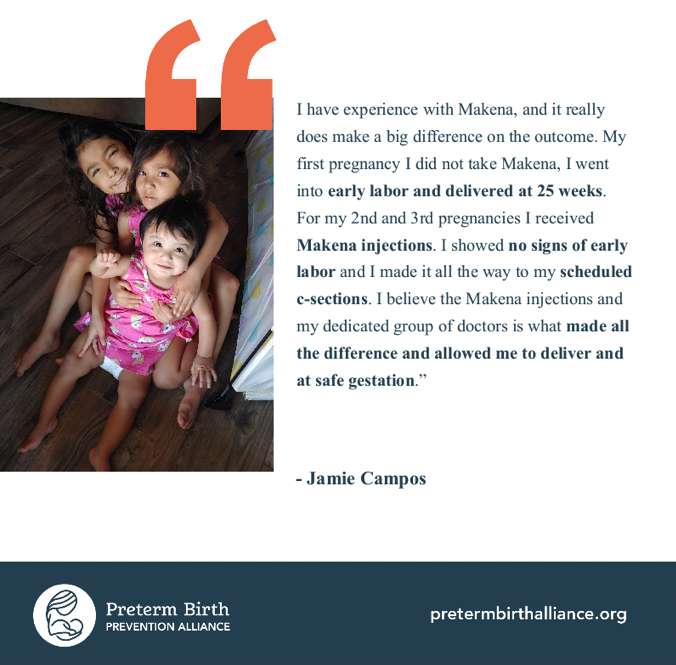
AMAG Pharmaceuticals has continued to develop a ground-breaking alliance with leading organizations in the women’s health space – including NCL – to impact barriers standing in the way of better outcomes in women’s sexual health. The alliance has been carrying out primary research to inform a formal launch later this year. The company also recently received several important approvals from the U.S. Food and Drug Administration (FDA). In February, the FDA approved the Makena® subcutaneous auto-injector drug-device combination product as a ready-to-administer treatment to reduce the risk of preterm birth in women pregnant with one baby and who spontaneously delivered one preterm baby in the past. The pre-filled Makena auto-injector offers a new administration option for patients and providers and contains a shorter, thinner non-visible needle compared to the intramuscular (IM) Makena injection. In the same month, the FDA approved AMAG’s application to broaden the existing label for Feraheme® (ferumoxytol injection) beyond the current chronic kidney disease (CKD) indication to include all eligible adult Iron Deficiency Anemia (IDA) patients who have intolerance to oral iron or have had unsatisfactory response to oral iron.









The #DataInsecurity Digest | Issue 70
/byThe FCC ‘hack’ that never was; U.S. thought to be nation most vulnerable to hacking
By John Breyault (@jammingecono, johnb@nclnet.org)
NCL Vice President of Public Policy, Telecommunications and Fraud
Subscribe here. Tell us what you think.
Editor’s Note: Concern that John Bolton’s decision to eliminate the White House’s cyber coordinator position continued to grow this week, with more experts speaking out that the move could leave the United States more vulnerable to hacks. The FCC continues to face questions over the alleged hack of its complaint database after internal emails revealed that Commission staff purposely mislead the media to think that the database was hacked (rather than reveal it had simply crashed from the overwhelming number of net neutrality comments submitted by the public).
Facebook remained in hot water after news came to light that it potentially violated its FTC consent decree by sharing users’ personal data with device manufacturers–even after users opted out of having their data shared.
And now, on to the clips!
—————–
Cyber experts and lawmakers worry that Bolton’s decision to fire cyber coordinator will hurt U.S. cyber efforts. @ericgeller reports that “Both Republicans and Democrats are expressing concern that the White House is rudderless on cybersecurity at a time when hostile nations’ hackers are moving aggressively, inspiring fears about disruptive attacks on local governments, power plants, hospitals and other critical systems.” The consensus among lawmakers, former officials from the White House, the intelligence community, and the departments of Justice, Homeland Security, Defense and State “is that Bolton’s moves are a major step backward for the increasingly critical and still-evolving world of cyber policy.” (Source: Politico)
The FCC ‘hack’ that never was. In May of 2017, when the FCC was accepting comments on its plan to roll back net neutrality protections, Americans responded by flooding the FCC with comments in support of net neutrality. The deluge of comments was so large that the FCC’s comment collection system crashed. In the days that followed, the FCC would blame its inability to accept comments on hackers. @dellcam has now learned from internal FCC emails that senior FCC officials “purposely misled several news organizations, choosing to feed journalists false information, while at the same time discouraging them from challenging the agency’s official story…the agency conducted a quiet campaign to bolster its cyberattack story with the aid of friendly and easily duped reporters, chiefly by spreading word of an earlier cyberattack that its own security staff say never happened.” @dellcam reports that to sell their story, agency staff even spread misinformation about former Chairman Wheeler stating that he supposedly covered up a similar breach back in 2014. (Source: Gizmodo)
Facebook shares personal data with at least 60 device makers. “Some device partners can retrieve Facebook users’ relationship status, religion, political leaning and upcoming events, among other data.” In addition, @nytimes found that “Facebook allows the device companies access to the data of users’ friends without their explicit consent, even after declaring that it would no longer share such information with outsiders. Some device makers could retrieve personal information even from users’ friends who believed they had barred any sharing.” This revelation raises “concerns about the company’s privacy protections and compliance with a 2011 consent decree with the Federal Trade Commission.” (Source: New York Times)
United States is the world’s most vulnerable-to-a-massive-cyber-attack nation. The report, conducted by Rapid 7 concluded that “The United States leads all other countries in the 2018 exposure rankings, scoring the highest in nearly every exposure metric we measure.” (Source: Rapid 7)
Only 23 percent of people understand that wearable devices and connected toys for children need to have security protection. This is problematic as the “data collected by cybercriminals paints a picture of the children’s lives, making them vulnerable to all kinds of cybercrime and potential attacks.” (Source: Forbes)
Breach du jour: 26 million Ticketfly users. The online ticket marketplace has been taken down by hackers, and 26 million of Ticketfly users have had their email address, home addresses, and phone numbers compromised. (Source: Motherboard)
Trump/Kim summit tests journalists’ cybersecurity IQ. Every journalist that was covering the historic summit received a goodie bag that included “a blue, innocent-looking mini USB fan. … Not so hot about it was the information security community,” which warned that “the device could be a covert method of installing malware onto the computers of journalists covering the summit.” (Source: Mashable)
Events
August 9-12, 2018 – DEF CON 26 – Las Vegas, NV
DEF CON is the world’s longest-running and largest underground hacking conference. Each summer, hackers, corporate IT professionals, and three-letter government agencies all converge on Las Vegas to absorb cutting-edge hacking research from the most brilliant minds in the world. (Source: DEF CON)
National Consumers League
Published June 14, 2018
The #DataInsecurity Digest | Issue 69
/byCyber challenges remain as Russia infects hundred of thousands of Internet routers
By John Breyault (@jammingecono, johnb@nclnet.org)
NCL Vice President of Public Policy, Telecommunications and Fraud
Subscribe here. Tell us what you think.
Editor’s Note: Last week the the FBI urged all Internet router users to restart their devices in an effort to determine which routers Russian hackers have infiltrated. Meanwhile news came to light that the geolocations for users of four major cellphone carriers were unsecured and available to anyone who knew where to look. This could be a problem for President Trump, since he routinely refuses pleas from security experts in the White House that he switch out his cell phones on a regular basis as being “too inconvenient.”
And now, on to the clips!
—————–
FBI: Hundreds of thousands of Internet routers have been hacked with Russian malware. The FBI is urging anyone with an Internet router to restart it in an effort to thwart malware that is linked to Fancy Bear, the Russian hacking group responsible for the hacking of the Democratic National Committee. The malware, “is capable of blocking web traffic, collecting information that passes through home and office routers, and disabling the devices entirely.” According to @TalosSecurity, “The malware has a destructive capability that can render an infected device unusable.” The malware “can be triggered on individual victim machines or en masse, and has the potential of cutting off internet access for hundreds of thousands of victims worldwide.”(Source: New York Times)
Speaking of Russia: 95 percent of surveyed digital security experts believe that our state election systems are not safe. (Source: Washington Post)
FBI massively overstates number of encrypted phones it cannot access. For months, the FBI has told both Congress and the public that “investigators were locked out of nearly 7,800 devices connected to crimes last year when the correct number was much smaller, probably between 1,000 and 2,000.” @DevlinBarrett reports that the bureau believes the overstatement was a result of a coding error, which resulted in “the use of three distinct databases that led to repeated counting of phones.” (Source: Washington Post)
The geo location information of AT&T, Sprint, T-Mobile, and Verizon users was left unsecured on the Internet. @briankrebs reports that LocationSmart, a company that provides real-time geolocation information of cellular devices has been providing Internet users the geolocation of any cell phone on the four major networks “without the need for any password or other form of authentication or authorization…to an accuracy of within a few hundred yards.” (Source: Krebs on Security)
Using a secure mobile device is “too inconvenient,” for President Trump. While advisors have urged the President to swap out his phones once a month as his predecessors have done for security reasons, he’s reportedly gone as long as five months between security checks as they are “too inconvenient” for him. In addition, @politico reports that unlike his predecessor, President Trump uses a phone with an enabled microphone and camera, which multiply the security risks. “Former national security officials are virtually unanimous in their agreement about the dangers posed by cell phones, which are vulnerable to hacking by domestic and foreign actors who would want to listen in on the president’s conversations or monitor his movements.” (Source: Politico)
House and Senate introduce bill to protect children from data collection. The bill, introduced by Sen. Ed Markey (D-MA) and Rep. Joe Barton (R-TX) in their respective chambers, “would amend the Children’s Online Privacy Protection Act to tighten protections against collecting data on minors, forcing websites to obtain parental consent before collecting data on users under the age of 13. To collect data on those ages 13-15, it would require websites to secure consent from the users themselves. The bill would also prohibit using such data for advertising targeted at children.” (Source: The Hill)
GDPR is in effect. As if the hundreds of emails clogging your inbox wasn’t a tip-off, last week, Europe’s long awaited General Data Protection Regulation (GDPR) law officially went into effect. The law pairs consumer protections such as “requirements to notify regulators about data breaches (within 72 hours)” with steep penalties for noncompliance. (Source: The Verge)
Mobile app fraud increases 600 percent in three years. The report published by RSA also found that 48 percent of the fraud it observed stemmed from phishing attacks. (Source: RSA)
Events
August 9-12, 2018 – DEF CON 26 – Las Vegas, NV
DEF CON is the world’s longest-running and largest underground hacking conference. Each summer, hackers, corporate IT professionals, and three-letter government agencies all converge on Las Vegas to absorb cutting-edge hacking research from the most brilliant minds in the world. (Source: DEF CON)
National Consumers League
Published May 31, 2018
The #DataInsecurity Digest | Issue 68
/byAs cyber threats continue to grow, White House eliminates top cyber job
By John Breyault (@jammingecono, johnb@nclnet.org)
NCL Vice President of Public Policy, Telecommunications and Fraud
Subscribe here. Tell us what you think.
Editor’s Note: The White House raised eyebrows this week when the new National Security Advisor, John Bolton, successfully lobbied the President to eliminate the role of special assistant to the president and cybersecurity coordinator. The position is currently held by the departing Rob Joyce.
Meanwhile, Equifax provided further details into the types of data its massive 146 million account breach compromised. Facebook, in response to the Cambridge Analytica scandal, suspended 200 applications while it looked into their data handling practices.
And now, on to the clips!
—————–
White House eliminates top cybersecurity job. As Iran raised its cyber attacks in response to the U.S. decision to pull out of the Iran deal, the White House decided to eliminate a key cyber post charged with protecting America from foreign state hackers. @ericgeller, who first reported that John Bolton, was lobbying the administration to eliminate the position, reported that when the idea was first floated “[c]ybersecurity experts and former National Security Council officials expressed alarm at the idea of eliminating the job, saying it would undo much of the progress the U.S. has made on cyber efforts and send the wrong message about U.S. priorities in the digital domain.” In the wake of the decision, @markwarner tweeted that “I don’t see how getting rid of the top cyber official in the White House does anything to make our country safer from cyber threats.” (Source: Politico)
Further details of Equifax breach released. Prior to Equifax’s latest disclosure, we knew that the breach had affected more than 146 million people, but we did not know the number of the records that were compromised. Equifax is now acknowledging that the compromised records included “146.6 million names, 146.6 million dates of birth, 145.5 million social security numbers, 99 million address information and 209,000 payment cards (number and expiry date) exposed, the company said there were also 38,000 American drivers’ licenses and 3,200 passport details.” (Source: The Register)
Personal data breaches, phishing scams among the top cyber crimes reported to the FBI in 2017. The FBI released its 2017 Internet Crime Complaint Center (IC3) Internet crimes report which “represents a total of 301,580 complaints with reported losses in excess of $1.4 billion. The top three crime types reported by victims in 2017 were non-payment/non-delivery, personal data breach, and phishing.” (Source: FBI)
Breach du jour: Chili’s. Last week, the restaurant chain learned that some of its customers’ payment cards had been compromised. @justinlmack reports that “Preliminary investigation indicates that malware was used to gather payment card information, including credit and debit card numbers, as well as names of cardholders who made in-restaurant purchases.” (Source: USA Today)
Breach du jour part deux: 3M Facebook users. Facebook users who took a personality quiz had their data stored on a website whose access codes were googleable. While the dataset did not include users’ names, in many cases it contained their ages, genders, and relationship statuses. For 150,000 people, it even contained their status updates. @Jake_K observes that while “a leak of 3 million users’ data is far smaller than the 87 million obtained by Cambridge Analytica, the story still serves as another warning of how easily this information can spread around and just how detailed it can be… even though the data was supposed to be anonymized, New Scientist points out that it easily could have been re-identified using the extra Facebook information attached to each personality test.” (Source: The Verge)
Quick hit: In related news, Facebook suspends 200 apps to investigate potential misuses of data. (Source: Quartz)
Twitter urges users to change their passwords. While there is no evidence that user passwords were compromised, a bug in the password hashing process caused user passwords to be “saved in plain text to an internal log, instead of masking them with the hashing process.” @cgartenberg observes tht while “Twitter hasn’t revealed how many users’ passwords may have potentially been compromised or how long the bug was exposing passwords before it found and fixed the issue … [t]he fact that the company is urging its entire user base to change their passwords indicates that it would seem to be a significant number of users.” (Source: Verge)
California teen phishes teachers to successfully change grades. Phishing attacks are usually used to perpetrate identity theft or to drain bank accounts. David Rotaro, a California student, used a phishing attack to change students’ grades at his school. Rotaro “created a fake website that looked identical to the school’s and then sent emails to teachers in an attempt to get them to sign into his fake site. At least one did, which allowed Rotaro to collect their login and password info. He then reportedly used that information to get into the Mount Diablo Unified School District IT network where he then changed other students’ grades — he even lowered some.” Rotaro now faces 14 felony charges. (Source: Yahoo!)
Events
August 9-12, 2018 – DEF CON 26 – Las Vegas, NV
DEF CON is the world’s longest-running and largest underground hacking conference. Each summer, hackers, corporate IT professionals, and three-letter government agencies all converge on Las Vegas to absorb cutting-edge hacking research from the most brilliant minds in the world. (Source: DEF CON)
National Consumers League
Published May 17, 2018
The #DataInsecurity Digest | Issue 67
/byAs cyber threats continue to grow, White House looks to eliminate top cyber job
By John Breyault (@jammingecono, johnb@nclnet.org)
NCL Vice President of Public Policy, Telecommunications and Fraud
Subscribe here. Tell us what you think.
Editor’s Note: The White House raised eyebrows this week when several sources reported that the new National Security Advisor, John Bolton, was lobbying the President to eliminate the role of special assistant to the president and cybersecurity coordinator. The position is currently held by the departing Rob Joyce.
Meanwhile, Equifax provided further details into the types of data its massive 146 million account breach compromised. Facebook, in response to the Cambridge Analytica scandal, suspended 200 applications while it looked into their data handling practices.
And now, on to the clips!
—————–
John Bolton is lobbying for the elimination of top cyber security job. As Iran raisers its cyber attacks in response to the US decision to pull out of the Iran deal, the White House is considering eliminating a key cyber post charged with protecting America from foreign state hackers. @ericgeller reports that “[c]ybersecurity experts and former National Security Council officials expressed alarm at the idea of eliminating the job, saying it would undo much of the progress the U.S. has made on cyber efforts and send the wrong message about U.S. priorities in the digital domain.” (Source: Politico)
Further details of Equifax breach released. Prior to Equifax’s latest disclosure, we knew that the breach had affected more than 146 million people, but we did not know the number of the records that were compromised. Equifax is now acknowledging that the compromised records included “146.6 million names, 146.6 million dates of birth, 145.5 million social security numbers, 99 million address information and 209,000 payment cards (number and expiry date) exposed, the company said there were also 38,000 American drivers’ licenses and 3,200 passport details.” (Source: The Register)
Personal data breaches, phishing scams among the top cyber crimes reported to the FBI in 2017. The FBI released its 2017 Internet Crime Complaint Center (IC3) Internet crimes report which “represents a total of 301,580 complaints with reported losses in excess of $1.4 billion. The top three crime types reported by victims in 2017 were non-payment/non-delivery, personal data breach, and phishing.” (Source: FBI)
Breach du jour: Chili’s. Last week, the restaurant chain learned that some of its customers’ payment cards had been compromised. @justinlmack reports that “Preliminary investigation indicates that malware was used to gather payment card information, including credit and debit card numbers, as well as names of cardholders who made in-restaurant purchases.” (Source: USA Today)
Breach du jour part deux: 3M Facebook users. Facebook users who took a personality quiz had their data stored on a website whose access codes were googleable. While the dataset did not include users’ names, in many cases it contained their ages, genders, and relationship statuses. For 150,000 people, it even contained their status updates. @Jake_K observes that while “a leak of 3 million users’ data is far smaller than the 87 million obtained by Cambridge Analytica, the story still serves as another warning of how easily this information can spread around and just how detailed it can be… even though the data was supposed to be anonymized, New Scientist points out that it easily could have been re-identified using the extra Facebook information attached to each personality test.” (Source: The Verge)
Quick hit: In related news, Facebook suspends 200 apps to investigate potential misuses of data. (Source: Quartz)
Twitter urges users to change their passwords. While there is no evidence that user passwords were compromised, a bug in the password hashing process caused user passwords to be “saved in plain text to an internal log, instead of masking them with the hashing process.” @cgartenberg observes tht while “Twitter hasn’t revealed how many users’ passwords may have potentially been compromised or how long the bug was exposing passwords before it found and fixed the issue … [t]he fact that the company is urging its entire user base to change their passwords indicates that it would seem to be a significant number of users.” (Source: Verge)
California teen phishes teachers to successfully change grades. Phishing attacks are usually used to perpetrate identity theft or to drain bank accounts. David Rotaro, a California student, used a phishing attack to change students’ grades at his school. Rotaro “created a fake website that looked identical to the school’s and then sent emails to teachers in an attempt to get them to sign into his fake site. At least one did, which allowed Rotaro to collect their login and password info. He then reportedly used that information to get into the Mount Diablo Unified School District IT network where he then changed other students’ grades — he even lowered some.” Rotaro now faces 14 felony charges. (Source: Yahoo!)
Events
August 9-12, 2018 – DEF CON 26 – Las Vegas, NV
DEF CON is the world’s longest-running and largest underground hacking conference. Each summer, hackers, corporate IT professionals, and three-letter government agencies all converge on Las Vegas to absorb cutting-edge hacking research from the most brilliant minds in the world. (Source: DEF CON)
National Consumers League
Published May 17, 2018
The #DataInsecurity Digest | Issue 66
/byRussian hacker threat to consumer IoT devices prompts warnings from US, UK; Facebook’s woes continue
By John Breyault (@jammingecono, johnb@nclnet.org)
NCL Vice President of Public Policy, Telecommunications and Fraud
Subscribe here. Tell us what you think.
Editor’s Note: The biggest recent news in data security is the unprecedented warning from the U.S. and U.K. governments that millions of consumers’ Internet of Things (IoT) devices may have been compromised by Russian hackers. Consumers’ compromised accounts are each worth, on average, $1,200 on the dark web. Typical targets like PayPal or credit card accounts are worth the most, but accounts at places like GrubHub and PizzaHut.com are also being traded on the dark web. Finally, after having its CEO on the hot seat before Congress, Facebook surely wants to be seen as being on its best behavior; new revelations about scammers using closed Facebook groups to promote fraud is unlikely to help its case.
And now, on to the clips!
—————–
US, UK warn of Russian hackers infiltrating home IoT devices. In an unprecedented move, American and British governments are warning citizens to beware Russian hackers’ efforts to compromise home broadband routers and Internet of Things (IoT) devices. Government officials have identified Russian efforts that have compromised millions of Internet-connected devices, allowing hackers to eavesdrop, collect confidential information, misdirect payments, or further compromise security. “The sweep and urgency of the statements from both sides of the Atlantic called to mind a computer-age version of a Cold War air raid drill, but asking citizens to upgrade their passwords rather than duck and cover,” write @ddknyt and @nixonron. (Source: New York Times)
Big Tech: We won’t help governments with cyberattacks. Thirty-one tech firms, led by Microsoft and Cisco, announced this week that they will not assist in governments’ attempts — including the U.S. government’s — to mount cyberattacks against “innocent civilians and enterprises from anywhere.” The agreement, writes @SangerNYT, stems from efforts by Microsoft’s Brad Smith to create a “‘digital Geneva Convention’ that sets norms of behavior for cyberspace just as the Geneva Conventions set rules for the conduct of war in the physical world.” Notably absent from the list of signers on the agreement are Amazon, Apple, and Google. (Source: New York Times)
You’re worth $1,200 on the dark web. VPN review site @top10_VPN is out with some interesting research looking at the average price of various kinds of compromised accounts on the dark web. The company’s Dark Web Market Price Index finds that the average cost of of a consumer’s digital identity — comprising all of a typical user’s hacked accounts — is $1,200. “Everything has a price on the dark web it seems,” writes @simonmigliano. “Paypal accounts with a healthy balance attract the highest prices ($247 on average). At the other end of the scale though, hacked Grubhub or Walmart accounts sell for less than $10.” (Source: Top 10 VPN)
Krebs: Deleted cybercrime groups on Facebook had 300,000 members. Research by cybersecurity reporter @briankrebs turned up nearly 120 private Facebook groups with more than 300,000 members dedicated solely to promoting cybercrime. “The scam groups facilitated a broad spectrum of shady activities, including spamming, wire fraud, account takeovers, phony tax refunds, 419 scams, denial-of-service attack-for-hire services and botnet creation tools,” writes Krebs. “The average age of these groups on Facebook’s platform was two years.” After being alerted by Krebs, Facebook deleted the groups, though there are likely to be “hundreds or thousands” of other similar groups still operating on the platform, writes Krebs. (Site: KrebsOnSecurity.com)
White House cyber brain drain follows Bolton appointment. The Trump Administration has lost two of its key experts on cyber issues, leaving the White House short-handed as it confronts continuing data security threats. Since the appointment of John Bolton as National Security Advisor, Tom Bossert, who oversaw cybersecurity policy, was forced out. In addition, the White House Cybersecurity Coordinator Rob Joyce is returning to the National Security Agency. (Source: POLITICO)
iPhone users urged to ditch 6-digit passcodes. Thanks to a new technology called GrayKey, which is being aggressively adopted by police departments, privacy-conscious users are being encouraged to ditch the default 6-digit passcode. That’s because GrayKey is being touted as a way for police departments to bypass the iPhone’s default disk encryption technology. Instead, writes @lorenzoFB, users concerned about surveillance are encouraged to adopt tougher-to-crack alphanumeric passcodes. (Site: Motherboard)
NYU study: Russian Bitcoin exchange brought in $16 million from 20,000 victims. New research by NYU Professor Damon McCoy tracked 20,000 victims of ransomware scams over a two-year period, finding that $16 million in payments were collected by a single Russian Bitcoin exchange. “With the rise of cryptocurrencies like Bitcoin, McCoy speculates that ransomware attacks, which thrive off of such difficult-to-trace payments, could become more of a threat to internet users,” writes @nyuews. (Source: Washington Square News)
Events
April 21, 2018 – Better Business Bureau Secure Your ID Day – BBB offices nationwide
BBBs across North America will host this helpful identity theft prevention event featuring FREE on-site shredding, electronic recycling, and tips to protect your identity. (Source: BBB)
August 9-12, 2018 – DEF CON 26 – Las Vegas, NV
DEF CON is the world’s longest-running and largest underground hacking conference. Each summer, hackers, corporate IT professionals, and three-letter government agencies all converge on Las Vegas to absorb cutting-edge hacking research from the most brilliant minds in the world. (Source: DEF CON)
National Consumers League
Published April 19, 2018
The #DataInsecurity Digest | Issue 65
/byFacebook data leak estimated to have affected as many as 87 million accounts; Breaches affect Atlanta, Baltimore, Saks, Panera
By John Breyault (@jammingecono, johnb@nclnet.org)
NCL Vice President of Public Policy, Telecommunications and Fraud
Subscribe here. Tell us what you think.
Editor’s Note: The aftermath from the Facebook/Cambridge Analytica data leak continued this week with reports surfacing that some psychological profiles may not yet be deleted and that the number of affected users may be as many as 87 million. Meanwhile, both Atlanta and Baltimore experienced ransomware attacks that disrupted key services like 911. Atlanta’s attack lasted for days and forced city workers to revert to pen and paper.
On the political front, the FBI’s Inspector General issued a report that suggests that the FBI exploited the circumstances of the San Bernardino shooting case to try coerce Apple into creating a backdoor to its encryption. The report suggests that the FBI knew it would be able to unlock the iPhone in question, but still attempted to pressure Apple so as to create a legal precedent. Finally, despite the shift to more secure chip-based payment cards, card data remains lucrative to hackers. This week, we learned of a massive break at Saks Fifth Avenue that reportedly compromised more than 5 millions customers’ card data.
And now, on to the clips!
—————–
FBI IG: Bureau more interested in establishing unlocking precedent than pursuing San Bernardino case. The Department of Justice’s Office of the Inspector General (OIG) released a new report finding that a “top FBI official ‘became concerned’ that one of her subordinates was stonewalling efforts to unlock the shooter’s phone ‘to pursue his own agenda of obtaining a favorable court ruling against Apple.’ In addition, according to the report, an FBI unit knew that a private vendor was 90 percent done with an unlocking tool when the bureau told a federal court that only Apple could crack the device.” (Source: Morning Cybersecurity)
Outspoken cyberhawk John Bolton tapped as National Security Advisor. On April 9, John Bolton will become President Trump’s National Security Advisor. Bolton has been a champion for cyber retaliation in the aftermath of state-sponsored hacks, saying that the United States should use its “‘muscular cyber capabilities’ to strike back against digital adversaries like China, Russia, Iran and North Korea. The point, he said, would be to impose costs ‘so high that they will simply consign all their cyber warfare plans to their computer memories to gather electronic dust.’” (Source: Politico)
City of Atlanta hit with crippling cyberattack. Last Thursday, Atlanta’s municipal government was “brought to its knees” by a ransomware attack that disabled the city government’s computers. @alanblinder called the attack “one of the most sustained and consequential cyberattacks ever mounted against a major American city.” (Source: New York Times)
Baltimore’s 911 system hit with ransomware attack. Last Sunday, Baltimore’s 911 and 311 systems were shut down by ransomware, forcing city workers to revert to manual dispatching. @RectorSun reports that the attack disabled the system that “automatically populates 911 callers’ locations on maps and dispatches the closest emergency responders there more seamlessly than is possible with manual dispatching.” For a time, the attack forced the city to revert to manual dispatching. (Source: The Baltimore Sun)
Facebook scandal grows to 87 million accounts. Yesterday, Facebook published a blog in which it acknowledged that, “in total, we believe the Facebook information of up to 87 million people — mostly in the US — may have been improperly shared with Cambridge Analytica.” (Source: Facebook)
Cambridge Analytica’s profiles on users have not yet been deleted. The UK’s Channel 4 reports that “Cambridge Analytica US campaign data, is still circulating – despite assurances it has been deleted…The cache of campaign data from a Cambridge Analytica source, details 136,000 individuals in the US state of Colorado, along with each person’s personality and psychological profile.” (Source: Channel 4)
Quick hit: FTC confirms investigation into Facebook. In its release, the FTC said that recent press reports had raised “substantial concerns about the privacy practices of Facebook.” (Source: Federal Trade Commission)
DOJ busts “massive” Iranian hacking ring. Iranian hackers are believed to have been “pilfering research and documents from over 100 American universities and government agencies for years.” Geoffrey Berman, the U.S. attorney for the Southern District of New York, commented that the bust is “one of the largest state-sponsored hacking campaigns ever prosecuted” by the United States. (Source: Politico)
Breach du jour: Saks Fifth Avenue. Saks Fifth Avenue, Lord & Taylor, and Saks Off Fifth were the subject of a massive data breach compromising the payment information of more than 5 million shoppers. Gemini Advisory, the cybersecurity research firm that discovered the breach, said that the breach is “is amongst the biggest and most damaging ever to hit retail companies.” (Source: Fortune)
Breach du jour, part deux: Panera Bread. @briankrebs is reporting that Panera Bread leaked millions of “customer records — including names, email and physical addresses, birthdays and the last four digits of the customer’s credit card number — for at least eight months before it was yanked offline.” Customers who ordered food online or through their app are believed to be affected. (Source: Krebs on Security)
Events
April 11, 2018 – House Energy and Commerce Hearing, Washington, DC
Facebook Founder Mark Zuckerberg will appear before the House Energy and Commerce committee to discuss Facebook’s “use and protection of user data.” (Source: Wall Street Journal)
National Consumers League
Published April 5, 2018
NCL health policy updates | Health Advisory Council Newsletter | 2018 Q1
/byNCL health policy at work
Script Your Future Medication Adherence Team Challenge
In January, NCL launched the seventh annual Medication Adherence Team Challenge. From January 15 through March 16, inter-professional teams—including student pharmacists, nurses, doctors, and others—implemented outreach activities in their communities to raise awareness and improve understanding about medication adherence, using Script Your Future. Since the Challenge began in 2011, more than 12,000 future health care professionals have directly counseled nearly 50,000 patients and reached more than 23 million consumers about the importance of medication adherence.
Stay tuned for NCL’s announcement of this year’s winners in May.
Protect Our Care Coalition and Association Health Plans
As part of the Protect Our Care Coalition, NCL remains actively engaged in the nationwide effort to protect the Affordable Care Act, Medicare, and Medicaid. In March, NCL issued a statement and joined a group letter expressing concerns that the Trump Administration’s proposed expansion of Association Health Plans (AHPs) would weaken consumer protections and undermine and destabilize the individual marketplace by heightening adverse selection. NCL worries that the proposal would open the floodgates to greater fraud and insolvencies, putting consumers at risk of unpaid medical bills, and threatening the availability and affordability of comprehensive coverage for many small employers and individual consumers.
America’s Health Insurance Plans (AHIP) ENGAGE Conference
On March 6, Karin Bolte, NCL’s Senior Director of Health Policy, participated in a “fireside chat” with David Merritt, AHIP’s Executive Vice President for Public Affairs & Strategic Initiatives, at AHIP’s ENGAGE conference for health plan communicators. Speaking on the topic of “How Americans Think about Health Coverage,” Karin and David discussed the take-aways from the 2017 health care debate and how the debate shaped the way consumers perceive coverage and health care; the outlook for the 2018 debate; drug pricing and medication adherence; the opioid crisis; and how health plans can better communicate with their members.
Dietary supplements
More than 170 million consumers in the United States use dietary supplements, and they should be confident that those supplements are safe, quality products that are manufactured appropriately and are accurately labeled regarding ingredients and claims. As an original member of the Dietary Supplements Quality Collaborative (DSQC), NCL is working with 25 organizations that are committed to advancing the quality and safety of products marketed as dietary supplements. To that end, NCL recently joined with leading public health and consumer organizations to urge Congress to double the budget of FDA’s Office of Dietary Supplement Programs to help create and maintain a safer, fairer, and more transparent dietary supplement marketplace.
Right to Try legislation
In March, NCL coordinated with our colleagues in the patient, consumer, and public health communities to reach out to Congress to express opposition to the latest version of Right to Try legislation (H.R. 5247), which we believe would create a dangerous, uncharted pathway for accessing experimental medications that have not been shown to be safe or effective. While H.R. 5247 includes patient safety improvements compared to previous versions of the legislation, NCL and our allies reiterated our concerns with creating a secondary pathway for accessing investigational therapies outside of clinical trials that would remove FDA approval and consultation. NCL believes that FDA’s existing expanded access program achieves the right balance between facilitating patient access and providing appropriate protections for patients, without undermining the clinical trials process.
Unfortunately, on March 21, the bill passed the House 267 to 149. The bill now heads to the Senate, which passed its own Right to Try legislation over the summer by unanimous consent. For reasons noted here, NCL will continue to argue against this misguided legislation.
Counterfeit drugs
NCL is still seeking partners for our Counterfeit Drugs Consumer Education Campaign. Working together, NCL’s Health and Fraud teams will develop consumer education content to be housed at NCL’s Fraud.org. The content will focus on the following elements:
Please contact Lee Granados, NCL’s Senior Director of Development, at leeg@nclnet.org about how your organization can join this resource-rich platform to educate consumers on making smart decisions.
Health Advisory Council Member Updates | Spring 2018
/byUSP
Access to Affordable, Quality Medicines
USP is evaluating approaches to best support recent efforts by the FDA to streamline and enhance the approval process for generic drug development. USP’s standards, developed in partnership with hundreds of expert volunteers, help support a robust and dependable generic medicines market that contributes to lower drug costs. USP is looking forward to working closely with both the FDA and the generic drug manufacturing industry to advance these efforts.
Compounding Update
USP General Chapters <795> Pharmaceutical Compounding ‒ Nonsterile Preparations, and <797> Pharmaceutical Compounding ‒ Sterile Preparations are in the active revision process. To provide a unified approach to quality compounding, USP intends to align the timing and content of General Chapters <795>, <797>, and <800> Hazardous Drugs—Handling in Healthcare Settings. Among other proposed content in the revisions, hazardous drug handling sections in <795> and <797> will reference General Chapter <800>. Stakeholders will be able to provide written comments through the USP website from March 30, 2018 to July 31, 2018 for USP <795>, and from July 28, 2018 to November 30, 2018 for USP <797>. There will also be two Stakeholder Open Microphone Sessions at USP-Rockville on April 20, 2018 for Chapter <795> and September 5, 2018 for Chapter <797>. The Intended Official Date for Chapters <795>,<797>, and <800> is December 1, 2019.
National Council on Patient Information and Education (NCPIE)
New NCPIE Report Outlines National Strategy to Prioritize Self-Care
A new report by the National Council on Patient Information and Education (NCPIE) highlights the need for advancing self-care in the United States and introduces an agenda to achieve greater awareness of self-care. The report, entitled Empowering Americans to Take Greater Responsibility for Their Health: A Roadmap for Building a National Self-Care Movement in the U.S., calls attention to a rapidly aging population as well as the increasing burden of both minor and chronic illnesses in the U.S. With the nation spending over $3 trillion annually on healthcare and with 80% of Americans expected to have at least one chronic condition by 2030, costing society more than $42 trillion in medical expenditures and losses in productivity, the U.S. health system is in a state of disrepair. This report sheds light on how self-care has the potential to improve individual health and reduce medical costs.
NCPIE has joined a new collaborative program, Allied Against Opioid Abuse (AAOA) with several stakeholder partners. AAOA is a national education and awareness initiative to help prevent the abuse and misuse of prescription opioids. The goal is to contribute to solving the opioid crisis in a meaningful way by educating patients about the rights, risks, and responsibilities associated with prescription opioids. The initiative is a collaborative effort with diverse partners across the pharmaceutical supply chain, as well as organizations that are experts in public health and healthcare. The AAOA website provides details about the campaign objectives and available educational resources.
National Association of Nurse Practitioners in Women’s Health
The National Association of Nurse Practitioners in Women’s Health (NPWH) will convene its second annual Healthy at Any Age Summit on April 26, 2018. The Summit will provide an opportunity for the group to focus on the physical, mental, economic, and community/social health needs of women over the age of 50. NPWH also plans to launch its Patient Portal during Women’s Health Week in May. Additionally, NPWH is looking forward to hosting the fifth annual Women’s Sexual Health Course for NPs in Phoenix this June. Finally, NPWH just concluded a series of successful regional meetings on “Women’s Health Care Across the Lifespan,” held in Dallas, Atlanta, Chicago, and New York.
National Alliance for Caregiving
The National Alliance for Caregiving, in partnership with Global Genes, has released Rare Disease Caregiving in America (February 2018), a national study of 1,406 unpaid caregivers ages 18 and over living in the United States who provide care to a child or adult with a rare disease or condition. The National Institutes of Health estimates that there are approximately 7,000 rare diseases. More than 400 unique rare diseases and conditions were captured in the study which identifies the emotional, financial, physical, and social strain of rare disease caregivers and includes public policy recommendations. The study and related materials are available at www.caregiving.org/rare. For questions or comments about the study, please contact the Alliance at (301) 718-8444 or info@caregiving.org.
Johnson & Johnson
The Janssen Pharmaceutical Companies of Johnson & Johnson issued their 2017 Janssen U.S. Transparency Report, which demonstrates the company’s commitment to responsible business practices that put patients first, including how Janssen invests its resources, prices its medicines, and helps people who need Janssen medicines get access to them. The second annual report shows that in 2017 the net price of Janssen’s medicines in the U.S. decreased by 4.6% while the company increased to $7.9 billion its investment in discovering and developing transformational medicines for patients facing some of the world’s most challenging diseases.
Brian Isetts, PhD, BCPS, FAPhA, University of Minnesota College of Pharmacy
Brian J. Isetts was recently nominated to serve a two-year term of service, commencing June 1, 2018, on the Medicare Evidence Development & Coverage Advisory Committee (MEDCAC) at CMS. MEDCAC was established to provide independent guidance and expert advice to CMS on specific clinical topics. The MEDCAC is used to supplement CMS’ internal expertise and to allow an unbiased and current deliberation of “state of the art” technology and science.
FDA Office of Women’s Health
FDA’s Office of Women’s Health (OWH) supports Research on Heart Disease in Women to provide valuable insights into sex differences in the diagnosis and treatment of cardiovascular disease. FDA OWH also provides free resources with special tips to help women from diverse communities make good decisions about their heart health.
Duke University School of Medicine
The Duke University School of Medicine Department of Population Health Sciences is pleased to announce its Summer Institute, which is scheduled for June 4-6, 2018 at the Washington Duke Inn on Duke’s campus. The Summer Institute is geared toward early- to mid-career researchers and professionals working in health care and health services research who want to learn new methods to broaden their research design. Led by five of Duke’s leading researchers, the Institute will cover three key health science research methods: Measurement Science, Qualitative Methods, and Dissemination & Implementation Science. Additional information is available here.
Council for Affordable Health Coverage
The Council for Affordable Health Coverage (CAHC) hosted Acting Assistant Secretary for Planning and Evaluation at HHS, John Graham, for its most recent monthly meeting on March 15th. The coalition is currently formulating its response to a request for feedback on healthcare cost transparency from Sen. Bill Cassidy (R-LA), Sen. Michael Bennet (D-CO) and members of the bipartisan Senate transparency workgroup.
CAHC’s Clear Choices Campaign is also preparing to release a report, tentatively set for April 3rd, entitled “Modernizing Medicare Plan Finder: Evaluating and Improving Medicare’s Online Comparison Shopping Experience.” The study, prepared with the National Council on Aging, offers a look at the current challenges and shortcomings of Medicare Plan Finder while providing recommendations for improvement.
Finally, earlier this month, CAHC released its March 2018 ACA dashboard, providing a snapshot of enrollment figures, carrier choices, and premium costs under the healthcare law. CAHC also released a supplemental fact-sheet on ACA premiums that can be viewed here.
Prescriptions for a Healthy America
Prescriptions for a Healthy America (P4HA) saw a successful February, with enactment of legislation it had long championed to coordinate Medicare parts A, B, and D claims data as part of the Bipartisan Budget Act.
On March 1, P4HA held a Congressional briefing entitled, “Medication Synchronization: Improving Health, Saving Time and Money.” The briefing featured a panel of expert guests from Harvard, Thrifty White, and Publix, among others, and discussed how medication synchronization programs can increase medication adherence, reduce hospitalizations, and reduce healthcare costs.
Also at the briefing, P4HA unveiled new cost estimates on the fiscal impact of further expanding medication synchronization programs. The report, prepared by P4HA Chief Economist Jeff Lemieux – a Congressional Budget Office alumnus – and P4HA Executive Director Sloane Salzburg, found that utilizing medication synchronization programs for all seniors with three or more prescriptions could save up to $42 billion a year due to reduced hospitalizations and improved adherence.
Related to this, the Bipartisan Budget Act passed in February also called for a GAO study and report on medication synchronization programs, which could yield new data to support expanding these models to more Americans who are at elevated risk for nonadherence.
Contact Sloane Salzburg (Sloane.salzburg@cahc.net) to learn more about CAHC and P4HA.
Consumer Healthcare Products Association (CHPA) Educational Foundation
Up and Away Campaign’s Cold & Flu Rally
For the first time, the Up and Away campaign capitalized on the cold and flu season during the month of December to remind parents about the importance of safe medicine storage, specifically highlighting the risks of leaving medicines out between doses. Through partner activation, highly targeted Facebook and Instagram advertising, English and Spanish press releases, and earned media outreach across local and national media markets in both English and Spanish, the Up and Away cold and flu rally garnered more than 7 million total impressions. In addition, through this rally, the Up and Away campaign deepened its partnership with Safe Kids through a joint media outreach effort. National press releases were distributed via PR Newswire in both English and Spanish to 146,355,005 potential readers, and the campaign reached its goal of securing four original coverage hits, including one spokesperson interview, for an estimated 117,869 coverage views. There was strong interest from Hispanic outlets, both local and national, and, in collaboration with Safe Kids and a local poison center, six new spokespersons were recruited, including two Spanish-speakers and a mother with a “close call” story.
Black Women’s Health Imperative
The Black Women’s Health Imperative (BWHI) has released and conducted a number of new information and awareness campaigns with respective partners:
The IndexUS can be viewed digitally by downloading a copy or you can request a printed copy by emailing info@bwhi.org.
Association for Accessible Medicines
The Association for Accessible Medicines (AAM) hosted its annual meeting in Orlando in February. More than 600 leaders in the field came to celebrate the achievements of the generic and biosimilars industry and to ready themselves for the political and business challenges ahead. Successes from the past year included the defeat of the FDA’s problematic draft drug labeling rule, the institution of enhanced FDA approval processes, and the FDA’s determination to curtail the abuse of safety programs by some brand companies. AAM’s President and CEO Chip Davis reminded attendees that hundreds of millions of patients in the U.S. and around the world rely on AAM member companies to provide safe, effective and affordable medicine. He urged member companies to engage proactively with state and federal legislators and other stakeholders to help them understand the value proposition of generics and biosimilars and how our business model differs from that of the brand-name manufacturers.
During the conference, AAM also released a new white paper, “Ensuring the Future of Accessible Medicines in the U.S.: Avoiding Shortages & Ensuring Competition for America’s Patients,” which finds that generics and biosimilars continue to provide savings for patients, but that uninterrupted patient access to these affordable prescription medicines is at risk. According to the report, generic prices are falling faster and settling lower than ever before. But new savings – with up to $140 billion in patent expiries over the next five years – are at risk without policies that ensure market entry, and continued savings from older generics are threatened by purchaser consolidation and policies like the Medicaid Generics Penalty and state-enacted burdens. The report concluded with a series of policy recommendations that policymakers can and should act on to ensure continued savings and market-based competition, as well as prevent shortages, for future availability of affordable medicines.
American Society of Health-System Pharmacists
The American Society of Health-System Pharmacists (ASHP) recognizes the significant impact that the opioid epidemic is having on patients and the healthcare system. On March 6, ASHP convened an interdisciplinary stakeholder meeting at its headquarters to address this public health concern. The 22-member Commission on Goals: Focus on Opioids included key influencers from nursing, medicine, public health, regulatory agencies, academia, and pharmacy. The Commission was charged with identifying actionable solutions to the opioid epidemic, with an emphasis on optimizing pain management through the selection, initiation, and monitoring of medication therapy in hospitals and health systems and how pharmacists can assist other clinicians in moving these solutions forward.
The Commission identified a number of actionable solutions, including pharmacist participation on pain care teams, adoption of opioid stewardship programs, use of performance data to drive practice change, improvements to prescription drug monitoring programs, utilizing patient-specific pain plans, and action plans that are coordinated with community-based organizations, first responders, and government agencies.
Proceedings of the meeting will be published in a forthcoming issue of the American Journal of Health-System Pharmacy.
America’s Health Insurance Plans
In February 2018, the Modern Medicaid Alliance — a partnership organization between Americans who value Medicaid and more than 100 leading advocacy groups, including the National Consumers League — convened an event in partnership with the Hoover Institution on the future of Medicaid. The event explored the immediate outlook for policy changes, examined Medicaid innovations already underway, and generated expert discussion on how Medicaid delivers for states and beneficiaries alike, as well as how leaders at the federal and state level can work together to improve outcomes and lower program costs. The event featured experts from leading organizations such as the National Association of Medicaid Directors, National Governors Association, National Rural Health Association, MMA-convening organization AHIP, George Washington University, and the National Alliance for Medicaid in Education.
AMAG Pharmaceuticals
AMAG Pharmaceuticals has continued to develop a ground-breaking alliance with leading organizations in the women’s health space – including NCL – to impact barriers standing in the way of better outcomes in women’s sexual health. The alliance has been carrying out primary research to inform a formal launch later this year. The company also recently received several important approvals from the U.S. Food and Drug Administration (FDA). In February, the FDA approved the Makena® subcutaneous auto-injector drug-device combination product as a ready-to-administer treatment to reduce the risk of preterm birth in women pregnant with one baby and who spontaneously delivered one preterm baby in the past. The pre-filled Makena auto-injector offers a new administration option for patients and providers and contains a shorter, thinner non-visible needle compared to the intramuscular (IM) Makena injection. In the same month, the FDA approved AMAG’s application to broaden the existing label for Feraheme® (ferumoxytol injection) beyond the current chronic kidney disease (CKD) indication to include all eligible adult Iron Deficiency Anemia (IDA) patients who have intolerance to oral iron or have had unsatisfactory response to oral iron.
Health Advisory Council Newsletter | 2018 Q1 | Member Q&A
/byPresident and CEO, Black Women’s Health Imperative
Q. How would you describe the work of the Black Women’s Health Imperative (BWHI)?
A. As President and CEO of the Black Women’s Health Imperative, I have the privilege of leading a very talented staff to realize our bold goal of increasing the number of healthy Black women from 9.5 million to 12.5 million by 2020.
Q. What do you think Council members should know about BWHI?
A. Since 1983, we have been the only national organization dedicated solely to improving the health and wellness of our nation’s 21 million Black women and girls – physically, emotionally and financially. We are working to lead the effort to solve the most pressing health issues that affect Black women and girls in the U.S. Through research, the innovative use of data and analytics, and investments in evidence-based strategies, we deliver bold new programs and advocate for health-promoting policies. We know Black women are inherently resilient and not defined by obesity, disease, or poverty.
Q. What BWHI initiatives would you like to share with the Council?
A. We are working on three major initiatives:
Change Your Lifestyle. Change Your Life. (CYL2) brings lifestyle coaching to women — and men — across the country to teach them how to eat differently and move more. CYL² leads the way in empowering people not only to shed pounds, but to also avoid diabetes, heart disease, and many other chronic conditions. CYL² is part of the National Diabetes Prevention Program, led by the Centers for Disease Control and Prevention (CDC). Our program exceeds all other CDC-funded diabetes prevention programs and we have the most successful outreach program of its kind to reach our target — Black women.
My Sister’s Keeper (MSK) is an initiative that works with Black college women, many of whom attend Historically Black Colleges and Universities (HBCUs), to build leadership skills on advocacy and health policy. We know it is important to invest in amplifying the voices of young women through education, building networks, and grassroots mobilization. MSK provides opportunities for women to come to Washington, DC to meet with Members of Congress and receive training on crafting policy language. We know that these young women will come into their own as the leaders of the future.
Our goal is to:
BWHI has also launched a major new initiative where we are bringing together national non-profits as well as community-based organizations that work to prevent the spread of HIV/AIDS among Black women. The New Normal will be the first of its kind to change the conversation around HIV, reduce stigma, and empower women to protect themselves and their families
Q. What is BWHI doing to change the way people think about and approach healthcare?
A. Our work is designed to empower women and the way we see ourselves in the health space. Our groundbreaking publication based on 20 years of research, IndexUS: What Healthy Black Women Can Teach Us About Health, changes the dialogue from what’s wrong with Black women, to what we can learn from healthy, emotionally strong and resilient women. It turns out, there’s a lot. We are talking about a fundamental shift in how we approach our work.
Q. What partnerships has BWHI had with NCL?
A. BWHI is proud to work with NCL because we know that an informed health care consumer is an empowered consumer. We also know that messages and information women receive about prevention and treatment can be confusing at best and misleading at worst. We want to make sure that Black women make the best possible decisions about their health, understand what barriers might prevent those decisions, and have access to the resources they need to live their healthiest and happiest lives.
Q. What does BWHI value about membership in NCL’s Health Advisory Council?
A. The members of the Health Advisory Council represent a broad spectrum of health care research, services, and information. Having access to some of the best thinkers and doers in health care has been enormously beneficial to our work. As we look to the future, we’re sure our data analytics coupled with the information the Advisory Council produces will result not only in improved health outcomes for Black women but necessary changes to produce more health-promoting policies at the Federal and State levels.
Health Advisory Council Newsletter | 2018 Q1
/byWelcome to the Q1 issue of the Health Advisory Council Newsletter. Below you will find NCL policy updates, a new Q&A with the Black Women’s Health Imperative, member updates, and more.
Thank you for renewing your membership!
Thank you for renewing your Health Advisory Council membership for 2018. We appreciate your support and look forward to continuing to work with you to improve the health of consumers and workers.
If you haven’t yet renewed or would like to check on the status of your membership, please contact Lee Granados, NCL’s Senior Director of Development, at leeg@nclnet.org.
In January, NCL launched the seventh annual Medication Adherence Team Challenge. From January 15 through March 16, inter-professional teams—including student pharmacists, nurses, doctors, and others—implemented outreach activities in their communities to raise awareness and improve understanding about medication adherence, using Script Your Future. Since the Challenge began in 2011, more than 12,000 future health care professionals have directly counseled nearly 50,000 patients and reached more than 23 million consumers about the importance of medication adherence. Stay tuned for NCL’s announcement of this year’s winners in May.
Click here for more NCL health policy updates.
Get to know the Black Women’s Health Imperative with a new Q&A.
Get the latest updates on programs, policy, and initiatives from our Members, including USP, NCPIE, NPWH, and many more.
We are currently in the process of planning NCL’s Health Advisory Council Spring Membership meeting in Washington, DC. Stay tuned for details!
If you have time-sensitive information and updates you’d like to share with the Health Advisory Council in between NCL’s quarterly newsletters, please contact Karin Bolte (karinb@nclnet.org) or Janay Johnson (janayj@nclnet.org), and we will be happy to forward your materials to the Council membership. We also encourage you to contact us with your ideas and suggestions for Council activities.
_______________
National Consumers League
Published March 27, 2018