Study: U.S. parents’ flu vaccine misconceptions concerning advocates – National Consumers League

December 17, 2013

Contact: NCL Communications, Ben Klein, (202) 835-3323, benk@nclnet.org

Washington, DC—According to a new survey released (report PDF) by the National Consumers League (NCL), fears and misperceptions about flu vaccines persist among Americans—adults and parents of children under the age of 17 alike. With flu season underway and the start of winter upon us, consumer advocates are concerned that misinformation about side effects and ineffectiveness of vaccines may be contributing to a failure to have children vaccinated.

In recent years, the science has evolved on the importance of getting vaccinated for the flu. It used to be the case that medical experts recommended flu shots only for the most vulnerable groups; but because healthy people benefit from the vaccine as well, medical experts now recommend that nearly everyone get the flu shot.

“Getting the flu can be serious, especially to children under 5 and other high risk groups,” said NCL Executive Director Sally Greenberg. “In our survey, however, we found the majority of parents of a child in this age group have not had them vaccinated with the flu vaccine” Despite an obvious desire to avoid coming down with the flu, consumers are unlikely to receive a flu vaccine because of their perceived good health, and the assumed side effects and ineffectiveness of the vaccine. “For parents, there is a disconnect between fear of their child contracting the flu and a failure to get the recommended vaccines to prevent its spread,” said Greenberg.

The national survey was conducted online by Harris Interactive among 1,756 U.S. adult Americans, of whom 993 are parents of children under 18, in August – September 2013.

The survey findings are a reminder that we need continuing consumer and patient education on the importance of both adults and children receiving a flu shot annually. The American College of Physicians, for example, strongly advises Americans to receive the vaccines endorsed by the Center for Disease Control (CDC) Advisory Committee on Immunization Practices, which includes an annual flu shot.

“A new version of the flu vaccine is prepared annually to best match the strains of flu virus currently circulating; while the effectiveness of the vaccine is better some years than others, getting vaccinated always results in better protection than not getting vaccinated,” said Molly Cooke, MD, FACP, President of the American College of Physicians.  “The flu vaccine does not cause flu in vaccine recipients.  It is understandable that some people regard being in good health as a reason to skip vaccination. This is because we used to reserve flu vaccination for elderly people and those with serious chronic illnesses. However, it is now clear that healthy people benefit as well. In addition, the more of us who are vaccinated, the better our families and communities are protected.”

The CDC recommends that all individuals over the age of 6 months receive the flu vaccine each year. It is especially important for people who are at high risk of developing serious complications if they get sick with the flu, including children under 5, pregnant women and those with medical conditions like asthma and diabetes.  The bottom line is that healthy or not, everyone should be vaccinated against the flu.

“Despite consensus among health agencies and health care professionals that vaccines are good for individuals and communities, vaccinations have, in recent years, appeared to have developed a negative stigma, and this is preventing some of us from doing our part in disease prevention,” said Rebecca Burkholder, NCL Vice President for Health Policy. “This flu season, many consumers will fail to get vaccinated. Misconceptions about how vaccines work are putting  all of us at risk.”

Highlights from the survey

Men vs. Women: Perceptions of how ‘severe’ the flu is

Over a third of adults rate the flu as very severe.  Women are more likely to rate the flu as severe than men.

  • Thirty-six percent (36%) of adults rated the flu as an 8, 9, or 10 on a scale from 1 to 10 where 0 means “not at all severe” and 10 means “extremely severe.”
  • Women are more likely than men to rate the flu as an 8, 9, or 10 for severity (43% vs. 28%).

Adults aren’t current on vaccinations

While nearly three-quarters of adults (74%) say they have received the flu vaccine, nearly 32% of those last received the flu vaccine a year ago or more.

  • Just over 5 in 10 (53%) parents have received a flu vaccination within the last year, compared to nearly 7 in 10 (68%) adults.

Why we aren’t vaccinating

The most common reason for not receiving the flu vaccine among adults who reported they have never received a flu shot was their good health (45%), side effects (29%), and perceived ineffectiveness of the vaccine (24%).

  • One in five (21%) said the reason they have not received the flu vaccine is because they do not believe the flu is a serious illness.
  • One in five (20%) say they fear of contracting the flu from the vaccination is a reason they have not received the flu vaccine.

Parents of children under 18 who reported they have never received a flu shot were more likely to say that the flu is not a serious illness as a reason for not receiving the vaccine themselves (31%).  However, when parents were asked to rate how concerned they were about their child contracting diseases, they were more likely to report they were concerned about their child contracting the flu than any other disease on the list with the exception of meningitis.

  • Parents are more likely than the general population to avoid receiving a vaccination due to fears of contracting the flu as a result of the vaccination (29% vs. 20%).
  • 33% of parents report they are extremely or very concerned about their child contracting the flu.
  • 44% of parents say their child has received vaccine.

Where the Flu vaccine is received

A number of adults report receiving flu shots in venues like the workplace or retail health clinic.

  • Nearly 4 in 10 (39%)adults received the flu shot in their doctor’s office.
  • Nearly 1 in 5 (18%) adults received a flu shot in a retail clinic (located in large retail settings such as drug stores, grocery stores or big box stores).
  • Parents are more likely to use/take advantage of vaccinations offered by their employer/workplace (24% vs. 18% adults).

On self-reported knowledge

Adults who say they are extremely or very knowledgeable about how vaccines work were more likely than those who said they were somewhat or not at all knowledgeable to report they have received a flu vaccine (82% vs. 68%).

  • Adults are more likely to say it is extremely or very important or important for a child to receive recommended vaccinations than they are to say it is extremely or very important or important for an adult to receive recommended vaccinations (91% vs. 75%).

About the Survey

NCL commissioned this survey, conducted by Harris Interactive, with an unrestricted educational grant from Pfizer. NCL and Harris Interactive are solely responsible for the design of the survey

The NCL Vaccine Survey of  adult Americans was conducted with an emphasis on parents of children between 0-17, to investigate vaccination rates and opinions among the general US population. A total of 1,756 adults aged 18 + were surveyed nationally of whom 993 were parents of children aged 0-17. The survey was conducted online from August 22 to September 9, 2013.

Survey results are weighted to be representative of the US population for gender, age, ethnicity, education, income and region based on the current US Census.

The full survey report, including additional findings on vaccine perceptions, can be found online at www.nclnet.org.

###

About the National Consumers League
The National Consumers League, founded in 1899, is America’s pioneer consumer organization. Our mission is to protect and promote social and economic justice for consumers and workers in the United States and abroad. For more information, visit www.nclnet.org.

About Harris Interactive®
Harris Interactive is one of the world’s leading market research firms, leveraging research, technology, and business acumen to transform relevant insight into actionable foresight. Known widely for The Harris Poll®, Harris offers proprietary solutions in the areas of market and customer insight, corporate brand and reputation strategy, and marketing, advertising, public relations and communications research across a wide range of industries. Additionally, Harris has a portfolio of multi-client offerings that complement our custom solutions while maximizing a client’s research investment. Serving clients worldwide through our North American and European offices, Harris specializes in delivering research solutions that help our clients stay ahead of what’s next. For more information, please visit www.theharrispoll.com.

FTC Chairwoman Edith Ramirez speaks at National Consumers League event on identity theft – National Consumers League

December 16, 2013

Contact: Ben Klein, NCL Communications, (202) 835-3323, benk@nclnet.org

Washington, DC – Speaking at a National Consumers League event on identity theft, FTC Chairwoman Edith Ramirez said Thursday that more can be done by the private sector and government to protect consumers and businesses from identity theft.

“It’s clear to me that we need to do more,” said Ramirez, who called for the government to make sure “small and medium sized companies know what they need to do and really understand the importance of data security.”

Chairwoman Ramirez was joined by former FTC Chairwoman Deborah Platt Majoras in giving keynote remarks at the event yesterday. Majoras served as founding co-chair of President George W. Bush’s Identity Theft Task Force from 2006-2008, leading a major campaign by the federal government to address the growing threat of ID theft.

The two officials joined experts in consumer protection and data security to discuss the growing problem of identity theft, which affected 12.6 million Americans in 2012. Fraud and identity theft have topped the list of FTC consumer complaints for 13 straight years. Although policymakers have taken strides to cut the incidence of these online crimes, the threat remains: every three seconds, a new American becomes a victim of identity theft.

“This event helped to focus attention on the continuing challenge of protecting consumers from identity theft,” said Sally Greenberg, executive director of the National Consumers League. “Government at all levels, along with law enforcement, have taken steps to help protect consumers from identity theft, but more must be done. We thank Chairwoman Ramirez and former Chairwoman Majoras for joining us to discuss the task of protect consumers from identity thieves and online fraud.”

The event coincided with the release of a new National Consumers League policy paper entitled “The State of Identity Theft in 2013.” The policy paper, authored by John Breyault, NCL’s Vice President of Public Policy, Telecommunications and Fraud, discusses the measures that have been put in place to protect consumers, and puts forward specific policy recommendations to improve identity theft protections for the future.

“We have taken important steps over the past 15 years to help protect consumers from identity theft,” said Breyault. “But policymakers, advocates and the general public must work to stay ahead of identity thieves and reduce the risk of identity theft. We hope this week’s discussions will be an impetus for further action against online identity thieves.”

Watch a video of the event on the National Consumer League’s YouTube channel.

###

About the National Consumers League

The National Consumers League, founded in 1899, is America’s pioneer consumer organization. Our mission is to protect and promote social and economic justice for consumers and workers in the United States and abroad. For more information, visit www.nclnet.org.

In a win for consumers, Volcker Rules take effect – National Consumers League

By Sally Greenberg, NCL Executive Director
This week marked a milestone for the Dodd-Frank law: a new set of rules to prevent banks from taking huge risks with other people’s money. The new regulations come under the umbrella of the Volcker Rule, named after former Federal Reserve Chairman Paul Volcker.  The Volcker rule was just approved by five of the nation’s Government regulators and is a sweeping set of new rules for the nation’s biggest banks. Thankfully, the Volcker Rule bans financial institutions from the kind of ultra-high-risk trading that nearly collapsed the world’s financial system.

Despite a fierce lobbying effort to prevent the new measure, it won out. The Volcker Rule will prohibit banks from trading for their own profit rather than on behalf of customers. We are pleased that the rules came out stronger than anyone expected. Commentators believe that consumers won this round. “Big banks lost,” said Mark Williams, a former Fed bank examiner who now teaches at Boston University. “Wall Street aggressively fought the Volcker rule.”


The new rule will ban federally insured banks from betting on risky investments such as private equity and hedge funds. Private equity funds buy companies and turn them around before selling them, while hedge funds often employ complex trading strategies. These investments have proved highly profitable in the past, but are also extremely risky because they are often so complicated that most of the world, including experts in this stuff, often don’t understand how these investments work. That is by design.


The Volcker Rule also closes a critical loophole. “The Volcker rule will make it illegal for firms to use government-insured money to make speculative bets that threaten the entire financial system, and demand a new era of accountability from CEOs who must sign off on their firms’ practices,” President Obama said in a statement. The rule goes into effect in April but banks have until July 2015 to comply.


Also, financial firms may buy and sell securities as a way to hedge bets, but they also take a lot of risks in the process and when they fail, they can bring down others with them. For example, JPMorgan Chase & Co. suffered more than $6 billion in losses from positions by a trader who was known as the “London Whale” for his oversized hedges. JPMorgan Chase is the nation’s largest bank and this risky trading has huge repercussions in the financial industry.


Now the Volcker rule will require banks to continually monitor and adjust hedging strategies to ensure they don’t become overly risky bets that damage investors.


Another feature of the new rule is that institutions will have to document rationales for hedges.  Fed Gov. Daniel Tarullo, who heads the agency’s bank supervision and regulation committee, said the “Whale” episode provided “a real-world example of what should not happen in a banking organization.”


Banks will be required to keep records to back up their positions, and chief executives will be required to sign off on their firms’ compliance. They are also being asked under the new rule to structure employee compensation so that it does not “reward or incentivize” engaging in prohibited proprietary trading practices or expose the bank “to excessive or imprudent risk.”


Two Senators who pushed for the rule back in 2010, Jeff Merkley (D-Ore.) and Carl Levin (D-Mich.), said they were pleased that it was tougher than what regulators originally proposed.


Merkley, who is a great consumer and worker champion, joined Levin in a statement on the new regulation, saying the Volcker rule “was intended to change the culture and practices at our nation’s largest financial firms, to prevent Wall Street and the big banks from making swing-for-the-fences bets that put depositors and taxpayers at risk. The regulators have taken a serious step forward in mandating critical changes.”


This is an important victory for taxpayers and the public and a defeat for Wall Street.


For that we need to thank the heads of the five regulatory agencies who hung tough in the face of strong industry lobbying and opposition, including Comptroller of the Currency Thomas J. Curry, who said at a recent FDIC board meeting, “Issuing a final rule is only the beginning of the process. The OCC will be especially vigilant in developing a robust examination and enforcement program that ensures our largest institutions will remain compliant.” It’s about time.

National Consumers League statement on tech industry efforts to address government surveillance – National Consumers League

December 10, 2013

Contact: NCL Communications, Ben Klein, (202) 835-3323, benk@nclnet.org

Washington, DC – The National Consumers League (NCL), the nation’s pioneering consumer and worker advocacy organization, today applauded the announcement by eight major technology industry companies of a coordinated effort to address the widespread collection of consumer data by the U.S. government.

In an open letter to Congress and the Obama Administration, the companies – AOL, Apple, Facebook, Google, LinkedIn, Microsoft, Twitter, and Yahoo — urged the federal government to abide by a set of principles limiting the massive collection of data about American citizens by federal intelligence agencies.

“Reforms addressing the mass surveillance of ordinary Americans is long overdue,” said NCL Executive Director Sally Greenberg. “Consumers expect that the corporations to which they entrust their data will not turn it over to the government without very specific goals and parameters tied closely to achieving specific national security goals.”

NCL supports legislation, like that introduced by Senators Jeff Merkley (D-OR), Mike Lee (R-UT) and Ron Wyden (D-OR), that would require the Department of Justice to unseal certain rulings by the Foreign Intelligence Surveillance Act (FISA) courts. This would do much to shine a spotlight on the workings of this court and start to restore consumers’ trust in the telecommunications and technology industry.

NCL appreciates that many companies have said no to demands for bulk data and commends these eight companies for asking for scrutiny over government intrusion into the private data of ordinary citizens.

###

About the National Consumers League

The National Consumers League, founded in 1899, is America’s pioneer consumer organization. Our mission is to protect and promote social and economic justice for consumers and workers in the United States and abroad. For more information, visit https://nclnet.org.

Did you know another American falls victim to ID theft #every3seconds? – National Consumers League

By John Breyault, Vice President of Public Policy, Telecommunications and Fraud

NCL’s “State of ID Theft” Conference To Put National Spotlight on Continuing Problem

For thirteen years, the crime of identity theft has generated more complaints to the Federal Trade Commission than another other fraud. In 2012, more than 12 million Americans were affected by identity theft, costing the U.S. economy $20.9 billion. Every three seconds, a consumer’s identity is comprised by this pernicious crime.


Seven years ago, President George W. Bush, recognizing the seriousness of the threat of ID theft, created the federal Identity Theft Task Force. Made up of eighteen federal agencies, the task force was charged with implementing a range of recommendations to address the threat of ID theft. The task force made thirty-one recommendations, from reducing the use of Social Security Numbers by federal agencies, to improving coordination by law enforcement, to passing a national data breach notification standard, to name a few. The implementation of these recommendations by the federal government, as well as improved anti-fraud procedures in the private sector, have done much to make life harder on ID thieves.

Despite these advances, ID theft is still a major threat to consumers, business and the government. According to one conservative estimate, more than 1.1 billion records have been comprised by identity theft. Data breaches, which put information on millions of consumers in the hands of fraudsters, are still occurring at a rate of at least one per day.

Just as troubling, it appears that we may be on the cusp of a new wave of ID theft. With ever larger amounts of data being collected about consumers by government and the private sector, data breaches become more likely. Identity thieves are shifting towards scams that are harder to detect, such as tax-related ID theft and medical ID theft. And the criminal themselves — often located overseas — are becoming more professional and organized.

How will these new factors affect consumers’ vulnerability to identity theft? What can we learn from the last seven years of fighting this problem? What should consumers expect from regulators, law enforcement and the private sector as this crime evolves?

To examine these and other questions, the National Consumers League will be hosting our first State of ID Theft conference on December 12 in Washington, DC. The event will bring together some of the brightest minds in the country for panel discussion examining the continuing threat of ID theft and what can be done to better protect consumers. Headlining the conference will be a lunchtime conversation between FTC Chairwoman Edith Ramirez and Former Chairwoman Deborah Platt Majoras, who co-chaired the federal Identity Theft Task Force from 2006-08.

Registration is free but space is limited. Please RSVP here. For more information please contact John Breyault at johnb@nclnet.org.


Statement on Nelson Mandela’s passing – National Consumers League

December 6, 2013

Contact: NCL Communications, Ben Klein, (202) 835-3323, benk@nclnet.org

Washington, DC — The following statement can be attributed to NCL Executive Director Sally Greenberg:

The National Consumers League mourns the death of Nelson Mandela, one of the most transformational and inspirational leaders in the modern era. Mr. Mandela was willing to give his life to the cause of dismantling South Africa’s vicious and oppressive system of racial apartheid. He spent 27 years in prison before being released in 1990, going on to become President of South Africa. Mandela stood for dignity and respect for people the world over. Admirably, when he accepted the role of leader of his nation, he did so without turning to rancor or vengeance against his earlier tormentors. In so doing, he inspired his countrymen and women to put down their weapons, reject anger and recrimination, and strive for a peaceable and harmonious transition to democracy.

The National Consumers League’s 114 year commitment to championing the rights of consumers and the dignity of working people is very much in keeping with the causes to which Nelson Mandela was devoted.   In the pantheon of great leaders throughout human history, Mandela surely stands at the top. We salute his life and mourn his passing.

###

About the National Consumers League

The National Consumers League, founded in 1899, is America’s pioneer consumer organization. Our mission is to protect and promote social and economic justice for consumers and workers in the United States and abroad. For more information, visit https://nclnet.org.

Drinking raw milk is a raw deal – National Consumers League

kelsey By Kelsey Albright, Linda Golodner Food Safety & Nutrition Fellow

Over the past decade, food movements centered around eating local foods, “locavore”, organic, and ethically produced foods have sky rocketed. Being that many of these forms of producing and labeling food are the start of a new frontier, plenty of laws and regulations have been put in place to ensure that consumers are not misinformed about their food.  As part of this movement, many Americans have turned to drinking raw milk. Surprisingly little is known about raw milk, and current regulations are lax to say the least.

More and more frequently consumers, especially children and others with weaker immune systems, are getting sick thanks to bacteria like Salmonella, E. coli and Listeria that can easily live and grow in unpasteurized milk.  Maddie Powell is just one example of a child gravely sickened by E. coli found in raw milk.  She developed hemolytic uremic syndrome (HUS ) and was hospitalized for weeks at great cost to her family. So why do people keep drinking raw milk if it’s so potentially dangerous?  Overwhelmingly, people are misinformed about how risky it is and assume that it must be more nutritious because it’s less processed. 

No scientific evidence supports raw milk having more nutrients.  The CDC estimates that between 1993 and 2006, 1500 people have fallen ill from drinking raw milk and consumers are 150 times more likely to contract a food borne illness from raw milk than pasteurized dairy products.  Pregnant women should be especially careful because even if they don’t feel sick, bacteria in raw milk can cause miscarriage, fetal death or illness, and even death among newborns. In this day and age of high fat, sugar, and salt, it can be tempting to search for foods that are the least processed.  Fortunately there are alternatives to raw milk.  Light pasteurization or “low-temperature vat pasteurization” heats smaller amounts of milk to a temperature cooler than is typical with regular pasteurization for a longer amount of time.  Also buying milks that aren’t homogenized, meaning the fat hasn’t been broken up so it remains suspended in the milk, is a viable option for those who might think raw milk is simply tastier.  Please, for your own sake, don’t drink raw milk.

Consumers League applauds DC Council vote – National Consumers League

December 3, 2013

Contact: NCL Communications, Ben Klein, (202) 835-3323, benk@nclnet.org

Washington, DC–The National Consumers League (NCL) today applauded the DC City Council for votes that would boost workers’ pay and expand their paid sick days.

“These are great first steps, very welcome, and long overdue,” said Sally Greenberg, NCL Executive Director.

The two measures approved would expand the city’s 2008 law on paid sick leave to include workers whose incomes rely on tips and increase the minimum wage in the District for all other workers from $8.25 to $11.50 per hour over a three-year period.

“Consumers have spoken very clearly in overwhelming support of tipped workers who serve them at dining establishments, for improving their wages and providing them with paid sick leave,” Greenberg said. “It’s not just a matter of compassion; it’s a matter of public health and food safety.”  

“If the proposals are ultimately adopted, thousands of tipped workers will have the freedom to stay home to recover when they are sick, instead of coming to work and potentially infecting coworkers and customers,” said Greenberg. “This is especially critical now that cold and flu season is upon us.”

According to the DC Fiscal Policy Institute, the gap between high-income and low-income households in the District is the third-highest among the 50 largest cities, after Atlanta and Boston. The $3.25 increase in the minimum wage will help some 51,000 workers who now struggle to make ends meet and help to lift them out of poverty.

The typical minimum-wage worker is 34 years old, supports a family, and works full time. The new wage floor would mean a full-time salary of $23,920 a year, which will lift a family of three to just above the poverty level. “This is still not enough money to cover basic expenses, but it is a vast improvement of the current minimum wage,” said Michell McIntyre, NCL’s Outreach Director, Labor & Worker Rights.

Although the new minimum wage bill does not raise the tipped minimum wage (currently $2.77 an hour), Councilmember Mary Cheh introduced a measure that would make the tipped minimum wage the same as the standard minimum wage.

“We look forward to seeing both bills signed into law and working with Councilmember Cheh on a tipped minimum wage bill,” said Greenberg.

###

About the National Consumers League

The National Consumers League, founded in 1899, is America’s pioneer consumer organization. Our mission is to protect and promote social and economic justice for consumers and workers in the United States and abroad. For more information, visit www.nclnet.org.

Help support NCL’s mission #GivingTuesday – National Consumers League

For the first time this year NCL will participate in Giving Tuesday, a national day of giving to help kick off the holiday season. Following Black Friday and Cyber Monday, more than 8,300 non-profits will aim to grab a piece of the post-Thanksgiving spending flurry. Consumers spent more than $12 billion on Black Friday, the biggest spending day of the year.

Billions more were spent on Thanksgiving and will be spent on Cyber Monday. This year, direct your charitable giving to the National Consumers League. Just a small donation can help:

Donate today, help support NCL’s 114-year legacy protecting America’s consumers and workers!  

Thanksgiving day is a time for family not shopping – National Consumers League

By Michell K. McIntyre, Outreach Director, Labor and Worker Rights Black Friday – the term alone can strike fear and excitement in even the most seasoned shoppers. But what consumers often don’t see or understand is what happens on the other side of the counter. Many stores have announced that they will be open on Thanksgiving to maximize consumer’s Black Friday enthusiasm. They have determined that shoppers are willing to curb their Thanksgiving festivities and traditions to start their holiday shopping on a day that is supposed to be centered on family and giving thanks for the blessings in one’s life. Stores like Costco, Nordstrom, Dillard’s and T.J. Maxx have resisted the urge to open on the holiday, however, many stores including Walmart, Macy’s, Toys “R” Us, and Best Buy will be open to shoppers on Thanksgiving day with some stores opening as early as 6am.
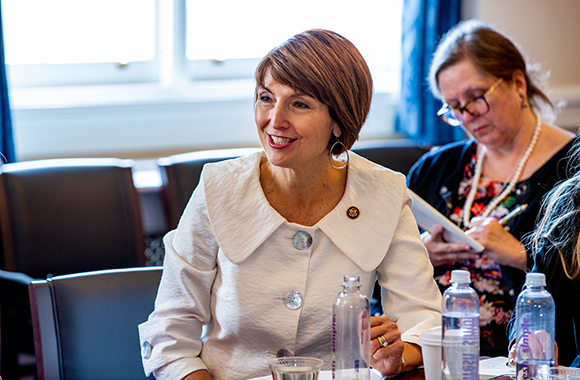


 But what does that mean for the workers who have to man the registers and stock the shelves? Many can’t show up to work at 6am on Thanksgiving – they have to get to their stores at least an hour before the doors open. What happened to their holiday? What happened to their time for family festivities and traditions? These workers tend to be low-wage earners that struggle to make ends meet. If a single mother with two children is making the federal minimum wage of $7.25 an hour and is working full time, she’s only earning $15,080 a year – well below the poverty rate for a family of three. If she’s making $10 an hour, she’s only earning $20,800 a year – still below the poverty rate and she would qualify for public assistance.

Consumers need to be aware of the reality facing these retail workers. Below is John Paul Ashton’s story of his constant struggle to put food on the table and support his family with meager wages. Ashton happens to work for Walmart, the largest private employer in the US, who also has a proven track record of using illegal retaliation and firings to intimidate and curb worker’s collective bargaining actions. Walmart, is also one of the most profitable retailers in the world. This holiday shopping season, Walmart workers will be taking a stand and protesting the company’s abusive labor practices, including poverty-level wages, stingy benefits, and irregular work schedules that make it impossible for their families to make ends meet.

John Paul Ashton: Scraping By on Less Than $25K John Paul “JP” Ashton, is a 31-year old Walmart maintenance worker who makes around $20,000 a year. Originally from Colorado, Ashton now lives in Washington. He is the father of two and has worked at Walmart for more than five years to support his family. “When I first started at Walmart I was told that it was a place where I could grow and have opportunities. I soon discovered that was not the case,” said Ashton. “People take being able to buy lunch for granted. I don’t need a fancy job, but what I do need is a job that allows me to provide for my family and to be able to speak out without fear of retaliation.

It would also be nice to have more than $2 in my bank account after I pay my bills.” Ashton, who must walk 45 minutes to work, prides himself on being a provider for his family. As one of the many Walmart workers who earn less than $25,000 a year, during his time with the mega-retailer Ashton has had to, at times, rely on food banks to feed his family.

Currently, he receives food stamps in order to put food on the table. “No one wants to have to rely on food stamps to live (and trust me I know how to budget the little money I make), but at the end of the day because of what Walmart pays I have no other choice. It’s hard for me to understand how a company that makes all that money and a family that has over $144 billion can justify what they pay workers,” he said. Ashton, who enrolled in Walmart’s healthcare plan in order to provide insurance to his two children, brings home on average $1200-1400 a month.

Often he is unable to pay his rent in full because his bi-weekly paycheck does not cover the full amount. Ashton joined OUR Walmart because he wanted to have a voice on the job and the ability to speak with management about working conditions without fear of retaliation. When asked what $25,000 a year would mean for him Ashton’s remark was simple, “Freedom…freedom to do more things for my children.” “I don’t need or want much. Yes, it would be nice to have a car or maybe a house. It would even be nice to have more than $10 in my bank account. Sam Walton said ‘you treat employees right, treat customers right and we all make money.’ Walmart does not does not live up to that and I am going to keep fighting until they do.” Read about more workers like JP each week as we release more stories from the majority of Walmart employees who struggle to get by on less than $25,000 a year.