
National Consumers League and Child Labor Coalition Mourn the Passing of Human Rights Attorney Terry Collingsworth 

Media Contact: Lisa McDonald, Vice President of Communications, 202-207-2829 

Washington, DC – The National Consumers League (NCL) and the Child Labor Coalition (CLC) mourn the untimely passing of Terry Collingsworth, a pioneering human rights attorney and tireless advocate for workers, children, and vulnerable communities around the world. 

For decades, Terry dedicated his life to confronting injustice and holding powerful multinational corporations accountable for human rights abuses. As the founder and Executive Director of International Rights Advocates (IRAdvocates), he helped advance a bold vision of a world free from forced labor, child slavery, and exploitation—a world where victims of corporate abuses have meaningful access to justice. 

Terry understood that protecting human rights required more than promises and voluntary corporate commitments. It demanded courageous action, legal accountability, and strong partnerships with workers and communities on the front lines of exploitation. His pioneering approach combined strategic litigation, research, public advocacy, and coalition building to challenge some of the world’s most powerful corporations.  

From representing children trafficked into forced labor on cocoa plantations in West Africa to challenging hazardous child labor in cobalt mines in the Democratic Republic of Congo, Terry was relentless in his pursuit of justice. His work also sought accountability for violence against trade unionists and for the exploitation of workers and communities whose fundamental rights had been denied.  

For the Child Labor Coalition and the National Consumers League, Terry was an important ally in the shared struggle to eliminate child labor and ensure that corporations respect human rights throughout their global supply chains. He recognized the essential role of consumers, advocates, trade unions, and grassroots organizations in demanding change and refusing to accept exploitation as the cost of doing business. 

 Terry’s determination, courage, and commitment to those too often denied a voice leave an enduring legacy. He demonstrated that even the most powerful corporations must be challenged when they profit from human suffering, and that the law can be a powerful instrument for advancing human dignity. 

We extend our deepest condolences to Terry’s family, friends, and colleagues. We honor his extraordinary contributions by reaffirming our commitment to the principles he championed: justice for exploited workers, freedom for children trapped in forced labor, and accountability for those who violate fundamental human rights. 


### 

About the National Consumers League (NCL)      

The National Consumers League, founded in 1899, is America’s pioneer consumer organization. Our mission is to protect and promote social and economic justice for consumers and workers in the United States and abroad. For more information, visit www.nclnet.org.  
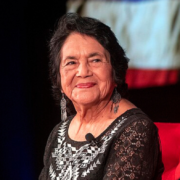
Honoring Dolores Huerta: A Trailblazer for Workers’ Rights, Children’s Rights, and Social Justice

“Sí, se puede!” — Yes, we can!

Few individuals have had as profound and lasting an impact on the American labor movement as Dolores Huerta, the legendary labor organizer, civil rights activist, and champion of working families.

For more than six decades, Huerta has fought tirelessly for the dignity, safety, and economic security of farmworkers, immigrants, women, and children. As a co-founder of the United Farm Workers movement, she helped transform the lives of countless agricultural workers by organizing for fair wages, safer working conditions, collective bargaining rights, and basic human dignity.

But Huerta’s legacy extends far beyond the workplace. Her advocacy has also helped shine a light on the struggles of farmworker families and the exploitation of children in American agriculture.

Before becoming a labor organizer, Huerta was a schoolteacher. She witnessed firsthand the devastating effects of poverty on the children of farmworkers—students who arrived at school hungry and without adequate clothing or shoes. Those experiences inspired her to devote her life to organizing workers and addressing the systemic injustices that kept families trapped in poverty.

Her life’s work underscores a fundamental truth: Protecting workers’ rights and protecting children from exploitation are inseparable goals. When parents earn fair wages, work in safe conditions, and have a voice on the job, their children have a better chance to remain in school, grow up healthy, and enjoy the childhood every young person deserves.

In 1993, the National Consumers League (NCL) proudly honored Dolores Huerta with its prestigious Trumpeter Award, recognizing her extraordinary contributions to labor rights and social justice. The award reflected NCL’s longstanding commitment to protecting workers, empowering consumers, and combating exploitative child labor.

Huerta also courageously exposed the rape and sexual abuse she was subjected to by her colleague Cesar Chavez. In an exposé earlier this year, it was revealed that Chavez, president of the United Farm Workers Union,  had a history of abusing young women who worked for him.

As NCL honored the group Justic for Migrant Women at NCL’s Trumpeter Awards, the irony didn’t escape us that this migrant women’s group is focused on protecting women from sexual abuse and harassment in the fields.

Today, Huerta’s work remains as relevant as ever. Children continue to labor in America’s agricultural fields, sometimes facing dangerous machinery, extreme heat, pesticide exposure, and grueling hours that jeopardize their health, safety, and education. The struggle to ensure that every child is protected from hazardous work is far from over.

Sally Greenberg, CEO of the National Consumers League and Co-Chair of the Child Labor Coalition, offers this tribute:

“Dolores Huerta is a giant in the history of American labor and civil rights. She understood long before many others that the fight for decent wages, safe workplaces, and dignity for working people is also a fight for the well-being of their children. Her extraordinary leadership helped give a voice to farmworkers and their families, including children whose needs and vulnerabilities have too often been overlooked. When the National Consumers League honored Dolores with our Trumpeter Award in 1993, we recognized a leader whose courage, determination, and commitment to justice embodied our organization’s deepest values. Today, as we confront the continued exploitation of children in agriculture and other dangerous industries, her example reminds us that progress requires organizing, persistence, and an unwavering belief that every worker—and every child—deserves dignity and opportunity. Dolores has shown generations of advocates what it means to turn compassion into action.”

— Sally Greenberg, CEO, National Consumers League; Co-Chair, Child Labor Coalition

At NCL and through our leadership in the Child Labor Coalition, we are proud to carry forward this shared commitment to protecting vulnerable workers and ensuring that children are not forced to sacrifice their health, education, or futures to dangerous labor.

Dolores Huerta’s extraordinary legacy reminds us that meaningful change is possible when people stand together, demand justice, and refuse to accept exploitation as inevitable.

We salute Dolores Huerta for her groundbreaking contributions to the labor movement, her lifelong advocacy for working families, and her enduring inspiration to those fighting for a world free from exploitative child labor.

Sí, se puede!


Consumers Will Pay the Price if FDA Opens the Door to Six Untested Peptides

Media Contact: Lisa McDonald, Vice President of Communications, 202-207-2829 

Washington, DC – At a time of mounting concern that gray-marketed injectable peptides carry severe risks to human health, the National Consumers League is raising alarm bells that an “interim access policy” poised to be issued by the Food and Drug Administration (FDA) will allow compounding pharmacies to make and sell six currently banned peptides – BPC-157, TB-500, KPV, MOTS-c, Epitalon, and Semax – despite FDA’s own scientists warning that the evidence behind these substances consists largely of small animal studies and laboratory experiments, not the rigorous testing Americans expect from the medicines they put into their bodies.

Specifically, NCL cautions that instead of undergoing a full rulemaking process, the interim access policy would put these untested peptide products on the market without the public comment and scientific review that the law intends. In doing so, FDA would allow specific “503A pharmacies” that prepare customized medications and are exempt from the safety and labeling rules required for FDA-approved medicines to compound these peptides for any use a prescriber supports. FDA’s argument is that patients already buy these peptides from illicit sellers, and thus an interim enforcement discretion policy will allow licensed pharmacies to compound higher-quality products under professional oversight.

The harm to consumers from this “might as well” policy is incalculable. The FDA has warned that immune responses to peptides range from silent antibodies to “life-threatening and catastrophic reactions,” which is why the agency placed the six peptides in Category 2 for significant safety risks, precluding their use. Additionally, the American Medical Association, other medical societies and global bodies including Health Canada, Australia’s Therapeutic Goods Agency, and the World Anti-Doping Agency have all warned that inadequately tested peptide products are a growing public health risk. Among the dangers are liver toxicity, cardiovascular stress, potential tumor promotion, and severe allergic reactions, ranging from skin-swelling and hives to life-threatening anaphylaxis.

Beyond the safety risks, the policy of enforcement discretion will give these unapproved peptide products the appearance of government sanction, leading consumers to believe that these substances are regulated and legal. This will be reinforced when the compounded peptides arrive in pharmacy-labeled vials, with a prescription from a licensed pharmacy, looking exactly like the more than 100 FDA-approved peptide medicines, including insulin and GLP-1 drugs, that have earned their place through large-scale clinical trials. A patient picking up a compounded BPC-157 injection will have no visible signal that it was never tested for safety, proper dosing, or long-term side effects. Just as deceptive advertising has left consumers confused about the difference between FDA-approved GLP-1 medicines and compounded copies, this policy would erase the line between proven medicines and experimental substances.

Moreover, NCL joins with numerous patient safety, medical and public health organizations in cautioning that FDA’s interim access policy will entrench an already dangerous market promoting “research-grade” peptides where influencers, podcasters, med spas, wellness clinics, and telehealth platforms promote these substances with sweeping claims about muscle repair, injury recovery, anti-aging, weight loss, and brain performance — assertions that are not supported by scientific evidence. Underscoring this concern, research published June 15, 2026, in the Journal of the American Medical Association finds over 130,000 Instagram posts and over 230 million views on TikTok as of May 2025 promoting synthetic peptides for muscle growth, injury recovery, anti-aging, and cognitive enhancement.

Because the interim policy implies regulation when none exists, consumers will be exposed to and will buy peptides that are unapproved, untested and exist outside of every lawful pathway believing the claims that these substances are “legal,” “pharmacy-grade,” and “doctor-prescribed” when these products are not backed by clinical trials and the FDA-approval process. Thus, consumers will be playing Russian Roulette with their health while FDA acts against its own mission of ensuring drugs are safe based on a regulatory system that requires rigorous pre-approval testing and FDA review, are of high quality based on good manufacturing practices and FDA inspections, and monitored for adverse events once they are on the market.

Recognizing what is at stake for the health of Americans, NCL supports the petition filed by the Partnership for Safe Medicines (PSM), which calls on the FDA to refrain from allowing compounding pharmacies to make and sell peptides that do not meet the conditions necessary to be included in the 503A Bulks List, the list of ingredients that compounders are permitted to use.

Current laws exist so that patients can trust they are getting safe, proven, and tested therapies. NCL therefore urges the FDA to follow its own scientists, reject a shortcut that bypasses the evidence, and require any peptide seeking broader access to go through full rulemaking with genuine scientific scrutiny. Consumers deserve the truth about what they are injecting, and they deserve a regulatory system that protects them rather than one that lends credibility to unsupported health claims.

###

About the National Consumers League (NCL)      

The National Consumers League, founded in 1899, is America’s pioneer consumer organization. Our mission is to protect and promote social and economic justice for consumers and workers in the United States and abroad. For more information, visit www.nclnet.org.   
National Consumers League Calls on Congress to Establish a Robust Regulatory System for Hemp-derived Beverages Before Extending Hemp Deadline

Media Contact: Lisa McDonald, Vice President of Communications, 202-207-2829    

Washington, DC – A provision in the 2018 Farm Bill removed hemp from the controlled substances list, creating a loophole in federal law that allowed the hemp industry to build a billion-dollar empire where manufacturers extract and concentrate intoxicating cannabinoids from hemp and market them in gummies, vapes, beverages, and other products. Using an addiction-for-profit model, these products are packaged with bright colors and candy-like branding that appeal to minors. Today, the $28 billion industry is enticing vulnerable teens and young adults with THC-infused beverages, edibles and other intoxicating items that they mistakenly view as safe because the products are sold widely in gas stations and convenience stores.

Recognizing the danger, Congress closed the hemp loophole in the November 2025 appropriations bill by setting a deadline for production of these products of November 17, 2026. It recently extended the deadline to December 11, 2026.

Congress should do nothing to alter the closure of the hemp loophole that was enacted in 2025 and is now effective December 11, 2026, unless and until a robust regulatory regime for hemp-derived products is put in place.

Especially as our work relates to the health and safety of children and adolescents, the National Consumers League is deeply concerned about the distinct risks that hemp products pose to teenagers and young adults whose developing brains are highly vulnerable to cannabinoids. As documented in the medical literature, adolescent cannabis use is a pressing public health concern, associated with adverse outcomes in brain development, mental health, and physical health including its effects on the gastrointestinal, cardiovascular, respiratory, and endocrine systems of body.

The consequences have been devastating. Not only are children and teenagers more vulnerable to the harmful effects of THC, but they are also more likely to consume these products accidentally and can develop dependence more quickly than adults. Thus, poison control centers, emergency departments, and addiction treatment providers have reported significant increases in cases involving hemp-derived THC exposure, including severe and sometimes life-threatening outcomes.

###   

About the National Consumers League (NCL)         

The National Consumers League, founded in 1899, is America’s pioneer consumer organization. Our mission is to protect and promote social and economic justice for consumers and workers in the United States and abroad. For more information, visit www.nclnet.org.     
Nobel Peace Laureate Kailash Satyarthi to Keynote a Conversation on Ending Global Child Labor

Media Contact: Lisa McDonald, Vice President of Communications, 202-207-2829

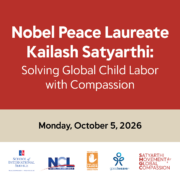
Washington, DC – Nobel Peace Laureate and global child rights advocate Kailash Satyarthi will join leaders in child labor advocacy, academia, diplomacy, and international development on Monday, October 5, for “Solving Global Child Labor with Compassion,” a public event hosted by the National Consumers League’s (NCL) Child Labor Coalition at American University’s School of International Service. Register here.

Event Details

When: Monday, October 5, 2026, 2:30-4:00 p.m.

Where: Abramson Family Founders Room, School of International Service, American University, 3468 Nebraska Ave. NW, Washington, DC

Keynote: Kailash Satyarthi, Nobel Peace Laureate and Founder of the Satyarthi Movement for Global Compassion

Admission: Free and open to the public; registration required.

The program will open with remarks from Rachel Sullivan Robinson, Interim Dean of American University’s School of International Service, and Sally Greenberg, Co-Chair of the Child Labor Coalition.

Following Satyarthi’s keynote, Judy Gearhart, Research Professor at the Accountability Research Center at American University’s School of International Service, will moderate a panel examining the continuing challenge of global child labor and approaches to addressing it. Satyarthi will be joined on the panel by Tim Ryan, Chairman of the Global March Against Child Labor, and Jon Jacoby, Chief Executive Officer of GoodWeave International.

The event comes as the international community continues working toward the elimination of child labor worldwide. The discussion will explore the role of compassion in confronting child exploitation and consider how advocates, governments, businesses, researchers, and consumers can contribute to protecting children and advancing their rights.

NCL has a longstanding commitment to combating exploitative child labor through its coordination of the Child Labor Coalition (CLC), whose 38 member organizations work to protect children from hazardous and exploitative work in the United States and abroad.

Satyarthi has been a longtime partner in the global movement to eliminate child labor and has previously joined NCL and CLC initiatives to advance children’s rights.

###

About the Child Labor Coalition

The Child Labor Coalition, co-chaired by the National Consumers League and the American Federation of Teachers, brings together organizations committed to combating exploitative child labor and protecting the health, safety, education, and well-being of working minors.

Celebrating Champions of Consumer Protection at the National Consumers League 2026 Trumpeter Awards

Awards to be presented to NAACP President and CEO Derrick Johnson, Congresswoman Debbie Dingell, Ohio Governor Mike DeWine, and Justice for Migrant Women Founder and President Mónica Ramírez 

Media Contact: Lisa McDonald, Vice President of Communications, 202-207-2829    

Washington, DC – The National Consumers League (NCL) will host its annual Trumpeter Awards Dinner on Tuesday, October 6, 2026, at the Mayflower Hotel in Washington, DC. The evening begins with a reception at 6 p.m., followed by dinner at 7 p.m.    

“Consumers are facing enormous challenges, from rising costs and weakened protections to threats to the safety and security of their families,” said NCL CEO Sally Greenberg. “At a time when it can be easy to feel discouraged, our 2026 honorees remind us of what strong leadership looks like. They have spent their careers standing up for fairness, accountability, and justice, and we are proud to recognize their commitment to consumers, workers, and families.” 

NCL will honor NAACP President and CEO Derrick Johnson; Congresswoman Debbie Dingell (MI-06); and Ohio Governor Mike DeWine with Trumpeter Awards for speaking out on social justice issues and the rights of consumers.   Justice for Migrant Women Founder and President Mónica Ramírez will receive the Florence Kelley Award, named for NCL’s first general secretary, a pioneering social reformer who fought child labor and exploitative working conditions and championed minimum-wage protections. News4’s Consumer Investigative Reporter, Susan Hogan, will serve as Master of Ceremonies.   

As consumer leaders navigate these unprecedented times in a rapidly changing marketplace, NCL’s 2026 Trumpeter Awards Dinner will serve as both a celebration and a call to action—honoring those who have spent their careers raising their voices for fairness, safety, and justice.    

All press: RSVP to lisam@nclnet.org  

###   

About the National Consumers League (NCL)         

The National Consumers League, founded in 1899, is America’s pioneer consumer organization. Our mission is to protect and promote social and economic justice for consumers and workers in the United States and abroad. For more information, visit www.nclnet.org.     
Nancy Glick

The Message of This Year’s National Food Safety Month: Make Food Safety a National Priority

By Nancy Glick, NCL’s Director of Food and Nutrition Policy

National Food Safety Education Month was established in 1994, a year after the deadly Jack in the Box E. coli O157:H7 outbreak sickened over 700 people and killed four children, making it the most infamous restaurant-associated foodborne illness crisis in U.S. history. Recognizing that foodborne illnesses affect one in six Americans annually, resulting in 128,000 hospitalizations annually and more than 3,000 preventable deaths, every September the observance raises awareness of ways to prevent consumers from getting sick by eating contaminated food.

However, this year’s food safety observance was different. According to the U.S. Public Interest Research Group (PIRG, there have been about 200 separate food recalls thus far in 2026, similar in number to 2025 but involving disease outbreaks large enough to sicken many thousands of consumers. This situation has led news outlets to describe 2026 as the “year of living dangerously” as consumers worry about the safety of everything from blueberries, soft cheese, eggs, and sprouts to iceberg lettuce.

The highly publicized Cyclospora outbreak tied to imported iceberg lettuce is the best example of “living dangerously” in 2026. Considered the largest recorded cyclosporiasis outbreak in U.S. history, nearly 20,000 lab-confirmed cases were reported to the Centers for Disease Control and Prevention (CDC) across 49 states and Washington, D.C., between May 1 and August 31, 2026. By the time the outbreak officially ended on September 11, cyclosporiasis resulted in 1,064 hospitalizations and two deaths.

However, since January 2026, the Food and Drug Administration (FDA) has issued public health advisories following investigations into 12 other foodborne illness outbreaks. This includes these recent outbreaks of foods contaminated with E. Coli and Salmonella:

  • A new multistate investigation of E. coli O26:H11 infections tied to Sierra Nevada Graziers grass-fed raw milk cheese products sold in retail outlets and online. Announced in late September, the recall began after the CDC learned of an E. coli outbreak that has sickened at least 13 people across nine states, resulting in eight hospitalizations, most of whom were children under age 5.
  • A recall of broccoli sprouts grown by Evergreen Fresh Sprouts, LLC contaminated with
  • a strain of Salmonella that was sold to grocery stores, restaurants, and foodservice customers in six states (Washington, Montana, Idaho, Utah, Minnesota, and Oregon). According to the FDA, 32 people have been infected with Salmonella as of September 3, resulting in three hospitalizations.
  • A recall of fresh jalapeños from Mexico distributed to wholesalers and restaurants in the U.S. that were also contaminated with Salmonella. The contaminated jalapeños sickened 431 people across 32 states. Because the peppers were used as ingredients in various meat and poultry products, the U.S. Department of Agriculture (USDA) issued a separate public health alert warning consumers to check their refrigerators for food items containing the recalled jalapeños.

Unsurprisingly, the number and severity of foodborne illness outbreaks have shaken Americans and sharply eroded confidence in the safety of the U.S. food supply. Of particular concern to policymakers and the food industry, the latest International Food Information Council (IFIC) Food & Health Survey found that consumer confidence in the U.S. food supply hit a 13-year low in 2025 before rebounding to 62% in 2026.

The survey also found that foodborne illnesses caused by bacteria such as E. coli, Salmonella, or Listeria are one of the three most important food safety concerns, fueled by beliefs identified in a 2025 survey that not all parts of the food system work together to ensure safety (54%) and government regulation is insufficient to prevent foodborne illness outbreaks. Reinforcing these concerns, a recent Quinnipiac University survey found that 55% of U.S. registered voters have little or no confidence in government oversight of food safety, while only 12% have a lot of confidence.

Thus, the message from observing this year’s National Food Safety Education Month is simple: ensuring the safety of the U.S. food supply is a 24/7 necessity for the health and prosperity of the nation.

Each year, food safety incidents and foodborne illness outbreaks cost the nation $7 billion. But the price tag for a lack of trust in the food safety system is far higher. When consumers have little confidence that government regulators and food producers are committed to food safety, companies will be forced to go out of business or file for bankruptcy liquidation after contamination outbreaks and the subsequent legal fallout destroys their operations. Moreover, consumers will vote with their wallets, no longer buying specific foods and brands and changing their food habits.

Instead of “living dangerously” another year at the supermarket or when going to a restaurant, it is in everyone’s interest for lawmakers and food producers to make food safety a top priority and invest in critical federal and state food safety and surveillance programs. Congress can take the first step by reversing delays on federal traceability rules, adequately funding foreign food inspections, and protecting core public health research.