Consumer/health groups united in pressing for standardized, useful alcohol facts label – National Consumers League

April 22, 2008

White Paper and Ad Campaign Put Issue in Front of Policymakers; New Poll Finds Consumers Want Government to Act

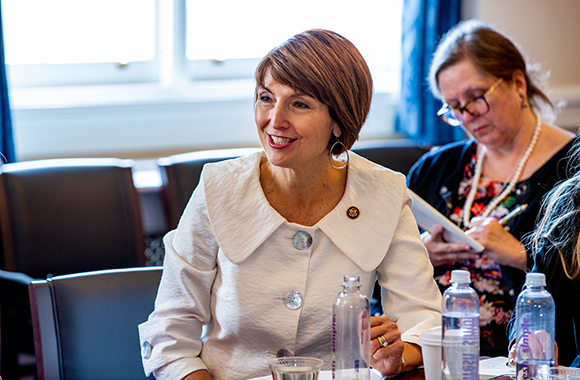
Sally Greenberg’s remarks

Contact: 202-835-3323, media@nclnet.org

Washington, D.C.– A coalition of public interest groups today called for the federal government to end 30 years of “deliberations and fact finding” by issuing a useful final regulation to require standardized labeling information on beer, wine and distilled spirits products.

At a news conference in Washington, members of a broad-based coalition of public health leaders and consumer advocacy organizations used the occasion of Alcohol Awareness Month to release a white paper laying out the need for an easy-to-read, standardized label that will provide consumers with complete information about alcohol and calorie content per serving. Issued as a nationwide call to action, the white paper concludes that easily accessible alcohol labeling can play an important role in reducing alcohol abuse, drunk driving, and the many diseases attributable to excessive alcohol intake, such as liver cirrhosis and cancers of the upper gastrointestinal tract.

To highlight this issue for federal policymakers, Shape Up America! — the anti-obesity crusade launched by former Surgeon General C. Everett Koop — also unveiled a newspaper advertising campaign featuring an open letter to Treasury Secretary Henry Paulson signed by 18 organizations and public health officials. The open letter cites more than 30 years of delay by Alcohol and Tobacco Tax and Trade Bureau (TTB) and its predecessor agency, the Bureau of Alcohol, Tobacco and Firearms (BATF), in responding to public pressure, several petitions, and court challenges, none of which has produced a government rule requiring an easy-to-read, standardized label on all alcoholic beverages.

“Today, even the most basic information about alcohol beverages is not provided on the labels of most alcohol beverage products,” said Sally Greenberg, Executive Director of the National Consumers League. “We are urging TTB to get it right by issuing a consumer friendly final regulation that will provide the same helpful and easily accessible labeling information on alcoholic beverages that is now required for conventional foods, dietary supplements, and nonprescription drugs.”

TTB’s most recent action occurred in 2007 when the agency proposed a mandatory “Serving Facts” panel on beer, wine and distilled spirits but left out the requirement that manufacturers list information about the alcohol content per standard serving. This resulted in a barrage of letters from consumers and public health leaders, all calling for complete information on the label.

Now that TTB has heard from the public and other stakeholders, the open letter ad declares it is time for Secretary Paulson and the TTB to “do the right thing” by mandating a standardized alcohol label with information about the alcohol content, the amount of alcohol per serving, the definition of a standard drink, the number of calories and facts about other ingredients. The ad states, “Anything short of mandating this basic information would be a failure of the regulatory process.”

Along with Shape Up America!, 17 prominent national public health, nutrition and consumers organizations and officials signed onto the ad and support this message: American Council on Science and Health, American Institute for Cancer Research, American Public Health Association, American Society for Nutrition, American Society of Addiction Medicine, Black Women’s Health Imperative, Consumer Federation of America, Maryland Consumer Rights Coalition, National Association of Local Boards of Health, National Consumers League, National Research Center for Women & Families, Virginia Citizens Consumer Council, George Blackburn MD, PhD; Associate Director of Nutrition, Division of Nutrition, David L. Katz, MD, MPH, FACPM, FACP; Director, Prevention Research Center, Yale University School of Medicine, C. Everett Koop, MD, ScD; Senior Scholar, C. Everett Koop Institute at Dartmouth College and U.S. Surgeon General 1981-1989, Peter Rostenberg, MD, FASAM; Private Practice, Internal Medicine and Addiction Medicine and Attending Physician, Danbury Hospital Department of Medicine and Judith S. Stern, ScD; Professor, University of California at Davis.

“It’s time to give consumers complete and detailed information about the alcohol and calorie content per serving in all beverage alcohol products so they can make informed and responsible purchasing and consumption decisions,” said Barbara J. Moore, Ph.D., president of Shape Up America!, “Anything less is a setback for public health.”

Reinforcing these views, National Consumers League and Shape Up America! released the findings of a new opinion poll, providing further evidence that the public believes government policy must change. Conducted by Opinion Research Corporation, the poll surveyed 1,003 adult Americans aged 21 and over from April 11-14, 2008 to identify the information consumers consider most important on an alcohol label. The top priority cited by more than three in four respondents (77 percent) is listing the alcohol content followed by the amount of alcohol per serving (73 percent) and the calories in each serving (65 percent). Of less importance but considered valuable information is the following: the number of servings in the bottle or can (57 percent), the carbohydrates in each serving (57 percent), the amount of fat in each serving (52 percent), and the protein in each serving (46 percent). When asked about TTB’s proposal that fails to require information on the amount of alcohol in a serving on the label, even more consumers — 74 percent — said this information should be mandatory.

The new poll also validates the usefulness of alcohol labels to educate consumers about following the Dietary Guidelines’ advice on moderate drinking, which is defined as up to one drink per day for women and up to two drinks a day for men. When asked if Americans should follow this advice, seven in ten respondents (71 percent) agreed and almost six in ten (58 percent) said they would use the alcohol label for this purpose. These findings reinforce a previous online survey conducted for Shape Up America! in December 2007, which reported that 79 percent of consumers would support alcohol labeling that summarizes the Dietary Guidelines’ advice.

“Those consumers who choose to drink absolutely need alcohol and calorie information per serving to help them comply with recommendations in the Dietary Guidelines,” said Chris Waldrop, Director of the Food Policy Institute at the Consumer Federation of America. “Without it, alcohol consumers continue to be left in the dark.”

The online survey also asked respondents to review three alternative labels that could be placed on alcohol beverage containers, giving TTB a better idea of what information consumers find most useful. When asked to compare the different options, the results were dramatic: the vast majority (76 percent) opted for a label that combines the information required under TTB’s proposed rulemaking (the amount of calories, carbohydrates, fat and protein) with the amount of alcohol per serving and the statement “a standard drink contains 0.6 fluid ounces of alcohol.” In contrast, only 7 percent chose the format proposed under TTB’s rulemaking.

Besides the general public, the coalition’s white paper summarized the views of leading public health and nutrition experts, who submitted comments to TTB about the health justifications for issuing a useful rule on alcohol beverage labeling. A review of the estimated 18,000 comments that TTB received in 2005 indicates that 96 percent supported giving consumers access to standardized and complete labeling information on beer, wine and distilled spirits.

This issue has a long history. In 1972, consumer organizations asked the federal government to require meaningful alcohol labeling. In 2003, the National Consumers League joined with the Center for Science in the Public Interest and 75 other public health and consumer organizations to submit a formal petition to TTB. This resulted in the agency issuing an “advanced notice of proposed rulemaking” in April 2005, followed by a “proposed rule” in 2007. That proposed rule, consumer advocates and public health leaders believe, leaves a huge gap in the basic nutritional facts consumers want and need when they consume alcohol.

Groups unite in call for action against phishing scams – National Consumers League

March 16, 2006

Contact: 202-835-3323, media@nclnet.org

Washington, DC—Consumer confidence in conducting business and protecting personal data online is threatened every day by phishing scams. In an initiative led by the National Consumers League (NCL), law enforcement, financial services and technical industries have joined forces to combat this threat.  The group today issued a “call to action” with the release of a paper outlining key recommendations that form a comprehensive plan for combating phishing more effectively.

Phishing is a large and growing problem, in which identity thieves pose as legitimate companies, government agencies, or other trusted entities in order to trick consumers into providing their bank account numbers, Social Security numbers, and other personal information. In 2005, phishing scams ranked 6th in Internet complaints to NCL’s Internet Fraud Watch program and the scams continue to dupe consumers.  A May 2005 consumer survey by First Data found that 43 percent of respondents had received a phishing contact, and of those, 5 percent (approximately 4.5 million people) provided the requested personal information. Nearly half of the phishing victims, 45 percent, reported that their information was used to make an unauthorized transaction, open an account, or commit another type of identity theft.

NCL’s new report, the result of a comprehensive three-day brainstorming retreat organized by the Washington-based consumer advocacy organization last September, makes multiple recommendations on how to combat it. 

“There is no silver bullet to solve the phishing problem, but there are known responses that need more support and promising new approaches that could help deter it,” said Susan Grant, director of NCL’s National Fraud Information Center. The key recommendations in the report are:

  • Create systems that are “secure by design” to make consumers safer online without having to be computer experts;
  • Implement better ways to authenticate email users and Web sites to make it easier to tell the difference between legitimate individuals and organizations and phishers posing as them;
  • Provide better tools for investigation and enforcement to prevent phishers from taking advantage of technology, physical location, and information-sharing barriers to avoid detection and prosecution;
  • Learn from the “lifecycle of the phisher” and use that knowledge about how these criminals operate to exploit points of vulnerability and stop them;
  • Explore the use of “white lists” to identify Web sites that are spoofing legitimate organizations and use “black lists” to create a phishing recall system that would prevent phishing messages from reaching consumers;
  • Provide greater support for consumer education, using clear, consistent messages and innovative methods to convey them.

Sponsorship for the initiative was provided by the American Express Company, First Data Corporation, and Microsoft Corporation.  The recommendations were developed by retreat participants representing financial services firms, Internet service providers, online retailers, computer security firms, software companies, consumer protection agencies, law enforcement agencies, consumer and ID theft victims organizations, academia, and coalitions such as the Anti-Phishing Working Group and the National Cyber Security Alliance.  Peter Swire, C. William O’Neill Professor of Law at the Moritz College of Law of the Ohio State University, wrote the report for NCL.

In the next phase of this project, NCL is forming working groups and inviting organizations and experts who are concerned about phishing to examine how the anti-phishing strategies in the report can be adopted on a widespread basis. “We all need to work together in a systematic approach if we want to have a significant impact on the tidal wave of phishing that is hitting consumers and hurting legitimate organizations,” said Grant.

To obtain a copy of “A Call for Action,” click here.

###


About the National Consumers League
The National Consumers League, founded in 1899, is America’s pioneer consumer organization. Our mission is to protect and promote social and economic justice for consumers and workers in the United States and abroad. For more information, visit www.nclnet.org.