
Progress at Risk as Global Leaders Confront the Ongoing Child Labor Crisis
By Reid Maki, NCL Director of Child Labor Advocacy & Coordinator of the Child Labor Coalition
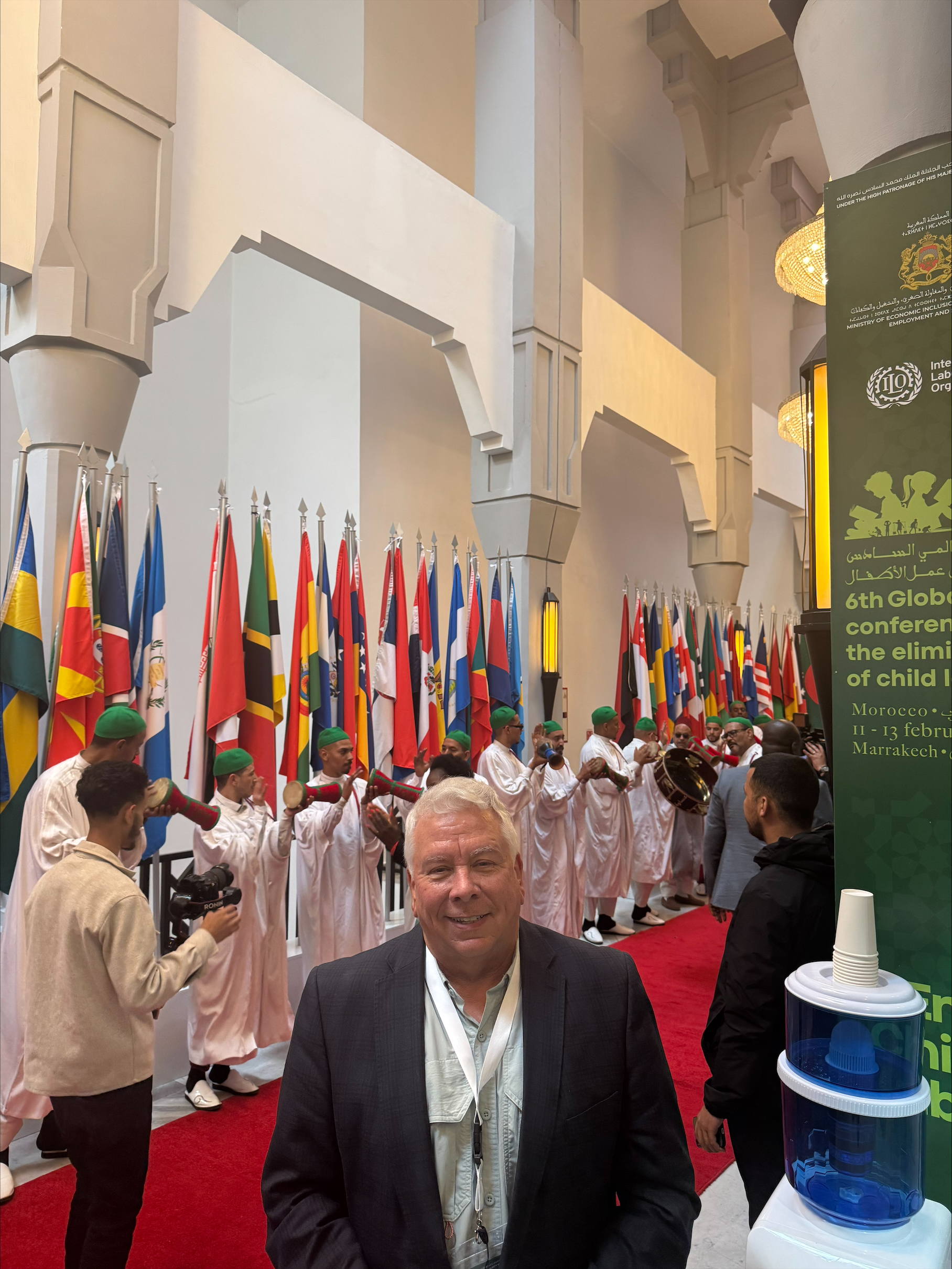
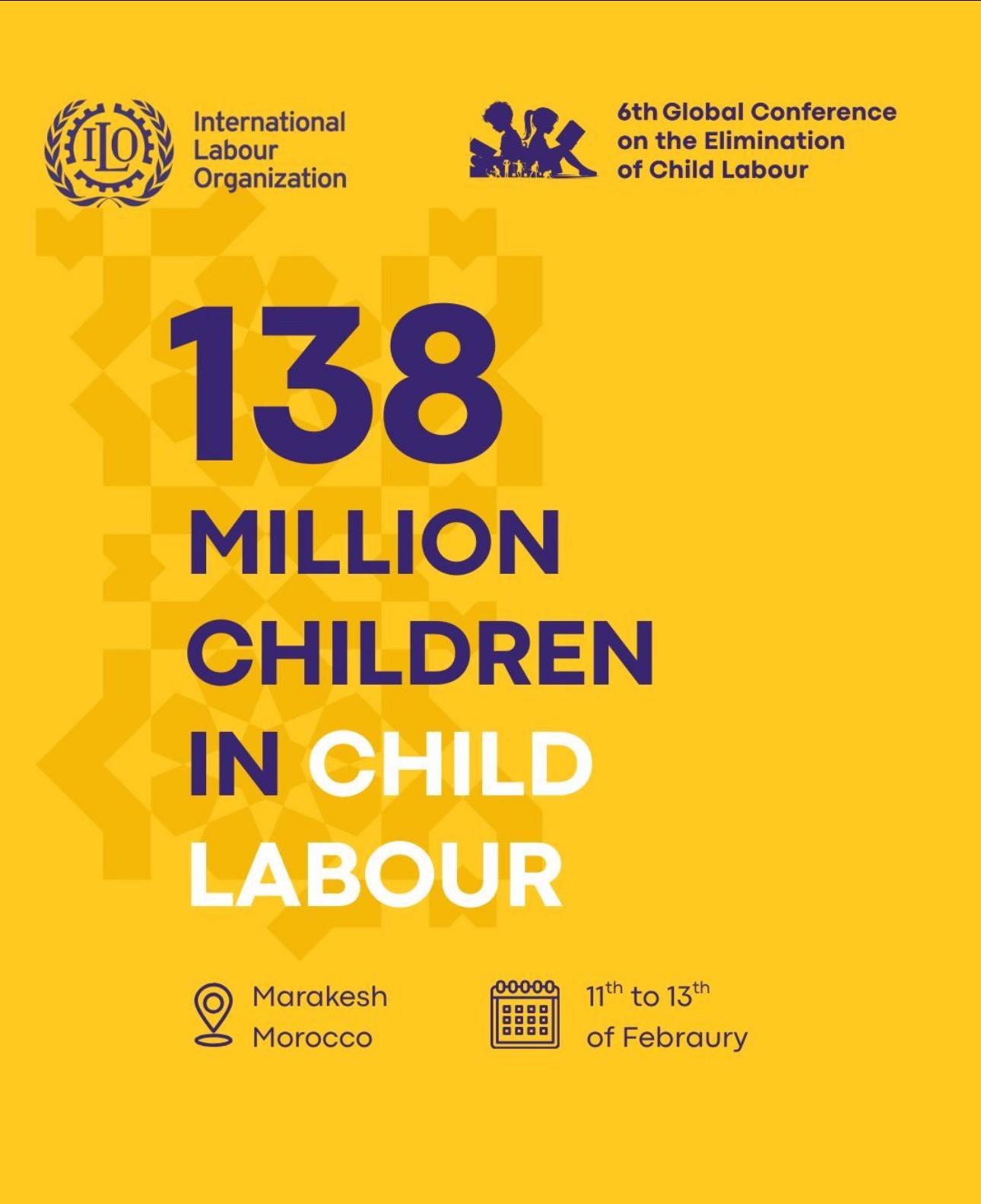 In Marrakech, Morocco, on Wednesday morning, the 6th Global Conference on the Elimination of Child Labour opened at the Palais des Congrès to a palpable air of excitement.
About 1,300 government leaders, employer groups, union leaders, and advocates against child labor attended the conference, organized by the government of Morocco with logistical assistance from the International Labour Organization (ILO). It is the first such international child labor conference since the one held in Durban, South Africa, in May of 2022.
As the Director of Child Labor Advocacy for the National Consumers League and the coordinator of the Child
Labor Coalition, this is my fourth quadrennial global child labor conference. Wednesday’s opening plenary began with a status check, highlighting the remarkable progress in reducing child labor, with estimates dropping from 246 million to 138
million last year. That’s phenomenal progress, but uncertainty hung in the air about what the future holds. The Trump administration’s cancellation of US AID poverty-reduction programs and $550 million in cuts to child labor and labor grants administered by the U.S. Department of Labor International Affairs Bureau in early 2025 has been an ongoing concern for child labor advocates, who fear a reversal of progress toward eliminating child labor.
Despite progress, advocates stressed the unfinished work: the global target to eliminate child labor by 2025 was missed, and 138 million children remain affected. As one speaker put it, ‘the number is simply not acceptable.’
Both the morning and afternoon plenaries featured ministers from several governments, ILO officials, and the International Trade Union Confederation discussing progress and future directions. Participants highlighted that reductions in child labor occurred across all continents where it was prevalent. The largest decrease was a 43% drop in Asia. Globally, the number of children in hazardous child labor fell from 79 million in 2020 to 54 million in 2024. However, speakers also noted a troubling rise in the proportion of child laborers who are between five and eleven years old.
Speakers urged identifying gaps in current efforts and emphasized the need to expand effective remediation—underscoring a united call to action.
Nobel Peace Prize Laureate Kailash Satyarthi addressed participants via video, urging the world to take “tools and guns out of children’s hands” and replace them with “pens and books.” He warned that recent years have seen a troubling decline in “moral accountability” and called for a “resurgence of compassion,” which he described as the transformative force needed to meet global child labor reduction goals. He also urged the ILO to mobilize heads of state committed to ending child labor into a special task force, aimed at building a stronger and more coherent “framework of action.”
“We must be bold,” said Satyarthi.
The conference continues until Friday afternoon, with officials and advocates sharing the strategies they have found most successful.